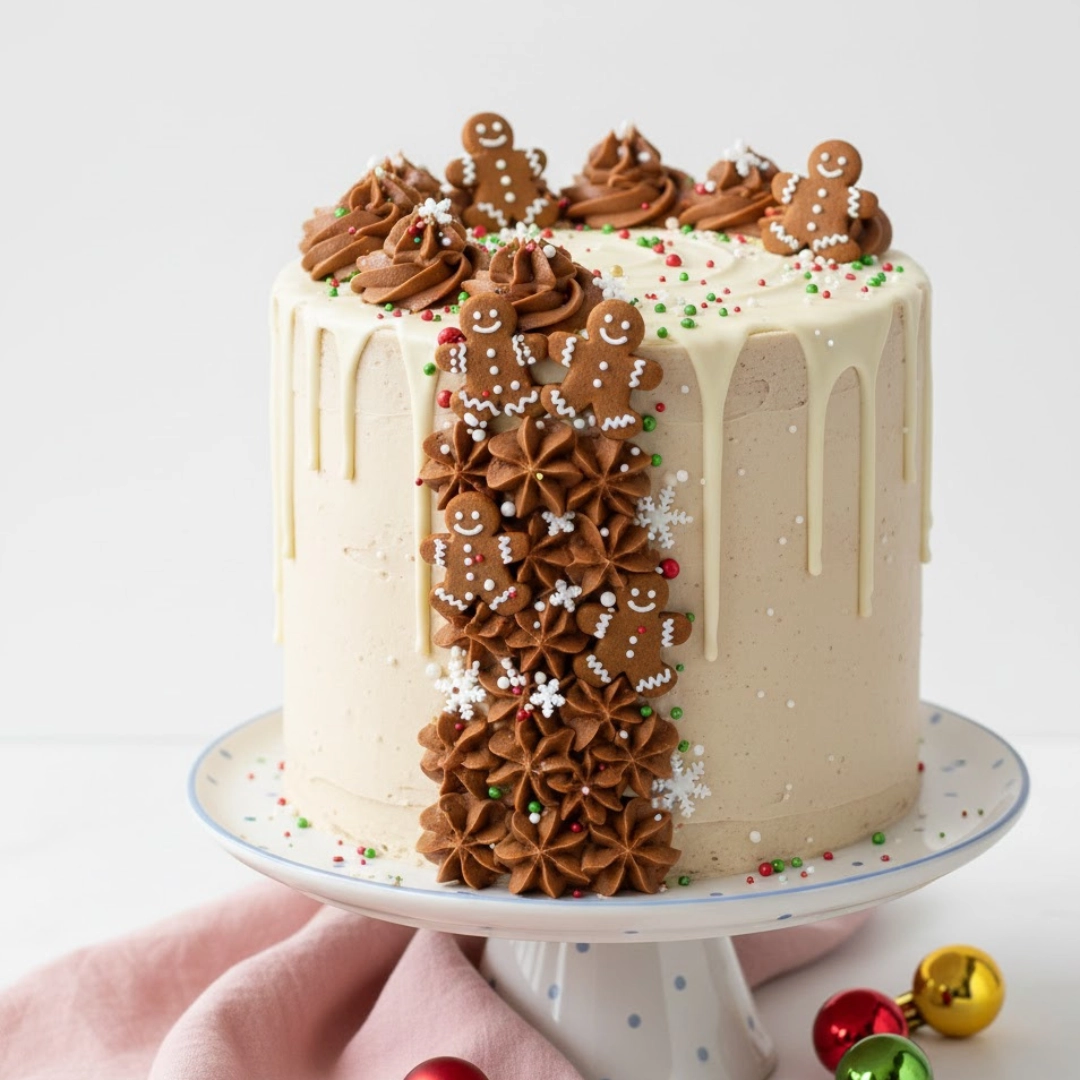
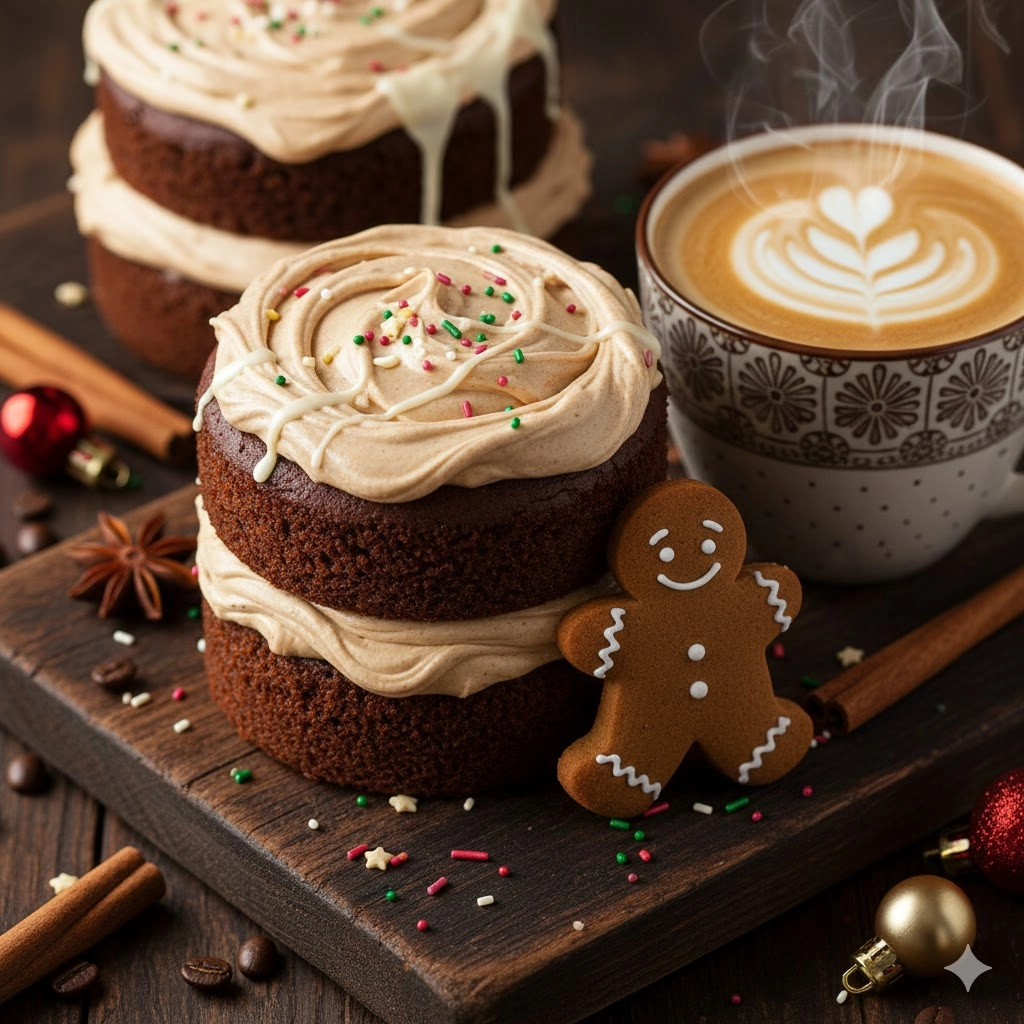
This particular cake captures the subtle complexity of two beloved winter rituals—the spicy, molasses-deep warmth of gingerbread and the creamy, aromatic steam of a perfectly pulled espresso drink. It’s a dessert engineered for those moments when you need something richer than a typical sheet cake, something that provides a gentle, lingering flavor. The blend of bold spices like ginger, cinnamon, and clove with the background hum of dark molasses is perfectly balanced by the subtle bitterness and fragrance of high-quality coffee integrated right into the batter and the buttercream. It’s an ideal choice for a celebratory holiday dessert or simply a comforting weekend baking project. The resulting gingerbread latte cake recipe is moist, wonderfully fragrant, and stacked high with a smooth, coffee-spiked cream cheese frosting that brings the entire experience into focus.
Table of Contents
The Essential Components: Gathering Your Ingredients
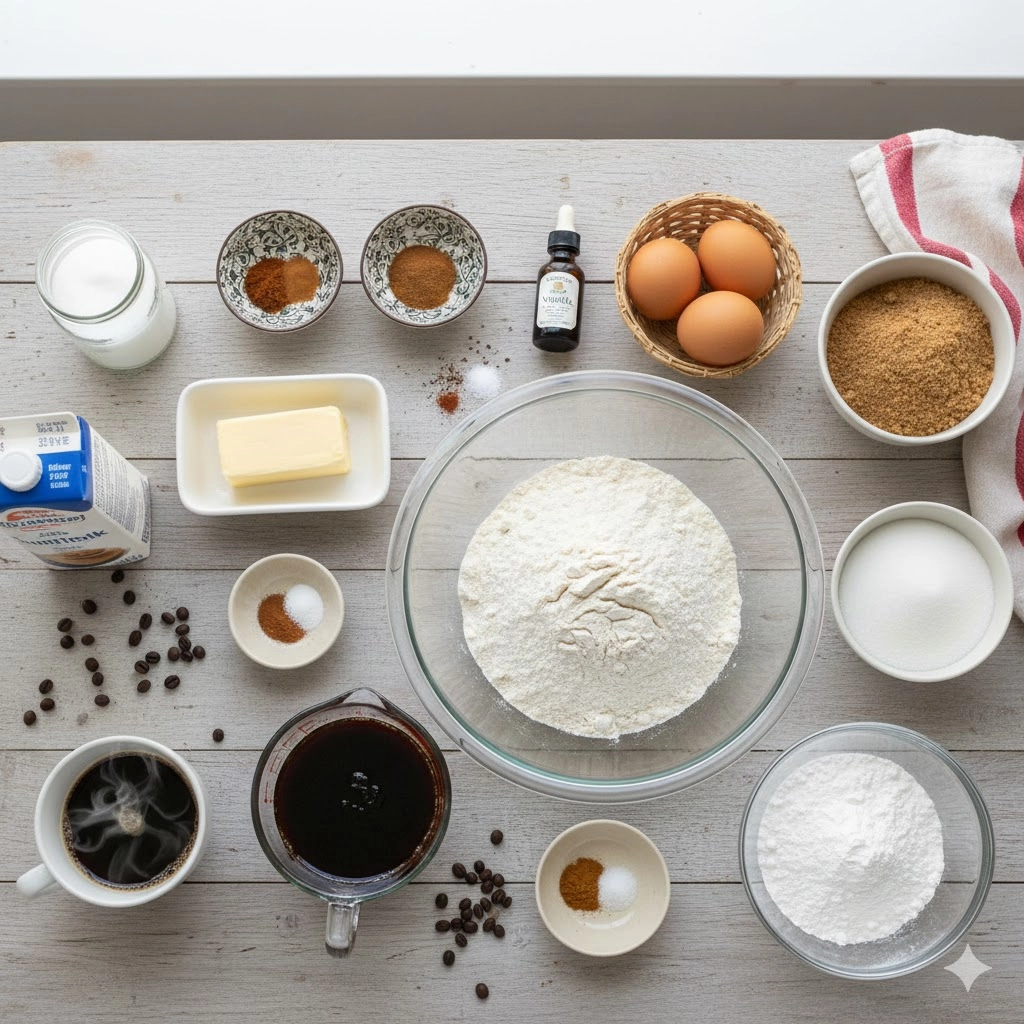
Building a deeply flavored layer cake requires high-quality pantry staples, especially when working with pronounced flavors like molasses and coffee. Precision in measurement is key to achieving the correct crumb structure and spice balance.
For the Gingerbread Cake Layers
- two and one-half cups (320 g) all-purpose flour
- one teaspoon baking soda
- one teaspoon ground cinnamon
- one teaspoon ground ginger
- one-half teaspoon ground cloves
- one-half teaspoon salt
- one cup (226 g) unsalted butter, softened
- one cup (200 g) granulated sugar
- one-half cup (100 g) packed dark brown sugar
- one-half cup (120 ml) unsulphured dark molasses
- two large eggs
- one teaspoon vanilla extract
- one cup (240 ml) buttermilk, room temperature
- one-half cup (120 ml) strongly brewed coffee (or espresso), cooled
For the Espresso Cream Cheese Frosting
- one cup (226 g) unsalted butter, softened
- eight ounces (226 g) cream cheese, full fat, softened
- four cups (480 g) powdered sugar, sifted
- one teaspoon vanilla extract
- two tablespoons strongly brewed coffee (or espresso), cooled
- one-quarter teaspoon salt
Architectural Stages: How to Assemble the Cake
The success of this cake lies in careful execution of both the cake layers and the frosting. Follow these steps methodically for the best results.
- Prepare the Pans and Preheat: Adjust your oven rack to the middle position. Prepare three eight-inch round cake pans by greasing them, lining the bottoms with parchment paper circles, and lightly dusting them with flour. Preheat your oven to three hundred fifty Fahrenheit.
- Whisk Dry Ingredients: In a medium bowl, whisk together the flour, baking soda, spices (cinnamon, ginger, cloves), and salt. Set the bowl aside.
- Cream Wet Ingredients (Part One): In a separate large mixing bowl, beat the softened butter, granulated sugar, and brown sugar together on medium speed until the mixture is light and fluffy—this should take approximately three minutes.
- Add Eggs and Molasses: Beat in the eggs, one at a time, incorporating fully after each addition. Mix in the molasses and vanilla extract until just combined. Scrape down the sides of the bowl.
- Alternate Wet and Dry: Reduce the mixer speed to low. Add one-third of the flour mixture, followed by one-half of the buttermilk, then one-third of the flour, the remaining buttermilk, and finally, the remaining flour mixture. Mix until just combined. Do not overmix.
- Incorporate the Coffee: Gently pour in the cooled, strong coffee and mix briefly until the batter is smooth. The batter will be thin.
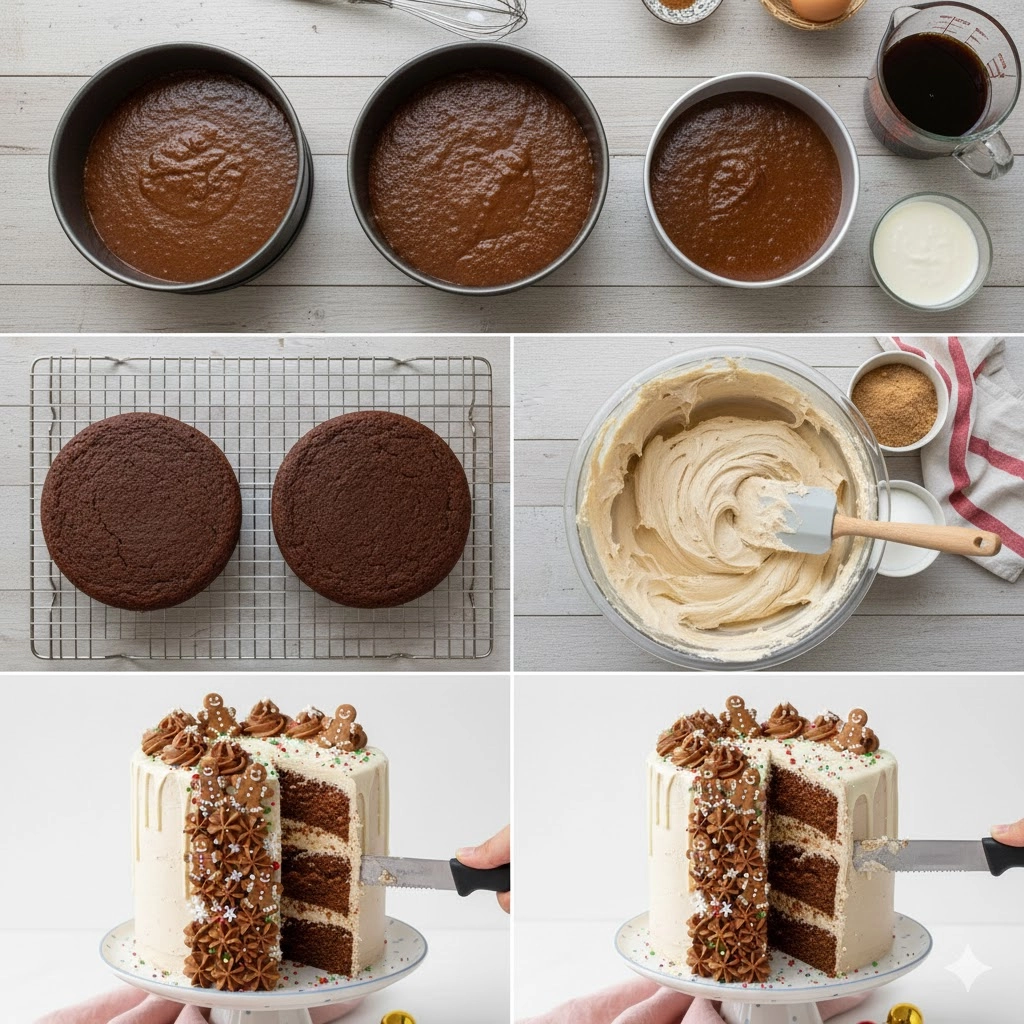
- Bake the Layers: Divide the batter evenly among the three prepared pans. Bake for twenty-five to thirty minutes, or until a toothpick inserted into the center of a layer comes out clean.
- Cool and Frost: Let the layers cool in the pans for ten minutes before inverting them onto a wire rack to cool completely. While they cool, prepare the espresso cream cheese frosting.
- Prepare the Frosting: Beat the softened butter and cream cheese together until smooth and uniform. Gradually add the sifted powdered sugar, salt, and vanilla extract. Finish by mixing in the two tablespoons of cooled coffee until the frosting is light, fluffy, and spreadable.
- Assemble and Chill: Once the cakes are fully cooled, stack and frost the layers. Finish with a final layer of frosting and chill the cake for at least thirty minutes before slicing.
Deeper Insight: Mastering the Batter and Bake
While the instructions provide the roadmap, understanding why certain steps are necessary is crucial for a truly exceptional finished cake. This deeper detail ensures the tender crumb and balanced flavor profile of the gingerbread latte cake recipe.
The Butter-Sugar Foundation
The initial creaming process of the butter and sugars is not just about mixing; it’s about aeration. Beating the mixture for a full three minutes, as specified, incorporates tiny air bubbles that expand in the oven, giving the cake its lift and tender structure. This step is particularly vital when using heavy ingredients like molasses and buttermilk. Look for the mixture to become noticeably lighter in color and texture—it should resemble pale yellow sand.
Integrating the Liquids
When you alternate adding the dry ingredients (flour mix) and the wet ingredients (buttermilk), you are managing gluten development. Adding them in stages, rather than all at once, ensures the liquids are emulsified evenly, which prevents the cake from becoming dense or tough. The buttermilk should be at room temperature; cold buttermilk will shock the batter, causing the butter to seize and resulting in a lumpy, inconsistent texture.
The Coffee Component
The half cup of cooled, strong coffee is added at the very end for a reason. Coffee enhances the flavor of chocolate and dark spices (like ginger and molasses) without making the cake explicitly “coffee-flavored.” It’s a background note that deepens the overall flavor profile. Since the coffee is a liquid, adding it late keeps the mixing time to a minimum after the flour is incorporated, further protecting the tender crumb structure. Mix only until it disappears into the batter. Overmixing here will result in a tough, rubbery cake.
Identifying Doneness
Oven temperatures can vary, so always rely on sensory cues instead of just the clock. The layers are done when the edges look firm and slightly pulling away from the sides of the pan. The top should spring back lightly when gently touched. Most reliably, the toothpick test should show a clean result—a few moist crumbs are acceptable, but wet batter is not. Allowing the cakes to cool fully on the rack is essential before frosting; any residual warmth will instantly melt the cream cheese frosting, causing it to slide right off.
Baker’s Wisdom: Pro Tips for Cake Perfection
Elevation, ingredient quality, and small changes in technique can drastically change the final outcome of a layer cake. Here are specific tips for this particular flavor combination.
- Bloom Your Spices: Before mixing the dry ingredients, try gently warming your cinnamon, ginger, and cloves in a dry skillet over low heat for about thirty seconds until they are highly aromatic. This “blooms” the volatile oils, making the spice flavor much more intense in the final baked cake.
- The Molasses Trick: Molasses is notoriously sticky. To ensure a clean and accurate measurement, spray your measuring cup lightly with cooking spray before pouring in the molasses. It will slide right out into the batter without leaving residue.
- Preventing the Dome: To help the cake layers bake flat, you can wrap the outside of each pan with a moistened, folded strip of old kitchen towel secured with a safety pin (often called a “baking strip”). This insulates the edges, allowing the cake to rise evenly instead of forming a peaked dome in the center.
- Tame the Frosting Temperature: Cream cheese frosting can be tricky—too warm, it melts; too cold, it tears the cake. If your kitchen is warm, chill the mixed frosting for ten minutes, then whip it again for thirty seconds before spreading. This firms it up slightly while maintaining its spreadable texture.
- The Perfect Coffee Brew: For the best flavor integration, use a strongly brewed, high-quality coffee or espresso shot. Instant coffee, or weak, stale drip coffee, will not provide the necessary depth to cut through the richness of the cream cheese and molasses.
- Crumb Coat Essential: Before applying the main layer of frosting, apply a very thin layer (a crumb coat) to the assembled cake. Chill it for fifteen minutes until set. This traps any loose crumbs and ensures a clean, smooth final frosting layer, particularly important with this soft gingerbread crumb.
- Cutting for Presentation: Use a long, thin, sharp knife and run it under hot water before each slice. Wipe it dry and make the cut immediately. This technique ensures a clean separation, showcasing the distinct layers of cake and frosting.
Adapting the Spice and Texture
A layer cake is a blank canvas for experimentation. If you are looking to change the flavor profile or accommodate dietary needs, here are three ways to modify this gingerbread latte cake recipe.
- Texture Boost with Nuts: To add a satisfying crunch, fold one-half cup of finely chopped pecans or walnuts into the finished cake batter just before dividing it into the pans. Toasting the nuts lightly beforehand will intensify their flavor.
- A Citrus Counterpoint: Gingerbread often pairs beautifully with citrus. Consider adding the zest of one whole orange to the dry ingredients for the cake layers. The aromatic oils in the zest will lift the deep, earthy molasses notes, adding a pleasant brightness.
- A Boozy Twist: For a more adult version, swap one-quarter cup of the buttermilk for a dark rum or bourbon. This substitution adds a complex caramel and woodsy depth that pairs exceptionally well with both the molasses and the coffee. Be mindful of the overall liquid balance and reduce the buttermilk slightly.
Finishing Touches: Serving and Presentation
The final presentation of the cake is the final stage of the culinary process. Here are a few ways to enhance the serving experience.
- Classic Ginger Garnishes: Garnish the finished cake with crystallized ginger pieces, either scattered over the top or placed neatly around the base. The chewy texture and sugary heat contrast beautifully with the smooth, cool frosting.
- A Dusting of Spice: After applying the final layer of frosting, lightly dust the top with a mix of cinnamon and powdered sugar, using a fine mesh sieve. This creates a beautiful, rustic finish and reinforces the warm spice aroma.
- The Coffee Pairing: Serve slices of the cake alongside a small, strong cup of espresso or a mug of hot apple cider. The intensity of the coffee or the tartness of the cider cuts through the richness of the cake, preparing the palate for the next bite.
Common Questions and Clarifications
Bakers often encounter similar issues when making spice cakes. Here are solutions to common queries about this recipe.
Can I make the cake layers ahead of time?
Yes, you can absolutely bake the layers a day or two in advance. Once fully cooled, wrap each layer tightly in plastic wrap and store them at room temperature. For longer storage, you can freeze wrapped layers for up to one month; thaw them overnight in the refrigerator before frosting.
What can I use if I don’t have buttermilk?
If buttermilk is unavailable, you can make a simple substitute: add one tablespoon of white vinegar or lemon juice to a measuring cup, then fill it the rest of the way with regular whole milk until you reach one cup. Let the mixture sit for five minutes until it curdles slightly before adding it to the batter.
My frosting seems too soft or runny. How do I fix it?
If your frosting is too soft, it is likely due to the temperature of your kitchen or the softness of the butter and cream cheese. The fix is to chill the entire bowl of frosting for ten to fifteen minutes. Once chilled, re-whip it with the mixer for thirty seconds. If it still needs body, add one to two tablespoons more sifted powdered sugar.
Why did my cake sink in the middle?
A sunken center is usually caused by opening the oven door too early, which allows a rush of cold air to interrupt the baking structure, or by not baking the cake for long enough. Always wait until the prescribed baking time is nearly finished before checking, and ensure your oven temperature is accurate.
Nutritional Breakdown
For those tracking their intake, here is an approximate nutritional overview per serving (assuming twelve servings).
| Nutrient | Amount per Serving |
| Calories | 480 kcal |
| Protein | 5 g |
| Carbs | 75 g |
| Fat | 18 g |
| Fiber | 1 g |
| Sugar | 55 g |
| Sodium | 280 mg |
Disclaimer
Nutrition information is an estimate and may vary based on preparation and ingredients used.
PrintSpiced Comfort: The Ultimate Gingerbread Latte Cake Recipe
A deeply flavored, multi-layered cake combining the warmth of gingerbread with a rich, coffee-infused cream cheese frosting, perfect for festive gatherings.
- Prep Time: 45 mins
- Cook Time: 30 mins
- Total Time: 1 hour 15 mins
- Yield: 12 servings 1x
- Category: Dessert
- Method: Baking
- Cuisine: American
Ingredients
2 1/2 cups all-purpose flour
1 teaspoon baking soda
1 teaspoon ground cinnamon
1 teaspoon ground ginger
1/2 teaspoon ground cloves
1/2 teaspoon salt
1 cup unsalted butter, softened
1 cup granulated sugar
1/2 cup packed dark brown sugar
1/2 cup unsulphured dark molasses
2 large eggs
1 teaspoon vanilla extract
1 cup buttermilk, room temperature
1/2 cup strongly brewed coffee, cooled
8 ounces cream cheese, softened
4 cups powdered sugar, sifted
2 tablespoons strongly brewed coffee, cooled
Instructions
1. Preheat the oven to three hundred fifty Fahrenheit. Prepare three eight-inch cake pans.
2. Whisk together the flour, baking soda, spices (cinnamon, ginger, cloves), and salt.
3. Cream the butter, granulated sugar, and brown sugar until light and fluffy. Beat in the eggs, molasses, and vanilla.
4. Alternately add the dry ingredients and buttermilk. Mix until just combined.
5. Stir in the one-half cup of cooled coffee until smooth. Divide evenly into the prepared pans.
6. Bake for twenty-five to thirty minutes. Cool completely on a wire rack.
7. Prepare the frosting: beat butter and cream cheese, then gradually add powdered sugar, vanilla, and the two tablespoons of cooled coffee.
8. Stack and frost the cooled cake layers completely. Chill for thirty minutes before serving.
Notes
Use room temperature buttermilk for the best crumb. Chill the assembled cake for a cleaner slice. For deeper spice flavor, toast the spices briefly before using.
Nutrition
- Serving Size: 1 slice
- Calories: 480
- Sugar: 55g
- Sodium: 280mg
- Fat: 18g
- Saturated Fat: 10g
- Unsaturated Fat: 6g
- Trans Fat: 0g
- Carbohydrates: 75g
- Fiber: 1g
- Protein: 5g
- Cholesterol: 90mg