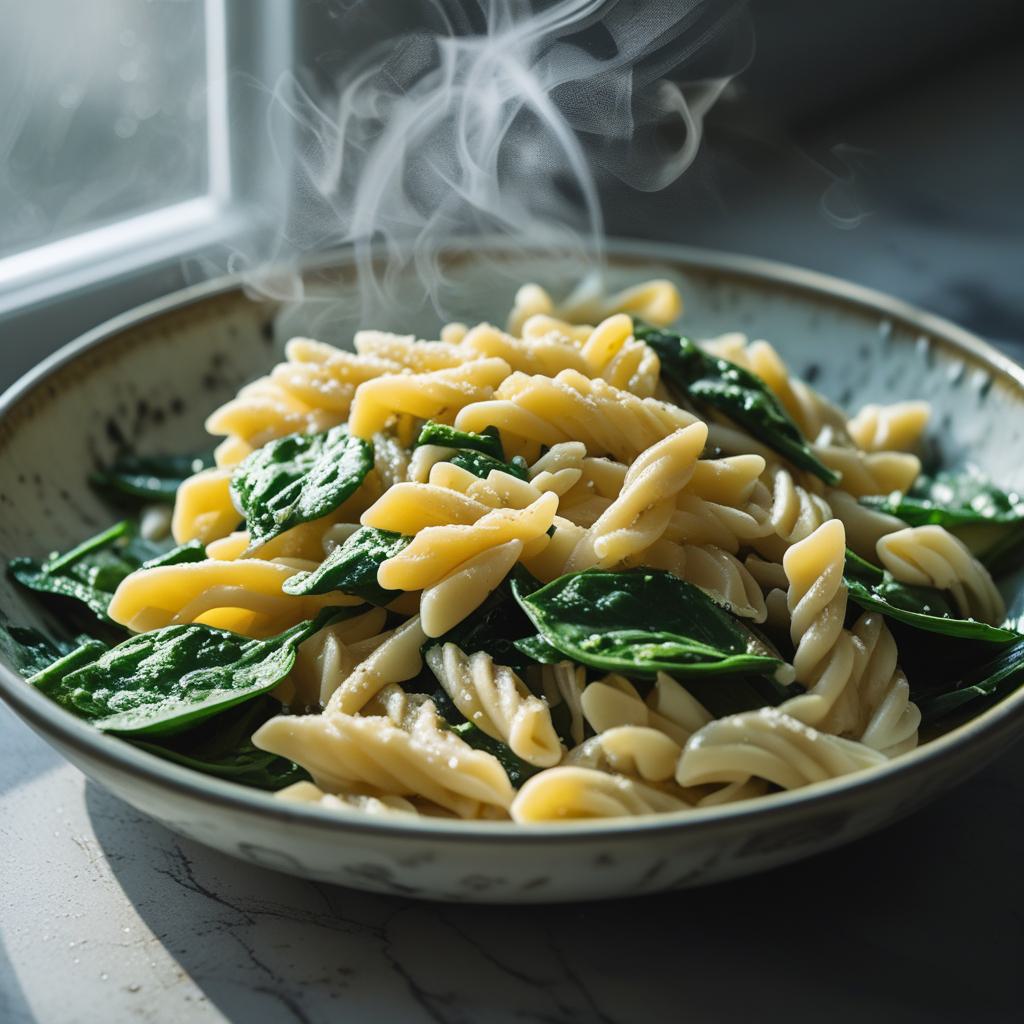
The first whiff of our Spinach Pasta Salad hits like a summer breeze through a herb garden—bright, verdant, and electrifying. Imagine al dente pasta coils glistening with olive oil, cradling emerald spinach leaves that crunch with every bite. There’s a whisper of garlic, a citrusy spark from lemon zest, and the umami punch of aged Parmesan. This isn’t just a salad; it’s a symphony of textures and temperatures. Cool greens meet warm pasta ribbons while toasted pine nuts scatter like edible confetti over jagged artichoke hearts. The dish balances indulgence and nourishment, its aroma oscillating between earthy (freshly cracked black pepper) and zesty (white wine vinegar). In culinary terms, it’s a masterclass in contrast: creamy avocado cubes against sharp red onions, sweet cherry tomatoes tempering briny olives. Every ingredient serves a purpose, every flavor a deliberate choice.
Table of Contents
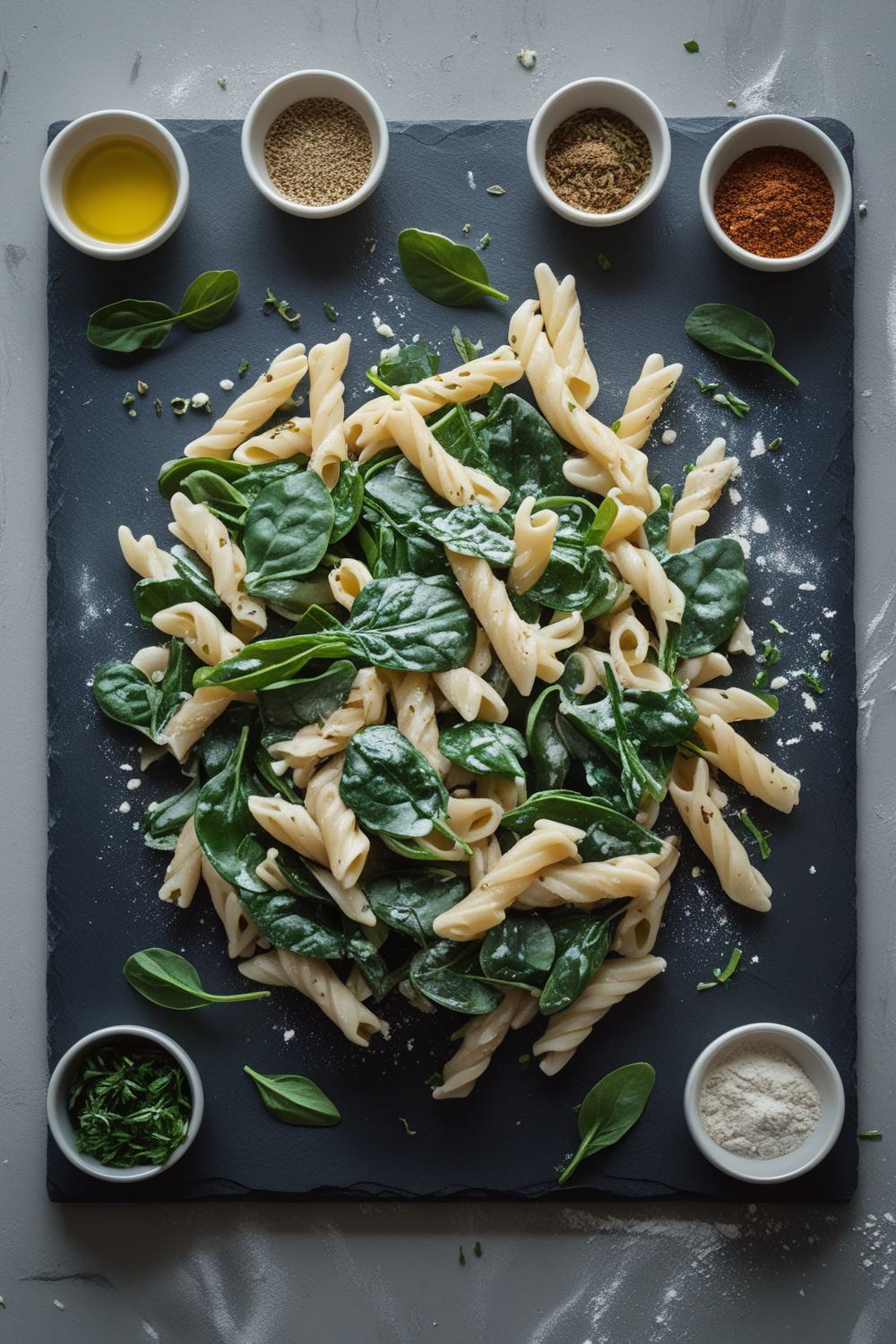
Ingredient Deep Dive
| Ingredient | Quantity | Purpose |
|---|---|---|
| Fusilli pasta | 300g | Base texture; traps dressing |
| Baby spinach | 150g | Freshness and iron source |
| Extra virgin olive oil | 60ml | Fat carrier for flavors |
| Lemon juice/zest | 1 lemon | Acidity to brighten greens |
| Toasted pine nuts | 40g | Crunch and nutty depth |
| Parmigiano-Reggiano | 80g | Salty umami backbone |
| Garlic clove | 1 (minced) | Aromatic foundation |
| Cherry tomatoes | 200g | Juicy sweetness |
| Kalamata olives | 50g | Briny contrast |
The pasta’s shape matters: fusilli’s helical grooves capture dressing better than smoother cuts. Baby spinach, picked young, offers tenderness over mature leaves’ bitterness. Olive oil isn’t just fat—its polyphenols bind fat-soluble vitamins in spinach, boosting nutrient absorption. Pine nuts toast to amplify Maillard reactions, releasing pyrazines that create their signature aroma.
Acidity is calibrated: lemon juice’s pH at 2.0-2.6 denatures spinach cell walls slightly, softening texture without wilting. Parmigiano’s glutamates synergize with tomatoes’ natural MSG-like compounds, elevating savoriness. Cold-pressed olive oil retains peppery aldehydes lost in refined versions, lending complexity.
Substitutions & Swaps
Vegan? Swap Parmesan for nutritional yeast or fermented cashew cheese. Gluten-sensitive? Use quinoa-based pasta—its higher protein prevents mushiness. For nut allergies, sunflower seeds mimic pine nuts’ crunch. Out of fresh spinach? Blanched frozen spinach works, but squeeze out excess water to avoid dilution.
Pantry hack: Replace fresh lemon juice with 2 tbsp white wine vinegar + 1 tsp sugar. No olives? Capers add saltiness, but rinse to control intensity. Cherry tomatoes can sub with sun-dried tomatoes (rehydrated), though reduce olive oil to balance moisture. Dairy-free? A tahini-lemon dressing offers creaminess without cheese.
Equipment Guide
A 12-inch stainless steel skillet ensures even toasting for pine nuts—non-stick risks uneven browning. Use a microplane for lemon zest; box graters tear peel oils, wasting flavor. A pasta pot with insert basket lets you blanch spinach in pasta water post-boil, saving time and dishes. Colanders matter: choose one with small holes to prevent losing pine nuts or orzo down the drain.
Ceramic bowls are ideal for mixing—metallic ones react with lemon juice, creating off-flavors. Tongs with silicone tips gently toss spinach without bruising. A digital thermometer ensures dressing emulsifies optimally at 55°C (131°F), where oil and acid bind best.
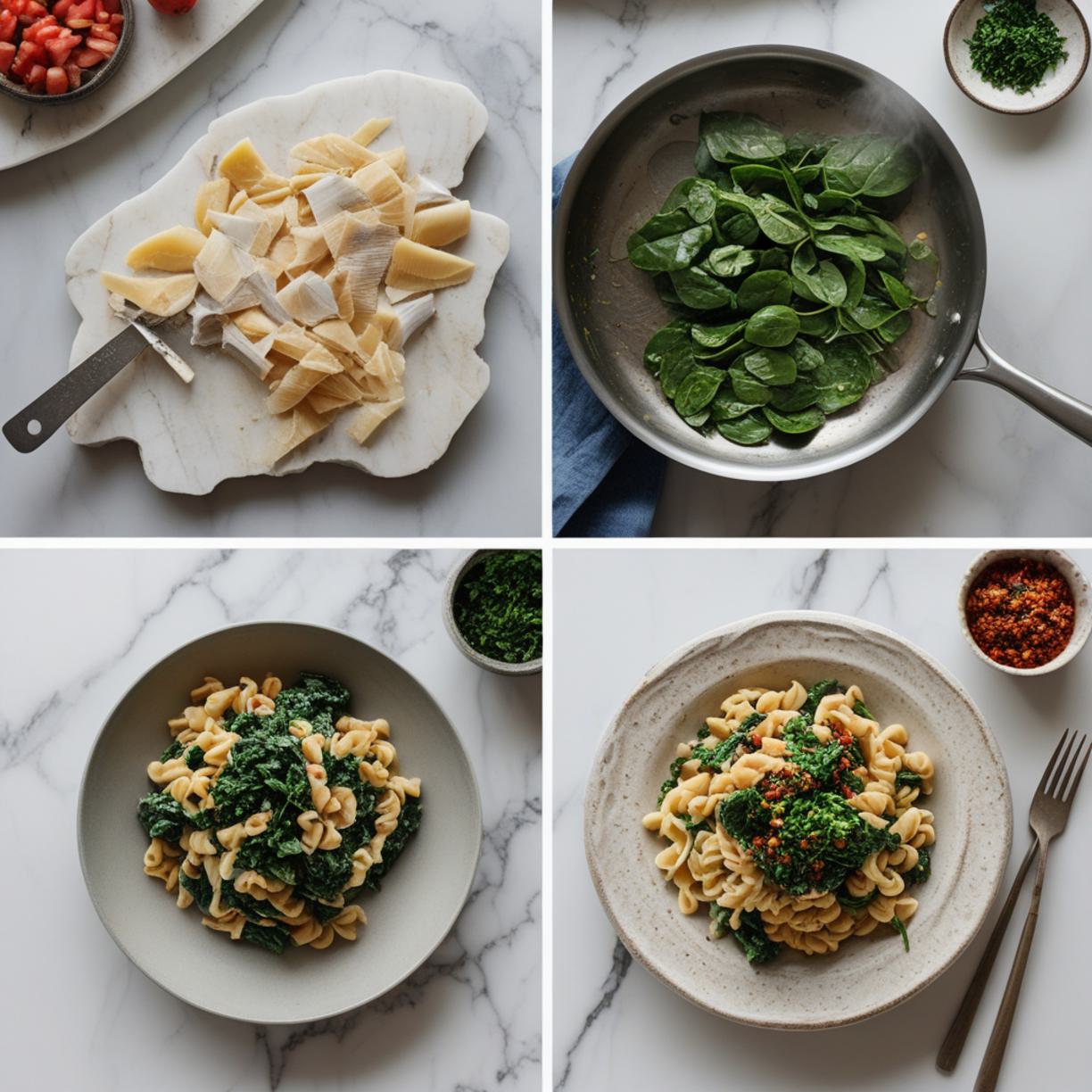
Step-by-Step Walkthrough
- Toast pine nuts: Dry-toast in skillet over medium-low until golden (3 mins).
- Cook pasta: Boil fusilli in salted water (10g salt/L) for 9 mins until al dente.
- Blanch spinach: Using pasta water, immerse spinach for 20 secs, then shock in ice water.
- Make dressing: Whisk olive oil, lemon juice/zest, minced garlic, black pepper.
- Combine: Toss warm pasta with dressing, add spinach, tomatoes, olives.
- Finish: Fold in nuts and cheese; adjust salt.
Heat management is crucial: pasta added to dressing while warm absorbs flavors deeper. Blanching spinach deactivates oxalases—enzymes that make raw greens gritty—but the ice bath halts cooking, preserving color.
Emulsify dressing by slowly drizzling oil into lemon juice while whisking aggressively. This creates a stable suspension, preventing separation. Add pasta first—its starch thickens dressing naturally. Never overdress; spinach wilts under excess liquid.
Expert Tips & Troubleshooting
Pro Secrets:
• Chill serving plates for 10 mins—cold surfaces keep salad crisp.
• Massage spinach lightly with 1 tsp salt before blanching to tenderize.
• Add dressing in two stages: half mixed with hot pasta, rest after cooling.
• Grate Parmesan frozen for fluffier, melt-resistant strands.
Troubleshooting:
Soggy salad? Spinach retained water. Use a salad spinner post-blanch.
Dressing separates? Whisk in 1 tsp Dijon mustard—natural emulsifier.
Pasta sticks? Toss with 1 tbsp oil post-draining (after rinsing, if gluten-free).
Bland? Boost umami with 1/4 tsp MSG or seaweed flakes.
Flavor Variations
Spicy Kick: Add 1 tsp Calabrian chili paste to dressing + crispy chorizo chips.
Herbaceous: Toss in 20g chopped tarragon + 15g mint for Middle Eastern flair.
Kid-Friendly: Omit onions; swap olives for roasted carrots. Mix in cheddar cubes.
Seafood Twist: Fold in 200g seared shrimp + lemon-truffle oil drizzle.
Storage & Reheating
Store undressed salad in airtight glass for 3 days. Keep dressing separate; toss max 4 hrs pre-serving. Never freeze—spinach turns mushy. Revive dried pasta by sprinkling 1 tsp hot water before mixing. Leftovers? Repurpose into frittatas: bake eggs + salad mix at 180°C for 12 mins.
FAQ Section
Q: Can I serve this salad warm?
Yes—optimal at 25-30°C. Toss warm pasta with cold ingredients to contrast temperatures.
Q: Make-ahead tips?
Prep dressing, toast nuts, wash spinach up to 2 days prior. Combine 1 hour before serving.
Q: Protein additions? Grilled chicken thighs or marinated tofu absorb dressing well. Add last to avoid sogginess.
Q: Pasta alternatives? Farro or couscous work, but adjust liquid: farro needs 50% more dressing.
Nutrition Information
| Nutrient | Per Serving (300g) |
|---|---|
| Calories | 480 kcal |
| Protein | 15g |
| Carbs | 55g |
| Fiber | 7g |
| Sugars | 4g |
| Fat | 24g |
| Sodium | 620mg |
Disclaimer: Nutritional values are estimates. Consult a nutritionist for personalized dietary advice. Ingredient substitutions will alter data.