
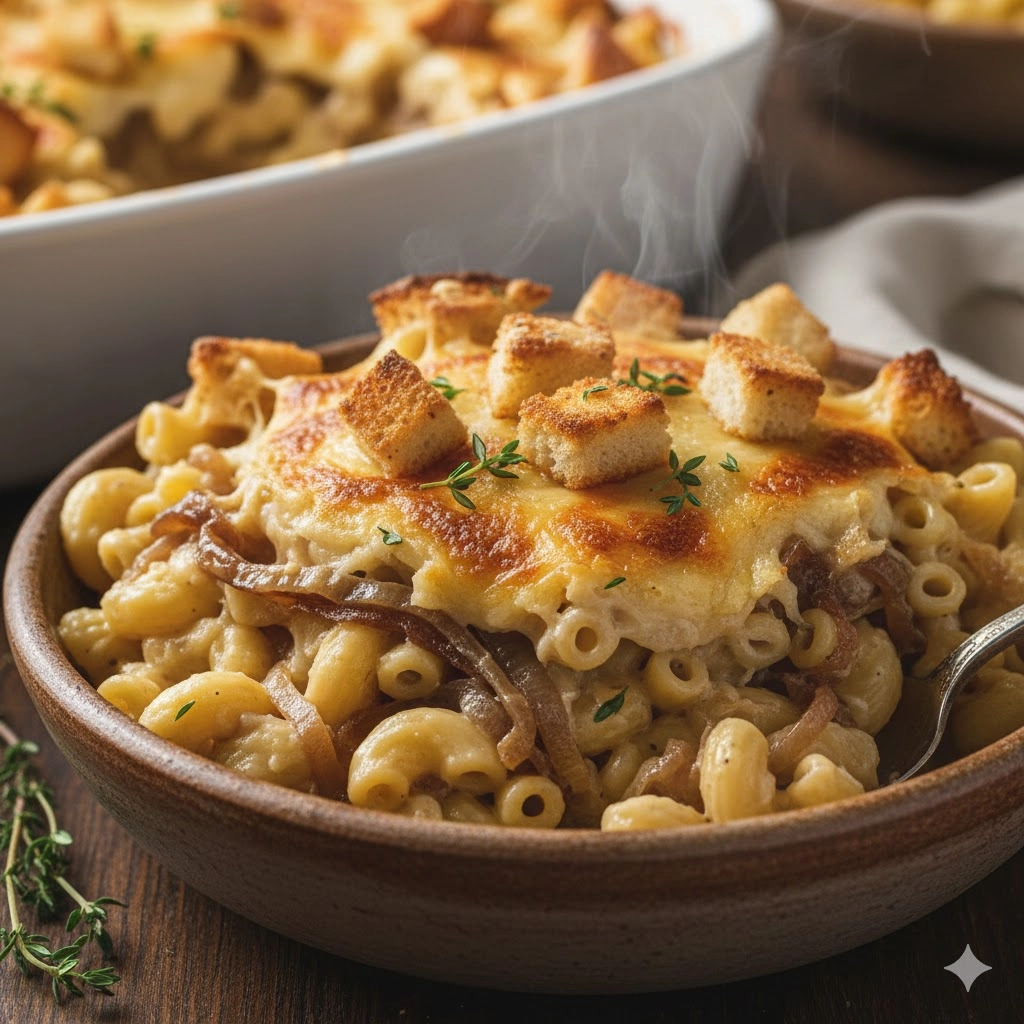
This French Onion Soup Mac & Cheese is a true kitchen achievement—it takes two iconic comfort dishes and merges them into a single, cohesive, and deeply satisfying meal. The result is a creamy, luxurious baked macaroni that carries the unmistakable, savory-sweet depth of slow-caramelized onions, finished with the classic Gruyère crust that defines the soup. It moves far beyond standard stovetop mac and cheese, presenting a dish that is rich, complex, and perfect for serving at a celebratory Sunday dinner or as a centerpiece for a cozy winter gathering.
The beauty of this casserole lies in its balance. The sharp, nutty flavor of Gruyère cuts through the richness of the béchamel, while the profound sweetness of the deeply browned onions prevents the cheese sauce from feeling one-dimensional. It’s a project dish, certainly, but one that rewards the effort with unparalleled flavor and texture, offering a sophisticated twist on a classic comfort food.
Culinary Components: What You Will Need
The success of this dish rests entirely on the quality and preparation of the core elements—namely, the onions, the cheese selection, and the béchamel. Resist the urge to rush the caramelization; the flavor payoff is worth the time.
For the Caramelized Onions and Broth
- 6 tablespoons unsalted butter, divided
- 4 large yellow onions (about 3 pounds or 1,360 grams), thinly sliced
- 2 teaspoons kosher salt, divided
- 1 teaspoon fresh black pepper
- 1/4 cup dry sherry or dry white wine (optional, for deglazing)
- 6 cups beef broth, preferably low sodium
- 2 sprigs fresh thyme
- 1 bay leaf
For the Macaroni and Cheese Sauce
- 1 pound (454 grams) elbow macaroni or small shell pasta
- 4 tablespoons all-purpose flour
- 4 cups whole milk, warmed
- 1/2 teaspoon freshly grated nutmeg
- 2 cups (about 8 ounces or 225 grams) freshly grated Gruyère cheese, divided
- 1 cup (about 4 ounces or 115 grams) grated sharp white cheddar cheese
- 1/2 cup (about 2 ounces or 55 grams) grated Parmesan cheese
For the Topping
- 4 slices thick-cut rustic bread or baguette, toasted until crisp (or 1 cup panko breadcrumbs)
- Remaining 1 cup grated Gruyère cheese
- 2 tablespoons chopped fresh parsley, for garnish (optional)
The Process: Assembling the Casserole
The preparation is divided into four distinct phases: the slow cook of the onions, the pasta and béchamel, the combination, and the final bake.
- Caramelize the Onions: Melt 4 tablespoons of butter in a large Dutch oven or heavy-bottomed pot over medium-low heat. Add the sliced onions, 1 teaspoon of salt, and pepper. Cook slowly, stirring every 10 to 15 minutes, for at least 45 minutes to one hour, until the onions are a rich, deep mahogany color.
- Build the Broth: Deglaze the pot with sherry or wine, scraping up any browned bits. Pour in the beef broth, add the thyme and bay leaf, and bring to a simmer. Reduce the heat and let the broth steep gently for fifteen minutes to deepen the flavor. Remove the thyme and bay leaf.
- Prepare Pasta and Béchamel: While the broth steeps, cook the pasta in salted water until very al dente—about 2 minutes less than package directions. Drain and set aside. In a separate large saucepan, melt the remaining 2 tablespoons of butter over medium heat. Whisk in the flour and cook for two minutes to form a light roux. Slowly whisk in the warmed milk until smooth. Bring the mixture to a simmer, stirring constantly, until it thickens slightly, about 5 to 7 minutes. Remove from heat and stir in the remaining salt, nutmeg, cheddar, and Parmesan until the sauce is smooth.
- Assemble and Bake: Preheat your oven to three hundred seventy-five Fahrenheit. Gently stir the caramelized onions and a small amount of the seasoned broth into the cheese sauce. Add the cooked pasta and toss everything gently to coat. Transfer the mixture to a buttered 9×13 inch baking dish. Arrange the toasted bread slices on top, pressing them slightly into the mac and cheese, then sprinkle the remaining cup of Gruyère evenly over the bread and the exposed pasta. Bake for 25 to 30 minutes, or until the topping is bubbly and deeply golden brown. Let the casserole rest for ten minutes before serving.

Layering Flavor and Texture: Step-by-Step Excellence
Achieving the perfect consistency and depth of flavor requires attention to the subtle cues during the cooking process. Rushing any part of this preparation will diminish the final result.
The Slow Dance of Caramelization
The flavor foundation of this French Onion Soup Mac & Cheese is the onions. They must be truly caramelized, not just sautéed. This process demands a low, consistent heat for an extended period. When you begin, the onions will be pale and voluminous. As time passes, they will shrink significantly and release their moisture. The key visual cue for readiness is the color: they should be the color of dark peanut butter or tarnished copper, not just golden. They will smell overwhelmingly sweet and nutty, a profound transformation from the raw, sharp aroma. If the onions begin to stick or burn, add a small splash of water or broth to loosen the fond (the browned bits on the bottom) and continue cooking. Those sticky bits are pure flavor.
Building the Savory Broth
After the caramelization, the broth step is crucial for incorporating the classic French onion soup profile. Adding the broth to the deep, flavorful onion base—after deglazing—allows the liquid to absorb the intense umami notes. The addition of thyme and a bay leaf contributes an herbaceous backbone that complements the sweetness of the onions and the richness of the cheese. Once the broth has simmered, taste it; it should be robust and highly seasoned. If it tastes weak, let it simmer uncovered for a few more minutes to concentrate the flavor before straining and reserving it for the final sauce.
Mastering the Béchamel Base
The béchamel needs to be velvety smooth and thick enough to cling to the pasta without being gluey. When making the roux, cook the flour and butter for at least two minutes (after the bubbling stops) to eliminate the raw, pasty taste of the flour. When adding the milk, pour it in slowly and whisk vigorously to prevent lumps. The sauce is ready when it coats the back of a spoon thickly—a classic test is drawing a line across the spoon’s back with your finger; if the line holds cleanly, the béchamel is sufficiently cooked. Adding the cheese off the heat prevents the sauce from becoming grainy or separating, ensuring a creamy, silky texture.
Al Dente Assurance
Overcooked pasta is the nemesis of any baked mac and cheese. Since the pasta will continue to cook and absorb liquid in the oven, you must cook it very al dente, meaning it should still be quite firm and slightly undercooked when drained. A good guideline is two minutes shy of the recommended cooking time on the package. This ensures the pasta holds its shape and maintains a pleasant chewiness after the final bake.
Expert Adjustments for a Perfect Bake
Small refinements in technique can elevate this casserole from good to truly exceptional.
- The Power of Freshly Grated Cheese: Always grate the Gruyère, cheddar, and Parmesan yourself. Pre-shredded cheeses contain anti-caking agents that can prevent the cheese from melting into a perfectly smooth sauce, often resulting in a slightly gritty or greasy texture.
- Warming the Milk: Adding cold milk to a hot roux can shock the sauce and make it more prone to lumping. Warming the milk slightly beforehand (either on the stove or in the microwave) allows it to incorporate smoothly and helps the béchamel thicken faster.
- Controlled Browning: If your mac and cheese is perfectly bubbly but the Gruyère crust isn’t quite as dark as you’d like, consider a quick blast under the broiler for the last minute or two. Keep a very close eye on it, as the transition from golden brown to burnt happens instantly.
- The Rest is Essential: Allowing the finished casserole to rest for ten minutes after coming out of the oven lets the sauce cool slightly and set. This results in a cleaner slice and prevents the sauce from running everywhere when you serve it.
Flavor Pathways and Realistic Swaps
Once you have mastered the fundamental recipe, this structure provides a wonderful canvas for culinary experimentation.
- Cheese Evolution: While Gruyère is non-negotiable for the French onion flavor, you can swap the sharp cheddar for Fontina or Raclette for an even nuttier, meltier texture. A small amount of smoked Gouda would also introduce a pleasant smoky dimension that complements the beef broth.
- Broth Variations: For a lighter, yet still complex flavor, use a mixture of half high-quality beef broth and half vegetable or chicken broth. Avoid straight chicken or vegetable broth, as the deep, savory quality of the beef is critical to mimicking the classic soup base.
- Caramelization Boost: To achieve an even deeper color and quicker caramelization, you can add half a teaspoon of baking soda to the onions at the very beginning. This increases the pH and accelerates the Maillard reaction, though it can slightly affect the texture if overused.
- Bread vs. Panko: While the classic rustic bread slices soaked in broth or butter are traditional, a mix of panko breadcrumbs and melted butter provides a lighter, crunchier topping that covers more evenly.

Ideas for Complementary Sides
The richness of this dish means it pairs best with accompaniments that offer acidity, freshness, and contrast.
- Bright, Simple Green Salad: A basic salad of mixed greens, shaved cucumber, and a light vinaigrette made with good-quality olive oil and Dijon mustard is ideal. The acidity of the vinaigrette cuts through the cheese and butter beautifully.
- Roasted Asparagus with Lemon Zest: Roasting asparagus at high heat keeps it firm and slightly charred, and a final squeeze of fresh lemon juice offers another bright, acidic note.
- Simple Glazed Carrots: A classic side that mirrors the sweetness of the caramelized onions without adding competition. Toss boiled carrots in a light glaze of butter, a touch of brown sugar, and a pinch of salt.
Common Questions and Kitchen Troubleshooting
The complexity of this recipe often leads to a few common questions regarding technique and ingredients.
What is the best way to slice the onions?
The onions should be sliced thin and uniformly. Using a mandoline (with caution) ensures consistent thickness, which is key to even caramelization. If slicing by hand, aim for pieces no thicker than one-eighth inch. Thicker slices will cook unevenly, leaving some caramelized and others still firm.
Can I prepare the caramelized onions ahead of time?
Absolutely, and this is highly recommended for time savings. The caramelized onions can be prepared up to three days in advance and stored in an airtight container in the refrigerator. Reheat them gently in a saucepan before incorporating them into the béchamel sauce.
Why is my cheese sauce grainy?
A grainy sauce is usually caused by cooking the cheese over high heat or adding it too quickly, causing the milk proteins to seize and the fat to separate. Always remove the béchamel from the heat before stirring in the cheese, and add it in small handfuls, stirring until each batch is fully melted and smooth before adding the next.
Is Gruyère cheese necessary, or can I substitute it entirely?
Gruyère is essential for the authentic French Onion Soup flavor profile, providing the characteristic nutty, savory, and slightly funky top crust. If unavailable, Jarlsberg or Emmental cheese offers a similar melting quality and mild, nutty flavor, but the final dish will lack the specific depth provided by true Gruyère.
Can this be frozen for later?
Baked mac and cheese with a béchamel base is typically not ideal for freezing. The texture of the sauce tends to break down upon thawing and reheating, often becoming watery or grainy. It is best enjoyed fresh or stored in the refrigerator for up to three days and reheated gently.
Nutritional Snapshot
| Nutrient | Amount per Serving |
| Calories | 680 kcal |
| Protein | 34 g |
| Carbs | 67 g |
| Fat | 31 g |
| Fiber | 4 g |
| Sugar | 12 g |
| Sodium | 780 mg |
Disclaimer
Nutrition information is an estimate and may vary based on preparation and ingredients used.
PrintFrench Onion Soup Mac & Cheese: The Ultimate Cold Weather Casserole
This French Onion Soup Mac & Cheese is a rich, complex comfort casserole that merges the savory-sweet depth of slow-caramelized onions and Gruyère with creamy baked macaroni.
- Prep Time: 30 mins
- Cook Time: 1 hr 30 mins
- Total Time: 2 hrs
- Yield: 8 servings 1x
- Category: Casserole
- Method: Baked, Stovetop
- Cuisine: American, French
Ingredients
6 tablespoons unsalted butter, divided
4 large yellow onions, thinly sliced
2 teaspoons kosher salt, divided
1 teaspoon fresh black pepper
1/4 cup dry sherry or dry white wine (optional)
6 cups beef broth
2 sprigs fresh thyme
1 bay leaf
1 pound elbow macaroni or small shell pasta
4 tablespoons all-purpose flour
4 cups whole milk, warmed
1/2 teaspoon freshly grated nutmeg
2 cups freshly grated Gruyère cheese, divided
1 cup grated sharp white cheddar cheese
1/2 cup grated Parmesan cheese
4 slices thick-cut rustic bread or 1 cup panko breadcrumbs
Instructions
1. Caramelize the Onions: Cook onions slowly with 4 tbsp butter, salt, and pepper for 45-60 minutes until deep mahogany.
2. Build the Broth: Deglaze, then add broth, thyme, and bay leaf. Simmer for fifteen minutes. Remove herbs.
3. Prepare Pasta: Cook pasta until very al dente (2 minutes shy of package directions). Drain.
4. Prepare Béchamel: Melt 2 tbsp butter, whisk in flour for a roux. Slowly whisk in warmed milk until thickened.
5. Add Cheese: Remove from heat and stir in salt, nutmeg, cheddar, and Parmesan until smooth.
6. Assemble and Bake: Preheat oven to three hundred seventy-five Fahrenheit. Mix sauce, onions, broth, and pasta. Transfer to a buttered 9×13 inch dish.
7. Finish Top: Place toasted bread on top and sprinkle with remaining Gruyère. Bake for 25 to 30 minutes until bubbly and golden.
8. Rest for ten minutes before serving.
Notes
Use freshly grated cheese for the best, creamiest sauce texture.
This dish is great made ahead; the caramelized onions can be prepared up to three days in advance.
To fix a grainy sauce, ensure you add the cheese off the heat, slowly, and in small batches.
Nutrition
- Serving Size: 1 bowl
- Calories: 680
- Sugar: 12g
- Sodium: 780mg
- Fat: 31g
- Saturated Fat: 18g
- Unsaturated Fat: 10g
- Trans Fat: 0g
- Carbohydrates: 67g
- Fiber: 4g
- Protein: 34g
- Cholesterol: 90mg