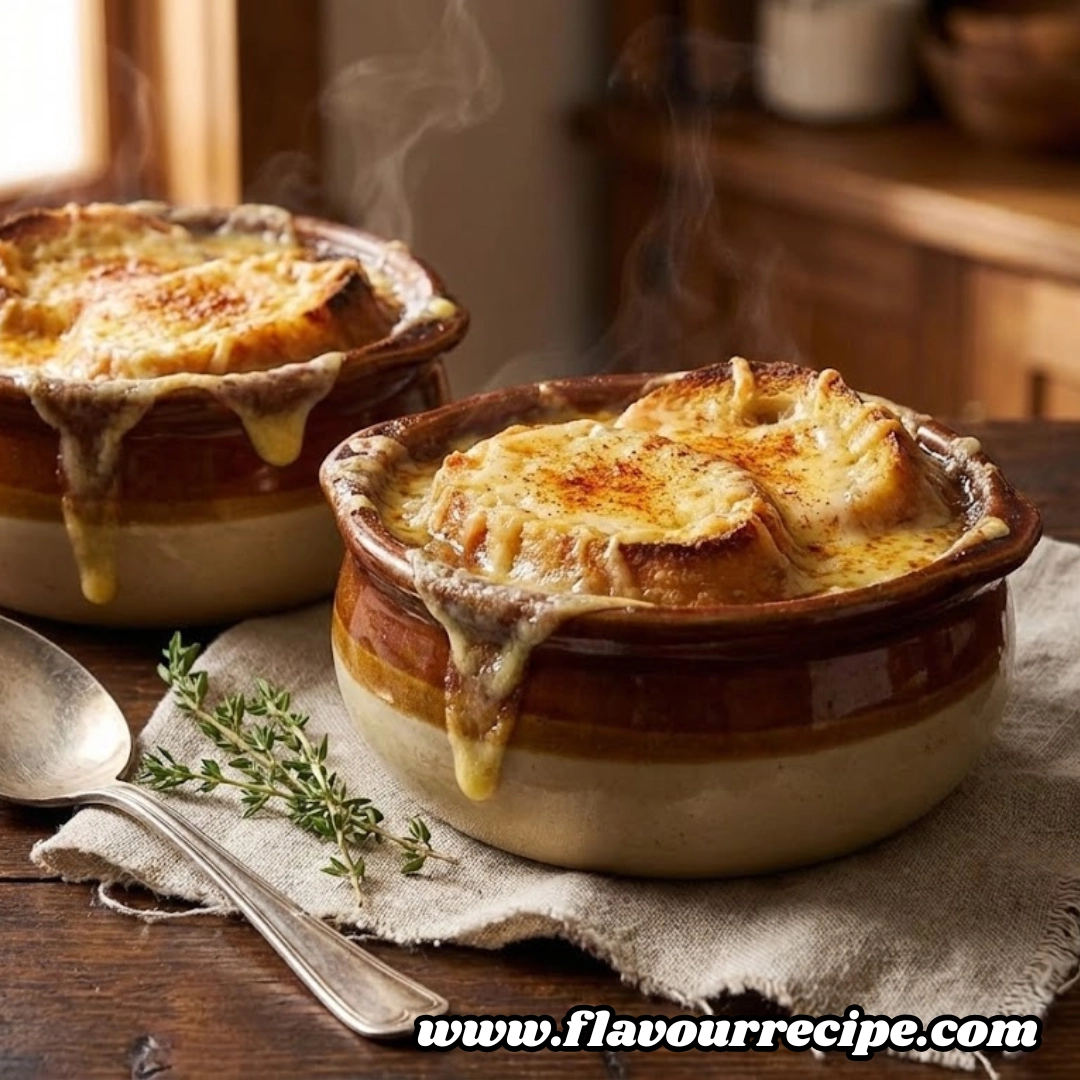
French Onion Soup Gratinée is much more than a simple bowl of broth and vegetables; it is a culinary masterpiece that celebrates the transformative power of patience and heat. This particular recipe has been a staple in kitchens for over thirty years, offering a depth of flavor that rivals the most prestigious Parisian bistros. By combining the natural sweetness of caramelized onions with a rich, savory broth and a decadent, melted cheese crust, you create a comfort food experience that is truly second to none. Whether you are hosting a formal dinner party or looking for a cozy meal on a chilly evening, this soup provides an exquisite presentation and a flavor profile that never fails to impress.
Table of Contents
Components for the Perfect Gratinée
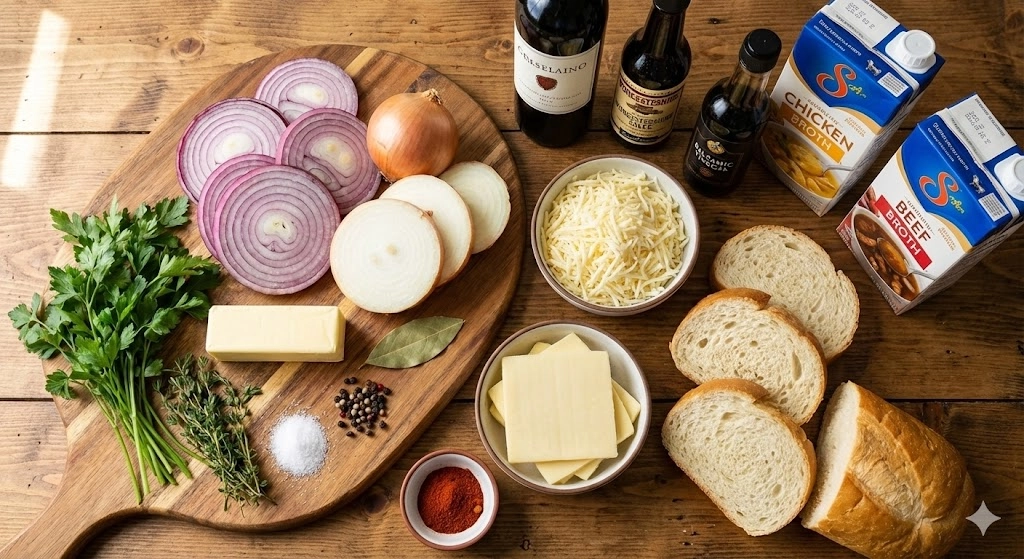
To achieve the restaurant-quality results this recipe promises, you will need to gather the following specific items. Ensure your cheeses are at room temperature to facilitate the perfect melt under the broiler.
- 4 tablespoons butter
- 2 large red onions, thinly sliced
- 2 large sweet onions, thinly sliced
- 1 teaspoon salt
- 48 fluid ounces chicken broth
- 14 ounces beef broth
- 1/2 cup red wine
- 1 tablespoon Worcestershire sauce
- 2 sprigs fresh parsley
- 1 sprig fresh thyme leaves
- 1 bay leaf
- 1 tablespoon balsamic vinegar
- Salt and freshly ground black pepper to taste
- 4 thick slices French bread
- 8 slices Gruyere cheese, at room temperature
- 1/2 cup shredded Asiago cheese, at room temperature
- 4 pinches paprika
Primary Preparation Directions
Follow these steps carefully to ensure the onions reach their full potential and the broth develops its signature complexity.
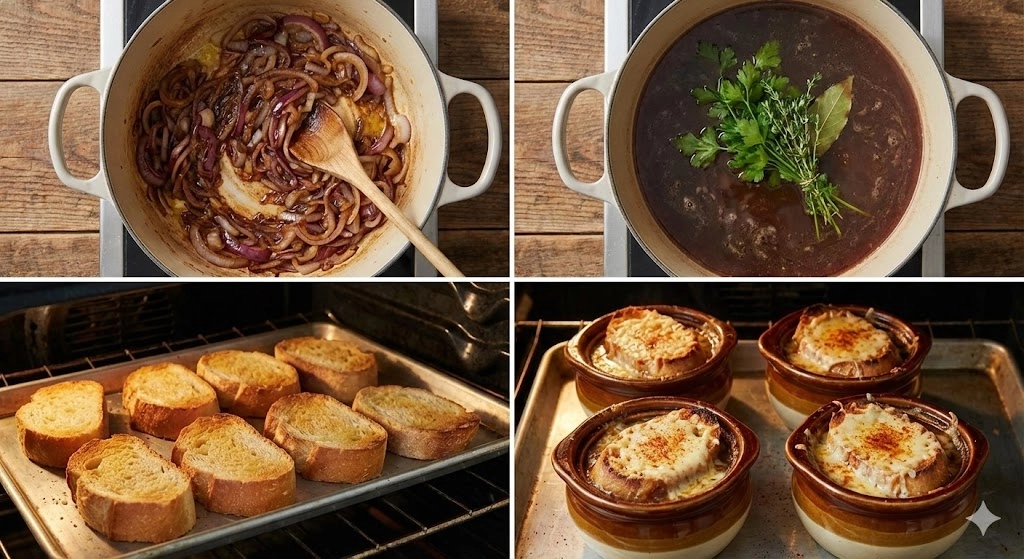
- Begin by melting the butter in a large pot over medium high heat. Once the butter is bubbling, stir in your sliced red onions, sweet onions, and the teaspoon of salt. You must cook these, stirring frequently, until the onions have fully caramelized and reached an almost syrupy consistency. This process should take approximately 35 minutes of careful attention.
- Next, pour in the chicken broth, beef broth, red wine, and the Worcestershire sauce. Take your fresh parsley, thyme, and the bay leaf and bundle them together securely with kitchen twine to create a bouquet garni. Add this herb bundle to the pot. Allow the mixture to simmer over medium heat for 20 minutes, stirring occasionally to marry the flavors. Once the simmering time is complete, remove and discard the herb bundle. Reduce your heat to low and stir in the balsamic vinegar. Season the soup with salt and pepper to your personal preference. Cover the pot to keep the soup warm while you move on to the bread.
- Position one of your oven racks approximately 6 inches from the heat source and preheat your oven broiler. Place the thick slices of French bread onto a baking sheet. Broil the bread, turning once, until both sides are well toasted and golden brown, which should take about 3 minutes. Leave the broiler on after removing the bread.
- Gather four large oven safe bowls or specialized soup crocks and place them on a rimmed baking sheet for stability. Fill each bowl two thirds of the way with the hot soup. Place one slice of the toasted French bread on top of the liquid in each bowl. Layer two slices of Gruyere ch1eese over the bread, and then distribute the shredded Asiago cheese evenly among the four bowls. Finish each with a pinch of paprika for color and a hint of spice.
- Place the baking sheet with the crocks back under the hot broiler. Cook for about 5 minutes until the cheese is bubbling and has turned a beautiful golden brown. The cheese should cascade over the sides of the crocks, creating a delicious and crusty seal. Serve the soup immediately while it is piping hot.
Mastering the Art of Caramelization and Flavor Balance
The heart and soul of any French Onion Soup Gratinée lie in the caramelization of the onions. This is not a process that can be rushed. When you add the red and sweet onions to the melted butter, you are initiating a complex chemical reaction known as the Maillard reaction. By including that initial teaspoon of salt, you are helping the onions release their moisture more effectively, which prevents them from burning while allowing their natural sugars to break down and brown.
The choice of using both red and sweet onions is deliberate. Sweet onions, like Vidalias, provide a high sugar content that creates that syrupy, jam-like texture. Red onions, on the other hand, offer a slightly sharper bite and a deep color that adds visual complexity to the final broth. As you stir the onions over the course of 35 minutes, you will notice them transition from translucent to a pale gold, and eventually to a deep, mahogany brown. This is where the foundation of the soup’s flavor is built.
Another critical element in this recipe is the use of both chicken and beef broth. While many traditional recipes rely solely on beef stock, the addition of chicken broth lightens the profile, preventing the soup from becoming overly heavy or cloying. The red wine and Worcestershire sauce add acidity and umami, respectively, which cuts through the richness of the butter and onions.
The addition of balsamic vinegar at the very end is a professional secret. Red onions have a tendency to turn a greyish hue when boiled in broth for extended periods. The acidity and dark pigment of the balsamic vinegar not only correct this color, making the soup look rich and vibrant, but also provide a final “pop” of flavor that balances the sweetness of the onions.
Strategic Tips for Culinary Success
Achieving the perfect gratinée topping requires a bit of finesse. When you are toasting your French bread, ensure it is truly “thick-cut.” If the bread is too thin, it will disintegrate into the soup before you even get it under the broiler. You want a sturdy vessel that can support the weight of the cheese while soaking up just enough broth to become tender but not mushy.
Temperature management is also key when dealing with Gruyere and Asiago. If you take the cheese directly from the refrigerator to the broiler, it may brown on the outside before it has a chance to fully melt and become gooey. By letting the cheese reach room temperature, you ensure a smooth, elastic melt that creates those iconic cheese strings when you lift your spoon.
When placing the crocks under the broiler, keep a very close eye on them. Every oven is different, and the transition from perfectly golden to burnt can happen in a matter of seconds. The paprika sprinkled on top isn’t just for flavor; it acts as a visual indicator. When the paprika starts to darken slightly and the cheese is vigorously bubbling, you know you have reached the peak of the gratinée.
Exploring Variations and Ingredient Alternatives
While the combination of Gruyere and Asiago is classic, there are several ways to adapt this recipe based on what you have in your pantry. If you cannot find Gruyere, a high quality Swiss cheese is an excellent substitute as it shares a similar nutty profile and melting point. If Asiago is unavailable, shredded mozzarella can provide that wonderful stretch, though it is milder in flavor, so you might want to add a bit more black pepper to compensate.
For the bread, while French bread is the traditional choice, a sturdy Italian loaf or even a sourdough boule can work beautifully. The key is the crust; you want something with enough structure to hold up against the liquid. If you are looking to change the flavor profile of the broth, some chefs prefer using a dry white wine instead of red for a crisper, more acidic finish, though the red wine provided in this recipe is what gives the soup its signature “bistro” depth.
If you find yourself without fresh herbs, you can use dried versions, but be cautious. Dried herbs are much more concentrated than fresh ones. A general rule of thumb is to use one third of the amount of dried herbs compared to fresh. However, for the best results in a long simmered soup like this, the fresh bouquet garni is highly recommended as it imparts a bright, aromatic quality that dried herbs often lack.
Optimal Serving Suggestions and Pairings
French Onion Soup Gratinée is a very rich dish, so it is often best served as a standalone starter or paired with lighter accompaniments. A crisp green salad with a simple lemon vinaigrette is the perfect partner, as the acidity of the dressing cleanses the palate between bites of the decadent, cheesy soup.
If you are serving this as a main course, consider a side of roasted vegetables or a light seafood dish. For beverage pairings, the red wine you used in the soup itself is usually a safe and delicious bet. A medium bodied red like a Merlot or a Cabernet Sauvignon complements the beefy notes of the broth. If you prefer white wine, a dry Chardonnay with a hint of oak can stand up to the richness of the Gruyere cheese.
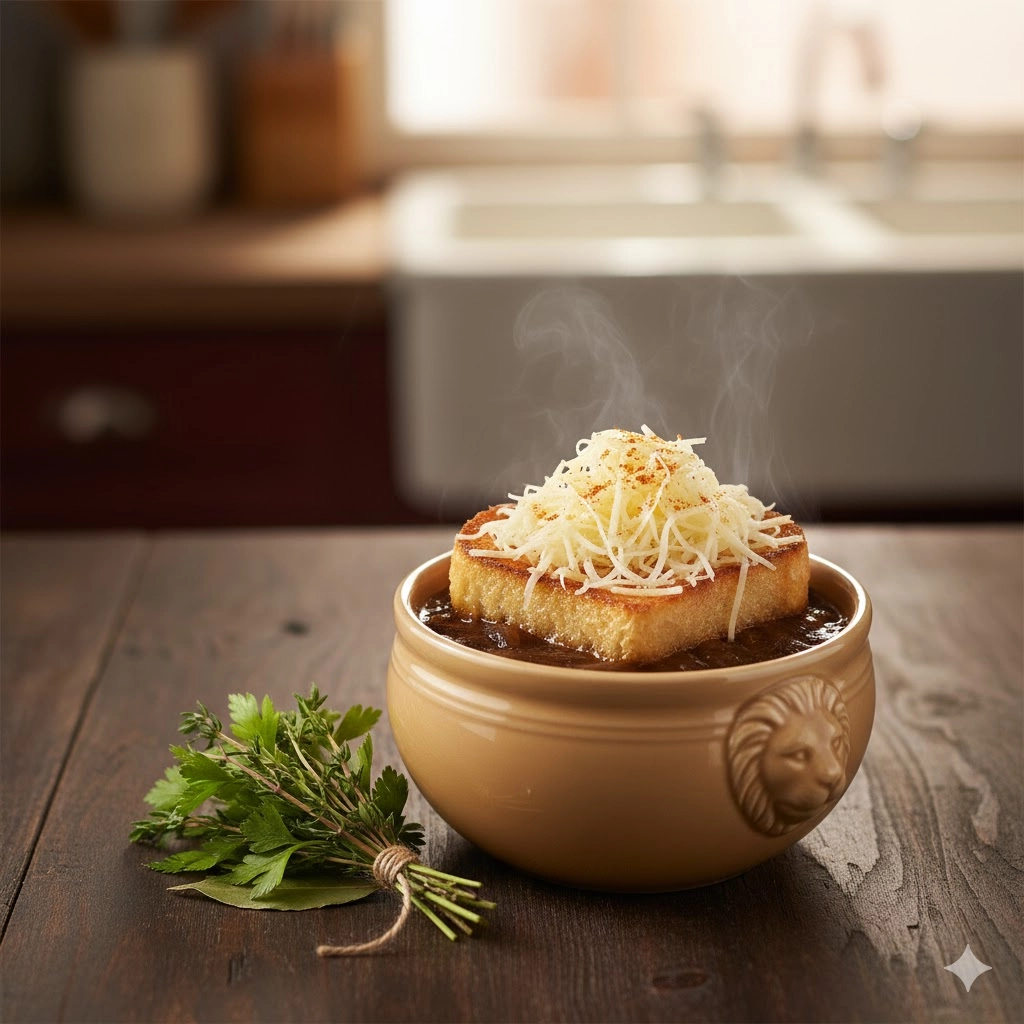
When it into the presentation, using the traditional lion-head soup bowls adds an air of authenticity to the meal. The way the cheese bubbles over the curved edges of these crocks is part of the visual appeal. Always serve the soup on a small saucer or underplate, as the crocks will be extremely hot coming out of the broiler, and the “cascading” cheese can be messy to handle without a secondary plate.
Managing the Process: Detailed Step-by-Step Breakdown
Let us dive deeper into the first phase: the onions. You will start with a mountain of sliced onions that might seem like too much for the pot. Don’t worry; onions are mostly water. As they hit the hot butter and salt, they will begin to wilt. For the first ten minutes, you are simply looking to soften them. Once the moisture starts to evaporate, you will see the volume of the onions decrease significantly. This is when you need to start stirring more frequently. You are looking for a deep “fond” or browned bits to form on the bottom of the pot. Stirring allows the onions to pick up these flavorful bits, distributing the color and taste evenly.
The simmering phase is equally important. When you add the liquids, use your wooden spoon to scrape the bottom of the pot vigorously. This is called deglazing, and it ensures that all those caramelized sugars from the onions are integrated into the broth. The herb bundle should be submerged but easy to retrieve. As the soup simmers for 20 minutes, the flavors of the thyme and parsley will infuse the broth, adding a layer of freshness that balances the heavy meat stocks.
Finally, the assembly phase is where the “gratinée” happens. Filling the bowls only two thirds full is a practical tip; it leaves enough room for the bread to float without the soup overflowing immediately. When you lay the cheese on, try to make sure it covers the edges of the bread and touches the sides of the crock. This is what allows the cheese to “anchor” itself to the bowl, creating that satisfying crust that you have to break through with your spoon.
Frequently Asked Culinary Questions
What is the best way to slice onions for this soup to ensure they cook evenly?
The best way to slice onions for a French Onion Soup is to cut them from pole to pole (root to stem) rather than into rings. Slicing with the grain of the onion helps the pieces maintain their structural integrity during the long caramelization and simmering process. If you slice them into rings, they are more likely to break down into a mushy consistency. Aim for slices that are about one eighth of an inch thick for the perfect balance of texture.
Can I prepare the soup base ahead of time for a dinner party?
Absolutely, and many would argue the soup actually tastes better the next day. You can complete the entire process through step two, which involves simmering the broth and adding the balsamic vinegar. Once the soup has cooled, store it in the refrigerator for up to two days. When you are ready to serve, simply reheat the soup on the stovetop until it is steaming hot, then proceed with the bread toasting and the broiler steps. This makes it an excellent choice for entertaining.
Why does my cheese sometimes sink into the soup instead of staying on top?
If your cheese is sinking, it is usually because the bread slice was too small or too thin, or the soup wasn’t hot enough to keep the bread buoyant. The bread acts as a raft for the cheese. Ensure your French bread slices are at least one inch thick and toasted until they are quite firm. Additionally, if you use room temperature cheese, it starts to melt the moment it hits the hot bread and soup, which helps it spread out and grip the sides of the crock rather than weighing down the center.
Is it possible to make this recipe without red wine?
While the red wine adds a specific depth and acidity, you can omit it if necessary. If you choose to leave out the wine, you might want to add an extra tablespoon of balsamic vinegar or a splash of beef consommé to make up for the lost complexity. However, the alcohol in the wine mostly evaporates during the simmering process, leaving behind only the concentrated grape flavors and tannins that define a classic French onion soup.
Nutritional Profile and Information
Please note that these values are estimates based on standard serving sizes and specific ingredient brands. Actual nutritional content may vary depending on the exact products used in your kitchen.
| Nutrient | Amount Per Serving |
| Calories | 618 |
| Total Fat | 36 grams |
| Saturated Fat | 21 grams |
| Cholesterol | 105 milligrams |
| Sodium | 2250 milligrams |
| Total Carbohydrates | 39 grams |
| Dietary Fiber | 4 grams |
| Sugars | 12 grams |
| Protein | 30 grams |
| Vitamin D | 2 micrograms |
| Calcium | 650 milligrams |
| Iron | 3 milligrams |
| Potassium | 450 milligrams |
Nutritional Disclaimer
The nutritional information provided is an estimate intended for educational purposes only. If you have specific dietary requirements or health concerns, it is always best to calculate the nutrition based on the exact ingredients and measurements you use.
A Final Note on This Culinary Tradition
Creating a French Onion Soup Gratinée from scratch is a rewarding experience that fills your home with the incredible aroma of sweet onions and savory herbs. It is a dish that rewards the patient cook, proving that simple ingredients like onions and bread can be elevated into something truly extraordinary with the right technique. As the cheese bubbles and browns under the broiler, you are participating in a long-standing culinary tradition that values flavor and texture above all else. We hope this recipe becomes a favorite in your household, bringing warmth and satisfaction to your table for many years to come. Enjoy every spoonful of this rich, gooey, and heart-warming classic.
PrintFrench Onion Soup Gratinée

This exquisite French Onion Soup Gratinée features deeply caramelized red and sweet onions in a rich broth, topped with a thick slice of toasted bread and a decadent, melted crust of Gruyère and Asiago cheese.
- Prep Time: 15 mins
- Cook Time: 1 hour
- Total Time: 1 hour 15 mins
- Yield: 4 servings 1x
- Category: Soup
- Method: Stovetop and Broiler
- Cuisine: French
Ingredients
4 tablespoons butter
2 large red onions, thinly sliced
2 large sweet onions, thinly sliced
1 teaspoon salt
48 fluid ounce can chicken broth
14 ounce can beef broth
1/2 cup red wine
1 tablespoon Worcestershire sauce
2 sprigs fresh parsley
1 sprig fresh thyme leaves
1 bay leaf
1 tablespoon balsamic vinegar
salt and freshly ground black pepper to taste
4 thick slices French bread
8 slices Gruyère cheese, at room temperature
1/2 cup shredded Asiago cheese, at room temperature
4 pinches paprika
Instructions
1. Melt butter in a large pot over medium-high heat. Stir in onions and salt. Cook, stirring frequently, until onions are caramelized and almost syrupy, about 35 minutes.
2. Stir in chicken broth, beef broth, red wine, and Worcestershire sauce. Add the bundled parsley, thyme, and bay leaf. Simmer over medium heat for 20 minutes.
3. Remove and discard herb bundle. Reduce heat to low; stir in balsamic vinegar and season with salt and pepper. Keep warm.
4. Preheat broiler. Arrange bread slices on a baking sheet and broil until toasted on both sides, about 3 minutes.
5. Fill 4 oven-safe bowls 2/3 full with hot soup. Top each with 1 toasted bread slice, 2 slices Gruyère, and 1/4 of the Asiago. Sprinkle with paprika.
6. Broil for about 5 minutes until cheese is bubbly, golden brown, and cascading over the sides.
Notes
Do not skip the balsamic vinegar; it corrects the color of the red onions and adds depth.
Ensure cheeses are at room temperature for the smoothest melt.
Use thick-cut bread to prevent it from becoming too soft in the broth.
Nutrition
- Serving Size: 1 bowl
- Calories: 618
- Sugar: 12g
- Sodium: 2250mg
- Fat: 36g
- Saturated Fat: 21g
- Unsaturated Fat: 15g
- Trans Fat: 0g
- Carbohydrates: 39g
- Fiber: 4g
- Protein: 30g
- Cholesterol: 105mg