
The classic tuna casserole holds a special place in the American culinary canon—it’s the quintessential dish for a comforting, no-fuss dinner. This recipe resurrects that nostalgic favorite, built on a foundation of creamy sauce, tender pasta, and savory flaked tuna, all capped with a satisfying, golden-brown topping. Unlike some versions that can taste thin or overly processed, this approach ensures a rich, deeply flavored sauce that truly elevates the humble ingredients. It is the perfect meal for busy evenings when you need something hearty on the table in under an hour, or as a cozy dish to share on a cold, rainy Sunday. This Easy Tuna Casserole delivers on flavor, texture, and pure, uncomplicated satisfaction.
Table of Contents
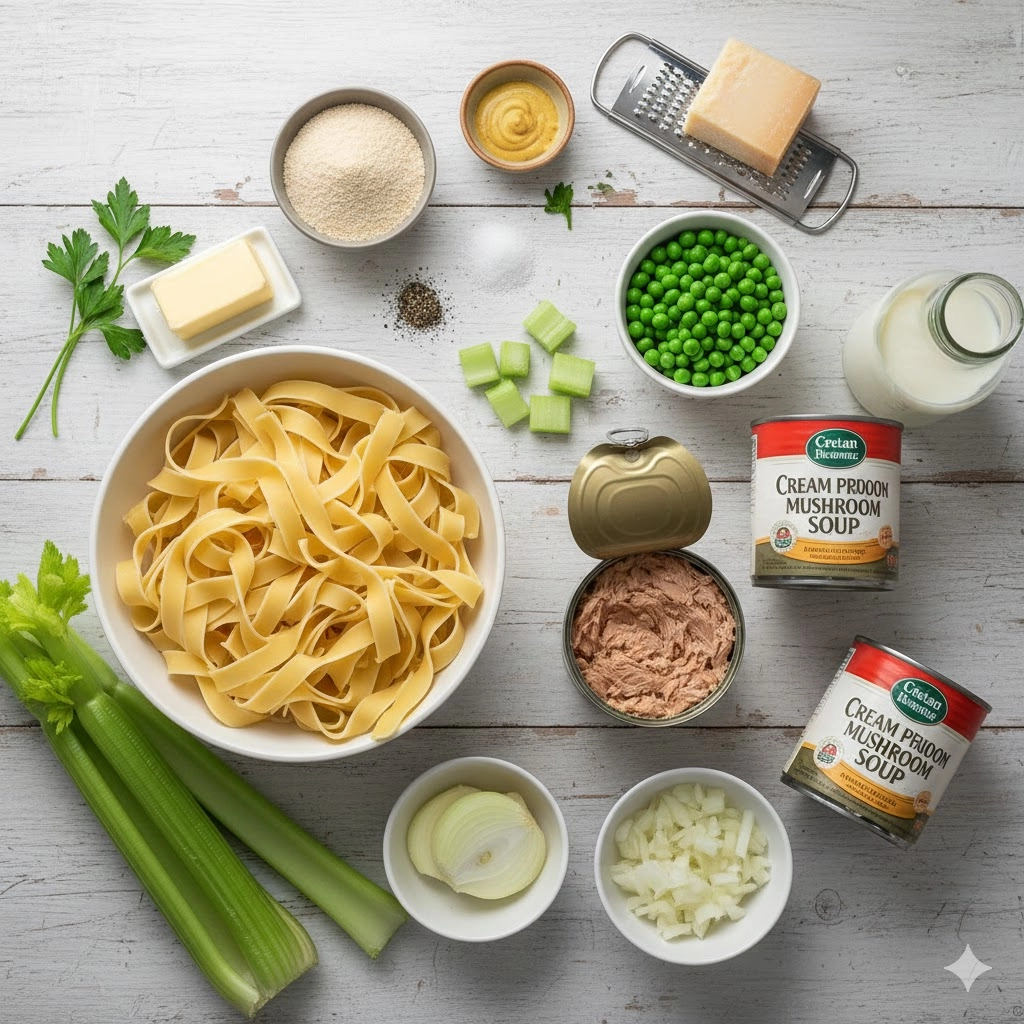
Ingredients for a Hearty Dinner
This recipe yields six generous servings.
From the Pantry and Fridge
- 1 (12-ounce) package wide egg noodles
- 1 tablespoon unsalted butter
- 1 large yellow onion, finely diced
- 1 cup finely sliced celery
- 2 (10.5-ounce) cans cream of mushroom soup
- 1 cup whole milk
- 1 teaspoon Dijon mustard
- 1/2 teaspoon freshly ground black pepper
- 1/4 teaspoon kosher salt
- 2 (5-ounce) cans tuna in water, drained well and flaked
The Crunchy Topping
- 1/2 cup panko breadcrumbs
- 1/4 cup grated Parmesan cheese
- 2 tablespoons unsalted butter, melted
The Cooking Sequence: A Streamlined Method
Follow these numbered steps for a smooth preparation flow. Note that all oven steps are written out to avoid formatting issues.
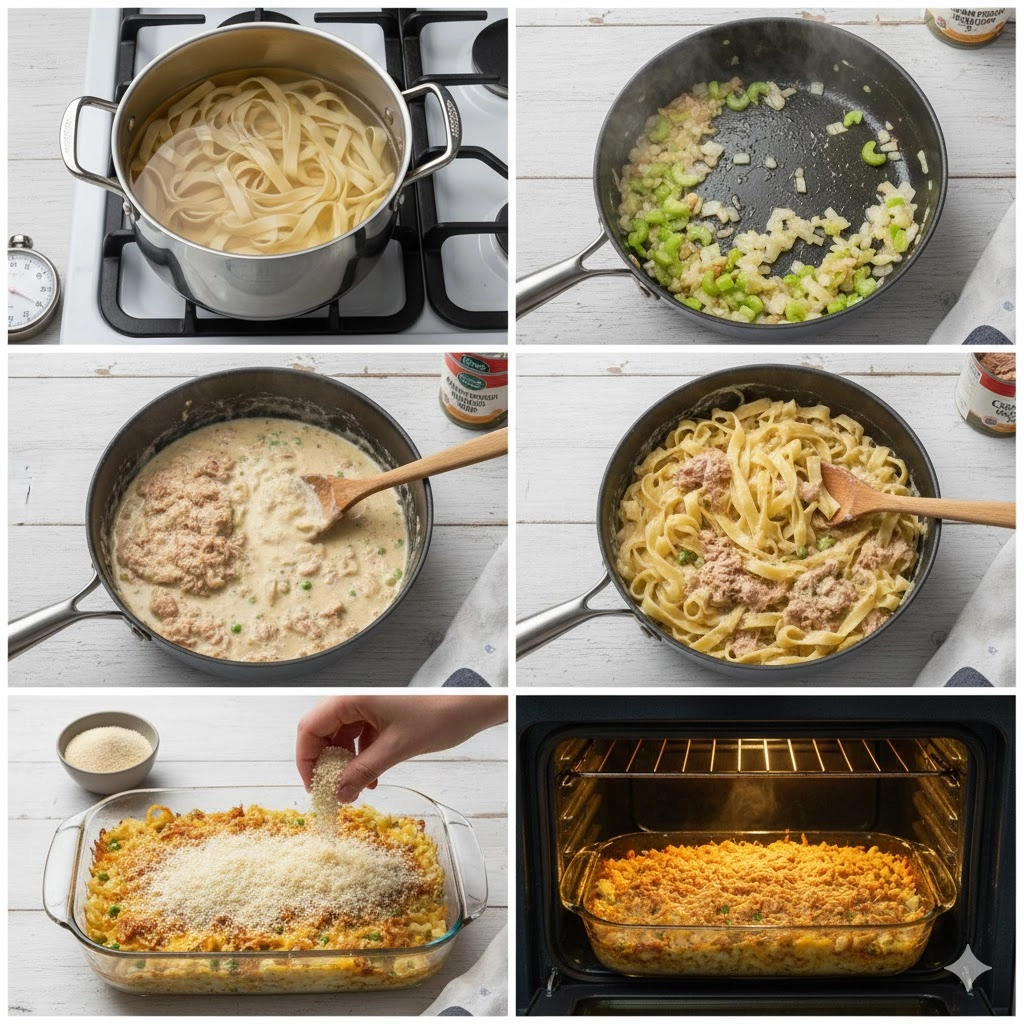
- Prepare the Noodles and Preheat: Cook the egg noodles in a large pot of salted, boiling water according to package directions until they are al dente. While they cook, preheat your oven to three hundred fifty Fahrenheit.
- Sauté the Aromatics: In a large saucepan, melt the one tablespoon of butter. Add the diced onion and sliced celery. Sauté over medium heat until the onion is translucent and the celery has softened, which should take about eight to ten minutes.
- Build the Sauce Base: Stir in the two cans of cream of mushroom soup, the whole milk, Dijon mustard, salt, and pepper. Bring the mixture to a gentle simmer, stirring constantly, then remove it from the heat.
- Combine Ingredients: Drain the cooked noodles well. Add the drained noodles and the flaked tuna to the saucepan with the creamy mushroom mixture. Fold gently until everything is evenly coated.
- Assemble and Top: Transfer the entire mixture into a standard nine-by-thirteen-inch baking dish. In a small bowl, combine the panko breadcrumbs, Parmesan cheese, and the two tablespoons of melted butter. Sprinkle this mixture evenly over the casserole.
- Bake Until Golden: Place the casserole in the preheated oven and bake for twenty-five to thirty minutes. The casserole is done when the sauce is bubbling around the edges and the topping is deeply golden brown and crisp.
- Rest and Serve: Remove the casserole from the oven and allow it to rest for five to ten minutes before serving. This brief rest time allows the sauce to settle and thicken.
Beyond the Steps: Mastering the Casserole
While the instructions are straightforward, understanding the nuances of temperature, texture, and timing is what separates a good casserole from a truly memorable one.
Perfecting the Egg Noodles
The instruction calls for cooking the egg noodles until they are al dente. This is a critical step. Since the noodles will continue to absorb liquid and cook further in the oven, pulling them out when they still have a slight bite prevents them from becoming mushy later. Overcooked pasta is the most common textural mistake in casseroles. When you drain them, give them a quick, light rinse with hot water—this removes excess starch but doesn’t cool them down too much, helping them incorporate smoothly into the hot sauce base.
The Art of the Sauté
The initial sautéing of the onion and celery is where the foundational flavor of your casserole is built. Sautéing them slowly until translucent, rather than rushing to brown them, coaxes out their subtle sweetness and ensures they are fully tender. Look for the onions to become almost clear, and the celery to yield easily to a fork. If you skip this step or undercook the vegetables, they will remain too firm and distract from the casserole’s overall creamy, tender texture. The aroma in your kitchen should shift from sharp onion to a mellow, savory scent as this step progresses.
Integrating the Sauce
When adding the milk and soup base, keep the heat on medium-low. The goal is a gentle simmer, not a vigorous boil, which could cause the canned soup to separate or burn on the bottom. When you remove the sauce from the heat and incorporate the tuna and noodles, fold the mixture gently. This isn’t a batter; rough stirring will break up the delicate tuna flakes, turning the dish into a mash. We want distinct pieces of tuna and noodle segments suspended in the sauce. The final texture should be uniformly creamy and moist, without any dry patches.
Achieving a Superior Topping
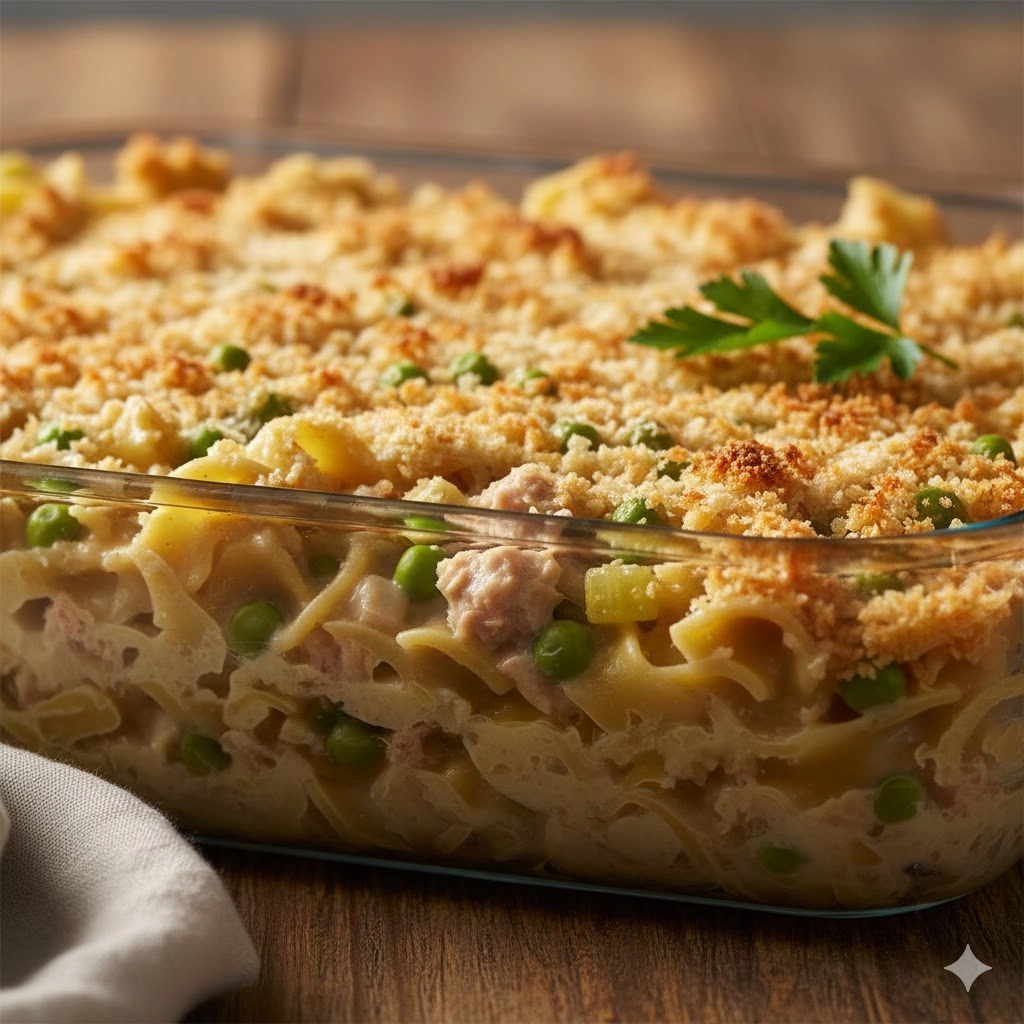
A classic casserole topping provides a crucial textural contrast to the creamy interior. The combination of panko and Parmesan is superior to crackers alone. Panko breadcrumbs are Japanese-style crumbs that are larger and flakier than standard breadcrumbs, which is why they stay crispier longer in the oven. The melted butter acts as the binder and fat source, ensuring even browning, while the Parmesan adds a salty, umami depth to the crunch. When sprinkling the mixture, aim for an even, thin layer. A topping that is too thick will become dry and hard; a thin, even dusting will bake into a perfectly crisp, golden crust. The visual cue of doneness is a deep, rich gold-brown hue, and the sound of the sauce lightly bubbling up through the edges of the topping.
Culinary Insights: Tips from a Home Cook
Here are five specific tips to ensure your casserole reaches its maximum potential, moving beyond the standard recipe card.
- Tuna Selection Matters: Always use high-quality, oil-packed tuna if possible, even though the recipe calls for water-packed. If you use oil-packed, drain it extremely well, but the richness it lends is unparalleled. If sticking to water-packed, make absolutely sure it is squeezed dry, as any excess water will thin out your sauce.
- The Power of Shallots: For a more refined, sweeter aromatic flavor, substitute one large shallot for half of the yellow onion. Shallots break down beautifully and offer a subtle complexity that works wonderfully with the cream of mushroom soup base.
- Fresh Herb Finish: While not traditional, a final sprinkle of fresh, chopped flat-leaf parsley or chives, added after the casserole comes out of the oven, adds a bright, necessary pop of freshness that cuts through the richness. Do not add them before baking, as they will turn brown and bitter.
- Preventing a Dry Casserole: If your casserole mix looks a little tight (too dry) before it goes into the oven, add an extra splash (up to one-quarter cup) of milk or even a few tablespoons of the pasta cooking water. The mixture should appear very moist, as the noodles will absorb a significant amount of the liquid during baking.
- Pre-Shredded Cheese Caution: Avoid using pre-shredded cheese in the sauce itself. Pre-shredded products often contain anti-caking agents that can make the sauce grainy. If you decide to add cheese to the sauce, shred it fresh from the block for the best melting properties.
Creative Spins and Substitutions
This adaptable dish is easily modified to suit different preferences, pantries, or dietary needs.
Using Different Fish or Protein
While tuna is classic, canned salmon or even shredded rotisserie chicken can be swapped in for a different flavor profile. If using chicken, ensure it is unseasoned to let the mushroom sauce shine. If you are aiming for a vegetarian dish, substitute the tuna with one can of well-drained, rinsed white beans (like cannellini) or one cup of thawed, drained frozen peas and carrots.
Varying the Noodles
Any medium-sized, sturdy pasta shape will work in place of the egg noodles, though the wide egg noodle is traditional because its texture and shape hold the sauce particularly well. Try shell pasta, penne, or even rotini. Ensure the cook time in the boiling water is adjusted for the specific pasta chosen.
Adding Vegetables
To increase the nutrient profile, feel free to fold in one cup of frozen peas and one-half cup of sliced canned mushrooms (drained) along with the tuna and noodles. Adding them frozen and well-drained allows them to cook perfectly during the baking time without becoming waterlogged.
Making a Homemade Sauce
For those who wish to move away from canned soup, a simple Mornay-style sauce (a Béchamel with cheese) can be used. Prepare a roux with four tablespoons of butter and four tablespoons of flour, then whisk in two cups of milk until thick. Season with salt, pepper, and a pinch of nutmeg, then whisk in one cup of grated Gruyère or sharp Cheddar before proceeding with the recipe.
Pairing the Meal: How to Serve
A rich, creamy casserole benefits greatly from simple, contrasting side dishes that provide brightness and texture.
- A Crisp Green Salad: A simple salad of mixed greens, shaved cucumber, and a light, zesty vinaigrette (lemon juice, olive oil, and a touch of garlic) cuts through the richness of the cream sauce, providing palate relief.
- Steamed Asparagus or Green Beans: Serving a lightly steamed vegetable, seasoned only with salt, pepper, and a pat of butter, offers a fresh, fibrous counterpoint to the soft, comforting texture of the casserole.
- A Slice of Garlic Toast: While already starchy, a crusty piece of toasted French bread brushed with butter and garlic powder is a wonderful utensil for scooping up any remaining creamy sauce.
Common Questions About Casserole Preparation
Can I prepare tuna casserole ahead of time?
Yes, you can assemble the entire casserole up to the point of adding the topping, then cover it tightly and refrigerate it for up to twenty-four hours. When ready to bake, add the topping and bake as directed, but you may need to add ten to fifteen minutes to the total cook time since the dish is cold.
How should I store leftovers?
Leftover casserole should be stored in an airtight container in the refrigerator and consumed within three to four days. For best results when reheating, use an oven or toaster oven set to three hundred twenty-five Fahrenheit until heated through, which helps the topping re-crisp. Microwaving is faster but will result in a softer topping.
Can I freeze tuna casserole?
Freezing is possible, but the texture of the sauce may change slightly upon thawing, sometimes becoming a little grainy. To freeze, assemble the casserole completely, but do not add the topping. Wrap it tightly in plastic wrap and foil. It can be frozen for up to three months. Thaw overnight in the refrigerator, add the topping, and then bake.
What is the best way to keep the topping crisp?
The key to a crisp topping is a combination of proper ingredients (like panko) and making sure the casserole is baked uncovered. If you find your topping is browning too quickly before the casserole is fully heated through, loosely tent it with a piece of aluminum foil for the last ten minutes of baking.
Nutritional Breakdown
The figures below are estimates based on the ingredients and serving size listed.
| Nutrient | Amount per Serving |
| Calories | 420 kcal |
| Protein | 30 g |
| Carbs | 42 g |
| Fat | 16 g |
| Fiber | 3 g |
| Sugar | 6 g |
| Sodium | 750 mg |
Disclaimer
Nutrition information is an estimate and may vary based on preparation and ingredients used.
PrintEasy Tuna Casserole: The Beloved Weeknight Classic
The classic tuna casserole is the ultimate comfort food. This recipe delivers a rich, creamy mushroom sauce with tender egg noodles and savory tuna, all topped with a crispy panko-Parmesan crust. Perfect for a busy weeknight or a cozy family dinner.
- Prep Time: 15 mins
- Cook Time: 30 mins
- Total Time: 45 mins
- Yield: 6 servings 1x
- Category: Main Dish
- Method: Baked Casserole
- Cuisine: American
Ingredients
1 (12-ounce) package wide egg noodles
1 tbsp unsalted butter
1 large yellow onion, finely diced
1 cup finely sliced celery
2 (10.5-ounce) cans cream of mushroom soup
1 cup whole milk
1 tsp Dijon mustard
1/2 tsp freshly ground black pepper
1/4 tsp kosher salt
2 (5-ounce) cans tuna in water, drained well and flaked
1/2 cup panko breadcrumbs
1/4 cup grated Parmesan cheese
2 tbsp unsalted butter, melted
Instructions
1. Cook egg noodles al dente. Preheat oven to 350 Fahrenheit.
2. Sauté onion and celery in 1 tbsp butter until soft (8–10 minutes).
3. Stir in mushroom soup, milk, mustard, salt, and pepper. Bring to a gentle simmer, then remove from heat.
4. Drain noodles. Add noodles and flaked tuna to the sauce. Fold gently to combine.
5. Transfer mixture to a 9×13 baking dish.
6. Combine panko, Parmesan, and 2 tbsp melted butter; sprinkle over the top.
7. Bake for 25–30 minutes until bubbling and topping is golden brown and crisp.
8. Rest for 5–10 minutes before serving.
Notes
To avoid a mushy texture, ensure the egg noodles are cooked only until al dente.
Squeeze the canned tuna very dry before adding it to the mixture.
If the mix looks too dry before baking, add an extra quarter cup of milk.
Store leftovers in the refrigerator for up to four days.
Nutrition
- Serving Size: 1 bowl
- Calories: 420
- Sugar: 6g
- Sodium: 750mg
- Fat: 16g
- Saturated Fat: 8g
- Unsaturated Fat: 6g
- Carbohydrates: 42g
- Fiber: 3g
- Protein: 30g
- Cholesterol: 75mg