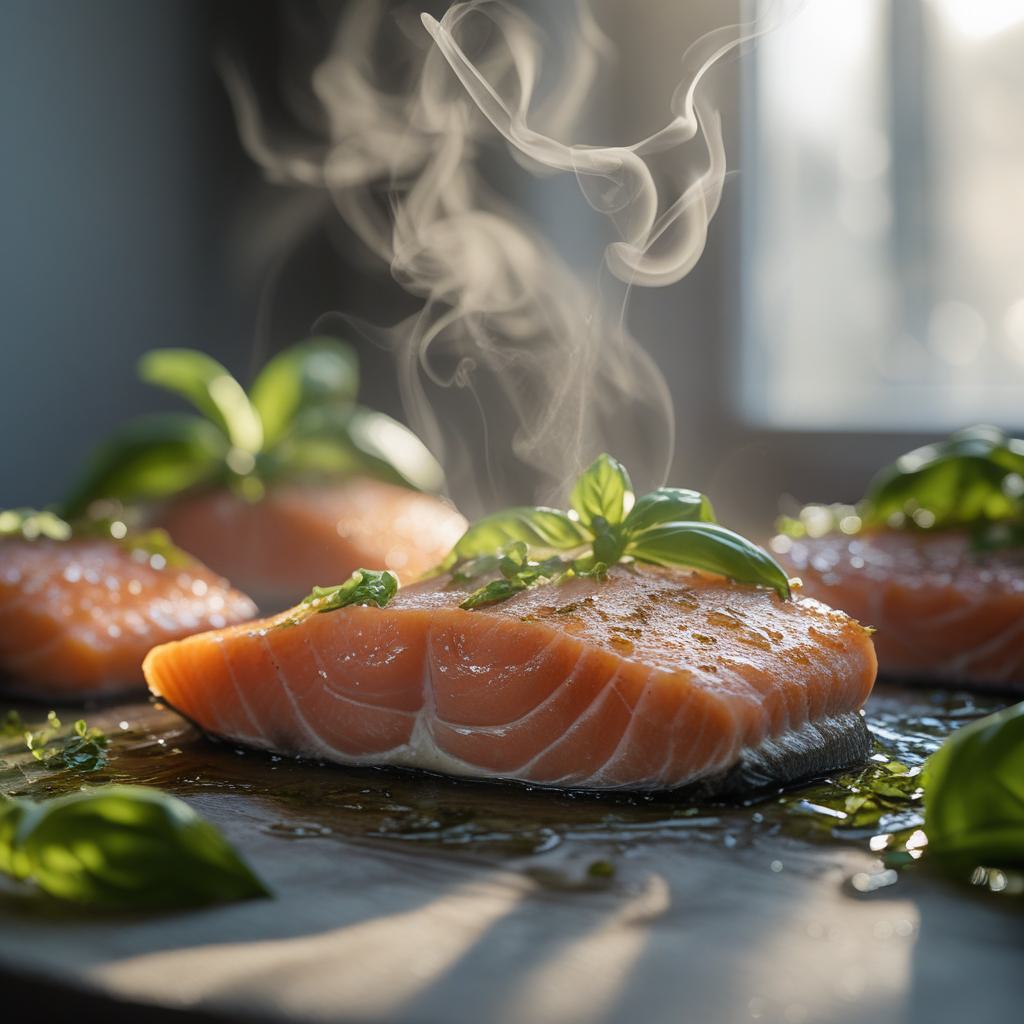
The moment tomato meets basil in a hot pan, the kitchen transforms. It begins with a sharp hiss—olive oil dancing across stainless steel—then comes the sweet, herbaceous perfume of fresh basil leaves wilting against caramelized garlic. This aromatic alchemy forms the foundation of Tomato Basil Salmon, a dish where oceanic richness collides with Mediterranean brightness in perfect harmony.
Imagine wild-caught salmon fillets, their coral flesh glistening, meeting a blistering hot pan. The skin contracts, crisping into golden lace while the flesh stays succulent. Then the crescendo: ruby-red cherry tomatoes bursting into jammy pockets, releasing tangy sweetness that cuts through the salmon’s fatty depth. Deglazed with white wine, the sauce emulsifies into velvet, clinging to each forkful. This isn’t just dinner; it’s a sensory sonata—bright acidity balancing unctuous texture, earthy basil grounding the dish’s vibrancy. In chef circles, it’s known as “the Elevator Pitch of Seafood”: simple enough for weeknights yet sophisticated enough for Michelin-starred menus.
Table of Contents
Ingredient Deep Dive
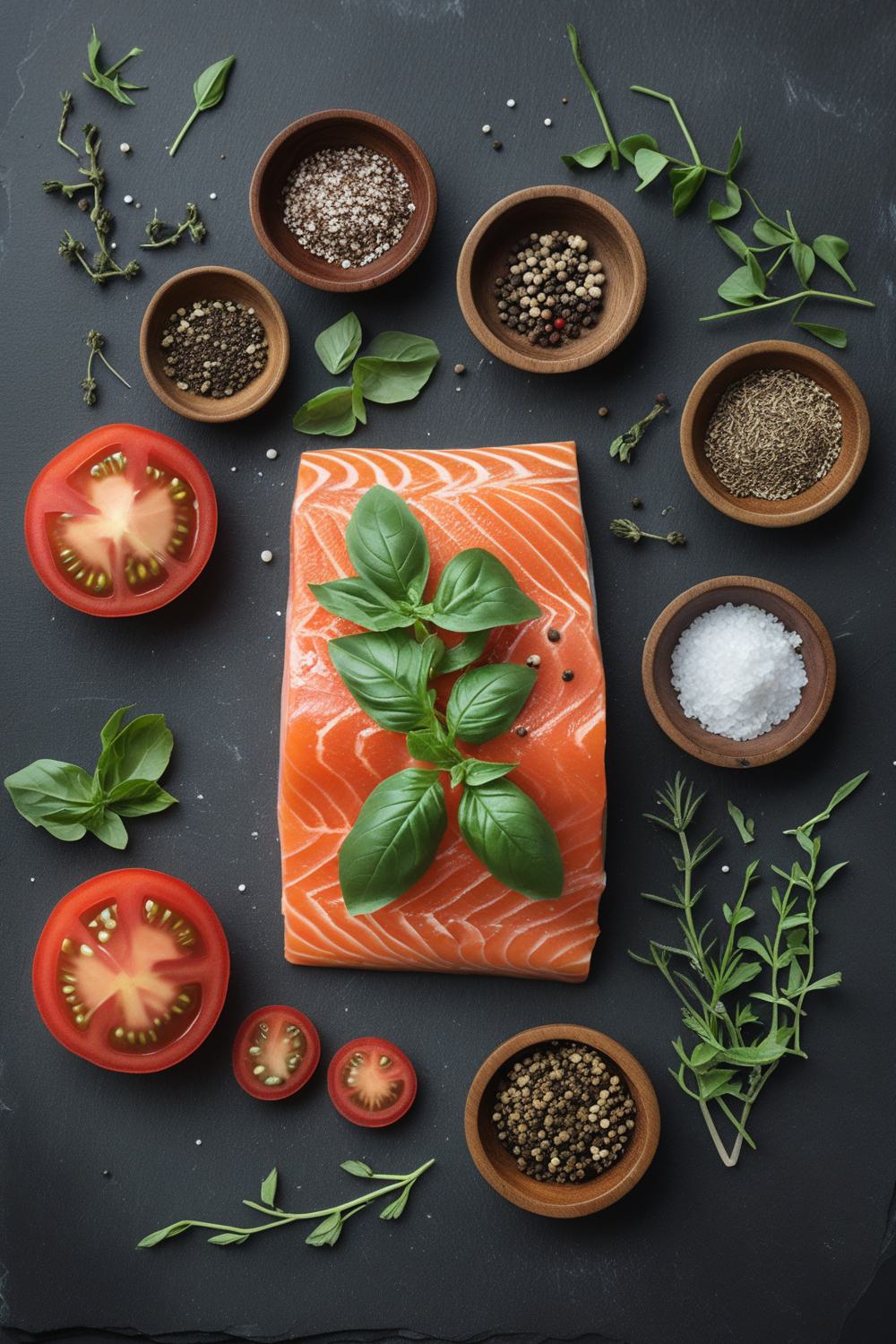
Every element here is intentional. Salmon’s omega-3 fats crave acidity, tomatoes provide it, and basil bridges them. Let’s dissect:
| Ingredient | Quantity | Purpose |
|---|---|---|
| Wild salmon fillets | 2 (6 oz each) | High-fat content prevents drying; collagen-rich skin crisps best |
| Cherry tomatoes | 1.5 cups | Concentrated sugars caramelize faster than larger varieties |
| Fresh basil | 1/2 cup, packed | Volatile oils (eugenol, linalool) infuse fats without bitterness |
| Dry white wine | 1/4 cup | Acetic acid deglazes fond; alcohol extracts fat-soluble flavors |
| Cold butter | 2 tbsp | Emulsifies sauce via milk solids; adds glossy mouthfeel |
| Garlic | 3 cloves | Alliinase enzyme activates when crushed, creating savory depth |
Salmon selection is non-negotiable. Farmed Atlantic salmon lacks the muscle density of wild-caught (think Sockeye or King). Its higher fat renders inconsistently, steaming rather than searing. Cherry tomatoes’ cell walls rupture at 180°F, releasing pectins that thicken the sauce naturally—no flour needed. Basil added off-heat preserves its chlorophyll brightness, avoiding the muddy tones of overcooked herbs.
Substitutions & Swaps
For gluten-free needs, verify soy sauce labels if adding umami (some brands use wheat). Vegan? Substitute salmon with marinated king oyster mushrooms or pressed extra-firm tofu. Sear until caramelized, mimicking salmon’s Maillard reaction. No fresh basil? Use 1 tsp dried basil added early, but boost freshness with parsley or mint garnish. Cherry tomatoes can swap for sun-dried tomatoes (rehydrated in wine) or roasted red peppers for sweeter profiles. Olive oil can replace butter for dairy-free, though sauce will be thinner—thicken with a cornstarch slurry if desired.
Equipment Guide
Your pan dictates texture. Cast-iron (like Lodge 10”) retains heat for consistent searing but requires preheating for 5 minutes on medium-high. Non-stick pans (All-Clad D3) offer easy release but won’t develop a robust fond. Stainless steel (Demeyere Atlantis) is ideal—reactive enough for deglazing, non-reactive coating unnecessary. Use fish spatula’s thin edge to flip fillets without tearing skin. Instant-read thermometer (Thermapen) is crucial; salmon transitions from underdone to overdone in 90 seconds. A microplane zester finely grates garlic without bitter cellulose bits.
Step-by-Step Walkthrough
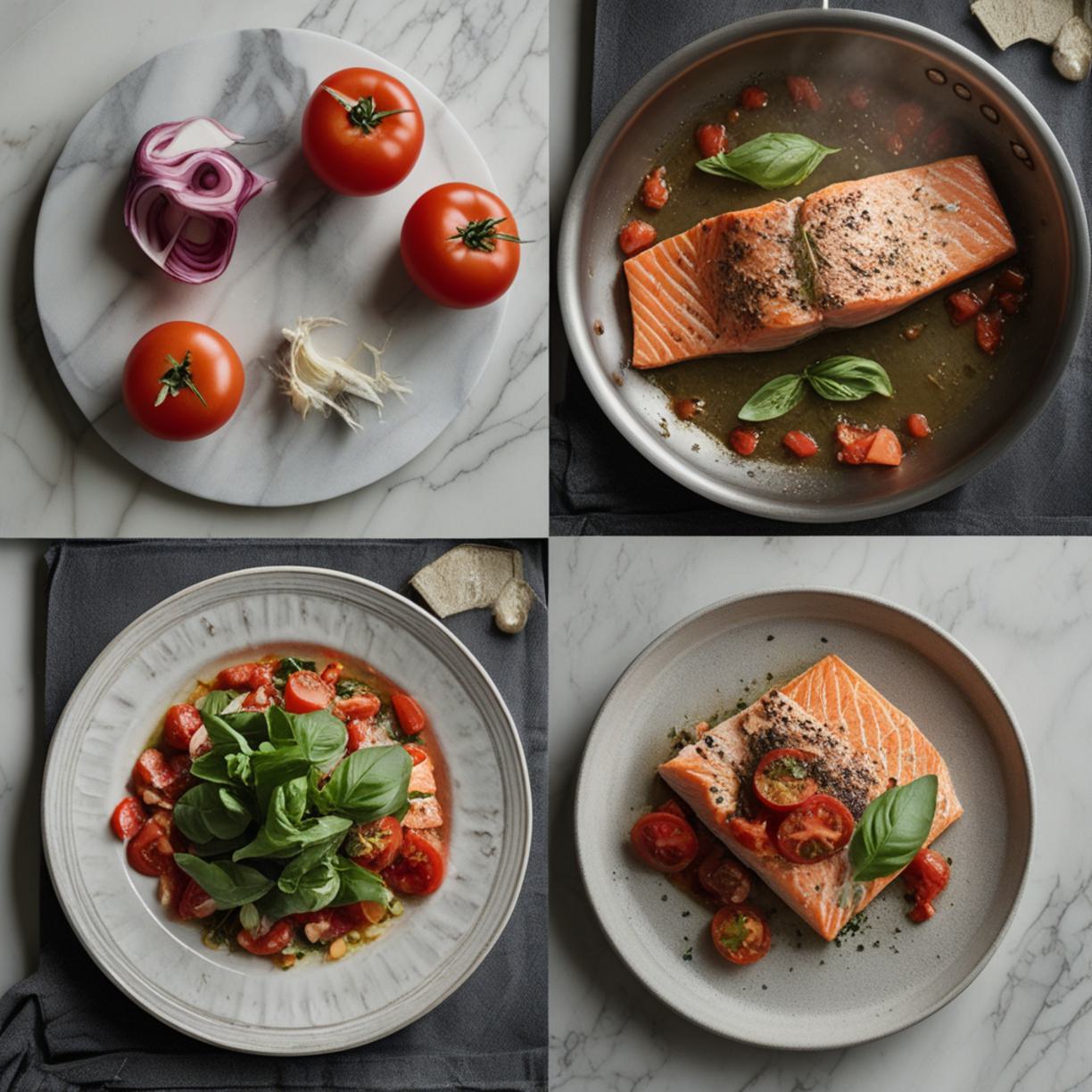
- Prep: Pat salmon dry. Season skin with salt (draws out moisture for crispness), flesh with pepper.
- Sear: Heat oil until shimmering. Lay salmon skin-down; press gently with spatula for 30 seconds to prevent curling. Cook 4 minutes untouched.
- Flip: When skin releases easily, flip. Sear flesh side 1 minute. Transfer to plate.
- Tomatoes & Garlic: Add tomatoes to pan. Cook until blistered (4 mins). Add minced garlic; sauté 30 seconds.
- Deglaze: Pour wine, scraping browned bits. Reduce by half (2 mins).
- Finish Sauce: Off heat, swirl in butter until emulsified. Stir in basil.
- Plate: Return salmon skin-side up to sauce. Spoon tomatoes over. Rest 2 minutes.
Crisp Skin Secret: Salt draws moisture from skin. Let salted fillets sit uncovered in the fridge for 15 minutes before cooking. This dehydrates the surface, ensuring shatter-crisp results.
Timing Precision: Salmon cooks to perfection at 125°F internally. Insert thermometer horizontally into the thickest part. Residual heat carries it to 130°F—the USDA’s safe minimum—during resting.
Sauce Mastery: Cold butter emulsifies best. Swirl cubes in gradually, letting each melt before adding more. If sauce breaks, whisk in 1 tsp hot water to re-bind.
Expert Tips & Troubleshooting
Problem: Soggy skin. Fix: Dry fillets thoroughly. Ensure pan is hot enough—oil should ripple but not smoke. No overcrowding; cook in batches if needed.
Problem: Overcooked salmon. Fix: Pull at 115°F for well-done haters. Carryover heat finishes cooking. For medium-rare, aim for 120°F pre-rest.
Pro Tip: Infuse oil. Steep basil stems in oil for 24 hours pre-cooking. Discard stems; use flavored oil for searing.
Wine Swap: No white wine? Use 1 tbsp lemon juice + 3 tbsp broth. Acidity is key.
Flavor Variations
Spicy Kick: Add 1/2 tsp chili flakes with garlic or finish with Calabrian chili oil. For complex heat, char 1 jalapeño with tomatoes.
Kid-Friendly: Omit wine; use apple juice. Swap basil for mild spinach. Cut salmon into nuggets; serve with tomato sauce for dipping.
Umami Bomb: Add 1 tbsp capers or anchovy paste with garlic. Garnish with grated Parmesan.
Storage & Reheating
Store cooled salmon and sauce separately (max 3 days). Reheat salmon skin-side down in a 275°F oven for 10 minutes. Warm sauce gently in a pan; never microwave, as butter can separate. Refresh basil garnish before serving.
FAQ Section
1. Can I use frozen salmon?
Yes. Thaw in the fridge overnight. Pat extra-dry; salt before cooking to reduce moisture.
2. How long does salmon cook per side?
3-4 minutes skin-side, 1 minute flesh-side. Exact time depends on thickness.
3. What sides pair well?
Creamy polenta, roasted asparagus, or crusty bread for sauce-dipping.
4. Is marinating necessary?
No. Salmon absorbs flavors quickly; the sauce provides ample seasoning.
The Recipe Card
Pan-seared salmon fillets with crispy skin, blistered cherry tomatoes, and a white wine-basil butter sauce. Ready in 20 minutes. Serves 2.
Nutrition Information
| Nutrient | Per Serving |
|---|---|
| Calories | 490 |
| Protein | 34g |
| Total Fat | 32g |
| Saturated Fat | 9g |
| Carbs | 7g |
| Fiber | 2g |
Disclaimer: Nutritional values are estimates. Actual numbers may vary based on ingredient brands.