
There is something inherently magical about walking through your front door after a long day and being greeted by the savory, buttery aroma of a home-cooked meal that has been simmering for hours. This easy slow cooker potato soup is the embodiment of kitchen comfort. It is a dish that manages to feel incredibly indulgent and rich while actually being mindful of its ingredients. By leaning into the gentle, consistent heat of a crock pot, we allow the starches in the potatoes to soften and the flavors of the onion and bacon to meld into a base that is nothing short of spectacular. Whether you are looking for a reliable weeknight dinner or a crowd-pleasing weekend lunch, this recipe delivers a velvety texture and deep flavor profile that will have everyone asking for seconds.
Table of Contents
Ingredients For This Creamy Slow Cooker Creation
To create the most successful version of this soup, you will want to gather high-quality ingredients. While the slow cooker does most of the heavy lifting, the integrity of your produce and dairy makes a significant difference in the final taste.
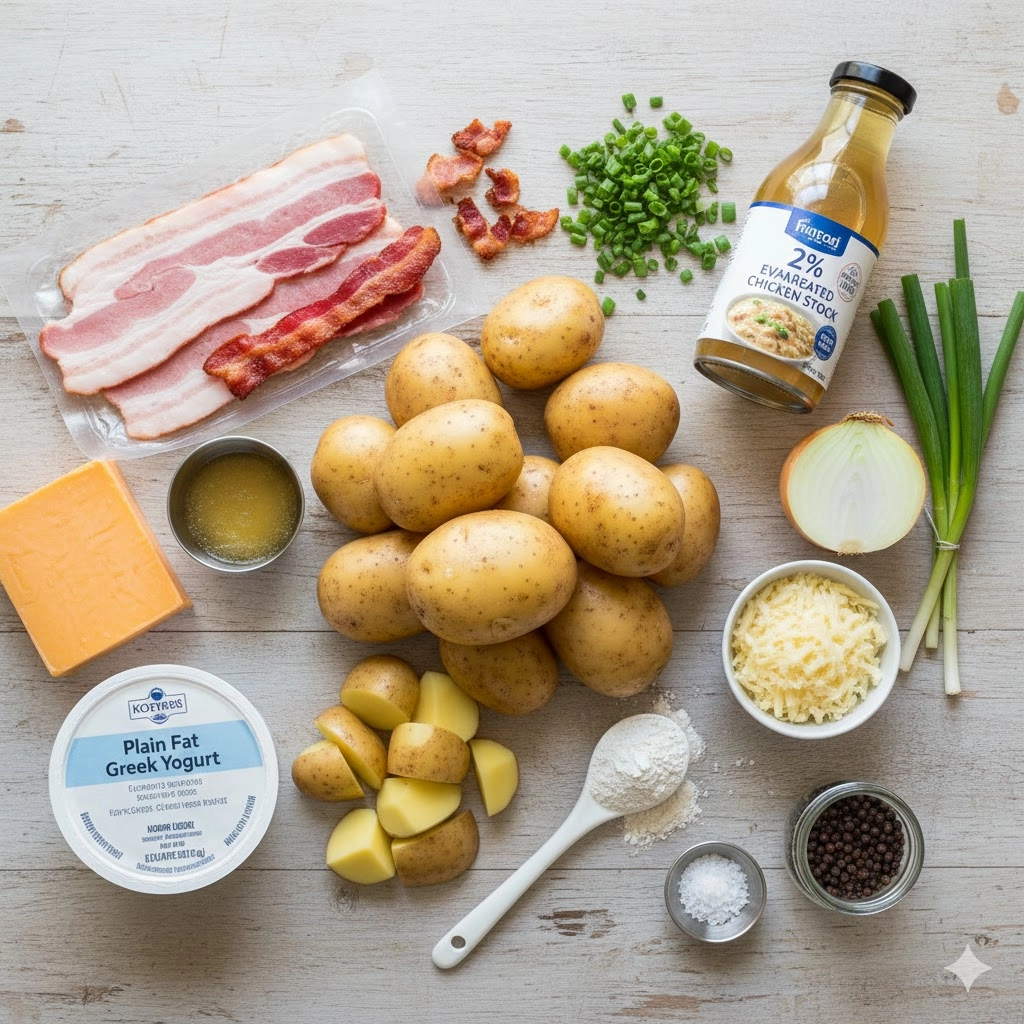
- 6 slices cooked bacon, diced (Save that rendered fat if you are frying it fresh)
- 3 to 4 cups good quality chicken stock or vegetable stock
- 2 pounds Yukon gold potatoes, peeled if you prefer and diced into uniform pieces
- 1 medium white or yellow onion, peeled and finely diced
- 4 tablespoons bacon grease or unsalted butter
- 1 third cup all purpose flour
- 1 twelve ounce can 2 percent evaporated milk
- 1 cup shredded reduced fat sharp cheddar cheese
- 1 half cup plain low fat Greek yogurt or low fat sour cream
- 1 teaspoon Kosher salt, plus more to adjust to your personal preference
- 1 half teaspoon freshly cracked black pepper
- Optional garnishes: thinly sliced green onions or fresh chives, extra shredded cheddar, crispy bacon bits, and a dollop of sour cream
Master the Process: Slow Cooker Potato Soup Instructions
The Slow Simmer Phase
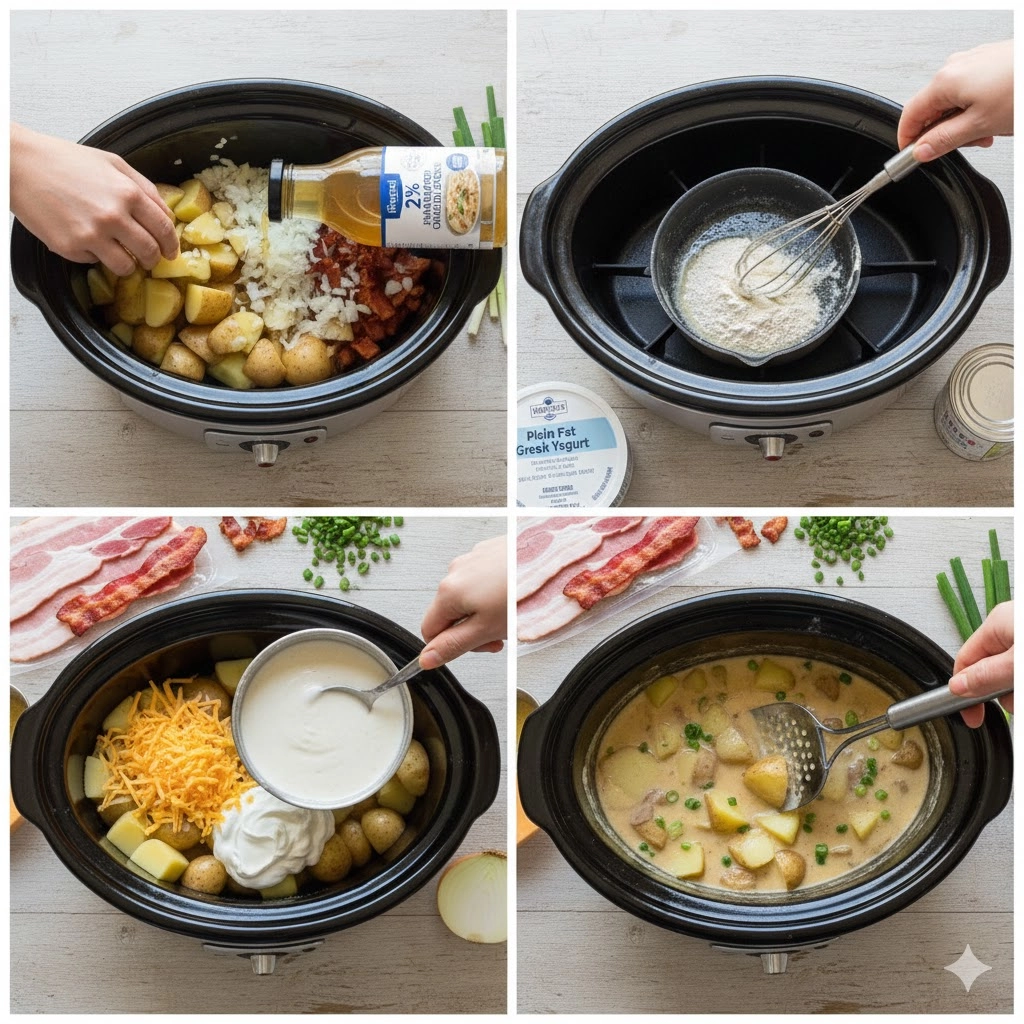
Begin by preparing your base. Place your diced cooked bacon, 3 cups of the chicken or vegetable stock, the diced Yukon gold potatoes, and the diced onion into the bowl of a large slow cooker. Give the mixture a quick stir to ensure the ingredients are evenly distributed. Secure the lid and set your slow cooker to the low setting for 6 to 8 hours, or if you are in a bit of a rush, set it to the high setting for 3 to 4 hours. You will know it is ready when the potatoes are completely tender and yield easily to the touch of a fork.
Creating the Velvety Thickener
When the slow cooker timer is nearing its end, it is time to prepare the stovetop roux that gives this soup its famous body. In a small saucepan over medium high heat, melt your butter or the reserved bacon grease. Once it is bubbling, whisk in the all purpose flour. Continue to whisk for about 1 minute to cook out the raw flour taste. Slowly pour in the evaporated milk while whisking constantly to prevent any lumps from forming. Continue cooking and stirring until the mixture reaches a simmer and becomes very thick, almost like a heavy gravy.
The Final Integration
Pour this thick milk mixture directly into the slow cooker bowl with the tender potatoes. Add in the shredded sharp cheddar cheese, the Greek yogurt or sour cream, and your salt and pepper. Stir everything together until the cheese has melted and the soup looks uniform. If you prefer a thicker, more rustic texture, use a potato masher to crush about half of the potatoes right in the pot. If the soup seems too thick for your liking, you can whisk in the remaining cup of stock to reach your desired consistency. Taste one last time for seasoning, adjust the salt or pepper if necessary, and serve warm with your favorite toppings.
Expanding On The Cooking Method: A Step-By-Step Deep Dive
Preparation is the secret weapon of any great home cook. When you start with 2 pounds of Yukon gold potatoes, you are choosing a variety that is naturally buttery and holds its shape just enough while still being easy to mash. Peeling is entirely optional; the skins on Yukon golds are thin and add a nice rustic touch, but for the smoothest possible experience, a quick peel is recommended. When dicing the potatoes and onions, try to keep the pieces roughly the same size. This ensures that every bite is uniform and that the vegetables cook at exactly the same rate.
The magic of the slow cooker is the “low and slow” extraction of flavor. As the potatoes sit in the chicken stock alongside the pre-cooked bacon and onions, they absorb the smoky, salty essence of the meat and the savory notes of the broth. Unlike stovetop methods where liquid can evaporate quickly, the sealed environment of the crock pot keeps all that moisture and flavor locked inside.
The transition to the stovetop for the roux is a crucial step that sets this recipe apart from “dump and go” versions that often turn out watery. By creating a concentrated thickening agent with evaporated milk and flour, you are introducing a creamy element that doesn’t break or curdle under high heat. Evaporated milk is a powerhouse in slow cooker recipes because it has a lower water content than regular milk, providing a rich mouthfeel without the high fat content of heavy cream. When you whisk this into the slow cooker at the very end, you are instantly transforming a brothy vegetable soup into a luxurious, comforting chowder.
The final mashing stage is where you get to be the artist. Some people love a completely chunky potato soup, while others prefer something closer to a puree. Mashing roughly 50 percent of the potatoes creates a beautiful “middle ground” where the released starches further thicken the liquid, but you still get those satisfying bites of tender potato.
Enhancing Your Dish With Unique Culinary Insights
To truly elevate this dish, consider the source of your fat. While butter is a classic choice for a roux, using the rendered grease from your bacon is a professional-level move. This fat is packed with smoky, salty flavor that carries through the entire soup, acting as a bridge between the solid bacon pieces and the creamy liquid base.
Another insight involves the temperature of your additions. When you are ready to stir in the Greek yogurt or sour cream at the end, try to let it sit at room temperature for a few minutes first, or “temper” it by stirring in a spoonful of the hot soup before adding it to the pot. This prevents the dairy from “shocking” and ensures a perfectly smooth integration.
For those who want a deeper flavor profile, don’t be afraid to let your onions lightly caramelize in a pan before adding them to the slow cooker. While the recipe allows for raw onions to go straight in, a 5-minute sauté can unlock a natural sweetness that balances the saltiness of the bacon and cheese. Furthermore, if you find your soup needs a little “brightness” at the end, a tiny splash of white vinegar or a squeeze of lemon juice can cut through the richness and make the potato flavor pop.
Customizations, Modifications, and Substitutions
This recipe is remarkably flexible. If you find yourself without Yukon gold potatoes, Russets are a fantastic alternative. They have a higher starch content, which will result in a fluffier potato piece and a naturally thicker soup once mashed. Red potatoes can also be used, though they are waxier and will stay quite firm, giving the soup a chunkier texture.
For a vegetarian version of this easy slow cooker potato soup, simply swap the chicken stock for a high-quality vegetable broth. You will omit the bacon, but to replace that “missing” smoky element, I recommend adding two to three teaspoons of Old Bay seasoning or a half teaspoon of smoked paprika. This provides that savory depth without the meat. You can also use a splash of liquid smoke if you want to mimic the bacon aroma more closely.
If you are looking to adjust the dairy, full-fat sour cream will provide a tangier, richer result than low-fat Greek yogurt. If you happen to have heavy cream on hand and aren’t worried about the extra calories, you can certainly substitute it for the evaporated milk, though the soup may become significantly thicker and might require a bit more stock to thin it out.

Perfect Accompaniments and Serving Ideas
Presentation is the final touch that makes a meal feel special. This soup is a “blank canvas” for toppings. A classic “loaded” potato soup approach includes a generous sprinkle of extra sharp cheddar, a pile of crispy bacon bits, and a handful of fresh chives or scallions. The green onions provide a necessary bite and freshness that contrasts beautifully with the cooked onions inside the soup.
As for what to serve on the side, you can never go wrong with bread. A crusty sourdough baguette or warm garlic knots are perfect for dipping into the thick broth and making sure not a single drop is wasted. For a lighter pairing, a crisp green salad with a sharp vinaigrette helps balance the hearty nature of the potatoes. If you are serving this for a gathering, consider a “topping bar” where guests can customize their own bowls with everything from pickled jalapeños to a drizzle of hot sauce or even a spoonful of caramelized onions.
Frequently Asked Questions About Potato Soup
Can I make this soup ahead of time for meal prep?
Absolutely. This soup actually tastes even better the next day as the flavors have more time to develop in the refrigerator. Simply store it in an airtight container for up to 3 days. When reheating, you may find the soup has thickened considerably; just add a splash of milk or stock while warming it on the stove to bring back that perfect consistency.
Why is my potato soup gummy or gluey?
Gumminess usually happens if you overwork the potatoes, especially if you use a high-speed blender or food processor to smooth out the soup. To avoid this, always use a manual potato masher or a large spoon to break up the potatoes. This keeps the starches intact and ensures a creamy, rather than sticky, texture.
Is it possible to freeze this recipe for later?
Generally, potato-based soups that contain dairy do not freeze particularly well. The potatoes can become grainy or mealy upon thawing, and the dairy-based roux may separate. It is much better enjoyed fresh or within a few days of cooking. If you must freeze it, do so before adding the cheese and Greek yogurt, and then whisk those in while reheating.
Finding Comfort In Every Spoonful
There is a reason why potato soup remains a staple in households across the country. It is the ultimate culinary hug, a dish that feels like home regardless of where you are. This specific slow cooker method takes the stress out of the process, allowing the appliance to handle the time-consuming softening of the vegetables while you go about your day. By the time you add that final creamy roux and a handful of sharp cheddar, you’ve created a masterpiece of texture and taste. It is simple, reliable, and deeply satisfying—exactly what a great recipe should be.
Nutritional Information and Profile
| Nutrient | Amount Per Serving |
| Calories | 345 calories |
| Total Fat | 14 grams |
| Saturated Fat | 8 grams |
| Cholesterol | 45 milligrams |
| Sodium | 850 milligrams |
| Total Carbohydrates | 38 grams |
| Dietary Fiber | 4 grams |
| Sugars | 7 grams |
| Protein | 18 grams |
Recipe Disclaimer
Note that nutritional values are estimates based on standard ingredients. Actual numbers may vary based on specific brands used or modifications made during the cooking process. Always consult with a healthcare professional for specific dietary needs.
PrintThe Ultimate Easy Slow Cooker Potato Soup For Cozy Nights

These 2-ingredient cheese straws are the ultimate party hack. Made with crispy, buttery puff pastry and sharp hard cheese, they are the perfect golden appetizer for any holiday gathering or cocktail hour.
- Prep Time: 20 mins
- Cook Time: 20 mins
- Total Time: 40 mins
- Yield: 20 straws 1x
- Category: Appetizers
- Method: Baking
- Cuisine: French-Inspired
- Diet: Vegetarian
Ingredients
1 1/2 cups grated mixed hard cheese (Parmesan, Pecorino Romano, or aged cheddar)
2 sheets thawed store-bought puff pastry
Instructions
1. Preheat oven to 375 degrees Fahrenheit and line two baking sheets with parchment paper.
2. Sprinkle 1/4 cup cheese on work surface and place one pastry sheet on top.
3. Sprinkle 1/4 cup cheese over pastry and roll out to 1/8-inch thickness.
4. Fold the pastry sheet in half and sprinkle with another 1/4 cup cheese.
5. Roll out again to 1/8-inch thickness (aiming for 10 inches long for long straws).
6. Cut pastry into 1-inch wide strips using a sharp knife cutting straight down.
7. Transfer strips to baking sheet and twist ends in opposite directions to spiral.
8. Refrigerate for 10 to 60 minutes. Repeat process for the second pastry sheet.
9. Bake for 15 to 20 minutes until deep golden brown and dry to the touch.
10. Cool briefly on the sheet until firm then transfer to a rack. Serve warm.
Notes
Keep the puff pastry cold for the best puff.
Use a sharp knife or pizza cutter to avoid sealing the dough edges.
Store in an airtight container for up to 24 hours.
Nutrition
- Serving Size: 2 straws
- Calories: 90
- Sugar: 0g
- Sodium: 105mg
- Fat: 6g
- Saturated Fat: 2g
- Unsaturated Fat: 3g
- Trans Fat: 0g
- Carbohydrates: 7g
- Fiber: 0g
- Protein: 2g
- Cholesterol: 7mg