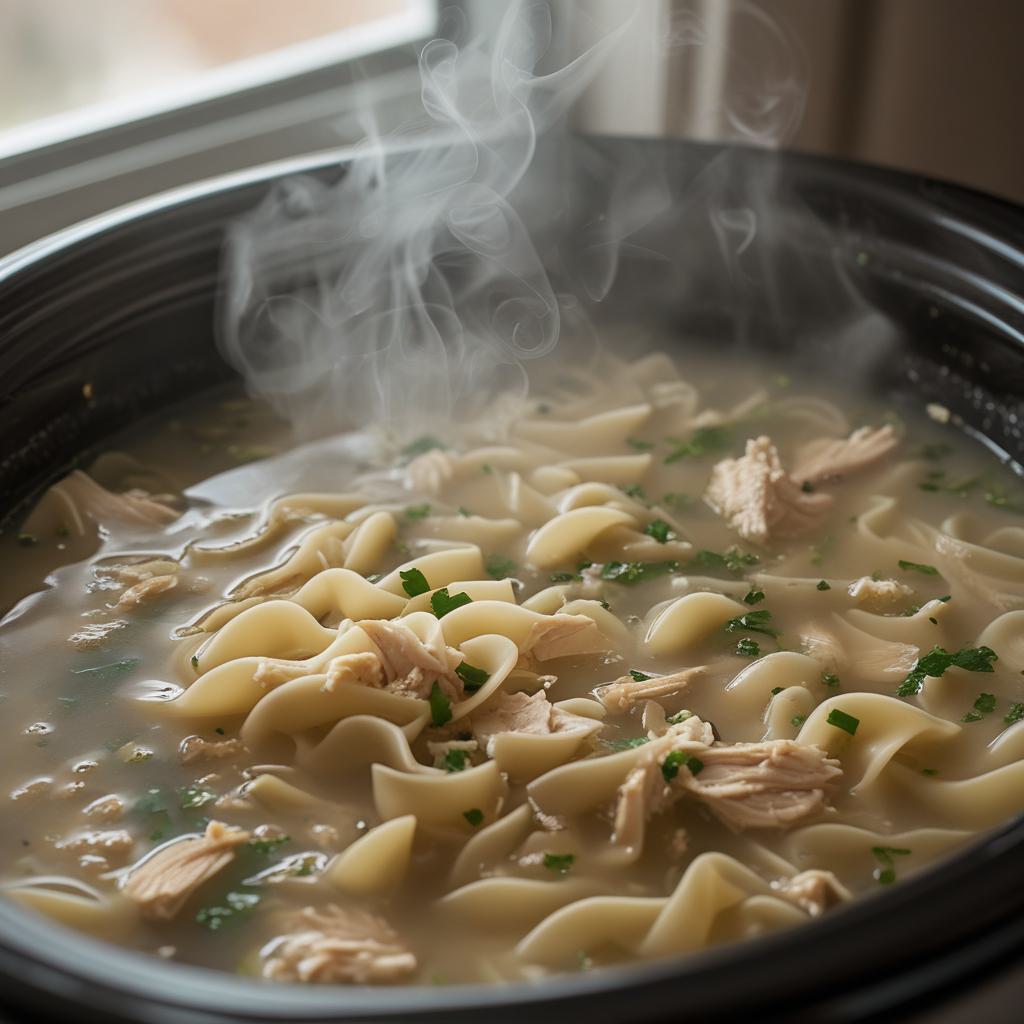
The first tendrils of steam curl from the slow cooker lid like culinary smoke signals – carrying whispers of caramelized onions, toasted garlic, and patiently extracted chicken essence. This isn’t mere soup; it’s liquid alchemy where humble bones transform into golden nectar over six hours. The magic happens in stages: first, the earthy chorus of mirepoix sizzling in olive oil, then the layered perfume of bay leaves and black peppercorns melding with rich stock. By hour three, your kitchen smells like a French bistro crossed with Grandma’s winningest Sunday supper. The final act introduces al dente noodles that drink deeply of this broth-elixir, their starchy surrender thickening the pot just enough to coat the spoon luxuriously. What separates this from pedestrian versions? Time’s fingerprint on collagen-rich thighs, the caramel kiss on roasted vegetables before they dive into the crock, and using proper egg noodles that maintain structural integrity rather than dissolving into paste. This isn’t comfort food – it’s culinary comfort engineering.
Table of Contents
Ingredient Deep Dive
| Ingredient | Quantity | Purpose |
|---|---|---|
| Chicken thighs (bone-in, skin-on) | 2 lbs | Collagen-rich dark meat withstands long cooking without drying |
| Yellow onions | 2 large | Provides foundational sweetness via Maillard reaction |
| Celery ribs with leaves | 3 stalks | Leaf inclusion adds aromatic phthalides unimpaired by cooking |
| Carrots (rainbow heirloom) | 1 lb | Color variety increases phytonutrient diversity |
| Chicken demi-glace | 2 tbsp | Umami amplifier without excess salt |
| Double-concentrated tomato paste | 1 tbsp | Adds glutamates and natural MSG for depth |
| Thyme sprigs (fresh) | 6 | Volatile oils infuse slowly without turning bitter |
| Extra-wide egg noodles | 12 oz | Higher egg content prevents mushiness |
Bone-in thighs function as miniature stock pots within the soup – their marrow seeping into the liquid while connective tissues methodically break into gelatin. This creates viscosity no cornstarch slurry can replicate. The tomato paste isn’t for acidity but stealth umami; when roasted with vegetables, its natural glutamates undergo flavor transformation akin to aged Parmesan rind.
Rainbow carrots introduce more than color psychology – purple varieties contain anthocyanins stable up to 250°F while yellows contribute lutein. Celery leaves (often discarded) carry the herbaceous punch of 10 additional stalks. Demi-glace acts as our flavor insurance policy, ensuring even quick versions achieve depth, while fresh thyme’s thymol content disperses optimally in lipid-rich broth.
Substitutions & Swaps
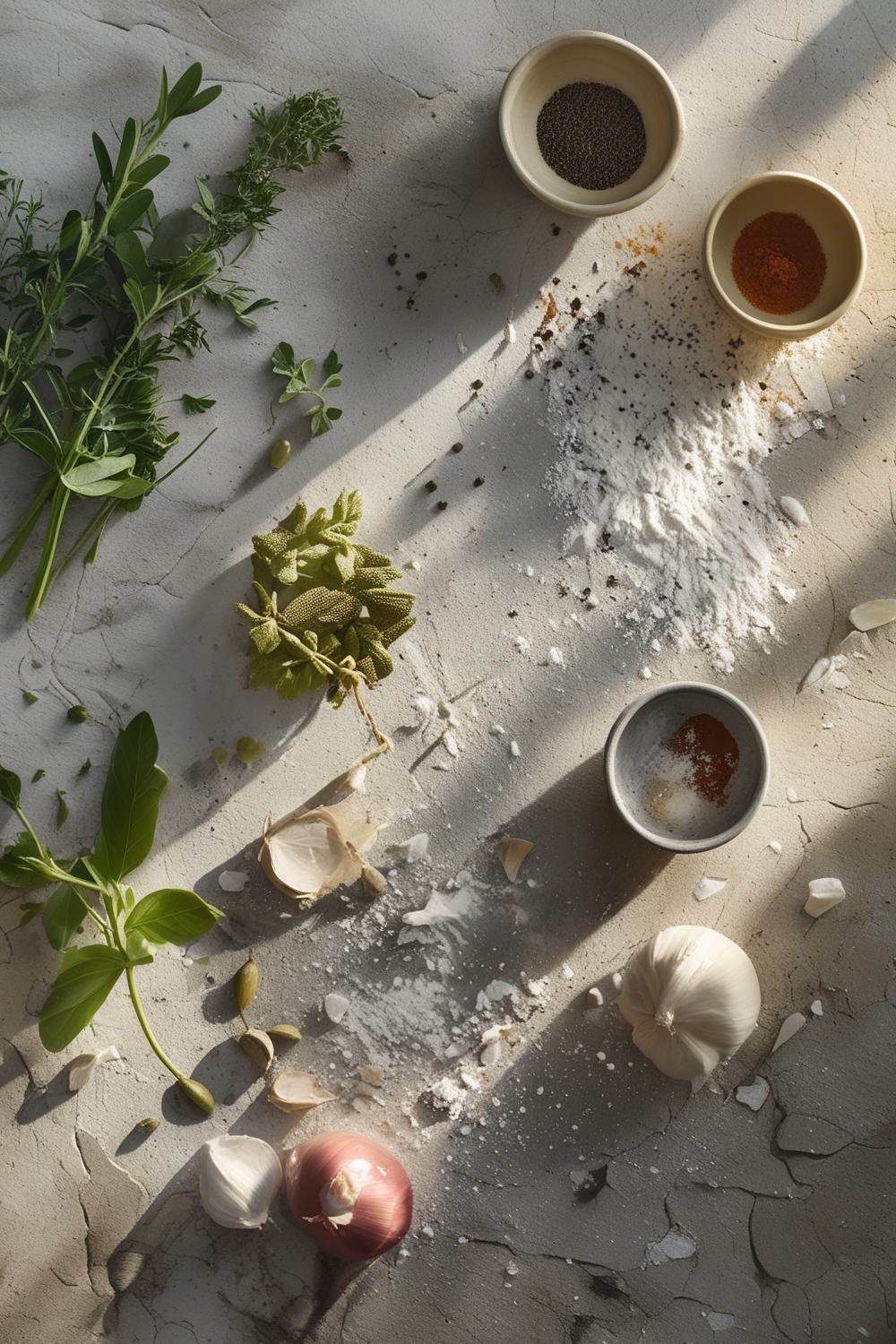
For gluten-sensitive diners, seek out premium egg noodles made with rice or tapioca flour – but add them only 20 minutes before serving to prevent disintegration. Vegan adaptations require layered solutions: rehydrated shiitake mushrooms provide squalene’s mouthfeel, while kombu seaweed mimics poultry’s nucleotides. Roasted cauliflower bones (stalk portions carved into drumstick shapes) give textural intrigue when simmered with nutritional yeast for cheesy depth.
In protein swaps, turkey thighs behave nearly identically to chicken, while white fish options demand radically shortened cooking windows – add cod or haddock only during the final 30 minutes. No demi-glace? Create quick “faux-glace” by reducing 2 cups low-sodium broth with 1 tsp marmite to 1/4 cup. Standard onions outperform shallots here due to higher polysaccharide content that catalyzes browning reactions.
Equipment Guide
A 6-quart oval slow cooker proves ideal – its shape accommodates chicken thighs without stacking. Metal vs ceramic inserts? Opt for metal when possible; it heats faster during the crucial browning phase. Essential peripherals include a microplane for fresh garlic (crushing releases alliinase enzymes for fuller flavor development) and spider strainer for skimming – crucial for clear broth.
Mandatory non-slow-cooker gear: a thick-bottomed skillet for controlled fond development (cast iron preferred) and instant-read thermometer. Overcrowding the pan during initial browning creates steamed rather than seared meat – use two batches if necessary. For herb containment, reusable silicone mesh balls outperform cheesecloth, allowing better oil exchange while containing leaves.
Step-by-Step Walkthrough
- Pat chicken thighs dry with paper towels, salt generously (1 tsp kosher salt total)
- Heat 1 tbsp grapeseed oil in skillet over medium-high until shimmering
- Sear thighs skin-side down 7 minutes until mahogany crust forms
- Flip thighs, sear bone-side 3 minutes, transfer to slow cooker
- Add diced onions to skillet, cook 4 minutes until edges char
- Stir in tomato paste, cook 2 minutes until brick-red
- Deglaze pan with 1/2 cup dry vermouth, scraping fond
- Transfer onion mixture to slow cooker
- Add celery, carrots, 6 cups cold water, demi-glace, and thyme
- Cook on LOW 6 hours (high for 3 creates tougher meat)
- Remove thighs, shred meat discarding skin/bones
- Return meat to pot, add noodles cooked separately al dente
- Simmer 10 minutes uncovered before serving
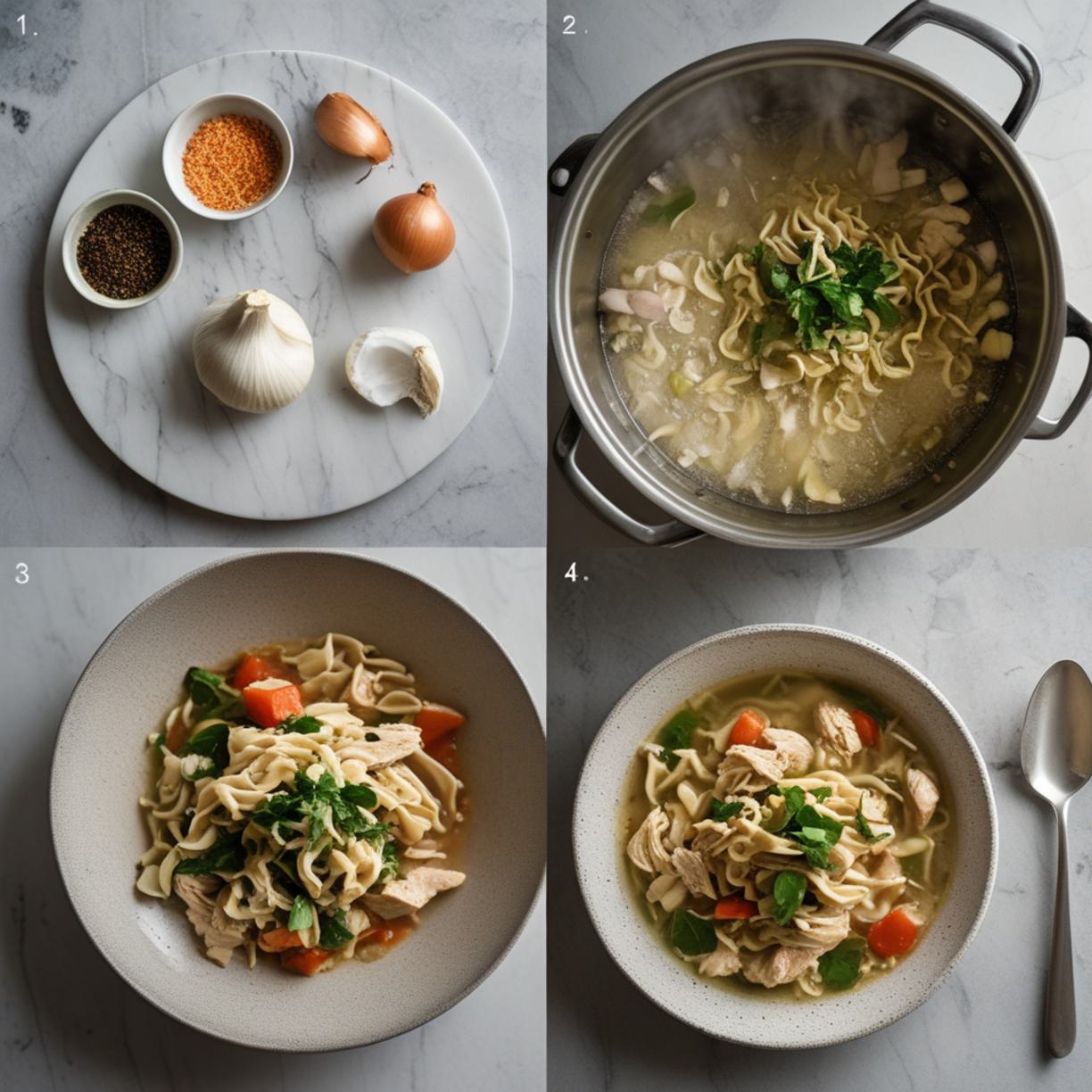
Three critical transitions define this soup: the sear creates foundational flavor compounds through Millard reactions; the deglaze captures soluble flavor molecules; and final noodle addition timing prevents starch overload. Unlike most slow cooker recipes, we cook noodles separately – this preserves broth clarity while allowing perfect texture control.
Temperature management is non-negotiable. Slow-cookers vary wildly; confirm broth reaches 185°F minimum for collagen breakdown but doesn’t exceed 200°F (boiling toughens proteins). For restaurant-worthy presentation, reserve some carrot rounds and celery leaves for bright final garnish.
Expert Tips & Troubleshooting
Crunchy carrots? Cut them into 1.5″ batons – smaller pieces disintegrate over six hours. If broth tastes flat despite correct seasoning, add acidity rather than salt: 1 tsp apple cider vinegar brightens flavors chemically. Cloudy broth results from boiling instead of simmering; if occurs, clarify with egg white raft (whisk 2 whites into cooled broth, simmer gently, strain).
Noodles absorbing all liquid? Store them separately, adding to bowls before ladling hot broth. For next-level mouthfeel, finish with a drizzle of garlic oil (steep minced garlic in olive oil 2 hours, strain). To rescue over-salted broth, introduce a raw peeled potato for 20 minutes – its starch absorbs excess sodium.
Most crucial trick: chill broth overnight before final serving. This allows fat to solidify for easy removal, yielding cleaner flavors. Reheat gently with shredded chicken and fresh noodles. Never add dairy directly to the pot; serve crème fraîche or yogurt on the side to avoid curdling.
Flavor Variations
For Southeast Asian notes, replace thyme with lemongrass stalks and kaffir lime leaves, adding fish sauce instead of demi-glace. Finish with cilantro and fried shallots. Children prefer milder versions; swap half the broth with unsweetened almond milk and add alphabet noodles cooked separately.
Curry lovers should bloom 2 tbsp Thai red curry paste with the onions, using coconut milk for half the liquid. Omit noodles, serving over jasmine rice. For German flair, add caraway seeds and diced potatoes, substituting spaetzle for egg noodles. Garnish with crispy speck.
Storage & Reheating
Store components separately: broth up to 5 days refrigerated or 3 months frozen (leave 1″ headspace). Noodles and chicken keep 3 days refrigerated. Assemble portions as needed. Reheat broth to 165°F before combining with cold noodles/chicken. Never refreeze. For best texture, freeze broth in ice cube trays; 2 cubes + fresh noodles = instant single serving.
FAQ Section
Can I use chicken breasts?
Only if brined 2 hours first; their low-fat content turns stringy during slow cooking. Best reserved for quick soups.
Why add noodles separately?
Starch continues swelling even when cold, creating bloated noodles. Cooking separately preserves ideal bite.
Can I make this vegetarian?
Yes – use mushroom broth, roast portobellos as “meat,” and add 1 tsp miso paste with the onions.
How to double the recipe?
Increase all ingredients except salt by 1.5x (too much liquid lowers temp). Use a 8-qt slow cooker.
The Recipe Card
Slow-Cooker Chicken Noodle Soup
Yield: 6 servings | Active: 30 min | Total: 6 hr 30 min
Umami-rich broth from seared thighs, roasted aromatics, and tomato depth transforms convenience food into haute cuisine. Al dente egg noodles and fresh thyme elevate this cold-weather essential.
Nutrition Information
| Nutrient | Per Serving |
|---|---|
| Calories | 410 |
| Protein | 31g |
| Carbohydrates | 34g |
| Dietary Fiber | 4g |
| Sugars | 6g |
| Fat | 16g |
| Sodium | 590mg |
Nutrition calculated including skin from thighs and all listed ingredients. Actual values may vary based on specific brands and preparation methods. Always consult a nutritionist for health-related concerns.