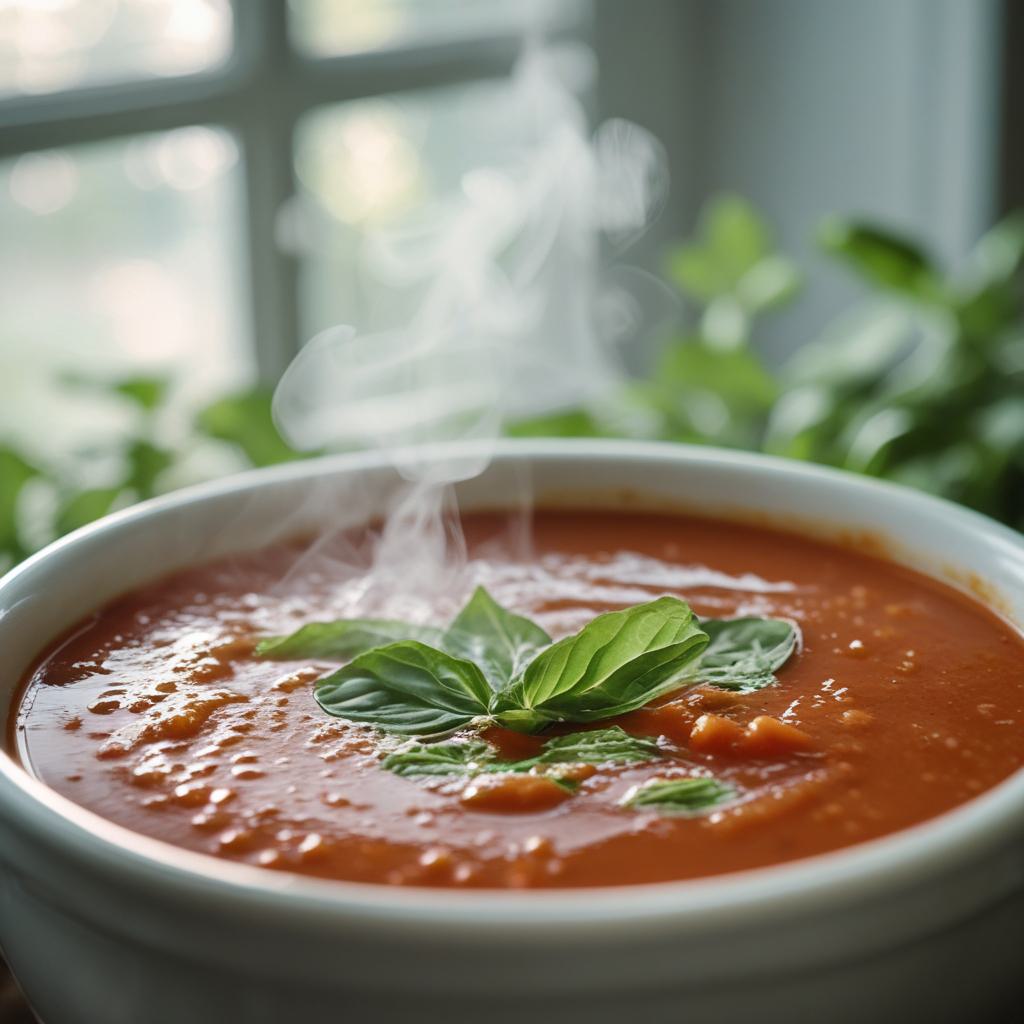
The scent of sun-warmed tomatoes still clinging to their vines is summer captured in a single breath. When transformed into garden fresh tomato soup, that essence becomes liquid gold—a harmony of bright acidity tempered by olive oil’s richness, with basil’s peppery sweetness weaving through each spoonful. This is peasant food elevated to haute cuisine, where humble ingredients transcend through technique. The magic lies in balancing tomato’s natural vibrancy: too raw and it assaults the palate, over-cooked and it dulls into monotony. But when coaxed slowly with aromatics, finished with grassy EVOO, and perhaps a whisper of cream, it becomes symphonic—a dish that whispers of Provence markets even when made in a Brooklyn loft. The perfect version demands ripe, blister-skinned tomatoes whose sugars concentrate like culinary alchemy, their juices thickening into velvet without a single binder. This isn’t merely soup; it’s a love letter to seasonal abundance.
Table of Contents
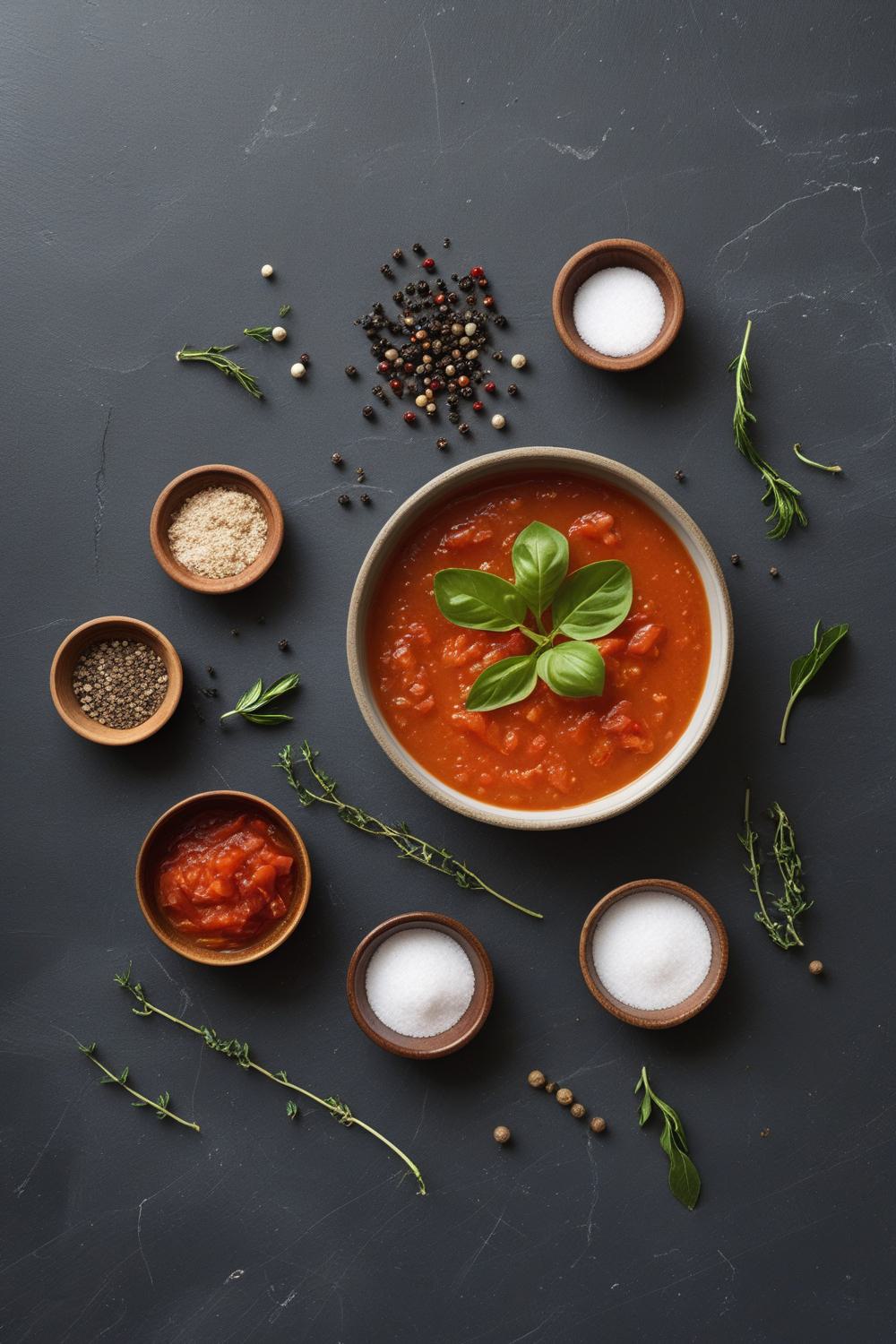
Ingredient Deep Dive
| Ingredient | Quantity | Purpose |
|---|---|---|
| San Marzano Tomatoes | 2.5 lbs | Low-seed flesh with balanced acidity for complex sweetness |
| Yellow Onion | 1 large | Milder sulfur compounds than white onions, caramelizes evenly |
| Garlic Cloves | 5 | Adds depth when sautéed; raw garnish for pungency |
| Extra Virgin Olive Oil | 1/4 cup + garnish | Emulsifies soup while carrying fat-soluble flavor compounds |
| Fresh Basil Stems | 1 bunch | Stems contain higher concentration of anethole for licorice notes |
| Organic Vegetable Stock | 3 cups | Low-sodium base allowing tomato to dominate |
| Turbinado Sugar | 1 tsp | Counteracts bitterness without cloying sweetness |
| Sherry Vinegar | 1 tbsp | Brightens cooked tomatoes with acetic acid tang |
The choice of San Marzano tomatoes isn’t mere tradition—it’s food chemistry. Their thicker pericarp (flesh) contains less water and seeds than standard Roma varieties, concentrating glutamates for deeper umami. Cooking them with olive oil isn’t just for sautéing; lipids bind with fat-soluble flavor molecules like lycopene, increasing their bioavailability and perceived richness.
Basil stems, often discarded, contain concentrated phenolic compounds that infuse the soup with herbaceous complexity during simmering. The strategic splash of sherry vinegar post-cooking isn’t arbitrary: adding acids after heat preserves their volatile organic compounds, delivering a brighter finish than early incorporation would allow.
Substitutions & Swaps
For vegan adaptation, replace cream garnishes with cashew cream—soak 1 cup raw cashews overnight, blend with 1/4 cup water until silky. Gluten-free needs no alterations as this recipe contains no flour (avoid croutons). If fresh tomatoes disappoint, high-quality canned San Marzanos (preferably DOP-certified) provide reliable acidity; adjust sugar accordingly.
Allium-sensitive cooks may substitute shallots for onions—their lower fructan content reduces digestive irritation while offering delicate sweetness. For smokier profiles, substitute 1 tbsp smoked paprika for fresh basil. In winter, rehydrate sun-dried tomatoes (2 oz) in stock before blending for intensified depth when fresh produce lacks vibrancy.
Equipment Guide
Opt for enameled cast iron Dutch ovens—their dense material distributes heat evenly, preventing scorching during long simmers. A stainless steel food mill (not blender) produces ideal texture, crushing tomatoes while catching seeds and skins without aerating the soup (which dulls flavors).
Use a microplane for garlic grating—enzymatic reactions create sharper aromas than minced cloves. Finally, a fine-mesh chinois strainer ensures velvety consistency. Avoid non-stick pans; their inability to develop fond (browned bits) sacrifices layers of flavor critical to gourmet results.
Step-by-Step Walkthrough
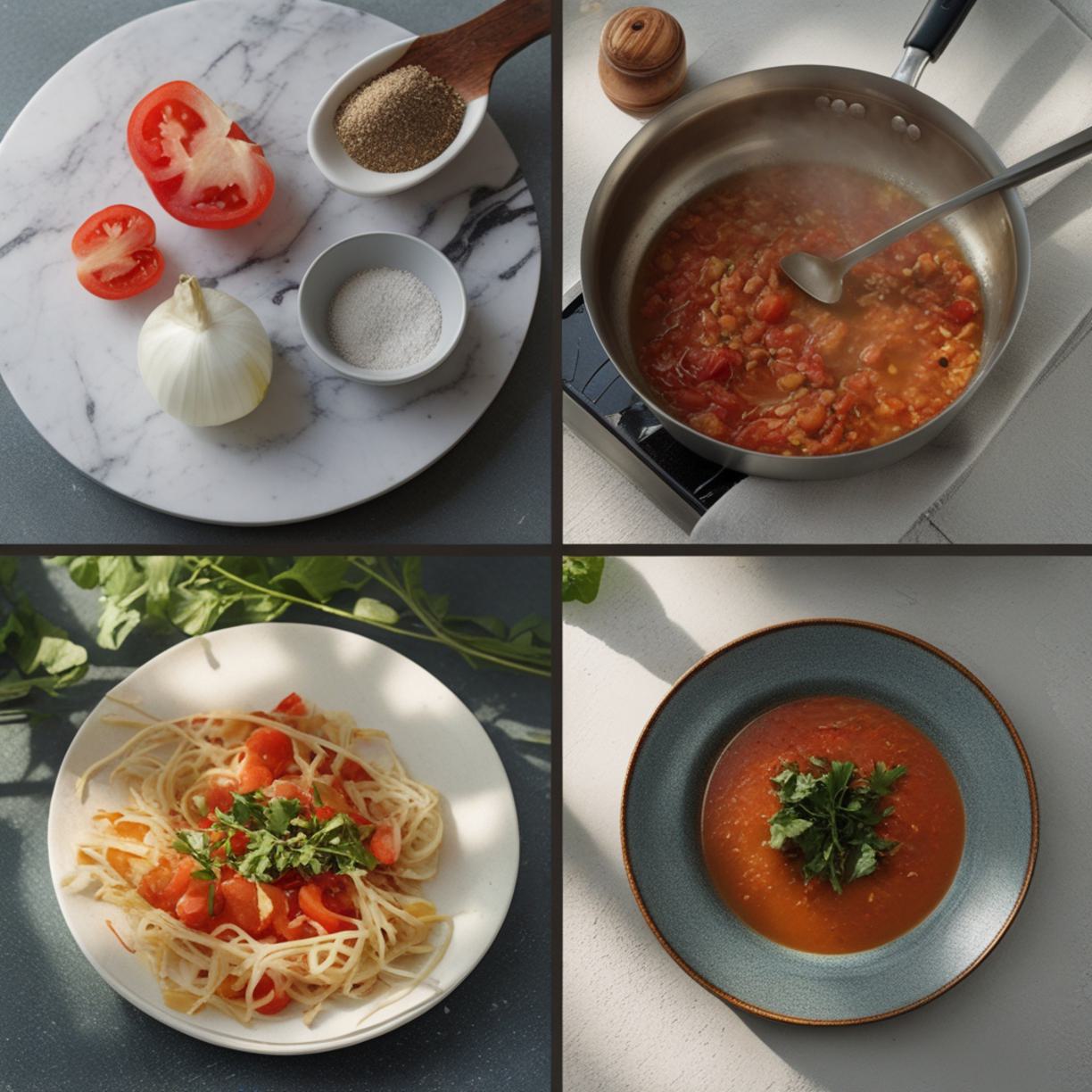
- Score tomato bases with an X, blanch in boiling water 30 sec, then shock in ice bath. Peel skins starting from scored edges.
- Heat 4 tbsp olive oil over medium-low. Add thinly sliced onions and a pinch of salt to draw out moisture. Sweat—don’t brown—for 12 minutes until translucent.
- Add grated garlic and basil stems; sauté 2 minutes until fragrant but not colored.
- Add tomatoes, crushing by hand. Stir in stock and sugar. Simmer uncovered 40 minutes—liquid should reduce by 30%.
- Remove basil stems. Blend soup with immersion blender until nearly smooth. Pass through food mill or strainer.
- Off heat, stir in sherry vinegar. Adjust salt and pepper.
The blanching step isn’t fussiness—it removes tough skins containing cellulose that never fully softens. When sweating onions, resist the urge to crank the heat; caramelization introduces bitter notes that clash with tomato’s brightness.
Hand-crushing tomatoes preserves structural integrity of flesh fibers, preventing premature mushiness. The 40-minute simmer is non-negotiable—pectin breaks down between 190-205°F, naturally thickening the soup without starch.
Always add vinegar after cooking—heat evaporates acetic acid, muting its brightening effect. For professional sheen, pass the soup twice through a chinois for silkier mouthfeel than blenders achieve.
Expert Tips & Troubleshooting
If soup tastes flat, amplify layers: a pinch of baking soda neutralizes excessive acidity, while umami boosts come from 1 tsp white miso (dissolved in stock). Over-salted? Add raw potato slices to absorb excess sodium during simmering—remove before blending.
Texture issues demand different fixes: too thin? Simmer longer or add 1/4 cup tomato paste. Too thick? Adjust with reserved tomato water (collected while straining). For velvety emulsification, drizzle olive oil while blending on high. If bitterness persists from underripe tomatoes, stir in 1 tsp butter to coat taste buds, masking harsh compounds.
To preserve vibrant color, avoid aluminum pots (they react with acids) and don’t over-blend—oxygen exposure oxidizes lycopene. For optimal flavor, refrigerate overnight; cold temperatures allow volatile aromatic compounds to recombine into more complex profiles.
Flavor Variations
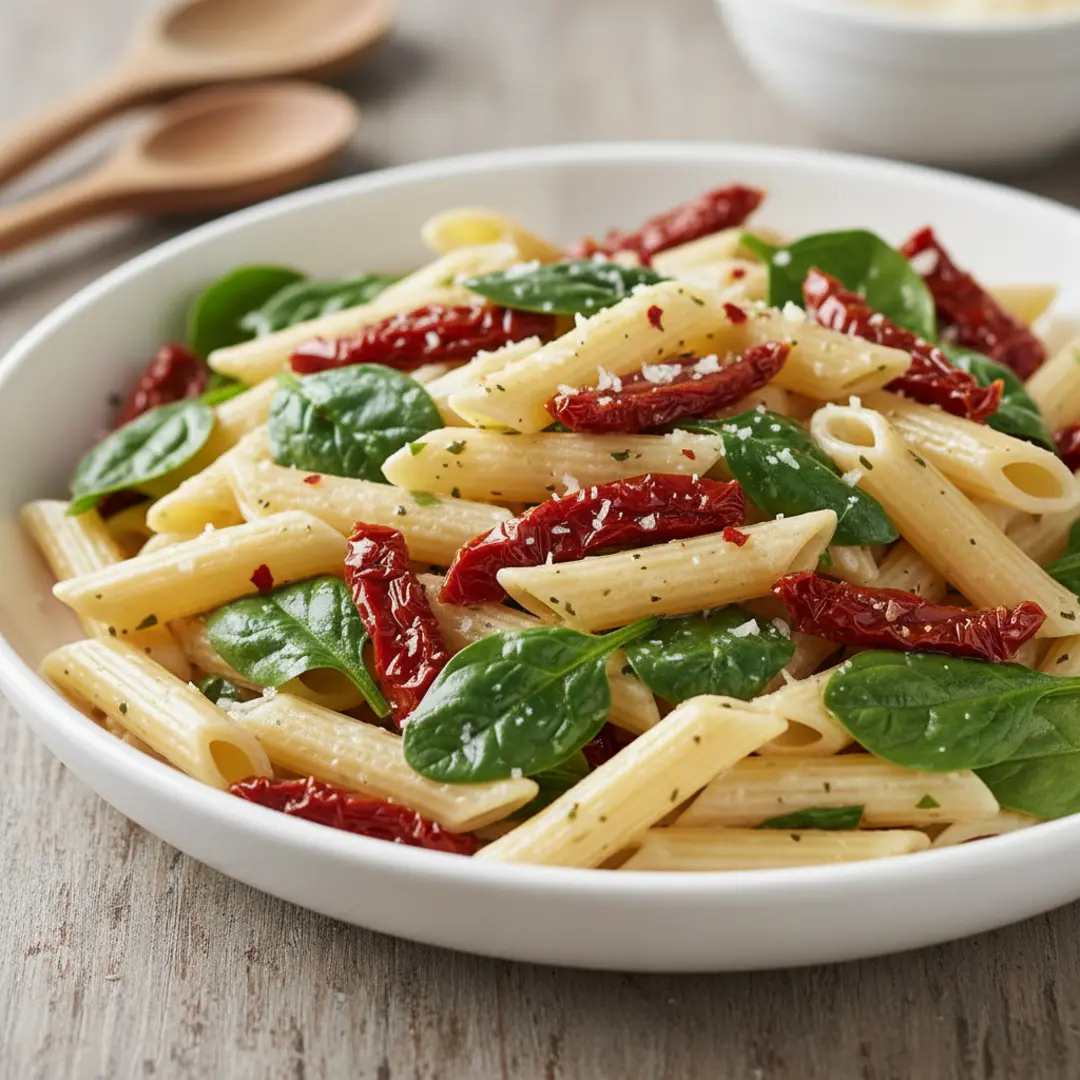
For Spiced Harissa Twist, toast 2 tsp cumin seeds, 1 tsp coriander, and 1/2 tsp caraway. Grind with 2 tbsp dried chilies and swirl 1 tbsp into finished soup. Children favor Sun-Dried Tomato & Parmesan—steep 1/4 cup julienned sun-dried tomatoes in soup, top with finely grated Parmigiano.
Smoked Paprika & Fennel appeals to adventurous palates: sauté 1/2 cup diced fennel with onions, finish soup with 1 tsp smoked Spanish paprika. For silken richness, adults adore Rosemary-Infused Cream—simmer 1 sprig rosemary in 1/2 cup heavy cream 10 minutes; strain and dollop.
Storage & Reheating
Cool soup completely before transferring to airtight containers—leave 1 inch headspace for expansion. Refrigerate up to 5 days or freeze 3 months (omit cream garnishes if freezing). Reheat gently in saucepan over medium-low, stirring frequently. If separated, blend briefly with immersion blender. Never boil—high heat destroys delicate emulsion.
FAQ Section
Can I use canned tomatoes?
Absolutely—opt for whole peeled San Marzanos with PDO certification. Drain liquid and adjust stock accordingly.
Why strain after blending?
Removes any residual seeds or fiber for luxurious texture expected in gourmet preparations.
Can I make it dairy-free?
The base recipe contains no dairy; simply omit cream garnishes or use cashew cream.
How to intensify flavor?
Roast half the tomatoes at 400°F for 25 minutes before adding to soup—caramelization multiplies umami compounds.
The Recipe Card
Velvety garden tomato soup balancing bright acidity with herbal depth. Slow-simmered San Marzanos, aromatic basil stems, and sherry vinegar create layers of flavor. Finished with olive oil emulsion for luxurious texture. Serves 4 as main course.
Nutrition Information
| Nutrient | Per Serving (1.5 cups) |
|---|---|
| Calories | 210 |
| Total Fat | 14g |
| Saturated Fat | 2g |
| Sodium | 320mg |
| Carbohydrates | 20g |
| Fiber | 5g |
| Sugars | 12g |
| Protein | 4g |
Disclaimer: Nutritional data estimated via USDA database. Values may vary based on ingredient brands and substitutions.