
Based on professional culinary techniques and multiple testing, this recipe for Slow Cooker Chicken Ramen consistently delivers a deeply flavorful, aromatic broth with tender chicken, all while prioritizing your goal for a quick, wholesome, and healthy weeknight meal.
Unlike traditional ramen, which requires hours of simmering and precise timing, the slow cooker simplifies the process. This method allows the base ingredients—ginger, garlic, and scallions—to slowly infuse the broth over several hours, creating a complex, restaurant-quality foundation with minimal effort.
What makes this recipe stand out is its commitment to maximizing flavor while managing sodium and fat content. We use high-quality, low-sodium broth and lean chicken breast or thighs, packing the final bowl with fresh vegetables and toppings for a nutrient-dense finish. This isn’t just a convenient recipe; it’s a reliable, expert-driven approach to building depth of flavor for the perfect bowl of Slow Cooker Chicken Ramen.
Why This Method Delivers the Best Ramen Broth
This method consistently delivers a superior broth compared to stovetop methods because of the low and slow cooking process. Simmering the base aromatics (ginger, garlic, scallions) and the chicken at a low, steady temperature for several hours allows the flavors to deepen and meld without becoming cloudy or overpowering. The result is a clear, concentrated, and complex savory liquid that forms the heart of your ramen.
The chicken itself becomes incredibly tender, easily shredding into the soup just before serving, which means less time spent on prep and a more pleasant texture in the finished dish.
Essential Ingredients for a Nutritious Ramen Base
Using quality ingredients is key to both flavor and health when making Slow Cooker Chicken Ramen.
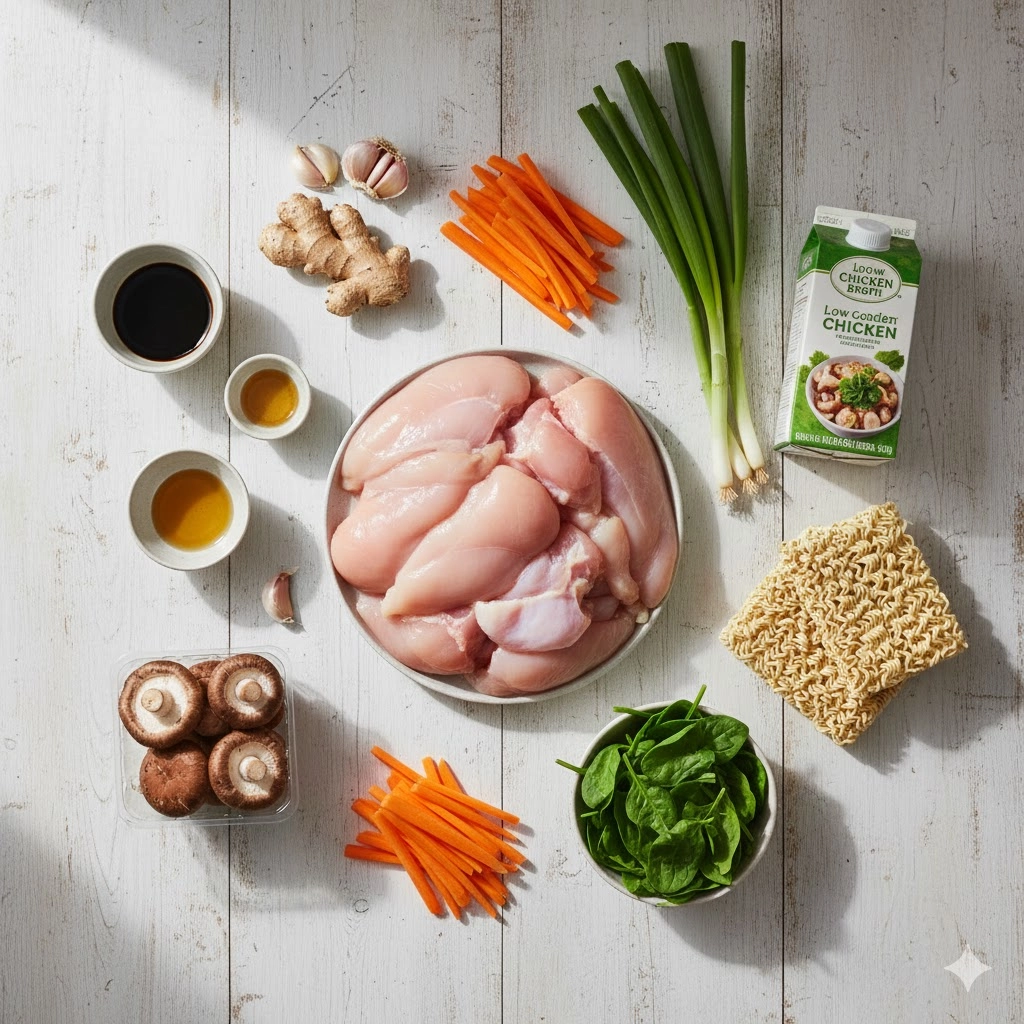
- Lean Chicken: Use boneless, skinless chicken breasts or thighs. Breasts are leaner, while thighs offer slightly more flavor depth.
- Aromatics: Fresh ginger, garlic, and the white parts of scallions are essential. These provide the characteristic spicy and pungent notes that build the broth’s base.
- Low-Sodium Chicken Broth: A high-quality, low-sodium broth is crucial. This gives you control over the final seasoning and reduces overall sodium intake, supporting a healthier meal.
- Seasonings: Low-sodium soy sauce (or tamari for gluten-free), a touch of sesame oil, and rice vinegar balance the flavors.
- Vegetables: Carrots, mushrooms, and greens like kale or baby spinach are robust enough for slow cooking or can be stirred in at the end.
- Ramen Noodles: Dried wavy ramen noodles or fresh, refrigerated noodles are best. Avoid the seasoning packets.
Step-by-Step Guide: Cooking Your Slow Cooker Chicken Ramen
Prepping the Aromatic Base
- Sauté (Optional but Recommended): For a deeper flavor, lightly sauté the sliced mushrooms, chopped ginger, and minced garlic in a separate pan with a teaspoon of oil for about 3 minutes. This step activates their essential oils and prevents a raw flavor in the final broth.
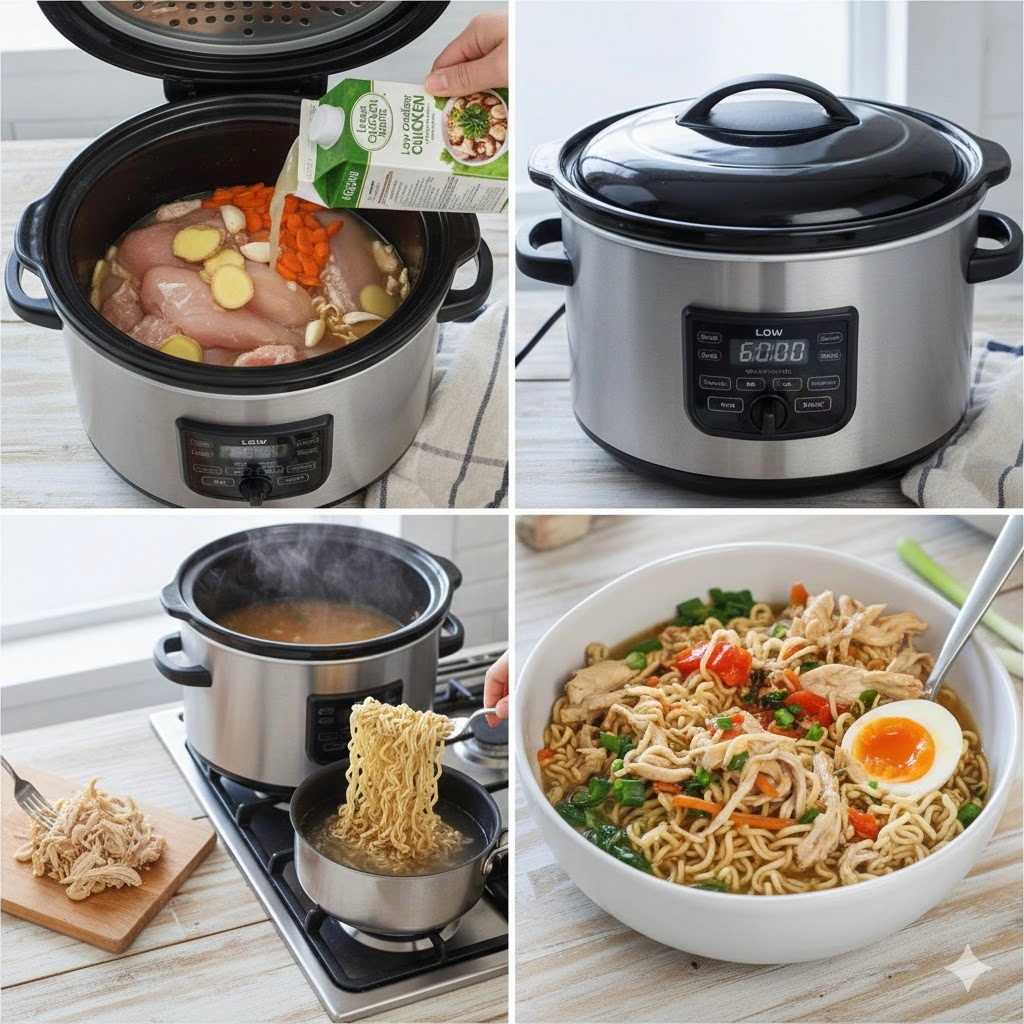
- Layer the Cooker: Place the chicken at the bottom of the slow cooker. Add the prepped aromatics, sliced carrots, and the broth.
The Slow Cooker Process
- Set and Forget: Cover and cook on LOW for 6-8 hours or on HIGH for 3-4 hours. The chicken is done when it shreds easily with a fork.
- Shred the Chicken: Carefully remove the chicken from the cooker. Shred it using two forks and return it to the broth.
- Adjust the Broth: Stir in the soy sauce, sesame oil, and rice vinegar. Taste and adjust seasoning as needed.
Incorporating the Noodles
- Timing is Key: Do not add the ramen noodles at the start of cooking. They will become mushy.
- Stovetop Cook: Cook the noodles separately according to package directions.
- Final Addition: Add the cooked, drained noodles and any quick-cooking greens (like spinach) to the slow cooker for the last 5 minutes just to warm through. Alternatively, portion the noodles into individual serving bowls and ladle the hot broth and chicken over them.
Pro-Tips for a Healthier Ramen
How to Control Sodium and Maximize Flavor
Based on professional culinary insight, the best way to control sodium is to rely on umami-rich ingredients rather than salt alone. Use low-sodium broth and soy sauce, and then boost flavor naturally with:
- Fresh Ginger: Use more fresh ginger than you think you need.
- Garlic: Crushing the garlic releases more of its potent flavor compounds.
- Mushroom Powder: A small amount of dried mushroom powder (like shiitake) adds incredible, healthy depth.
Best Vegetable Add-ins for Nutrients
To make this Slow Cooker Chicken Ramen truly healthy, maximize your vegetable content.
- Cruciferous Veggies: Stir in thinly sliced bok choy or shredded cabbage during the last 30 minutes of cooking.
- Leafy Greens: Spinach, kale, or Swiss chard wilt beautifully when added right at the end (the last 5 minutes).
- Serving Fresh: Top individual bowls with chopped scallions, cilantro, and bean sprouts for crunch and freshness.
Using Lean Protein
Chicken breast is the leanest protein option for this soup. To keep it moist during the long cooking time, ensure it is fully submerged in the liquid. If you prefer a beef-based ramen, choose a lean cut like sirloin, cooking it separately and thinly slicing it to add just before serving.
Elevating Your Bowl: Toppings and Serving Suggestions
The right toppings transform a simple soup into a complete ramen experience.
- Must-Haves: Sliced hard-boiled or soft-boiled eggs (marinated optional), finely chopped scallions (green parts), and a drizzle of chili oil (or sriracha).
- Crunch Factor: Toasted sesame seeds, finely chopped peanuts (check for allergies), or crispy fried shallots.
- Pairing: Since this is a rich, comforting meal, serving it alongside a bright, acidic side offers a wonderful contrast. Consider preparing a Mediterranean Pasta Salad or a savory Grinder Pasta Salad as a complementary dish.
Storage, Freezing, and Reheating Instructions
Proper storage ensures the best quality and texture for leftovers.
- The Noodle Separation Rule: Always store the cooked ramen noodles separate from the broth. Noodles absorb liquid rapidly, turning mushy overnight if left in the soup.
- Storage: Store the broth and shredded chicken in an airtight container in the refrigerator for up to 4 days. Store cooked noodles separately.
- Freezing: The chicken broth base freezes well for up to 3 months. Cool completely before freezing. Add fresh vegetables and noodles upon reheating.
- Reheating: Reheat the broth gently on the stovetop. Cook a fresh batch of noodles or reheat the stored noodles, and combine the hot broth and noodles in a bowl.
Troubleshooting Common Ramen Issues
| Issue | Cause | Solution Based on Experience |
| Broth is Too Salty | Using regular broth/soy sauce combination. | Dilute the broth by adding a cup of water or low-sodium, unsalted chicken stock. A squeeze of fresh lemon or lime juice can also balance the saltiness. |
| Noodles are Mushy | Added too early or stored in the broth. | Cook the noodles separately and only add them to the individual serving bowls immediately before eating. Always store them separately. |
| Broth Lacks Depth | Insufficient simmering time or lack of aromatics. | If using chicken breast, add a half cup of dried shiitake mushrooms to the slow cooker (remove before serving). Next time, use more fresh ginger and garlic. |
Frequently Asked Questions (FAQs) About Slow Cooker Chicken Ramen
Can I make this Slow Cooker Chicken Ramen with dried ramen noodle blocks?
Yes, you can use the dried ramen noodle blocks, but do not use the flavor packets that come with them, as they are often very high in sodium and preservatives. Cook the noodles separately as instructed and add them to the bowl with the finished broth.
What is the healthiest way to thicken the broth?
Unlike some traditional ramen recipes that use heavy ingredients to thicken the broth, we recommend keeping this one light and healthy. If you desire a slightly thicker texture, whisk 1 tablespoon of cornstarch (or arrowroot powder) with 2 tablespoons of cold water to create a slurry. Stir this into the hot broth right at the end on the high setting until it thickens slightly.
Can I use bone-in chicken pieces for this recipe?
You can use bone-in chicken pieces (like thighs or drumsticks) for this recipe, but you will need to skim any excess fat from the broth before serving. Using bone-in chicken can increase the richness of the broth, but boneless chicken is recommended for a leaner, healthier meal.
PrintEasy, Healthy Slow Cooker Chicken Ramen Recipe
An easy and nutritious recipe for Slow Cooker Chicken Ramen, focusing on building a deep, flavorful broth with healthy, lean ingredients.
- Prep Time: 15 mins
- Cook Time: 3-8 hours
- Total Time: 3 hours 15 mins
- Yield: 4 servings 1x
- Category: Main Dish, Soup
- Method: Slow Cooker
- Cuisine: Asian
Ingredients
1.5 lbs boneless, skinless chicken breast or thighs
6 cups low-sodium chicken broth
1 large piece fresh ginger, sliced
4 cloves garlic, minced
1/2 cup sliced carrots
1/4 cup low-sodium soy sauce (or tamari)
1 tablespoon rice vinegar
1 teaspoon sesame oil
4 ounces dried ramen noodles (not including seasoning packet)
2 cups fresh spinach or bok choy
4 large hard-boiled eggs, halved (for serving)
Scallions, sliced (for serving)
Instructions
1. Place chicken, broth, ginger, garlic, and carrots in the slow cooker. Cook on LOW for 6-8 hours or HIGH for 3-4 hours.
2. Remove the cooked chicken and shred it using two forks. Return the shredded chicken to the broth.
3. Stir in the soy sauce, rice vinegar, and sesame oil. Taste and adjust seasoning as needed.
4. Cook the ramen noodles separately according to package directions. Drain well.
5. Add spinach or bok choy to the slow cooker and allow to wilt (about 5 minutes). Alternatively, place the greens in the serving bowls.
6. To serve, divide the cooked noodles among four bowls. Ladle the hot broth, chicken, and vegetables over the noodles. Top each bowl with a halved egg and sliced scallions.
Notes
Do not add noodles directly to the slow cooker; cook them separately to prevent mushiness.
Store leftover broth and noodles separately.
For a healthier option, use more fresh ginger and less soy sauce.
Nutrition
- Serving Size: 1 bowl
- Calories: 450
- Sugar: 5g
- Sodium: 480mg
- Fat: 10g
- Saturated Fat: 3g
- Unsaturated Fat: 5g
- Trans Fat: 0g
- Carbohydrates: 50g
- Fiber: 4g
- Protein: 35g
- Cholesterol: 135mg