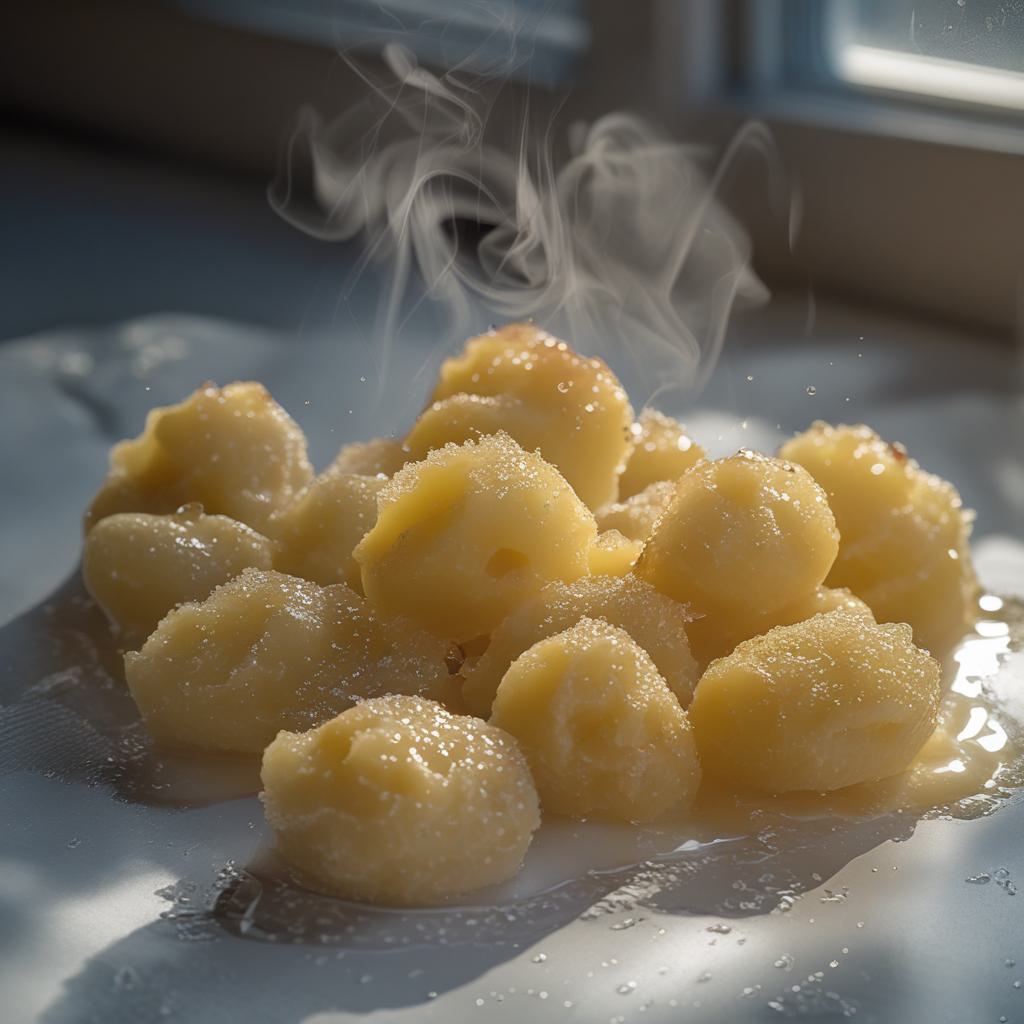
Ingredient Deep Dive
| Ingredient | Quantity | Purpose |
|---|---|---|
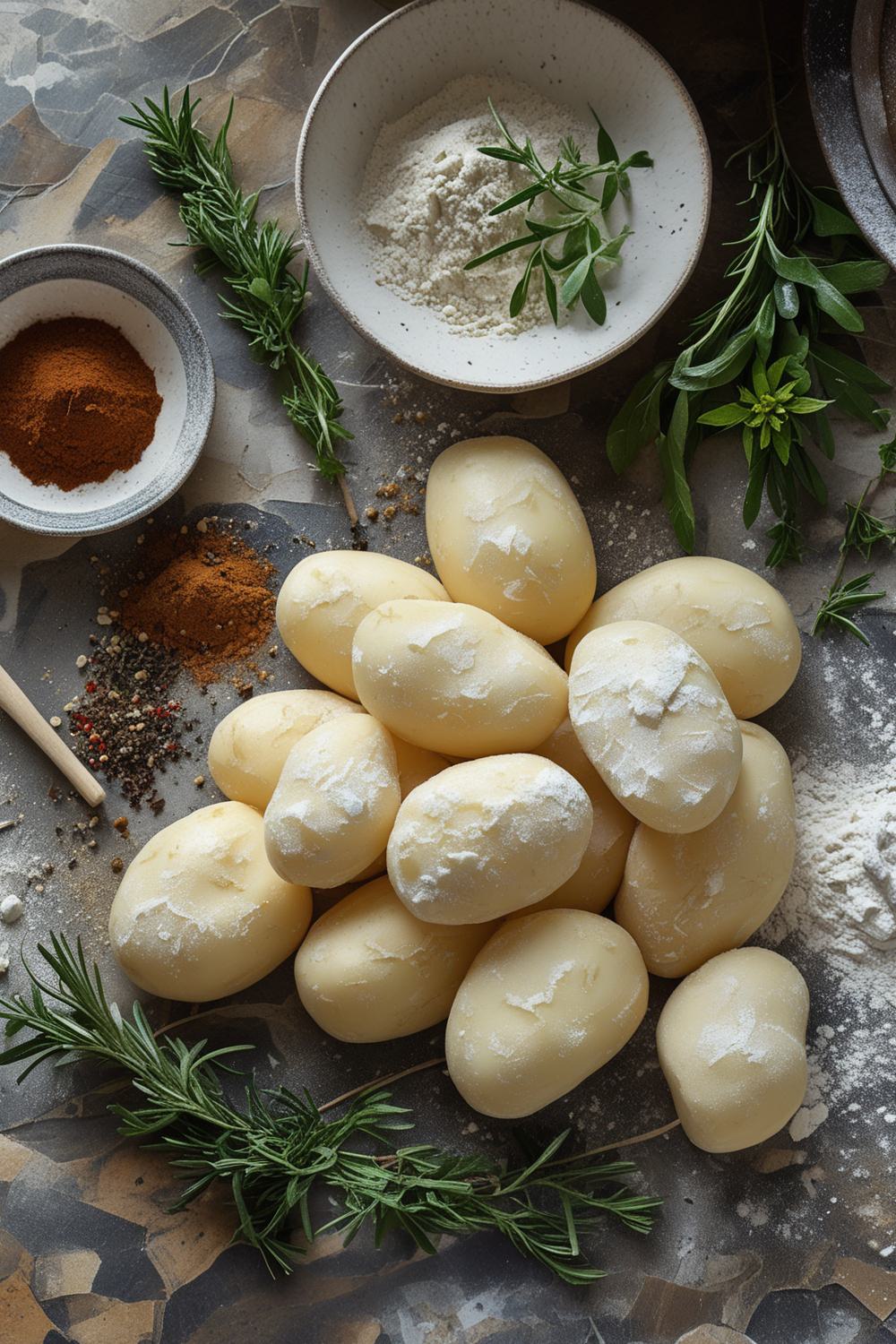
| Russet Potatoes | 4 large (2lbs/900g) | High-starch content creates creamy interiors with crisp caramelization |
| Clarified Butter | 4 tbsp (60ml) | High smoke point ensures golden searing without burning |
| Vegetable Stock | 1 cup (240ml) | Steam-roasting liquid that imparts subtle savory depth |
| Thyme Sprigs | 6 whole | Woody herb perfumes the cooking fat and stock |
| Garlic Cloves | 3 smashed | Builds aromatic foundation without overpowering |
| Kosher Salt | 2 tsp | Enhances natural potato sweetness |
The starch matrix in russet potatoes undergoes magical transformation when exposed to the dual cooking method. Surface sugars caramelize at 320°F (160°C) when seared in butter, while the stock’s steam converts interior starches to velvety-soft textures through gelatinization. This creates the signature contrast of glass-like crust and cloud-like center.
Clarified butter proves superior to olive oil because its milk solids have been removed – preventing scorching during the initial high-heat searing phase. The collagen in quality vegetable stock (or chicken stock if non-vegetarian) acts as a natural emulsifier, creating a glossy reduction sauce that clings perfectly to the potato cylinders.
Substitutions & Swaps
For vegan preparations, substitute cultured vegan butter with 87% fat content. Mushroom stock makes an excellent plant-based alternative that mimics umami-rich meat stocks. Gluten-free needs are inherently covered since potatoes contain no gluten compounds.
If fresh thyme isn’t available, use 1/4 tsp dried thyme added to the stock rather than the searing fat. Duck fat can replace butter for richer flavor profiles in omnivore versions. When large russets are unavailable, Yukon Gold potatoes still deliver excellent results – reduce cooking time by 5 minutes due to lower starch content.
Equipment Guide
A 12-inch cast iron skillet reigns supreme for fondant potatoes. Its unparalleled heat retention creates consistent caramelization and transfers efficiently from stovetop to oven. Heavy stainless steel works second-best. Avoid non-stick pans – their lower maximum temperatures inhibit proper crust development.
Essential tools include a fish spatula for delicate flipping without tearing crusts, a sharp chef’s knife for clean potato cuts, and a digital probe thermometer to ensure oil stays between 315-325°F before adding potatoes. A metal pastry brush helps evenly distribute butter during roasting.
Step-by-Step Walkthrough
- Peel potatoes completely and trim ends to create flat surfaces
- Cut into 2-inch tall cylinders using a cookie cutter or knife
- Soak in cold water for 30 minutes to remove surface starch
- Pat completely dry with paper towels – crucial for searing
- Preheat skillet over medium-high with clarified butter
- Sear potato ends for 4 minutes until deep golden crust forms
- Flip with fish spatula and sear other end for 3 minutes
- Add thyme and garlic to butter, tilt pan to baste potatoes
- Pour in preheated stock until halfway up potatoes
- Transfer to 400°F (205°C) oven for 25 minutes uncovered
- Baste every 7 minutes with reduced stock/butter mixture
The initial soak removes surface starch that causes uneven browning. Proper drying prevents dangerous oil splatter – water creates steam pockets that interrupt direct contact between potato and pan. Preheating stock accelerates cooking and prevents temperature shock to the pan. Always preheat your oven – bringing cold potatoes into a lukewarm oven will make them greasy rather than crisp.
Basting frequency determines crust integrity. Too often disrupts the developing crust; too infrequently allows drying. Look for the butter/stock emulsion to reduce to syrup-like consistency – this signals perfect glaze formation. The final internal temperature should reach 210°F (99°C) for complete starch gelatinization.
Expert Tips & Troubleshooting
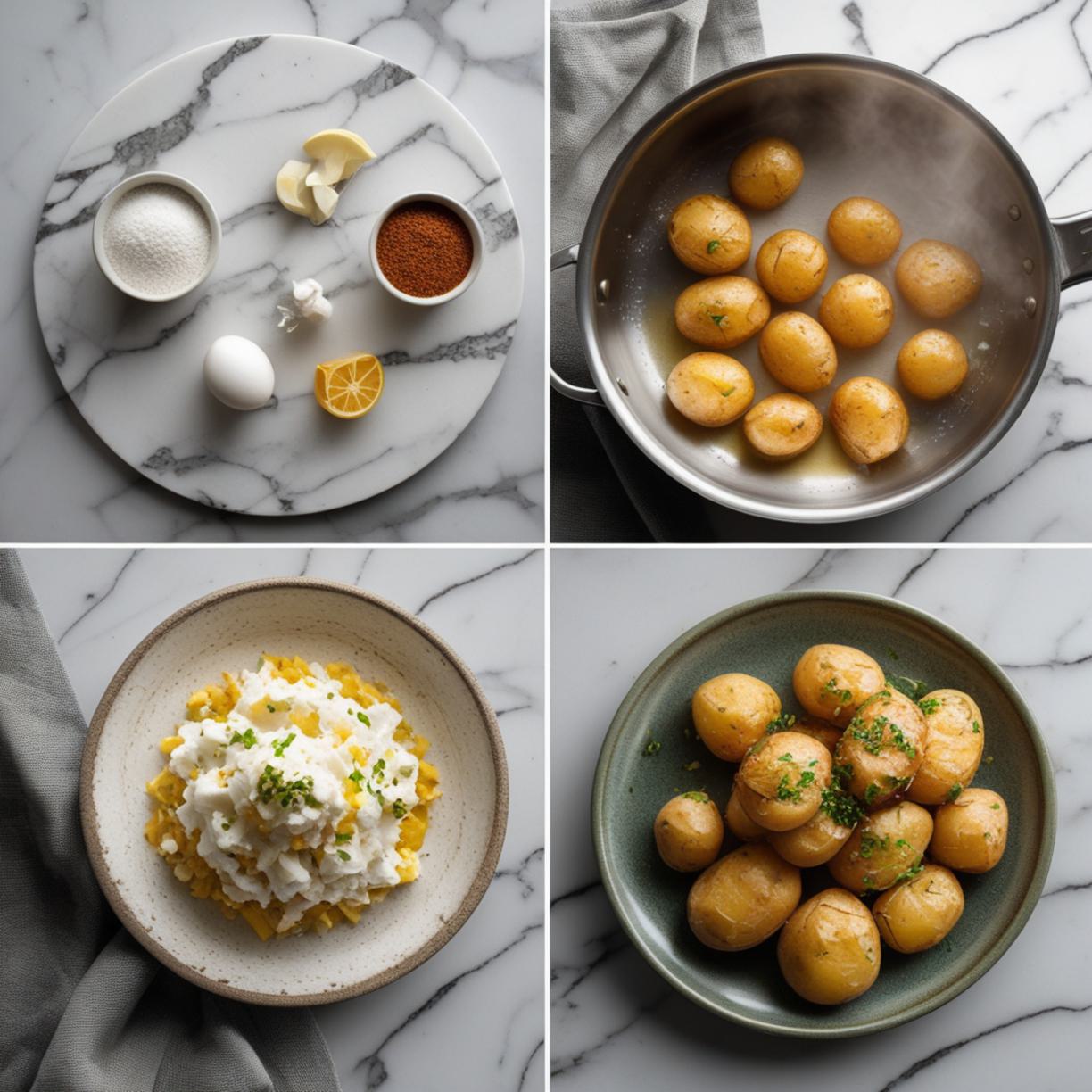
Crowding the pan is the cardinal sin. Leave 1/2 inch between potato cylinders for proper evaporation – steam trapped between pieces creates mush. If your butter smokes immediately upon adding potatoes, your pan is too hot. Remove from heat 15 seconds before reintroducing to burner. Sticking indicates insufficient fat or moving potatoes too early – wait until crust naturally releases.
For dramatic height retention, use a mandoline to create perfectly parallel ends. If stock evaporates before potatoes are tender, add 2 tbsp boiling water (never cold) and cover loosely with foil. To rescue undercooked centers, microwave individual portions 15 seconds before serving. Always rest potatoes 5 minutes after oven removal to allow residual heat to complete cooking.
Flavor Variations
Moroccan Twist: Add 1/4 tsp cumin + 1/8 tsp cinnamon to butter baste. Finish with orange zest. Kid-Friendly: Replace thyme with rosemary (less intense) and use chicken stock. Mix 1 tbsp honey into stock for subtle sweetness.
Asian Fusion: Substitute miso paste dissolved in dashi stock. Garnish with toasted sesame seeds and Thai basil. Truffle Luxe: Add shaved black truffle to stock. Finish with white truffle oil drizzle.
Storage & Reheating
Cool completely before refrigerating in airtight container (max 3 days). Reheat upside-down in skillet over medium-low with 1 tsp water – crust regains crispness while steam revives interiors. Avoid microwaving unless covered with damp paper towel to prevent hardening. Freezing is not recommended due to texture degradation.
FAQ Section
Why are they called fondant potatoes? The name refers to their “melting” texture (from French fondre) not the sugar paste.
Can I use small potatoes? Not recommended – surface area/mass ratio affects cooking physics. Minimum 2-inch diameter required.
Why clarify butter? Removing milk solids prevents burning – critical for the required searing temperature.
No oven-proof skillet? Transfer seared potatoes to preheated baking dish with stock before oven stage.
Nutrition Information
| Nutrient | Per Serving | % Daily Value* |
|---|---|---|
| Calories | 247 | |
| Total Fat | 14g | 22% |
| Carbohydrates | 29g | 10% |
| Dietary Fiber | 2g | 8% |
*Percent Daily Values based on 2,000 calorie diet. Disclaimer: Nutrition estimates vary based on ingredient brands and preparation methods. For precise dietary needs, consult a nutritionist.