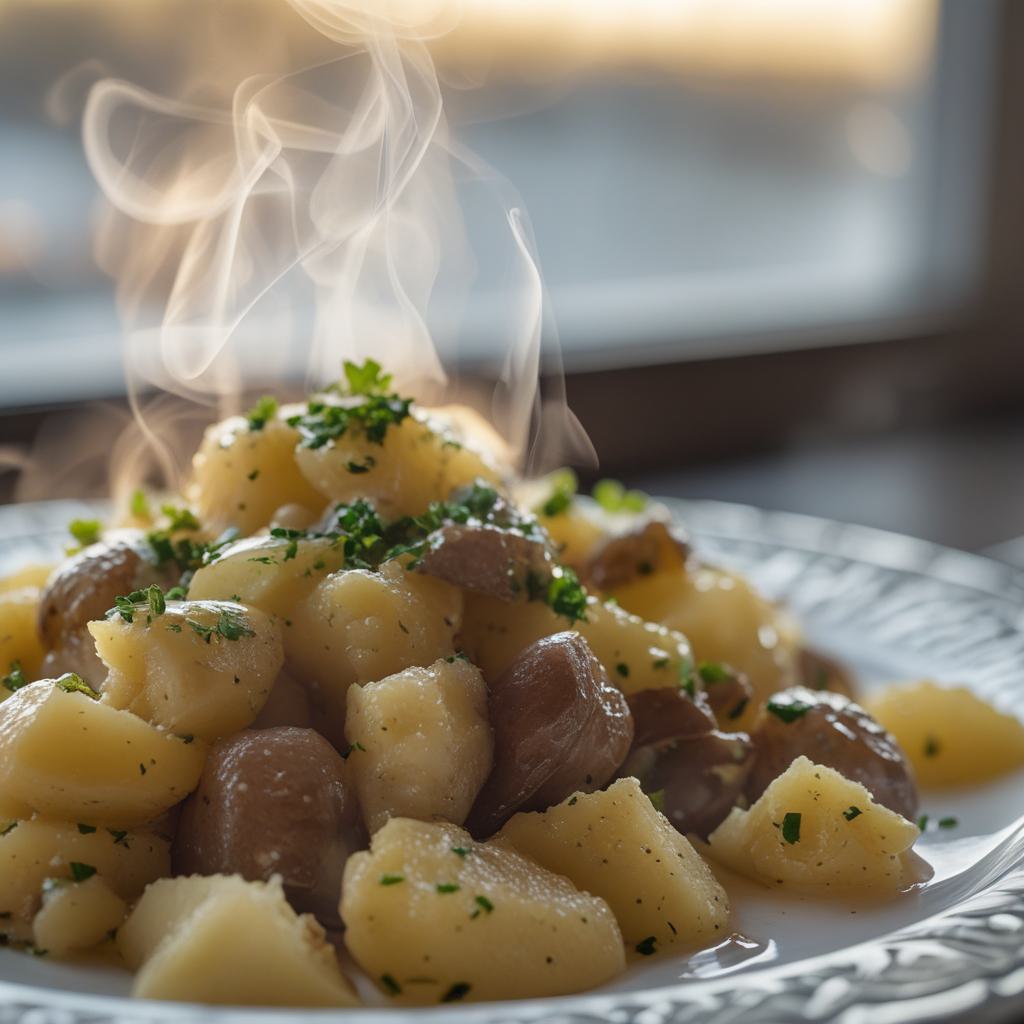
An orchestra of decadence fills the air when Steakhouse Potatoes Romanoff emerges from the oven. The aroma triggers primal cravings—robust aged cheddar melds with the lactic tang of crème fraîche, punctuated by whispers of caramelized onion and the subtle earthiness of russet potatoes baked to velvet perfection. Imagine the crackle of golden-brown crust giving way to a cloud-like interior, each spoonful releasing wisps of steam carrying notes of black pepper and nutmeg. This is no side dish; it’s the pièce de résistance straddling rustic elegance and haute cuisine, a recipe born from Midwestern steakhouses yet worthy of a Parisian brasserie.
Table of Contents
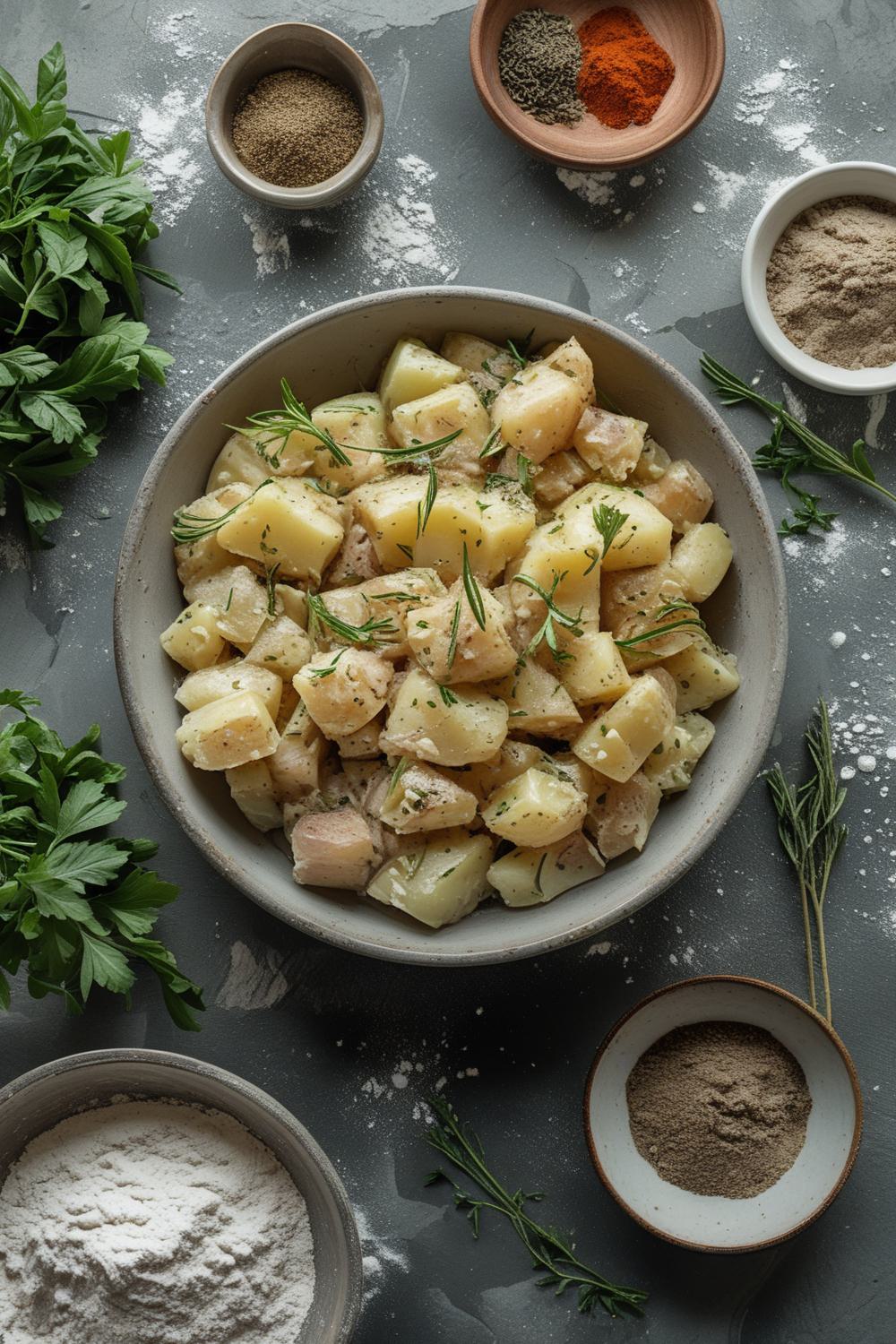
Ingredient Deep Dive
| Ingredient | Quantity | Purpose |
|---|---|---|
| Russet potatoes | 2.5 lbs | High starch content creates fluffy texture when baked |
| Crème fraîche | 1.5 cups | Tangy fat emulsion prevents curdling during baking |
| Extra-sharp white cheddar | 8 oz, grated | Low moisture cheese ensures clean melt and structure |
| Shallots | 1/3 cup minced | Sulfuric compounds mellow into sweet umami |
| Fresh chives | 1/4 cup | Enzymatic alliinase provides bright onion finish |
| Cognac | 2 tbsp | Alcohol extracts fat-soluble flavor compounds |
| Smoked paprika | 1 tsp | Phytonutrient-rich capsicum adds depth |
The starch-protein matrix in russets undergoes retrograde gelation during baking, creating pockets that absorb the dairy emulsion. Crème fraîche’s 30-45% butterfat and live cultures (Lactococcus lactis) provide both stability and tang, while its pH of 4.4-4.5 reacts with the calcium phosphate in aged cheddar to create an ultra-smooth sauce.
Shallots contain nearly twice the sugar of yellow onions, allowing Maillard reactions at lower temperatures. Cognac’s ethanol acts as a solvent for shallot oils, while oak-derived lactones bind fat molecules into a cohesive flavor profile against the cruciferous sulfur notes of fresh chives.
Substitutions & Swaps
For lactose intolerance: Substitute crème fraîche with coconut cream cultured with probiotic capsules (24 hours at 110°F). Replace cheddar with aged gouda (90% lactose-free). Vegan adaptations require nutritional yeast blended with cashew cream and agar-agar for structural integrity—add 1 tsp lactic acid powder to mimic tang.
Gluten-free needs are inherent in this recipe. Lower-fat versions sacrifice texture; using Greek yogurt instead of crème fraîche causes syneresis (water separation). However, kefir cheese strained overnight provides better results. Sweet potatoes may replace russets but require 25% less dairy due to higher moisture content. For nut-free diets, sunflower seed-based “parmesan” offers umami without cross-contamination risks.
Equipment Guide
Cast iron skillets (10-12 inch) reign supreme for thermal retention—they continue cooking potatoes evenly after oven removal. Avoid non-stick coatings; fond development is crucial. A box grater’s large holes create ideal cheese strands that melt uniformly. Use a potato ricer (not masher) for debris-free fluffing without gum-inducing cell rupture.
Infrared thermometers ensure precise 400°F oven temps—conventional thermostats often lie. Stoneware baking dishes cause uneven browning. Stainless steel mixing bowls prevent reactive interactions with acidic crème fraîche. Microplane zesters produce shallot pulp that integrates seamlessly rather than floating in chunks.
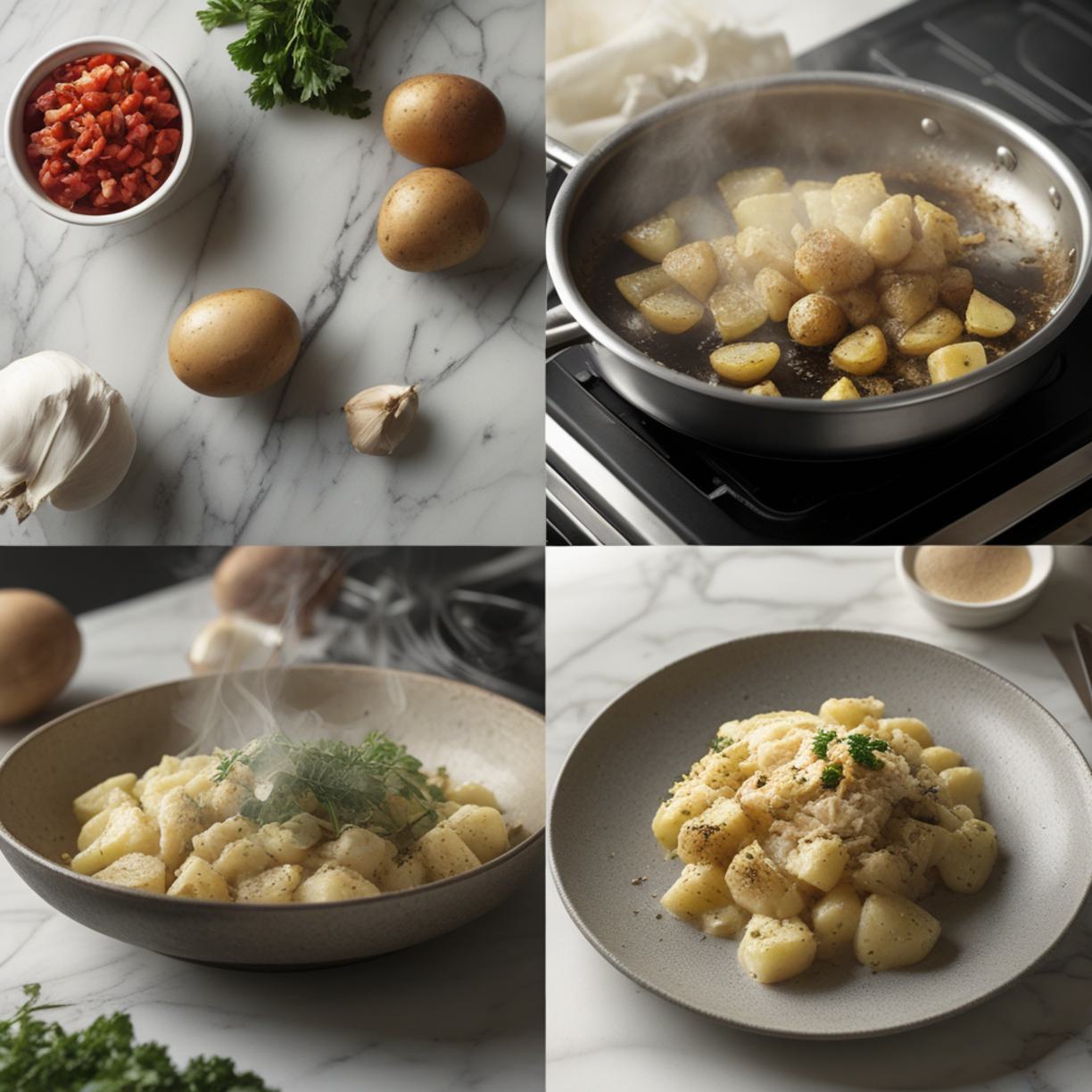
Step-by-Step Walkthrough
- Bake unpeeled potatoes at 400°F for 55 minutes on a wire rack (direct pan contact causes steam-soggy skins)
- Rest potatoes 20 minutes—pectins need cooling to lock in moisture
- Rice potatoes into chilled bowl (prevents gummy texture)
- Sauté shallots in 1 tbsp butter until translucent (5-min caramelization)
- Deglaze with cognac off-heat to preserve alcohol-soluble flavors
- Fold mixture into potatoes with crème fraîche using figure-8 motions
- Sprinkle 70% cheese gradually to create even distribution
- Transfer to pre-heated cast iron and top with remaining cheese
- Bake at 425°F 18 minutes until center reaches 185°F
- Broil 90 seconds for photogenic crust formation
The key lies in potato temperature: warm potatoes melt cheese prematurely while cold potatoes inhibit binding. Rice directly onto parchment paper to prevent metallic tastes from steel bowls. When folding in dairy, work clockwise only—reversing direction collapses air pockets vital for lightness.
Baking duration depends on dish depth: shallow pans require higher heat (450°F) briefly, while stoneware needs 25% longer at 400°F. Always broil before reaching desired internal temperature—carryover heat will add 7-10°F during resting.
Expert Tips & Troubleshooting
The Watery Potato Emergency: If mixture appears wet post-mixing, add 1 tbsp potato starch and refrigerate 45 minutes. Water evaporation during chilling will tighten the emulsion. Never add flour—it creates pastiness.
Flat Flavor Rescue: Boost umami with 1 tsp MSG or 2 tsp dried porcini powder. For broken sauce consistency (visible fat separation), whisk in 1 tsp sodium citrate dissolved in 1 tbsp hot water.
Crust Failures: Insufficient top crust means insufficient surface cheese. Grate a layer of Parmesan over cheddar before broiling—its glutamates accelerate browning. If edges burn while center remains pale, create a foil ring covering only the perimeter during baking.
Gummy Texture Prevention: Overworking potatoes releases excessive amylose starch. Always rice in one direction through the ricer. Avoid multiple passes. If using a food mill, use the coarsest die.
Flavor Variations
Smoke & Fire Edition: Replace paprika with 1 tsp chipotle powder + 2 tsp ancho chili flakes. Fold in 1/3 cup smoked brisket ends. Replace Cognac with mezcal for phenolic complexity.
Seafood Upgrade: Fold in 1/2 cup lobster knuckle meat or lump crab during mixing. Substitute crème fraîche with tarragon-infused bechamel. Top with caviar butter (1:4 ratio) before broiling.
Child-Friendly Version: Omit alcohol—use apple cider reduction. Replace sharp cheddar with milder fontina. Add crispy pancetta bits for textural intrigue. Shape into muffin tins with panko crust for portion control.
Storage & Reheating
Refrigerate in glass (not plastic) containers for 3 days maximum—potato starches become resistant and dairy separates beyond this. Freeze pre-baked mixture for 45 days; add fresh cheese topping when baking. Reheating requires moisture reintroduction: Place portion in ramekin with 1 tsp cream, cover with foil, bake 12 mins at 375°F. Microwaving deconstructs the emulsion irreversibly.
FAQ Section
Q: Can I prepare this ahead for dinner parties?
A: Assemble (unbaked) 36 hours in advance—the acid in crème fraîche prevents oxidation. Add extra 5 minutes baking time from refrigerated state.
Q: Why did my potatoes turn gray?
A: Enzymatic browning from disrupted cell walls. Next time, rice immediately post-peeling and toss with 1 tsp lemon juice.
Q: Is there a low-carb substitution?
A: Cauliflower yields 82% fewer carbs but requires steaming (not baking) and tripled cheese to bind. Expect wetter texture.
Q: Can I use pre-shredded cheese?
A: Never. Cellulose coatings inhibit melting. Shredding yourself creates clean milkfat strands essential for proper viscosity.
Nutrition Information
| Nutrient | Per Serving | % Daily Value |
|---|---|---|
| Calories | 417 | 21% |
| Total Fat | 28g | 36% |
| Saturated Fat | 18g | 90% |
| Protein | 14g | 28% |
| Carbohydrates | 28g | 10% |
| Fiber | 2g | 7% |
| Sodium | 521mg | 23% |
Disclaimer: Nutritional data estimates based on USDA databases. Actual values may vary by 12% due to ingredient variability. Consult a nutritionist for medical dietary plans.