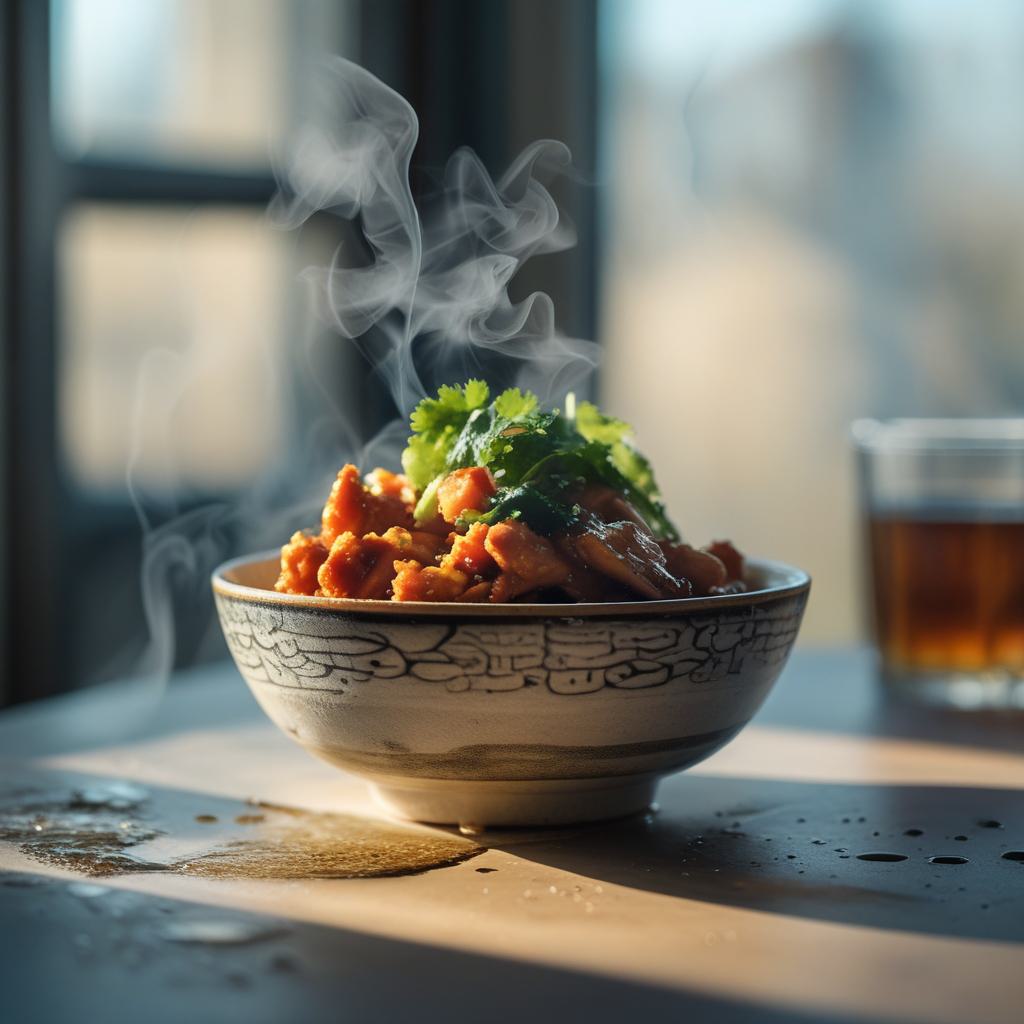
The air snaps with the sizzle of golden chicken meeting searing oil—the first olfactory promise of the Bang Bang Chicken Bowl. This dish isn’t simply tossed together; it’s a calculated riot of contrasts where nuance meets audacity. Imagine crisp, panko-armored chicken shards yielding to tender juiciness beneath a sauce that simultaneously whispers velvet and shouts with chili-tinged authority. The bowl arrives like an artist’s palette: emerald cucumber confetti, ruby pickled onions, and toasted sesame seeds catching light like edible gold leaf. Each element maintains its integrity—crunch against cream, heat tempered by cool—while harmonizing in a single bite that unravels layers of umami, sweetness, and the earthy whisper of sesame oil. Here, texture isn’t an afterthought but an architectural feat—a testament to the dish’s street food soul refined through a haute lens. The sauce, a carefully balanced emulsion of mayonnaise and sweet chili, clings with intentional viscosity, sealing flavors into every crevice. This isn’t just sustenance; it’s edible theater.
Table of Contents
Ingredient Deep Dive
| Ingredient | Quantity | Purpose |
|---|---|---|
| Chicken thighs | 500g | Fat content ensures juiciness during high-heat frying |
| Cornstarch | 75g | Creates ultra-crisp shell by inhibiting gluten formation |
| Rice vinegar | 2 tbsp | Acidity brightens heavy elements without overwhelming |
| Sweet chili sauce | 120ml | Provides viscous sweetness to counter salt & heat |
| Sambal oelek | 1 tbsp | Fermented depth that raw chili paste lacks |
| Japanese mayo | 150ml | Higher egg yolk content creates richer emulsion |
| Pickled red onion | 100g | Acetic acid cuts richness; anthocyanins add color |
Protein selection matters: Thighs over breasts bring collagen that converts to gelatin at 160°F, self-basting the meat during frying. The cornstarch-buttermilk dredge employs science—lactic acid tenderizes while creating uneven bubbles under crust formation. When frying, moisture evaporation forms steam pockets, resulting in that signature craggy texture sauce clings to.
Emulsion chemistry defines the sauce. Mayonnaise’s lecithin acts as an emulsifier, binding oil and vinegar suspensions that would typically separate. Heat from freshly fried chicken slightly melts the mayo-chili matrix, allowing it to seep into crevices without making the crust soggy—a key reason for tossing while hot. Sugar isn’t merely sweetener; it’s a flavor amplifier and browning agent under the broiler’s kiss.
Substitutions & Swaps
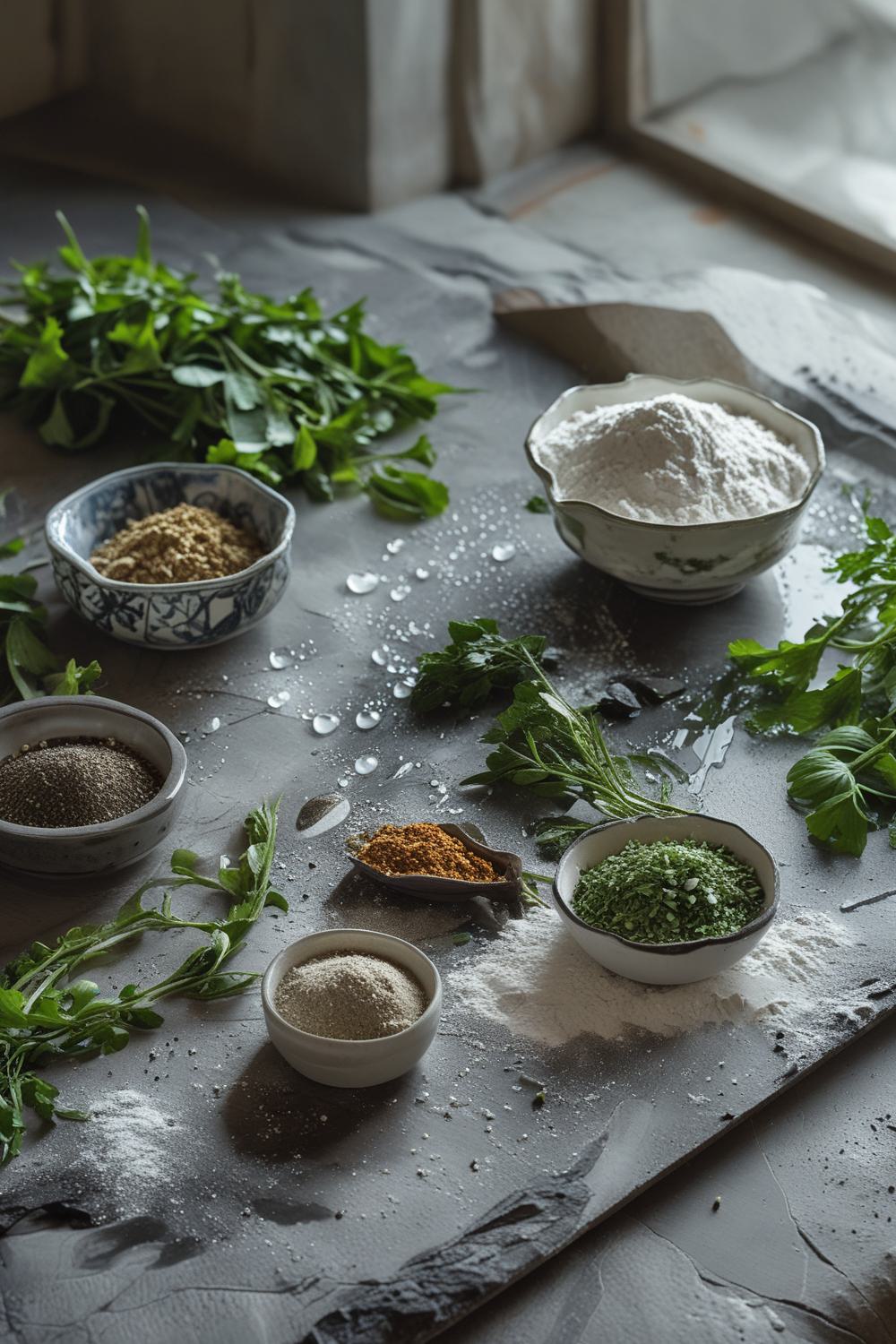
For gluten-free needs, replace panko with crushed rice cereal or almond flour—their low moisture ensures crunch remains. Tamari (wheat-free soy sauce) adjusts the marinade. Vegan adaptations shine with pressed extra-firm tofu or oyster mushrooms sliced thick; their porous structures mimic chicken’s sauce-adhering quality. Aquafaba (chickpea brine) can replace egg in dredging—its proteins denature similarly when heated. Kewpie mayo haters can use Greek yogurt thinned with lime, though expect tangier notes. For nut allergies, toasted sunflower seeds offer sesame-like texture without risk. Sambal oelek’s heat can be replicated with gochujang diluted with maple syrup—a fermented chili alternative balancing sweetness and funk.
Equipment Guide
Cast iron skillets dominate here—their superior heat retention prevents oil temperature dips when adding chicken, ensuring shatter-crisp crusts. Thin pans cause uneven cooking; burnt exteriors and raw interiors. Use a candy thermometer to maintain oil at 350°F—critical for proper browning without grease absorption. Metal tongs prevent batter tearing vs silicone. A wire rack over sheet pan drains excess oil; parchment traps cause sogginess. Mortar and pestle crush toasted sesame seeds optimally—pre-ground loses volatile oils. Heavy-bottomed saucepan stabilizes emulsification when making double-boiler sauces.
Step-by-Step Walkthrough
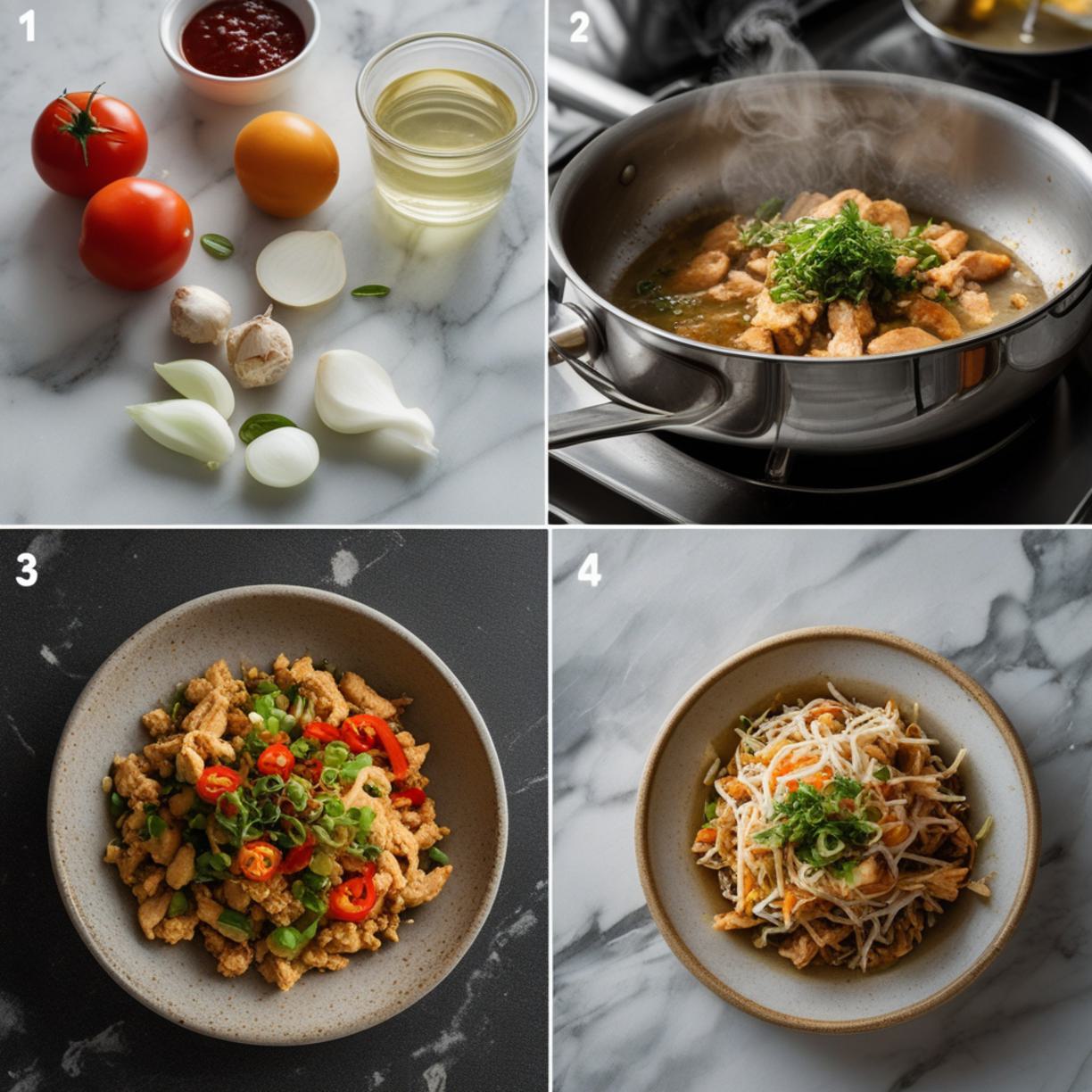
- Macerate onions in rice vinegar with pinch of sugar for 30 minutes—acid breaks cell walls gently.
- Cut thighs into 3cm strips against grain to shorten muscle fibers for tenderness.
- Marinate in buttermilk, garlic powder, salt overnight—lactic acid tenderizes, salt seasons via osmosis.
- Dredge in cornstarch-paprika mix; rests 10 minutes ensuring adhesion.
- Fry in 1-inch oil at 350°F 4 minutes per side until GBD (Golden-Brown-Delicious).
- Broil 90 seconds post-saucing for caramelized notes.
- Assemble bases first—warm sushi rice accepts sauce best.
Temperature discipline separates home cooks from chefs: Chill marinade ingredients before emulsifying—warmer liquids break easier. Fry in batches—crowding drops oil temp 50°F, leading to greasy results. Sauce application timing is surgical—drain fried chicken 30 seconds before tossing; excess oil repels sauce but residual heat integrates flavors. When plating, hot components touch cool ones last (herbs/greens) to preserve integrity.
The rice choice matters more than it seems: Sushi rice’s sticky amylopectin catches sauce pools better than jasmine. Rinse grains until water runs clear; excess starch creates gumminess. Steam spread thinly cools marginally so rice doesn’t keep cooking—a Japananese “shari” technique for controlled texture. Layer components vertically, not horizontally—height showcases textures.
Expert Tips & Troubleshooting
Problem: Soggy crust. Solution: Pat chicken dry post-marinade; surface moisture creates steam barrier preventing crisping. Problem: Broken sauce. Fix: Whisk in 1 teaspoon hot water—liquids at similar temperatures incorporate better. Problem: Over-salted. Counter: Add lemon zest—citrus oils distract palate from salt dominance. Secret: Dust cornstarch twice, letting coating hydrate before frying—creates extra-crunchy shell. Pro-tip: Add ¼ tsp baking soda to marinade—raises pH, accelerates browning without burning. For glossy sauce sheen, finish with ½ tsp sesame oil off-heat—volatile compounds remain intact. Never squeeze lemon directly over fried components—citric degrades crunch; serve wedges on side.
Flavor Variations
Spice escalations: Mala version—add Sichuan peppercorn oil into sauce. Thai riff—swap mayo for coconut cream and kaffir lime zest. Kid-friendly: Use honey instead of sambal; sprinkle “dragon dust” (paprika+nutritional yeast) for flair. Korean fusion: Gochugaru in dredge, kimchi slaw base. For umami bombs, add shiitake powder to cornstarch mix or truffle salt post-fry. Herbaceous twist: Thai basil-mint chiffonade replaces cilantro; less soapy for genetic tasters.
Storage & Reheating
Store components separately: Sauce tight-lidded (3 days), chicken on rack uncovered (prevents condensation sogginess). Reheat chicken in air fryer at 375°F 3 minutes—convection restores crispness. Microwave softens crusts irreparably. Rice revives with damp paper towel over bowl—steam rehydrates without hardening. Pickled onions improve over 72 hours; make extra.
FAQ Section
Is Bang Bang Chicken spicy?
Moderate—sambal provides heat depth, adjustable by quantity and seed inclusion.
Can I air fry instead?
Yes—spray basket lightly, cook 400°F 12 minutes. Flip once. Less crisp but healthier.
Make ahead possible?
Prep sauce/chop veggies 2 days prior. Fry chicken fresh—texture degrades quickly.
Rice alternatives?
Quinoa, soba noodles, or shredded iceberg ‘bowls’ for low-carb swaps.
The Recipe Card
| Prep Time | Cook Time | Serves |
|---|---|---|
| 30 mins | 20 mins | 4 |
Crispy chicken meets creamy-spicy mayo atop sushi rice, crowned with pickled veg and herbs—modern umami bomb with street food charm in 45 minutes flat.
Nutrition Information
| Calories | Fat | Carbs | Protein |
|---|---|---|---|
| 720 kcal | 38g | 62g | 34g |
Disclaimer: Nutritional estimates utilize USDA database and standard measuring techniques. Actual values vary based on ingredient brands and preparation precision. For dietary concerns, consult a nutritionist.