
The brilliance of Indian cuisine is often in its complexity, a layering of spices and time that builds profound depth. Yet, sometimes, the evening demands something quick, satisfying, and deeply flavorful without the multi-hour commitment. That is precisely where this recipe for Easy 20 Minute Butter Chicken enters the rotation. It delivers the signature, creamy, slightly sweet, and savory profile of classic Murgh Makhani—a universally beloved dish—but streamlines the process dramatically. This is weeknight comfort food perfected, a vibrant, rich sauce coating tender pieces of chicken, ready to be ladled over steamy basmati rice or scooped up with warm naan. It transforms a busy Tuesday into a small, culinary victory.
The Essential Pantry List for Makhani Chicken
For the Chicken and Marinade:
- One and one half pounds (680 grams) boneless, skinless chicken breasts or thighs, cut into one-inch cubes
- One half cup (120 milliliters) plain whole-milk yogurt
- Two teaspoons ground ginger
- One teaspoon garlic powder
- One half teaspoon turmeric powder
- One half teaspoon kosher salt
For the Sauce Base:
- Two tablespoons unsalted butter
- One small yellow onion, finely minced
- Two cloves garlic, minced
- One tablespoon freshly grated ginger
- One half teaspoon cumin powder
- One half teaspoon coriander powder
- One half teaspoon smoked paprika
- One quarter teaspoon cayenne pepper (adjust to desired heat)
- One fifteen-ounce can (425 grams) crushed tomatoes
For Finishing:
- One half cup (120 milliliters) heavy cream
- Two teaspoons granulated sugar
- One teaspoon garam masala
- One quarter cup (60 milliliters) water (or as needed for consistency)
- Fresh cilantro, chopped, for garnish

A Rapid Path to Flavor: Preparing This Quick Chicken Curry
Follow these steps for the fastest route to a flavorful, creamy butter chicken.
- Marinate the Chicken: In a medium bowl, combine the cubed chicken with yogurt, ground ginger, garlic powder, turmeric, and salt. Toss thoroughly to coat and set aside while you prepare the sauce base.
- Aromatics in the Pan: Melt the butter in a large, deep skillet or Dutch oven over medium heat. Add the minced onion and cook, stirring occasionally, until softened and translucent, about four to five minutes.
- Bloom the Spices: Add the minced fresh garlic and grated ginger to the pan. Cook for one minute until fragrant. Stir in the cumin, coriander, smoked paprika, and cayenne pepper, cooking for thirty seconds to awaken their flavors.
- Build the Tomato Base: Pour the crushed tomatoes into the skillet. Bring the mixture to a simmer, scraping up any browned bits from the bottom of the pan. Let it bubble gently for about five minutes to thicken slightly and deepen the tomato flavor.
- Cook the Chicken: Add the marinated chicken and the yogurt marinade directly into the simmering sauce. Stir well to combine, reduce the heat to medium-low, and cover the pan.
- Simmer and Tenderize: Allow the chicken to simmer in the sauce for approximately seven to ten minutes, or until it is completely cooked through and the juices run clear.
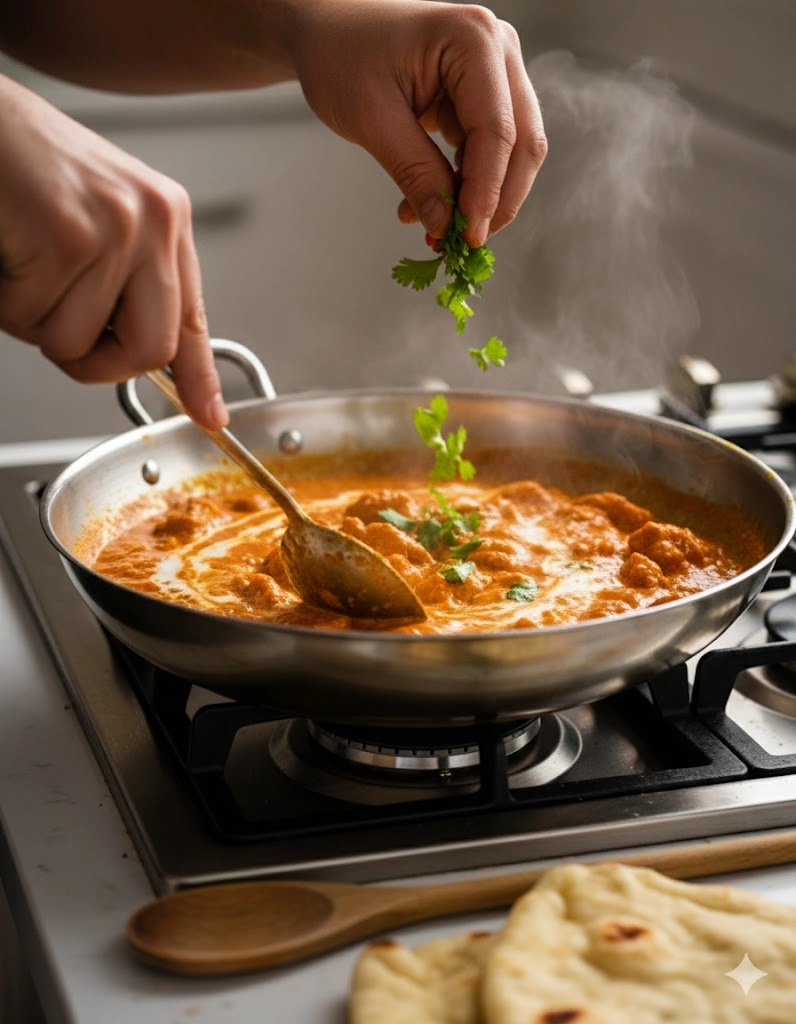
- Finalize the Sauce: Uncover the skillet. Stir in the heavy cream, granulated sugar, and garam masala. Adjust the sauce consistency with water if it is too thick. Simmer for a final two minutes.
- Rest and Serve: Remove from the heat. Taste and adjust salt if necessary. Garnish generously with fresh cilantro and serve immediately.

Mastering the Sauce and Chicken: Step-by-Step Culinary Guidance
Creating a truly excellent butter chicken, even in twenty minutes, requires attention to sensory cues and precise heat management. This detailed section guides you past common pitfalls to ensure a restaurant-quality result.
The Power of a Quick Marinade:
While classic recipes call for an overnight marinade, we leverage the acidity and fat in the yogurt to tenderize the chicken quickly. When you combine the cubed chicken with the spices and yogurt, you are creating a flavorful, protective coating. Even five minutes of contact time helps the surface of the chicken absorb initial flavor notes and, crucially, prevents the meat from drying out when it hits the heat. The goal is a uniform coating; every piece should look lightly covered in the yellow-gold hue of the turmeric-laced mixture.
Aromatics and the Butter Melt:
Start with two full tablespoons of butter. This isn’t a dish to skimp on the richness! When melting the butter over medium heat, watch for the shift from solid to liquid, followed by a slight foaming. Add the minced onion once the foaming subsides. The onions should be cooked until they turn fully translucent and soft, but absolutely not browned. Browning the onions introduces a sharp, bitter edge that will clash with the dish’s intended creaminess and sweetness. The aroma should be sweet and mellow before you proceed.
The Crucial Spice Bloom:
After the onions are soft, introduce the fresh garlic and ginger. Cook these for just under a minute. Garlic burns quickly and becomes acrid, so this window is brief. Immediately follow the fresh aromatics with the dried spices—cumin, coriander, paprika, and cayenne. This thirty-second process is called “blooming” the spices. By lightly toasting the ground spices in the hot oil and butter, you unlock their essential oils, intensifying their fragrance and flavor tenfold. The skillet will fill with a deep, earthy aroma—this is the signal that you are ready for the tomatoes.
Simmering the Tomato Foundation:
When you add the crushed tomatoes, the mixture will bubble vigorously. Reduce the heat slightly and actively scrape the bottom of the pan with your spoon. This removes any fond (browned, flavorful bits) and incorporates them into the sauce, adding a layer of subtle, complex flavor. The initial five-minute simmer allows the water in the tomatoes to evaporate, which concentrates the tomato flavor and ensures the final sauce isn’t watery. You are looking for a visible reduction in volume and a deeper, brick-red color.
Integrating and Cooking the Chicken:
Add the marinated chicken and the marinade directly into the tomato base. The yogurt in the marinade is a key thickener for this quick sauce, so don’t leave any behind. The major mistake to avoid here is rapid, high-heat boiling. High heat will cause the yogurt to split, resulting in a grainy, separated sauce. Reduce the heat to medium-low before adding the chicken, and maintain a gentle, steady simmer. Cover the pan to trap the steam, which helps the chicken cook evenly and quickly. The chicken is done when a piece cut open reveals no pink in the center, and the surrounding sauce is now thick and glossy. This quick method for Easy 20 Minute Butter Chicken relies on constant, gentle heat.
The Finishing Touches:
The heavy cream, sugar, and garam masala are added last to protect their flavor integrity. Heavy cream should not be aggressively boiled, as this can dull its richness. The sugar balances the acidity of the tomatoes, creating the characteristic sweet-and-savory profile of makhani. Finally, garam masala is a finishing spice blend, best added right at the end to preserve its fragrant, volatile oils. Stir gently for two minutes, until the sauce is a uniform, velvety orange hue and clings beautifully to the chicken.
Elevating the Experience: Expert Techniques for Butter Chicken Success
These five specific tips move your dish from merely good to truly exceptional.
- Skip the Low-Fat Dairy: For a sauce this quick, full-fat dairy is non-negotiable. Using low-fat yogurt or milk can increase the risk of the sauce separating or curdling during the cooking process. The high fat content in whole-milk yogurt and heavy cream provides stability and that essential, luscious mouthfeel that defines butter chicken.
- Embrace Fresh Grated Ginger: While the recipe calls for garlic powder in the marinade for convenience, always use freshly grated ginger for the sauce base. The aroma and sharper, brighter flavor of fresh ginger adds complexity that ground ginger simply cannot replicate. Use a microplane zester for the best, most pulpy texture.
- Adjust Consistency with Stock, Not Water: If your sauce is too thick after adding the cream, use chicken stock instead of plain water to thin it out. This adds another subtle layer of savory depth without diluting the flavor profile, ensuring every spoonful remains rich and complex.
- Toast Your Tomatoes: Before adding the chicken, let the tomato base simmer uncovered until you see small spots of oil begin to separate and pool on the surface of the sauce. This indicates that the tomatoes have cooked down sufficiently and their flavor has concentrated, eliminating the raw, canned taste.
- A Secret Touch of Fenugreek: To achieve the authentic, slightly earthy complexity found in restaurant versions, stir in one half teaspoon of dried fenugreek leaves (kasoori methi) that have been lightly crushed between your palms just before adding the heavy cream. The heat of your hands and the crushing action releases the deeply aromatic essence of the herb.
Ingredient Swaps and Flavor Adjustments
Flexibility is a key trait of a great home cook. Adapt this recipe to your preferences or what you have on hand.
Protein Alternatives:
Instead of chicken, you can easily use paneer cheese or firm tofu. For paneer, cube it and add it directly to the sauce when you would add the chicken. For tofu, press the extra-firm variety, cube it, and lightly pan-fry it until golden before incorporating it into the sauce to ensure it holds its shape.
Cream Alternatives:
To make the dish dairy-free, substitute the heavy cream with full-fat coconut milk (the kind in a can, not a carton). The coconut milk provides the necessary creaminess and richness, though it will impart a very mild coconut note, which pairs beautifully with the tomato and spice base. Skip the initial yogurt marinade and use lemon juice instead.
Tomato Intensity:
If you prefer a milder, slightly sweeter sauce, swap the crushed tomatoes for one fifteen-ounce can of tomato puree or smooth passata. These have a less chunky texture and are often less acidic than crushed tomatoes, leading to a silkier final result.
Boosting Heat:
For a spicier butter chicken, increase the cayenne pepper to one half or even three quarters of a teaspoon. Alternatively, stir in a pinch of red chili flakes along with the other dried spices, or introduce one small, minced green chili (like a serrano) with the fresh ginger and garlic.
Building a Complete Meal: Pairing and Presentation
The richness of the Makhani sauce demands simple, balancing side dishes that allow the curry to shine.
Basmati Rice Foundation:
The classic and best choice is long-grain basmati rice, prepared simply. The individual grains remain separate and fluffy, perfect for soaking up every drop of the luxurious sauce. For an aromatic twist, cook the rice with a bay leaf and a few cardamom pods.
The Essential Flatbread:
Warm, fluffy naan bread is critical. Garlic naan or plain naan, warmed gently in a skillet or oven until slightly blistered, serves as the ideal utensil for scooping the chicken and wiping the bowl clean. If naan is unavailable, a simple homemade chapati or paratha will suffice.
A Cooling Element:
The richness of the butter chicken is perfectly cut by a simple, cool side salad or yogurt condiment. A light kachumber salad—a mix of finely diced cucumber, tomato, and red onion, tossed with a squeeze of lime juice and a sprinkle of salt—provides a refreshing textural and temperature contrast.
A Simple Vegetable Side:
Offer a vibrant green vegetable prepared plainly, such as lightly sautéed green beans with a pinch of salt and a dash of lemon, or steamed broccoli florets. This provides a necessary lightness and a break from the deep, creamy flavors of the main dish.
Common Questions About This Favorite Indian Dish
Addressing the most frequent inquiries to ensure your cooking experience is seamless.
Why is my sauce grainy or separated?
A grainy sauce is almost always caused by adding cold dairy (like heavy cream or yogurt) to a very hot, actively boiling liquid, or by cooking dairy over heat that is too high. Ensure your sauce is on a gentle simmer (medium-low heat) when you stir in the heavy cream, and incorporate it slowly, stirring continuously until smooth.
Can I prepare the chicken ahead of time?
Yes, you can certainly complete the marinade step hours ahead or even the night before. This actually benefits the chicken flavor and tenderness. Store the marinated chicken covered in the refrigerator. When ready to cook, proceed directly to the instruction step of adding the chicken to the sauce.
How do I store and reheat leftovers?
Store leftovers in an airtight container in the refrigerator for up to three days. To reheat, transfer the curry to a pot and warm gently over low heat, stirring occasionally. Avoid microwaving on high heat, as this can also cause the sauce to separate. If the sauce has thickened too much, stir in a tablespoon of water or cream while reheating.
Is it possible to make this recipe spicy?
While butter chicken is traditionally a mild dish, you can increase the heat easily. The simplest way is to add more cayenne pepper when you bloom the spices, or for a deeper, earthier heat, incorporate one quarter teaspoon of Kashmiri chili powder.
What is garam masala and why is it added last?
Garam masala is a blend of aromatic spices, often including cinnamon, cardamom, cloves, and black pepper. It is added at the end of the cooking process because the spices are already toasted and ground, and their volatile, fragrant oils will dissipate if boiled for too long. Adding it at the end preserves the maximum aroma and flavor intensity.
Nutritional Breakdown
Use this table as a reference for the estimated nutritional content per serving.
| Nutrient | Amount per Serving |
| Calories | 585 kcal |
| Protein | 45 g |
| Carbs | 22 g |
| Fat | 35 g |
| Fiber | 4 g |
| Sugar | 11 g |
| Sodium | 590 mg |
Disclaimer
Nutrition information is an estimate and may vary based on preparation and ingredients used.
PrintEasy 20 Minute Butter Chicken

The brilliance of Indian cuisine is often in its complexity, a layering of spices and time that builds profound depth. Yet, sometimes, the evening demands something quick, satisfying, and deeply flavorful without the multi-hour commitment. That is precisely where this recipe for Easy 20 Minute Butter Chicken enters the rotation. It delivers the signature, creamy, slightly sweet, and savory profile of classic Murgh Makhani—a universally beloved dish—but streamlines the process dramatically. This is weeknight comfort food perfected, a vibrant, rich sauce coating tender pieces of chicken, ready to be ladled over steamy basmati rice or scooped up with warm naan. It transforms a busy Tuesday into a small, culinary victory.
- Prep Time: 5 mins
- Cook Time: 15 mins
- Total Time: 20 mins
- Yield: 4 servings 1x
- Category: Dinner, Main Dish
- Method: Stovetop
- Cuisine: Indian
Ingredients
1.5 pounds (680 grams) boneless, skinless chicken breasts or thighs, cut into one-inch cubes
0.5 cup (120 milliliters) plain whole-milk yogurt
2 teaspoons ground ginger
1 teaspoon garlic powder
0.5 teaspoon turmeric powder
0.5 teaspoon kosher salt
2 tablespoons unsalted butter
1 small yellow onion, finely minced
2 cloves garlic, minced
1 tablespoon freshly grated ginger
0.5 teaspoon cumin powder
0.5 teaspoon coriander powder
0.5 teaspoon smoked paprika
0.25 teaspoon cayenne pepper (adjust to desired heat)
1 15-ounce can (425 grams) crushed tomatoes
0.5 cup (120 milliliters) heavy cream
2 teaspoons granulated sugar
1 teaspoon garam masala
0.25 cup (60 milliliters) water (or as needed for consistency)
Fresh cilantro, chopped, for garnish
Instructions
1. Marinate the Chicken: In a medium bowl, combine the cubed chicken with yogurt, ground ginger, garlic powder, turmeric, and salt. Toss thoroughly to coat and set aside while you prepare the sauce base.
2. Aromatics in the Pan: Melt the butter in a large, deep skillet or Dutch oven over medium heat. Add the minced onion and cook, stirring occasionally, until softened and translucent, about four to five minutes.
3. Bloom the Spices: Add the minced fresh garlic and grated ginger to the pan. Cook for one minute until fragrant. Stir in the cumin, coriander, smoked paprika, and cayenne pepper, cooking for thirty seconds to awaken their flavors.
4. Build the Tomato Base: Pour the crushed tomatoes into the skillet. Bring the mixture to a simmer, scraping up any browned bits from the bottom of the pan. Let it bubble gently for about five minutes to thicken slightly and deepen the tomato flavor.
5. Cook the Chicken: Add the marinated chicken and the yogurt marinade directly into the simmering sauce. Stir well to combine, reduce the heat to medium-low, and cover the pan.
6. Simmer and Tenderize: Allow the chicken to simmer in the sauce for approximately seven to ten minutes, or until it is completely cooked through and the juices run clear.
7. Finalize the Sauce: Uncover the skillet. Stir in the heavy cream, granulated sugar, and garam masala. Adjust the sauce consistency with water if it is too thick. Simmer for a final two minutes.
8. Rest and Serve: Remove from the heat. Taste and adjust salt if necessary. Garnish generously with fresh cilantro and serve immediately.
Notes
For a sauce this quick, full-fat dairy is non-negotiable. The high fat content in whole-milk yogurt and heavy cream provides stability and that essential, luscious mouthfeel.
Always use freshly grated ginger for the sauce base; the fresh aroma and brighter flavor adds complexity that ground ginger cannot replicate.
If your sauce is too thick, use chicken stock instead of plain water to thin it out to add a subtle layer of savory depth without dilution.
Let the tomato base simmer until you see small spots of oil begin to separate and pool on the surface—this concentrates the tomato flavor.
For an authentic flavor boost, stir in one half teaspoon of dried fenugreek leaves (kasoori methi), crushed between your palms, just before adding the heavy cream.
Nutrition
- Serving Size: 1 serving
- Calories: 585
- Sugar: 11g
- Sodium: 590mg
- Fat: 35g
- Saturated Fat: 20g
- Unsaturated Fat: 10g
- Trans Fat: 0g
- Carbohydrates: 22g
- Fiber: 4g
- Protein: 45g
- Cholesterol: 135mg