
There are few weeknight meals that deliver the same level of deep, soothing comfort as a well-made casserole. This dish, the Crockpot Pierogi Casserole with Kielbasa, elevates that sentiment, combining the best parts of Eastern European tradition—creamy potato and cheese dumplings—with the smoky, savory appeal of cured sausage, all suspended in a velvety, slow-cooked sauce. It’s a hearty, one-pot wonder, designed for those evenings when you need maximum flavor payoff for minimal effort. The beauty of this recipe lies in its simplicity; the slow cooker does all the heavy lifting, melding the distinct textures and rich ingredients into an impossibly cozy meal that feeds a crowd and guarantees smiles.
Table of Contents
THE ESSENTIAL PANTRY CHECKLIST
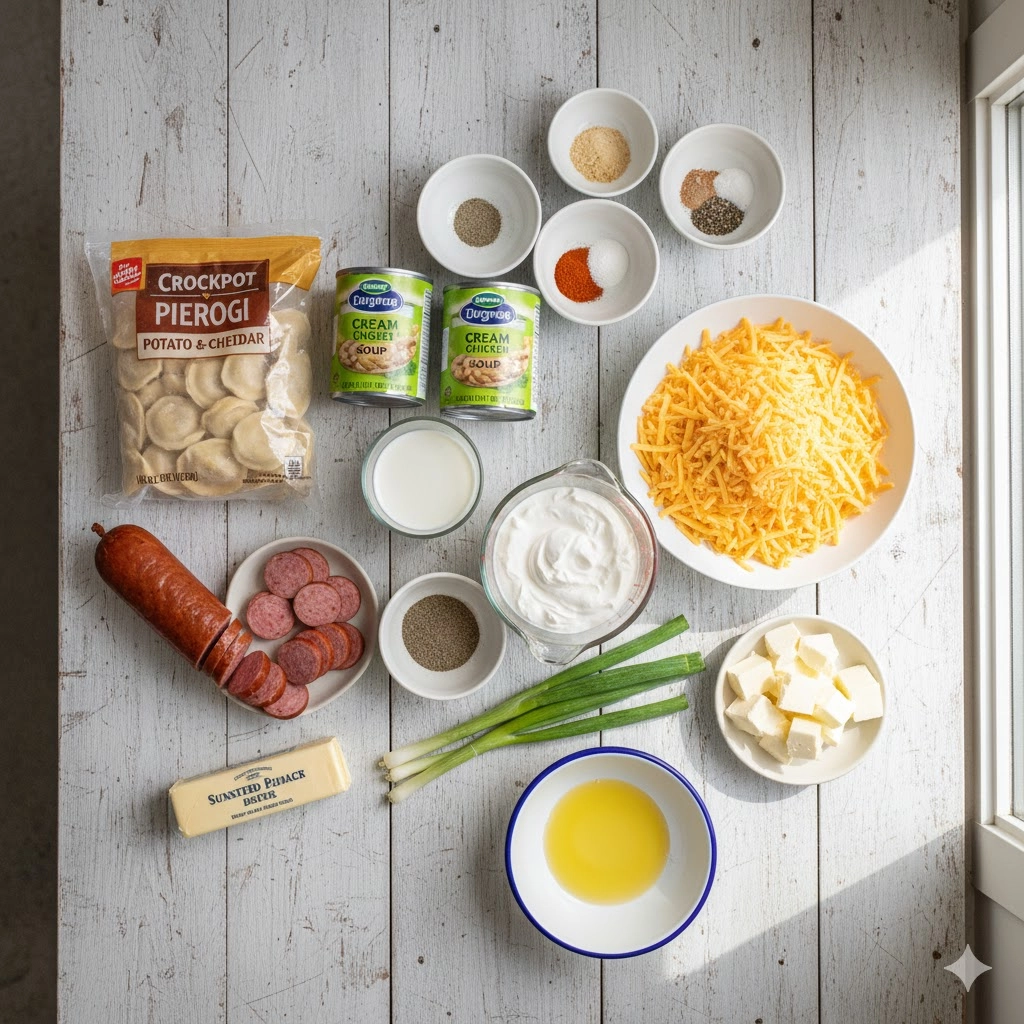
This casserole relies on a handful of straightforward, staple ingredients. Quality matters here, especially when it comes to the kielbasa and pierogi, as they form the backbone of the flavor profile.
Primary Components
- One 12 to 14-ounce package of smoked kielbasa sausage, sliced into half-inch thick rounds
- One 16-ounce package of frozen pierogi (potato and cheddar variety recommended), do not thaw
- Two cups of shredded sharp cheddar cheese
- One cup of shredded Monterey Jack cheese (or a comparable mild, melting cheese)
- Four ounces of cream cheese, cubed
The Creamy Base
- Two 10.5-ounce cans of condensed cream of chicken soup
- One cup of whole milk or half-and-half
- One half cup of sour cream
Seasoning and Garnish
- One teaspoon of dried onion powder
- One half teaspoon of smoked paprika
- One quarter teaspoon of black pepper, freshly ground
- One quarter cup of fresh chives or green onions, thinly sliced, for garnish
- Two tablespoons of unsalted butter
A Gentle Approach: The Cooking Sequence
This streamlined process makes the most of the slow cooker’s set-it-and-forget-it nature. Follow these steps for flawless execution.
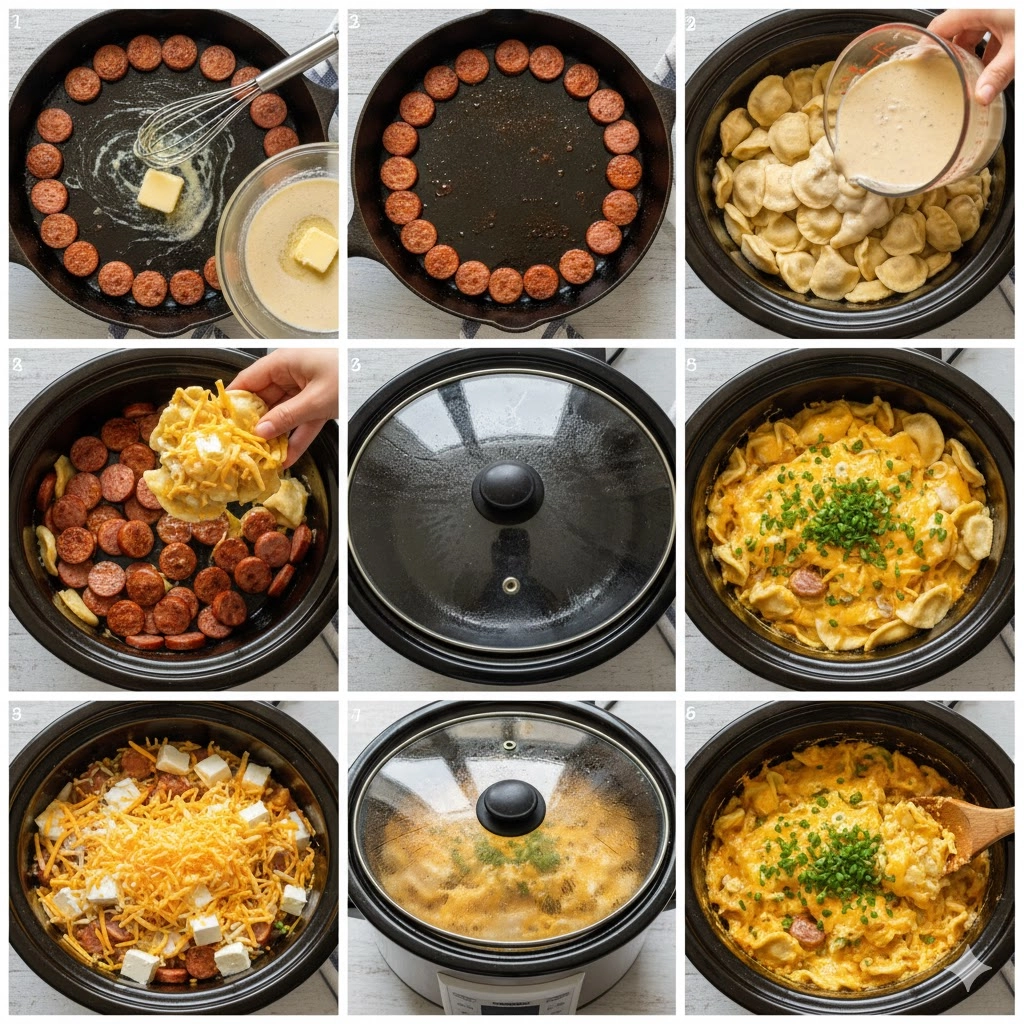
- Prepare the Meats and Base: Lightly sauté the kielbasa slices and whisk together the soup, milk, and seasonings to form the sauce.
- Grease and Layer: Thoroughly grease the interior of a six-quart slow cooker insert. Distribute half of the kielbasa across the bottom.
- Introduce the Pierogi: Arrange half of the frozen pierogi evenly over the layer of kielbasa.
- Build the Cheesy Sauce: Pour half of the creamy soup mixture over the pierogi and kielbasa, followed by half of the shredded cheddar and Monterey Jack cheeses and half of the cubed cream cheese.
- Repeat the Layers: Add the remaining kielbasa, pierogi, soup mixture, and all remaining cheeses (cheddar, Monterey Jack, and cream cheese).
- Slow Cook: Cover the slow cooker and cook on the “Low” setting for six to eight hours or on the “High” setting for three to four hours.
- Final Touches: In the last thirty minutes of cooking, gently stir the mixture to distribute the melted cream cheese. Garnish and serve immediately.
Mastering the Slow Cooker: A Deep Dive into Technique
Achieving the perfect, non-mushy casserole texture in a slow cooker requires attention to detail. This section breaks down the crucial sensory cues and technical checks for each phase.
Phase 1: Prepping the Kielbasa
While you can technically throw the kielbasa directly into the slow cooker, a brief sauté in the butter significantly deepens the flavor profile. Melt the two tablespoons of unsalted butter in a skillet over medium heat. Add the sliced kielbasa and cook for about three to four minutes, just until the edges are lightly browned and slightly crisp.
Sensory Cues: You should hear a gentle sizzle and smell the rich, smoky aroma of the sausage intensifying as the fat renders. The color should transition from a uniform pinkish-red to a deeper mahogany at the edges.
Mistakes to Avoid: Do not crowd the pan, which would cause the sausage to steam instead of brown. Also, do not overcook it; it only needs a slight sear, as the slow cooker will finish the job. Remove the kielbasa with a slotted spoon to leave excess grease behind, ensuring the casserole isn’t overly oily.
Phase 2: Assembling the Layers
Layering is the structural secret to a great casserole. The goal is to ensure that the heat and moisture distribute evenly, cooking the pierogi without turning them into a paste. The frozen state of the pierogi is key; they will slowly absorb the liquid as the cooker heats up.
Texture Indicators: When layering, aim for a single, non-overlapping stratum for both the kielbasa and the pierogi. This maximizes their contact with the creamy sauce. The cream cheese cubes should be nestled directly into the sauce layers; their small size allows them to melt quickly and thicken the overall mixture without needing to be mixed in beforehand.
Doneness Check (Pre-Cook): Ensure the soup base is fully emulsified—there should be no dry pockets of seasoning powder remaining when you pour it over the layers. This preliminary step prevents clumping later.
Phase 3: The Long Slow Cook
The true transformation happens inside the sealed slow cooker. The low, steady heat works to gently steam the pierogi while the dairy melts and forms a rich, clingy sauce.
Aroma Indicators: After about four hours on the “Low” setting (or two hours on “High”), the kitchen should be filled with the distinct aroma of melted cheese, smoked meat, and savory herbs. This is your first indication that the dish is successfully cooking.
Consistency Check: The dish is nearing readiness when the pierogi are plump, soft, and no longer have a firm, doughy center. To check, gently scrape down to the side of the slow cooker insert; the sauce should be thick enough to coat the back of a spoon, not runny or watery.
Phase 4: The Finishing Stir
The final, thirty-minute step is crucial. The cream cheese and shredded cheese will have mostly pooled in spots. Use a sturdy wooden spoon or spatula to gently fold the mixture.
Sensory Focus: Stir slowly and deliberately. The goal is to incorporate the pockets of melted cream cheese and redistribute the pierogi and kielbasa without crushing the delicate dumplings. The sauce should transition into a uniform, smooth, and cohesive consistency, coating every piece of pasta and sausage. If the sauce seems too thick, a small splash of milk (up to one quarter cup) can be stirred in during this time to loosen it slightly.
Elevating the Dish: Culinary Insights and Expert Advice
Even the simplest comfort foods benefit from a few clever techniques. These tips will help you take your Crockpot Pierogi Casserole with Kielbasa from simple to sublime.
- The Advantage of Frozen Pierogi: Do not thaw the pierogi. Using them frozen ensures that they slowly absorb the moisture from the sauce rather than immediately breaking down into a paste. Thawed pierogi are prone to overcooking and becoming mushy long before the casserole is finished.
- Condensing the Soup Base: While the recipe calls for condensed soup, you can achieve a superior flavor and texture by using a scratch-made béchamel sauce seasoned with chicken bouillon. If using condensed soup, whisk it vigorously with the milk/half-and-half before adding the sour cream to prevent the colder sour cream from clumping.
- Managing Moisture Levels: Slow cookers, especially newer models, seal very tightly and retain all moisture. If your casserole seems too wet halfway through cooking, try slightly propping the lid open with the handle of a wooden spoon for the last hour to allow a small amount of steam to escape, thickening the sauce naturally.
- Aromatic Boosting: For an immediate lift of fresh flavor, stir in two tablespoons of chopped fresh parsley or dill immediately after turning the heat off, right before serving. The residual heat will wilt the herbs and release their volatile oils without dulling their brightness.
- Cheese Selection Prowess: Use block cheese that you shred yourself instead of pre-shredded bags. Pre-shredded cheese contains anti-caking agents (like potato starch or cellulose) that can lead to a slightly grainy or gritty texture in slow-cooked sauces. Freshly shredded cheese melts into a far smoother, silkier consistency.
- Sausage Fat Infusion: Instead of discarding all the fat after browning the kielbasa, consider reserving one tablespoon of the rendered fat and adding it to the cream sauce mixture. This adds a powerful, smoky undertone directly into the sauce base, further integrating the meat’s flavor throughout the dish.
- The Overnight Chill: This casserole tastes exponentially better the next day. The flavors fully marry and deepen overnight. If preparing this for a dinner party, consider making it the day before, chilling it, and gently reheating it in an oven set to two hundred fifty Fahrenheit.
Creative Shifts: Flavor Swaps and Ingredient Tweaks
The basic blueprint of starch, sausage, and creamy cheese is infinitely adaptable. Here are several realistic ways to modify the dish to suit different preferences or pantry availability.
- Meat Alternatives: Swap the kielbasa for another smoked sausage, such as mild Italian sausage (browned first) or spicy andouille sausage, which will introduce a welcome kick of heat. For a vegetarian option, replace the sausage with one pound of sautéed button mushrooms and caramelized onions, and use a cream of mushroom soup base instead of cream of chicken.
- Beyond Cheddar: While cheddar is classic, a sharp, funky cheese like Gruyère or even a smoked Gouda can add sophistication. If you want a subtle tang, use one cup of shredded provolone alongside one cup of mozzarella for a stretchier, milder melt.
- Vegetable Bulk-Up: To make the dish stretch further and add fiber, stir in one cup of frozen peas or a half cup of chopped sun-dried tomatoes during the last thirty minutes of cooking. Adding them too early can result in an overcooked, colorless texture.
- Herbaceous Twist: Replace the smoked paprika with a mixture of dried marjoram and thyme. These herbs are traditional in many Slavic dishes and complement the potato-and-cheese filling beautifully, lending an earthy, slightly floral note to the sauce.
- The Beer Cheese Variation: For a richer, more complex sauce, replace one half cup of the milk in the base with a half cup of a light lager or pilsner. The beer’s slight bitterness balances the richness of the cheese and meat. Ensure you cook the beer with the condensed soup for five minutes on the stovetop first to burn off the alcohol before transferring it to the slow cooker.

The Perfect Accompaniment: What to Serve Alongside
Because this casserole is rich, dense, and full-bodied, the ideal pairings are light, acidic, and fresh to cut through the creaminess.
- A Simple, Bright Green Salad: Serve a large bowl of crisp mixed greens dressed with a sharp vinaigrette—think red wine vinegar, olive oil, a dash of Dijon mustard, and cracked black pepper. The acidity acts as a palate cleanser, balancing the heaviness of the cheese and sausage.
- Quick Refrigerator Pickles: A side of sliced dill pickles, quick-pickled red onions, or even sauerkraut offers a sour, crunchy counterpoint. These fermented or pickled items are traditional complements to Eastern European cuisine and provide a necessary textural contrast.
- Steamed Green Beans with Lemon: Lightly blanching or steaming fresh green beans and tossing them with a squeeze of fresh lemon juice, a pinch of salt, and a drizzle of olive oil creates a warm, neutral vegetable side that doesn’t compete with the main dish’s powerful flavors.
- A Crusty, Artisan Loaf: A thick slice of fresh sourdough or French baguette is essential for swiping up every last bit of the creamy, cheesy sauce left on the plate.
Answering Your Kitchen Queries
Can I use fresh pierogi instead of frozen ones?
It is strongly recommended to use frozen pierogi for this slow-cooker method. Fresh pierogi, which often have thinner dough, will likely disintegrate during the long cooking time, turning the dish into a potato and cheese mash instead of a casserole with intact dumplings. If you must use fresh, reduce the total cooking time to two hours on the “Low” setting and monitor closely.
Why is my sauce watery after the cook time?
The primary cause of a watery sauce is the release of moisture from the frozen pierogi and the inherent condensation inside the slow cooker. To fix this, remove the lid for the final thirty to forty-five minutes of cooking on “High.” If it is still too thin, stir in a slurry made from one tablespoon of cornstarch mixed with two tablespoons of cold water, and allow it to cook for an additional ten minutes to thicken.
Can I prepare this casserole ahead of time?
Absolutely. You can assemble the entire casserole (up to the point of turning on the heat) in the slow cooker insert, cover it, and refrigerate it for up to twenty-four hours. Add an extra thirty minutes to the total cooking time to account for starting with cold ingredients. Do not pre-cook the kielbasa if assembling ahead, as the texture may become slightly tougher when reheated.
What is the best way to store and reheat leftovers?
Store leftovers in an airtight container in the refrigerator for up up to three days. To reheat, the best method is in a conventional oven or a toaster oven set to three hundred twenty-five Fahrenheit until warmed through. This prevents the pierogi from becoming rubbery, which often happens when they are reheated in a microwave.
Is it possible to bake this dish in a conventional oven?
Yes, this recipe can be adapted for a nine-by-thirteen inch baking dish. Assemble the layers as instructed, cover the dish tightly with aluminum foil, and bake in an oven preheated to three hundred fifty Fahrenheit for about forty-five minutes. Remove the foil and bake for an additional fifteen minutes, or until the cheese is bubbly and lightly browned.
Estimated Nutritional Breakdown
This table provides an estimate for one serving of the casserole.
| Nutrient | Amount per Serving |
| Calories | 640 kcal |
| Protein | 32 g |
| Carbs | 50 g |
| Fat | 35 g |
| Fiber | 4 g |
| Sugar | 6 g |
| Sodium | 1350 mg |
Disclaimer
Nutrition information is an estimate and may vary based on preparation and ingredients used.
PrintSlow-Cooked Comfort: The Ultimate Crockpot Pierogi Casserole with Kielbasa

This Crockpot Pierogi Casserole with Kielbasa combines smoky sausage and potato-cheese dumplings in a rich, slow-cooked cream sauce. A hearty, comforting, and easy one-pot dinner.
- Prep Time: 15 mins
- Cook Time: 3-8 hours
- Total Time: 3-8 hours
- Yield: 8 servings 1x
- Category: Dinner
- Method: Slow Cooker
- Cuisine: American, Eastern European
Ingredients
12–14 oz smoked kielbasa, sliced
16 oz frozen potato and cheddar pierogi
2 cups sharp cheddar cheese, shredded
1 cup Monterey Jack cheese, shredded
4 oz cream cheese, cubed
2 cans (10.5 oz) condensed cream of chicken soup
1 cup whole milk or half-and-half
½ cup sour cream
1 tsp dried onion powder
½ tsp smoked paprika
¼ tsp black pepper
¼ cup fresh chives or green onions, sliced
2 tbsp unsalted butter
Instructions
1. Lightly sauté kielbasa in butter and whisk the soup base ingredients.
2. Thoroughly grease a 6-quart slow cooker.
3. Layer half of the kielbasa and half of the frozen pierogi.
4. Pour half of the soup mixture, shredded cheese, and cream cheese cubes over the layer.
5. Repeat the layers with the remaining ingredients.
6. Cover and cook on LOW for 6-8 hours or HIGH for 3-4 hours.
7. In the last 30 minutes, gently stir to distribute melted cream cheese and sauce.
8. Garnish with chives or green onions and serve hot.
Notes
Do not thaw the pierogi before cooking.
Using freshly shredded block cheese results in a smoother sauce.
Leftovers are best reheated in a conventional oven.
Nutrition
- Serving Size: 1 serving
- Calories: 640
- Sugar: 6g
- Sodium: 1350mg
- Fat: 35g
- Saturated Fat: 18g
- Unsaturated Fat: 10g
- Trans Fat: 0g
- Carbohydrates: 50g
- Fiber: 4g
- Protein: 32g
- Cholesterol: 120mg