
There is a distinct kind of satisfaction that comes from planning ahead, especially when it involves breakfast for a group. This preparation technique—assembling a hearty, savory, egg-and-bread-based dish the night before and letting low, slow heat do the heavy lifting—transforms the hectic morning rush into a calm, welcoming spread. The Crockpot Breakfast Casserole concept is built on a foundation of savory meats, soft bread cubes, and a custard that slowly thickens, resulting in a perfectly tender, deeply flavorful meal that’s ready the moment you wake up. It’s ideal for holiday mornings, hosting weekend guests, or simply streamlining your routine to start the day with real substance.
Table of Contents
The Components of a Great Overnight Dish
A successful slow-cooked casserole relies on balancing the moisture, the structure, and the fat. Achieving that perfect, creamy-but-set texture requires careful consideration of the base ingredients. Using high-quality proteins and dairy ensures the finished product is rich without being greasy, and moist without being soggy.
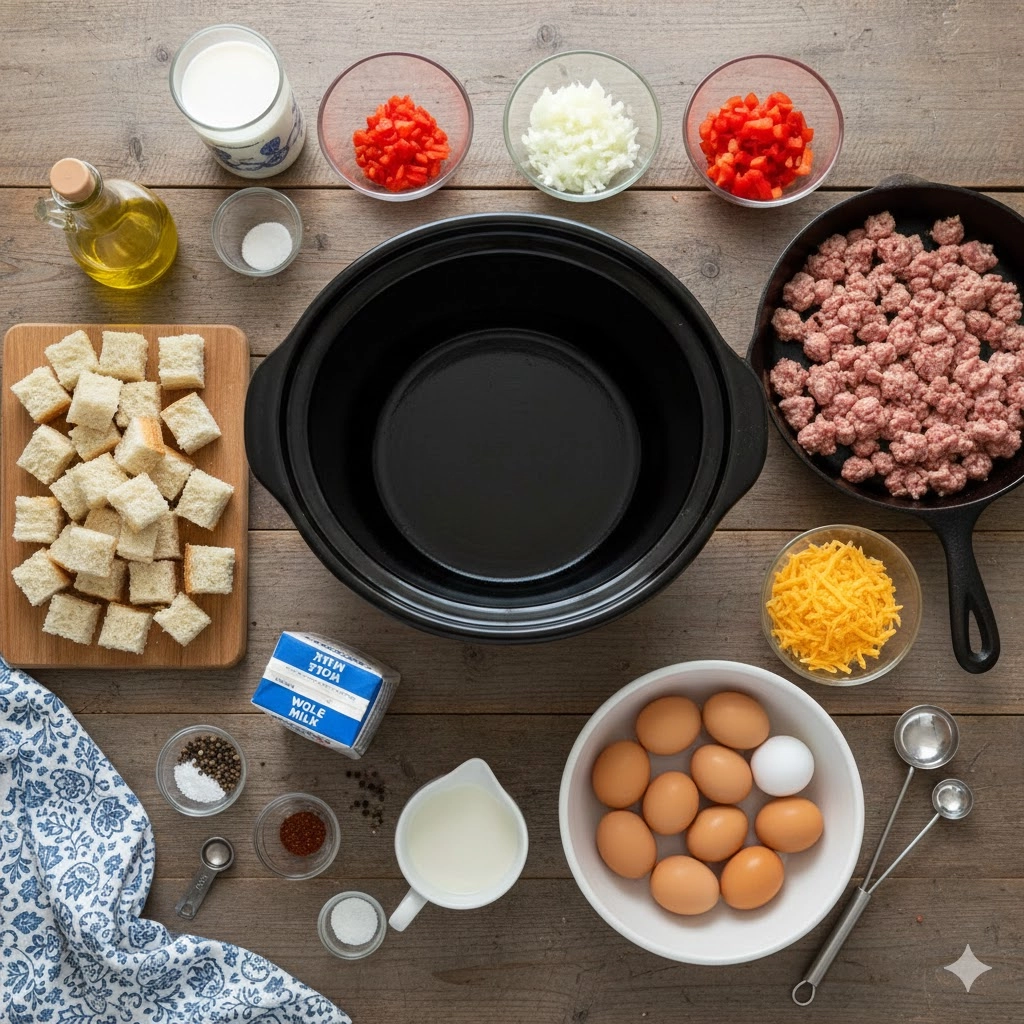
What You’ll Need
For the Base
- Six cups of cubed, day-old bread (such as Italian loaf, brioche, or sourdough)
- One pound of breakfast sausage (or bacon, rendered)
- One cup of finely diced yellow onion
- One cup of diced red bell pepper
- Eight ounces of sharp cheddar cheese, grated
- One tablespoon of olive oil or rendered bacon fat
For the Custard
- Twelve large eggs
- One and one half cups of whole milk
- One half cup of heavy cream
- One teaspoon of sea salt
- One quarter teaspoon of black pepper
- One half teaspoon of dry mustard powder
- Pinch of cayenne pepper
Preparing the Base: Building Flavor in Stages
The key to preventing a watery or unseasoned casserole is to manage moisture content and pre-cook the aromatics and meats before they enter the slow cooker. Follow these steps for best results.
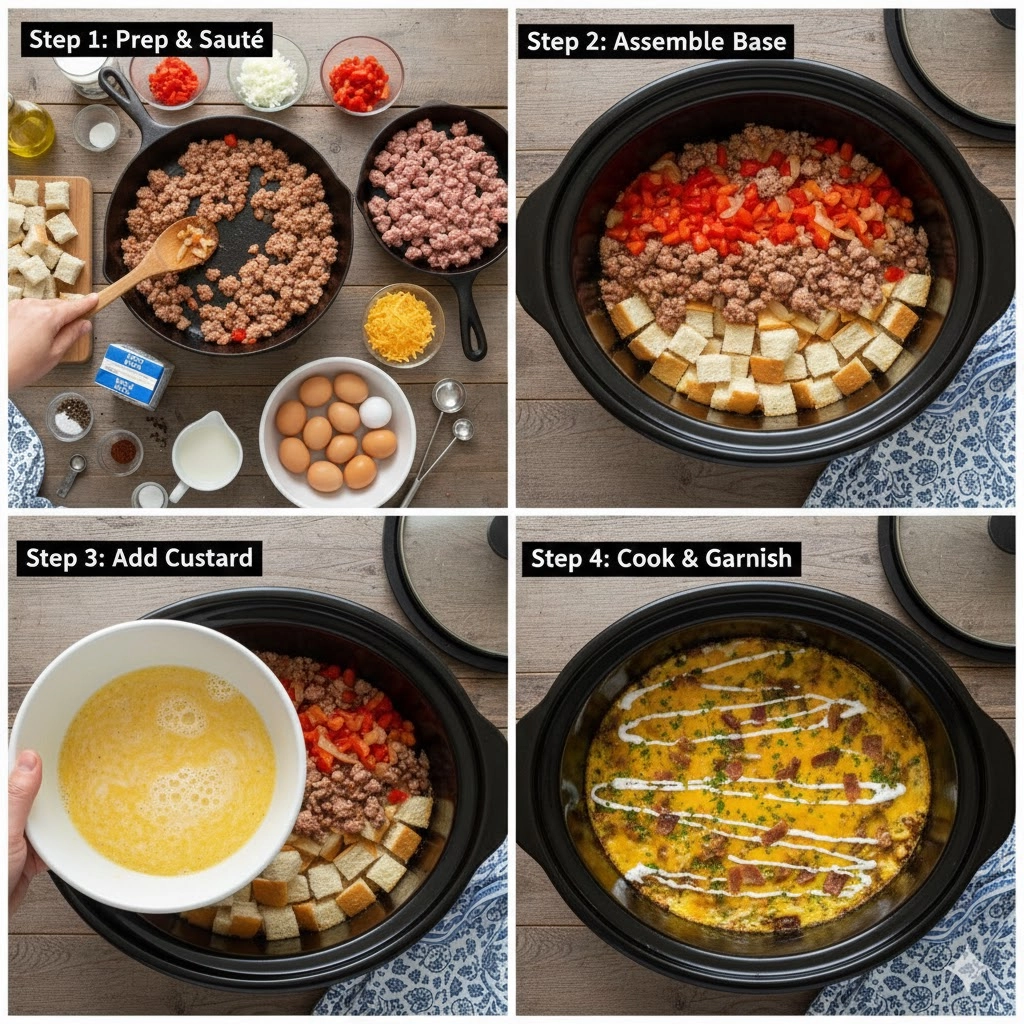
- Prepare the Meats and Vegetables: In a large skillet, cook the sausage until fully browned, breaking it up as it cooks. Remove the sausage with a slotted spoon and set aside, reserving two tablespoons of the rendered fat in the pan. Add the diced onion and bell pepper to the pan and sauté until softened and fragrant—about seven minutes.
- Coat the Slow Cooker: Lightly grease the interior of a standard six-quart slow cooker with butter or a non-stick spray to prevent sticking and aid in cleanup.
- Assemble the Foundation: Place the bread cubes into the bottom of the slow cooker in an even layer. Evenly scatter the cooked sausage, the softened vegetables, and the grated cheddar cheese over the bread.
- Whisk the Custard: In a separate large bowl, whisk together the eggs, milk, heavy cream, salt, pepper, dry mustard, and cayenne until the mixture is uniform and slightly frothy.
- Pour and Distribute: Pour the custard mixture evenly over the entire casserole base in the slow cooker. Use a spoon to gently press the bread cubes down, ensuring they are fully submerged and absorbing the liquid.
- Refrigerate and Rest: Cover the slow cooker insert and refrigerate for at least four hours, or ideally, overnight, to allow the bread to fully hydrate.
- The Cooking Phase: In the morning, transfer the slow cooker insert to the heating unit. Cook the casserole on the Low setting for five to six hours, or on the High setting for three to four hours.
Mastering the Cook: Monitoring Texture and Aroma
Cooking a large volume of liquid and solids in a slow cooker requires sensory awareness. Unlike oven baking, the heat comes from the sides and bottom, meaning the edges cook faster than the center.
The Sauté and Sear: The initial step of cooking the sausage and vegetables is crucial. This step is about more than just cooking; it’s about concentrating the flavor. When you sauté the onions and peppers, they should reach a stage where they are translucent and their sugars begin to lightly caramelize, releasing a sweet, savory aroma. If you skip this, the vegetables will release excess moisture into the custard as it cooks, resulting in a soupier final texture. The aroma should shift from sharp onion to a rounded, sweet fragrance before they are added to the pot.
The Hydration Check: After pouring the custard over the bread, the overnight rest is non-negotiable. This process, known as staling or hydration, allows the starches in the bread to soak up the liquid fully. When you check the casserole the next morning, the surface of the bread should no longer look dry or distinct. Instead, it should appear soft, swollen, and entirely saturated, with very little standing liquid visible between the pieces. If any pieces appear dry, gently press them down one last time.
The Doneness Cues: When the casserole is approaching doneness (around the four-hour mark on Low), pay attention to the visible cues. The edges will begin to pull slightly away from the slow cooker walls, and the top will appear deeply golden, especially where the cheese has crisped. The most reliable check is the temperature and texture of the center. Insert a clean knife or thermometer into the middle: the knife should come out clean (not wet with raw egg), and the internal temperature should register at least one hundred sixty Fahrenheit. The texture should feel firm and springy, not jiggly or liquid. The aroma will fill your kitchen, smelling rich with baked eggs, melted cheese, and savory meat.
Mistakes to Avoid: The most common error is removing the lid prematurely. Every time the lid is lifted, a significant amount of built-up heat and steam escapes, adding about twenty to thirty minutes to the overall cooking time. Do not lift the lid until you are ready to perform the final doneness check. Also, avoid overloading the slow cooker; it should be filled no more than two-thirds of the way to ensure even heating.
Expert Adjustments: Elevating the Standard Casserole
Even a simple dish like a breakfast casserole benefits from subtle techniques that maximize flavor and texture. These are professional adjustments designed to refine the end result.
- Use Stale, Not Fresh, Bread: Fresh bread is too soft and will turn to mush when soaked in custard. Using day-old, slightly dried bread—or even cubing fresh bread and toasting it lightly in an oven at two hundred fifty Fahrenheit for ten minutes—provides the necessary structure to stand up to the long, moist cook time.
- Tempering the Custard: Ensure the milk and eggs are fully incorporated and the dry spices are evenly distributed. Whisking vigorously until the dry mustard is fully dissolved prevents flecks of seasoning from collecting in one spot. For an even creamier texture, warm the milk slightly before adding it to the eggs to help emulsify the mixture better.
- The Final Cheese Layer: While grating all the cheese and mixing it in is effective, reserve about one quarter of the shredded cheddar. Sprinkle this reserved cheese over the top of the casserole during the last thirty minutes of cooking. This provides a fresh layer of melted, browned, and stretchy cheese that contrasts beautifully with the set interior.
- Acidity for Balance: Slow-cooked, high-fat, high-protein dishes can feel heavy. Introducing a dash of acid provides crucial balance. This can be done post-cooking by topping with a mild salsa, a dollop of crème fraîche mixed with a squeeze of lemon juice, or a finely minced, high-quality pickled jalapeño.
- Liners for Convenience: While not strictly for flavor, a slow cooker liner ensures that absolutely no part of the casserole sticks, and cleanup is minimal. This is particularly valuable for entertaining when time is paramount.
Swaps and Seasoning: Tailoring the Profile
The versatility of this Crockpot Breakfast Casserole allows for endless customization. Changing the protein or cheese can completely shift the dish’s profile, making it a different experience every time.
Protein Swaps: Instead of pork sausage, use one pound of crumbled chorizo (adjusting the spices, as chorizo is already highly seasoned), or six slices of thick-cut ham, diced small. For a lighter approach, use twelve ounces of finely chopped mushrooms and spinach, sautéing them until all the moisture has evaporated before adding them to the bread mixture.
Cheese Alternatives: Replace the sharp cheddar with Gruyère for a nutty, earthy flavor, or a blend of Monterey Jack and pepper jack for a milder, spicier kick. For an Italian influence, a mix of shredded mozzarella and Parmesan is excellent, but ensure the Parmesan is freshly grated for maximum impact.
Aromatic Additions: A teaspoon of dried herbs like thyme or sage complements the sausage beautifully. Alternatively, adding a tablespoon of minced fresh chives or scallions (the white and light green parts) into the custard mixture offers a sharper, fresher taste profile that cuts through the richness.
Spice Level Adjustment: For those who prefer heat, increase the cayenne pepper to one half teaspoon, or introduce a diced chipotle pepper in adobo sauce to the vegetable mixture for a smoky heat. If you need to tone it down, omit the cayenne entirely and rely solely on the black pepper and dry mustard for warmth.

Presentation and Pairing
The slow-cooker format inherently creates a rustic, family-style meal. However, a few simple additions can elevate the presentation and ensure the meal feels complete.
The Garnishing Finish: Never serve the casserole plain. The simple act of sprinkling the top with fresh, finely chopped parsley, chives, or cilantro immediately introduces color and vitality to the dish. If using parsley, choose flat-leaf for its brighter flavor.
Serving with Crunch: Since the casserole is inherently soft, serving something crunchy alongside it provides necessary textural contrast. A small bowl of toasted walnuts, a side of crisp bacon strips, or a simple side of dressed mixed greens adds complexity.
Pairing with Citrus and Coffee: The richness of the eggs, cheese, and meat pairs exceptionally well with something sharp and acidic. Serve a pitcher of fresh-squeezed orange juice or grapefruit juice. The drink cuts through the fat and cleanses the palate. Additionally, ensure high-quality coffee or strong black tea is available, as the tannins and bitterness complement the deep savory notes of the casserole.
Key Questions About Slow-Cooker Breakfasts
These frequently asked questions address common concerns about adapting breakfast recipes to the slow-cooking method.
Can I make this entirely vegetarian?
Yes, you can easily make this dish vegetarian by replacing the one pound of sausage with an equal amount of firm, diced mushrooms (cremini or shiitake) and one cup of sautéed spinach. It is crucial to sauté the vegetables until all their liquid has evaporated before assembling the casserole, as mushrooms and spinach release significant moisture as they cook.
How do I prevent the edges from burning while the center finishes cooking?
Burning usually occurs when the heat is too high or the bread cubes are packed too densely against the ceramic walls. To prevent this, line the slow cooker with parchment paper, allowing it to extend up the sides. If you don’t have parchment, ensure you only cook on the Low setting, and if your model runs hot, place a towel between the lid and the ceramic base to absorb some of the intense heat.
What is the best way to store and reheat leftovers?
Cool the casserole completely, then cut it into individual serving portions. Store these portions in airtight containers in the refrigerator for up to four days. To reheat, you can use a microwave, but for the best texture, place the slices on a baking sheet and reheat in an oven set to three hundred twenty-five Fahrenheit for about ten to fifteen minutes, until hot throughout.
Is it safe to leave the slow cooker on overnight?
Modern slow cookers are designed for extended, unattended cooking and are generally safe to leave on the low setting overnight. However, to ensure the safest preparation, always start the cook time after the ingredients have been refrigerated, and make sure your slow cooker is placed on a heat-safe surface away from other kitchen clutter.
Can I use frozen vegetables in this recipe?
It is strongly recommended to avoid using frozen vegetables like peppers, onions, or hash browns, as they contain a high amount of ice crystals and water. When they thaw and cook in the custard, they will release this excess water, diluting the egg mixture and leading to a soggy, potentially unappetizing result. If you must use them, thaw them completely and pat them aggressively dry with paper towels first.
Nutritional Snapshot
| Nutrient | Amount per Serving |
| Calories | 420 kcal |
| Protein | 25 g |
| Carbs | 30 g |
| Fat | 23 g |
| Fiber | 2 g |
| Sugar | 6 g |
| Sodium | 780 mg |
Disclaimer
Nutrition information is an estimate and may vary based on preparation and ingredients used.
PrintThe Essential Crockpot Breakfast Casserole for Effortless Entertaining

This essential Crockpot Breakfast Casserole is prepared the night before, featuring savory sausage, sharp cheddar, and a creamy egg custard base, perfect for stress-free hosting.
- Prep Time: 20 mins
- Cook Time: 5 hours
- Total Time: 5 hours 20 mins
- Yield: 8 servings 1x
- Category: Breakfast
- Method: Slow Cooker
- Cuisine: American
Ingredients
6 cups of cubed, day-old bread
1 pound of breakfast sausage
1 cup of finely diced yellow onion
1 cup of diced red bell pepper
8 ounces of sharp cheddar cheese, grated
1 tablespoon of olive oil or rendered bacon fat
12 large eggs
1 and one half cups of whole milk
1 half cup of heavy cream
1 teaspoon of sea salt
1 quarter teaspoon of black pepper
1 half teaspoon of dry mustard powder
Pinch of cayenne pepper
Instructions
1. In a large skillet, cook the sausage and sauté the diced onion and bell pepper until softened.
2. Lightly grease the interior of a six-quart slow cooker.
3. Layer the bread cubes, cooked sausage, softened vegetables, and grated cheddar cheese in the slow cooker.
4. In a separate bowl, whisk together the eggs, milk, cream, and all seasonings until uniform.
5. Pour the custard mixture evenly over the casserole base, gently pressing down the bread.
6. Cover and refrigerate for at least four hours, or ideally, overnight, to allow the bread to fully hydrate.
7. In the morning, cook the casserole on the Low setting for five to six hours, or on High for three to four hours.
8. Serve immediately when the center is set and the internal temperature reaches 160 Fahrenheit.
Notes
Use day-old or lightly toasted bread for the best texture.
Reserve one quarter of the cheese to sprinkle on top during the last 30 minutes of cooking for a fresh melted layer.
Avoid lifting the lid prematurely during cooking to prevent significant heat loss.
Nutrition
- Serving Size: 1 piece
- Calories: 420
- Sugar: 6g
- Sodium: 780mg
- Fat: 23g
- Saturated Fat: 10g
- Fiber: 2g
- Protein: 25g