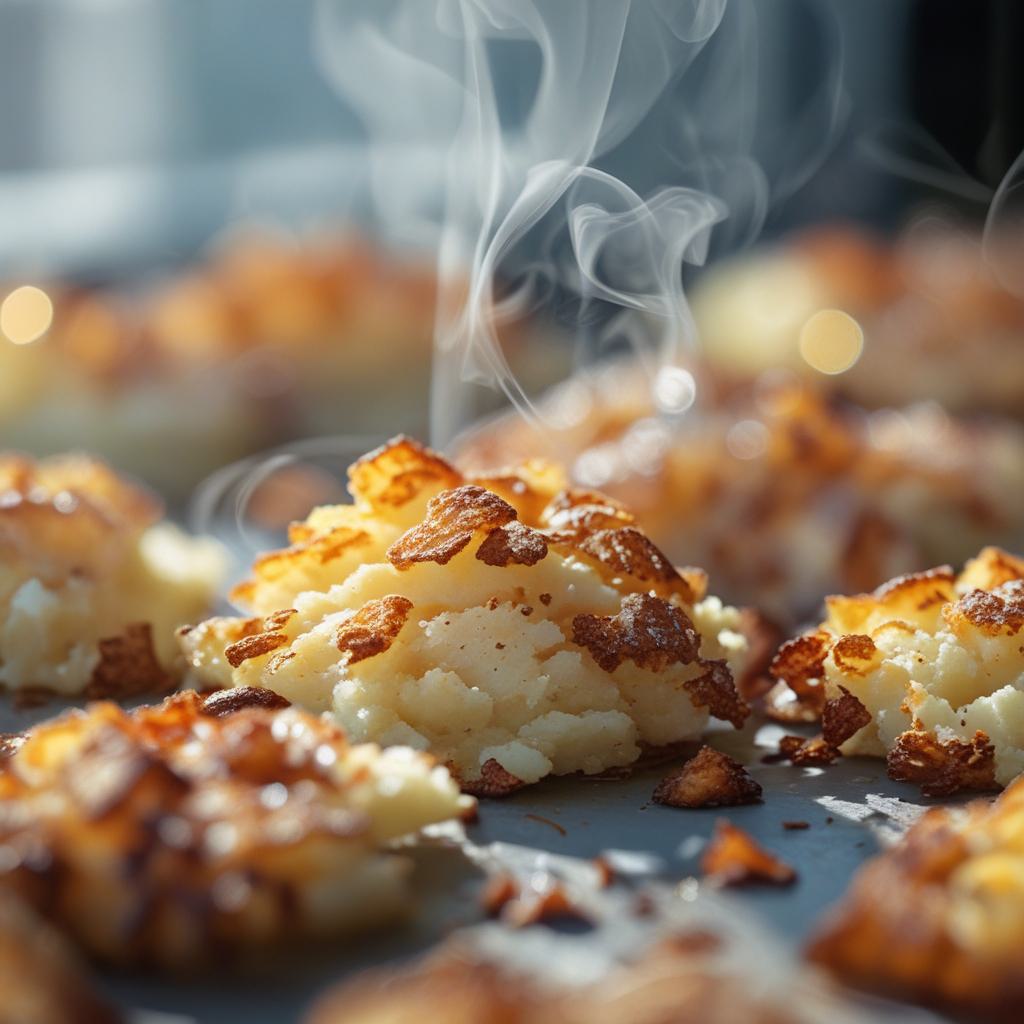
The moment your fork shatters that golden crust, a symphony begins—a percussion of crisp edges giving way to clouds of steaming, buttery potato. Crispy smashed potatoes aren’t merely a side dish; they’re edible paradoxes. Earthy yet luxurious. Rustic but refined. Imagine petite Yukon Golds, their jackets bronzed in duck fat, insides whipped into ethereal lightness by brutal force. The aroma palette oscillates between toasted oak notes from high-heat roasting and herbal top notes of rosemary smoke. It’s a dish that winks at pommes purée’s elegance while wearing dirty boots—its charm lying in calculated destruction. Farmers’ market specimens transform under strategic violence: boiled until yielding, then throttled flat before oil baptizes every crevice. The result? Landscapes of texture—charred summits, creamy valleys, salt crystals melting like morning frost. This is peasant food weaponized by technique.
Table of Contents
Ingredient Deep Dive
| Ingredient | Quantity | Purpose |
|---|---|---|
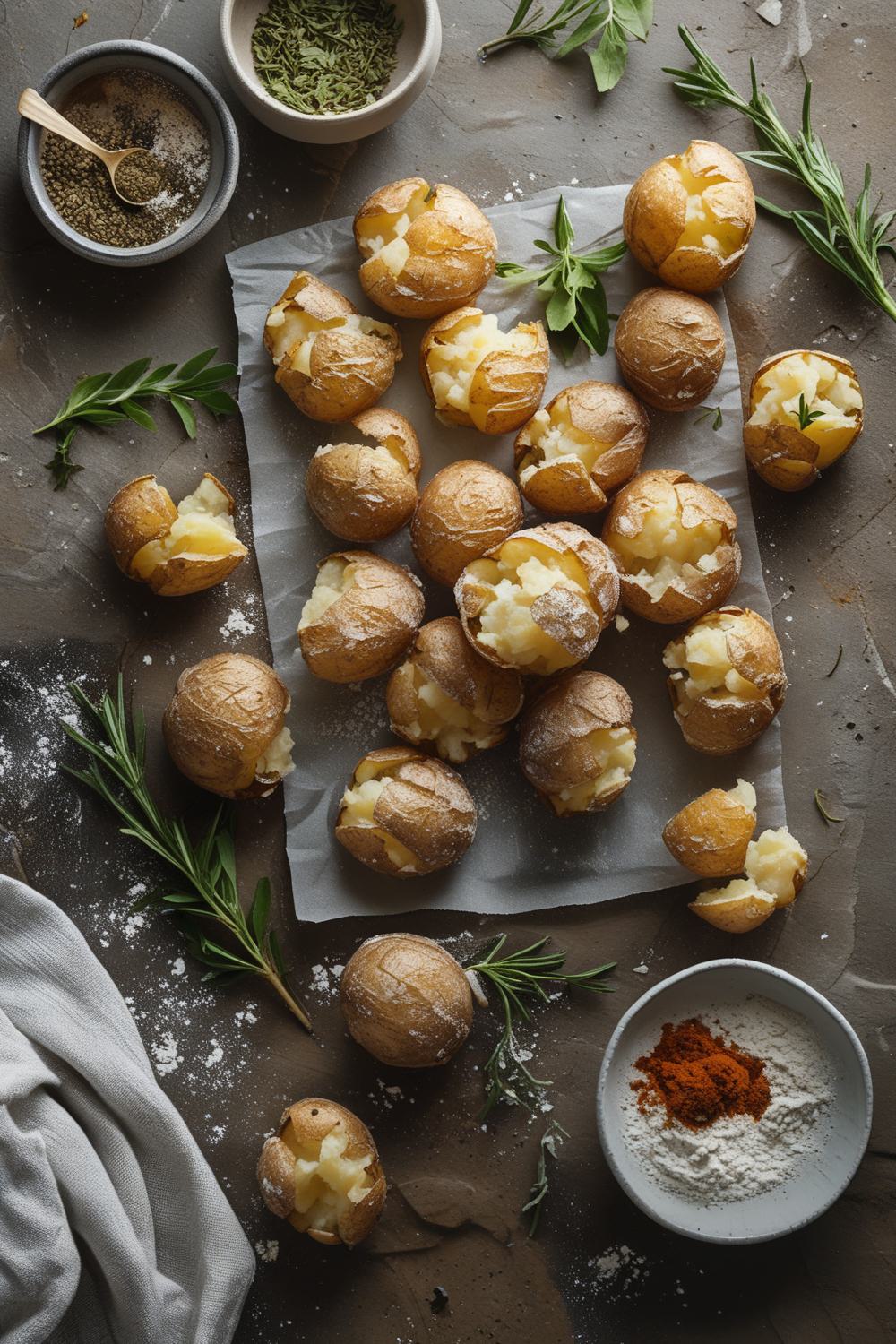
| Yukon Gold potatoes (1.5-2″ diameter) | 2 lbs | High starch/low moisture for fluffiness |
| Duck fat | 1/3 cup | Higher smoke point & umami-rich crisping |
| Flaky sea salt (Maldon) | 1 tbsp | Dissolves slowly for textural contrast |
| Fresh thyme | 3 sprigs | Earthy counterpoint to richness |
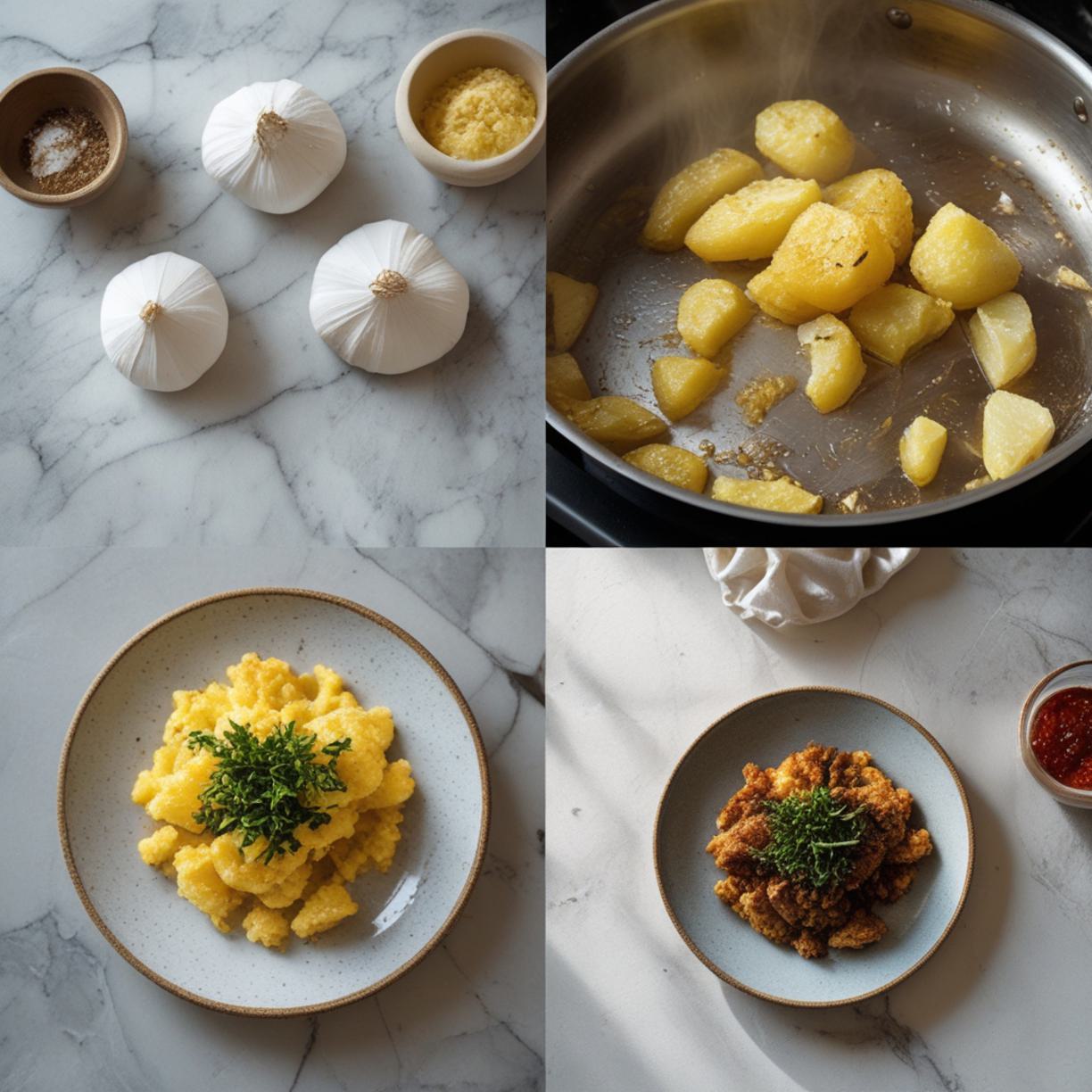
| Black garlic | 4 cloves | Adds fermented sweetness without burning |
| Freshly ground Sichuan pepper | 1 tsp | Numbing citrus notes cut through fat |
Chemistry dictates every choice here. Yukon Golds strike the perfect amylose-to-amylopectin ratio—enough starch to create craggy surfaces when smashed, yet sufficient moisture to prevent chalkiness. Duck fat’s fatty acid profile (35% unsaturated) allows roasting at 450°F without polymerization (that acrid smoke). The glycerol in black garlic caramelizes externally while retaining balsamic-like moisture inside the tuber’s fissures.
Texture engineering occurs via moisture management. Blanching in heavily salted water (10% salinity) partially gelatinizes starches while creating osmotic pressure to expel excess water—critical for shattering crusts. Post-smash resting lets surface moisture evaporate; this desiccation is non-negotiable for ultimate crispness. Sichuan pepper’s sanshools activate TRPV1 receptors, tricking the palate into perceiving “brightness” against the fat’s unctuousness.
Substitutions & Swaps
For vegan iterations, replace duck fat with refined coconut oil (neutral flavor) or mushroom soy butter (blend roasted shiitake powder into Miyoko’s cultured oat butter). Allergy concerns? Opt for peanut oil over duck fat—its high oleic content mimics similar crisping behavior. Grain-sized salt works if Maldon’s unavailable, but add 25% less to compensate for faster dissolution.
No black garlic? Roast regular garlic cloves submerged in grapeseed oil at 250°F for 90 minutes until mahogany-hued. Potato alternatives exist but beware: fingerlings retain too much moisture, while russets fracture unevenly. If forced to substitute, parboil russets 3 minutes less and double the post-smash drying time. For low-oxalate diets, purple Peruvian potatoes work beautifully but expect muted browning.
Equipment Guide
Cast iron reigns supreme—its thermal mass maintains blistering 450°F surface temps even after potato moisture hits the pan. If using stainless steel, preheat until water droplets dance like mercury. Non-stick surfaces sabotage crust formation; polymers recoil above 500°F. For smashing, a French rolling pin offers controlled pressure. A fish spatula’s tapered edge slides beneath fragile crusts intact.
Digital probe thermometers prevent oil smoke disasters. Parchment paper? Only for sheet pans—it insulates cast iron’s direct heat. Mortar and pestle grind Sichuan pepper without shredding husks (which turn bitter in blenders). Lastly, a spider strainer prevents potato rupture during blanching. Compromising on tools risks textural mediocrity.
Step-by-Step Walkthrough
- Boil 4 quarts water with 1/2 cup kosher salt.
- Add potatoes, simmer 22 minutes until 80% cooked (fork meets slight resistance).
- Drain, rest potatoes on wire racks for 17 minutes to evaporate moisture.
- Preheat cast iron skillet with duck fat in 450°F oven.
- Place potatoes 3″ apart on skillet. Smash to 1/2″ thickness with rolling pin (one decisive motion).
- Roast 22 minutes. Flip potatoes, insert black garlic between crevices.
- Roast 12 more minutes. Finish under broiler for 90 seconds.
- Toss with thyme, Sichuan pepper, and flaky salt.
Critical precision lies in smashing technique: too timid and interiors remain dense; too aggressive and structural integrity fails. Target 50% height reduction—this maximizes surface area for crust while preserving steam pockets within.
Stage the flip at minute 22—when edges curl upwards like papyrus scrolls. This signals sufficient dehydration for easy release. Insert black garlic now; earlier placement burns its sugars. The final broiler blast isn’t optional—direct radiation creates microblisters that trap salt crystals (look for 30% surface coverage of charred bubbles).
Never overcrowd the pan. Steam from adjacent potatoes creates a humid microclimate, turning potential crisp into limp tragedy. Two inches between each allows convective heat currents to wrap each tuber evenly.
Expert Tips & Troubleshooting
Problem: Gummy interiors. Solution: Undercook initial boil—they should still be springy when smashed. “Terrors of the fork” don’t apply here. Problem: Sticking to pan? Not enough oil conductivity. Pour fat along sides first—letting it heat before contacting potatoes. If already stuck, wait: crusts release naturally upon sufficient dehydration.
For extra crunch, dust smashed surfaces with rice flour or whey protein isolate (1/4 tsp per potato). These hydrocolloids form microgrids that trap escaping steam, puffing up like chicharrón. Temperature dips when adding potatoes? Compensate by increasing initial heat by 25°F—thermal mass requires recalibration.
Naked-eye cues > timers. Ideal crust emits a hollow tap when flicked. Underside should resemble a topographic map of canyons—deep oil channels that signal thorough rendering. If potatoes collapse when flipped, reduce boil time by 3 minutes and smash gentler next batch.
Flavor Variations
Fusion Edges: Post-broiler, shave bottarga over potatoes + lemon zest—the salt-cured roe melts into briny lava. Kid-Friendly: Swap duck fat for brown butter (children detect nutty sweetness better) and replace Sichuan pepper with smoked paprika dust. Tennessee Whiskey Glaze: Reduce Jack Daniel’s + sorghum syrup by half, brush on potatoes before final broil.
Heat seekers might infuse duck fat with dried ghost peppers (steep 10 minutes, strain)—capsaicin dissolves into lipids efficiently. For umami bombs, post-roast toss with kombu powder and bonito flakes. Sweet versions? Sprinkle with maple sugar and cracklings post-smash—it’s Thanksgiving meets Paris bistro.
Storage & Reheating
Store unseasoned potatoes in single layers between parchment. Refrigerate for 72 hours. Freezing alters starch crystallization—thawed spuds turn mealy. To revive, reheat at 425°F on preheated pizza stone for 9 minutes. Microwaving murders texture; it reactivates gelatinized starches into glue. For next-day crunch, toss cold potatoes in hot duck fat for 60 seconds—like deep-fry resuscitation.
FAQ Section
Q: Can I skip boiling and roast raw potatoes?
A: No—gelatinization from boiling enables starches to dehydrate properly during roasting.
Q: Why does the skin stay chewy?
A: High-water varieties like red potatoes cause this. Yukon Golds have thinner, more permeable skins.
Q: Do I need fancy salt?
A: Kosher salt dissolves too quickly. Flaky salts cling without dissolving, giving intermittent salinity bursts.
Q: Can I make these ahead for parties?
A: Parboil and store unsmashed potatoes overnight. Smash and roast while guests arrive—they degrade within 20 minutes post-crisping.
Nutrition Information
| Nutrient | Per Serving (200g) | % Daily Value |
|---|---|---|
| Calories | 312 | – |
| Total Fat | 18g | 23% |
| Saturated Fat | 5g | 25% |
| Cholesterol | 12mg | 4% |
| Sodium | 842mg | 37% |
| Total Carbohydrates | 34g | 12% |
| Dietary Fiber | 4g | 14% |
| Protein | 4g | 8% |
Disclaimer: Nutritional data uses industry software with generic databases. Values may vary by 11% based on ingredient brands and ripeness. Consult a dietitian for medical conditions.