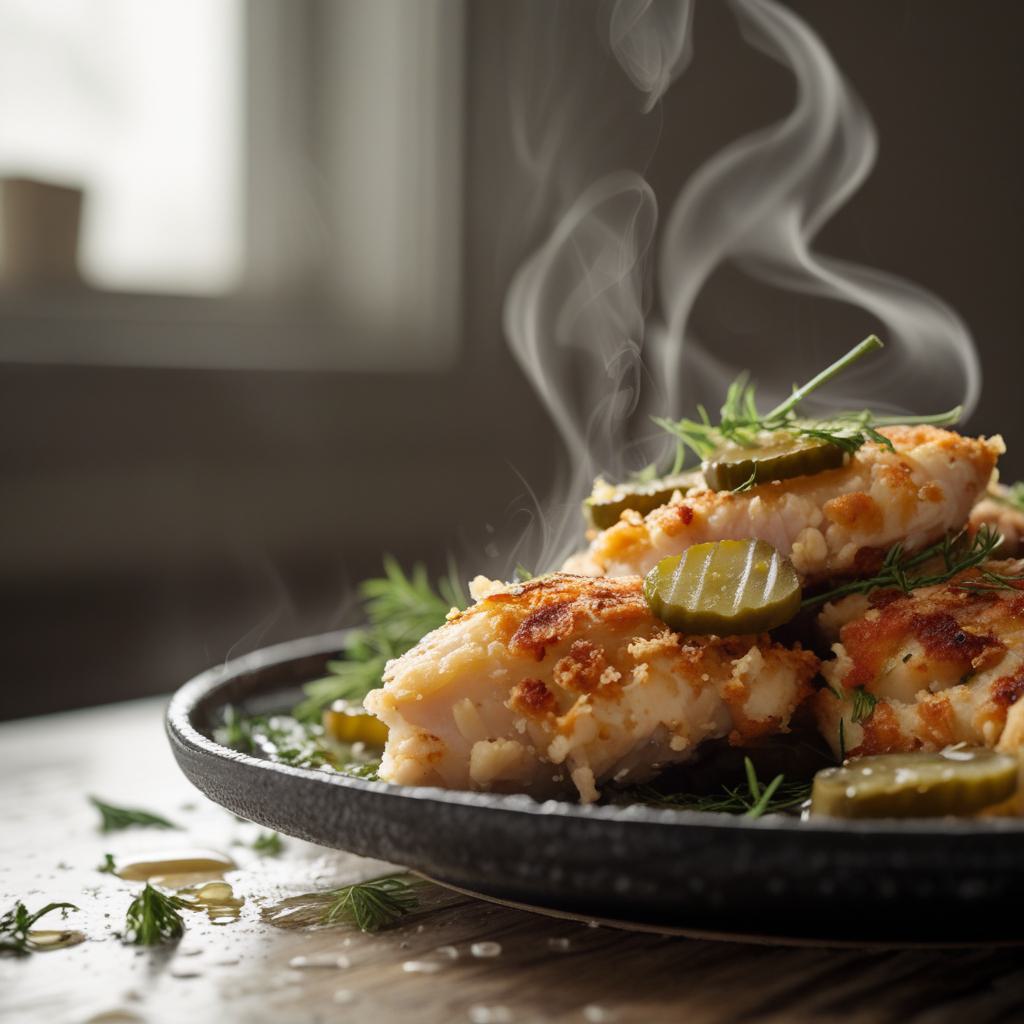
The moment golden Parmesan meets the electric tang of brined dill pickles, culinary magic unfolds. For those seeking sophistication with a playful crunch, Crispy Dill Pickle Parmesan Chicken stands apart — a harmonious rebellion where fermented brightness elevates hearty comfort. Imagine boneless chicken breasts, meticulously pounded to opulent thinness before being bathed in pickle juice brine. This acidic marinade performs two vital tasks: tenderizing the poultry with scientific precision while infusing each fiber with those unmistakable garden herb notes. The true artistry emerges in the crust — a mosaic of panko breadcrumbs fried to audibly shattering crispness, amplified by nutty Parmigiano-Reggiano. As these elements fuse under high heat, aromas of toasted cheese and vinegary dill entwine above the skillet, promising contrasts that captivate. Served piping hot, each bite delivers first a textural crescendo — the audible snap of the crust surrendering to tender, brined flesh — followed by layered flavors: rich umami from aged cheese, salty savoriness from breadcrumbs, and that final bright crescendo of pickle essence cutting through the richness. Elevated pub fare? Perhaps. But more accurately, this is a dish where childhood nostalgia meets Michelin-star discernment.
Table of Contents
Ingredient Deep Dive
| Ingredient | Quantity | Purpose |
|---|---|---|
| Boneless skinless chicken breasts | 4 (6-8 oz each) | Lean protein base with even cooking surface |
| Dill pickle juice (not sweet) | 1 cup | Brining agent for tenderization & flavor infusion |
| Japanese panko breadcrumbs | 1 1/2 cups | Larger flakes create airier, crisper crust |
| Finely grated Parmigiano-Reggiano | 3/4 cup | Umami depth and golden browning catalyst |
| Garlic powder | 1 tsp | Concentrated allium notes without burning |
| Smoked paprika | 1/2 tsp | Subtle smokiness & caramelization aid |
| Chopped fresh dill | 2 tbsp | Bright herbal counterpoint to fried elements |
| High-heat oil (avocado or grapeseed) | 1/2 cup | Neutral taste with 520°F smoke point |
The marriage of pickle juice and Parmesan isn’t mere whimsy — it’s culinary chemistry. Acetic acid from the brine denatures chicken proteins gently, resulting in remarkably tender meat while allowing salt penetration deeper than surface seasoning. This pre-treatment also lowers the chicken’s pH, which Maillard reaction enthusiasts will appreciate: browning accelerates under acidic conditions. Speaking of browning, Parmigiano-Reggiano’s glutamates and aged lactose crystals caramelize faster than standard cheeses, while its low moisture prevents steaming within the crust.
Panko warrants special attention. Unlike dense standard breadcrumbs, these flaky Japanese-style crumbs have elongated cellular structures that fracture into delicate shards when fried. When bound with egg wash, they create miniature air pockets that amplify crispness while preventing oil saturation. The inclusion of smoked paprika isn’t just for flavor—capsanthin pigments in paprika enhance visual appeal through carotenoid retention even at high temperatures. Finally, selecting grapeseed or avocado oil isn’t arbitrary; their high smoke points prevent acrid flavors while enabling the 375°F frying temperature crucial for rapid moisture expulsion.
Substitutions & Swaps
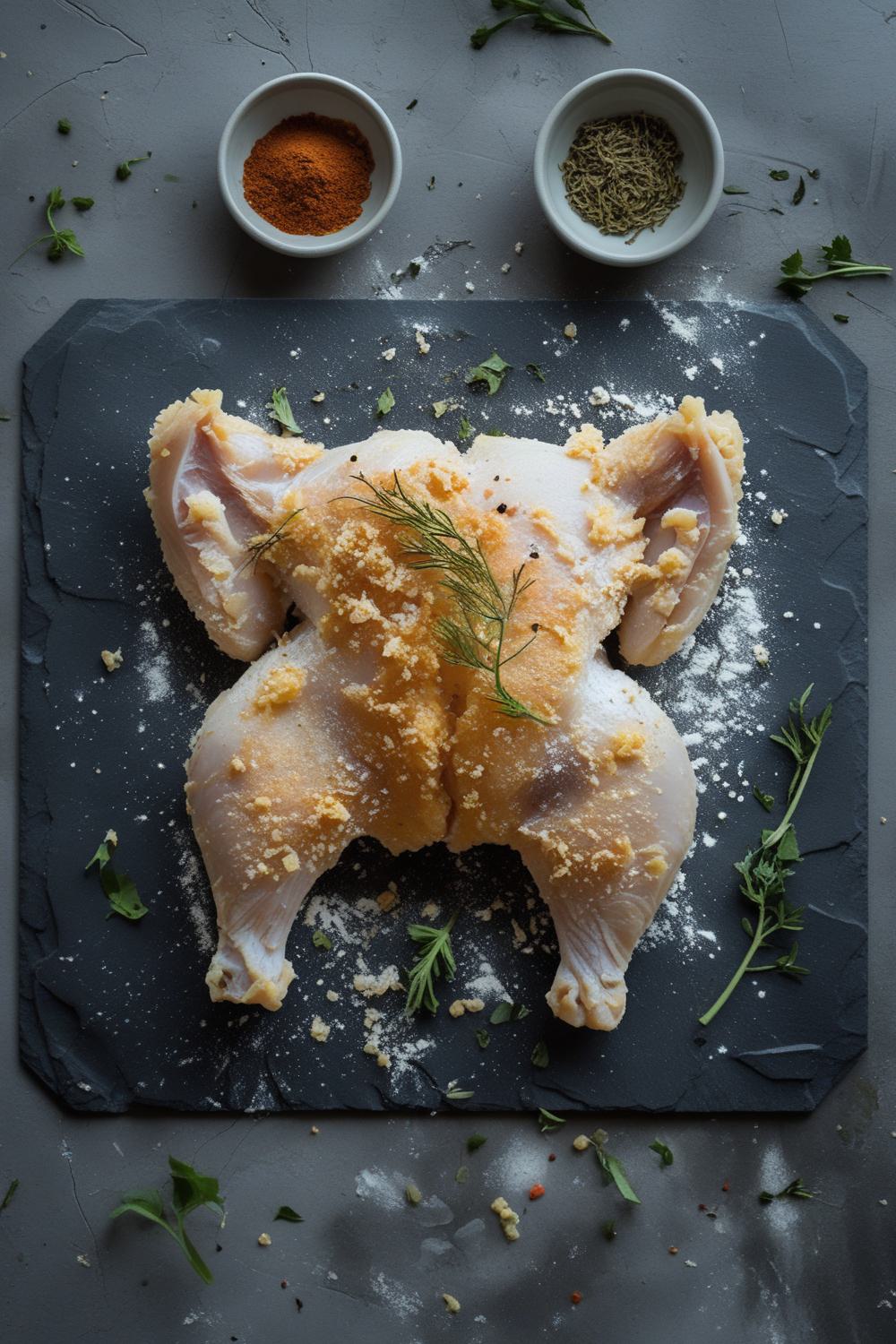
Vegan adaptations thrive here. Replace chicken with thick-sliced cauliflower steaks or trumpet mushrooms; their porous nature absorbs brine beautifully. Nutritional yeast (2 tbsp mixed into panko) mimics Parmesan’s savoriness, while aquafaba replaces eggs for binding. Gluten-free? Opt for certified GF panko — standard GF breadcrumbs often result in sandy textures. No pickle juice? Use 3/4 cup buttermilk + 1/4 cup white vinegar + 1 tbsp dill seed. For nut allergies, omit Parmesan entirely — increase smoked paprika to 1 tsp and add 1 tbsp white miso to the dredging station for umami compensation. Those avoiding frying may bake at 425°F on a wire rack for 18-20 minutes, though crust will be slightly less shattering.
Equipment Guide
Your skillet choice dramatically affects results. Cast iron reigns supreme, offering unparalleled heat retention for steady frying temperatures — essential when crust integrity depends on immediate oil recovery after chicken immersion. Avoid non-stick for this recipe; achieving proper crust browning requires temperatures that degrade PTFE coatings. A meat mallet with dual textured heads (smooth and spiked) ensures even 1/2-inch thickness without tearing flesh. Invest in a frying thermometer (clip-on style) — visual oil assessment leads to under/overheating. For impeccable plating, preheat serving plates in a 170°F oven; cold dishes cause condensation that softens the crust prematurely. Lastly, commercial kitchen tweezers provide surgical precision when flipping delicate cutlets.
Step-by-Step Walkthrough
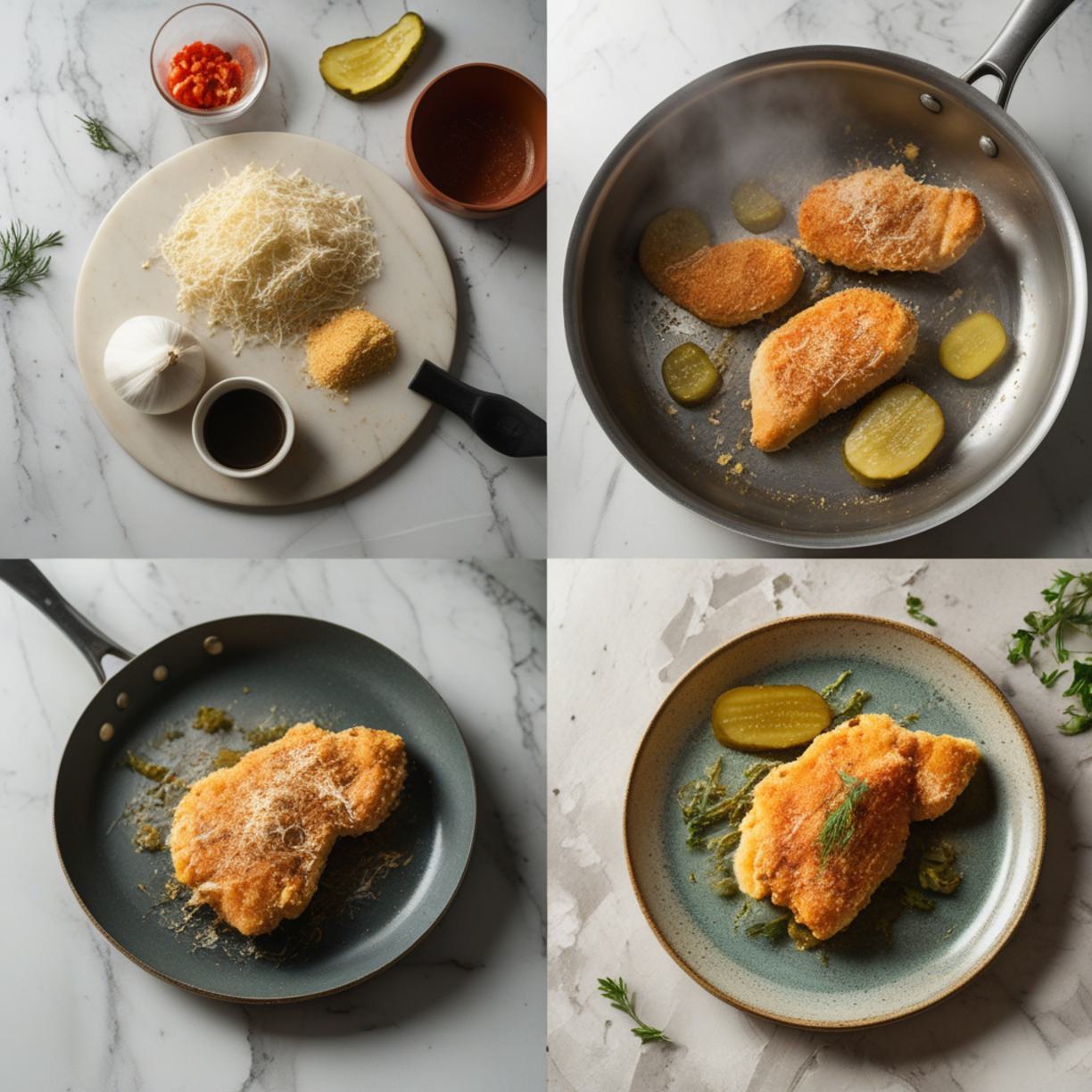
- Brining: Pound chicken between parchment to 1/2-inch uniformity. Submerge in pickle juice 40 minutes (no longer — acidity toughens proteins beyond this point).
- Dredge Station Setup: Whisk 2 eggs + 1 tbsp brine in shallow dish. Combine panko, cheese, garlic powder, paprika, and 3/4 tsp salt in another. Line a sheet pan with wire rack.
- Breading Protocol: Remove chicken, pat aggressively dry. Dip in egg, allow excess to drip 10 seconds. Press into panko mix, applying firm pressure. Transfer to rack, refrigerate uncovered 20 minutes (crucial for coating adhesion).
- Frying Technique: Heat 1/4 inch oil to 375°F in 12-inch skillet. Gently lay chicken away from you to prevent oil splashing. Fry 3 minutes undisturbed. Flip, fry 2-3 minutes until internal temp reaches 155°F.
- Resting: Transfer to clean rack immediately. Sprinkle with flaky sea salt and fresh dill rest 5 minutes — carryover cooking achieves 165°F as juices redistribute.
The most frequent error occurs during breading: insufficient drying leads to egg wash dilution, causing coatings to slip. Refrigeration post-breading firms the egg’s protein bonds with crumbs. When frying, thermostat discipline separates professionals from amateurs. At 365-375°F, moisture violently escapes as steam, creating that coveted crispy matrix. Lower temperatures cause oil penetration; higher burns Parmesan before chicken cooks through.
Flipping protocol is equally vital. Disturb chicken before the crust sets (about 3 minutes), and you’ll lose entire breading sections. Watch for bubbling reduction at the edges — this signals moisture evaporation completion on the first side. For picture-perfect presentation, fry presentation-side down first; the initial contact yields smoother browning.
Expert Tips & Troubleshooting
Avoid overcrowding — frying more than two cutlets simultaneously drops oil temp catastrophically. If breading detaches during flipping, immediately reduce heat; rapid boiling beneath the crust causes separation. Soggy bottoms? Double-fry: initial cook to 150°F, rest 5 minutes, then 90-second fry at 385°F for ultimate crispness. Detecting doneness without a thermometer demands sensory training: properly cooked chicken should offer slight resistance when pressed with tongs, neither mushy nor rigid.
Panko turning too dark too fast? Your oil likely exceeds 385°F — pull skillet off heat momentarily to recalibrate. For cheese-heavy spots threatening to burn, deploy the ‘spoon baste’ technique: tilt skillet, collect oil, pour over offending areas to distribute heat. Post-fry resting isn’t optional; interrupting this step causes juices to surge through the crust, creating sogginess. If reheating leftovers, employ a two-zone method: medium-low skillet with 1 tsp oil to re-crisp the bottom while gently warming the interior.
Flavor Variations
Spice aficionados: add 1 tsp cayenne to breading and whisk 2 tbsp chili crisp into the egg wash. Korean fusion enthusiasts might swap Parmesan for crushed shrimp chips and garnish with kimchi mayo. Kid-approved versions reduce dill intensity — replace half the pickle juice with dill pickle brine and substitute mozzarella for sharper Parmesan. Game day upgrade? Fry chicken into tenders, serve with dipping sauce of ranch blended with pickle juice and grated horseradish. For Mediterranean elegance, incorporate lemon zest into breading and top with tzatziki studded with minced cornichons.
Storage & Reheating
Store leftovers separated by parchment in airtight containers for up to 3 days. Avoid refrigeration while hot — condensation invites sogginess. Reheating requires dry heat: air fryer at 375°F for 4 minutes, or oven on a wire rack at 400°F for 8 minutes. Microwave resuscitation annihilates texture integrity — it’s an unforgivable sin. For make-ahead convenience, breaded chicken freezes beautifully up to a month; fry directly from frozen, adding 1-2 minutes per side. Thawing before cooking creates a soggy disaster.
FAQ Section
- Can I use pickle slices instead of juice? Optimal flavor requires liquid brine; pickle chunks burn in the crust. However, finely minced pickles may be pressed into the breading after dredging.
- Will apple cider vinegar work? As an absolute last resort — reduce to 3/4 cup and add garlic powder and fresh dill to compensate for flavor depth.
- How do I achieve gluten-free without sacrificing crispness? Korean sweet rice flour replaces the initial dredging flour, ensuring a moisture barrier that prevents gluten-free panko from becoming gummy.
- Why not thigh meat? Thighs require longer cooking times, reducing coating integrity before reaching desired internal temp. Breasts’ lean composition aligns better with quick frying methods.
Nutrition Information
| Nutrient | Per Serving (1 cutlet) |
|---|---|
| Calories | 478 |
| Total Fat | 24g |
| Protein | 42g |
| Carbohydrates | 18g |
| Sodium | 890mg |
Disclaimer: Nutritional estimates provided for informational purposes; actual values may vary based on ingredient brands and preparation methods. For precise dietary requirements, consult a certified nutritionist.