
Few dishes capture the soul of expert home cooking quite like a properly executed creamy mushroom chicken. This preparation takes simple poultry and transforms it into an elegant, deeply satisfying meal, thanks to a luxurious, earthy sauce. It is a dish defined by its incredible textural contrast: the perfectly seared, tender chicken breast resting in a velvet cloak of savory, aromatic cream, punctuated by toothsome, browned mushrooms. It’s an approachable classic, but mastering the technique elevates it far beyond the ordinary, making it suitable for a casual Sunday dinner or a special occasion that calls for richness and depth.
The real genius of this recipe lies in the layered flavor building—starting with a perfect sear on the chicken, capitalizing on the deeply savory fond left behind, and then slowly integrating the complex aromas of garlic and herbs into a reduction that serves as the backbone for the heavy cream. The resulting sauce is not just thick; it’s an emulsion of chicken essence, concentrated mushroom flavor, and bright acid, ensuring that every bite is balanced and compelling.
Table of Contents
Essential Components for the Perfect Dish
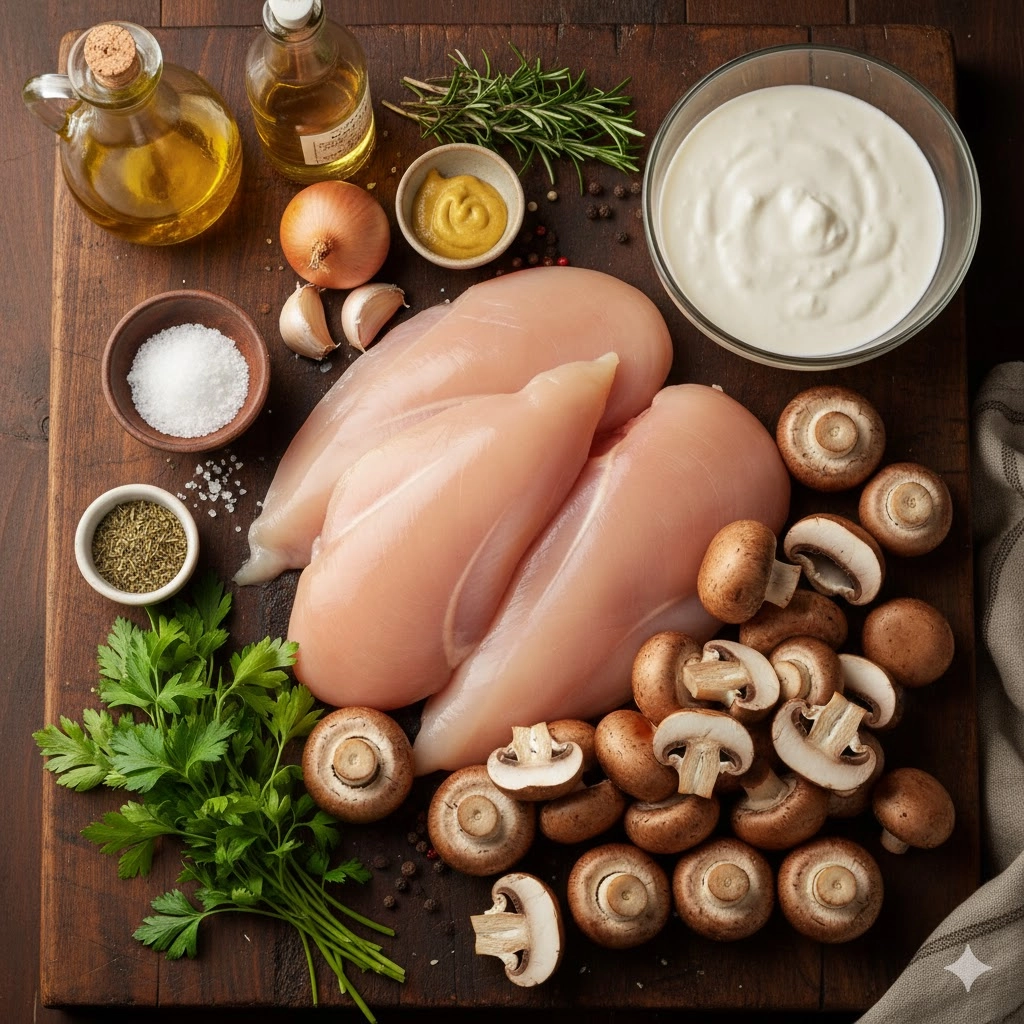
The success of a deeply flavorful pan sauce rests entirely on the quality and preparation of a few key ingredients. Focus on sourcing fresh, high-quality components and preparing them precisely for the best results.
For the Chicken and Searing:
- Four boneless, skinless chicken breasts (about six to eight ounces each)
- One half cup all-purpose flour, for dredging
- One teaspoon fine sea salt
- One half teaspoon freshly ground black pepper
- Three tablespoons high-heat cooking oil (such as avocado or grapeseed)
- Two tablespoons unsalted butter
For the Mushroom Sauté:
- One pound cremini mushrooms, wiped clean and sliced one quarter inch thick
- One half cup finely diced shallots (about one large shallot)
- Two tablespoons unsalted butter
- One teaspoon dried thyme
- One half teaspoon dried rosemary
For the Cream Sauce:
- Three large cloves garlic, finely minced
- One cup good quality chicken broth (low sodium preferred)
- One quarter cup dry white wine (like Pinot Grigio or Sauvignon Blanc), optional
- One teaspoon Dijon mustard
- One tablespoon fresh lemon juice
- One and one half cups heavy cream (full fat)
- Two tablespoons finely chopped fresh Italian parsley, for garnish
The Culinary Choreography: High-Level Steps
This recipe moves quickly once you begin cooking, which requires a small amount of mise en place beforehand. Read through these high-level instructions to understand the flow, then consult the detailed section for mastery.
- Prepare the Chicken: Slice the chicken breasts horizontally to create eight thinner cutlets. Combine the flour, salt, and pepper, and dredge the chicken cutlets until lightly coated, shaking off any excess.
- Sear the Chicken: Heat the oil and butter in a large, heavy-bottomed skillet over medium-high heat. Sear the chicken in batches for three to four minutes per side until deeply golden and a light crust has formed. Remove the chicken and set aside.
- Brown the Mushrooms: Reduce the heat to medium. Add the remaining two tablespoons of butter and sauté the sliced mushrooms, shallots, thyme, and rosemary until they have released their moisture, it has cooked off, and the mushrooms are deeply caramelized. Remove them and set aside with the chicken.
- Build the Fond and Deglaze: Add the minced garlic to the pan drippings and cook briefly. Pour in the white wine (if using) or a splash of chicken broth to deglaze, scraping up the flavorful brown bits (fond) from the bottom of the pan.
- Reduce the Liquids: Pour in the remaining chicken broth, stir in the Dijon mustard, and let the mixture simmer rapidly until it has reduced by about half, concentrating the base flavor.
- Create the Emulsion: Reduce the heat to low. Stir in the heavy cream and lemon juice. Bring the sauce to a gentle simmer—do not allow it to boil vigorously.
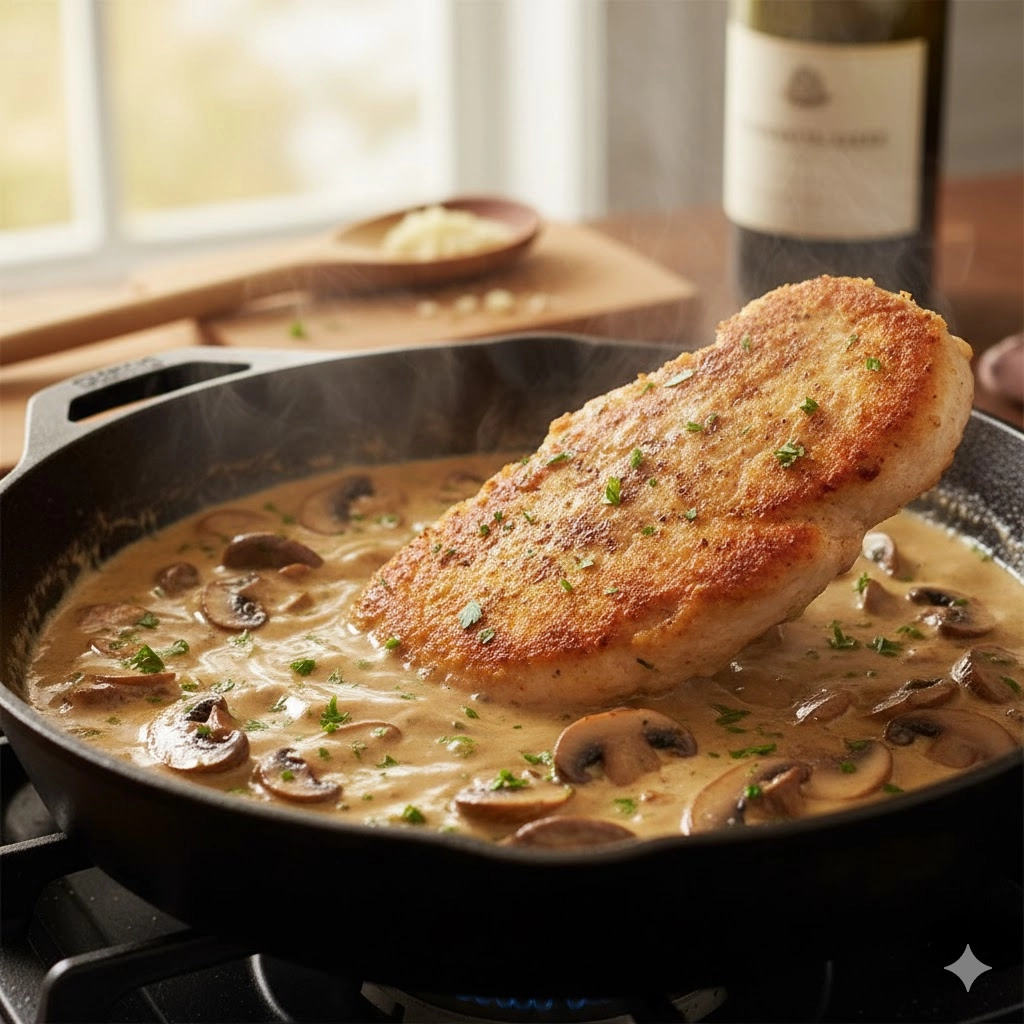
- Finish the Dish: Return the seared chicken and browned mushrooms to the pan. Allow the chicken to finish cooking through in the simmering sauce for approximately four to five minutes, or until the sauce has thickened slightly and the chicken is fully cooked.
- Rest and Serve: Garnish generously with fresh parsley and serve immediately.

Achieving Excellence: Detailed Technique and Sensory Cues
The difference between a good dish and a truly great one is precision in the steps. Every component in this recipe contributes to the final texture and taste complexity.
The Art of the Sear
For the chicken to achieve that desirable golden crust and remain fork-tender, proper pan temperature is paramount. Start with your pan on medium-high. When searing, the oil should shimmer slightly, indicating it is hot enough to achieve immediate caramelization—the Maillard reaction—when the chicken hits the surface. The initial two tablespoons of butter are added not just for flavor, but because butter solids brown beautifully, adding a nutty richness to the crust. However, butter alone burns easily, which is why it’s stabilized with the high-heat oil.
When you place the floured cutlets in the pan, listen for a vigorous, immediate sizzle. If it’s too quiet, the pan is not hot enough, and the chicken will steam rather than sear. If the fat is smoking violently, the pan is too hot. Sear in small batches, ensuring there is space between each cutlet. Overcrowding the pan immediately lowers the temperature and prevents proper browning. The surface of the chicken should transform from pale white to a deep, resonant gold-brown, smelling slightly nutty and deeply savory. Upon removal, the internal temperature of the cutlets should be close to one hundred fifty Fahrenheit; they will finish cooking later in the sauce.
Mastering Mushroom Caramelization
Mushrooms are mostly water, and rushing this step is a cardinal sin of pan cookery. When the sliced mushrooms and shallots first hit the pan, they will absorb all the remaining fat and immediately begin releasing their water content. The pan will quiet down, and the mushrooms will appear glossy and wet. Resist the urge to season them heavily or stir constantly during this phase; let them sit and release their moisture.
The critical stage begins once the water has completely evaporated. The mushrooms will begin to stick to the pan, and the temperature will rise, allowing them to truly brown and caramelize. At this point, you can stir more frequently. Listen for a distinct textural change: the mushrooms will transition from rubbery and wet to soft, supple, and slightly crispy around the edges. The aroma will shift from damp earthiness to a deep, savory, umami scent. This deep browning is essential, as it concentrates their flavor, which then integrates perfectly into the cream sauce.
The Magic of Deglazing and Reduction
The small, brown, flavorful bits stuck to the bottom of the pan after searing the chicken and mushrooms are called fond. This is pure, concentrated flavor—the essence of the dish. To extract it, we use deglazing. After removing the mushrooms, add the minced garlic. Cook it only for about thirty seconds until it is highly fragrant; garlic burns quickly and will taste bitter if overcooked.
Immediately introduce the cold liquid—the white wine, if using, or the chicken broth. The liquid hitting the hot pan creates steam, lifting the fond effortlessly. Use a wooden spoon or spatula to scrape up every bit of that brown goodness. This step is non-negotiable for building a rich sauce base. The wine and/or broth is then allowed to reduce rapidly. A proper reduction not only concentrates the chicken and wine flavor but slightly thickens the sauce base before the cream is even introduced, lending a more sophisticated mouthfeel. The reduction is complete when the volume has decreased by approximately fifty percent and the consistency is slightly syrupy.
Achieving a Stable, Silky Cream Emulsion
When incorporating the heavy cream, the key is temperature control. If you dump cold cream into a high-heat reduction, there is a risk of breaking the sauce or causing the cream to curdle. Always reduce the heat to low before adding the cream. Stir it in slowly, and then bring the sauce to a very gentle simmer. The cream will thicken naturally as the water evaporates and the dairy fats and proteins come together with the concentrated broth.
The addition of lemon juice and Dijon mustard serves two crucial functions. First, the acidity brightens the dish, cutting through the richness of the cream and the earthiness of the mushrooms. Second, Dijon mustard contains natural emulsifiers that help bind the fat and liquid in the sauce, ensuring it remains silky and stable, preventing a separated, oily texture. The final test for doneness for the creamy mushroom chicken is twofold: the chicken reaches an internal temperature of one hundred sixty-five Fahrenheit, and the sauce coats the back of a spoon lightly.
Mastering the Sauce: Expert Advice and Flavor Tweaks
Taking this recipe from good to truly memorable involves respecting key cooking principles and knowing how to troubleshoot in real-time.
- Use Thinner Cutlets: Do not skip slicing the chicken breasts horizontally. Thick chicken breasts require a long cooking time, meaning the exterior sears beautifully but the interior is dry by the time the center reaches one hundred sixty-five Fahrenheit. Thin cutlets cook quickly and finish perfectly in the sauce without drying out.
- The Case for Cremini: While white button mushrooms work, cremini (or baby bella) mushrooms offer a significantly deeper, more complex earthiness. Their flavor profile holds up better against the richness of the cream and garlic, making them the superior choice for this dish.
- Correcting a Split Sauce: If your cream sauce begins to look grainy or separated (or “split”), it is usually a sign that it was cooked too hot or too long. To fix it, remove the pan from the heat immediately. In a separate small bowl, whisk one tablespoon of cold butter into one tablespoon of warm (not hot) water, creating an instant emergency emulsion. Slowly whisk this mixture into your sauce, off the heat, until it comes back together.
- Enriching the Fond: To guarantee a dark, flavorful fond for deglazing, ensure the butter/oil mixture you use for searing the chicken contains a small amount of fat from the cream sauce ingredients (or even a drop of oil you used for the mushrooms). This layered fat flavor is key.
- Achieving the Right Consistency: If your sauce is too thin, remove the chicken and mushrooms and let the sauce simmer on medium-low for several minutes until it reduces to your liking. If it’s too thick, add a tablespoon of chicken broth or white wine at a time until the desired, pourable consistency is reached.
- Fresh Herb Finishing: While dried herbs (thyme, rosemary) are necessary for the initial cooking phase, always finish with fresh parsley. The bright, clean notes of fresh herbs lift the heavy cream and rich fat, preventing the dish from tasting overly dense.
- Do Not Salt the Mushrooms Early: Salting mushrooms before they have released their water and caramelized is counterproductive. Salt draws out moisture, which slows down the browning process significantly. Salt them only after they have achieved the desired deep color and texture.
Creative Adjustments: Ingredient Swaps and Flavor Variations
This adaptable recipe is wonderful for experimentation. Here are a few reliable ways to change the primary components or introduce new flavor elements.
- Pork or Veal Scallopini: Instead of chicken cutlets, you can use thin slices of pork tenderloin or veal scallopini, prepared exactly the same way (dredged in flour and quickly seared). The cooking time will be nearly identical, and these meats pair exceptionally well with the rich, creamy mushroom sauce.
- Aromatic Booster: For an even deeper flavor, substitute four ounces of chopped smoked bacon or pancetta for the initial oil used to sear the chicken. Render the fat from the cured pork first, remove the crispy pieces (saving them for garnish), and use the rendered fat to sear the chicken. This provides a smoky, salty layer to the final sauce.
- Truffle Essence: Incorporate a small amount of truffle paste or truffle oil for an elevated, luxurious flavor. Stir in one teaspoon of white truffle oil or one tablespoon of black truffle paste right at the end of the cooking process, just before serving, to enhance the earthy notes of the mushrooms.
- Dairy-Free Option: For those avoiding dairy, you can successfully substitute the heavy cream with full-fat coconut milk (the kind in the can, not the carton) or a high-quality cashew cream. Note that the flavor profile will change, but the richness and velvety texture can be maintained. Avoid using lower-fat milk substitutes, which tend to separate or curdle when subjected to heat and acid.
- The Sherry Kick: Replace the white wine with two tablespoons of dry sherry (Fino or Amontillado). Sherry offers a nuttier, more intense flavor profile that deepens the savory notes of the mushrooms and complements the garlic beautifully.
Building a Better Plate: Accompaniment Pairings
The richness of the sauce requires a side dish that can absorb flavor or provide a necessary counterpoint of texture and brightness.
- Creamy Polenta: A bowl of soft, cheesy polenta is perhaps the most classic pairing. The grain’s neutral flavor and incredible absorbency make it the perfect vehicle for soaking up every last drop of the decadent mushroom sauce. Start with medium-ground cornmeal and cook it slowly for a silky texture.
- Garlic and Lemon Asparagus: When serving a heavy main course, a sharp, bright vegetable side is crucial for balancing the palate. Lightly steam or roast asparagus spears, then toss them with a drizzle of fresh lemon juice, grated Parmesan, and a pinch of crushed garlic. The tartness and slight bitterness of the asparagus cut through the richness of the cream.
- Wild Rice Pilaf: For a slightly heartier but still balanced approach, a pilaf featuring wild rice provides excellent textural contrast. The nuttiness and slight chewiness of the wild rice prevent the meal from feeling monolithic. Incorporate fresh herbs like sage or marjoram into the pilaf to echo the flavors in the sauce.
- Simple Crusty Bread: Sometimes the simplest accompaniment is the best. A fresh, crusty baguette or a sourdough loaf allows you to fully appreciate the sauce by using the bread for scarpetta—mopping up the pan.
Common Kitchen Queries Answered
This recipe is simple, but achieving perfection often raises a few practical questions during the cooking process.
Can I use pre-sliced mushrooms for this recipe?
While convenient, pre-sliced mushrooms tend to lose moisture and flavor faster, and they may not achieve the same deep, savory sear as freshly sliced ones. It is highly recommended that you purchase whole cremini mushrooms and slice them yourself for the best textural and flavor results in the final sauce.
What is the best way to store and reheat leftovers?
Store leftovers in an airtight container in the refrigerator for up to three days. To reheat, transfer the dish to a small saucepan and warm it gently over very low heat. Adding a splash of extra chicken broth or cream while reheating can help prevent the sauce from breaking or separating as the fats melt and re-emulsify.
Why is my sauce not thickening properly?
The most common reasons for a thin sauce are either not allowing the initial chicken broth reduction to concentrate enough, or using a low-fat dairy product. Ensure the broth simmers until it visibly coats the back of a spoon before adding the heavy cream. If using heavy cream, simply let the finished sauce simmer for a few extra minutes until the desired thickness is achieved.
Can I prepare the chicken ahead of time?
You can slice and dredge the chicken cutlets in the seasoned flour up to two hours ahead of time and keep them loosely covered in the refrigerator. However, do not sear them until you are ready to cook the entire dish. The mushrooms and sauce must be prepared fresh for the best flavor and texture.
Preparation Metrics
| Nutrient | Amount per Serving |
| Calories | 685 kcal |
| Protein | 48 g |
| Carbs | 12 g |
| Fat | 50 g |
| Fiber | 2 g |
| Sugar | 4 g |
| Sodium | 520 mg |
Disclaimer
Nutrition information is an estimate and may vary based on preparation and ingredients used.
PrintThe Ultimate Pan-Seared Creamy Mushroom Chicken
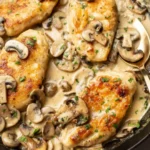
An expert recipe for preparing perfectly seared chicken cutlets smothered in a rich, velvety creamy mushroom chicken sauce built on a flavorful deglazed fond. This classic is elevated through precise technique.
- Prep Time: 15 mins
- Cook Time: 30 mins
- Total Time: 45 mins
- Yield: 4 servings 1x
- Category: Main Course
- Method: Stovetop
- Cuisine: American
Ingredients
4 boneless, skinless chicken breasts (about six to eight ounces each)
1/2 cup all-purpose flour
1 teaspoon fine sea salt
1/2 teaspoon freshly ground black pepper
3 tablespoons high-heat cooking oil
4 tablespoons unsalted butter (divided)
1 pound cremini mushrooms, sliced one quarter inch thick
1/2 cup finely diced shallots
1 teaspoon dried thyme
1/2 teaspoon dried rosemary
3 large cloves garlic, finely minced
1 cup good quality chicken broth
1/4 cup dry white wine (optional)
1 teaspoon Dijon mustard
1 tablespoon fresh lemon juice
1 1/2 cups heavy cream (full fat)
2 tablespoons finely chopped fresh Italian parsley, for garnish
Instructions
1. Slice the chicken breasts horizontally to create eight thinner cutlets. Combine the flour, salt, and pepper, and dredge the chicken cutlets until lightly coated, shaking off any excess.
2. Heat the oil and two tablespoons of butter in a large, heavy-bottomed skillet over medium-high heat. Sear the chicken in batches for three to four minutes per side until deeply golden. Remove the chicken and set aside.
3. Reduce the heat to medium. Add the remaining two tablespoons of butter and sauté the sliced mushrooms, shallots, thyme, and rosemary until they have released their moisture, it has cooked off, and the mushrooms are deeply caramelized. Remove them and set aside with the chicken.
4. Add the minced garlic to the pan drippings and cook briefly. Pour in the white wine (if using) or a splash of chicken broth to deglaze, scraping up the flavorful brown bits (fond) from the bottom of the pan.
5. Pour in the remaining chicken broth, stir in the Dijon mustard, and let the mixture simmer rapidly until it has reduced by about half, concentrating the base flavor.
6. Reduce the heat to low. Stir in the heavy cream and lemon juice. Bring the sauce to a gentle simmer—do not allow it to boil vigorously.
7. Return the seared chicken and browned mushrooms to the pan. Allow the chicken to finish cooking through in the simmering sauce for approximately four to five minutes, or until the sauce has thickened slightly and the chicken is fully cooked.
8. Garnish generously with fresh parsley and serve immediately.
Notes
Use cremini or baby bella mushrooms for the deepest flavor.
If the sauce splits, remove from heat and slowly whisk in a tablespoon of cold butter to re-emulsify.
Do not overcrowd the pan when searing the chicken; work in batches for a proper crust.
Nutrition
- Serving Size: 1 serving
- Calories: 685
- Sugar: 4g
- Sodium: 520mg
- Fat: 50g
- Saturated Fat: 25g
- Unsaturated Fat: 15g
- Trans Fat: 0g
- Carbohydrates: 12g
- Fiber: 2g
- Protein: 48g
- Cholesterol: 160mg