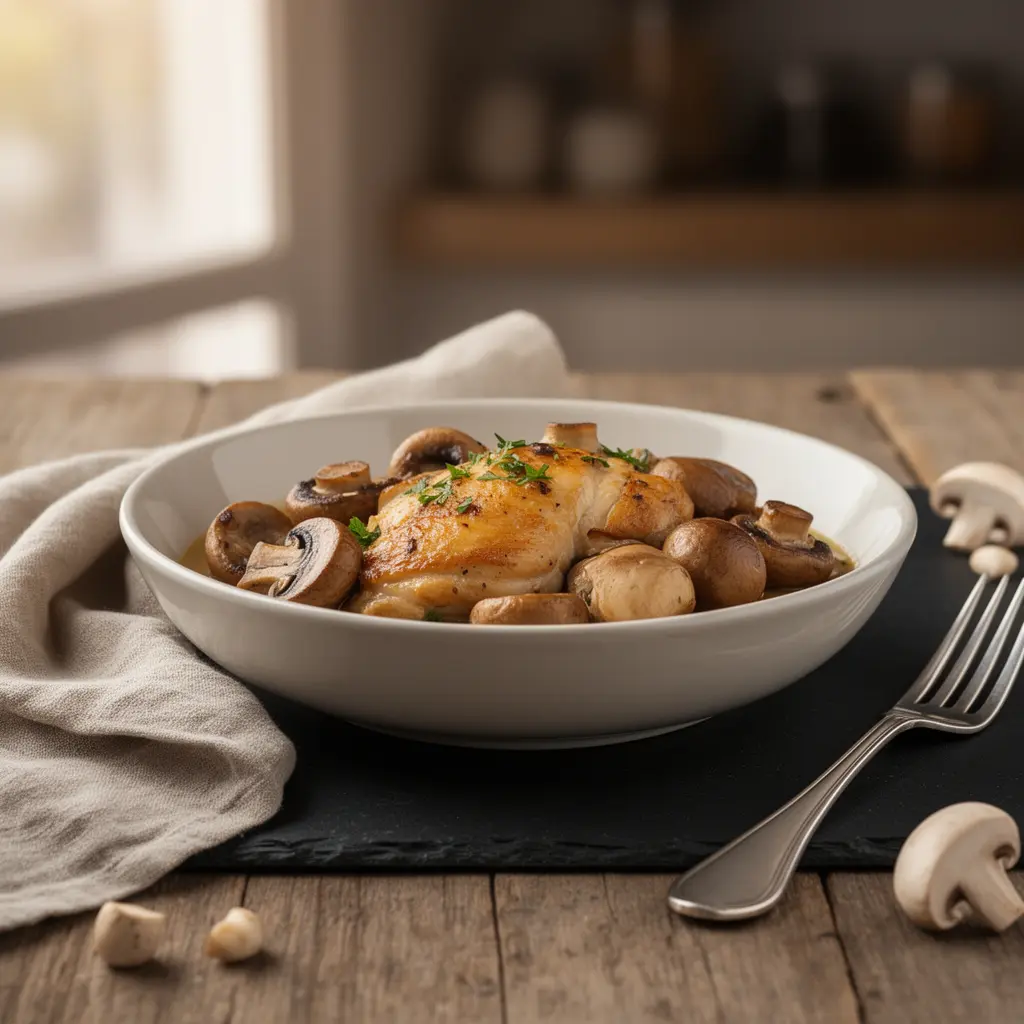
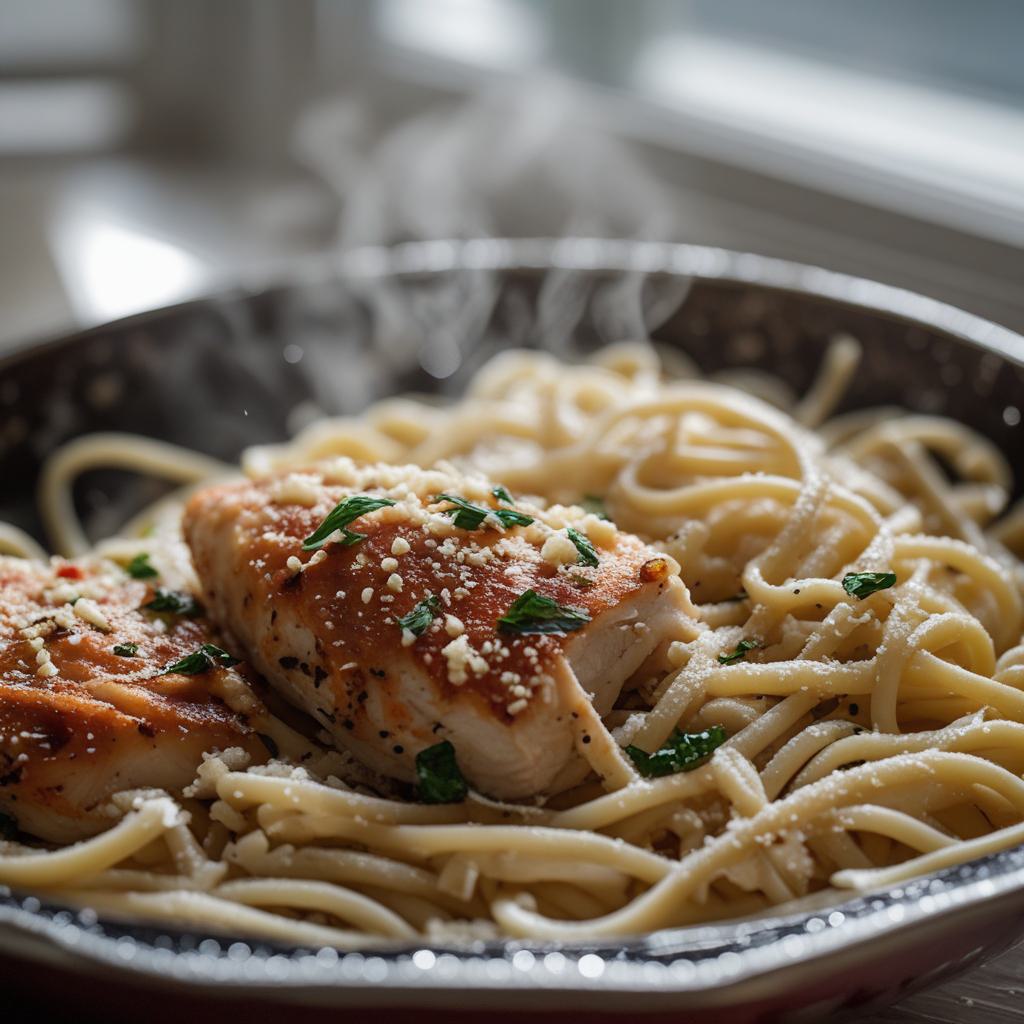
The scent of toasted garlic and aged Parmesan curls through the air like a beckoning finger – that first olfactory promise of comfort meeting sophistication. Garlic Parmesan Chicken and Pasta straddles worlds: the rustic familiarity of golden poultry and al dente noodles, elevated by the alchemy of butter emulsifying with salty cheese into a sauce that clings with luxurious intent. This dish speaks in whispers of Italian trattorias yet demands precision – overcook the chicken by a minute and you lose its succulent kiss; underseason the sauce and the Parmigiano-Reggiano’s crystalline complexity falls mute. It’s a dance of textures: the fork-crackle of seared crust giving way to tender breast, the pasta’s resistance against teeth, the sauce coating every strand with umami-rich velvet. When executed with care, it becomes more than sustenance – it’s a masterclass in balance, where pungent garlic mellows in warm cream, where parsley’s chlorophyll brightness cuts through richness. This is food that demands linen napkins but feels like coming home.
Table of Contents
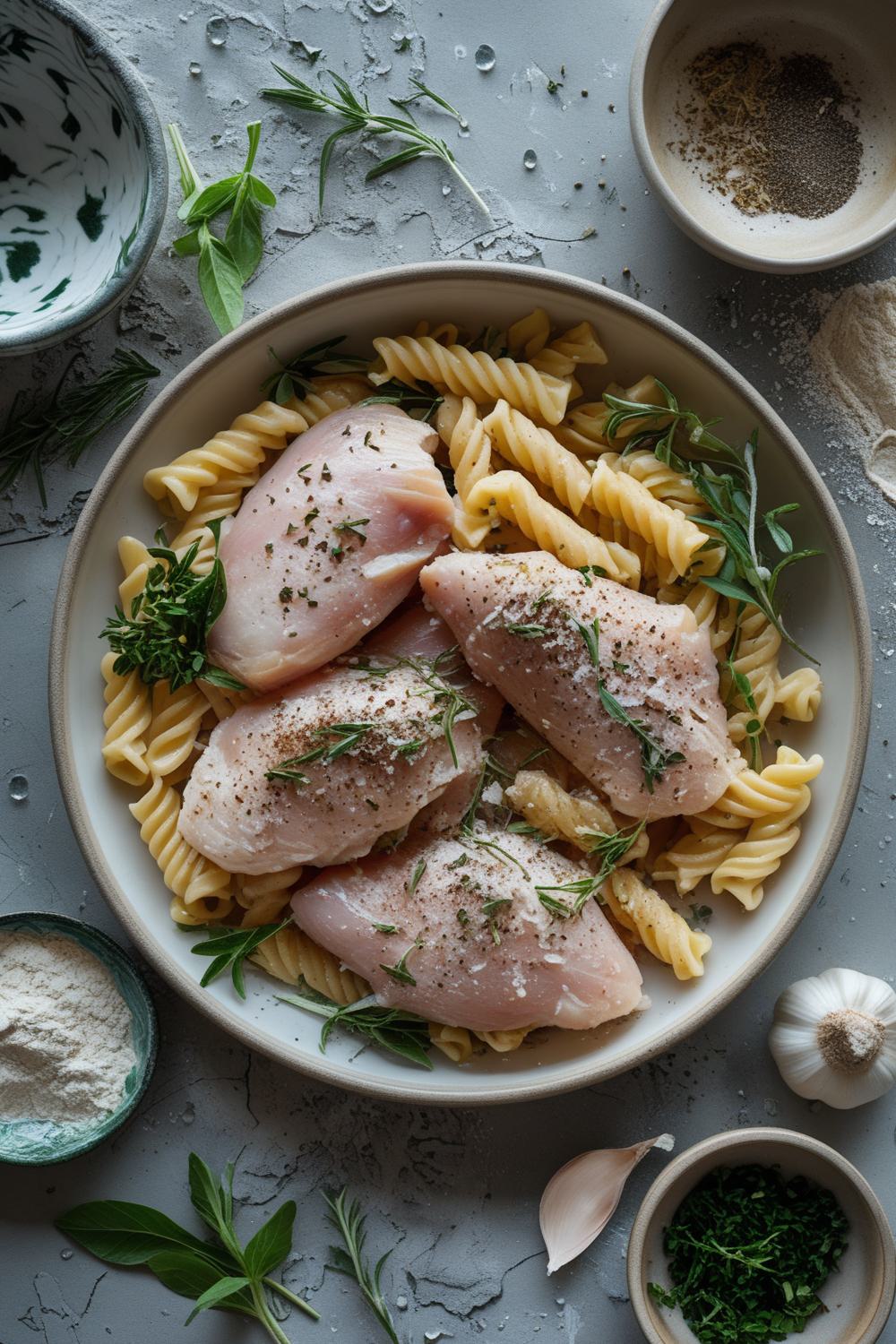
Ingredient Deep Dive
| Ingredient | Quantity | Purpose |
|---|---|---|
| Chicken breasts (air-chilled) | 2 large | High-protein base; air-chilled prevents waterlogged meat |
| Parmigiano-Reggiano (24+ months) | 1 1/2 cups grated | Umami depth from tyrosine crystals; emulsifies sauce |
| Garlic (fresh) | 8 cloves | Alliinase enzymes create pungency when crushed |
| Pasta (bronze-cut linguine) | 12 oz | Rough texture holds sauce; durum wheat maintains bite |
| Heavy cream (36% fat) | 1 cup | Fat globules create stable emulsion |
| Unsalted butter (European-style) | 4 tbsp | Milk solids brown evenly; controls salinity |
| White wine (unoaked Chardonnay) | 1/2 cup | Acidity balances fat; alcohol carries fat-soluble flavors |
| Fresh parsley | 1/4 cup chopped | Chlorophyll brightens richness |
The chicken’s preparation begins with meticulous drying – moisture is the enemy of Maillard browning. Air-chilled poultry contains 3-5% less water than water-processed, concentrating flavor. Parmigiano-Reggiano’s age matters profoundly: 24-month wheels develop tyrosine amino acid clusters that deliver those coveted crystalline crunch points while readily melting into protein-fat networks.
Bronze-die pasta’s micro-ridges aren’t mere aesthetics; they increase surface area by 30% compared to Teflon-extruded noodles, allowing sauce adherence. Heavy cream’s phospholipid structure enables stable emulsification with butter at 185°F – the exact temperature where casein proteins in cheese begin binding liquids without seizing.
Substitutions & Swaps
For vegan adaptations, use king oyster mushroom scallops – their longitudinal fibers mimic chicken’s grain. Nutritional yeast won’t suffice; blend soaked cashews with miso and lactic acid for faux-Parmesan depth. Gluten-free enthusiasts should seek brown rice linguine with xanthan gum for chew. No white wine? Deglaze with 1/4 cup lemon juice + 1/4 cup vegetable stock + 1 tsp sugar. Heavy cream can be replaced with coconut cream for dairy-free versions, but add 1/2 tsp guar gum to stabilize. Chicken skeptics can substitute butter-basted halibut, adjusting cook time to 3 minutes per side.
Equipment Guide
A 12-inch carbon steel skillet is non-negotiable – its thermal mass achieves restaurant-worthy sear without hotspots. Use a Microplane for cheese to maximize surface area (preventing clumping), not a box grater. Pasta demands a 6-quart stockpot with 4 quarts rapidly boiling salted water (1 tablespoon kosher salt per quart). Digital probes prevent chicken overcooking; pull breasts at 157°F (carryover cooks to 165°F). Your sauce pan matters – clad stainless steel with aluminum core prevents scorching. Silicone-coated tongs protect nonstick surfaces when turning chicken.
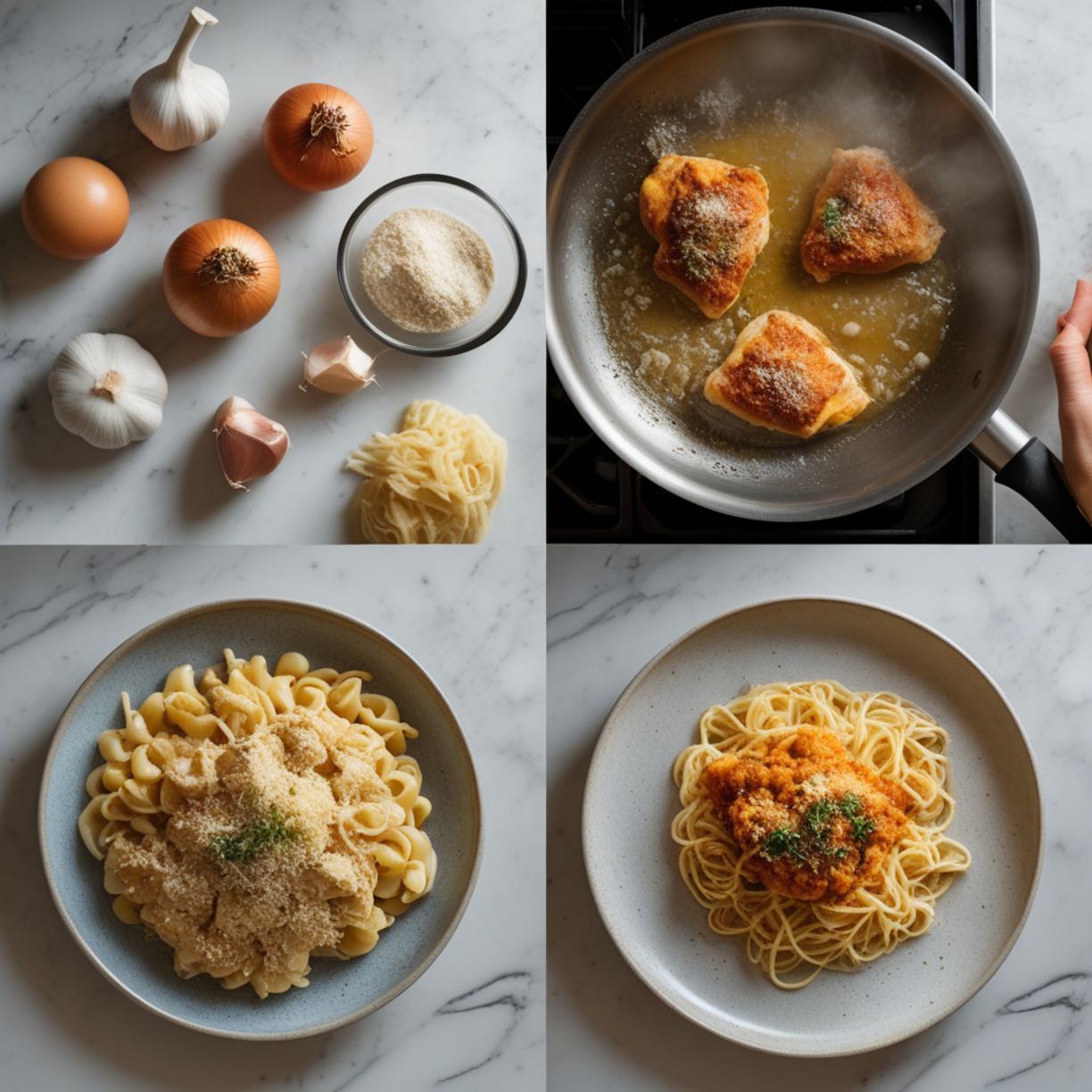
Step-by-Step Walkthrough
- Dry chicken breasts with paper towels, season generously with kosher salt (1 tsp per breast).
- Heat skillet over medium-high until water droplets dance (375°F). Add 1 tbsp grapeseed oil.
- Sear chicken 6-7 minutes per side until golden. Transfer to rack; tent loosely with foil.
- Reduce heat to medium. Melt butter, sauté garlic until fragrant (45 seconds).
- Deglaze with wine, simmer until reduced by half (2 minutes).
- Add cream, simmer 3 minutes until slightly thickened. Off heat, whisk in Parmesan.
- Boil pasta in salted water until 1 minute shy of al dente. Reserve 1 cup starchy water.
- Slice chicken diagonally against grain. Toss pasta in sauce with 1/2 cup pasta water.
- Plate pasta, top with chicken. Garnish with parsley and extra Parmesan.
Professional Insight #1: Resting chicken 8 minutes before slicing allows actin-myosin proteins to reabsorb juices. Cutting against the grain shortens muscle fibers for perceived tenderness.
Professional Insight #2: Adding cheese off-heat prevents casein proteins from clumping. The sauce should coat a spoon but flow freely – if too thick, adjust with pasta water.
Professional Insight #3: Undercooking pasta is intentional; it finishes absorbing sauce liquid, concentrating flavor while maintaining texture integrity.
Expert Tips & Troubleshooting
Crystallized Sauce? You overcompensated pasta water. Whisk in 1 tbsp cold butter to re-emulsify. Rubbery Chicken? Avoid pounding breasts thin – uniform 1-inch thickness ensures even cooking. Grainy Cheese? Pre-grated parmesan contains cellulose; always grate fresh. Clumpy Sauce? Temper cold cream by whisking 1/4 cup hot liquid into it before adding. For deeper flavor, steep garlic in cold butter for 30 minutes before cooking. To salvage over-salted sauce, add raw potato slices for 5 minutes to absorb excess salt. If pasta sticks, toss with 1 tsp olive oil immediately after draining – but never rinse.
Flavor Variations
For capsaicin lovers, infuse oil with Calabrian chiles before searing chicken. Kids prefer milder profiles: replace garlic with roasted puree and use mild Asiago cheese. Mediterranean versions gain brininess with oil-cured olives and preserved lemon. Autumn adaptations: fold roasted pumpkin into sauce with nutmeg. Umami bombers add 1/2 cup porcini soaking liquid to cream. Bacon enthusiasts render pancetta first, using its fat to sear chicken. Herb variants might include tarragon for anise notes or marjoram for floral lift.
Storage & Reheating
Cool components separately within 2 hours. Store chicken slices atop pasta in airtight container for 3 days max. Reheat gently: microwave at 50% power with damp paper towel cover, stirring sauce every 30 seconds. Stovetop method: use nonstick pan with 1 tbsp water over low heat, covered. Frozen versions (up to 1 month) lose texture integrity; thaw overnight before reheating. Discard if sauce separates irreparably.
FAQ Section
Q: Can I use pre-cooked rotisserie chicken?
A: Not advised – reheating dries proteins. If necessary, add raw chicken pieces to sauce for last 3 minutes.
Q: Why isn’t my sauce thickening?
A: Cream may have been overheated; replace 1/4 cup cream with full-fat Greek yogurt off-heat.
Q: Can I substitute half-and-half?
A: Only if you reduce sauce longer – half-and-half lacks stabilizing phospholipids.
Q: How to prevent garlic bitterness?
A: Crush cloves whole, remove green sprouts before mincing.
The Recipe Card
Garlic Parmesan Chicken and Pasta: Seared chicken breasts rest atop linguine slicked with emulsified Parmesan-cream sauce. Garlic’s punch mellows into richness, cut by parsley’s freshness. Serves 4 in 40 minutes. Elevate weeknights with this Michelin-worthy balance of crunch, velvet, and umami.
Nutrition Information
| Nutrient | Per Serving |
|---|---|
| Calories | 720 kcal |
| Protein | 42g |
| Fat | 38g |
| Carbs | 55g |
| Fiber | 3g |
Disclaimer: Nutritional data estimated via FDA guidelines. Actual values may vary based on ingredient brands and preparation methods. Consult nutritionist for dietary restrictions.