
The best weekend breakfasts are those that require minimal fuss on Saturday or Sunday morning, leaving you more time for coffee and company. This Crack Breakfast Casserole delivers on that promise, offering a rich, savory, and satisfying combination of eggs, cheese, and irresistible pork sausage nestled beneath a layer of tender crescent roll dough. Baked until golden brown and puffed, it’s a robust dish perfect for feeding a crowd, whether you’re hosting brunch or preparing for a holiday morning. It also happens to be wonderfully flexible, easily assembled the night before so you can simply slide it into the oven as soon as you wake up.
The Essential Components
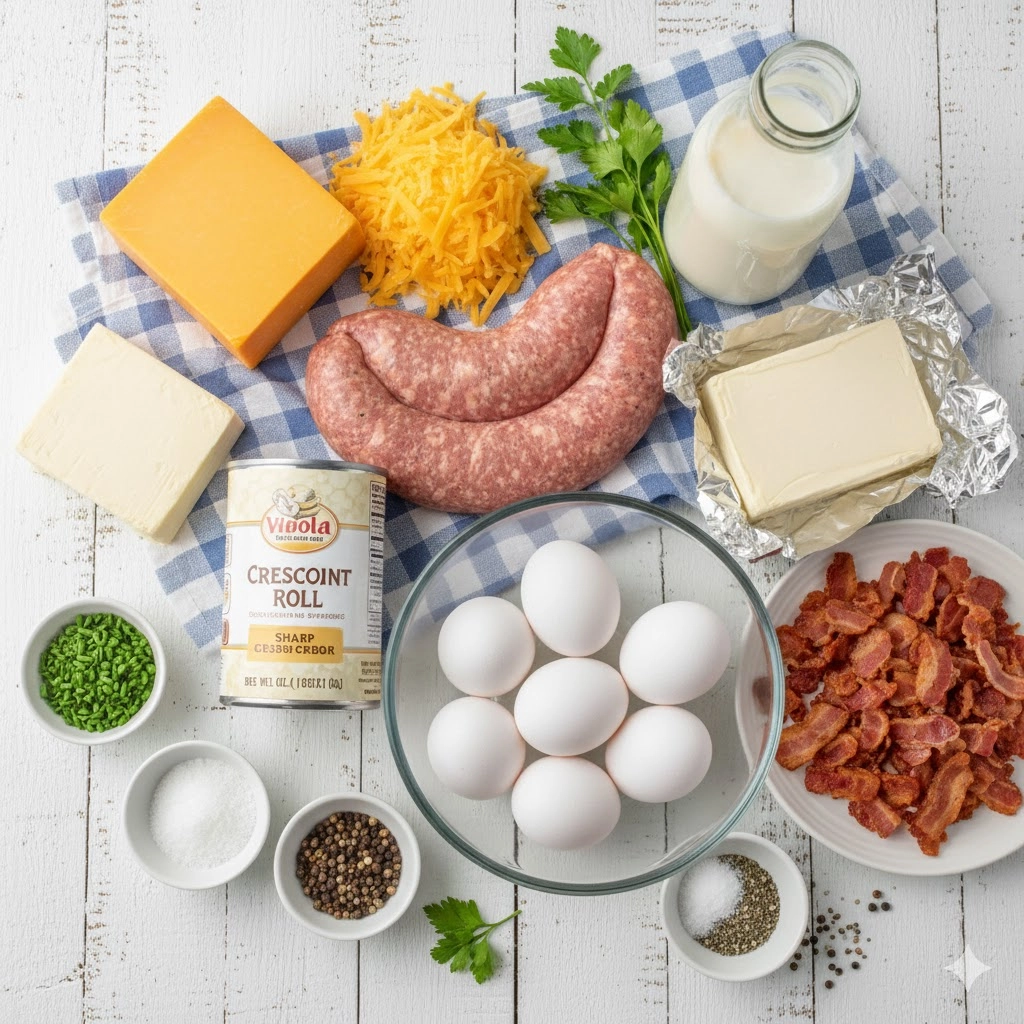
This casserole is built on familiar, hearty ingredients. Using quality components is the key to achieving the rich, savory depth of flavor that defines this dish.
For the Foundation
- 1 pound (450 grams) bulk pork sausage, such as Jimmy Dean brand
- 2 cups (225 grams) shredded sharp cheddar cheese
- 1 cup (115 grams) shredded Monterey Jack cheese
- 1 (8-ounce / 225-gram) package cream cheese, softened
- 1 (8-ounce / 225-gram) can refrigerated crescent roll dough
For the Custard
- 8 large eggs
- one half cup (120 milliliters) whole milk
- 1 teaspoon dried chives
- one half teaspoon garlic powder
- one quarter teaspoon kosher salt
- one quarter teaspoon black pepper
Constructing Your Breakfast Masterpiece
This recipe is designed for a nine-by-thirteen-inch baking dish.
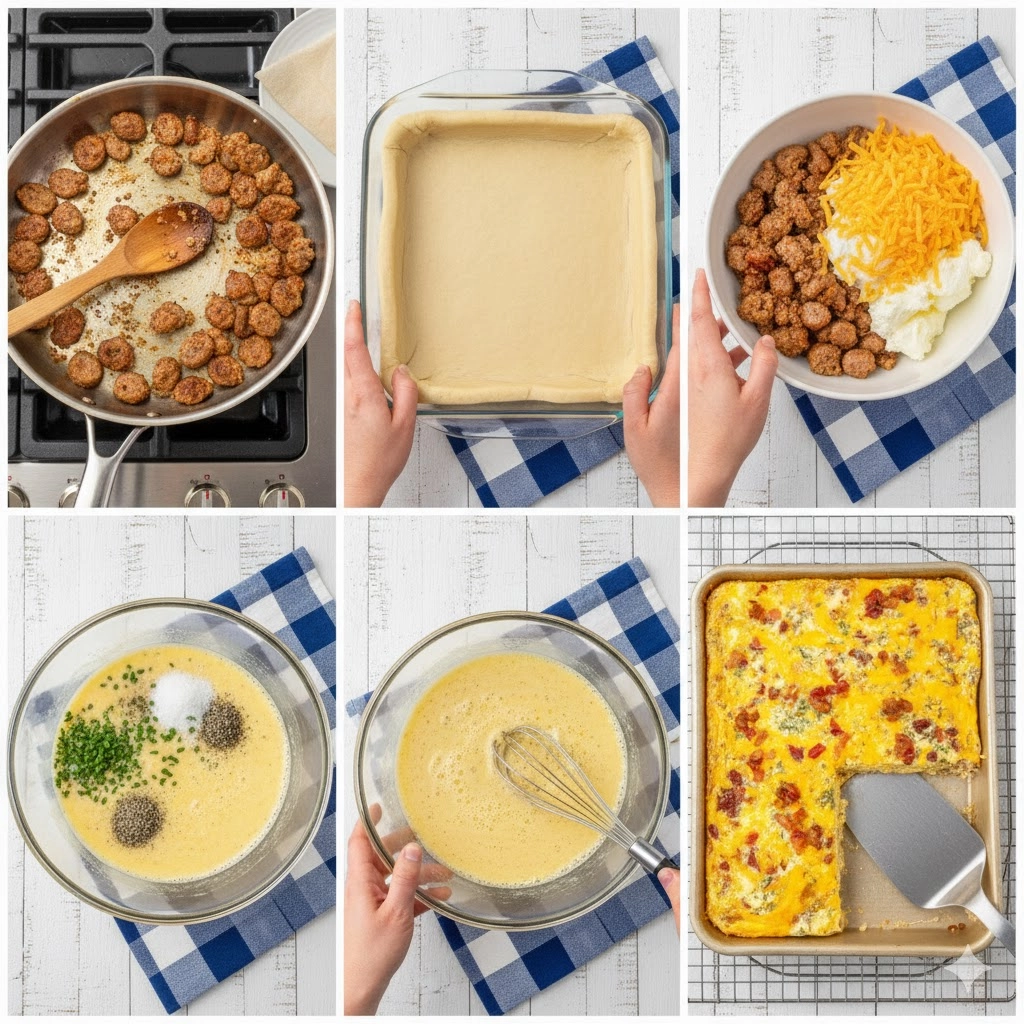
- Prepare the Meaty Base: Brown the bulk pork sausage in a large skillet over medium heat, breaking it up as it cooks. Once no pink remains, drain off any excess grease and set the cooked sausage aside.
- Establish the Dough Layer: Unroll the crescent roll dough and press it firmly into the bottom of the prepared baking dish, pinching together the seams to form a solid crust.
- Create the Savory Filling: In a large mixing bowl, combine the browned sausage, the softened cream cheese, and both the cheddar and Monterey Jack cheeses. Spread this mixture evenly over the crescent roll dough base.
- Whisk the Custard: In a separate medium bowl, whisk together the eggs, milk, dried chives, garlic powder, salt, and pepper until the mixture is uniform and slightly frothy.
- Assemble and Soak: Gently pour the egg and milk mixture over the sausage and cheese filling, ensuring the entire surface is covered.
- Chill (Optional, but Recommended): Cover the dish tightly with plastic wrap and refrigerate for at least four hours, or ideally, overnight.
- Bake: Preheat your oven to three hundred seventy-five Fahrenheit. Remove the casserole from the refrigerator and take off the plastic wrap. Bake for forty to fifty minutes, or until the top is golden brown and the center is set.
- Rest and Serve: Allow the casserole to rest for ten minutes before slicing and serving.
The Culinary Flow: Detailed Execution
Understanding the subtle cues during preparation ensures your casserole achieves the perfect texture and flavor balance.
Building the Sausage Layer
The step of browning and draining the sausage is crucial. A well-drained sausage base prevents the final casserole from becoming greasy. Cook the sausage until it is deeply colored—a little extra browning translates to a richer, more complex savory flavor in the finished dish. Once drained, allowing the sausage to cool slightly before mixing it with the cream cheese will prevent the cheese from immediately melting, which helps distribute the ingredients more evenly over the crust.
Laying the Crust
The crescent roll dough acts as a tender, buttery base. When pressing the dough into the dish, focus on creating a seamless barrier. Use your fingertips to firmly press all the edges up slightly against the sides and ensure the perforated seams are completely sealed. If there are any gaps, the rich egg and cheese mixture can seep underneath and cause the bottom crust to become soggy instead of crisp-tender. This foundation is essential for a clean slice when serving.
Integrating the Cheese and Egg
The secret to a truly lush and moist casserole is the balance of the cheese and the egg custard. When you combine the cheeses with the softened cream cheese and sausage, you are creating a dense, savory middle layer that holds its shape and flavor during baking.
When whisking the egg custard, aim for a thorough mix that incorporates the seasonings completely. Pouring this over the filling slowly allows the liquid to saturate the mixture evenly. If you choose to refrigerate the casserole overnight, the dough begins to absorb some of the liquid, resulting in a more unified, less compartmentalized texture where the crescent roll crust is almost integrated into the creamy filling.
Knowing When It’s Done
Baking at three hundred seventy-five Fahrenheit ensures both the dough and the custard cook fully without burning. The casserole is fully cooked when the edges are visibly pulling away from the dish, the top is a deep golden brown, and the center is no longer jiggly. To be completely certain, insert a thin knife or skewer near the center; if it comes out clean, the eggs are set. Overbaking can lead to a dry, rubbery texture, so begin checking for doneness at the forty-minute mark.
Expert Baker’s Pro Tips
These specific adjustments will elevate your casserole from good to truly exceptional.
- The Power of Pre-Soaking: While you can bake this immediately, resting the casserole in the refrigerator overnight allows the crescent dough to slightly absorb the egg mixture. This results in a superior, more flavorful crust that is tender yet still distinct, rather than just a separate layer of dough.
- Cheese Strategy: Use block cheese that you shred yourself. Pre-shredded cheeses contain anti-caking agents that can inhibit melting and result in a slightly grainy texture. Freshly shredded cheese melts into a far creamier consistency.
- Preventing a Rubber Texture: Always use whole milk or even heavy cream in your custard. The added fat slows the coagulation of the egg proteins, preventing them from seizing up and becoming rubbery. If you must use less fat, reduce the oven temperature to three hundred fifty Fahrenheit and increase the baking time slightly.
- Dealing with Greasy Sausage: If your sausage releases a significant amount of fat, use paper towels to press out every possible drop before adding it to the cheese mixture. Too much residual grease will leach into the dough and make the bottom soggy.
- The Foil Cover Trick: If the top crust begins to brown too quickly—typically around the thirty-minute mark—gently tent the casserole with aluminum foil for the remainder of the bake time to prevent the crust from scorching while the center finishes cooking.
- Optimal Cutting: Because of the generous amount of melted cheese, allow the casserole to rest for a full ten minutes after removing it from the oven. This allows the internal structure to stabilize, making for cleaner, easier slices.
Flavor Variations and Substitutions
This recipe is robust enough to handle thoughtful modifications based on your pantry and preference.
- Spice it Up: For a kick, swap the pork sausage for an equal amount of spicy Italian sausage or add one teaspoon of crushed red pepper flakes to the egg custard. A dash of hot sauce like Tabasco can also be whisked into the eggs.
- Meat Alternatives: Substitute the pork sausage with ground turkey or chicken, ensuring you season the poultry well during browning, perhaps with a half teaspoon of smoked paprika and a quarter teaspoon of dried sage. Fully cooked and crumbled bacon is another excellent replacement for a smoky flavor profile.
- Vegetable Inclusion: To add color and texture, gently sauté one cup of finely chopped bell peppers (any color) or thinly sliced mushrooms until they are tender and all moisture has evaporated. Fold these into the sausage and cheese mixture before pouring in the custard.
- Different Cheeses: Feel free to mix and match cheeses. Sharp provolone, Gouda, or even pepper jack (for heat) can replace one of the cheddar or Monterey Jack cheeses. The goal is to maintain the creamy, meltable quality.
The Best Ways to Serve This Delight
The rich, savory nature of this breakfast bake pairs well with simple, fresh counterpoints.
- Fresh and Bright: Serve slices alongside a generous bowl of fresh fruit salad featuring seasonal berries, sliced kiwi, and orange segments. The acidity and sweetness cut through the richness of the cheese beautifully.
- A Simple Green Salad: Believe it or not, a light side salad dressed with a bright vinaigrette (made from olive oil, lemon juice, and a pinch of sugar) is a sophisticated pairing, perfect for a brunch setting.
- On the Side of Sweet: A small drizzle of maple syrup or a dollop of fruit preserves on the side introduces a sweet-and-savory contrast. For the less adventurous, serving it with your favorite salsa is a classic move.
- Hot Beverages: This casserole is robust, so it pairs best with strong black coffee or a hearty herbal tea.

Frequently Asked Questions
Can I use frozen hash browns in the casserole?
Yes, but you must thaw and thoroughly dry them first. Pressing out excess moisture is essential. You can lay one layer of the thawed, dried hash browns over the crescent roll dough before adding the meat and cheese mixture.
How do I store and reheat leftovers?
Store any leftovers in an airtight container in the refrigerator for up to three days. To reheat, you can use a microwave for speed, or, for better texture, place slices in a toaster oven or on a baking sheet in an oven set to three hundred twenty-five Fahrenheit until heated through and the top is slightly crisp.
What size dish is mandatory for this recipe?
A standard nine-by-thirteen-inch casserole dish is the ideal size. If you use a slightly smaller or larger dish, the baking time may change. A smaller dish will result in a thicker casserole that may need an extra ten to fifteen minutes to set fully in the center.
Can I substitute the crescent roll dough?
Puff pastry can be used for a flakier, richer result, but you will need to completely thaw it and press it into the dish. Alternatively, a layer of buttered and quartered slices of day-old white bread can replace the crescent dough for a more bread-pudding-like base.
Is it safe to leave the casserole in the refrigerator overnight?
Yes, assembling this casserole the night before and refrigerating it is a common and safe practice. The chilling time allows the flavors to meld and the dough to absorb the custard slightly, improving the final texture and taste significantly.
Nutritional Breakdown
| Nutrient | Amount per Serving |
| Calories | 420 kcal |
| Protein | 25 g |
| Carbs | 18 g |
| Fat | 28 g |
| Fiber | 1 g |
| Sugar | 3 g |
| Sodium | 680 mg |
Important Note on Estimates
Nutrition information is an estimate and may vary based on preparation and ingredients used.
PrintThe Ultimate Make-Ahead Crack Breakfast Casserole

A rich, savory breakfast casserole featuring pork sausage, three cheeses (cream cheese, cheddar, and Monterey Jack), and a buttery crescent roll crust. Easily assembled the night before for a stress-free morning meal.
- Prep Time: 20 mins
- Cook Time: 45 mins
- Total Time: 65 mins
- Yield: 12 servings 1x
- Category: Breakfast
- Method: Baked
- Cuisine: American
Ingredients
1 pound bulk pork sausage
2 cups shredded sharp cheddar cheese
1 cup shredded Monterey Jack cheese
1 (8-ounce) package cream cheese, softened
1 (8-ounce) can refrigerated crescent roll dough
8 large eggs
one half cup whole milk
1 teaspoon dried chives
one half teaspoon garlic powder
one quarter teaspoon kosher salt
one quarter teaspoon black pepper
Instructions
1. Brown the bulk pork sausage in a large skillet over medium heat, drain off excess grease, and set aside.
2. Unroll the crescent roll dough and press it into the bottom of a nine-by-thirteen-inch baking dish, pinching seams to seal.
3. Combine the browned sausage, softened cream cheese, and both cheddar and Monterey Jack cheeses. Spread evenly over the dough base.
4. Whisk together the eggs, milk, chives, garlic powder, salt, and pepper until uniform.
5. Pour the egg mixture gently over the sausage and cheese filling, ensuring full coverage.
6. Cover and refrigerate for at least four hours, or ideally overnight.
7. Preheat oven to three hundred seventy-five Fahrenheit. Remove plastic wrap.
8. Bake for forty to fifty minutes, or until the top is golden brown and the center is set.
9. Allow to rest for ten minutes before slicing and serving.
Notes
Resting the casserole overnight allows the dough to absorb the liquid, resulting in a more unified texture.
Use block cheese that you shred yourself for a creamier melt.
If the top browns too fast, gently tent with foil for the rest of the baking time.
Nutrition
- Serving Size: 1 slice
- Calories: 420
- Sugar: 3g
- Sodium: 680mg
- Fat: 28g
- Saturated Fat: 15g
- Unsaturated Fat: 10g
- Trans Fat: 0g
- Carbohydrates: 18g
- Fiber: 1g
- Protein: 25g
- Cholesterol: 180mg