Why This Homemade Classic Patty Melt Recipe Works (The Real Story)
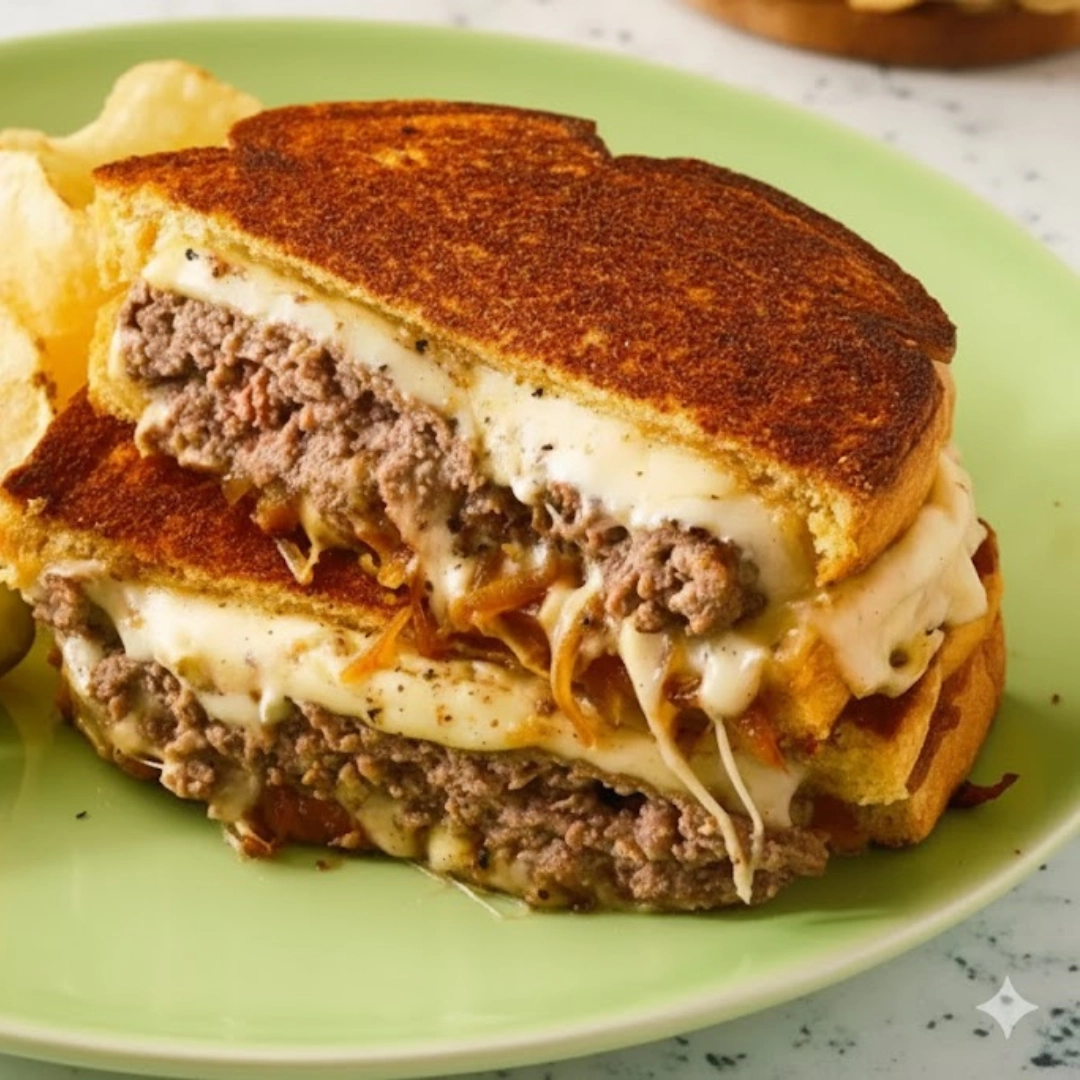
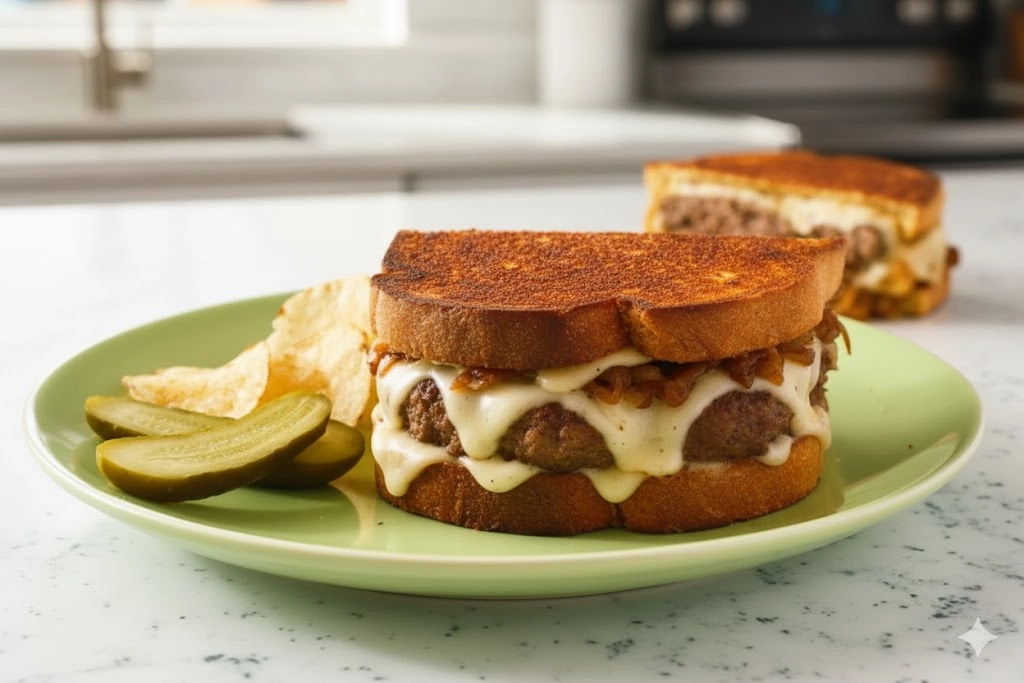
The Classic Patty Melt is the perfect blend of a grilled cheese and a juicy burger—built on buttery toasted rye bread, layered with caramelized onions, melted cheese, and a seasoned beef patty. This recipe focuses on achieving the essential balance of textures and flavor: crisp, golden bread, tender beef, and rich, melty cheese. By following a clear, step-by-step method, you can recreate the iconic diner-style patty melt at home with consistent, reliable results. It’s a simple, satisfying, and nostalgic sandwich that delivers bold flavor in every bite.
Table of Contents
Ingredients for the Ultimate Classic Patty Melt
To make a batch of four of the best Classic Patty Melt sandwiches you’ll ever taste, you need just a few high-quality components. Quality matters here—especially in simple recipes where every flavor note is exposed.
Essential Ingredients
- Bread: 8 slices of marble rye or dark pumpernickel bread. (The rye’s slight sourness cuts through the richness of the beef and cheese.)
- Cheese: 8 slices of Swiss cheese (or Gruyère for an upgrade).
- Beef: 1.5 lbs (about $0.68$ kg) ground beef, $80/20$ blend. (The fat content is essential for juiciness).
- Onions: 2 large yellow onions, thinly sliced.
- Butter/Oil: 4 Tbsp unsalted butter, divided, plus 2 Tbsp neutral oil (like canola or grapeseed).
- Seasoning: Salt and freshly ground black pepper.

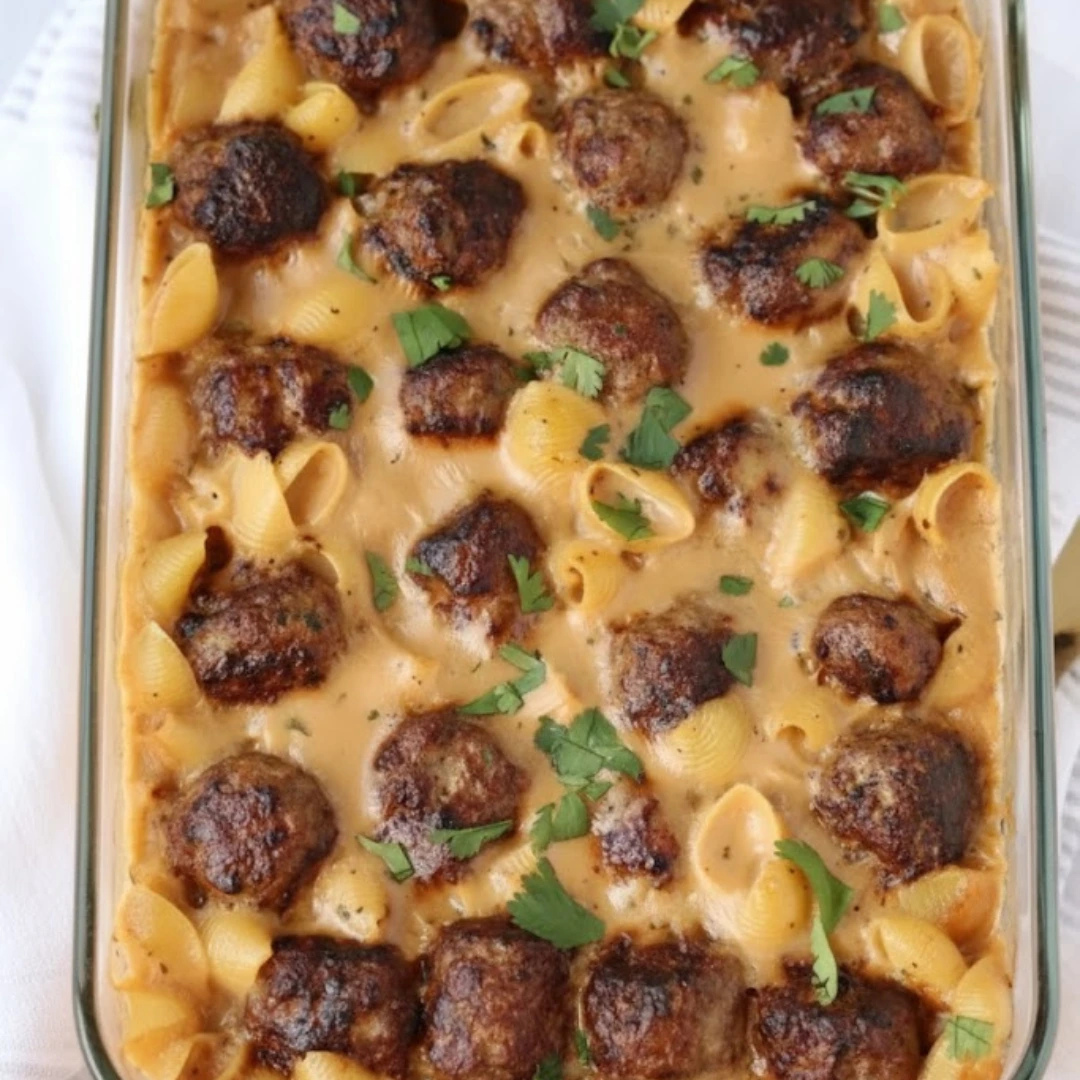
If you’re looking for a hearty vegetarian dish to balance out this comfort food, I recommend checking out this recipe for gnocchi with spinach and feta.
The Science Behind the Perfect Bread and Cheese Pairing
The choice of bread and cheese isn’t arbitrary; it’s based on culinary science:
- Rye Bread: The acidity in rye helps prevent the sandwich from feeling overly greasy. Its dense structure holds up to the moisture from the patty and onions, preventing a soggy bottom.
- Swiss Cheese: Swiss (or its French cousin, Gruyère) contains a high percentage of casein proteins and moisture, making it an excellent melting cheese with a high melt point. When subjected to low, slow heat, it transitions into a smooth, creamy liquid without breaking or becoming oily, which is critical for that iconic cheese pull in a Classic Patty Melt.
Step-by-Step Instructions: Mastering the Classic Patty Melt
The secret to a truly great dish lies in a low-and-slow approach for the onions and a quick, high-heat sear for the meat, followed by a gentle, even grilling for the assembly.
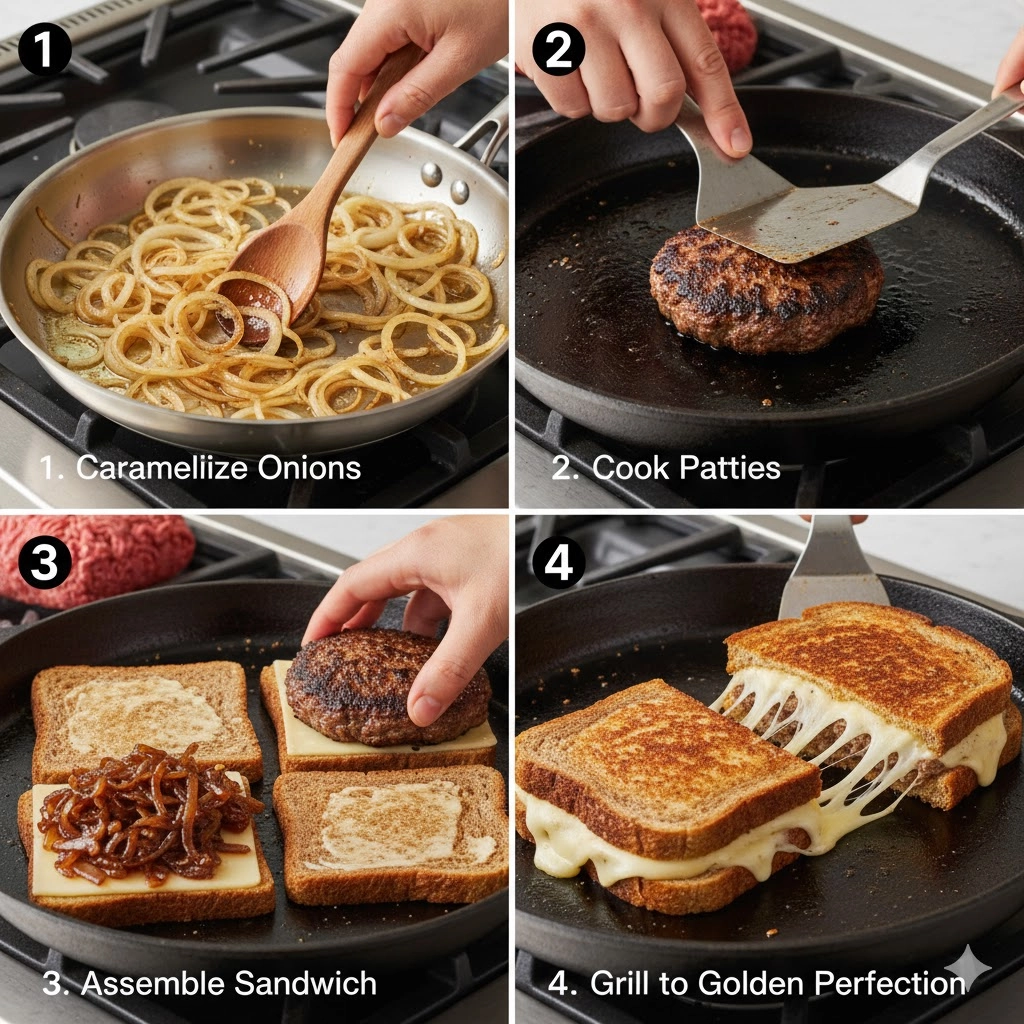
How to Achieve Deeply Caramelized Onions
Caramelizing onions is the longest but most crucial step. Do not rush it.
- In a large skillet over medium-low heat, melt 2 tablespoons of butter with 2 tablespoons of oil.
- Add the thinly sliced onions and a generous pinch of salt.
- Cook slowly, stirring occasionally, for 25 to 35 minutes. The goal is to evaporate their moisture and break down their sugars, resulting in a dark, jammy, and intensely sweet concentration of flavor.
- Remove the onions from the skillet and set aside. Wipe the skillet clean for the next step.
Forming and Cooking the Perfect Beef Patty
Patty melts use thin patties, similar to smash burgers, to cook quickly and achieve maximum surface area browning.
- Gently divide the ground beef into four equal portions. Do not overwork the meat.
- Form each portion into a flattened oval shape that matches the general size and shape of your rye bread slices. This is essential for the structure of the final recipe.
- Season both sides of the patties liberally with salt and black pepper.
- Heat your clean skillet or griddle over medium-high heat. Cook the patties for 3–4 minutes per side until they have a deep brown crust and are cooked through. Remove and set aside.
The Grilling Technique for Golden-Brown Excellence
This final stage brings all the elements together.
- Lay out the eight slices of bread. Spread the remaining 2 tablespoons of softened butter evenly on one side of all slices (this is the outside).
- In the skillet (or on the griddle) over medium heat, place four slices of bread, butter-side down.
- Immediately layer each with one slice of cheese, a cooked beef patty, a generous mound of the caramelized onions, and the second slice of cheese.
- Top with the remaining four slices of bread, butter-side up.
- Grill for 3–5 minutes per side, pressing lightly with a spatula, until both sides are golden brown and the cheese is fully melted and oozy.
Chef’s Tips for a Flawless Classic Patty Melt
Ingredient Substitutions and Swaps
Based on my experience adjusting flavors for different palates, here are a few simple ways to modify this recipe:
- Cheese: While Swiss is classic, Provolone or Pepper Jack can add a sharper, spicier kick.
- Bread: Sourdough or even thick-cut brioche can be used if rye is unavailable, though the characteristic flavor will change.
- Meat: For a lighter take, you could substitute ground beef with ground turkey, though you may need to add a splash of oil to the pan when cooking as turkey is leaner. This is a great way to adapt classic dishes, similar to how you might lighten up a main course like slow cooker honey mustard chicken.
- Add-ins: A thin smear of Dijon mustard on the inside of the bread can enhance the overall tang and flavor complexity.
Make-Ahead and Prep Time Efficiency
The single most time-consuming element is caramelizing the onions. You can do this far in advance:
- Caramelized Onions: These can be made up to three days ahead of time and stored in an airtight container in the refrigerator. Reheat them gently in the microwave or skillet just before assembling the sandwiches.
- Patty Prep: You can form the patties ahead of time, place them on a parchment-lined tray, and cover them tightly. They should be cooked within 24 hours for best quality.
What to Serve with Your Classic Patty Melt
The dish is rich, savory, and substantial, so it pairs beautifully with sides that offer texture, acidity, or crunch.
- The Classic Pairing: Crisp, well-seasoned French fries or sweet potato fries are the traditional accompaniment.
- Acidity: A small side of dill pickles or a vinegar-based coleslaw provides a much-needed acidic counterpoint to cut through the richness of the cheese and beef.
- Soup and Salad: For a full diner experience, serve it alongside a cup of French Onion soup (if you enjoy the double dose of onions) or a simple, crisp green salad with a light vinaigrette. If you’re looking for other easy, savory snacks to serve alongside, try these gluten-free pizza rolls.
Storage, Reheating, and Nutritional Context
Leftovers and Reheating
If you have leftover patty melts, they can be stored in the refrigerator for up to 3 days.
- Storage: Wrap each sandwich tightly in foil or store them in an airtight container.
- Reheating: Avoid the microwave, which will result in soggy bread. The best method is to reheat the sandwich in a dry skillet over medium-low heat, covered loosely with foil, for about 5–7 minutes per side. This restores the crispness of the bread and ensures the cheese is re-melted.
A Note on Nutrition
While the Classic Patty Melt is a wonderful treat, it is dense and caloric. Using lean ground beef ($90/10$) and portion-controlling the cheese are simple ways to reduce the overall fat content. If you are focused on adapting favorite dishes to be healthier or diet-friendly, similar efforts can be made with comfort food recipes like gluten-free hamburger helper.
This content is for educational purposes only and does not replace professional dietary or medical advice.
Don’t miss to follow us in Pinterest.
Classic Patty Melt: Frequently Asked Questions (FAQs)
What is the difference between a Patty Melt and a Cheeseburger?
A traditional cheeseburger is served on a soft bun with cold toppings (like lettuce and tomato). A recipe is always served on grilled rye or pumpernickel bread, includes caramelized onions, and is held together with melted Swiss cheese, making it a distinct type of grilled sandwich rather than a burger.
Why do my caramelized onions taste bitter?
Bitterness usually occurs if the onions are cooked too quickly over heat that is too high. You are burning the sugars instead of slowly caramelizing them. Keep the heat on medium-low and be patient—the process should take at least 25 minutes.
Can I use a different type of beef?
Yes, but $80/20$ ground beef (80% lean, 20% fat) is recommended because the fat renders during cooking, keeping the patty moist and contributing rich flavor to the finished sandwich. Leaner cuts (like $90/10$) tend to result in drier patties unless you add a binding agent or oil.
The Best Classic Patty Melt Recipe: Tested and True Comfort Food
An authentic, tested recipe for the Classic Patty Melt, featuring perfectly caramelized onions, juicy ground beef, Swiss cheese, and grilled rye bread.
- Prep Time: 10 mins
- Cook Time: 45 mins
- Total Time: 55 mins
- Yield: 4 servings 1x
- Category: Main Dish
- Method: Stovetop
- Cuisine: American
Ingredients
1.5 lbs 80/20 ground beef
2 large yellow onions, thinly sliced
8 slices Swiss cheese
8 slices marble rye bread
4 Tbsp unsalted butter, softened and divided
2 Tbsp neutral oil (canola, grapeseed)
Salt and freshly ground black pepper to taste
Instructions
1. In a large skillet over medium-low heat, melt 2 Tbsp butter with 2 Tbsp oil. Add onions and a pinch of salt. Cook slowly, stirring occasionally, for 25-35 minutes until deep golden brown and jammy. Remove and set aside.
2. Gently divide the beef into 4 oval patties, matching the size of the bread. Season liberally with salt and pepper. Heat the cleaned skillet over medium-high heat. Cook patties for 3-4 minutes per side until a deep crust forms and meat is cooked through. Remove and set aside.
3. Spread the remaining 2 Tbsp of softened butter on one side of all 8 bread slices (this is the outside). Place 4 slices, butter-side down, in the skillet over medium heat.
4. Layer each base slice with: 1 slice of Swiss cheese, a cooked beef patty, a generous mound of caramelized onions, and the second slice of Swiss cheese. Top with the remaining 4 slices of bread, butter-side up.
5. Grill for 3-5 minutes per side, pressing lightly with a spatula, until the bread is golden brown and crisp, and the cheese is fully melted. Serve immediately.
Notes
The key is patience with the onions; do not rush the caramelization process.
Use marble rye for the best flavor, or pumpernickel for a deeper, richer taste.
For reheating, use a dry skillet over medium-low heat instead of a microwave to maintain the bread’s crispness.
Nutrition
- Serving Size: 1 sandwich
- Calories: 850
- Sugar: 5g
- Sodium: 950mg
- Fat: 55g
- Saturated Fat: 25g
- Unsaturated Fat: 20g
- Trans Fat: 0g
- Carbohydrates: 45g
- Fiber: 3g
- Protein: 55g
- Cholesterol: 170mg