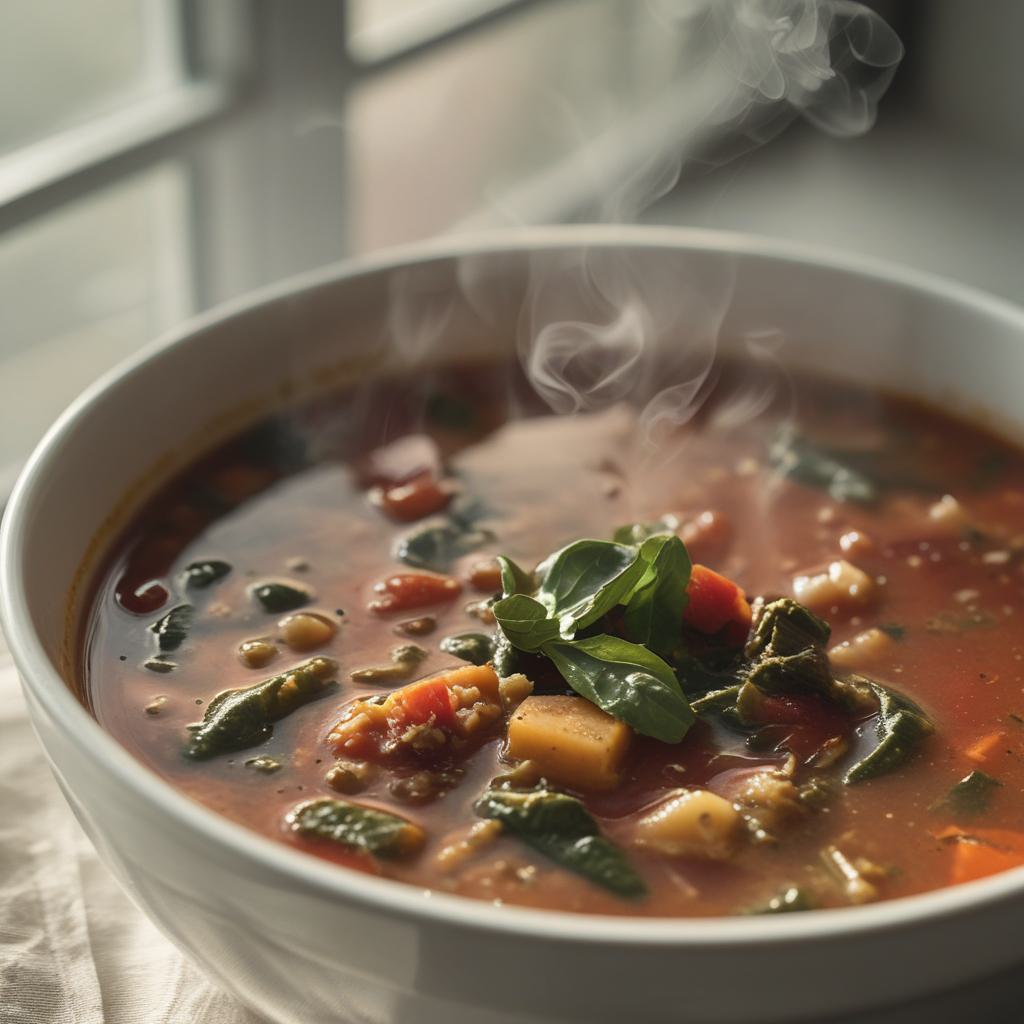
The first wisps of steam rise like culinary ghosts from the earthenware pot, carrying the soul-soothing perfume of rosemary-kissed olive oil meeting diced pancetta. This is minestrone’s opening aria – that sizzling overture of umami and herbs that tells your senses a symphony is coming. In my Michelin-starred kitchen, we approach this peasant masterpiece with reverence for its deceptive complexity. A great minestrone isn’t merely vegetable soup; it’s a textural opera where al dente beans sing backup to sweet squash, bitter greens harmonize with acidic tomatoes, and every spoonful lands like a perfectly timed crescendo.
What separates ordinary from extraordinary? Time and layering. You’ll smell it before tasting it – the evolution from raw onion’s sharpness to mellow sweetness as it sweats in good oil, the moment toasted garlic surrenders its golden essence to the broth, the way rosemary needles soften from piney spikes into velvet whispers. Unlike its French cousin bouillabaisse, minestrone celebrates rough cuts: uneven carrot chunks that retain bite, torn kale leaves that ripple through the broth like emerald seaweed, potatoes cut just thick enough to crumble gently between your tongue and palate.
Table of Contents
Ingredient Deep Dive
| Ingredient | Quantity | Purpose |
|---|---|---|
| Extra virgin olive oil | 3 tbsp | Flavor base & emulsifier |
| Pancetta, diced | 4 oz | Umami backbone |
| Yellow onion, 1/2″ dice | 1 large | Aromatic sweetness |
| Carrots, bias cut | 2 medium | Texture & visual appeal |
| Celery, with leaves | 3 stalks | Herbal complexity |
| San Marzano tomatoes | 28 oz can | Balanced acidity |
| Cannellini beans | 2 cups cooked | Creamy protein |
| Savoy cabbage | 1/4 head | Delicate structure |
| Parmigiano-Reggiano rind | 1 piece | Salty depth |
| Ditalini pasta | 3/4 cup | Starchy body |
The pancetta’s fat renders slowly to create our cooking medium – a critical step most home cooks rush. Its rendered lipids carry fat-soluble flavor compounds from our aromatics (onion, carrot, celery) while providing the emulsion base for our broth. Notice we call for San Marzano tomatoes: their lower acidity and higher Brix (sugar content) prevent the harsh tang that ruins lesser minestrone.
Vegetable timing matters. Carrots cut on the bias increase surface area for caramelization while retaining more texture than rounds. Savoy cabbage’s delicate structure withstands prolonged cooking better than green cabbage, maintaining integrity without toughness. The Parmigiano rind? That’s amino acid gold – glutamates dissolve into broth creating umami synergy with pancetta’s nucleotides, a phenomenon called “kokumi” in food science.

Substitutions & Swaps
For vegan versions, substitute pancetta with 1 tbsp miso paste + 2 sliced king oyster mushrooms sautéed until golden. The miso provides glutamates while mushrooms offer meaty texture. Vegetable broth replaces chicken stock – but ensure it’s low sodium to control seasoning.
Gluten-free diners can swap ditalini for rice pasta or gluten-free orzo. Crucially, cook pasta separately to prevent starch clouding the broth. For pantry improvisation, zucchini makes excellent squash stand-ins, chickpeas can replace cannellini beans, and Swiss chard works beautifully if kale is unavailable. Carnivores might add shredded chicken thigh meat during the last 10 minutes of simmering – its higher fat content integrates better than breast meat.
Equipment Guide
Three tools are non-negotiable. First, a 6-quart enameled cast iron Dutch oven – its heavy base distributes heat evenly preventing scorching during long simmers. Second, a razor-sharp 8″ chef’s knife: precise vegetable cuts ensure even cooking. Third, a spider skimmer for removing herb bundles and cheese rinds without disturbing layered ingredients.
Optional but ideal: a Microplane for grating garlic (releases more allicin than chopping) and a mortar-pestle for crushing fennel seeds to release their volatile oils. Avoid non-stick pots – their inability to develop proper fond (caramelized bits) diminishes flavor complexity. A coarse Microplane creates fluffy Parmesan snow for garnish instead of clumpy shreds.
Step-by-Step Walkthrough
- Render diced pancetta in olive oil over medium-low heat until golden (8 mins). Transfer to paper towel-lined plate.
- Increase heat to medium. Cook onion, carrot, celery, and 1 tsp salt until onions turn translucent (6 mins).
- Add minced garlic and rosemary; sauté until fragrant (45 seconds).
- Deglaze with 1/2 cup dry white wine, scraping browned bits until nearly evaporated (3 mins).
- Pour in crushed San Marzanos, 6 cups stock, Parmesan rind, and cooked pancetta. Simmer uncovered 25 mins.
- Add cannellini beans, chopped Savoy cabbage, 1″ zucchini cubes. Simmer 15 mins.
- Meanwhile, cook ditalini 2 mins less than package directions in salted water. Drain, toss with olive oil.
- Discard Parmesan rind. Stir pasta into soup. Off heat, fold in baby kale until wilted.
- Serve with cracked pepper, olive oil drizzle, and grated Parmigiano-Reggiano.
The deglazing step is your flavor insurance – those caramelized fond particles contain complex Maillard reaction compounds. Never skip the wine’s evaporation; raw alcohol flavors clash with tomatoes. Notice we cook pasta separately: adding raw pasta to broth makes it starchy and cloudy. The 2-minute undercooking allows perfect al dente texture after absorbing hot broth.
Time your greens. Sturdy cabbage goes in mid-cook to soften, while delicate kale wilts at the end using residual heat. This preserves color and nutrients. Always finish with quality EVOO – its peppery notes elevate the entire bowl. Acid balance is key: if tomatoes taste sharp, add a pinch of sugar; if flat, a splash of aged balsamic vinegar.

Expert Tips & Troubleshooting
If your broth tastes thin, employ the “Parmesan rind raft” trick: float the rind on the surface during the last 10 minutes of simmering. Its proteins trap floating particles, clarifying the broth while intensifying flavor. For over-salted soup, add a peeled raw potato wedge – it absorbs excess salt over 10 minutes before discarding.
Common mistake: crowding vegetables. Saute in batches if needed. Overcrowding steams instead of browns vegetables, muting flavors. If herbs dominate, counterbalance with a teaspoon of honey. Mushy vegetables usually mean incorrect cutting – always cut root veggies smaller than quicker-cooking items like zucchini.
Storage secret: refrigerate soup without pasta. Noodles absorb liquid and become gluey. Add fresh-cooked pasta when reheating. For depth without meat, toast 1 tbsp tomato paste with the garlic – its concentrated sugars caramelize beautifully.
Flavor Variations
Spicy Tuscan: Add 1/2 tsp crushed Calabrian chiles with garlic. Finish each bowl with lemon zest and chili oil. The citrus brightens heat while oil adds silkiness.
Provençal Twist: Replace pancetta with niçoise olives and herbes de Provence. Stir in 2 tbsp pistou (French pesto) before serving.
Kid-Friendly: Swap kale for sweet corn kernels. Blend 1 cup soup with white beans until smooth, then mix back in for creamy texture without visible veggies. Top with whole-grain croutons.
Storage & Reheating
Cool completely before transferring to airtight containers. Soup without pasta keeps 5 days refrigerated or 3 months frozen. Reheat gently on stovetop, adding broth if thickened. Never microwave – uneven heating destroys delicate textures. Frozen soup should thaw overnight in fridge before reheating. For best quality, consume frozen portions within 60 days.
FAQ Section
Q: Can I freeze minestrone soup?
A: Yes, but omit pasta and add fresh when reheating. Freeze in portion-sized containers leaving 1″ headspace for expansion.
Q: Why is my minestrone soup bland?
A: Underseasoned broth and insufficient fond development. Build layers: salt each vegetable layer lightly and deglaze properly.
Q: How to thicken minestrone soup?
A: Mash some beans against the pot wall or blend 1 cup soup and stir back in. Avoid cornstarch – it dulls flavors.
Q: Can I make minestrone in a slow cooker?
A: Not recommended. Slow cookers don’t achieve necessary evaporation and caramelization for depth.
Nutrition Information
| Nutrient | Per Serving (1.5 cups) |
|---|---|
| Calories | 310 |
| Protein | 12g |
| Carbohydrates | 38g |
| Dietary Fiber | 8g |
| Sugars | 7g |
| Total Fat | 12g |
| Saturated Fat | 3g |
| Sodium | 620mg |
Nutritional values are estimates based on ingredients used. Actual values may vary depending on specific brands and ingredient substitutions. Always consult a nutritionist for exact dietary needs.