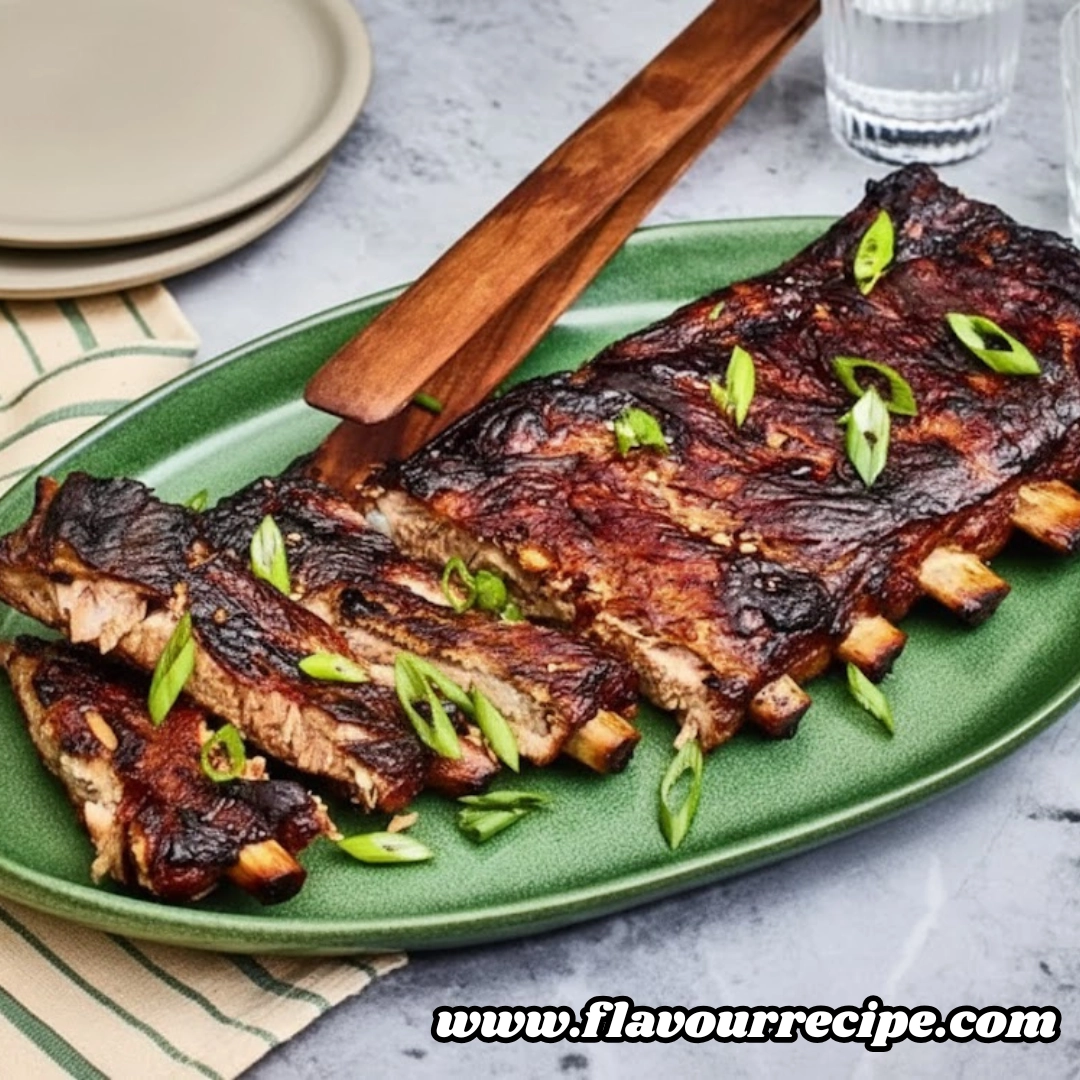
Whether you are strolling through a bustling night market in Shanghai or sitting in your favorite red-booth Chinese restaurant in the heart of New York City, there is one aroma that is instantly recognizable: the sweet, charred, and deeply aromatic scent of Chinese spareribs. These ribs are a cornerstone of Cantonese barbecue culture, known as char siu style when roasted to a lacquered finish. They represent the perfect marriage of culinary technique and pantry staples that have been refined over centuries.
The secret to a truly spectacular Chinese sparerib lies in the balance. It is not just about the sweetness of the honey or the saltiness of the soy sauce; it is about the “umami” depth that comes from fermented beans and the subtle, numbing warmth of five-spice powder. In this comprehensive guide, we are going to walk through an authentic preparation that ensures your ribs are not just flavorful on the surface, but tender and juicy all the way to the bone.
Table of Contents
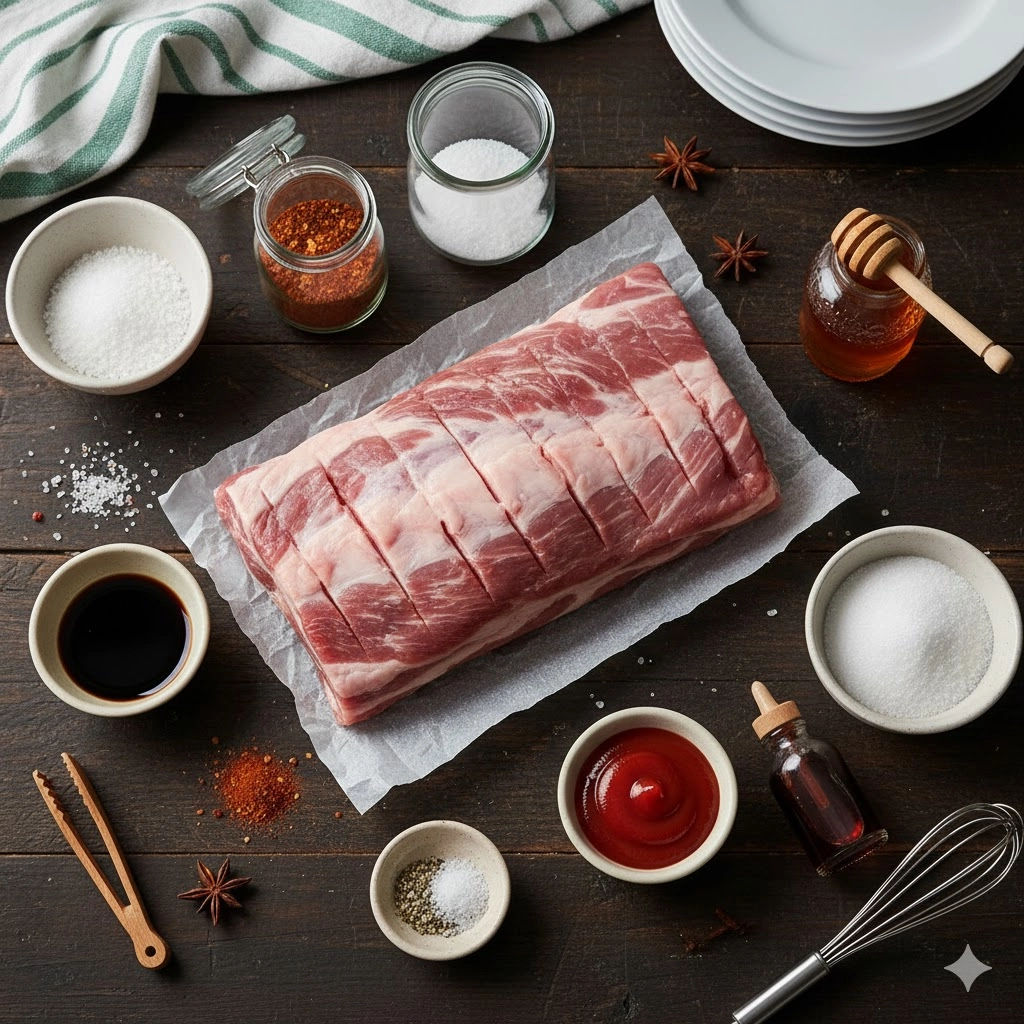
Ingredients
- 3 pounds meaty beef spareribs
- 1 tablespoon garlic salt
- 1 tablespoon granulated white sugar
- 2 teaspoons salt
- 1 teaspoon white pepper
- 2 tablespoons tomato ketchup
- 2 tablespoons Chinese cooking wine (Shaoxing wine)
- 0.5 teaspoon Chinese five-spice powder
- 0.25 teaspoon red food coloring (optional for that classic takeout look)
- 2 tablespoons honey (for the final glaze)
Authentic Preparation Instructions
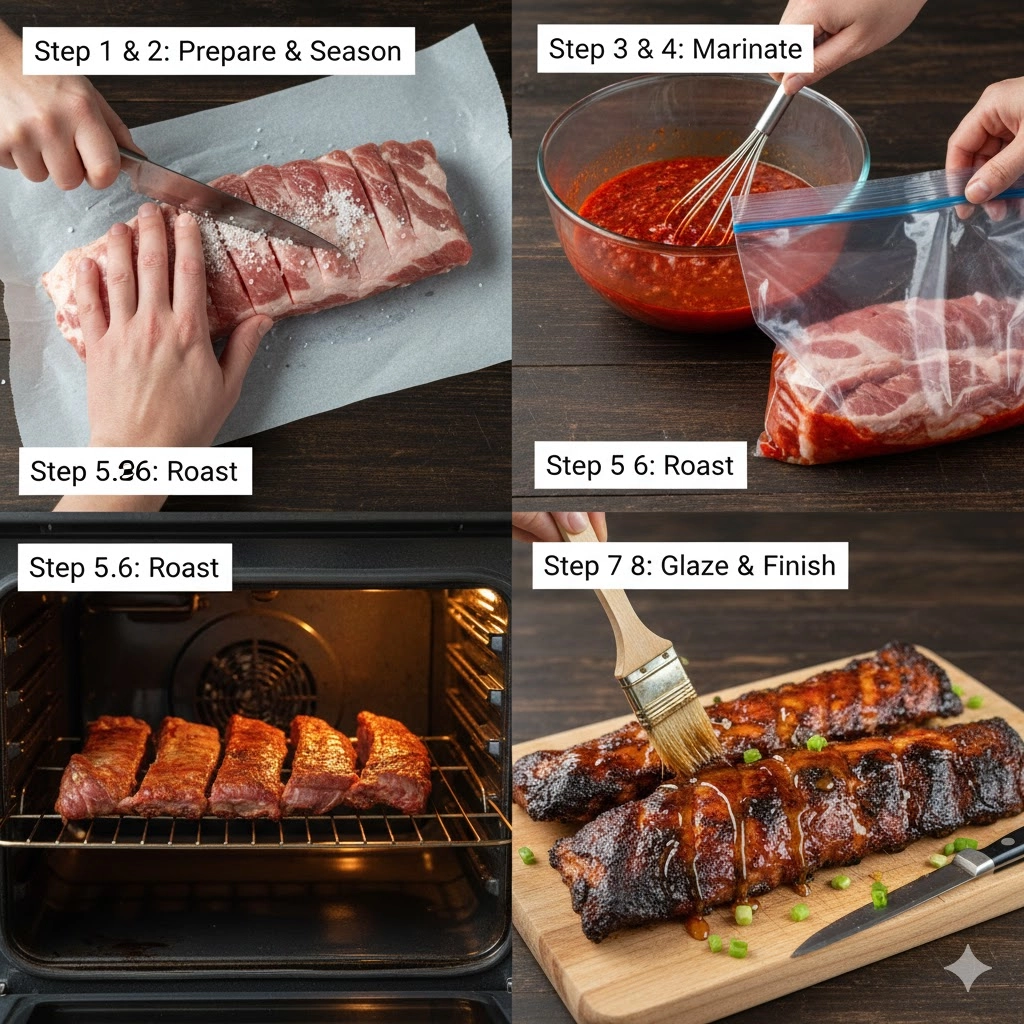
- Prepare the Ribs: Start by patting the 3 pounds of beef spareribs dry with paper towels. Using a sharp knife or cleaver, create shallow cuts between the bones and along the thickest parts of the meat. This allows the marinade to penetrate deeper into the muscle fibers.
- Apply the Initial Seasoning: Take the 1 tablespoon of garlic salt and rub it vigorously over all surfaces of the ribs. Ensure the salt gets into the slits you made in the previous step.
- Mix the Marinade: In a medium-sized mixing bowl, combine the 1 tablespoon of granulated white sugar, 2 teaspoons of salt, 1 teaspoon of white pepper, 2 tablespoons of ketchup, 2 tablespoons of Chinese cooking wine, 0.5 teaspoon of five-spice powder, and the optional 0.25 teaspoon of red food coloring. Whisk until the sugar has mostly dissolved.
- Marination Process: Place the seasoned ribs in a tray or a large sealable bag. Spread the marinade evenly over both sides of the meat. Cover or seal tightly and refrigerate for a minimum of 4 hours, though 8 hours is ideal for maximum flavor absorption.
- Tempering the Meat: Remove the ribs from the refrigerator approximately one hour before you plan to cook them. Bringing the meat to room temperature ensures even cooking in the oven.
- Roasting Phase One: Preheat your oven to 400 Fahrenheit. Line a baking pan with aluminum foil for easy cleanup and place a wire baking rack on top of the foil. Lay the ribs on the rack, meat-side up. Do not cover them. Roast for 30 to 35 minutes.
- The Glazing Step: While the ribs roast, prepare your glaze by warming the 2 tablespoons of honey (you can thin it with a teaspoon of warm water if it is too thick). Remove the ribs from the oven after the initial roasting period and brush the honey generously over the surface.
- Final Char: Return the glazed ribs to the oven for an additional 10 minutes. Watch closely to ensure the honey caramelizes into a sticky glaze without burning.
- Resting and Slicing: Once the ribs have reached a total cooking time of about 40 to 45 minutes and look charred at the edges, remove them from the oven. Let them rest for a full 10 minutes before slicing between the bones to serve.
Step-by-Step Details: Navigating the Nuances of the Roast
Achieving the perfect Chinese sparerib is a journey of sensory observation. When you first begin by scoring the meat, you are performing a technique known as “venting.” This is crucial because spareribs, particularly the St. Louis cut or full slabs, have dense connective tissue. By creating those small incisions, you are creating pathways for the liquid marinade—the Shaoxing wine and soy-based liquids—to travel into the center of the meat. Without this, you often end up with a flavorful exterior and a bland, grey interior.
As the ribs sit in the refrigerator, a chemical process called denaturing occurs. The salts in the garlic salt and the marinade begin to break down the protein structures, which is why we recommend at least 4 hours. If you rush this, the meat won’t have that “snappy” yet tender texture characteristic of high-end barbecue. The addition of the Chinese cooking wine serves two purposes: it acts as a solvent for the aromatic five-spice powder and it helps to neutralize any “gamey” odors from the beef, leaving behind a subtle, floral sweetness.
When the ribs finally hit the 400 Fahrenheit oven, the Maillard reaction takes over. This is the chemical reaction between amino acids and reducing sugars that gives browned food its distinctive flavor. Because we use a rack over a foil-lined pan, the hot air is able to circulate 360 degrees around the rib. This mimics the hanging ovens used in traditional Cantonese roast houses. If you were to lay the ribs directly on the pan, the bottom would boil in its own juices, resulting in a soggy texture rather than a crisp, charred finish.
The final 10 minutes are perhaps the most critical. This is when the honey glaze transforms. Honey is high in fructose, which caramelizes at a lower temperature than granulated sugar. As it bubbles and reduces, it traps the moisture inside the meat while creating a “lacquered” shell. You are looking for those “burnt ends”—small patches of dark, mahogany carbonization on the tips of the bones and the edges of the meat. This provides the bitter counterpoint to the sweet glaze, creating a complex flavor profile that keeps you coming back for another bite.
Unique Culinary Insights: Science in the Kitchen
To elevate this dish from a home-cooked meal to restaurant quality, one must understand the role of the five-spice powder. This blend typically consists of star anise, cloves, Chinese cinnamon, Sichuan pepper, and fennel seeds. It hits every part of the palate: sweet, sour, bitter, pungent, and salty. Because it is so potent, we use only half a teaspoon. Over-seasoning with five-spice can lead to a medicinal taste, so precision is key here.
Another insight involves the use of ketchup. While it might seem like a modern Western addition, ketchup actually has its roots in fermented Asian sauces. In this recipe, it provides the necessar y acidity and a thick base that helps the other spices cling to the meat. The vinegar in the ketchup also helps to further tenderize the beef during the long marination period.
If you find that your ribs are browning too quickly before the meat is tender, you can employ a technique called “shielding.” Simply tent a piece of foil over the ribs for the middle 15 minutes of cooking, then remove it for the final glazing. However, in a standard 400 Fahrenheit oven, the 45-minute total time is usually the “sweet spot” where the fat has rendered sufficiently but the meat hasn’t begun to dry out.
Accompaniments and Serving Suggestions
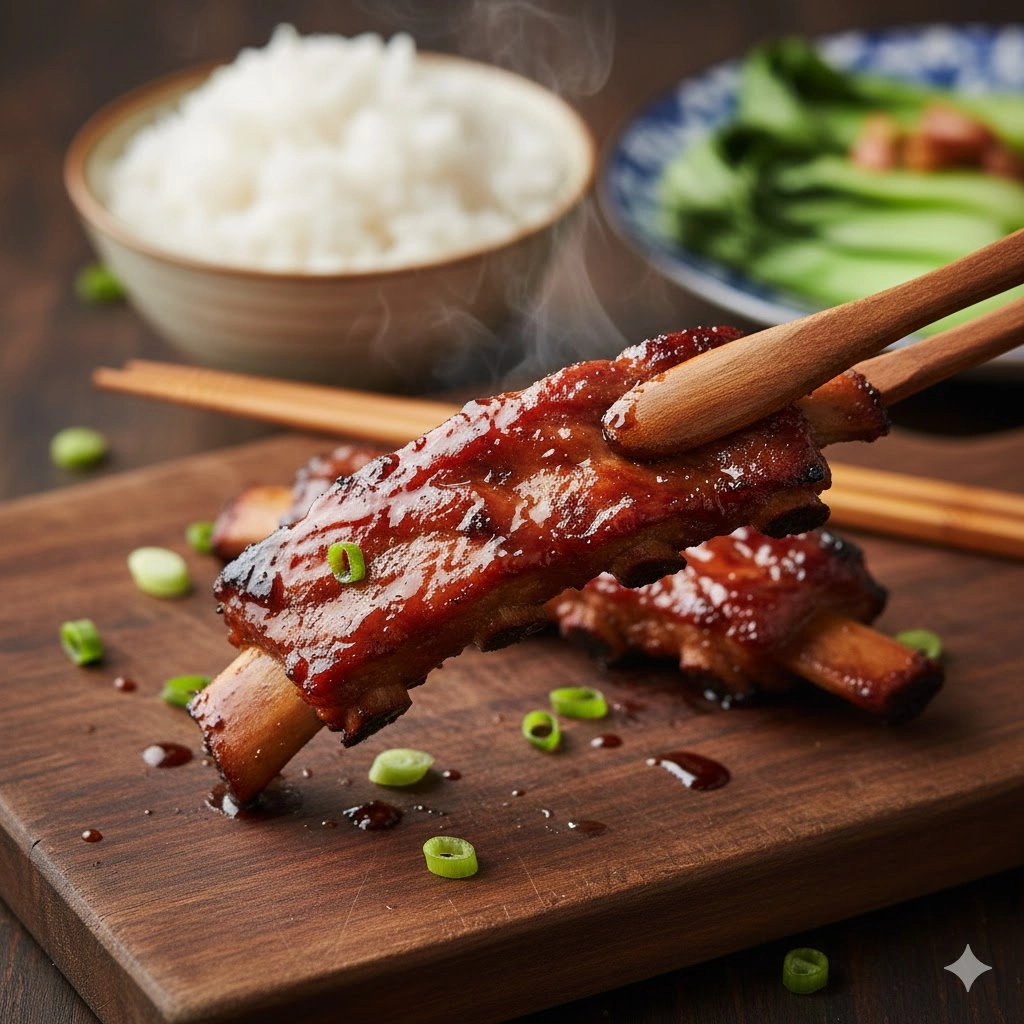
To balance the richness of the fatty beefand the intensity of the sticky glaze, you want to serve these ribs with something that offers a clean, crisp contrast. A simple bowl of steamed jasmine rice is the most traditional choice, as the rice acts as a neutral canvas for the sauce.
For a vegetable side, consider bok choy or gai lan (Chinese broccoli) sautéed with a little bit of ginger and oyster sauce. The bitterness of the greens cuts through the sugar in the ribs beautifully. Alternatively, a cold smashed cucumber salad with plenty of garlic and black vinegar provides a refreshing temperature and texture contrast.
When serving at a party, it is best to slice the ribs into individual pieces before bringing them to the table. Pile them high on a platter and garnish with a generous handful of thinly sliced green onions or toasted sesame seeds. This not only looks professional but makes them much easier for guests to grab as finger food.
Modifications and Substitutions
While the reference recipe is optimized for authenticity, kitchen reality sometimes requires flexibility. If you cannot find Shaoxing wine at your local grocery store, a dry pale sherry is the closest substitute. It has the same nutty, fortified wine profile. Avoid using “cooking sherry” sold in standard supermarkets, as it is often loaded with extra salt that will throw off the balance of the marinade.
For those who prefer a less sweet rib, you can reduce the honey glaze or substitute it with a brush of toasted sesame oil and a sprinkle of sea salt in the final five minutes. This will result in a “dry” style rib that emphasizes the beef and five-spice flavors.
If you are using baby back ribs instead of spare ribs, be aware that they are leaner and will cook faster. You should reduce the initial roasting time by about 5 to 7 minutes to prevent the meat from becoming tough. Conversely, if you have particularly thick, meaty St. Louis style ribs, you may need to extend the roasting time by 10 minutes before applying the glaze.
Deep-Dive FAQ
Why do my ribs sometimes turn out tough instead of tender?
Toughness usually results from one of two things: either the ribs were not marinated long enough to break down the fibers, or they were cooked too quickly at a temperature that was too high. Bringing the meat to room temperature before putting it in the oven is a vital step that many people skip. If the center of the rib is cold when it hits the heat, the outside will overcook and become rubbery before the inside is even done.
Is the red food coloring really necessary for the flavor?
In a word, no. The red food coloring is entirely aesthetic. It is used in commercial kitchens to give the ribs that iconic, vibrant red “neon” glow that people associate with Chinese takeout. It does not add anything to the flavor or texture. If you prefer a more natural-looking dish, the dark soy sauce and the caramelization of the honey will still provide a beautiful deep mahogany color.
Can I make these on an outdoor grill instead of an oven?
Yes, you certainly can. To adapt this for the grill, you should use indirect heat. Set your grill to medium heat and place the ribs on the side of the grate that does not have the flame or coals directly underneath it. Close the lid and cook for about 40 minutes, then move them to the direct heat for the final 5 minutes of glazing. This will add a smoky dimension that the oven cannot replicate.
How do I store and reheat leftovers without drying them out?
Leftover ribs should be stored in an airtight container in the refrigerator for up to three days. To reheat them, avoid the microwave if possible, as it tends to make the meat “bouncy.” Instead, wrap the ribs in foil with a tiny splash of water or apple juice and place them in a 300 Fahrenheit oven for about 15 minutes. This gently steams the meat back to life while keeping the glaze sticky.
The Final Flourish
Mastering Chinese spareribs is a rewarding endeavor that brings the soul of the Cantonese kitchen into your home. It is a dish that rewards patience—patience in the marinating, patience in the tempering, and patience in the resting. When you finally pull that tray out of the oven and see the glistening, charred edges of the meat, you will know that the effort was worth it. These ribs are a testament to the fact that with just a few specific ingredients and the right technique, you can create a meal that rivals any restaurant.
Nutrition Table
| Nutrient | Amount Per Serving |
| Calories | 420 calories |
| Total Fat | 28 grams |
| Saturated Fat | 10 grams |
| Cholesterol | 95 milligrams |
| Sodium | 880 milligrams |
| Total Carbohydrates | 12 grams |
| Dietary Fiber | 0 grams |
| Sugars | 10 grams |
| Protein | 26 grams |
Disclaimer
The nutritional information provided is an estimate based on standard ingredient measurements and should not be used as a substitute for professional dietary advice. Actual values may vary depending on the specific cut of meat and brands of sauces used.
PrintThe Ultimate Guide to Perfect Chinese Spareribs: A Masterclass in Sticky Savory Perfection
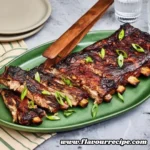
These authentic Chinese Spareribs are marinated in a traditional blend of five-spice and Shaoxing wine, then roasted to a sticky, mahogany perfection with a sweet honey glaze.
- Prep Time: 4 hours
- Cook Time: 45 mins
- Total Time: 5 hours
- Yield: 4 servings 1x
- Category: Main Course
- Method: Roasting
- Cuisine: Chinese
Ingredients
3 pounds meaty beef spareribs
1 tablespoon garlic salt
1 tablespoon granulated white sugar
2 teaspoons salt
1 teaspoon white pepper
2 tablespoons tomato ketchup
2 tablespoons Chinese cooking wine
0.5 teaspoon Chinese five-spice powder
0.25 teaspoon red food coloring
2 tablespoons honey
Instructions
1. Prepare the ribs by scoring between the bones.
2. Rub with garlic salt and set aside.
3. Mix the remaining marinade ingredients (except honey) and coat the ribs.
4. Marinate in the refrigerator for 4 to 8 hours.
5. Preheat oven to 400 Fahrenheit and place ribs on a wire rack over a lined pan.
6. Roast for 30 to 35 minutes.
7. Brush with honey glaze.
8. Roast for an additional 10 minutes until charred and sticky.
9. Rest for 10 minutes before slicing.
Notes
Bring meat to room temperature before roasting for even cooking.
Use a wire rack to ensure air circulation for a crispy finish.
Substitute dry sherry if Shaoxing wine is unavailable.
Nutrition
- Serving Size: 3-4 ribs
- Calories: 420
- Sugar: 10g
- Sodium: 880mg
- Fat: 28g
- Saturated Fat: 10g
- Unsaturated Fat: 14g
- Trans Fat: 0g
- Carbohydrates: 12g
- Fiber: 0g
- Protein: 26g
- Cholesterol: 95mg