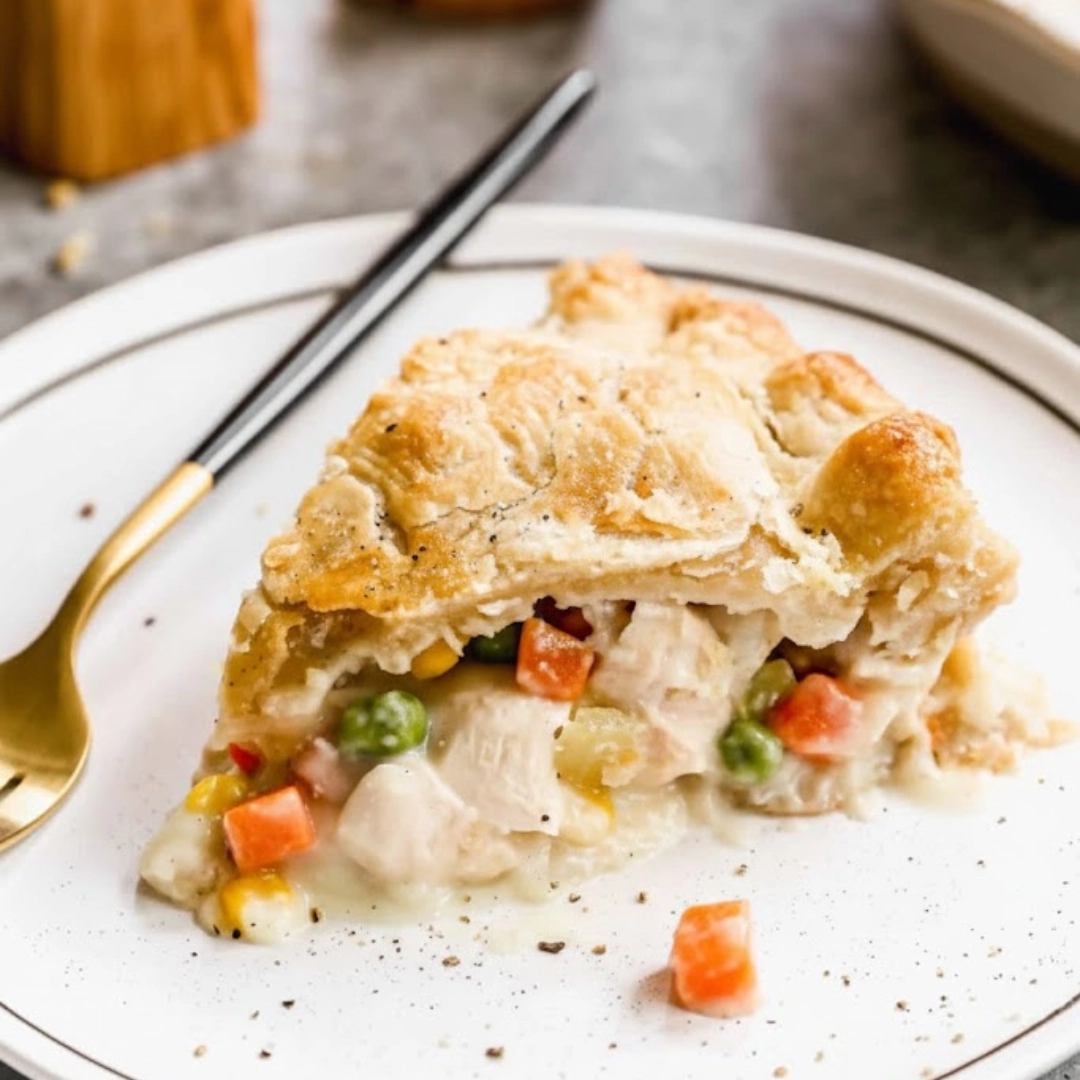
For generations, the chicken pot pie has reigned supreme as the quintessential, deeply satisfying meal. It’s an edible tapestry of tender chicken, vibrant vegetables, and a creamy, aromatic sauce, all tucked beneath a flaky, buttery crust. When the weather outside is crisp and you crave something substantial and comforting, nothing quite compares to slicing into the golden-brown dome of a homemade chicken pot pie. This recipe elevates that classic experience, focusing on rich depth of flavor and a pastry that shatters perfectly with every forkful. It’s the kind of dish that warms you from the inside out and is a perfect centerpiece for a family Sunday dinner.
The Components: Gathering Your Supplies
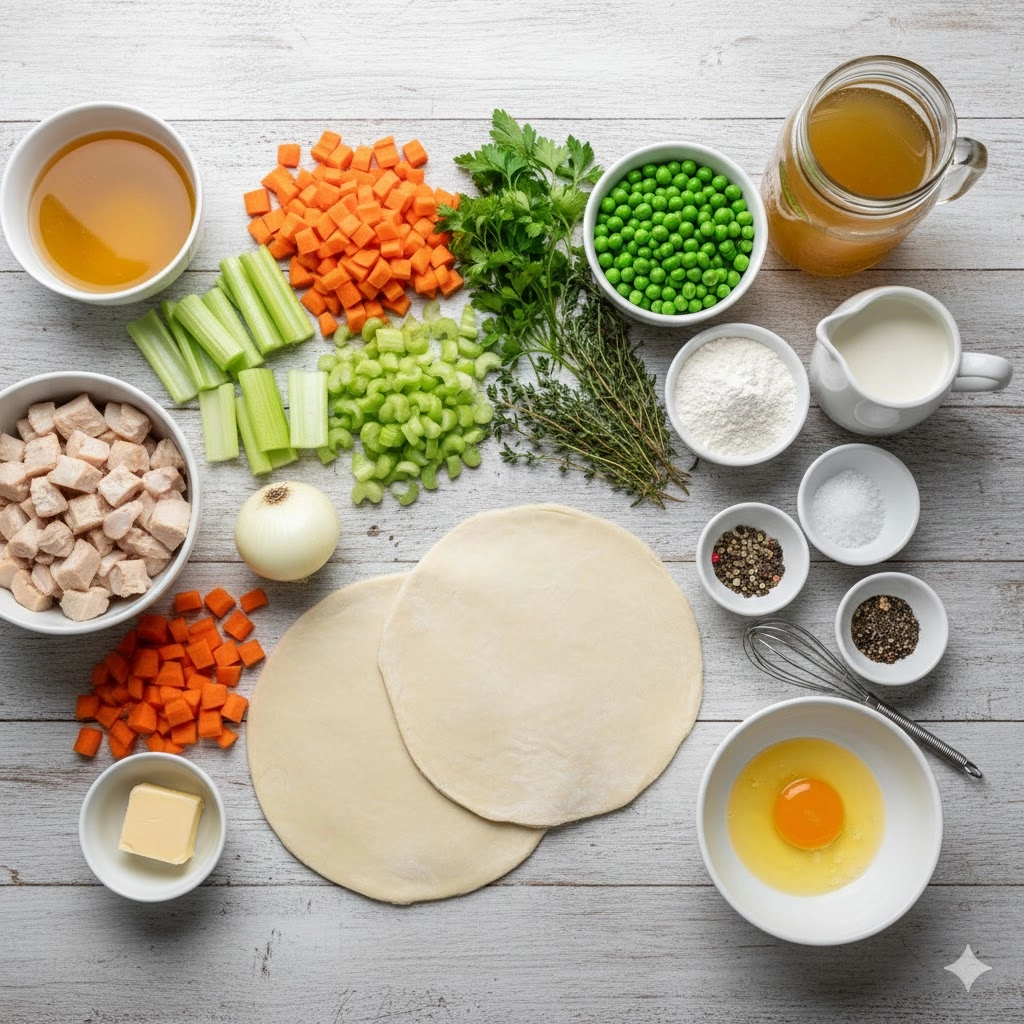
For the Filling
- One and one half pounds boneless, skinless chicken breasts or thighs, cooked and diced
- Four tablespoons unsalted butter
- One medium yellow onion, finely diced
- Two medium carrots, peeled and diced
- Two stalks celery, diced
- One half cup all-purpose flour
- Three cups chicken broth, low sodium
- One cup heavy cream
- One cup frozen peas, thawed
- One half cup fresh parsley, chopped
- One teaspoon dried thyme
- One half teaspoon dried rosemary
- One teaspoon kosher salt, or to taste
- One half teaspoon freshly ground black pepper, or to taste
For the Crust
- Two disks refrigerated pie crust, or one package of pre-made crusts
- One large egg, beaten (for egg wash)
The Process: Building the Pot Pie
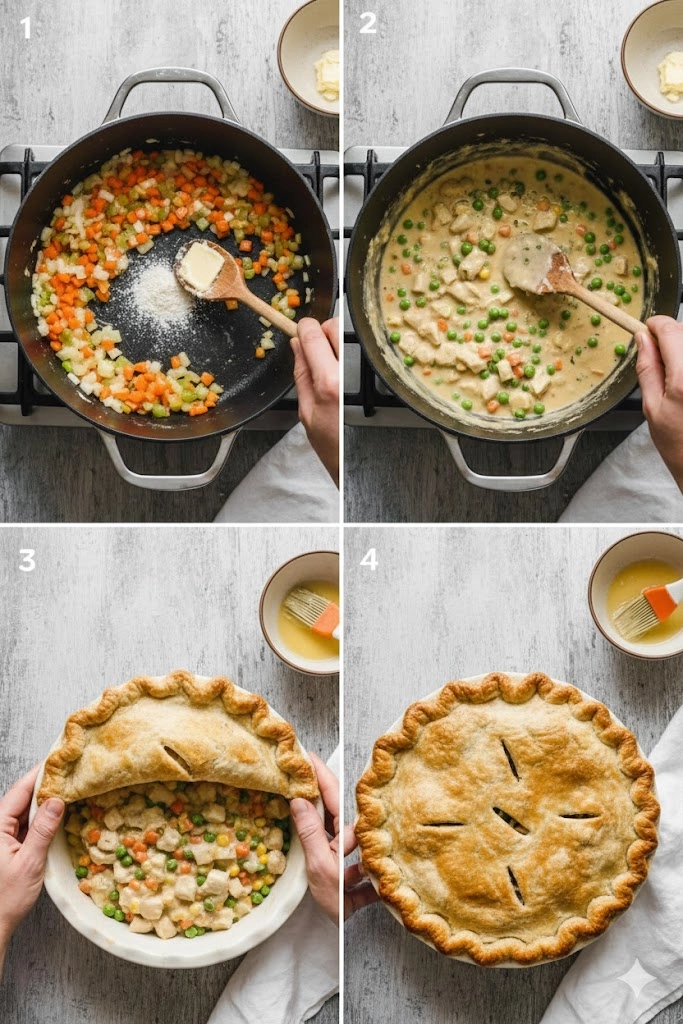
- Prepare the Aromatics: Melt the butter in a large Dutch oven or heavy-bottomed pot over medium heat, then sauté the diced onion, carrots, and celery until softened, which usually takes about five to seven minutes.
- Create the Roux: Sprinkle the flour over the softened vegetables and cook, stirring constantly, for one minute until the mixture forms a thick, paste-like consistency, known as a roux.
- Build the Sauce: Slowly whisk in the chicken broth, ensuring there are no lumps. Bring the sauce to a gentle simmer and cook until it has visibly thickened. Stir in the heavy cream, thyme, and rosemary.
- Combine the Filling: Fold in the cooked, diced chicken, thawed peas, and fresh parsley. Season the mixture generously with salt and pepper. Remove the filling from the heat and set it aside to cool slightly.
- Assemble the Pie: Line a nine-inch pie plate with one disk of the pie crust. Pour the cooled filling into the crust. Brush the edges of the bottom crust with the egg wash. Place the second crust over the top and crimp the edges to seal. Cut several slits in the top crust to vent steam.
- Bake the Pie: Brush the entire top crust with the remaining egg wash and bake in an oven preheated to four hundred Fahrenheit for thirty to forty minutes, or until the crust is a deep golden-brown and the filling is bubbling hot.
Decoding the Bake: Detailed Execution Steps
The Foundation of Flavor: Sautéing the Mirepoix
The true soul of this dish begins not with the chicken, but with the aromatic base of onions, carrots, and celery—the classic mirepoix. When you melt the butter, watch for it to foam and subside; that’s the sign it’s ready. Add the vegetables and listen for the satisfying, low sizzle. The goal here is not browning, but a gentle softening and sweetening. Keep the heat at a steady medium and stir them often. When the onions turn translucent and the carrots lose their rigid, raw appearance—they will become visibly brighter—you’ve developed the necessary sweetness that balances the savory richness of the final sauce. This is a critical step; rushing it leads to crunchy, less flavorful vegetables.
The Art of the Roux and Velvety Texture
Once the vegetables are softened, sprinkling the flour over them and stirring for a full minute is essential. This cooking time eliminates the raw, chalky taste of the flour. The resulting roux should be a pale blond color and have a sandy, cohesive texture. The magic happens when you introduce the cold or room-temperature broth—always add a liquid of a different temperature than the roux to prevent lumps. Whisk vigorously and steadily until the liquid is fully incorporated. As the mixture heats, the starch granules in the flour swell and thicken the sauce. You’ll know the sauce is ready when it coats the back of a spoon and you can draw a clean line through it with your finger. Stirring in the heavy cream right after thickening adds luxurious body and a silken mouthfeel that defines a truly great pot pie filling.
Assembling and Sealing: The Key to a Crisp Crust
Before you pour the filling, make sure it has cooled down slightly. Pouring piping-hot filling into a raw crust can prematurely melt the butter in the pastry, leading to a soggy bottom. This is the ultimate chicken pot pie tragedy. Once the filling is in the pie plate, lightly brush the exposed edge of the bottom crust with the egg wash. This egg wash acts as a glue. Lay the top crust over, trim any excess, and then firmly press the two edges together. Crimp them with a fork or pinch them decoratively with your fingers to ensure a tight, impenetrable seal. A tight seal traps the steam and moisture, preventing the crust from drying out. Finally, cut those vent slits; they are necessary escape routes for the steam, which prevents the top crust from ballooning or cracking disastrously.
The Final Transformation: Achieving Golden Glory
The egg wash brushed over the top crust is what gives the finished pie its stunning, deep golden-brown hue and beautiful sheen. When baking at four hundred Fahrenheit, pay close attention around the twenty-five minute mark. The edges often brown faster than the center. If you notice the crust getting too dark before the filling is fully bubbling and the center is set, loosely tent the pie with a piece of aluminum foil. This deflects direct heat and allows the interior to finish cooking without burning the crust. The pie is truly done when the filling is audibly simmering up through the vents—a visual sign that the starches have fully gelatinized and the entire dish is warmed through. Let it rest for at least fifteen minutes before slicing; this allows the filling to set and prevents a messy, runny serving.
Expert Guidance: Elevating Your Recipe
The Chicken Conundrum
While leftover roasted or rotisserie chicken works beautifully for speed, poaching boneless chicken breasts specifically for this recipe yields a more tender result. Submerge the chicken in cold, lightly salted water, bring it to a gentle simmer, and cook just until done. Dice the chicken while it’s still warm to retain moisture. If using thighs, which contain more connective tissue, a slow braise will maximize flavor and tenderness.
Optimizing the Pastry
For the flakiest crust, ensure both the pastry and the filling are cold before assembly. The contrast in temperatures between the cold butter in the crust and the hot oven creates the steam necessary for separation and flakiness. Work quickly when handling the dough; the warmth of your hands can melt the butter. Use just enough flour on your surface to prevent sticking, but not so much that you toughen the dough.
Spice and Herb Management
For an even richer, deeper flavor, consider blooming your dried herbs. Before adding the broth, sprinkle the thyme and rosemary onto the sautéed vegetables and cook for thirty seconds. This brief exposure to heat and fat extracts and intensifies their aromatic oils, making their presence much more pronounced in the final dish.
The Importance of Consistency
If your filling seems too thin after thickening, a quick fix is to dissolve one teaspoon of cornstarch in two teaspoons of cold water (a slurry). Remove the pot from the heat, stir in the slurry, and return to a low simmer for one minute. Never add dry starch directly to a hot liquid, or it will clump. The consistency should be thick enough to mound slightly on a spoon.
Managing Salt Levels
If you use store-bought stock or broth that is not low-sodium, reduce the added salt in the recipe by at least one half teaspoon. Taste the sauce before adding the cooked chicken and adjust the seasoning. Remember that the salt flavor concentrates as the pie bakes and the liquid reduces.
Adjustments and Substitutions for Dietary Needs
Poultry Alternatives
This classic recipe can be easily adapted by substituting the chicken with an equal amount of cooked turkey (perfect for post-holiday meals), or even cubed pork tenderloin that has been braised until fork-tender. For a rich, earthy flavor, you could try seared pheasant or guinea fowl, treating them as you would the chicken.
Vegetable Swaps
The peas, carrots, and celery are traditional, but feel free to swap them based on season or preference. Consider adding quartered button mushrooms, sautéed first with the aromatics, or substituting the peas with chopped green beans or diced russet potatoes (added early in the simmering process to ensure they cook through). A handful of sweet corn kernels adds a lovely sweetness and textural contrast.
Creating a Vegetarian Pie
To make a completely vegetarian pot pie, replace the chicken with one and one half pounds of a hearty combination: cubed firm tofu, browned seitan strips, or a mixture of cremini and shiitake mushrooms. Instead of chicken broth, use a rich, high-quality vegetable or mushroom stock, which will ensure the depth of flavor is maintained.
Suggested Pairings: What to Serve Alongside
A Simple, Crisp Salad
Given the richness and heartiness of the pot pie, the perfect counterpoint is a clean, simple, and slightly acidic salad. Think mixed greens tossed with a light vinaigrette made from lemon juice, olive oil, and a touch of Dijon mustard. The sharpness of the dressing cuts through the creamy sauce beautifully.
Braised Greens
Serving a side of lightly braised kale, collard greens, or Swiss chard adds a welcome touch of bitterness and texture. Braise them gently in chicken or vegetable broth with a clove of garlic and a pinch of red pepper flakes for a subtle heat. The slight chewiness of the greens provides an excellent contrast to the smooth filling.
Cranberry or Fruit Sauce
A small dish of homemade cranberry sauce or a tart fruit chutney, often associated with poultry dishes, is a wonderful addition. The tart, bright fruit flavor offers an unexpected but delicious balance to the savory, umami-rich filling.
Common Questions
Can I make the filling ahead of time?
Absolutely. The filling can be prepared up to two days in advance and stored in an airtight container in the refrigerator. Ensure the filling is completely cooled before storing. When you are ready to assemble, simply pour the cold filling into the pie crust, top with the second crust, and proceed with the baking instructions.
What is the best way to store and reheat leftovers?
Leftover pot pie should be covered tightly with plastic wrap or aluminum foil and stored in the refrigerator for up to three days. To reheat a slice, the best method is in a toaster oven or a standard oven at three hundred fifty Fahrenheit for about fifteen to twenty minutes. This keeps the crust crispy; the microwave is not recommended as it will steam the crust and make it soggy.
Can I use puff pastry instead of a double crust?
Yes, puff pastry makes a fantastic, elegant topping. You will only need one sheet. Cut the sheet to fit the pie plate with a slight overlap. Brush it with the egg wash and remember to cut vents. Since puff pastry is delicate, it may brown faster than a regular pie crust, so watch it closely and tent with foil if necessary.
How do I prevent the bottom crust from becoming soggy?
Aside from cooling the filling, you can “blind bake” the bottom crust briefly. Line the crust with parchment paper and fill it with pie weights, dry beans, or rice. Bake it at three hundred seventy-five Fahrenheit for ten to fifteen minutes before adding the filling and the top crust. This helps to set the pastry structure.
Nutritional Overview
| Nutrient | Amount per Serving |
| Calories | 585 kcal |
| Protein | 35 g |
| Carbs | 40 g |
| Fat | 32 g |
| Fiber | 4 g |
| Sugar | 5 g |
| Sodium | 590 mg |
Disclaimer
Nutrition information is an estimate and may vary based on preparation and ingredients used.
PrintClassic Chicken Pot Pie: A Deeply Satisfying Winter Meal

This recipe elevates the classic chicken pot pie experience, focusing on rich depth of flavor and a flaky, buttery crust. It’s the ultimate deeply satisfying comfort meal.
- Prep Time: 30 mins
- Cook Time: 40 mins
- Total Time: 70 mins
- Yield: 8 servings 1x
- Category: Dinner
- Method: Baking
- Cuisine: American
Ingredients
1.5 pounds boneless, skinless chicken breasts or thighs, cooked and diced
4 tablespoons unsalted butter
1 medium yellow onion, finely diced
2 medium carrots, peeled and diced
2 stalks celery, diced
0.5 cup all-purpose flour
3 cups chicken broth, low sodium
1 cup heavy cream
1 cup frozen peas, thawed
0.5 cup fresh parsley, chopped
1 teaspoon dried thyme
0.5 teaspoon dried rosemary
1 teaspoon kosher salt, or to taste
0.5 teaspoon freshly ground black pepper, or to taste
2 disks refrigerated pie crust
1 large egg, beaten (for egg wash)
Instructions
1. Prepare the Aromatics: Melt the butter and sauté onion, carrots, and celery until softened (5–7 minutes).
2. Create the Roux: Sprinkle flour over vegetables and cook, stirring, for 1 minute until a thick paste forms.
3. Build the Sauce: Slowly whisk in chicken broth and simmer until thickened. Stir in heavy cream, thyme, and rosemary.
4. Combine the Filling: Fold in cooked chicken, thawed peas, and parsley. Season with salt and pepper, then cool slightly.
5. Assemble the Pie: Line a 9-inch pie plate with one crust. Pour cooled filling inside. Brush edges with egg wash.
6. Seal and Vent: Place the second crust over the top and crimp the edges firmly. Cut several slits in the top crust.
7. Bake the Pie: Brush the top crust with egg wash and bake at four hundred Fahrenheit for 30 to 40 minutes, until golden and bubbling.
Notes
Use fresh parmesan for best results.
Add spinach or mushrooms for variation.
Store leftovers in an airtight container for up to 4 days.
Nutrition
- Serving Size: 1 slice
- Calories: 585
- Sugar: 5g
- Sodium: 590mg
- Fat: 32g
- Saturated Fat: 18g
- Unsaturated Fat: 10g
- Trans Fat: 0g
- Carbohydrates: 40g
- Fiber: 4g
- Protein: 35g
- Cholesterol: 115mg