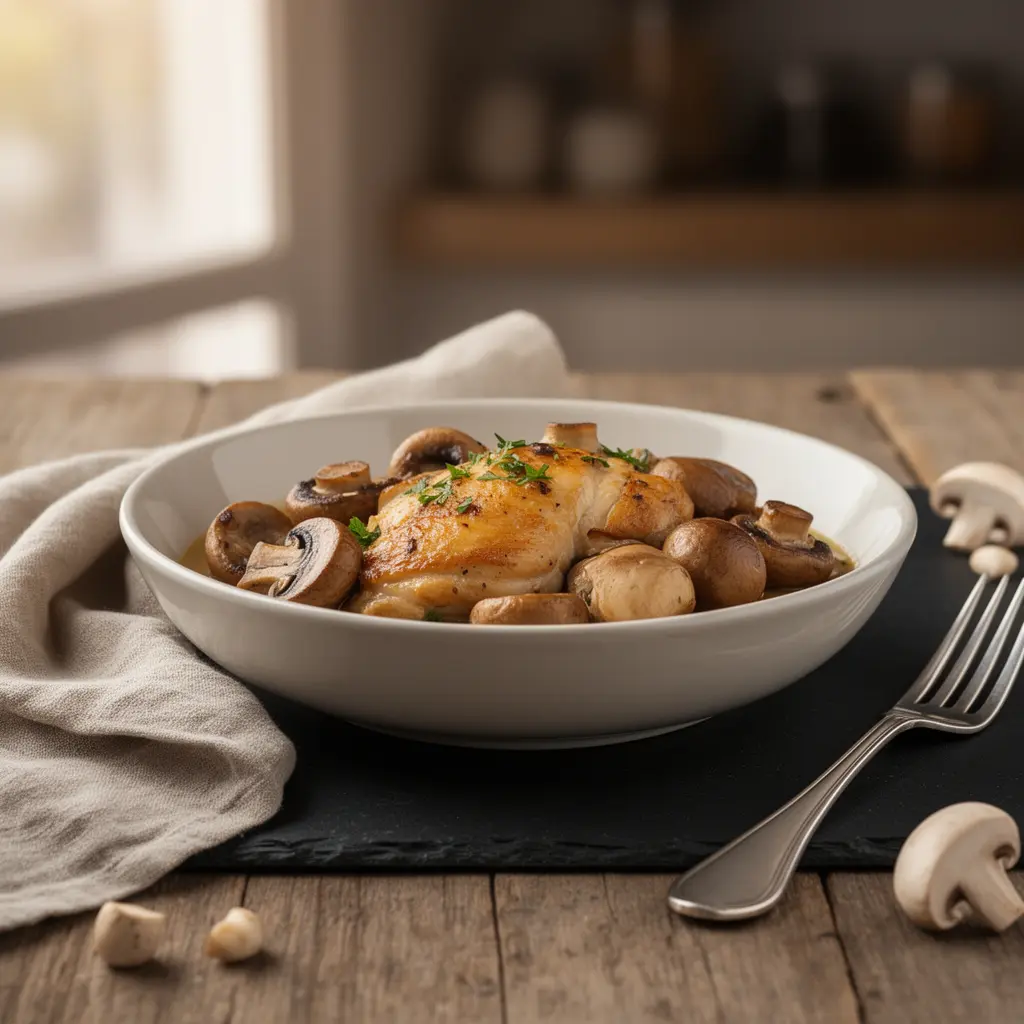

The beauty of Italian-American cuisine often lies in its ability to transform a few humble pantry staples into a dish that feels undeniably luxurious. This version of a classic piccata focuses on high-impact flavors—briny capers, zesty citrus, and velvety butter—brought together in a single skillet. By using thin-cut poultry, we minimize the time spent over the stove while maximizing the absorption of the pan sauce. It is an ideal solution for those evenings when you desire a sophisticated, chef-quality meal without the exhaustive cleanup or long simmer times.
Table of Contents
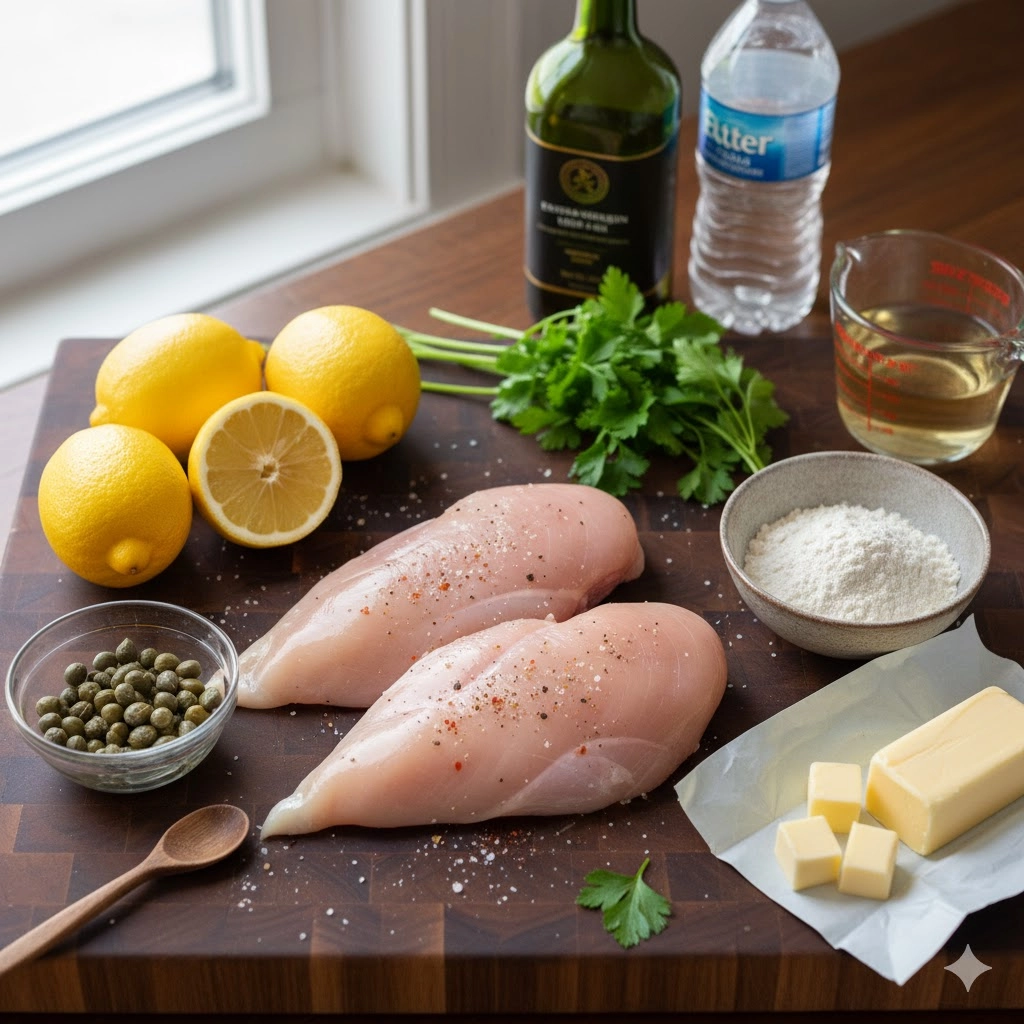
What You Will Need
The Foundation
- 4 boneless, skinless chicken breast halves (approximately 6 ounces each)
- 1/2 cup all-purpose flour
- 1 teaspoon sea salt
- 1/2 teaspoon freshly cracked black pepper
- 1/4 teaspoon cayenne pepper (optional for subtle warmth)
The Sauté and Deglaze
- 2 tablespoons extra-virgin olive oil
- 1/2 cup dry white wine (Sauvignon Blanc or Pinot Grigio work best)
- 1/4 cup fresh lemon juice (roughly the juice of one large lemon)
- 1/4 cup chicken stock or filtered water
The Finishing Touches
- 1 tablespoon nonpareil capers, rinsed and drained
- 3 tablespoons unsalted butter, cut into small cubes and kept chilled
- 2 tablespoons fresh Italian parsley, finely minced
The Quick-Start Method
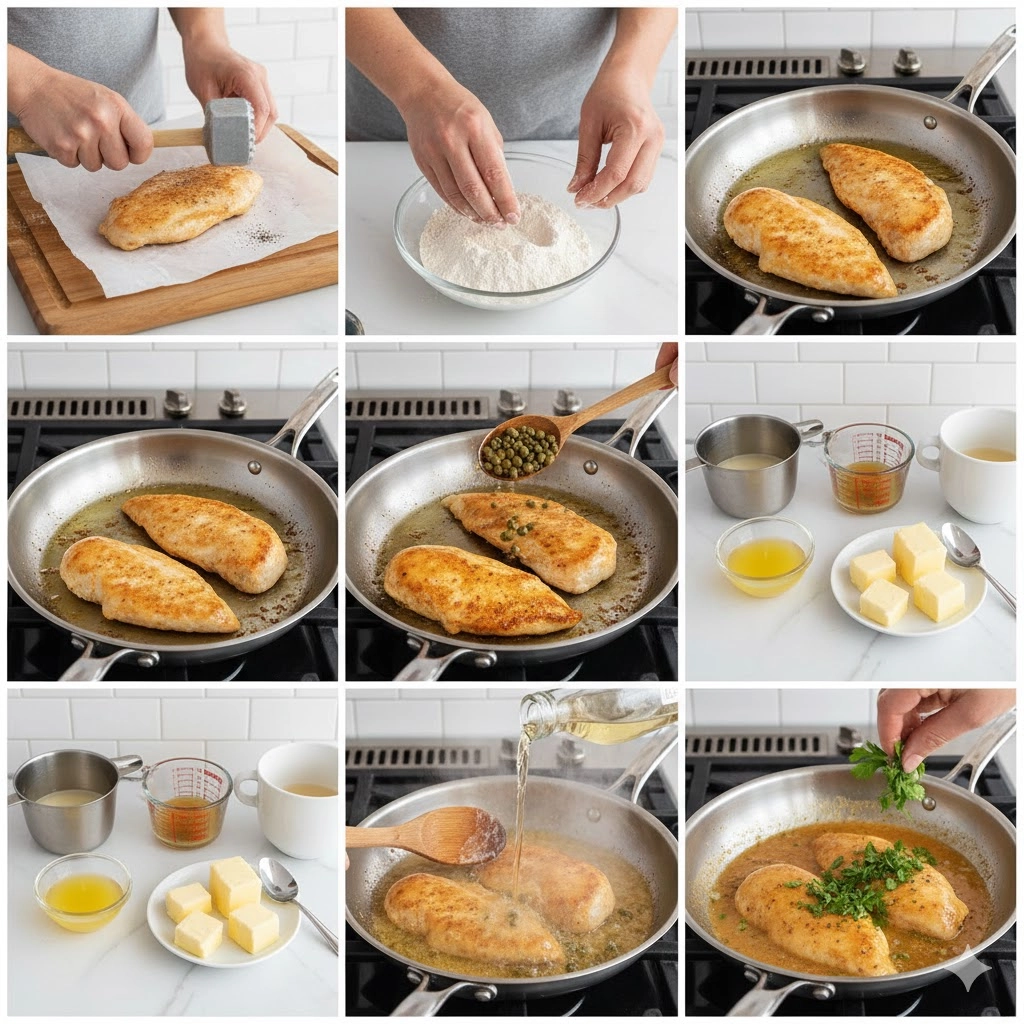
- Uniformly flatten the chicken breasts to a one half inch thickness.
- Coat the seasoned meat in the flour, tapping away any excess.
- Pan-sear in hot oil for five minutes per side, then set aside.
- Briefly toast the capers in the remaining pan drippings.
- Pour in the wine to deglaze, simmering until the liquid is reduced by half.
- Emulsify the sauce by whisking in the lemon juice, stock, and cold butter pats.
- Return the chicken to the pan, toss with parsley, and serve immediately.
Deep Dive: Mastering the Details
Preparing the Poultry
Consistency is the secret to a successful Quick Chicken Piccata. If one side of the breast is an inch thick and the other is a quarter-inch, the thinner side will dry out before the center is safe to eat. Use a heavy rolling pin or a meat mallet to pound the chicken between sheets of parchment paper. You aren’t just tenderizing the meat; you are creating a flat surface that will brown evenly in the oil, ensuring every bite has that characteristic golden crust.
Achieving the Perfect Dredge
When coating the chicken in flour, less is more. A heavy coating will slide off in the pan or turn the sauce into a thick paste. The goal is a light, dusty layer that helps the chicken brown and provides just enough starch to help the butter and wine bind together later. Always season the meat directly rather than just seasoning the flour to ensure the salt penetrates the protein.
The Chemistry of the Pan Sauce
Once the chicken is removed, the pan will be covered in “fond”—the brown bits stuck to the bottom. This is concentrated flavor. When you add the white wine, use a wooden spoon to scrape these bits into the liquid. This process, called deglazing, creates the dark, savory base of the piccata. Reducing the wine is non-negotiable; if you skip this, the sauce will have a sharp, alcoholic bite. You want it to reach a syrupy consistency before moving to the next step.
Emulsification: The Cold Butter Trick
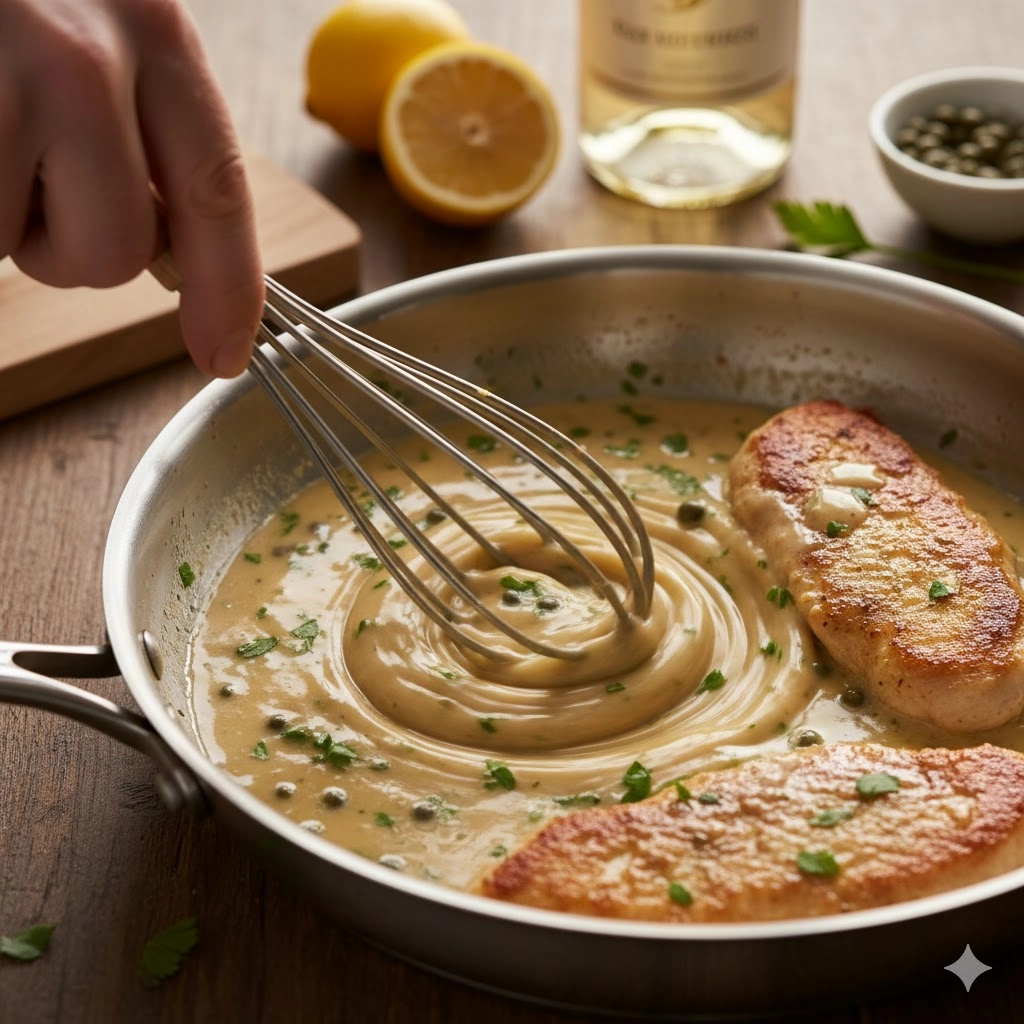
The most technical part of this recipe is adding the butter. If you add melted or warm butter, it will simply turn into oil. By whisking in small, stone-cold cubes of butter one at a time over low heat, you are creating an emulsion. The cold fat blends with the acidic lemon and wine to create a sauce that is thick, glossy, and opaque. This is what separates a homemade dish from a restaurant-standard meal.
Expert Secrets for Better Flavor
- Rinse the Capers: If you find capers to be too aggressive, soak them in a small bowl of water for five minutes before use. This tempers the vinegar and allows the floral notes of the bud to shine.
- The Chill Factor: Keep your butter in the freezer for ten minutes before you plan to make the sauce. The colder the butter, the more stable the emulsion will be.
- High Heat, Briefly: When searing the chicken, don’t be afraid of a little smoke. You want to hear a loud hiss when the meat hits the oil to lock in the juices.
- Parsley Timing: Add the parsley at the very end. If it cooks in the sauce for too long, it loses its bright green color and fresh, peppery aroma.
- Warming the Plates: Since this is a thin-cut dish with a butter-based sauce, it can cool down quickly. Serving it on pre-warmed plates keeps the sauce at the perfect silkiness while you eat.
Creative Variations
- The Garden Twist: Add a handful of baby spinach to the pan at the same time you return the chicken. The residual heat will wilt the greens perfectly into the sauce.
- Mushroom Piccata: Sauté a cup of sliced cremini mushrooms in the oil before adding the capers for an earthier, more savory version of the dish.
- Dairy-Free Alternative: Use a high-quality vegan butter substitute that is high in fat content to achieve a similar emulsion, or omit the butter and whisk in a teaspoon of cornstarch slurry to thicken the wine and lemon.
Pairing and Presentation
To do justice to the vibrant acidity of the sauce, serve this chicken alongside something that can absorb the extra liquid. A nest of buttered noodles or a side of creamy polenta works wonderfully. For a lighter approach, a crisp arugula salad with a simple balsamic glaze provides a peppery contrast to the rich butter sauce. Garnish the final plate with a few thin wheels of fresh lemon to signal the bright flavors within.
Frequently Asked Questions
What kind of white wine should I use?
Stick to dry whites. Avoid anything labeled “Late Harvest” or sweet Rieslings, as the sugar will caramelize and make the dish taste like dessert. A crisp Italian Pinot Grigio is the most authentic choice.
Can I use chicken thighs instead?
Yes, though you will need to increase the cook time. Boneless thighs are fattier and more forgiving, but they should still be pounded thin to ensure they cook at the same rate as the sauce reduction.
My sauce separated and looks oily. Can I fix it?
If the sauce “breaks,” try adding a tablespoon of heavy cream or a teaspoon of water and whisking vigorously over very low heat. This can often bring the emulsion back together.
How do I make this more kid-friendly?
If the capers are too “salty” for younger palates, you can finely mince them so they disappear into the sauce, providing flavor without the texture, or simply reduce the amount of lemon juice slightly.
Nutrition Information
| Nutrient | Amount per Serving |
| Calories | 321 kcal |
| Protein | 25 g |
| Carbs | 8 g |
| Fat | 18 g |
| Fiber | 0 g |
| Sugar | 1 g |
| Sodium | 224 mg |
Nutrition information is an estimate and may vary based on preparation and ingredients used.
PrintThe Ultimate Twenty-Minute Chicken Piccata

This Quick Chicken Piccata features tender, thinly pounded chicken breasts seared to perfection and finished in a vibrant, velvety lemon-butter sauce with briny capers.
- Prep Time: 10 mins
- Cook Time: 15 mins
- Total Time: 25 mins
- Yield: 4 servings 1x
- Category: Quick
- Method: Stovetop
- Cuisine: Italian-American
Ingredients
4 skinless, boneless chicken breast halves
Salt and ground black pepper to taste
1 pinch cayenne pepper
1/2 cup all-purpose flour for dredging
2 tablespoons olive oil
1 tablespoon capers, drained
1/2 cup dry white wine
1/4 cup fresh lemon juice
1/4 cup water
3 tablespoons cold unsalted butter, sliced
2 tablespoons chopped fresh Italian parsley
Instructions
1. Place chicken between plastic and pound to one half inch thickness.
2. Season chicken with salt, pepper, and cayenne; dredge lightly in flour.
3. Heat olive oil in a skillet over medium-high heat and sear chicken for 5 minutes per side. Remove to a plate.
4. Sauté capers in the remaining oil for 30 seconds to release flavor.
5. Pour in white wine and simmer until the liquid is reduced by half.
6. Whisk in lemon juice, water, and cold butter pats until the sauce emulsifies and thickens.
7. Return chicken to the pan, stir in fresh parsley, and coat with sauce before serving.
Notes
Keep the butter very cold until the moment you whisk it into the sauce to ensure a glossy emulsion.
Use a dry white wine like Pinot Grigio or Sauvignon Blanc for the best acidity.
If you prefer no alcohol, substitute the wine with extra chicken broth and a teaspoon of lemon juice.
Nutrition
- Serving Size: 1 breast with sauce
- Calories: 321
- Sugar: 1g
- Sodium: 224mg
- Fat: 18g
- Saturated Fat: 7g
- Unsaturated Fat: 11g
- Trans Fat: 0g
- Carbohydrates: 8g
- Fiber: 0g
- Protein: 25g
- Cholesterol: 88mg