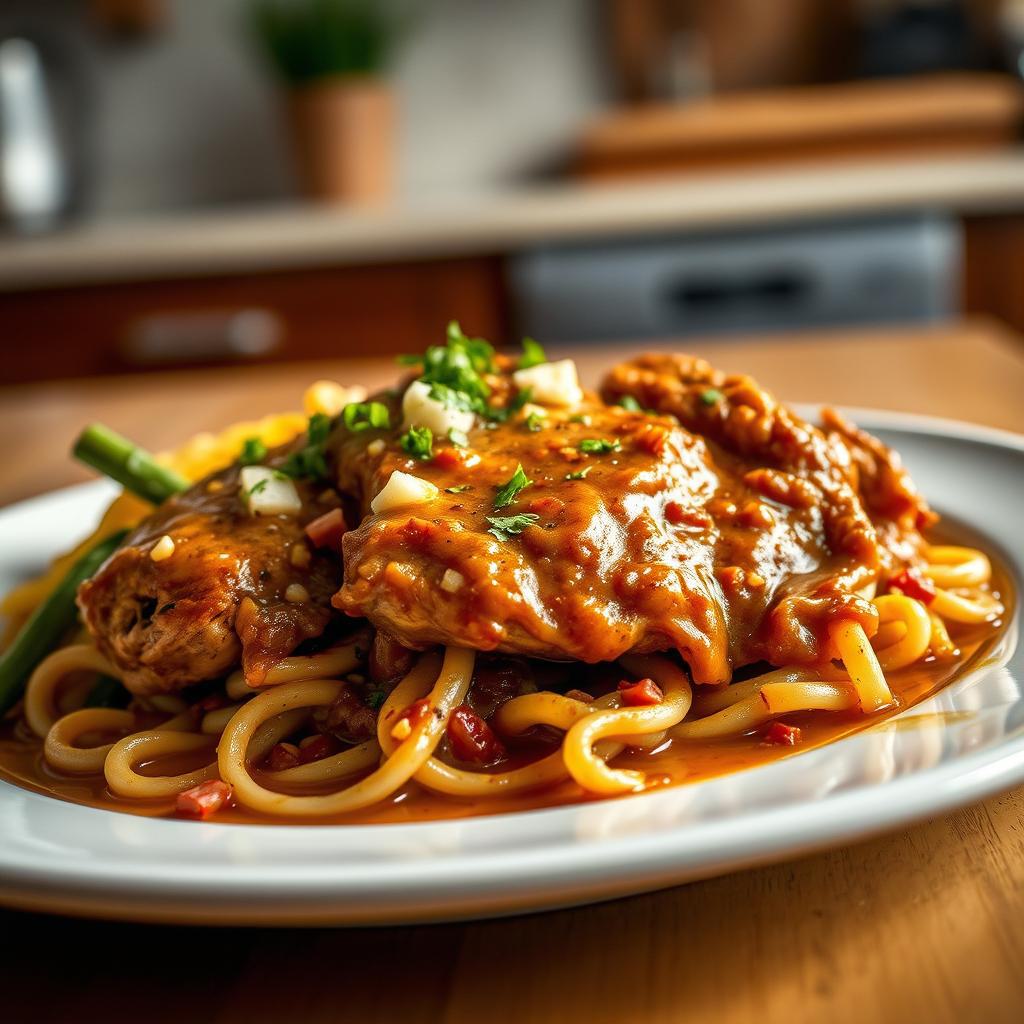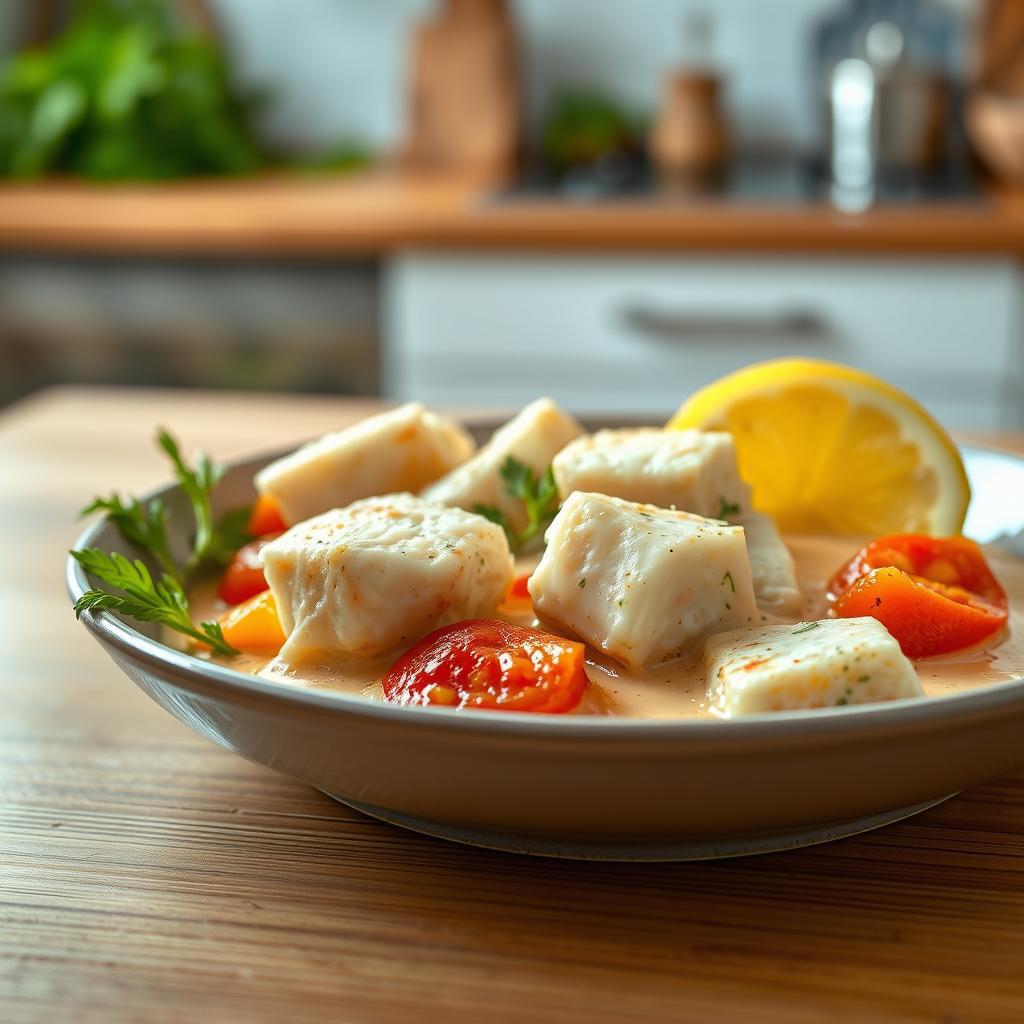
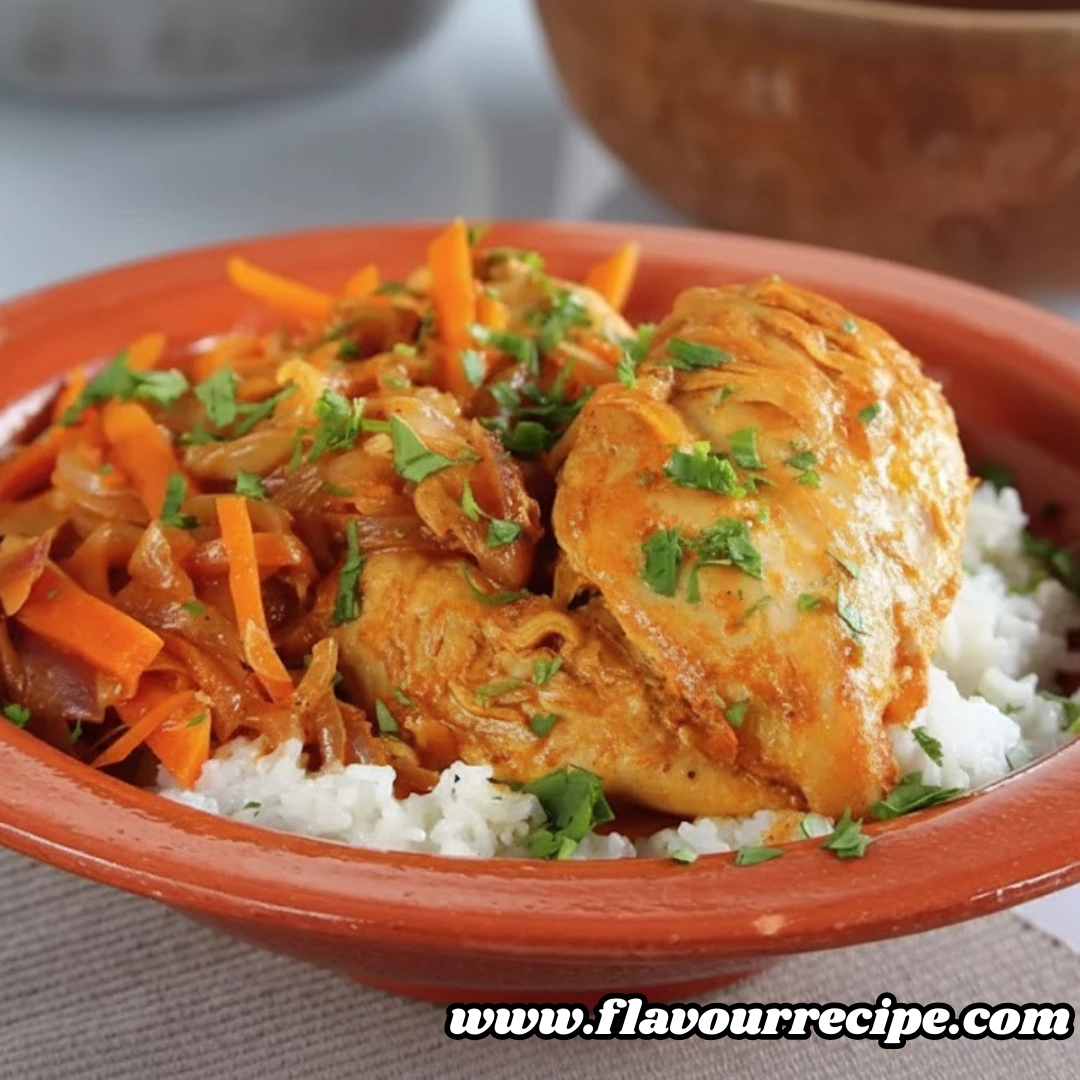
Originating from the Mediterranean but finding a spiritual home in Latin American and Spanish cuisines, escabeche is a preservation technique that has evolved into a vibrant culinary staple. This specific version focuses on tender poultry steeped in a sharp, aromatic poaching liquid of vinegar and wine. The acidity serves as a bright counterpoint to the savory chicken, while a blend of onions and carrots provides a natural sweetness and crunch. Served warm or at room temperature, this Chicken Escabeche offers a complex flavor profile that benefits greatly from a brief resting period, allowing the spices and vinegar to penetrate the meat thoroughly.
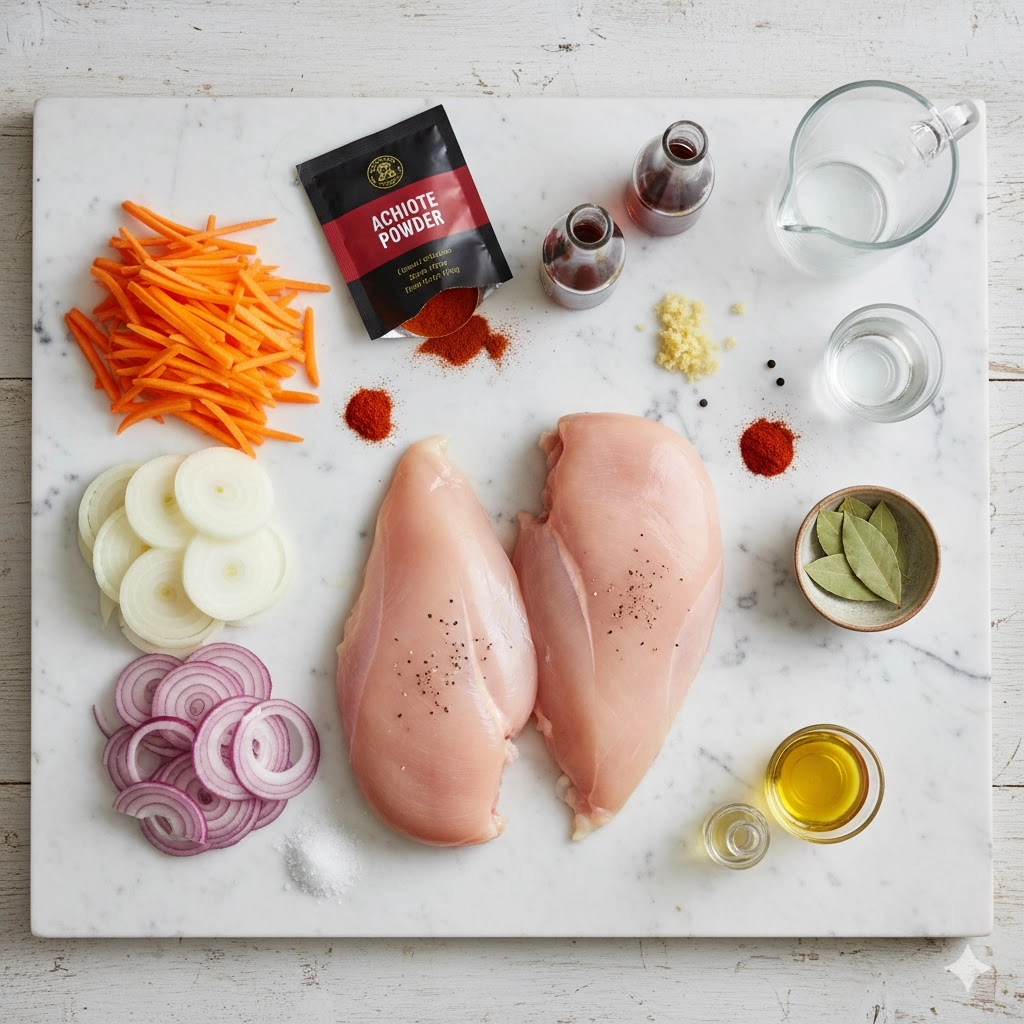
Essential Components for the Escabeche
This recipe is scaled for two generous servings. The quantities are designed to ensure enough pickling liquid to keep the chicken moist during the simmering process.
- Three tablespoons extra-virgin olive oil
- Twelve and one half ounces skinless, boneless chicken breast halves
- Three and one half ounces carrots, peeled and julienned into matchsticks
- Three and one half ounces white onion, sliced into thin half-moons
- Three and one half ounces red onion, sliced into thin half-moons
- Two whole bay leaves
- One large clove garlic, finely minced
- One teaspoon ground black pepper
- One half teaspoon fine sea salt
- One quarter cup red wine vinegar
- One quarter cup dry white wine (such as Sauvignon Blanc or Pinot Grigio)
- One quarter cup filtered water
- One teaspoon achiote powder (annatto)
- One half teaspoon cayenne pepper
Primary Preparation Sequence
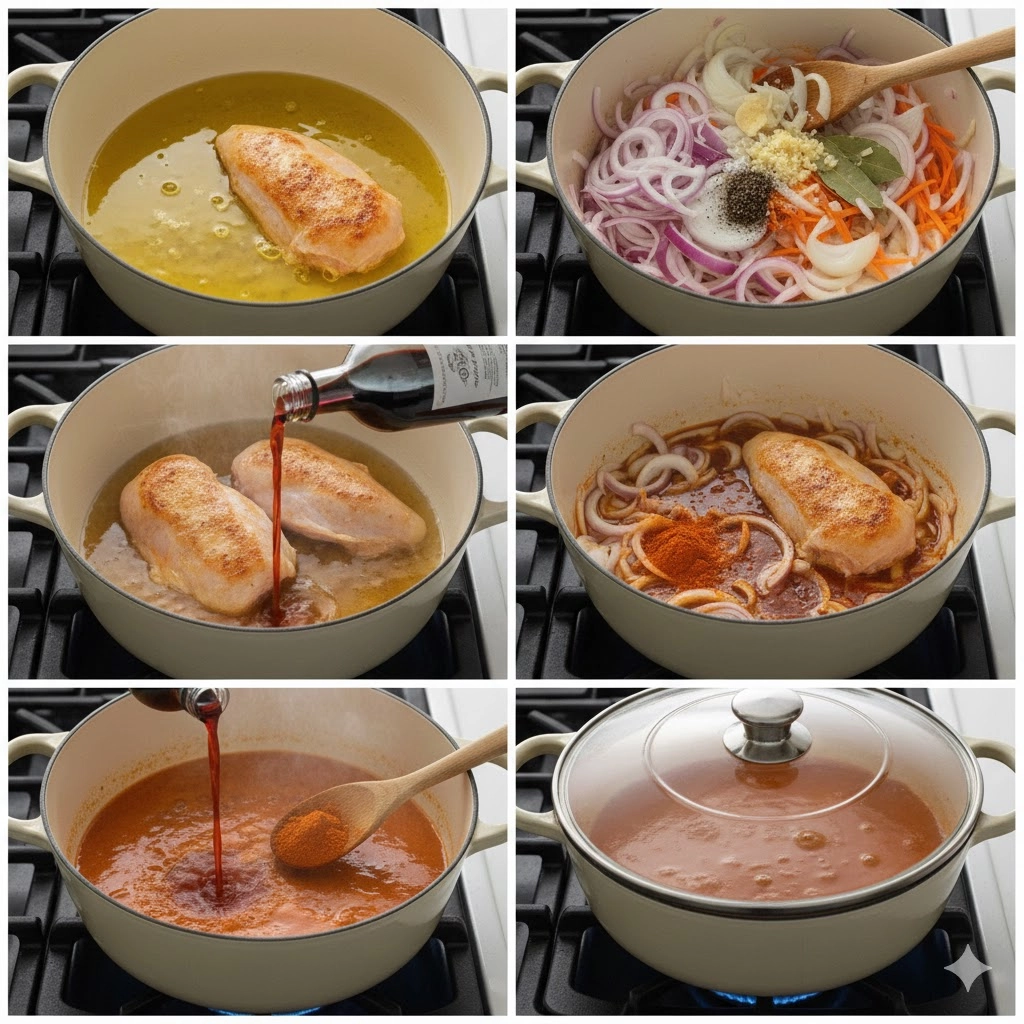
- Heat the olive oil in a heavy-bottomed Dutch oven over medium-high heat.
- Sear the chicken breasts on one side until a golden crust forms.
- Turn the chicken and incorporate the carrots, both onion varieties, garlic, and basic seasonings.
- Sauté the mixture until the vegetables lose their rigidity and the chicken develops color on all sides.
- Deglaze the pan with the vinegar, wine, and water, then stir in the achiote and cayenne.
- Lower the heat, cover the pot, and simmer gently until the internal temperature reaches the safe threshold.
Technical Execution and Culinary Nuance
Success with this Chicken Escabeche relies on the interplay between the searing of the meat and the softening of the aromatics. When you first place the chicken in the hot Dutch oven, resist the urge to move it for at least five minutes. This allows the Maillard reaction to occur, creating a savory foundation for the sauce. You are looking for a deep golden hue rather than a light tan.
Once you flip the meat and add the julienned carrots and sliced onions, the moisture from the vegetables will begin to loosen any browned bits from the bottom of the pan. The onions should transition from opaque to translucent, absorbing the oil and chicken juices. Avoid browning the garlic; it should remain fragrant and soft. If the garlic begins to turn dark brown, it will impart a bitter note to the delicate vinegar broth.
The addition of red wine vinegar and dry white wine introduces a sharp acidity that is characteristic of traditional escabeche. When the achiote powder is stirred in, the liquid will take on a brilliant, earthy orange-red tint. Achiote provides a mild, nutty flavor that acts as a bridge between the sharp vinegar and the spicy cayenne.
The simmering phase must be controlled. If the liquid boils too vigorously, the chicken fibers will toughen. Keep the heat at a low simmer—just a few bubbles breaking the surface—to ensure the meat remains succulent. Use a digital thermometer to check for a reading of one hundred sixty-five Fahrenheit. At this point, the chicken will be fully cooked but still juicy.
Professional Tips for Best Results
- Uniform Slicing: Ensure your carrots and onions are sliced to a similar thickness. This ensures they soften at the same rate and provides a consistent texture in every bite.
- Achiote Sourcing: If you cannot find achiote powder, you can substitute it with a mixture of equal parts paprika and turmeric. It won’t be identical, but it provides the necessary color and a hint of earthiness.
- The Rest Period: While delicious immediately, this dish truly shines after sitting for thirty minutes off the heat. This allows the vinegar to “pickle” the outer layer of the chicken.
- Vinegar Choice: If red wine vinegar is too sharp for your palate, try a high-quality apple cider vinegar for a fruitier, softer acidic profile.
- Vessel Selection: Use a non-reactive pot, such as enameled cast iron or stainless steel. Aluminum or unlined copper can react with the high vinegar content and change the flavor of the sauce.
- Wine Quality: Never cook with a wine you wouldn’t drink. A crisp, dry white wine adds a layer of sophistication that “cooking wines” cannot replicate.

Creative Variations and Adjustments
If you prefer a different protein, this method works exceptionally well with firm white fish like halibut or cod. Simply reduce the simmering time to prevent the fish from flaking apart too early. For a vegetarian alternative, thick slices of roasted cauliflower or wedges of firm tofu can be used, though you should reduce the liquid slightly as they won’t release as much moisture as the chicken.
To increase the aromatic complexity, consider adding a cinnamon stick or a few whole cloves during the simmering process. This leans into the North African influences that originally shaped Spanish escabeche. For those who enjoy more heat, replace the cayenne with a sliced fresco chili or a dried guajillo chili for a smoky undertone.
Serving and Presentation
The most traditional way to enjoy this meal is over a bed of fluffy white rice or steamed quinoa, which helps soak up the seasoned vinegar broth. For a lighter approach, serve the chicken and vegetables alongside a crusty piece of sourdough bread to mop up the juices.
In many South American households, this dish is served chilled or at room temperature as part of a larger spread. It makes an excellent topping for a hearty salad of bitter greens like arugula or radicchio, where the acidity of the escabeche acts as a natural dressing.
Frequently Asked Questions
Can I use chicken thighs instead of breasts?
Yes, boneless skinless chicken thighs are an excellent substitution. They contain more fat, which makes them very forgiving during the simmering process, though you may need to increase the cook time by five to seven minutes.
How long will this dish keep in the refrigerator?
Because of the high vinegar content, this dish stores remarkably well. It can be kept in an airtight container for up to four days, and many find that the flavor actually peaks on the second or third day.
What can I use if I don’t have dry white wine?
You can substitute the wine with additional water and a squeeze of fresh lemon juice, or use a light chicken stock. This will slightly reduce the depth of flavor but will still result in a very bright and tasty meal.
Is it necessary to julienne the carrots?
Julienning allows the carrots to cook quickly while maintaining a slight bite. If you prefer a softer texture, you can slice them into thin rounds, but the aesthetic of the long, thin strips is traditional for this preparation.
Nutrition Information
| Nutrient | Amount per Serving |
| Calories | 506 kcal |
| Protein | 42 g |
| Carbs | 19 g |
| Fat | 26 g |
| Fiber | 4 g |
| Sugar | 7 g |
| Sodium | 721 mg |
Nutrition information is an estimate and may vary based on preparation and ingredients used.
PrintTangy and Aromatic South American Chicken Escabeche

This tangy and aromatic South American Chicken Escabeche features tender poultry steeped in a sharp poaching liquid of red wine vinegar and dry white wine, balanced with sweet julienned carrots and onions.
- Prep Time: 15 mins
- Cook Time: 30 mins
- Total Time: 45 mins
- Yield: 2 servings 1x
- Category: Main Course
- Method: Stovetop
- Cuisine: South American
Ingredients
3 tablespoons extra-virgin olive oil
12 1/2 ounces skinless, boneless chicken breast halves
3 1/2 ounces carrots, julienned
3 1/2 ounces white onion, thinly sliced
3 1/2 ounces red onion, thinly sliced
2 bay leaves
1 clove garlic, minced
1 teaspoon ground black pepper
1/2 teaspoon salt
1/4 cup red wine vinegar
1/4 cup dry white wine
1/4 cup water
1 teaspoon achiote powder
1/2 teaspoon cayenne pepper
Instructions
1. Heat oil over medium-high heat in a Dutch oven and brown chicken on one side for 5 minutes.
2. Flip chicken and add carrots, white onion, red onion, bay leaves, garlic, black pepper, and salt.
3. Sauté until vegetables have softened and chicken has browned, about 8 minutes.
4. Pour in red wine vinegar, white wine, and water.
5. Sprinkle with achiote powder and cayenne; stir well.
6. Reduce heat to medium, cover, and simmer for 15 minutes until chicken reaches 165 Fahrenheit.
Notes
Let the dish rest for 30 minutes before serving to allow the vinegar to penetrate the meat.
Serve at room temperature for the most authentic flavor profile.
Pairs perfectly with fluffy white rice or steamed quinoa.
Nutrition
- Serving Size: 1 breast with vegetables
- Calories: 506
- Sugar: 7g
- Sodium: 721mg
- Fat: 26g
- Saturated Fat: 5g
- Unsaturated Fat: 21g
- Trans Fat: 0g
- Carbohydrates: 19g
- Fiber: 4g
- Protein: 42g
- Cholesterol: 108mg