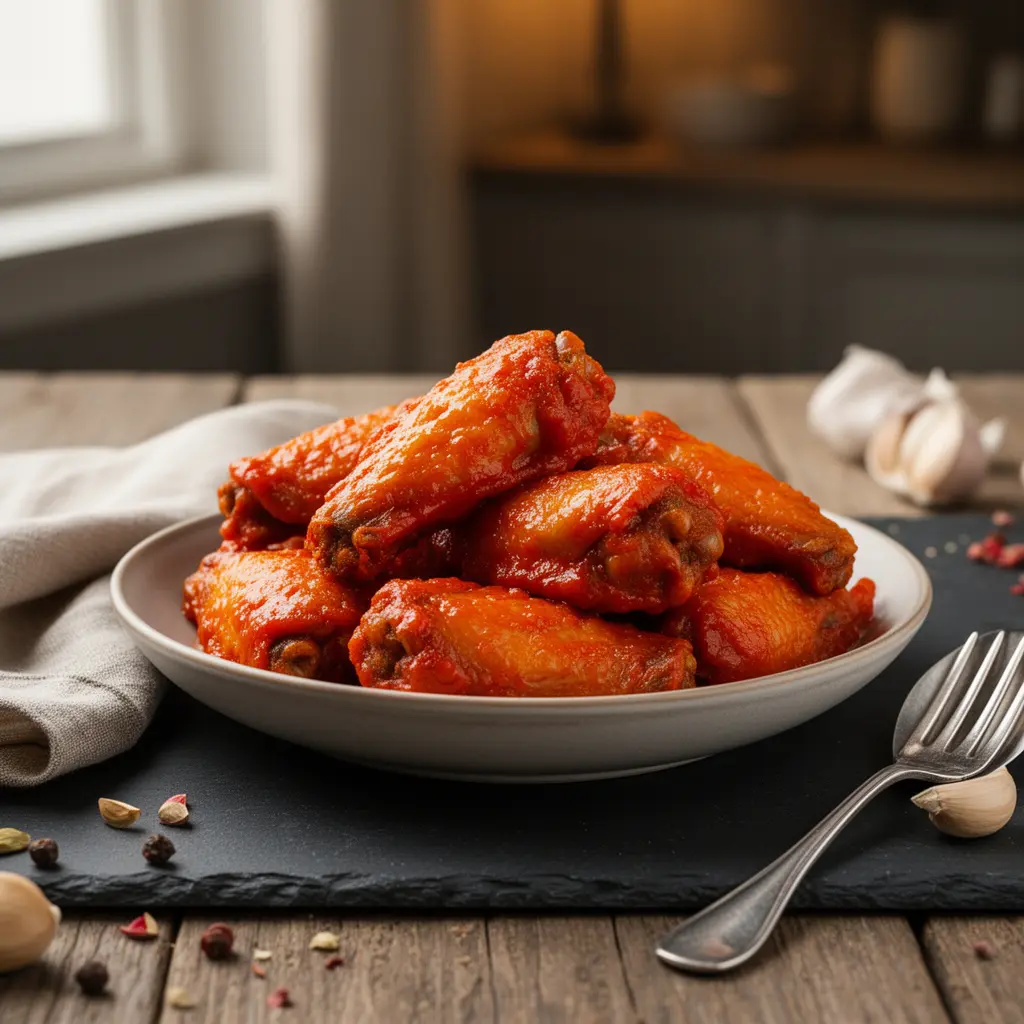

There are few dishes that capture the creamy, savory perfection of Italian comfort cuisine quite like carbonara. This iteration takes that timeless Roman preparation—rich egg yolks, sharp pecorino or Parmesan, and cured pork—and transforms it into a robust, shareable casserole. The Chicken Carbonara Pasta Bake marries the silky texture of the classic sauce with the heartiness of baked pasta, allowing the flavors to meld and deepen under a light, golden crust. It is an exceptional choice for a substantial weekend meal or a celebratory gathering, delivering familiar indulgence without the pressure of having to serve everyone immediately a la minute. It’s a dish that respects tradition while fully embracing the convenience and conviviality of a baked entree.
Table of Contents
The Essential Components
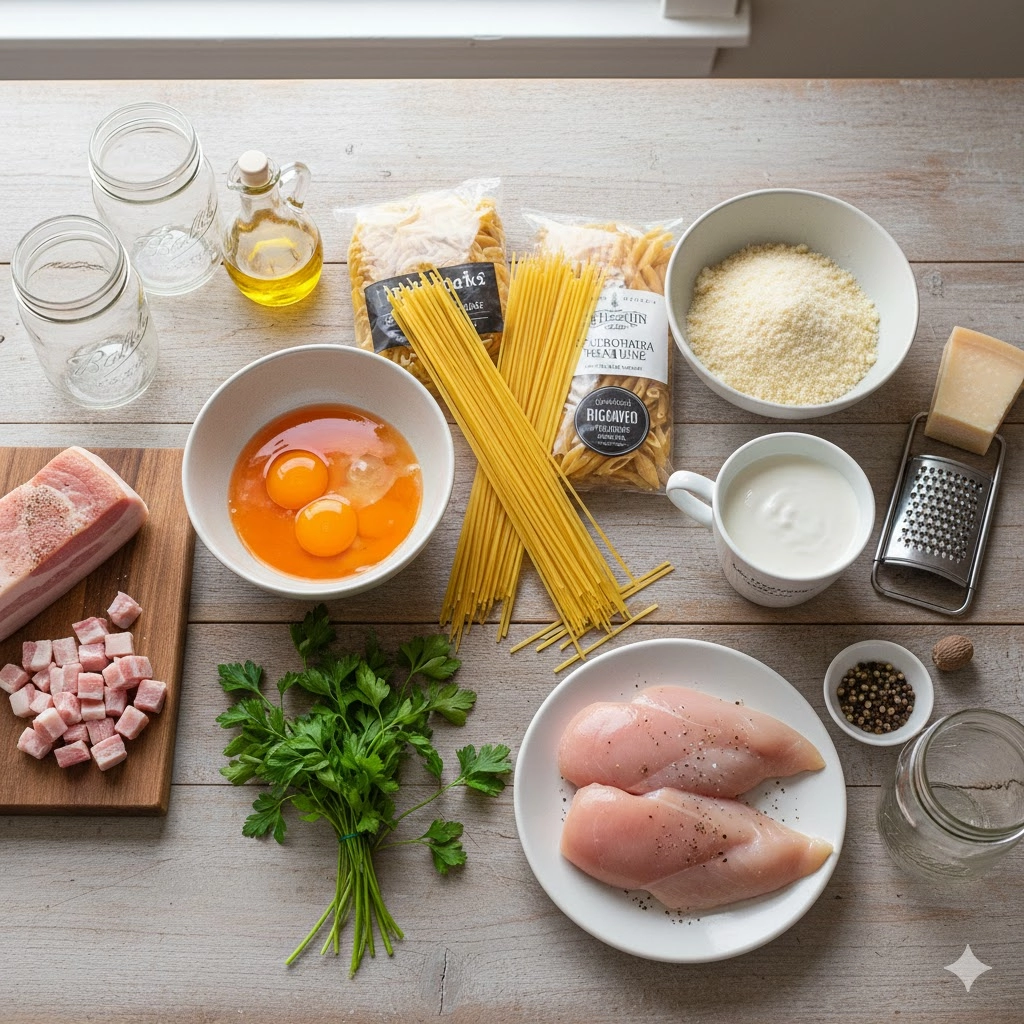
Creating a memorable pasta bake relies on quality ingredients and logical organization. Here is the framework for success, ensuring all elements are prepped and ready for assembly. Note that we prioritize metric measurements for baking accuracy, followed by their common US equivalents.
For the Sauce Base
- 10 ounces (280 grams) pancetta, diced small
- 4 large egg yolks, preferably pasture-raised
- 1 cup (240 milliliters) heavy cream, brought to room temperature
- 2 cups (200 grams) finely grated Parmesan cheese, plus extra for topping
- 1 teaspoon freshly cracked black pepper
- 1/4 teaspoon ground nutmeg (optional, but recommended)
The Pasta and Protein
- 16 ounces (450 grams) dried spaghetti, penne, or rigatoni
- 2 cups (approximately 8 ounces or 230 grams) cooked chicken breast, diced into half-inch cubes
- 2 tablespoons olive oil (for prepping the pan and chicken)
Key Finishing Elements
- 1/4 cup finely chopped fresh Italian parsley
- Reserved pasta water (approximately 2 cups)
The Art of Assembly: Procedure Overview
This recipe is structured into three main phases: rendering the pork and cooking the pasta, creating the delicate carbonara emulsion, and finally, baking the finished casserole. Following these high-level steps ensures a smooth process.
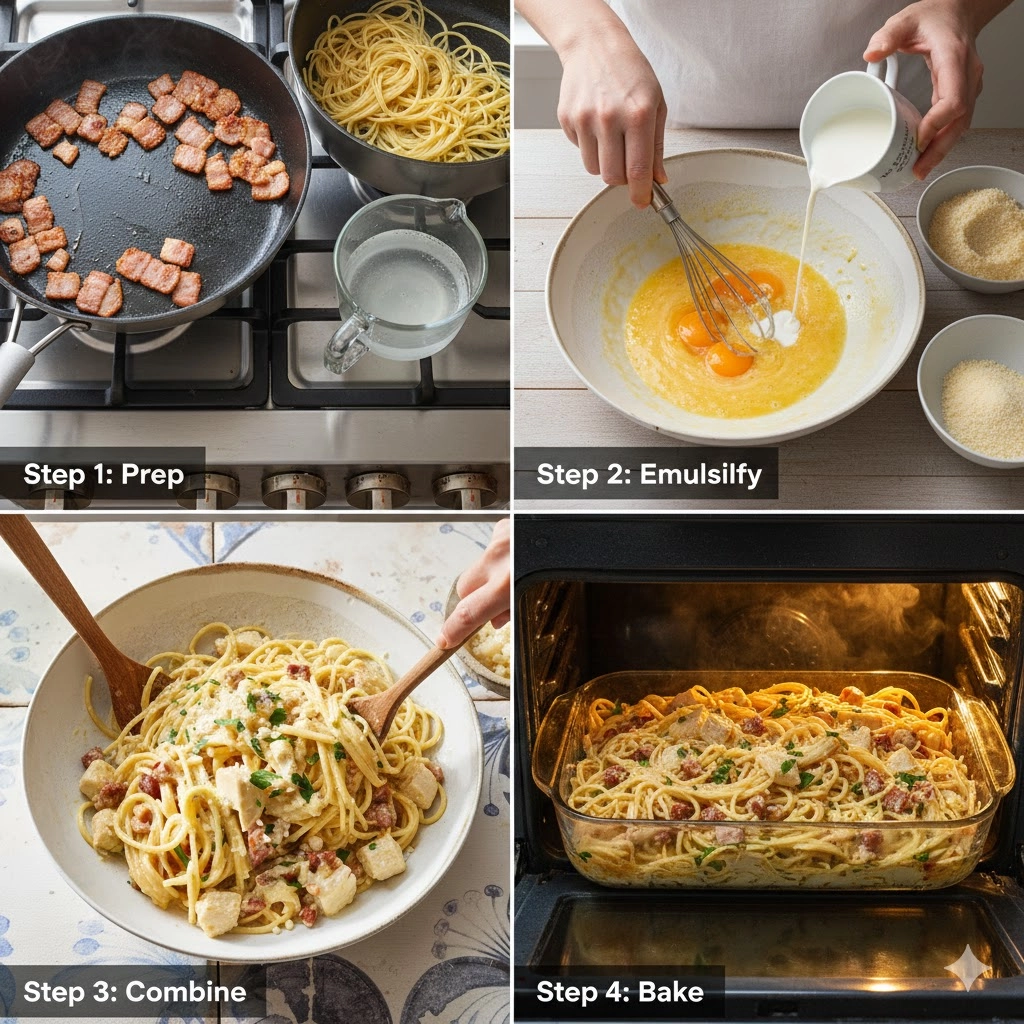
- Prepare the Rendered Pork and Pasta: Preheat the oven to three hundred twenty-five Fahrenheit. Cook the diced pancetta until crisp, then remove the solids, reserving the drippings. Meanwhile, boil the pasta until significantly undercooked (about five minutes). Drain and reserve two full cups of the cooking liquid.
- Create the Carbonara Emulsion: Vigorously whisk the egg yolks in a large bowl. Gradually incorporate one and a half cups of the hot, reserved pasta water, ensuring continuous motion to temper the eggs. Whisk in the heavy cream and grated Parmesan cheese until completely smooth.
- Combine and Bake: Toss the undercooked pasta, diced chicken, and crisp pancetta into the sauce mixture. Gently mix until every piece is coated. Transfer the mixture to a prepared nine by thirteen inch baking dish. Bake for twenty to twenty-five minutes, stirring once halfway through.
- Rest and Garnish: Remove the dish from the oven and allow it to rest for at least five minutes. The sauce will continue to thicken off-heat. Adjust the consistency with remaining pasta water if a looser texture is desired. Finish with fresh parsley and additional Parmesan cheese before serving.
Mastering the Carbonara Sauce (and the Bake)
The success of this baked dish hinges on properly executing the classic carbonara technique, which is essentially an emulsion, followed by managing the heat during the baking phase.
Phase 1: The Pancetta and Pasta Prep
Start by cutting the pancetta into an even dice. Consistency here is key to ensuring it all crisps up simultaneously. Place the pancetta in a cold skillet and render it slowly over medium-low heat. This low and slow process allows the fat to melt out thoroughly, resulting in truly crisp pieces and a generous pool of flavorful fat. Once rendered and golden brown, use a slotted spoon to transfer the pancetta to a separate plate lined with paper towels, leaving the rendered fat in the pan. The residual heat and aroma of this fat will subtly flavor your kitchen and serve as a flavor anchor later, though it is not directly added back into the sauce.
For the pasta, we aim for a texture far from al dente—specifically, about halfway done. Since the pasta will absorb liquid and continue to cook in the oven, a five-minute boil is usually sufficient for standard spaghetti or penne. The key here is the reserved pasta water. This starchy liquid is the foundation of the carbonara emulsion, providing the necessary heat and starch molecules to bind the egg yolks and cheese into a luxurious, stable cream. Ensure the reserved water is piping hot when used.
Phase 2: The Delicate Emulsion
This step is the most critical: preventing the egg yolks from scrambling. In a very large mixing bowl—one that can eventually hold all the pasta—whisk the egg yolks until they are uniformly pale yellow. The next move must be swift and deliberate: gradually pour the measured hot pasta water into the egg yolks while whisking constantly and vigorously. The goal is not to cook the eggs, but to raise their temperature slowly enough (tempering) that they can thicken the sauce without setting into curds. The mixture should become noticeably thicker and velvety.
Once the tempering is complete, whisk in the room temperature heavy cream. The cream acts as a vital buffer and stabilizer, helping to smooth out the final texture and providing insurance against separation during baking. Finally, whisk in the finely grated Parmesan. The sauce at this point will be thick, fragrant, and pale yellow, smelling richly of salt, pepper, and dairy. Taste the sauce base now and adjust the black pepper and any additional salt (though the pancetta and Parmesan usually provide enough).
Phase 3: The Baking Transformation
Once the pasta, pancetta, and diced cooked chicken are thoroughly tossed in the raw sauce, transfer the entire mixture into your prepared baking dish. The mixture will look loose and liquidy—this is correct. During the bake, set at three hundred twenty-five Fahrenheit, the remaining liquid will convert to steam, the starch in the pasta will continue to hydrate, and the egg-and-cheese sauce will gradually set and stabilize, creating a dense, rich texture.
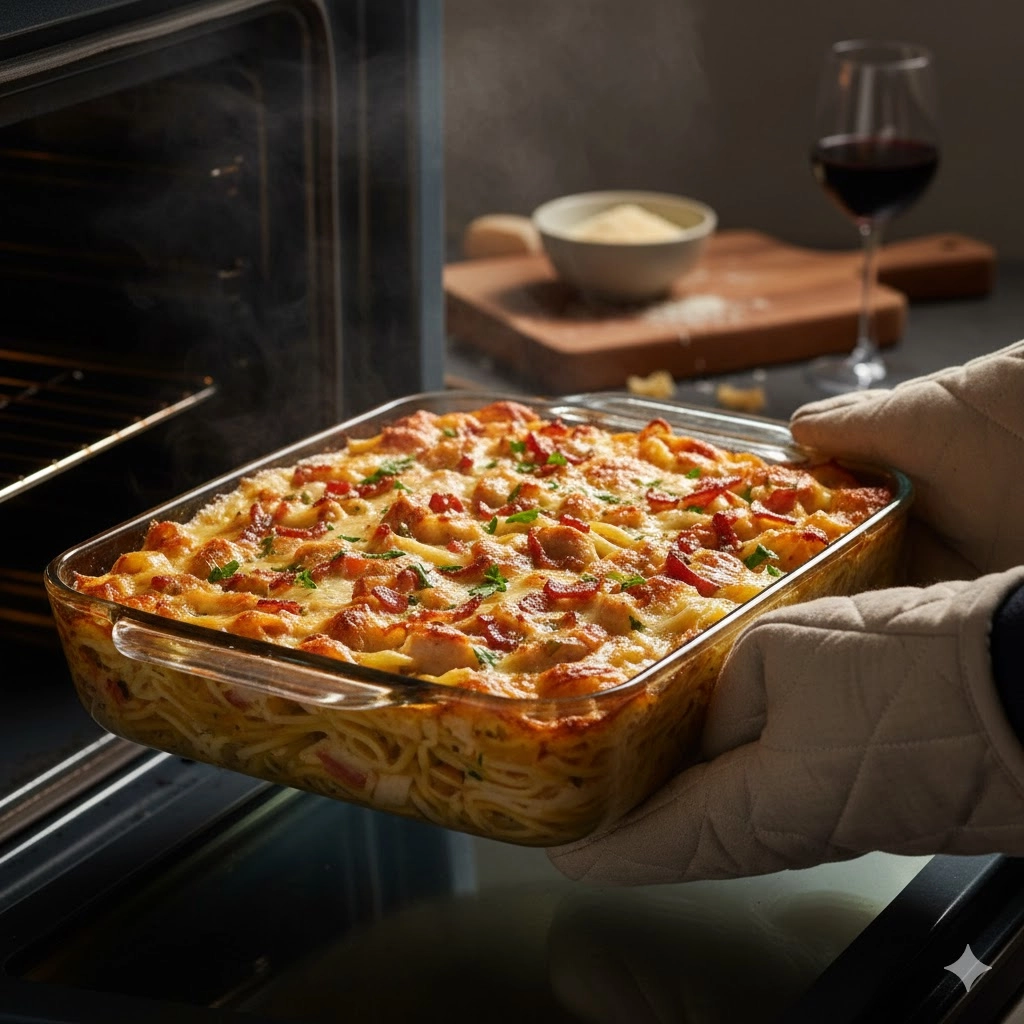
The required stir halfway through the twenty to twenty-five minute bake is essential. It ensures that the sauce at the bottom of the dish is brought to the surface to prevent over-setting and promotes even cooking. When you pull the dish out, the sauce should appear thickened but not completely solid or dry. It should bubble gently and have a slightly set edge. The resting period is not optional; it allows the residual heat to complete the setting process and for the carbonara to achieve its final, perfect consistency.
Achieving Perfect Texture: Culinary Insights
While the steps are clear, mastery lies in recognizing and reacting to the subtle cues during preparation.
- Temperature Management is Paramount: If your eggs scramble during the emulsion phase, the pasta bake is ruined before it even hits the oven. Ensure the heavy cream is at room temperature to prevent shocking the egg mixture. If the reserved pasta water feels too hot, let it stand for thirty seconds before slowly introducing it to the yolks. The final sauce mixture should be warm, not hot.
- The Power of Finely Grated Cheese: Do not use pre-shredded or coarsely grated Parmesan. The quality of your cheese drastically impacts the final texture. You need finely grated Parmesan (or Pecorino Romano for a bolder flavor) that melts instantly into the sauce without becoming gritty. Larger pieces of cheese may fail to integrate completely, leading to a lumpy result.
- Choosing the Right Pasta Shape: While spaghetti is traditional for carbonara, a tubular or short-cut pasta like penne, rigatoni, or ziti holds up better in a bake. These shapes trap the sauce inside and around their ridges, providing a superior flavor delivery system in a casserole format.
- Preventing Dryness in the Bake: The number one pitfall of a baked carbonara is a dry, solid final product. The key preventive measure is the undercooked pasta and the correct oven temperature. Baking at three hundred twenty-five Fahrenheit is crucial; higher temperatures risk turning the creamy sauce into scrambled eggs and cheese. The mixture should remain slightly looser than expected when it comes out of the oven, relying on the rest period to achieve the ideal texture.
- Chicken Integration and Seasoning: Use leftover, already seasoned chicken if possible, but if cooking fresh chicken, ensure it is simply seasoned with salt and pepper. The goal is for the chicken to absorb the carbonara flavor, not compete with it. A rotisserie chicken is an excellent, time-saving option here.
Customizing Your Casserole: Substitutions and Variations
This recipe offers a robust canvas for creativity. While the core ingredients are sacred to the carbonara identity, certain modifications can adapt the dish to dietary needs or personal preferences.
Replacing the Cured Pork
Pancetta provides the perfect smoky and salty base, but high-quality thick-cut bacon, cut into lardons, is a widely accepted and delicious alternative. For a less traditional but richer flavor, try guanciale, the cured pork cheek, which has a more delicate and complex fat profile. For a vegetarian take, replace the meat and fat with three tablespoons of high-quality olive oil and a cup of sautéed shiitake or cremini mushrooms, which offer a deep, savory umami note.
Exploring Alternative Cheeses
Parmesan and Pecorino Romano are the traditional standard. If you are using all Pecorino, reduce the amount of added salt in the entire recipe, as Pecorino is significantly saltier than Parmesan. For a milder flavor, you can substitute up to half of the Parmesan with a good quality Fontina or even Gruyère, which will enhance the melt factor and add a subtle nuttiness, though this takes the dish further from its Roman roots.
Introducing Vegetables
To lighten the dish or add nutritional value, introduce pre-cooked vegetables before baking. Steamed broccoli florets, tender-crisp asparagus tips, or sautéed green peas are excellent additions. Blanch and shock the vegetables first, ensuring they are dry before adding them to the pasta mixture. Adding raw vegetables will release too much moisture and dilute the sauce. A half-cup of sun-dried tomatoes, patted dry and chopped, also provides a wonderful burst of acidity and color.
Enhancing the Meal: Pairing and Presentation
The richness and texture of the Chicken Carbonara Pasta Bake require simple, contrasting accompaniments to balance the plate and palate.
The Classic Green Salad
Serve alongside a crisp, cold salad featuring slightly bitter greens like arugula, radicchio, or endive. The bitterness cuts through the richness of the cream, egg, and cheese. Dress it minimally with a high-quality extra virgin olive oil, a squeeze of fresh lemon juice, and a pinch of salt. The acidity is critical for a full-meal balance.
Crusty Bread and Oil
A simple, crusty loaf of artisanal bread is non-negotiable. Toasting thick slices and serving them with a dipping oil infused with herbs like rosemary and thyme allows guests to fully appreciate the savory drippings and scrape up any remaining sauce from the baking dish. Garlic bread is also a fantastic, if slightly less refined, partner.
Wine Selection
A dish this rich pairs beautifully with a medium-bodied white wine that has high acidity. Look for a dry Italian white like Soave or a crisp, unoaked Chardonnay. If you prefer red, choose a light, slightly fruit-forward option like a young Chianti that won’t overpower the creamy sauce.
Your Kitchen Questions Answered
We’ve compiled the most common inquiries to ensure your bake is flawless from start to finish.
Can I prepare this recipe ahead of time?
While this recipe is best when baked immediately after mixing, you can complete the prep work up to a day in advance. Cook the pasta and the pancetta, dice the chicken, and grate the cheese. Store these components separately in the refrigerator. Right before baking, prepare the egg emulsion, combine the ingredients, and proceed with the baking instructions.
Why did my sauce curdle or become dry?
Curdling occurs when the egg yolks cook too rapidly, usually due to adding them to liquid that is too hot or baking at too high of a temperature. Ensure you whisk the yolks vigorously while slowly adding the hot pasta water. If the sauce is dry after baking, it means the pasta absorbed too much moisture. Next time, add up to a half cup of extra reserved pasta water when mixing, or try baking at three hundred Fahrenheit instead.
What is the best way to reheat leftovers?
The key to reviving this casserole without drying it out is moisture. When reheating a slice in the oven or microwave, add a tablespoon of milk, stock, or water directly onto the serving before covering it with foil or a microwave lid. This will re-emulsify the sauce slightly and prevent the edges from hardening into a rubbery texture.
Can I use pre-cooked, jarred Alfredo sauce instead of making the carbonara base?
While you technically can use Alfredo, it will result in a completely different dish—a creamy chicken pasta bake, not carbonara. Carbonara relies on the specific, savory depth imparted by the egg yolks, cheese, and rendered pork fat working together to create a light, silky emulsion that no jarred white sauce can replicate.
Is it possible to freeze this casserole?
Freezing a dish that contains an egg-based, high-fat emulsion is not recommended. Upon thawing and reheating, the sauce is highly likely to separate, resulting in an oily, grainy, or curdled texture. If you must freeze, freeze only the pasta and chicken mixture tossed in a small amount of simple cream sauce (milk, butter, and flour), and add the rich carbonara emulsion fresh right before baking.
Nutritional Snapshot
This table provides estimated nutritional information per serving for the Chicken Carbonara Pasta Bake.
| Nutrient | Amount per Serving |
| Calories | 780 kcal |
| Protein | 39 g |
| Carbs | 31 g |
| Fat | 56 g |
| Fiber | 2 g |
| Sugar | 3 g |
| Sodium | 720 mg |
Disclaimer
Nutrition information is an estimate and may vary based on preparation and ingredients used.
PrintChicken Carbonara Pasta Bake: A Baked Homage to Rome
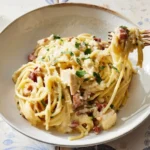
This robust Chicken Carbonara Pasta Bake takes the rich, savory flavor of classic carbonara—egg yolks, pancetta, and Parmesan—and turns it into a hearty, shareable baked casserole. Ideal for family dinners.
- Prep Time: 20 mins
- Cook Time: 35 mins
- Total Time: 55 mins
- Yield: 6 servings 1x
- Category: Casserole, Dinner
- Method: Baking
- Cuisine: Italian-American
Ingredients
10 ounces pancetta, diced small
4 large egg yolks
1 cup heavy cream, room temperature
2 cups finely grated Parmesan cheese, plus extra for topping
1 teaspoon freshly cracked black pepper
1/4 teaspoon ground nutmeg (optional)
16 ounces dried spaghetti, penne, or rigatoni
2 cups cooked chicken breast, diced into half-inch cubes
2 tablespoons olive oil
1/4 cup finely chopped fresh Italian parsley
Reserved pasta water (approximately 2 cups)
Instructions
1. Preheat the oven to three hundred twenty-five Fahrenheit. Cook the diced pancetta until crisp, then remove the solids, reserving the drippings. Meanwhile, boil the pasta until significantly undercooked (about five minutes). Drain and reserve two full cups of the cooking liquid.
2. Vigorously whisk the egg yolks in a large bowl. Gradually incorporate one and a half cups of the hot, reserved pasta water, ensuring continuous motion to temper the eggs. Whisk in the heavy cream and grated Parmesan cheese until completely smooth.
3. Toss the undercooked pasta, diced chicken, and crisp pancetta into the sauce mixture. Gently mix until every piece is coated.
4. Transfer the mixture to a prepared nine by thirteen inch baking dish. Bake for twenty to twenty-five minutes, stirring once halfway through.
5. Remove the dish from the oven and allow it to rest for at least five minutes. Adjust the consistency with remaining pasta water if a looser texture is desired. Finish with fresh parsley and additional Parmesan cheese before serving.
Notes
Baking at three hundred twenty-five Fahrenheit is crucial to prevent the egg yolks from scrambling.
Use finely grated Parmesan cheese for the best, creamiest texture.
You can substitute pancetta with high-quality thick-cut bacon.
Serve alongside a crisp green salad with a lemon vinaigrette to cut through the richness.
Nutrition
- Serving Size: 1 serving
- Calories: 780
- Sugar: 3g
- Sodium: 720mg
- Fat: 56g
- Saturated Fat: 25g
- Unsaturated Fat: 31g
- Trans Fat: 0g
- Carbohydrates: 31g
- Fiber: 2g
- Protein: 39g
- Cholesterol: 302mg