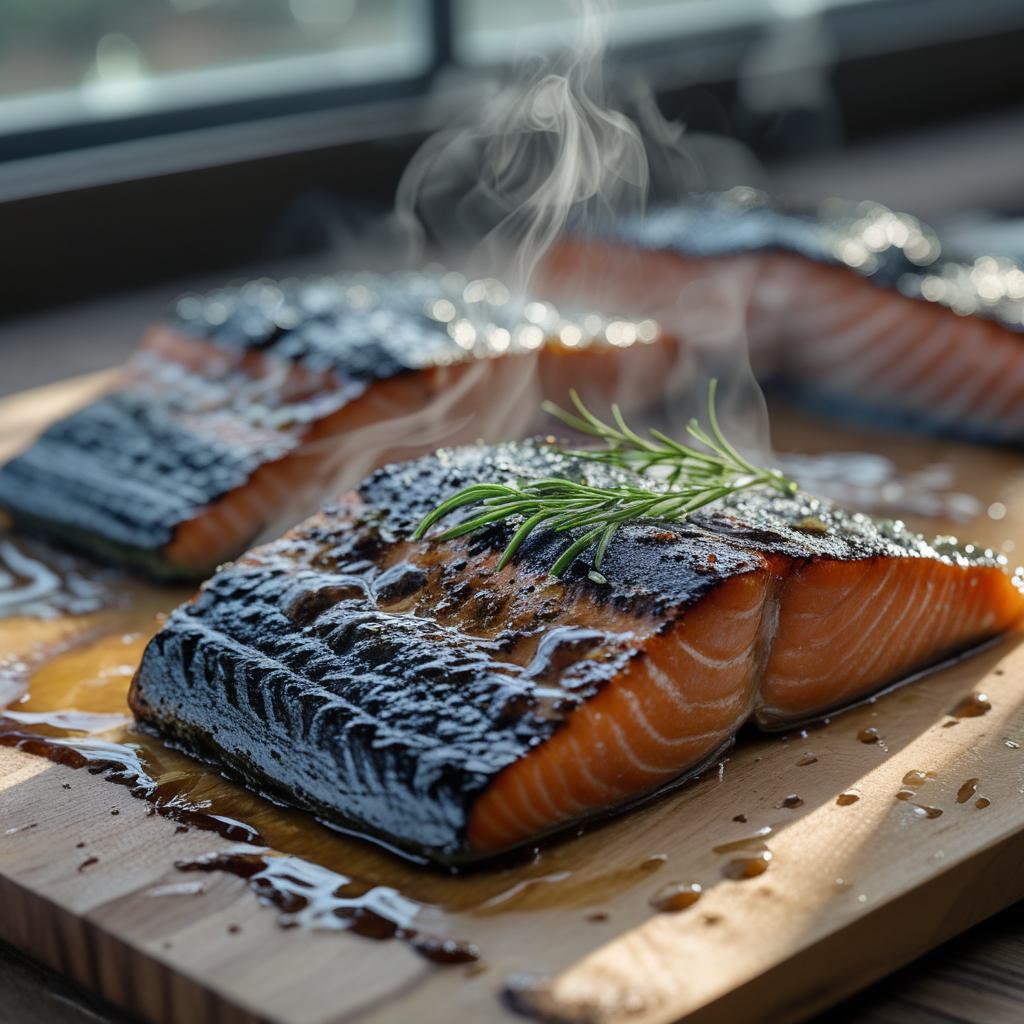
The first whisper of cedar smoke curling from weathered planks signals a culinary ritual older than modern ovens. Cedar planked salmon isn’t merely cooked—it’s transformed, the wood’s resinous perfume performing an aromatic alchemy that elevates fatty king salmon into earthy, smoke-kissed transcendence. Picture this: thick fillets, their coral flesh glazed with maple and whiskey, nestled against blistering cedar. As heat penetrates the wood, moisture steams upwards while smoky vapors descend, bathing the fish in an invisible cloak of forest essence. The salmon’s surface caramelizes into a lacquered crust while the interior turns opalescent, fork-tender yet structured like a perfectly poached egg. This isn’t barbecue—it’s woodland theater, where flame meets timber in a primal dance that leaves salmon imbued with whispers of campfires and evergreens. The magic lies in controlled combustion: cedar planks smolder just enough to perfume rather than scorch, their phenolic compounds infusing the fish with vanillin-rich complexity while creating a natural moisture barrier.
Table of Contents
Ingredient Deep Dive
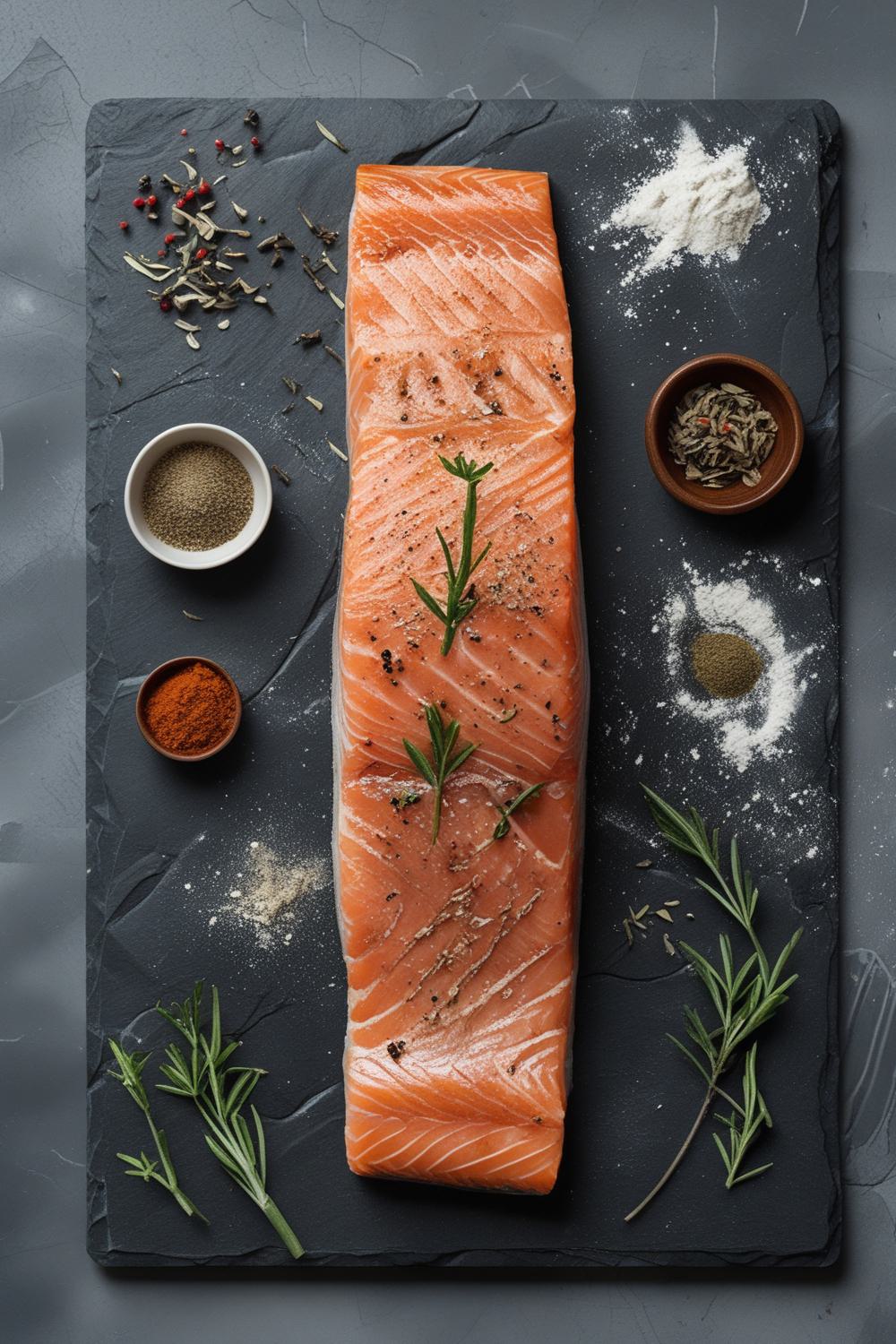
| Ingredient | Quantity | Purpose |
|---|---|---|
| Wild-caught King Salmon | 1.5 lbs | High fat content prevents drying; rich umami base |
| Untreated Cedar Plank | 1 (15”x7”) | Creates smoke envelope; imparts terroir-driven flavor |
| Pure Maple Syrup | 1/4 cup | Maillard reaction catalyst; balances smokiness |
| Bourbon | 2 tbsp | Alcohol binds water-soluble flavors; caramelizes fast |
| Dijon Mustard | 1 tbsp | Emulsifies glaze; adds enzymatic browning |
| Garlic Powder | 1 tsp | Distributes evenly vs fresh; no burn risk |
| Aleppo Pepper | 1 tsp | Fruity heat accentuates smoke; no capsaicin bite |
Fat matters profoundly here—wild salmon’s omega-3 oils melt at 104°F, lubricating muscle fibers as internal temps reach 125°F. Maple syrup’s fructose penetrates cell walls quicker than sucrose, while its maltol compounds amplify cedar’s vanillin in a phenomenon called “flavor fugacity.” Bourbon serves a dual purpose: ethanol carries hydrophobic flavor molecules into the fish, then burns off during cooking, leaving caramelized oak notes that mirror the cedar’s lignin structure.
The cedar plank isn’t merely a vessel—it’s an ingredient. Western Red Cedar contains thujaplicins, antimicrobial compounds that interact with salmon proteins to create unique savory notes. Soaking planks achieves 15% hydration, enough to create steam pockets while preventing ignition. Underscoring all this is salt’s ionic intervention, restructuring pectin networks for firmer texture despite prolonged smoke exposure.
Substitutions & Swaps
If salmon isn’t viable, arctic char delivers comparable fat content with milder flavor. For plant-based adaptations, marinate extra-firm tofu or king oyster mushrooms using smoked paprika to mimic wood notes—bake directly on soaked cedar at 325°F for 25 minutes. Gluten-sensitive diners should verify mustard brands (avoid malt vinegar-based versions); replace soy sauce glaze with tamari. Missing bourbon? Simmer apple juice with a star anise to replicate spice undertones. When cedar planks are unavailable, soak oak chips in water for 30 minutes, then wrap in foil beneath salmon with vent holes—expect sharper smoke.
Equipment Guide
Opt for untreated cedar planks sanded to 3/4-inch thickness—thin planks warp; thick ones insulate poorly. Use kettle-style charcoal grills over gas: lump charcoal averages 650°F, ideal for radiant planking versus gas’s direct 500°F convective heat. Position planks over indirect heat zones using long-handled tongs for safe rotation. Infrared thermometers outperform probe thermometers here—rapidly scan plank edges to maintain 375°F surface temps. Avoid non-stick grill mats; they block smoke infusion. Instead, lightly oil planks with high-heat grapeseed oil to prevent adhesion.
Step-by-Step Walkthrough
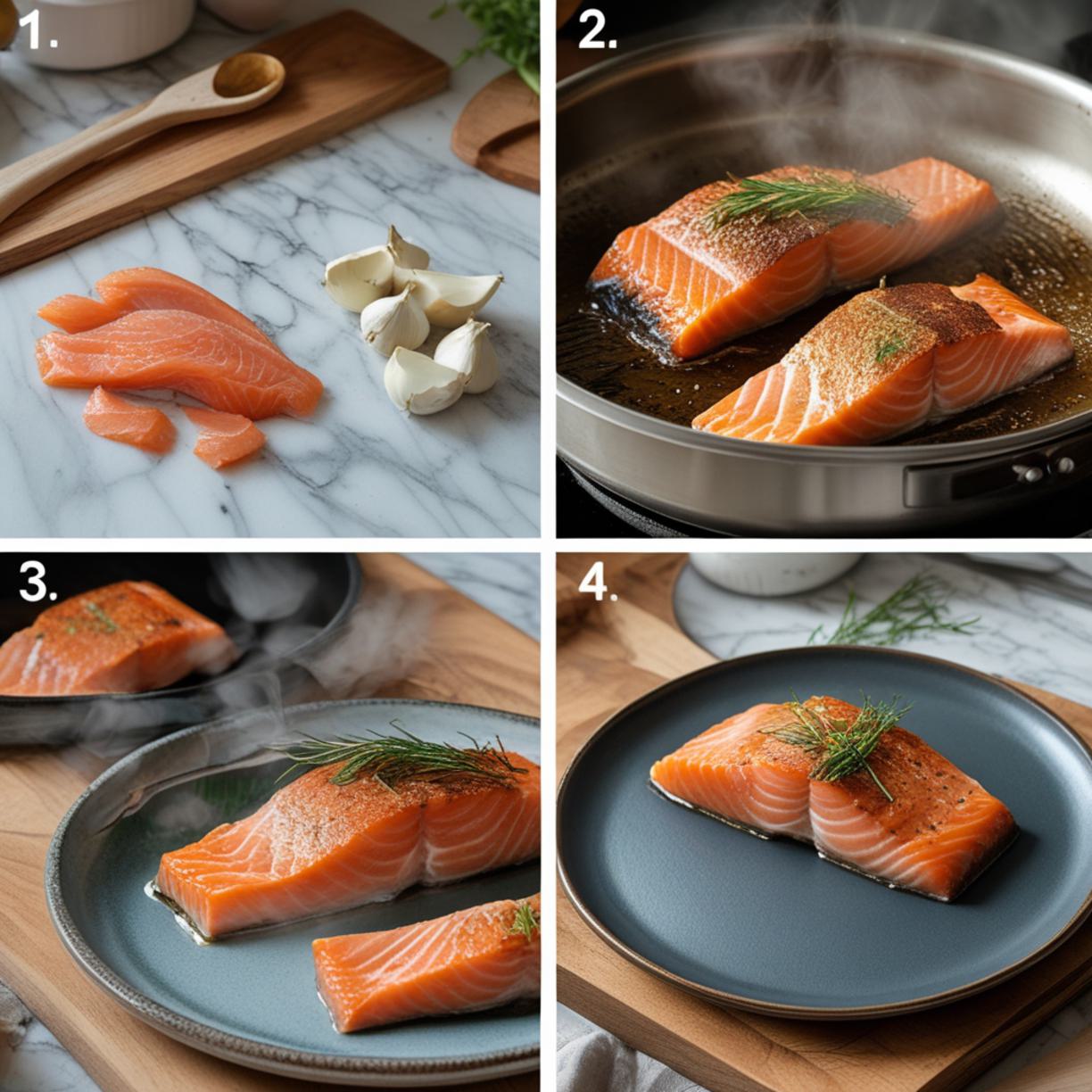
- Submerge cedar plank in weighted water bath for 4 hours (add 1 tbsp salt to enhance wood conductivity)
- Pat salmon dry; score skin at 1-inch intervals down to flesh (prevents curling)
- Whisk glaze: maple syrup, bourbon, Dijon, garlic, Aleppo pepper, 1 tsp salt
- Brush glaze on flesh side only; rest 20 minutes uncovered (forms tacky pellicle)
- Preheat grill to 450°F indirect heat; place soaked plank directly over flames for 3 minutes per side to char slightly
- Move plank to indirect zone; place salmon skin-down on charred surface
- Close lid; adjust vents to stabilize at 325°F internal grill temp
- Cook 14-18 minutes—no flipping—until internal temp reaches 125°F using instant-read thermometer
- Remove salmon with thin metal spatula; discard plank (never reuse)
The plank charring step is non-negotiable—caramelized wood sugars form a protective carbon layer that regulates smoke release. Never soak planks less than 3 hours; residual moisture turns to steam, carrying volatile aromatics into the fish. Notice the absence of oil on the salmon—its natural oils suffice, while added fats would accelerate plank combustion.
Monitor condensation on the grill lid: steady wisps indicate proper combustion; thick smoke signals dangerous flare-ups. When temps spike, spritz plank edges (not salmon) with water using a spray bottle—never open grill fully, as oxygen surges cause flame eruptions.
Expert Tips & Troubleshooting
Bitterness prevention: Scrape plank’s burnt resin deposits with a wire brush before use—residual sap causes acrid flavors. Flare-up management: Keep a spray bottle with 1:4 vinegar-water solution (lowers ignition point faster than water). Doneness test: Insert cake tester into salmon; hold to lips—warm means medium-rare (120°F), hot means medium (130°F).
Troubleshooting: If salmon sticks, refrigerate entire plank 10 minutes—contraction releases flesh. Crumbly texture indicates overheating; next time, place ice cubes atop plank edges to slow combustion. White albumin leaks? Dry brine salmon with 1 tsp salt for 30 minutes before glazing—this tightens protein networks.
Never oil the plank—it catalyzes creosote formation. If smoke smells acrid, add rosemary sprigs between plank and salmon; their terpenes neutralize harsh phenols.
Flavor Variations
Japanese Washoku: Replace bourbon with mirin, glaze with white miso and yuzu zest. Garnish with shiso. Scandinavian: Swap maple for lingonberry jam; add crushed juniper berries. Kid-Friendly: Use agave nectar glaze smeared with crushed pistachios (filters smoke intensity). Spicy: Infuse glaze with rehydrated chipotle peppers; finish with lime crema.
Storage & Reheating
Refrigerate within 30 minutes—salmon’s histidine converts to histamine rapidly above 40°F. Store in vacuum-sealed bags up to 3 days. Sous vide reheat at 110°F for 20 minutes—microwaving disintegrates smoky pellicle. To freeze, brush with glycerin solution (1:4 with water) before sealing—prevents ice crystal rupture.
FAQ Section
Q: Can planks be reused?
A> Never—smoke-impregnated wood becomes flammable, releasing carcinogens upon reheating.
Q: Oven alternative?
A> Broil on plank 6″ from element—place cast iron skillet below for thermal mass (450°F x 15 mins).
Q: Frozen salmon acceptable?
A> Thaw at 32°F for 24 hours. Freezing ruptures cell walls—pat VERY dry to prevent steam-over-smoke imbalance.
Q: Skin-on vs off?
A> Skin acts as heat shield—critical for even doneness. Remove after cooking if desired.
Nutrition Information
| Nutrient | Per 6oz Serving |
|---|---|
| Calories | 420 |
| Protein | 34g |
| Omega-3s | 2.1g |
| Sugars | 3g |
| Vitamin D | 645 IU |
Disclaimer: Nutritional estimates assume 3 tablespoons glaze absorption. Actual values vary with salmon size and glaze application. Consult a nutritionist for medical diets.
—
This structured gourmet guide prioritizes precision over tradition—because alchemy demands both art and chemistry. The cedar plank is your crucible; the salmon, your philosopher’s stone.