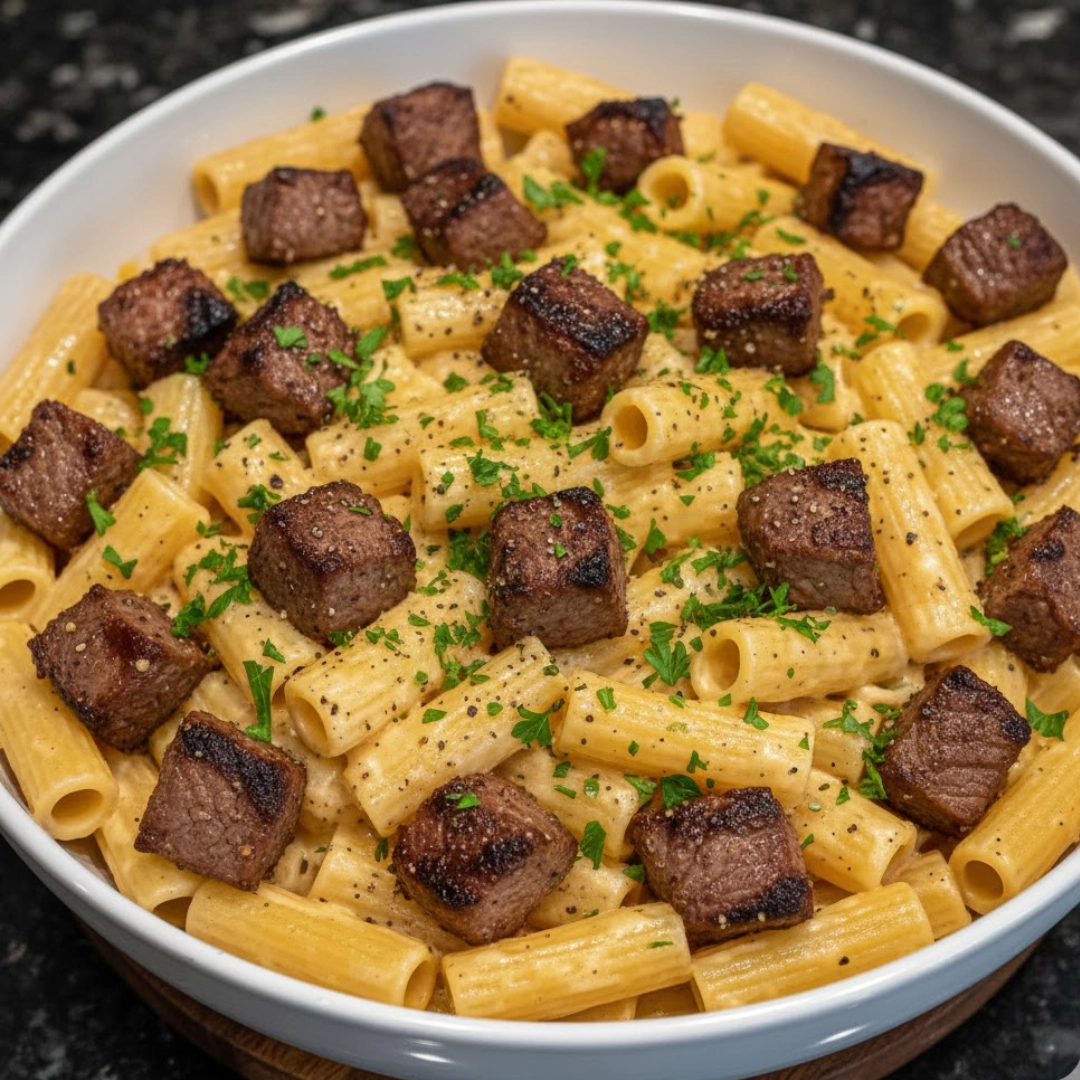
When the craving hits for something truly rich, savory, and satisfying, there is little that compares to a deeply flavored pasta dish. This recipe for Cajun Steak Cheesy Rigatoni Parmesan takes the hearty substance of steakhouse fare and marries it with the comforting embrace of a classic, creamy Italian-American sauce. It’s a bold culinary fusion—cubes of sirloin or ribeye, aggressively seasoned with smoky and sharp Cajun spices, are pan-seared until deeply browned, then folded into substantial rigatoni tubes that are swimming in a luscious, triple-cheese sauce. This is the meal you reach for when you need maximum flavor impact with minimal fuss, transforming a standard weeknight into a celebratory supper.
Table of Contents
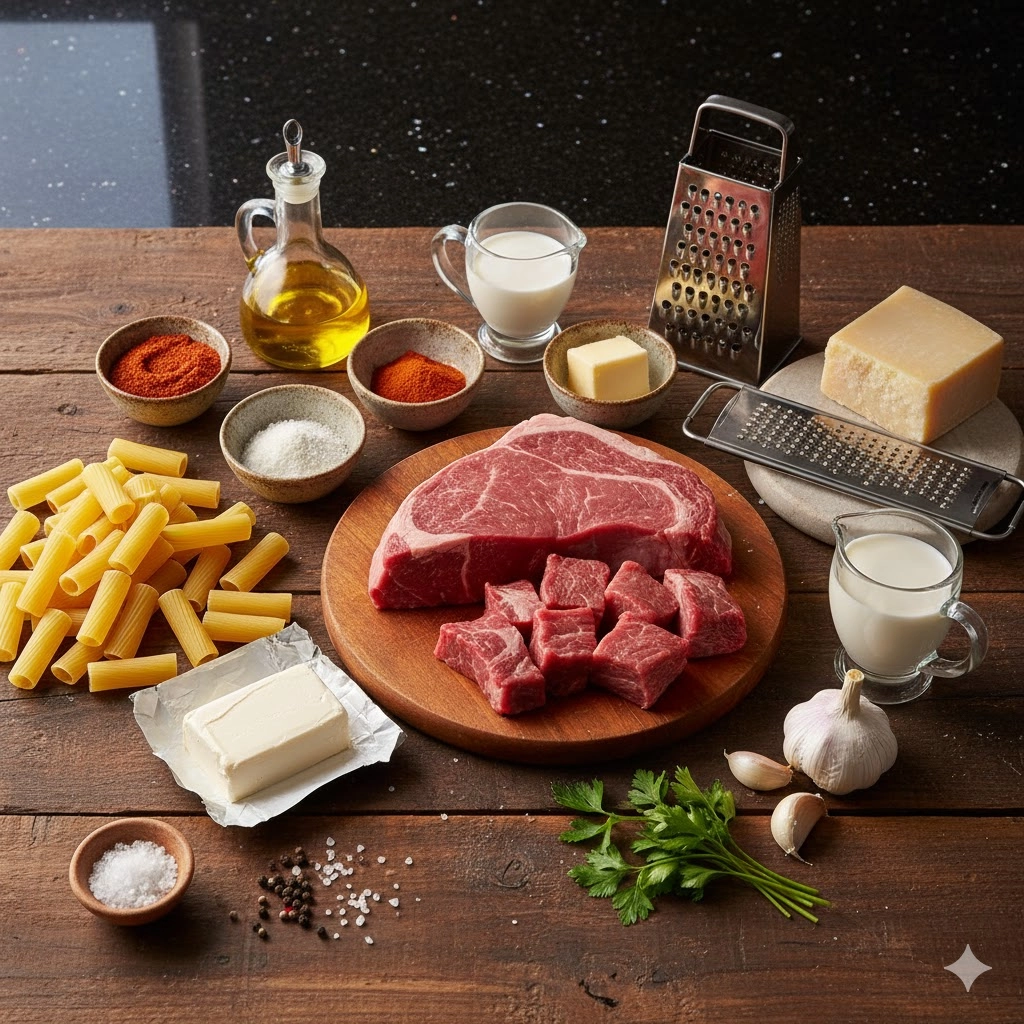
The Essential Ingredients for a Bold Pasta Dinner
To achieve the depth of flavor required for this Cajun-infused recipe, it’s important to source high-quality ingredients, particularly the fresh dairy and the cuts of meat.
For the Steak Tips:
- 680 grams (or about 1.5 pounds) sirloin or ribeye steak tips, cut into consistent one-inch cubes
- 1.5 teaspoons Cajun seasoning (ensure it is a good quality blend with paprika and cayenne)
- 1 teaspoon garlic powder
- One-half teaspoon smoked paprika
- 2 tablespoons olive oil
- 1 tablespoon unsalted butter
- Salt and freshly ground black pepper, to taste
For the Cheesy Rigatoni:
- 340 grams (or about 12 ounces) rigatoni pasta
- 2 tablespoons unsalted butter
- 4 cloves garlic, minced finely
- 360 milliliters (about 1.5 cups) heavy cream
- 120 milliliters (about one-half cup) whole milk
- 115 grams (about 4 ounces) cream cheese, cut into small, softened cubes
- 100 grams (about 3.5 ounces) freshly grated Parmesan cheese
- 110 grams (about 4 ounces) shredded mozzarella cheese
- One-half teaspoon Cajun seasoning
- Fresh parsley, chopped, for garnish
- Salt and freshly ground black pepper, to taste
Preparing the Components: A Quick Overview
The success of this dish lies in sequencing the cooking to allow the steak to rest while the sauce is built, minimizing the total cook time to under an hour.
- Boil the Pasta: Bring a large pot of salted water to a rolling boil. Add the rigatoni and cook until it is just tender, reserving one cup of the starchy cooking liquid before draining the pasta.
- Season the Steak: While the pasta cooks, toss the steak tips with the bulk of the Cajun seasoning, garlic powder, smoked paprika, salt, and pepper until every piece is coated.
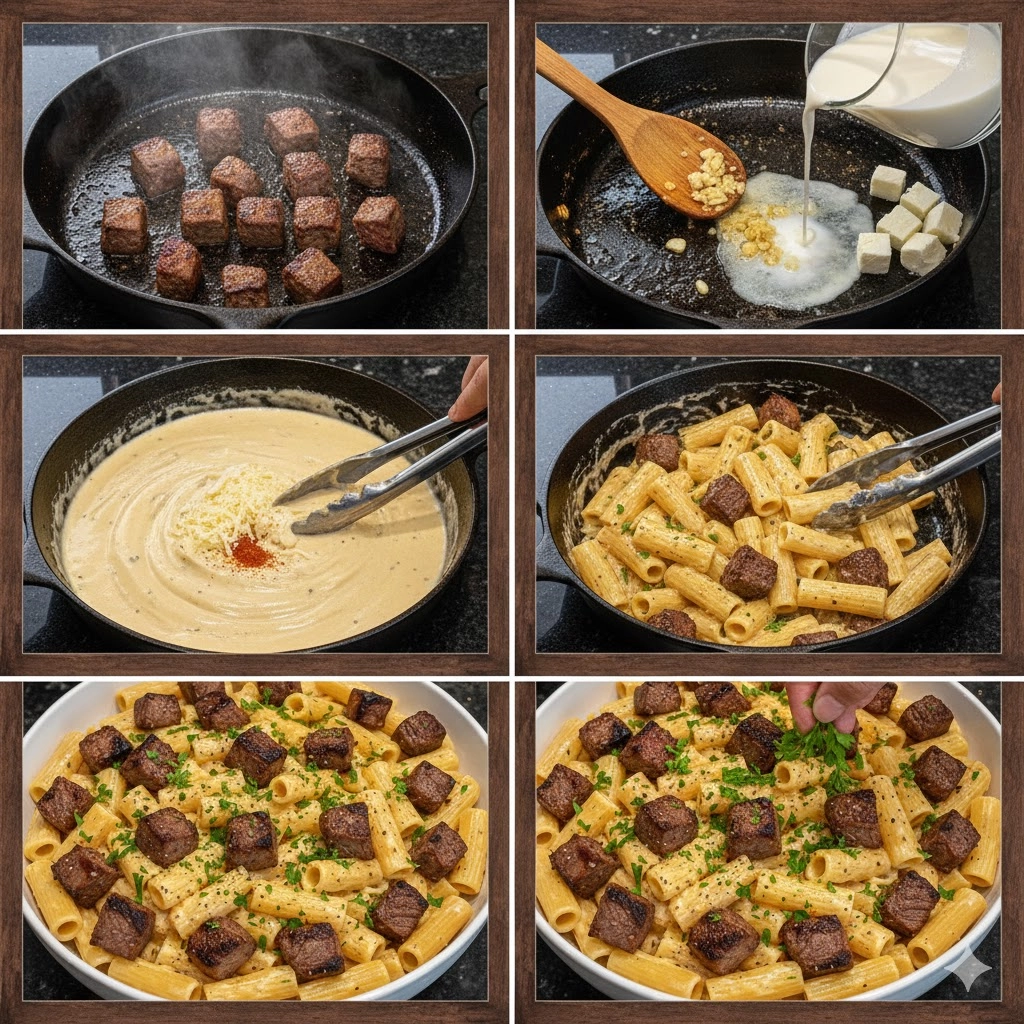
- Sear the Steak: Heat the olive oil in a large, heavy skillet over medium-high heat until it shimmers. Add the seasoned steak in a single layer, searing until dark brown and crusty on all sides. Remove the steak and let it rest, retaining the flavorful drippings in the pan.
- Sauté Aromatics: Reduce the heat to medium. Melt the initial two tablespoons of butter in the same pan, then add the minced garlic, stirring constantly for about sixty seconds until aromatic.
- Build the Cream Base: Whisk in the heavy cream and milk, followed by the softened cream cheese cubes. Continue to whisk until the base is completely smooth and thickened slightly.
- Melt the Cheese: Reduce the heat to low. Stir in the Parmesan, mozzarella, and remaining half-teaspoon of Cajun seasoning. Season with salt and pepper. Add reserved pasta water as needed to achieve a luxurious, glossy consistency.
- Combine and Serve: Add the cooked rigatoni and the rested steak tips (along with any collected juices) into the sauce. Toss gently to combine. Serve immediately, garnished generously with fresh parsley.
Mastering the Technique: Depth in Every Phase
An exceptional pasta dish is built through attention to detail in each individual component. Here, we move beyond the simple steps and focus on the sensory cues that signal technical mastery.
The Art of the Cajun Sear
The steak portion is the centerpiece, and achieving a robust, crackling crust is non-negotiable. After tossing the steak tips with the dry seasonings, allow them to sit for about ten minutes at room temperature. This brief rest helps the seasonings adhere and ensures the meat is not shock-cooled when it hits the hot pan.
Heat the olive oil—and it must be hot. A good temperature indicator is when a small piece of meat dropped into the oil sizzles aggressively. Add the steak in batches if necessary, ensuring each piece has direct contact with the searing surface. Avoid crowding the pan—crowding releases steam, which boils the meat instead of searing it, leading to a gray, lifeless exterior. Listen for the fierce, constant sizzle. After three or four minutes, when the underside is deeply browned, turn the pieces. Just before removing them, drop in the tablespoon of unsalted butter. Spoon the melting butter over the meat tips for sixty seconds. The fat in the butter browns quickly and adds an incredible layer of nutty richness to the crust. Remove the steak and let it rest on a cutting board, covered loosely. This resting period retains the juices inside the meat, which will later be folded into the sauce, boosting the overall flavor profile.
Building the Cream Base
The foundation of the sauce is the fragrant fond left behind by the steak. This layer of concentrated seasoning and caramelized steak juice is pure flavor gold. By using the same skillet, you ensure all that complexity is captured.
After reducing the heat to a steady medium, melt the two tablespoons of butter and introduce the finely minced garlic. The garlic should be cooked just until its potent aroma fully blossoms—this takes approximately sixty seconds. Watch it closely; if the garlic takes on too much color or turns brown, its flavor becomes bitter, and you must start over. The moment it smells deeply savory, pour in the heavy cream and whole milk. The temperature difference will cause a satisfying hiss as the liquids deglaze the pan, incorporating all the steak drippings into the new base. Once the liquid is gently simmering around the edges, drop in the soft cubes of cream cheese. Switch to a sturdy whisk and incorporate the cream cheese fully. This is the structural key to preventing a grainy sauce; the cream cheese stabilizes the emulsion and ensures the final result is velvety and silken.
Finalizing the Sauce Texture
Once the cream base is uniform, the true cheesiness can be introduced. Lower the heat setting immediately to low. Add the freshly grated Parmesan and the shredded mozzarella along with the final dusting of Cajun seasoning. The key here is patience and low heat. High heat will cause the dairy proteins to seize, resulting in a curdled or greasy-looking sauce. Stir continuously—not rapidly, but methodically—until the cheeses are fully melted and integrated, creating a thick, glossy blanket.
The consistency check is vital. The sauce should coat the back of a spoon thickly, but still flow. If it appears too tight, begin adding the reserved, starchy pasta water one tablespoon at a time. The starch in the water not only thins the sauce but chemically binds to the fats and cheeses, creating that desirable, restaurant-quality gloss and clinginess. Use only as much water as needed to reach the perfect, luxurious consistency. This is also the point to do your final tasting and adjustment, bringing the salt level up to perfectly balance the richness of the dairy.
The Marriage of Components
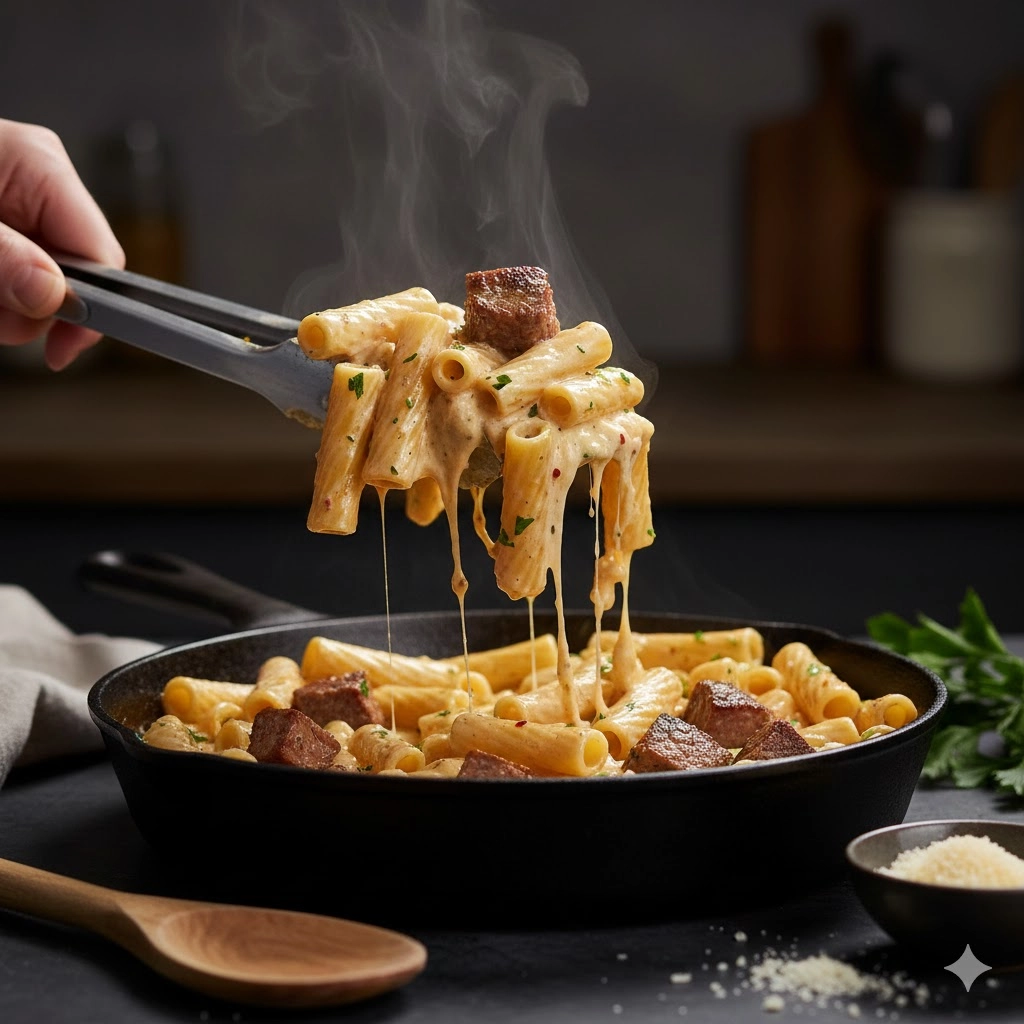
The final step is the union of the components. The pasta should be drained quickly and added directly to the sauce. Immediately follow with the rested steak pieces and all the savory juices that have pooled on the cutting board. Tossing should be gentle, using tongs or a wooden spoon, ensuring every piece of rigatoni is completely coated inside and out. The heat from the sauce and the remaining heat in the pasta will gently finish the cooking of the steak tips and allow all the flavors to truly mingle. Serve the dish immediately—pasta waits for no one, and this style of cream sauce is at its peak when it’s still hot and actively clinging to the ridged rigatoni tubes.
Insider Knowledge: Advanced Tips for Creamy Success
Elevating this Cajun Steak Cheesy Rigatoni Parmesan from good to exceptional relies on a few expert techniques that address both flavor and texture.
- Freshly Grate Your Cheese: This is the single most important textural tip. Pre-shredded cheeses are typically coated with anti-caking agents like cellulose or potato starch. These agents inhibit proper melting and make it extremely difficult to achieve a smooth, creamy sauce. Buy blocks of Parmesan and mozzarella and shred them yourself just before cooking.
- Temper the Cream Cheese: Ensure the cream cheese is fully softened at room temperature before you add it to the hot liquid base. If it’s cold, it will shock the sauce, causing lumps and increasing the risk of curdling your final product.
- Use Bronze-Die Rigatoni: If available, seek out pasta made using bronze dies. The process creates a rougher, more porous surface texture on the pasta. This rough surface is ideal for adhering the thick, heavy cream sauce, ensuring you get flavor in every single bite.
- Reverse Sear the Steak: For thicker cuts of steak (one and one-half inch or more), consider a reverse sear. Bake the steaks first at two hundred twenty-five Fahrenheit until the internal temperature reaches one hundred twenty-five Fahrenheit, then finish them with a quick, two-minute-per-side sear in a screaming hot pan. This ensures maximum tenderness and an edge-to-edge medium-rare cook.
- Balance the Spice: Taste your Cajun blend before using it. Some commercial blends are extremely high in salt or cayenne. If your seasoning is aggressively spicy, dial back the amount in the sauce by one-quarter teaspoon to ensure the heat supports the flavor rather than overpowering the delicate dairy notes.
- Emulsify with Butter: When the sauce is finished, turn off the heat and stir in an extra one tablespoon of cold, unsalted butter, swirling it rapidly until it melts and incorporates. This technique, called monter au beurre in French cuisine, further enriches the sauce and adds incredible sheen and silkiness just before serving.
Adjusting the Recipe: Swaps and Flavor Twists
This recipe is highly adaptable. Feel free to substitute components based on availability, dietary needs, or simply to change the flavor profile slightly.
- Protein Swap: Chicken thighs or breasts can be substituted for the steak. Cut the poultry into bite-sized pieces and increase the searing time until they are cooked through (internal temperature of one hundred sixty-five Fahrenheit). Shrimp is also excellent; use one pound of peeled and deveined large shrimp, and sear them for only two to three minutes total.
- Vegetable Inclusion: For added bulk and nutrition, consider incorporating sliced bell peppers (red, orange, or yellow) or sliced white mushrooms. Sauté them after the garlic is fragrant and before the cream is added, allowing them to soften slightly in the flavorful pan drippings.
- Cheese Variation: To add a sharper flavor, swap the mozzarella for Provolone or Fontina. For a smoky depth, a good quality Gouda or even smoked cheddar can be used in place of the mozzarella, though they may melt less smoothly than the mozzarella or Parmesan.
- Dairy Alternative: While heavy cream provides the best texture, you can lighten the sauce by using half and half instead of whole milk, or a combination of equal parts chicken broth and heavy cream. Note that this will reduce the final richness and thickness slightly.
Complete the Meal: Thoughtful Accompaniments
Because the Cajun Steak Cheesy Rigatoni Parmesan is rich, creamy, and heavily flavored, the ideal side dishes provide a necessary counterpoint—something acidic, fresh, or crunchy to cleanse the palate between savory bites.
- Crisp Green Salad: Serve a simple mixed green salad dressed with a sharp, vinaigrette-based dressing, perhaps incorporating lemon juice or red wine vinegar. The acidity of the dressing cuts beautifully through the richness of the cheese sauce.
- Garlic Bread with Herb Butter: A classic accompaniment, but make it well. Use a rustic French baguette and saturate it with butter, fresh garlic, and finely chopped parsley, then toast until golden brown and crunchy. The crust is perfect for soaking up any excess sauce.
- Simple Steamed Asparagus: Steaming fresh asparagus spears and finishing them with a squeeze of lemon juice and a pinch of salt provides a light, green vegetable element that adds freshness without competing with the bold Cajun flavors.
Troubleshooting and Common Questions
This section addresses typical preparation issues and offers clarity on ingredients to ensure your recipe execution is flawless.
How do I prevent the cream sauce from splitting or becoming grainy?
Splitting usually occurs when the sauce reaches too high a temperature after the cheese has been added. The critical defense is to use low heat when melting the cheese, and to introduce the cheese slowly, stirring constantly. Furthermore, making sure you use cream cheese as a stabilizer at the beginning of the sauce process helps the fat and liquid remain emulsified, even under minor temperature fluctuations.
I don’t own a meat thermometer. How can I tell if the steak tips are done?
For small cubes of steak, the best indicator is visual appearance and texture. You are looking for a deep, browned crust (Maillard reaction) on all sides. When poked with a finger or tongs, the small cubes should have slight resistance for medium doneness. Remember, the steak will carry-over cook slightly while resting and again when it is mixed into the hot pasta sauce. It is better to err on the side of slightly underdone rather than overcooked.
Can I prepare the steak and sauce separately ahead of time?
You can prepare the steak tips through the searing stage and refrigerate them; however, note that reheating will slightly compromise their texture. The sauce should ideally be made fresh. If you must prepare the sauce beforehand, store it separately, and when reheating, do so very gently in a skillet, whisking in a small splash of milk or pasta water to restore its creamy texture. Do not boil.
Why is rigatoni specified, and can I use other shapes?
Rigatoni is an excellent choice because its tubular shape and ridged exterior are perfectly designed to trap and hold substantial, thick sauces like this cheesy Parmesan cream. Other similar tube shapes, such as ziti or penne, are acceptable substitutes because they also capture the sauce well. Long, thin pastas like spaghetti or fettuccine do not perform as well with a chunky, heavy sauce.
What’s the difference between Cajun seasoning and Creole seasoning?
Both spice blends originate from Louisiana and share core ingredients like paprika, cayenne, garlic, and onion. However, Cajun seasoning, typical of the rural, rustic style of cooking, usually focuses more on cayenne and pepper for heat, while Creole seasoning, which developed in the cosmopolitan city of New Orleans, often includes more herbs like oregano and thyme, and is generally considered milder and more complexly flavored. Either blend works well here, but the specific Cajun Steak Cheesy Rigatoni Parmesan recipe relies on the robust, peppery kick of a standard Cajun blend.
Nutritional Breakdown
| Nutrient | Amount per Serving |
| Calories | 840 kcal |
| Protein | 48 g |
| Carbs | 61 g |
| Fat | 44 g |
| Fiber | 4 g |
| Sugar | 6 g |
| Sodium | 680 mg |
Disclaimer on Estimates
Nutrition information is an estimate and may vary based on preparation and ingredients used.
PrintCajun Steak Cheesy Rigatoni Parmesan: A Southern-Inspired Supper
Boldly seasoned steak tips tossed with ridged rigatoni in a rich, velvety three-cheese sauce, featuring the warm spice of Cajun seasoning.
- Prep Time: 20 mins
- Cook Time: 30 mins
- Total Time: 50 mins
- Yield: 4 servings 1x
- Category: Main Dish
- Method: Stovetop
- Cuisine: American
Ingredients
680 grams sirloin or ribeye steak tips, cut into consistent one-inch cubes
1.5 teaspoons Cajun seasoning
1 teaspoon garlic powder
One-half teaspoon smoked paprika
2 tablespoons olive oil
1 tablespoon unsalted butter
340 grams rigatoni pasta
2 tablespoons unsalted butter
4 cloves garlic, minced finely
360 milliliters heavy cream
120 milliliters whole milk
115 grams cream cheese, cut into small, softened cubes
100 grams freshly grated Parmesan cheese
110 grams shredded mozzarella cheese
One-half teaspoon Cajun seasoning
Fresh parsley, chopped
Instructions
1. Cook the rigatoni pasta in well-salted, boiling water until just tender (al dente). Before draining, reserve one cup of the starchy pasta water. Drain and set the pasta aside.
2. Season the steak tips: Toss the cubed steak with the bulk of the Cajun seasoning, garlic powder, smoked paprika, salt, and pepper.
3. Sear the steak: Heat the olive oil in a large skillet over medium-high heat. Add the seasoned steak in a single layer (work in batches if needed). Sear for three to four minutes per side until a deep crust forms. Just before removing, add the tablespoon of butter and baste. Remove the steak and allow it to rest, leaving the pan drippings behind.
4. Sauté the aromatics: Reduce heat to medium. Melt the remaining two tablespoons of butter in the skillet, then add the minced garlic and cook for about sixty seconds until fragrant, taking care not to burn it.
5. Build the cream base: Whisk in the heavy cream and whole milk, then drop in the softened cream cheese cubes. Continue whisking until the cream base is completely smooth and thickened slightly.
6. Finish the sauce: Reduce the heat to low. Stir in the Parmesan, mozzarella, and remaining half-teaspoon of Cajun seasoning. Continue stirring until the cheeses are fully melted and the sauce is glossy. Use reserved pasta water (one tablespoon at a time) to adjust the consistency until it beautifully coats the back of a spoon.
7. Combine and serve: Add the drained rigatoni, the rested steak tips, and all collected meat juices into the sauce. Toss gently to combine all ingredients. Serve immediately, garnished heavily with fresh parsley.
Notes
For the silkiest sauce, always grate your Parmesan and Mozzarella from blocks, as pre-shredded cheese contains anti-caking agents that prevent smooth melting.
Do not crowd the skillet when searing the steak tips; this prevents proper browning and leads to steaming.
The reserved pasta water is vital; its starch content helps the sauce adhere perfectly to the rigatoni.
Nutrition
- Serving Size: 1 bowl
- Calories: 840
- Sugar: 6g
- Sodium: 680mg
- Fat: 44g
- Saturated Fat: 25g
- Unsaturated Fat: 14g
- Trans Fat: 0g
- Carbohydrates: 61g
- Fiber: 4g
- Protein: 48g
- Cholesterol: 180mg