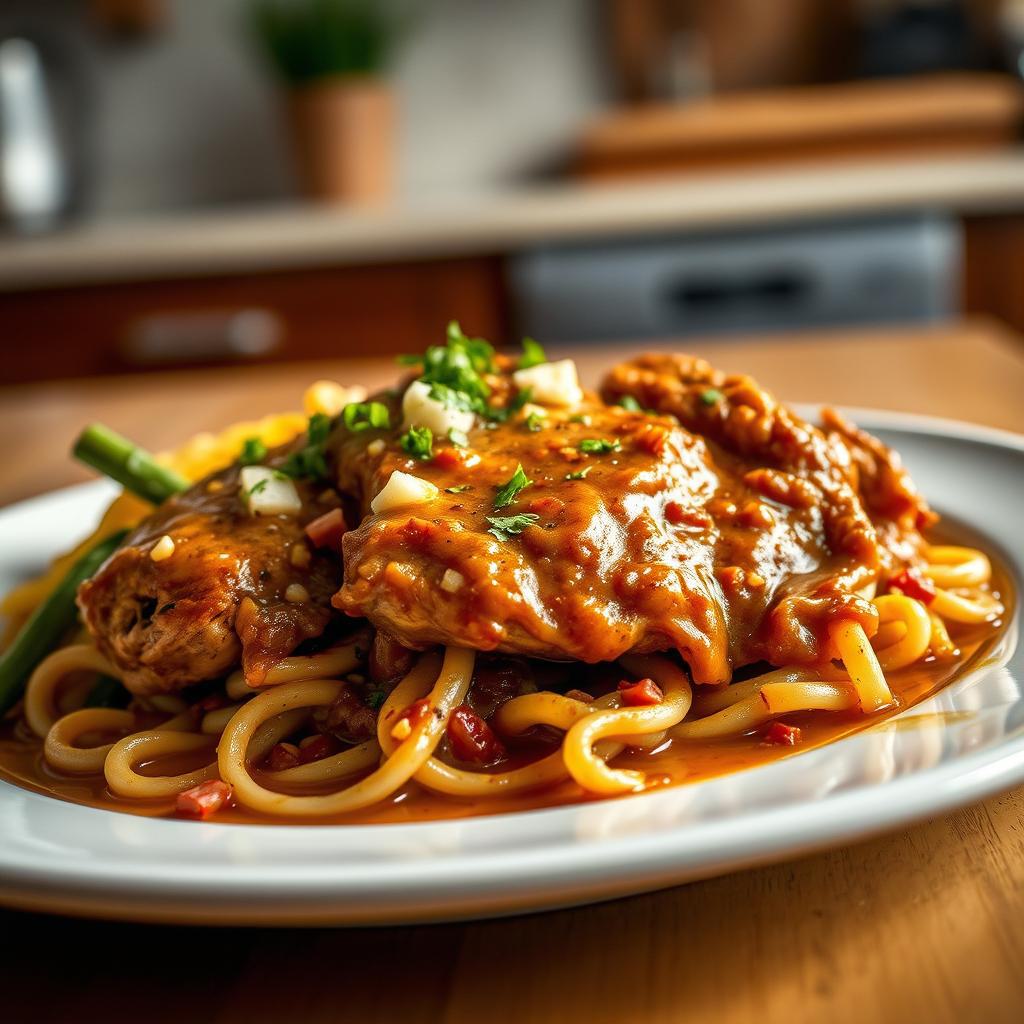
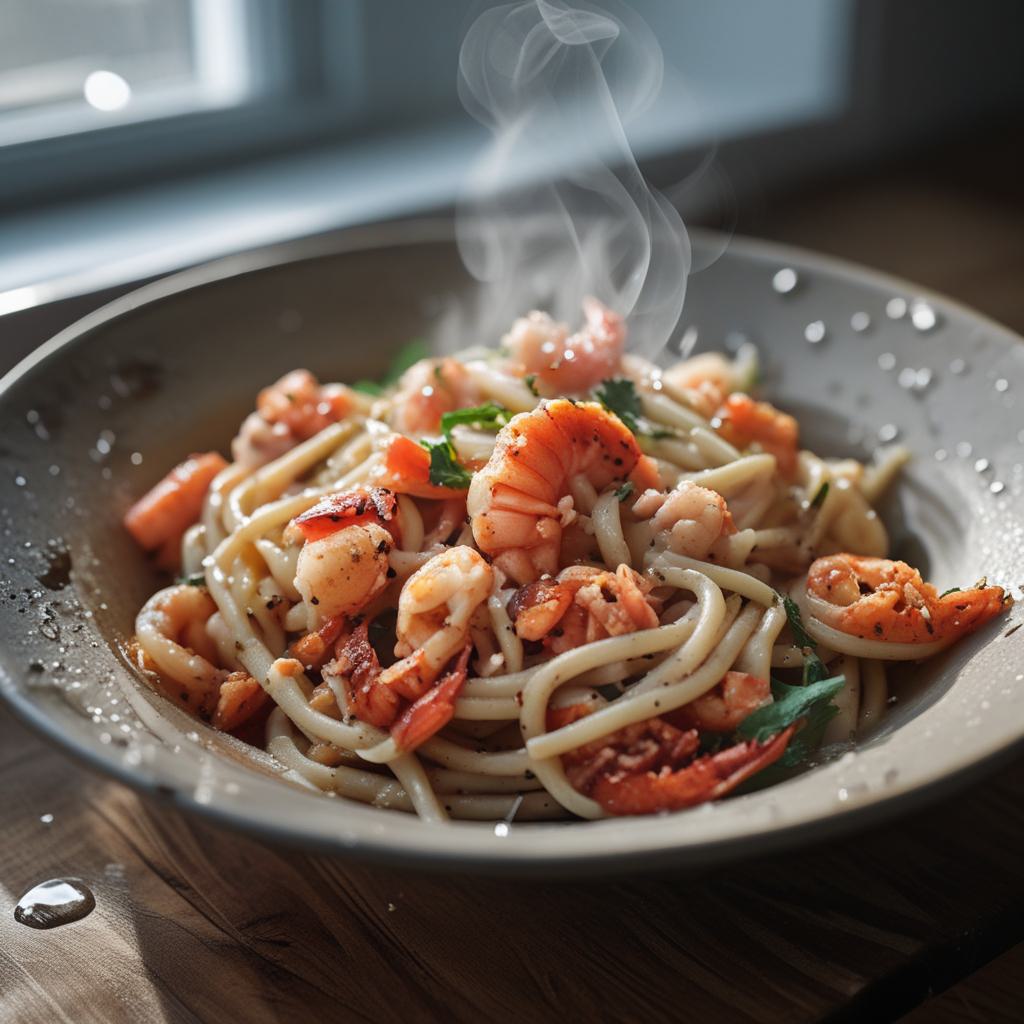
The moment Cajun Seafood Pasta hits the skillet, your kitchen transforms into a sensory wonderland. First comes the hiss of plump shrimp meeting hot oil, releasing briny-sweet steam that mingles with the earthy perfume of paprika and thyme. Then garlic enters the chorus – golden and narcotic – followed by the bright sting of white wine reducing to syrup. This dish isn’t merely cooked; it’s orchestrated. Born from Louisiana’s bayous and Italy’s coastal villages, it’s where jumbo Gulf shrimp dance with Andouille sausage in a cream sauce laced with the Holy Trinity of Cajun cooking: bell peppers, onions, and celery. Each forkful delivers crackling heat from cayenne, smoky depth from file powder, and the luxurious embrace of Parmesan-laced linguine. Here, every ingredient plays a dual role: the lemon zest isn’t just acidity but a conductor balancing richness, while that final scatter of green onions offers crunch alongside chlorophyll freshness. This is food that sweats, sings, and stains your napkin with gusto.
Table of Contents
Ingredient Deep Dive
| Ingredient | Quantity | Purpose |
|---|---|---|
| Jumbo shrimp (16/20) | 1.5 lbs | Sweetness, protein structure |
| Andouille sausage | 8 oz | Smoke, fat reservoir |
| Holy Trinity (onion, celery, green bell pepper) | 1 cup each | Aromatic base, textural contrast |
| Garlic cloves | 6 | Allium backbone |
| Cajun spice blend | 3 tbsp | Flame-building complexity |
| Heavy cream (36% fat) | 1.5 cups | Emulsification, mouthfeel |
| Dry white wine (Sauvignon Blanc) | 1 cup | Acidity, deglazing agent |
| Linguine | 12 oz | Sauce adhesion vehicle |
| File powder | 1 tsp | Umami thickener |
| Lemon zest | 2 tsp | Brightness amplifier |
The fat percentage in heavy cream isn’t arbitrary. At 36%, it contains enough butterfat to emulsify the spicy oil from Andouille without breaking, while its lactose content caramelizes into subtle sweetness against the heat. Shrimp size matters critically: 16/20 count ensures meaty bites that won’t overcook before the sauce reduces. Meanwhile, file powder – ground sassafras leaves – performs double duty as both thickener and a whisper of root-beer-like earthiness that anchors the dish’s Louisiana heritage.
Acid balance is engineered through three channels: white wine’s tartness (select Sauvignon Blanc for its grassy notes), lemon zest’s citral oils (avoid juice to prevent curdling cream), and the Holy Trinity’s natural malic acid. The sausage isn’t just protein but a fat source – rendered Andouille oil carries fat-soluble spice compounds like capsaicin and carotenoids directly into the sauce matrix.
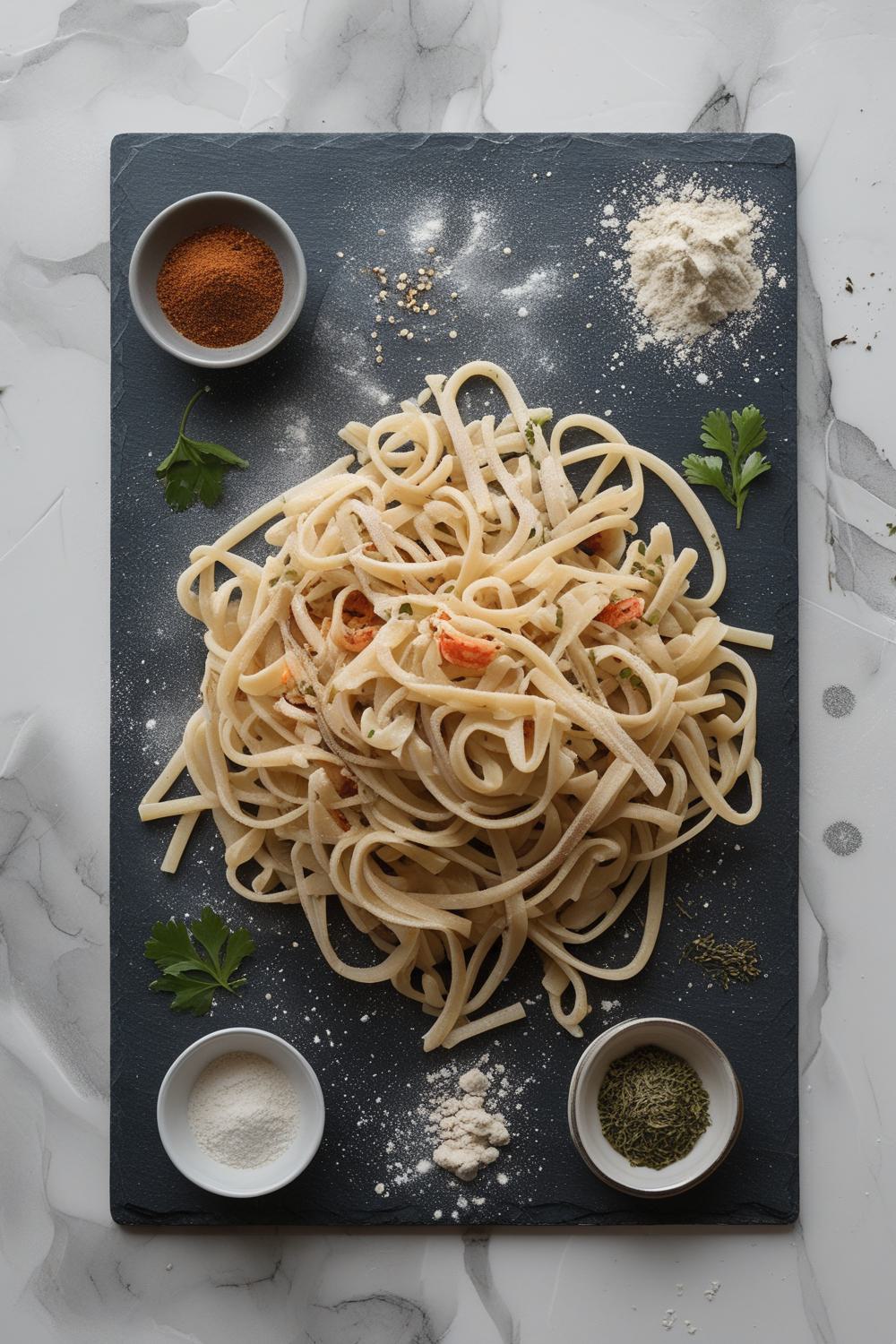
Substitutions & Swaps
For gluten-free needs, swap linguine for brown rice pasta – its higher amylose content provides better sauce adherence than corn-based alternatives. Vegan adaptations demand tactical layering: use king oyster mushrooms sliced into scallop-like disks (sear aggressively for Maillard crust) and liquid smoke + smoked paprika to mimic Andouille’s depth. Replace shrimp with heart of palm chunks brined in nori tea for oceanic umami. Heavy cream can become cashew cream (soak 1 cup raw cashews in boiling water for 15 minutes, then blend with ¾ cup unsweetened almond milk until silky).
Pantry emergencies? No white wine? Use ½ cup chicken broth + 1 tbsp apple cider vinegar. Out of file powder? Combine ½ tsp ground thyme + ¼ tsp ground sassafras tea leaves. For lactose-sensitive diners, coconut cream (not milk) offers comparable richness but adds subtle tropical notes – counterbalance this with extra cayenne. Always keep frozen shrimp on hand; brine them in 1 tbsp salt + 1 tsp baking soda dissolved in 2 cups cold water for 10 minutes to restore plump texture.
Equipment Guide
Your weapon of choice: a 14-inch carbon steel skillet. Unlike non-stick, it develops fond – those caramelized bits essential for depth – and withstands the dual assault of acidic wine and cream. For pasta, use a 6-quart Dutch oven with ample salt (1 tbsp per quart) to properly season noodles from within. Precision tongs with scalloped edges prevent shrimp tearing, while a flat-edged wooden spoon scrapes the skillet’s curve efficiently.
Two extras elevate results: an instant-read thermometer (shrimp turn rubbery at 145°F – pull them at 135°F for carryover cooking) and stainless steel prep bowls for mise en place. Spices bloom optimally between 250-300°F; infrared thermometers prevent burning. If using cast iron, avoid prolonged wine deglazing which can strip seasoning – deglaze quickly then transfer sauce to a non-reactive saucepan after scraping.
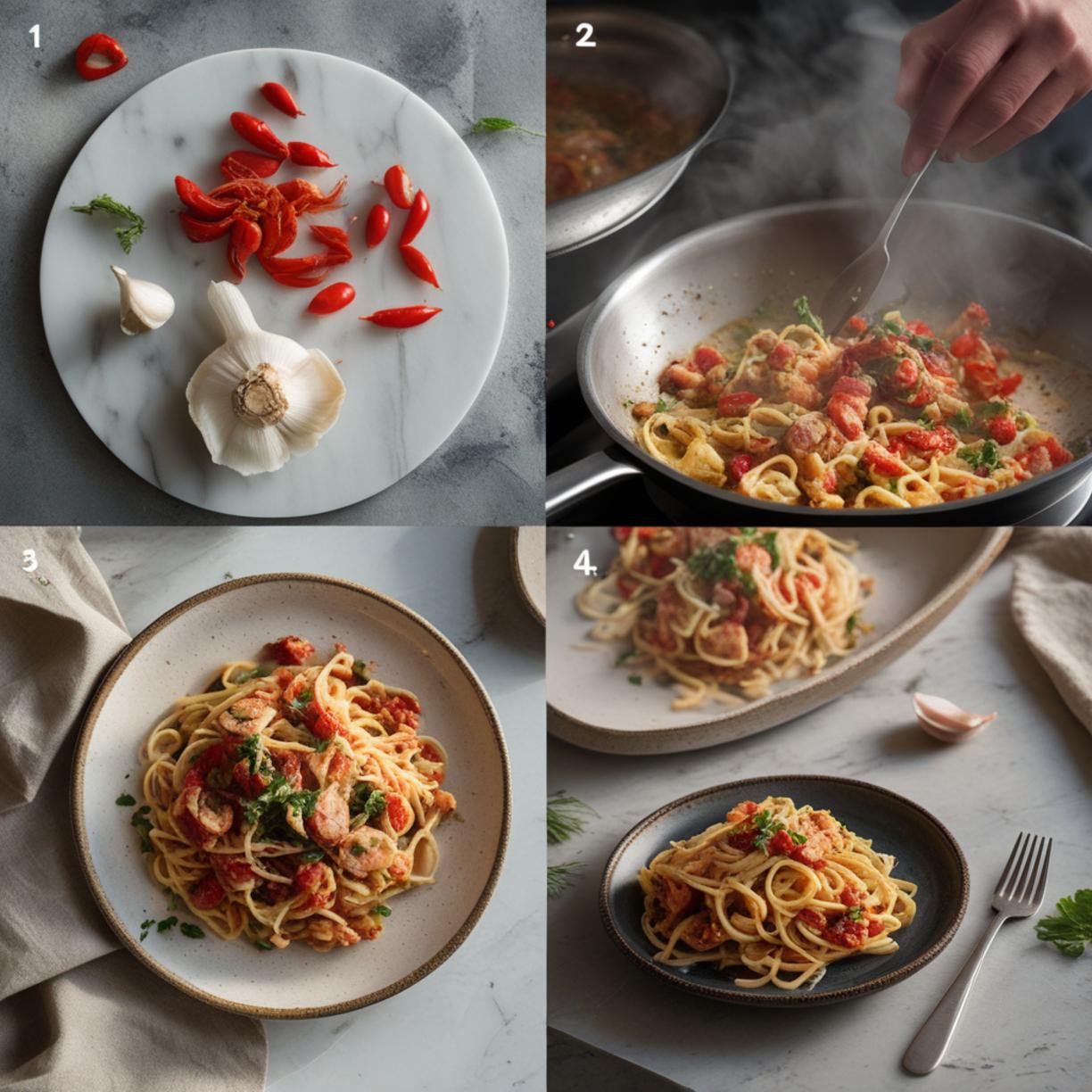
Step-by-Step Walkthrough
- Brute shrimp: Toss with 1 tsp baking soda + ½ tsp salt. Rest 10 minutes – alkali alters pH for crisp sear.
- Sear sausage: Render diced Andouille over medium until fat pools (2 cups cubed potato in cold water).
- Aromatics: Sweat Holy Trinity in sausage fat 6 minutes. Add garlic in final 60 seconds.
- Bloom spices: Stir Cajun seasoning into vegetables 30 seconds to release volatile oils.
- Deglaze: Pour wine, scrape fond. Reduce by ¾ until syrupy (4 minutes at simmer).
- Cream infusion: Add heavy cream + file powder. Simmer until naplé consistency (coats spoon).
- Shrimp ballet: Add shrimp, cook just until edges pink (90 seconds per side). Remove immediately.
- Pasta marry: Toss al dente linguine into sauce. Off heat, add lemon zest.
- Finish: Fold shrimp/sausage back in. Top with scallions.
Timing is warfare: start pasta water when prepping vegetables – they’ll finish around the time water boils. Cream temperature control is critical; add it off direct heat if your stove runs hot to prevent scalding. For fork-coating sauce, undercook pasta by 2 minutes – it absorbs seasoned cream while resting.
Deglazing mechanics matter: after removing sausage/vegetables, crank heat to high. Pour wine across the entire pan surface – steam lifts fond faster than scraping. Reduce to ¼ cup maximum; if overcooked, add 2 tbsp pasta water to reintroduce starch.
The shrimp add-back must be strategic: heat them just enough in sauce to warm through. Overcooking here turns them bouncy. Lemon zest stirred in off-heat retains volatile oils – a bright nose rather than bitter cook-out.
Expert Tips & Troubleshooting
Crisp-Shell Shrimp: Pat dry aggressively, then dust with cornstarch (1 tsp per lb). Sear in batches – overcrowding steams them. Wait until oil shimmers before adding; a single layer ensures contact. Flip only once when edges curl. Broken Sauce? Whisk in 1 tbsp cold butter or 2 tsp cornstarch slurry (1:1 starch/water). Temperature shock stops fat separation. Bland Depth: Bloom spices longer (45 seconds vs 30), add 1 tsp fish sauce with cream, or finish with a Parmesan rind while simmering. Mushy Pasta: Undercook by 3 minutes; finish cooking IN sauce with ¼ cup reserved pasta water. The starch binds the emulsion.
Salt wisely: Andouille and Cajun blends contain sodium. Salt pasta water adequately (it seasons from within), but wait until sauce reduction completes before final seasoning cream amplifies salt perception. If over-salted, add 1 tsp honey or ½ grated raw potato (remove after 2 minutes). For intense aroma, toast whole spices (cumin, coriander, mustard seeds) before grinding your Cajun blend – volatile compounds peak within 24 hours.
Flavor Variations
In Créole mode, add ½ cup crushed tomatoes with cream and garnish with okra chips. Kid-friendly? Replace cayenne with sweet paprika and incorporate roasted red pepper purée into the cream. For fire breathers, steep 2 dried chilies (e.g., árbol or ghost) in warming cream – remove before serving. Caribbean fusion: swap Andouille for jerk-spiced chicken, add pineapple tidies, and use coconut cream. Winter comfort: fold in lump crabmeat at the end with ¼ tsp nutmeg. Always balance heat with sweetness – a tbsp of maple syrup can temper Scotch bonnet volatility.
Storage & Reheating
Cool components separately within 90 minutes: strain shrimp from sauce, portion pasta with minimal sauce contact. Store in glass (plastic absorbs spice oils) up to 72 hours. Reheat sauce/shrimp in a non-stick pan over medium-low with 1 tsp water – microwave murders texture. Pasta revives via steam basket: 2 minutes covered with damp paper towel. Freeze sauce (without pasta) 2 months; thaw overnight before reheating with fresh cream (2 tbsp per cup) to restore emulsion.
FAQ Section
Q: Can I use pre-cooked shrimp?
A: Disastrous. They’ll toughen upon reheating. Only raw, shell-on shrimp release collagen as they cook, enriching the sauce.
Q: What if I can’t find file powder?
A: Okra powder (1 tsp) or xanthan gum (pinch) provides similar thickening. Flavor won’t match entirely – boost thyme if omitting.
Q: Can I make it ahead for guests?
A> Prep components separately: cook pasta to al dente, toss with oil. Refrigerate sauce base (through cream addition). Final assembly takes 7 minutes.
Q: Why does my Cajun seasoning taste bitter?
A> You scorched the spices. Bloom them in oil beneath smoke point (~350°F) or add later with vegetables to buffer heat.
Nutrition Information
| Nutrient | Per Serving (1/4 recipe) |
|---|---|
| Calories | 780 kcal |
| Protein | 38g |
| Fat | 42g |
| Saturated Fat | 22g |
| Carbohydrates | 52g |
| Fiber | 3g |
| Sodium | 1280mg |
| Sugar | 6g |
Disclaimer: Nutritional estimates utilize USDA database averages. Actual values vary based on specific ingredient brands, seafood size variance, and sauce reduction extent. Cream measurements assume 20% evaporation. For precise tracking, weigh ingredients raw and account for cook-loss adjustments.