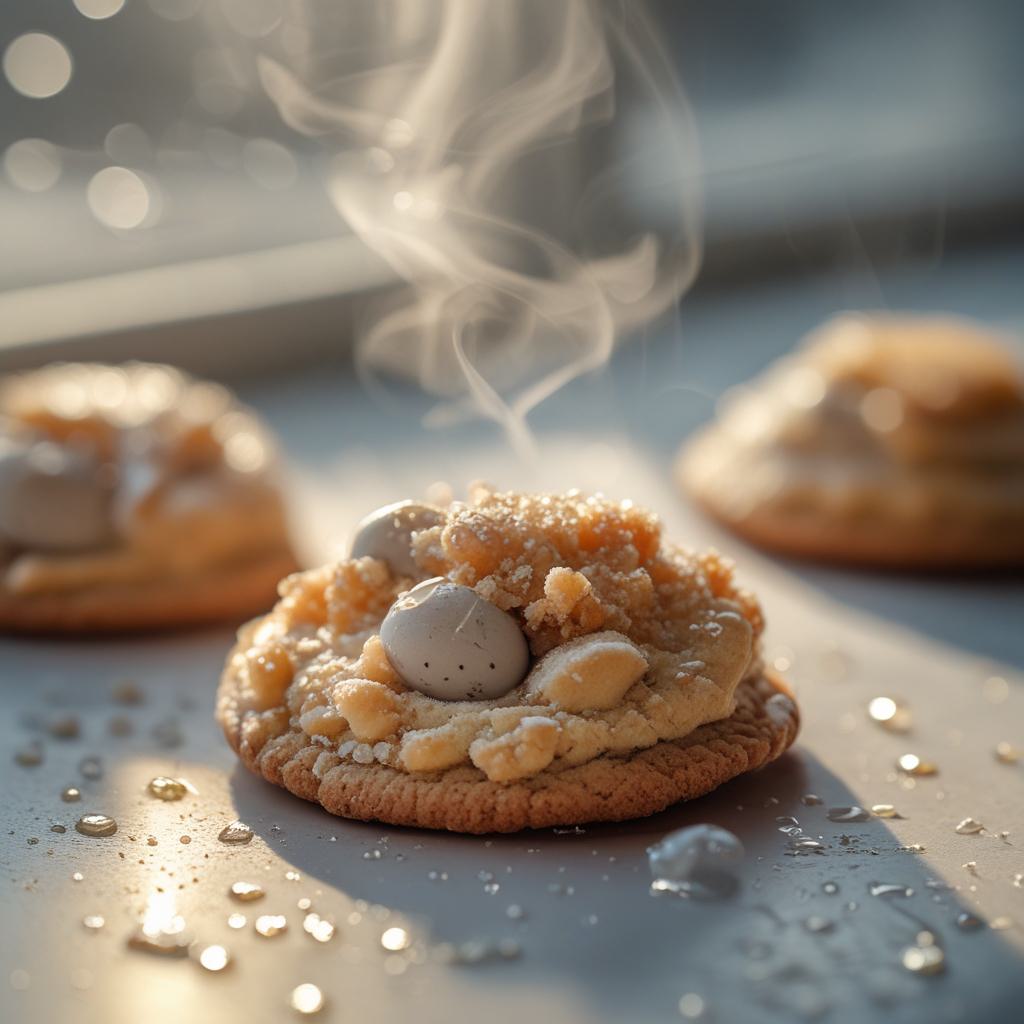
The moment your kitchen fills with the warm embrace of vanilla-kissed dough and melting milk chocolate, you know something extraordinary is happening. Cadbury Egg Cookies aren’t merely baked goods—they’re nostalgia captured in edible form, a collision of textures that begins with crisp edges yielding to chewy centers studded with crackling sugar shells. Imagine biting through buttery shortbread to discover creamy fondant oozing from miniature chocolate eggs, their pastel foil wrappers shimmering like buried treasure. This recipe transforms supermarket sweets into patisserie-worthy artistry, where the snap of tempered chocolate meets the gooey surrender of caramelized brown sugar. It’s springtime reconfigured as dessert: floral notes from Madagascar bourbon vanilla temper the richness, while sea salt flakes lift the entire composition into a realm worthy of silver platters and dimly lit dessert bars alike.
Table of Contents
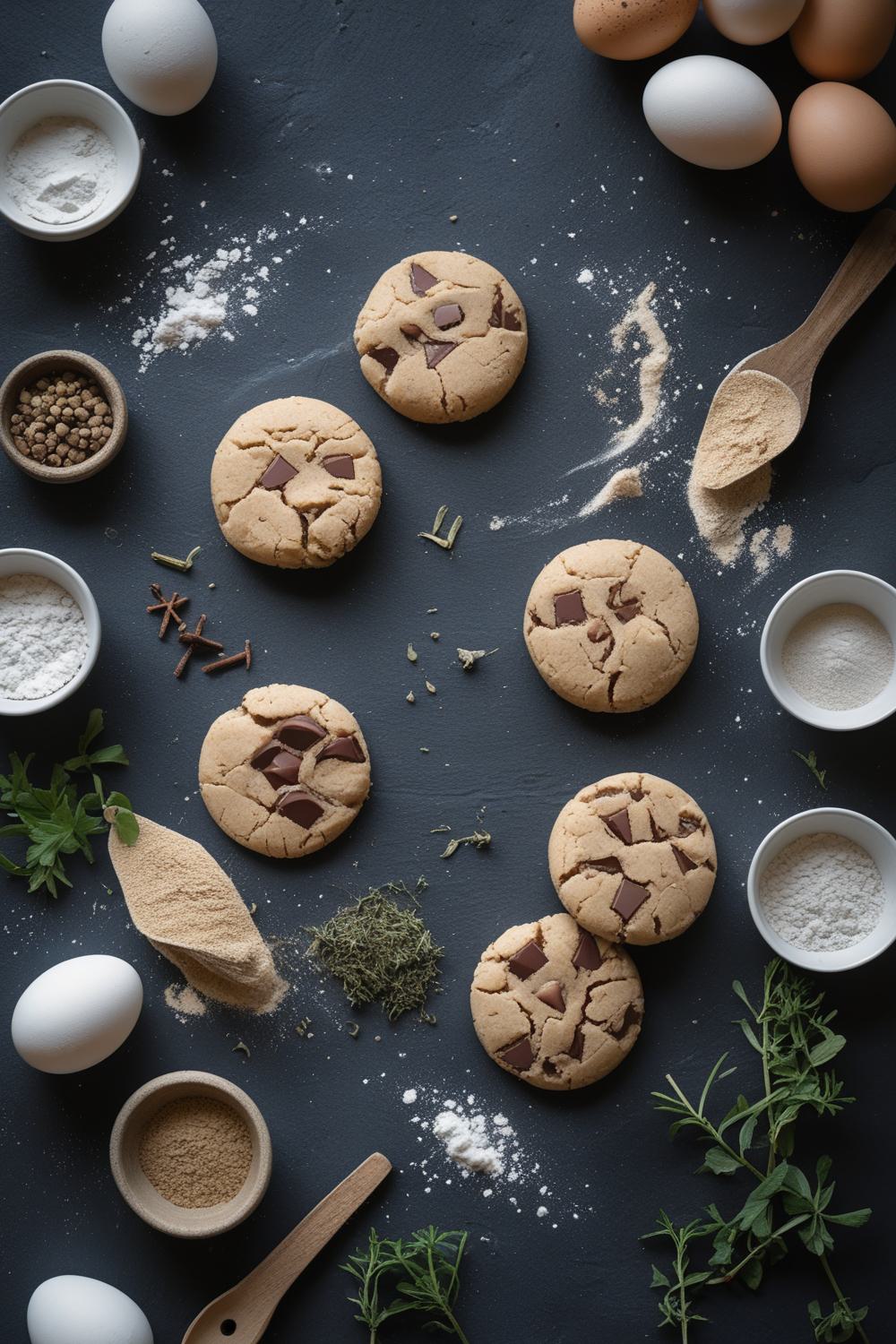
Ingredient Deep Dive
| Ingredient | Quantity | Purpose |
|---|---|---|
| Unsalted European butter | 1 cup (225g) | Higher fat content (82-85%) creates spread-resistant structure |
| Dark brown sugar | 3/4 cup (150g) | Molasses content boosts chewiness and caramelization |
| Granulated sugar | 1/4 cup (50g) | Provides structural rigidity and surface crackle |
| Large egg yolks | 2 | Emulsifies fats without excess water from whites |
| Bread flour | 2 1/4 cups (280g) | Higher gluten prevents Cadbury eggs from sinking |
| Cornstarch | 1 tbsp | Tenderizes crumb and extends freshness |
| Mini Cadbury Creme Eggs | 24 (frozen) | Freezing prevents premature bursting during baking |
| Fleur de sel | 1 tsp | Hyrdoscopic crystals amplify sweet/salty contrast |
Cookie chemistry hinges on thermal reactions. European butter’s lower water content minimizes steam production, which combined with bread flour’s robust gluten network, creates scaffolding capable of supporting molten chocolate centres without collapse. The 3:1 ratio of brown to white sugar isn’t accidental—dark brown’s 6.5% molasses content attracts water molecules during baking, yielding that coveted bend without break texture so essential to premium cookies.
Yolks serve dual functions: their phospholipids bind fat and water into stable emulsions while lecithin promotes browning via Maillard reactions. Freezing the Cadbury eggs is non-negotiable—it lowers their phase transition temperature, ensuring the sugar shell remains intact until the final minutes of baking when thermal expansion creates those artful fissures revealing liquid fondant. Cornstarch’s granular structure interrupts gluten formation and staves off starch recrystallization, giving these cookies a 5-day shelf life without textural degradation.
Substitutions & Swaps
For gluten-free adaptations, substitute bread flour with 280g blanched almond flour plus 1 tbsp psyllium husk powder. This mimics gluten’s binding capacity while adding nutty richness that complements the chocolate eggs. Vegan butter must contain at least 80% fat—Miyoko’s Creamery European-Style works beautifully. Replace egg yolks with 50g aquafaba whipped to stiff peaks, which introduces air pockets that compensate for density loss.
Sugar substitutions prove trickier. Coconut sugar contains invert sugars that cause excessive spreading—use powdered erythritol mixed with 1 tsp molasses per 100g substitute. For dairy-free chocolate, select mini eggs made with rice malt syrup rather than those containing milk solids, which often have higher burning points. In a pantry emergency, Rolos or Lindt Lindor truffles make adequate stand-ins, though baking time decreases by 90 seconds to prevent scorching.
Equipment Guide
Success demands precision tools. A 3mm-thick aluminum baking sheet (preferably USA Pan brand) prevents hotspots that incinerate egg bottoms. Silicone baking mats outperform parchment—their slight grip prevents cookie spread during oven spring. Use a #20 disher scoop (exactly 3 tbsp capacity) for uniform portioning; stainless steel models with thumb-release levers maintain structural integrity better than plastic competitors.
Thermometers prove critical: calibrate your oven with a hanging mercury thermometer (digital sensors fail at convection settings) and employ an infrared gun to check butter temperature—it must read 65°F (18°C) before creaming. When rotating pans, utilize industrial-grade tongs to avoid jostling delicate dough balls. Finally, invest in a wire cooling rack with tightly woven grids; wide spacing causes cookie sag from insufficient support.
Step-by-Step Walkthrough
- Cube chilled butter, then rest at 65°F for 35 minutes (test with infrared thermometer)
- Sift flour, cornstarch, baking soda, and 3/4 tsp fleur de sel through a chinois
- Cream butter and sugars on medium-low (KitchenAid speed 4) for precisely 2 minutes
- Introduce yolks one at a time, pausing to scrape bowl with flexible silicon spatula
- Add dry ingredients in 3 additions, mixing just until no flour pockets remain
- Divide dough into 50g portions using #20 scoop, rolling into flawless spheres
- Press frozen Cadbury eggs deep into centers—completely envelop with dough
- Chill shaped dough balls on parchment-lined tray for 43 minutes (no plastic wrap)
- Preheat oven to 375°F (190°C) with baking sheet positioned on middle rack
- Arrange 6 dough balls per sheet, bake 11 minutes until edges blush golden
- Immediately tap pan on stove to deflate, then sprinkle with remaining salt
- Cool exactly 7 minutes on sheet before transferring to wire rack
Texture mastery occurs in three phases: the creaming stage emulsifies fat and sugar into micro-air pockets that later expand from baking soda activation. Chilling solidifies butter matrixes so cookies retain height rather than pancaking—45 minutes allows thorough hydration without starch over-development. When pressing Cadbury eggs, ensure a minimum 1cm dough barrier exists around all sides; thinner sections cause catastrophic leaks.
During baking, refrain from opening the oven before minute 9—thermal shock collapses delicate structures. The signature “tap” post-baking terminates carryover cooking, preserving liquid centers while setting exteriors. Cooling time isn’t negotiable; transferring too early risks structural collapse from residual steam pressure.
Expert Tips & Troubleshooting
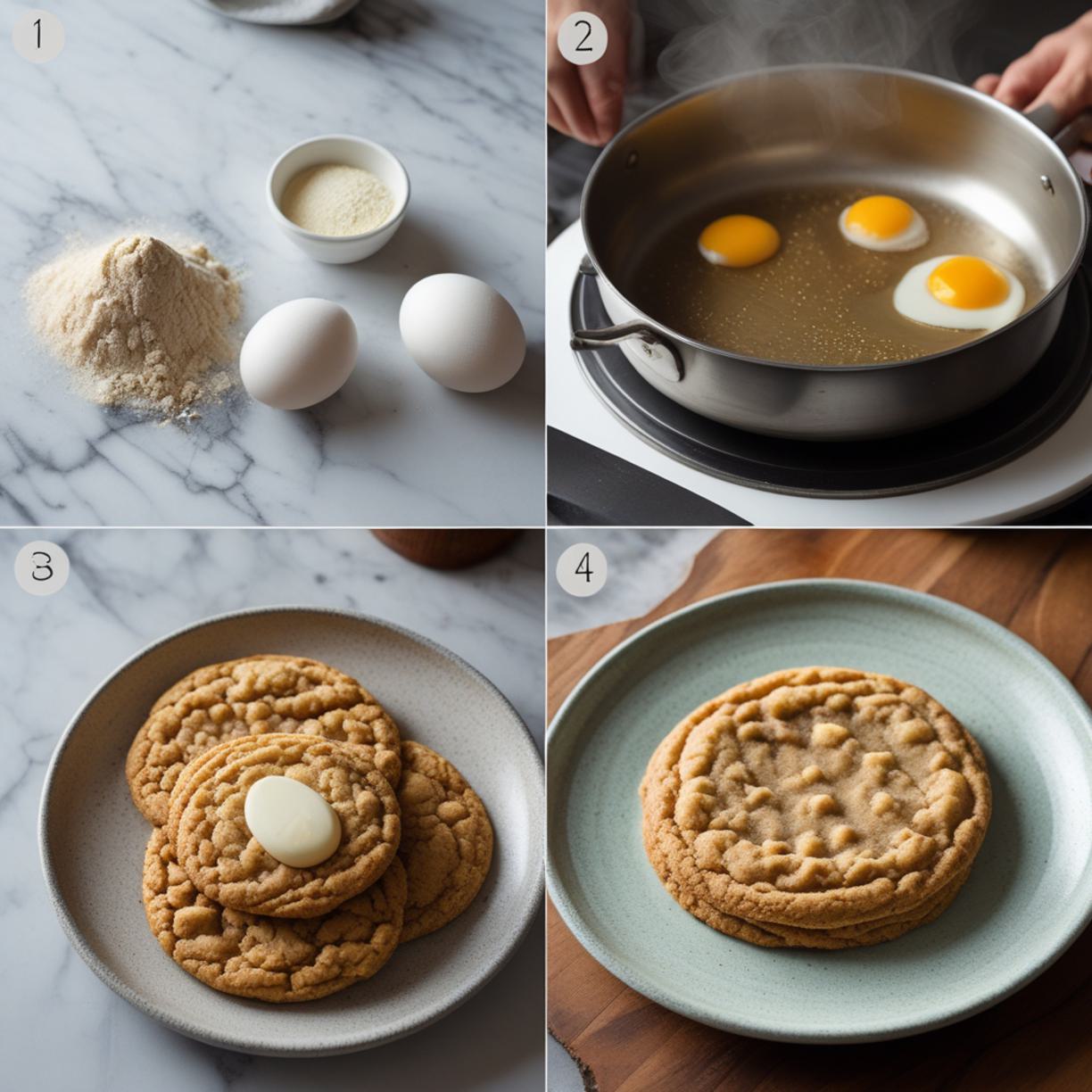
Achieving bakery-quality Cadbury cookies requires finesse. If eggs burst prematurely, your dough was insufficiently chilled—freeze shaped balls for 20 minutes pre-baking. For cookies spreading excessively, check butter temperature; 65°F is ideal—warmer causes collapse. Hollow centers indicate overmixing after flour incorporation; cease mixing when streaks still exist and finish blending by hand.
Sticky dough plagues humid environments—chill mixing bowl 30 minutes before starting and work near an air conditioner. If chocolate scorches, lower oven temperature by 15°F and extend baking time 2 minutes while rotating sheet front-to-back at the 8-minute mark. Salvage overbaked cookies by brushing edges with simple syrup and reheating at 200°F for 5 minutes—this restores pliability.
Never refrigerate dough overnight—extended gluten relaxation creates tough cookies. For uniform browning, lightly spritz dough balls with water before baking; surface moisture delays crust formation allowing internal gases to expand evenly. And that grayish ring around eggs? Prevent it by brushing frozen eggs with melted cocoa butter pre-embedding—it creates a moisture barrier.
Flavor Variations
Adult palates thrill to smoky depth: replace 50g flour with mesquite powder and add 1/4 tsp chipotle to dough. Before baking, brush cookies with dark rum and sprinkle with black lava salt. For nut enthusiasts, toast 100g browned butter solids and fold into dough with chopped candied pecans. Kid-friendly versions excel with rainbow sprinkles embedded into dough surfaces and milk chocolate eggs instead of dark.
During Easter, incorporate crushed pastel M&Ms into dough plus a teaspoon of freeze-dried raspberries for tart contrast. Adventurous bakers might inject cooled cookies using a pastry syringe—experiment with dulce de leche or bourbon-infused ganache for surprise centers exceeding the Cadbury eggs’ capacity.
Storage & Reheating
Store cooled cookies in single layers separated by greaseproof paper within airtight steel containers (plastic imparts odors). Add a food-safe silica packet to absorb humidity—they’ll remain crisp for 8 days. Freezing raw dough balls maximizes freshness; vacuum-seal portions and bake straight from freezer, adding 3 minutes to timer.
Revive day-old cookies by placing in 300°F oven with ovenproof cup of water for 3 minutes—steam rehydrates without sogginess. Avoid microwaves, which liquefy chocolate unevenly. For gifting, line decorative tins with beeswax wraps—their antimicrobial properties extend shelf life over plastic cling film.
FAQ Section
Can I use regular-sized Cadbury eggs?
No—standard eggs’ thicker shells resist melting, creating doughy pockets. Miniatures have precisely calibrated chocolate-to-fondant ratios.
Why do my cookies puff up like muffins?
Oven temperature is too low—invest in a hanging thermometer. Underheated ovens cause excessive rising before crust sets.
Can I omit eggs for allergies?
Substitute yolks with 50g coconut cream + 1/2 tsp lecithin powder. Eggs contain emulsifiers irreplaceable by standard vegan alternatives.
How to prevent foil from sticking?
Freeze eggs 2 hours before unwrapping—cold contracts chocolate from foil. Twisting ends first loosens wrappers cleanly.
Nutrition Information
| Nutrient | Per Cookie (approx) |
|---|---|
| Calories | 247 kcal |
| Fat | 13.2g (7g saturated) |
| Carbohydrates | 31.5g (18g sugars) |
| Fiber | 0.8g |
| Protein | 2.9g |
| Sodium | 167mg |
Disclaimer: Nutritional data calculated using USDA databases for generic ingredients. Actual values vary based on specific brands and Cadbury egg batch variations. This recipe contains allergens including gluten, dairy, eggs, and soy (present in chocolate coatings). Consult manufacturers’ labels for dietary restrictions.