This bucatini pasta recipe delivers a simple yet deeply satisfying garlic butter sauce that comes together in under 30 minutes. The key to achieving a silky, restaurant-quality finish lies in properly salted pasta water and the emulsification that occurs when starchy water meets melted butter. Bucatini, with its hollow center, absorbs the sauce more effectively than traditional spaghetti, creating a rich, flavorful bite in every forkful.
This guide focuses on the essential techniques—seasoning the pasta water correctly, building a smooth garlic-butter emulsion, and finishing the pasta to the ideal texture. Each step is designed to help you master this classic comfort dish with consistency and confidence. Perfect for weeknight dinners or quick Italian-inspired meals, this bucatini recipe highlights how a handful of simple ingredients can transform into an exceptional, comforting plate of pasta.
Table of Contents
What Makes the Bucatini Pasta Shape Unique?
Bucatini translates roughly to “little holes” and belongs to the long-cut pasta family, like spaghetti and linguine. However, its distinction lies in that central hole, or lumen, which runs its entire length.
This tube structure is a key reason many chefs prefer it:
- Superior Sauce Adherence: The sauce not only coats the outside surface but also sneaks into the hollow core, allowing the pasta to absorb more flavor internally.
- Pleasing Texture: It provides a firmer, more substantial mouthfeel than solid spaghetti. When cooked properly, it maintains an excellent al dente bite.
- Piping Effect: Because of the hole, when you bite into it, the sauce trapped inside “pipes” out, ensuring maximum flavor delivery with every chew.
While many sauces work, bucatini is traditionally paired with rich, oil-based, or creamy sauces, like the one in this garlic-butter bucatini version. If you love the idea of tubular pasta, you might also enjoy making a hearty Grinder Pasta Salad Recipe.
Essential Ingredients for This Tested Bucatini Dish
Based on my experience adjusting flavors for different palates, the key to this recipe is the balance of sharp garlic, rich fat, and salty cheese.
Mastering the Simple Garlic-Butter Sauce Base
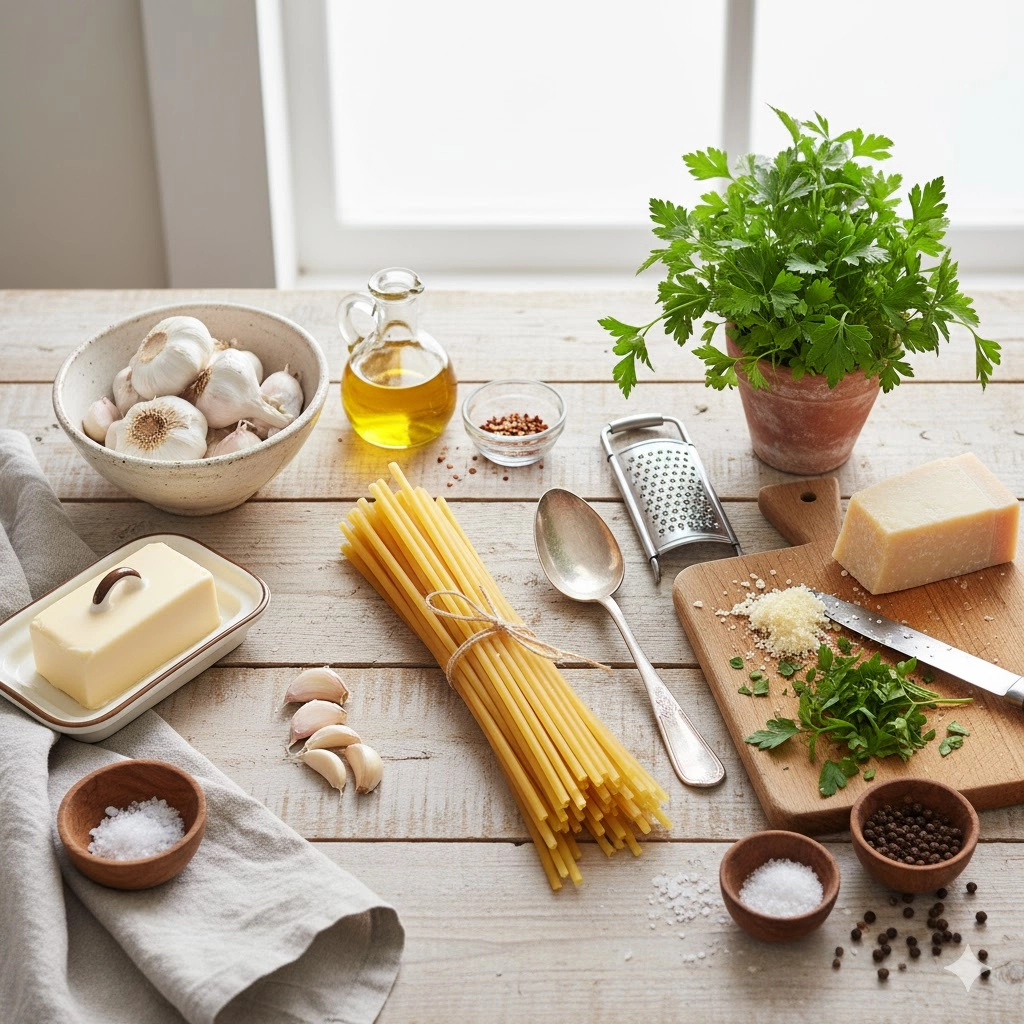
- Bucatini Pasta: 1 pound (450g). Always opt for bronze-die cut pasta for better sauce grip.
- Unsalted Butter: 6 tablespoons. Using unsalted butter allows you to control the final sodium level.
- Extra Virgin Olive Oil (EVOO): 2 tablespoons. This helps raise the smoke point of the butter and adds depth of flavor.
- Garlic: 6–8 large cloves, thinly sliced or minced. This is a garlic butter sauce, so don’t be shy!
- Red Pepper Flakes (optional): 1/2 teaspoon. This provides a subtle warmth without making the dish spicy.
- Pasta Water: About 1 cup. Crucial for the sauce emulsion (see section below).
Key Flavor & Garnish Elements
- Fresh Parsley: 1/4 cup, chopped. Adds a necessary burst of color and freshness.
- Parmesan Cheese: 1/2 cup, freshly grated, plus more for serving. Use only high-quality, authentic Parmigiano-Reggiano for the best flavor and melting ability.
- Salt and Black Pepper: To taste.
Science of the Sauce: How to Create a Perfect Emulsion
The difference between a watery sauce and a silky, glossy one is simple: the starch from the pasta water.
When pasta cooks, the starch (mostly amylose and amylopectin) leaches into the boiling water. This starchy liquid acts as a powerful emulsifier a bridge between fat (butter/oil) and water (the liquids in the sauce).
My Method for a Glossy Finish:
- Reserve the Water: Always reserve at least 1 cup of starchy water before draining the pasta.
- Activate the Starch: Add the reserved water to the pan with the melted butter and garlic. The starch molecules thicken the water.
- Whip and Toss: When you add the cooked pasta to the sauce, the movement of tossing and stirring helps bind the fat and water, creating a stable, homogenous, and incredibly luxurious sauce that clings perfectly to the bucatini noodles.
Step-by-Step: Making Your Homemade Bucatini Meal
1. Cook the Bucatini
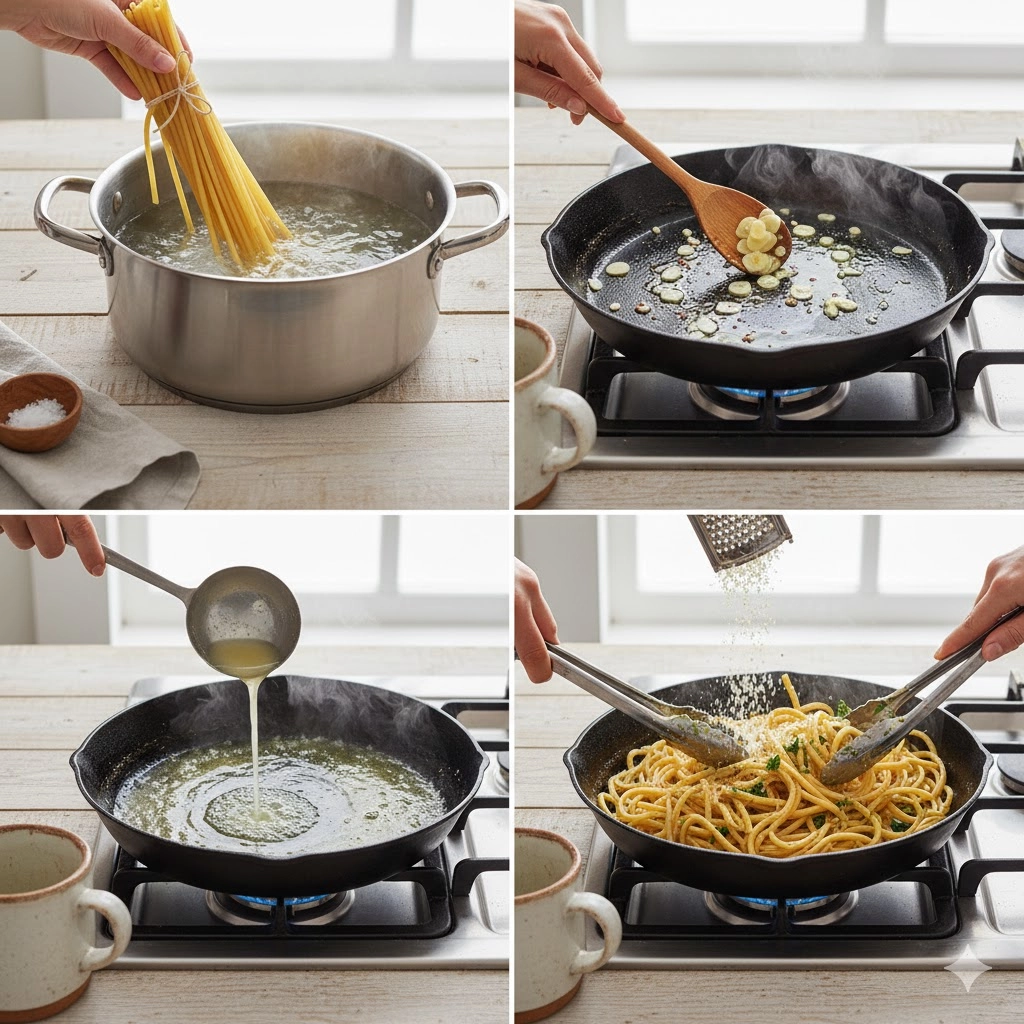
Bring a large pot of water to a rolling boil. Add about 2 tablespoons of kosher salt the water should taste like the sea. Cook the bucatini according to package directions, typically 9–11 minutes, until al dente.
Expert Tip: Set a timer for 1 minute less than the package recommends, as the pasta will finish cooking in the sauce. Reserve 1 to 1.5 cups of the starchy cooking water before draining the pasta.
2. Prepare the Garlic Butter Base
While the pasta is boiling, melt the butter and olive oil in a large skillet or pan over medium-low heat. Add the minced garlic and red pepper flakes (if using). Cook gently for about 1 to 2 minutes, stirring constantly, until the garlic is fragrant but not browned or burned. Burnt garlic will ruin the flavor.
3. Emulsify the Sauce
Increase the heat to medium. Add about 3/4 cup of the reserved pasta water to the pan. Bring it to a simmer and let it reduce slightly, stirring until the water and fat start to merge and form a slightly thickened, cloudy sauce. This process activates the starch.
4. Combine and Finish
Add the drained bucatini directly to the skillet with the sauce. Toss vigorously to coat the pasta completely. Add the grated Parmesan cheese and continue tossing. If the sauce looks too thick, add more pasta water, a tablespoon at a time, until the sauce is glossy and coats the pasta beautifully.
5. Season and Serve
Taste the pasta and season with additional salt and freshly cracked black pepper as needed. Stir in the fresh parsley. Serve immediately with extra grated cheese on top. This is the simple pleasure of a perfect bucatini bowl.
Ingredient Swaps and Expert Prep Tips
Quick Substitutions for Common Ingredients
- Dairy-Free: Substitute the butter with high-quality olive oil or a plant-based, neutral-flavored butter alternative. Skip the Parmesan or use a vegan Parmesan substitute.
- Cheese: If you don’t have Parmesan, Pecorino Romano is an excellent, saltier substitute, but use slightly less.
- Herb: Fresh basil or oregano can be used instead of parsley, though parsley provides the most neutral, clean finish.
- Different Pasta: While bucatini is ideal, you can easily use this sauce on perciatelli (a thicker tube pasta), spaghetti, or rigatoni. If you are looking for other light pasta ideas, our recipe for Mediterranean Pasta Salad Recipe is a must-try.
Cooking Bucatini Like a Pro
- Salting is Key: Do not skimp on salt in the cooking water. As Nonna taught me, this is the only chance you have to season the pasta itself.
- Sauce Size Matters: After testing this recipe multiple times, I recommend using the widest skillet you have. Tossing the pasta in a large surface area helps the sauce emulsify and cling better.
- Never Rinse: Do not rinse the cooked bucatini. Rinsing washes away the essential surface starch needed to create the silky, binding sauce.
- Cook to Finish: Add the pasta to the sauce while it is still slightly undercooked. The final minute of cooking in the pan, absorbing the garlic butter and starch water, is what makes the sauce stick.
Storing Leftovers and Reheating for Best Flavor
This simple creamy bucatini dish is always best when served immediately, but leftovers can be managed successfully.
- Storage: Store cooled leftovers in an airtight container in the refrigerator for up to 3 days.
- Reheating: Avoid the microwave, which dries out the pasta and separates the emulsion.
- Place the pasta in a skillet over low heat.
- Add 1 to 2 tablespoons of water or broth to loosen the sauce.
- Gently toss until heated through and the sauce becomes creamy again.
Serving Suggestions: What Pairs Best with Bucatini?
Because this garlic butter bucatini is rich, simple, and satisfying, it pairs perfectly with light, fresh, or crunchy sides.
- Green Salad: A simple arugula or mixed green salad tossed with a bright lemon vinaigrette provides a necessary acidic contrast to the rich butter.
- Roasted Vegetables: Asparagus, broccoli, or bell peppers roasted with olive oil and a dash of salt complement the garlic flavor beautifully.
- Protein: For a more complete meal, serve alongside grilled chicken breast or baked white fish.
If you are a fan of quick, versatile pasta dishes, you might want to check out our main guide to making the best Pasta Salad variations.
Frequently Asked Questions About Bucatini
Why is my sauce watery?
Your sauce is likely watery because you added too much reserved pasta water too quickly, or your pan heat was too low. The key is to add the starchy water gradually (a tablespoon at a time) while tossing the pasta vigorously over medium heat. This ensures the starch properly binds with the fat (butter/oil).
Is bucatini difficult to eat?
Yes, you can reduce the garlic to 3 or 4 cloves. However, as this is a garlic-butter sauce, reducing it too much will diminish the primary flavor profile of the dish.
Nutrition Notes on This Comforting Pasta Dish
While this bucatini meal is a perfect comfort food, it is important to understand its general nutritional makeup, primarily deriving from carbohydrates and healthy fats.
- Pasta provides complex carbohydrates, which are a good source of sustained energy.
- The recipe uses high-quality fat (butter and olive oil) and is seasoned generously with fresh garlic.
This content is for educational purposes only and does not replace professional dietary or medical advice. For specific dietary planning, consult with a certified health or nutrition professional.
PrintThe Best Easy Bucatini Pasta Recipe with Garlic Butter Sauce
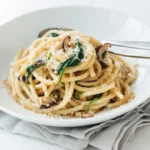
An authentic, easy bucatini pasta recipe with a silky garlic butter sauce. Learn the science of using starchy pasta water for a perfect emulsion in this 30-minute weeknight meal.
Ingredients
1 pound (450g) Bucatini Pasta
6 tablespoons Unsalted Butter
2 tablespoons Extra Virgin Olive Oil
6–8 large cloves Garlic, thinly sliced or minced
1/2 teaspoon Red Pepper Flakes (optional)
1 to 1.5 cups Reserved Starchy Pasta Water
1/2 cup Freshly Grated Parmesan Cheese (plus more for serving)
1/4 cup Fresh Parsley, chopped
Kosher Salt and Black Pepper to taste
Instructions
1. Bring a large pot of water to a rolling boil and salt heavily. Cook bucatini according to package directions until al dente. Reserve 1 to 1.5 cups of starchy water before draining the pasta.
2. In a large skillet over medium-low heat, melt butter and olive oil. Add the minced garlic and red pepper flakes (if using). Cook gently for 1-2 minutes until fragrant; do not burn the garlic.
3. Increase heat to medium. Add 3/4 cup of the reserved pasta water to the pan. Bring to a simmer and let it reduce slightly, stirring until the water and fat begin to merge and thicken.
4. Add the drained bucatini directly to the skillet. Toss vigorously to coat. Add the grated Parmesan cheese and continue tossing. Add more pasta water, a tablespoon at a time, until the sauce is glossy and perfectly coats the bucatini.
5. Taste and season with additional salt and pepper. Stir in the fresh parsley. Serve this easy garlic-butter bucatini immediately with extra Parmesan.
Notes
Use bronze-die cut bucatini for better sauce grip.
Do not rinse the cooked pasta, as you need the starch for the sauce.
For best results, serve immediately. Leftovers can be gently reheated in a skillet with a splash of water.