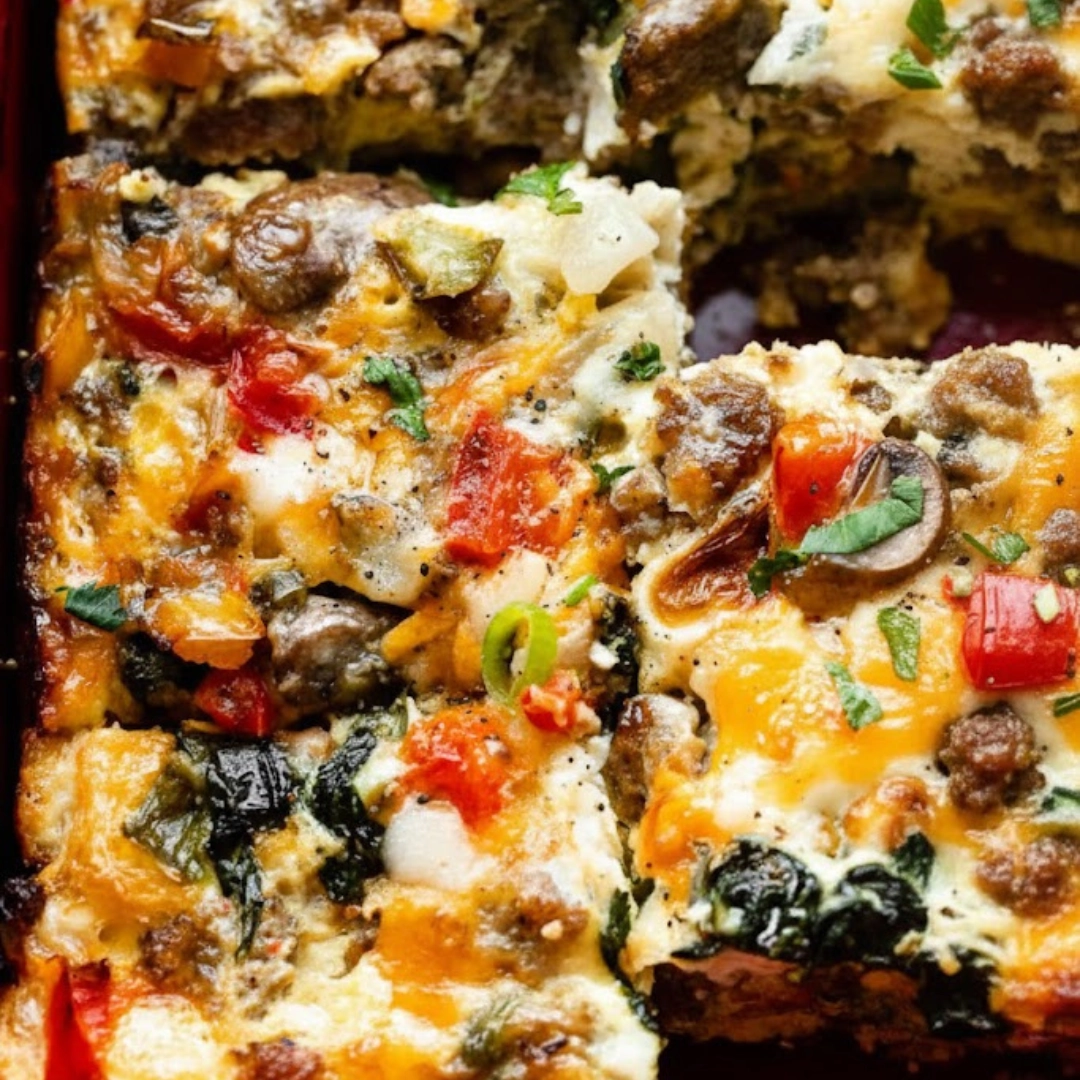
The ideal morning meal shouldn’t require you to wake up before dawn. It should be hearty, savory, deeply comforting, and ready to simply slide into the oven. This is precisely the genius of a great Breakfast Casserole. It’s a complete meal—protein, starches, vegetables, and creamy richness—all baked into one sliceable dish. Whether you are hosting holiday brunch, feeding a crowd on a weekend, or simply preparing for busy weekdays, this recipe is designed for maximum flavor with minimal morning fuss. It combines tender bread, seasoned sausage, sharp cheese, and a light, custardy egg base to create a texture that is both robust and delicate. This recipe is a foundational, adaptable template for all your future brunch ambitions.
Table of Contents
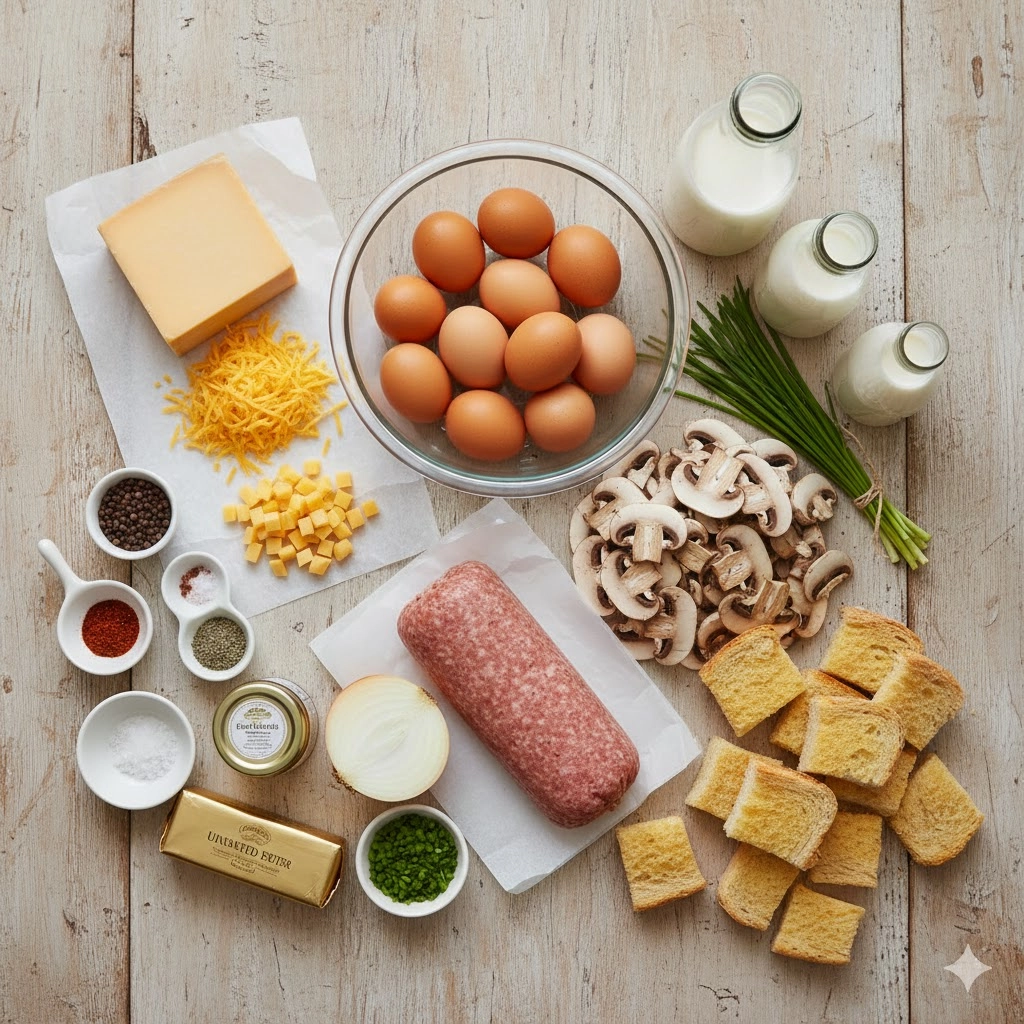
The Essential Ingredients for Success
Building a fantastic casserole is all about balance: the right ratio of bread to egg mixture, and high-quality, flavorful additions. We prioritize texture and savoriness in this core list.
For the Base and Binder
- 1 (one) pound breakfast sausage (bulk or removed from casings)
- 1 (one) large yellow onion, finely diced
- 2 (two) cups fresh mushrooms, sliced (cremini or button)
- 1 (one) teaspoon dried sage
- 1 (one) teaspoon kosher salt
- 1/2 (one half) teaspoon black pepper
- 1 (one) tablespoon unsalted butter
For the Egg and Cream Custard
- 12 (twelve) large eggs
- 2 (two) cups whole milk
- 1/2 (one half) cup heavy cream
- 1 (one) teaspoon Dijon mustard
- 1/4 (one quarter) teaspoon cayenne pepper (optional, for subtle warmth)
The Starch and Cheese
- 8 (eight) slices hearty white bread or sourdough, cut into one-inch cubes
- 2 (two) cups (about eight ounces) sharp cheddar cheese, freshly shredded
- 1/4 (one quarter) cup minced fresh chives, for garnish
The Culinary Choreography: High-Level Preparation Steps
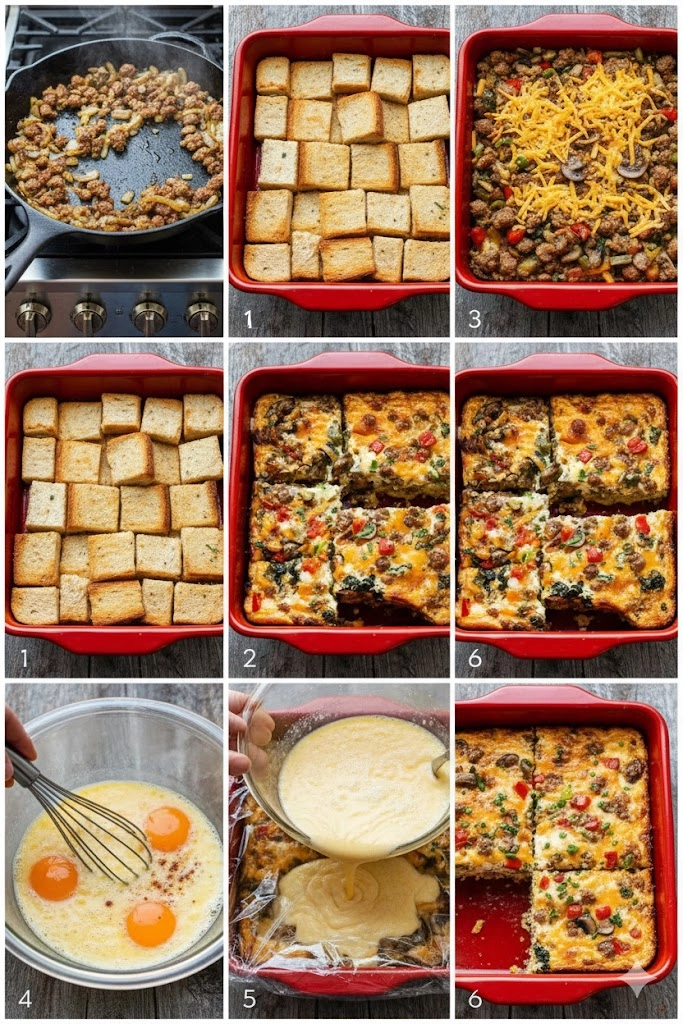
Preparing this dish is straightforward, but timing is key. You’ll cook the filling, assemble the layers, allow the bread to fully hydrate, and then bake.
- Sauté the Aromatics and Meat: Brown the sausage and cook down the onion and mushrooms, seasoning thoroughly.
- Cube and Layer the Bread: Cut the bread into uniform cubes and scatter them across the bottom of a greased nine-by-thirteen baking dish.
- Distribute the Filling: Spread the cooked sausage and vegetable mixture evenly over the bread layer.
- Create the Custard: Whisk together the eggs, dairy, and spices until light and homogenous.
- Soak and Chill: Pour the egg mixture over the layers, ensuring the bread is submerged, then cover and refrigerate for at least four hours, and up to one day.
- Preheat and Bake: Remove the casserole from the refrigerator, allow it to temper, and bake at three hundred fifty Fahrenheit until set and golden brown.
- Rest and Serve: Allow the finished casserole to cool briefly before slicing and garnishing.
Building Flavor and Texture: Detailed Step-by-Step Guidance
Success in a savory casserole hinges on managing moisture and building distinct layers of flavor.
Developing the Sausage and Vegetable Foundation
Begin by melting the unsalted butter in a large skillet over medium-high heat. Add the diced yellow onion and sliced mushrooms. The goal here is to draw out the moisture from the vegetables, concentrating their earthy flavor and preventing a watery casserole base. Sauté for about eight to ten minutes, or until the onions are translucent and the mushrooms have released their liquid and are starting to caramelize slightly around the edges. You should see a noticeable reduction in their volume.
Next, crumble in the breakfast sausage. Increase the heat slightly to help the sausage brown effectively. Break the meat apart with a spoon as it cooks. Once the sausage is cooked through and no pink remains, drain off any excess fat. Leaving too much grease will result in a heavy, soggy texture in the final dish. Return the skillet to the burner and stir in the dried sage, kosher salt, and black pepper. Cook for an additional one minute, allowing the heat to “bloom” the sage—this process releases its essential oils and maximizes the herbaceous aroma. Set this mixture aside to cool slightly while you prepare the egg custard and the baking dish.
Layering the Bread and Cheese
The type of bread you choose is vital. Standard sandwich bread can dissolve into a mushy texture. Opt for a slightly stale, heartier loaf like sourdough, Italian bread, or Challah. Cut the bread into consistent one-inch cubes; this uniformity ensures they absorb the custard at the same rate. Grease your nine-by-thirteen ceramic or glass baking dish thoroughly. Spread the bread cubes in a single, even layer across the bottom.
Now, distribute the cooled sausage and vegetable mixture across the bread base. It should be scattered evenly to ensure every slice gets a mix of ingredients. Top this layer with the freshly shredded sharp cheddar cheese. Shredding the cheese yourself is key—pre-shredded cheese contains anti-caking agents that inhibit smooth, creamy melting. The cheese needs to be distributed throughout the casserole, not just on top, to provide richness and structure.
The Perfect Egg Custard Blend
In a large bowl, whisk the twelve eggs until the yolks and whites are fully incorporated and slightly frothy. Whisking in air helps keep the final texture light. Gradually whisk in the whole milk and heavy cream. The combination of both dairy products provides structure (from the milk) and a creamy mouthfeel (from the heavy cream). Incorporate the Dijon mustard and cayenne pepper. The Dijon adds a savory depth that balances the richness of the sausage and cheese, and the cayenne offers a subtle back-end warmth that brightens the entire dish, without making it taste spicy. Season the custard very lightly with salt and pepper. Remember that the sausage and cheese are already salty, so you only need enough seasoning to lift the flavor of the eggs.
Carefully and slowly pour the egg custard over the bread, meat, and cheese layers. The goal is to fully saturate the bread without disturbing the layers too much. Use a spatula to gently press down on any floating bread cubes to ensure they are submerged and can properly absorb the liquid. This absorption step is the most critical element for achieving a tender, custardy interior rather than a dry, crumbly one.
The Essential Soaking and Baking Process
Cover the assembled casserole tightly with plastic wrap and transfer it to the refrigerator. Allow it to soak for a minimum of four hours—this time is non-negotiable for a superior texture. Overnight chilling is ideal, giving the bread full time to soften and integrate with the custard. When you are ready to bake, remove the casserole from the refrigerator thirty minutes before placing it in the oven. This tempering time helps the cold baking dish warm up slightly, preventing thermal shock and ensuring the casserole cooks evenly from the center out.
Preheat your oven to three hundred fifty Fahrenheit. Remove the plastic wrap and place the dish on the center rack. Bake for approximately fifty-five to sixty-five minutes. The casserole is done when the center is set (a toothpick or knife inserted near the center comes out clean), the edges are bubbling, and the top is a deep golden brown. The internal temperature should register at least one hundred sixty-five Fahrenheit. If the top begins to brown too quickly before the center is cooked, loosely tent the dish with aluminum foil.
Once removed from the oven, allow the Breakfast Casserole to rest for ten minutes before slicing. This brief cooling period allows the internal juices and custard to settle, ensuring clean slices and preventing the dish from collapsing when served. Garnish with fresh chives for a pop of color and fresh onion flavor.
Advanced Techniques for a Perfect Morning Casserole
These tips move beyond the basic steps and offer a deeper understanding of the culinary science behind this comforting dish.
- Stale Bread is Your Friend: Use day-old or slightly dried-out bread. If your bread is fresh, cut the cubes and spread them on a baking sheet; place them in a two hundred fifty Fahrenheit oven for about ten minutes to lightly dry them out. This prevents the bread from turning to a mushy paste when soaked.
- Manage Your Salt: As a high-sodium dish, control the salt. Do not salt the onion/mushroom mixture or the egg custard heavily. Instead, salt the sausage after draining the fat. The final salty punch will come from the aged, sharp cheddar cheese.
- The Tempering Trick: Do not place a stone-cold dish directly into a hot oven. The thirty-minute rest time on the counter before baking is crucial for even cooking. This pre-warming step drastically reduces the chances of having a dry exterior while the center remains unset.
- Use Freshly Grated Cheese: Pre-shredded cheese contains cellulose powder to prevent clumping. This additive creates a grainy texture when melted. Always grate a block of cheese for the smoothest, richest result.
- A Note on Liquids: Use a combination of whole milk and heavy cream. Using all milk can result in a watery custard, and using all cream can make the dish excessively rich and heavy. The fifty percent milk and twenty-five percent heavy cream ratio (with twenty-five percent egg volume) provides the perfect balance of richness and lightness.
- Avoid Over-Stirring: When you pour the custard over the ingredients, resist the urge to vigorously stir the contents of the dish. Gentle pressure is fine. Over-stirring forces the cheese and heavier fillings to the bottom, resulting in unevenly baked layers.
Expert Insights on Ingredient Swaps and Customization
This foundation is incredibly versatile. Adapt the proteins, vegetables, and seasonings to match your pantry or dietary needs.
- Switching the Protein: Substitute the bulk sausage with one pound of crumbled, fully cooked ground turkey, Italian sausage, or even diced pre-cooked ham steak. If using turkey, you will need to increase the seasoning (add one half teaspoon of smoked paprika and a pinch of fennel seed) to boost the flavor that is lost by removing the pork fat.
- Vegetable Overhaul: Swap mushrooms and onions for any combination of two cups of pre-cooked vegetables. Good options include sautéed bell peppers, spinach (squeezed dry to remove excess moisture), or blanched broccoli florets. Ensure all vegetables are cooked and dried before adding them.
- Cheese Selection: Replace the cheddar with Monterey Jack for a milder flavor and gooier texture, or Gruyère for a nutty, more sophisticated profile. For a little heat, incorporate pepper jack.
- A Dairy-Free Alternative: This requires a small adjustment to the texture. Use a combination of unsweetened oat milk and a vegan sour cream alternative (about one half cup) in place of the dairy components. The texture will be slightly less custardy but still satisfying.
Pairing and Presentation: Serving Your Masterpiece
While the casserole is a complete meal, a few simple additions can elevate the presentation and balance the richness.
- The Acidic Counterpart: A simple bowl of fresh, sliced fruit is mandatory. Offer bright, acidic fruits like grapefruit segments, tangerines, or a simple mixed berry salad tossed with a squeeze of fresh lime juice. The acid cuts through the richness of the eggs and cheese.
- Textural Contrast: Serve with a side of crispy home fries or hash browns if you desire more starch, or a light, peppery side salad (like arugula with a lemon vinaigrette) to add a fresh, bitter contrast to the savory notes.
- The Condiment Bar: Provide a selection of condiments for personalization. Hot sauce (like Cholula or Tabasco), a bowl of salsa verde, or a simple dollop of sour cream or Greek yogurt can enhance the flavor profile right before serving.

Essential Inquiries: Answering Your Breakfast Casserole Questions
We cover some of the most common concerns regarding the preparation, storage, and handling of this recipe.
Can I freeze the uncooked casserole?
It is not recommended to freeze this casserole before it is baked. The freezing and thawing process can cause the dairy custard to separate and create a grainy, unappealing texture when baked. You will get a much better result by baking it fresh after its overnight soak.
What is the best way to store and reheat leftovers?
Cool any leftover portion completely, then cut it into individual serving squares and place them in an airtight container. Refrigerate for up to four days. To reheat, the best method is to use a toaster oven or standard oven at three hundred fifty Fahrenheit for about ten to fifteen minutes until heated through and the edges are crispy again.
Can I make this dish without soaking it overnight?
You can, but the results will be noticeably different. If you are extremely pressed for time, allow a minimum soaking time of four hours. Without adequate soaking, the bread will remain partially dry and slightly chewy in the finished dish, and the custard will not set into a uniform, sliceable texture.
What causes the casserole to be watery or runny?
This is typically caused by two factors. The first is improper draining of the cooked sausage and vegetables; ensure you blot or drain off all excess fat and liquid. The second is using fresh vegetables like spinach without cooking them first—they release high amounts of water during baking. Always cook and thoroughly drain watery vegetables.
Is it possible to use non-dairy milk?
Yes, unsweetened almond milk or oat milk works well as a substitution for whole milk, though the final texture may be slightly softer due to the difference in protein and fat content. Avoid rice milk, which is too thin, and be sure to use a brand without added sugars to keep the flavor profile savory.
Nutritional Snapshot
| Nutrient | Amount per Serving |
| Calories | 385 kcal |
| Protein | 24 g |
| Carbs | 21 g |
| Fat | 22 g |
| Fiber | 1 g |
| Sugar | 4 g |
| Sodium | 590 mg |
Nutrition information is an estimate and may vary based on preparation and ingredients used.
PrintA Savory, Make-Ahead Breakfast Casserole for Any Morning

This is the ultimate, hearty make-ahead Breakfast Casserole recipe featuring savory sausage, sharp cheddar cheese, and tender, custardy bread. Perfect for feeding a crowd.
- Prep Time: 25 mins
- Cook Time: 65 mins
- Total Time: 1 hour 30 mins
- Yield: 12 servings 1x
- Category: Breakfast, Brunch
- Method: Baking
- Cuisine: American
Ingredients
1 pound breakfast sausage
1 large yellow onion, finely diced
2 cups fresh mushrooms, sliced
1 teaspoon dried sage
1 teaspoon kosher salt
1/2 teaspoon black pepper
1 tablespoon unsalted butter
12 large eggs
2 cups whole milk
1/2 cup heavy cream
1 teaspoon Dijon mustard
1/4 teaspoon cayenne pepper (optional)
8 slices hearty white bread or sourdough, cut into 1-inch cubes
2 cups (8 ounces) sharp cheddar cheese, freshly shredded
1/4 cup minced fresh chives, for garnish
Instructions
1. Sauté the Aromatics and Meat: Brown the sausage and cook down the onion and mushrooms in one tablespoon of butter, seasoning thoroughly with sage, salt, and pepper. Drain off any excess fat and allow to cool slightly.
2. Cube and Layer the Bread: Cut the hearty bread into uniform one-inch cubes and scatter them across the bottom of a greased nine-by-thirteen baking dish.
3. Distribute the Filling: Spread the cooled sausage and vegetable mixture evenly over the bread layer. Top with the two cups of freshly shredded cheddar cheese.
4. Create the Custard: Whisk together the eggs, whole milk, heavy cream, Dijon mustard, and cayenne pepper (if using) until light and homogenous.
5. Soak and Chill: Pour the egg mixture slowly over the layers, gently pressing down on the bread to submerge it. Cover tightly and refrigerate for a minimum of four hours, or preferably overnight.
6. Preheat and Bake: Remove the casserole from the refrigerator thirty minutes before baking. Preheat the oven to three hundred fifty Fahrenheit. Bake uncovered for fifty-five to sixty-five minutes.
7. Rest and Serve: The casserole is done when the center is set and the top is golden. Let it rest for ten minutes before slicing and garnishing with fresh chives.
Notes
Use day-old or lightly dried-out bread for the best results, as fresh bread can become mushy when soaked.
Do not salt the egg custard heavily; the main salt content comes from the sausage and cheese.
For the creamiest results, always grate your cheese fresh instead of using pre-shredded varieties.
Nutrition
- Serving Size: 1 slice
- Calories: 385
- Sugar: 4g
- Sodium: 590mg
- Fat: 22g
- Saturated Fat: 10g
- Fiber: 1g
- Protein: 24g