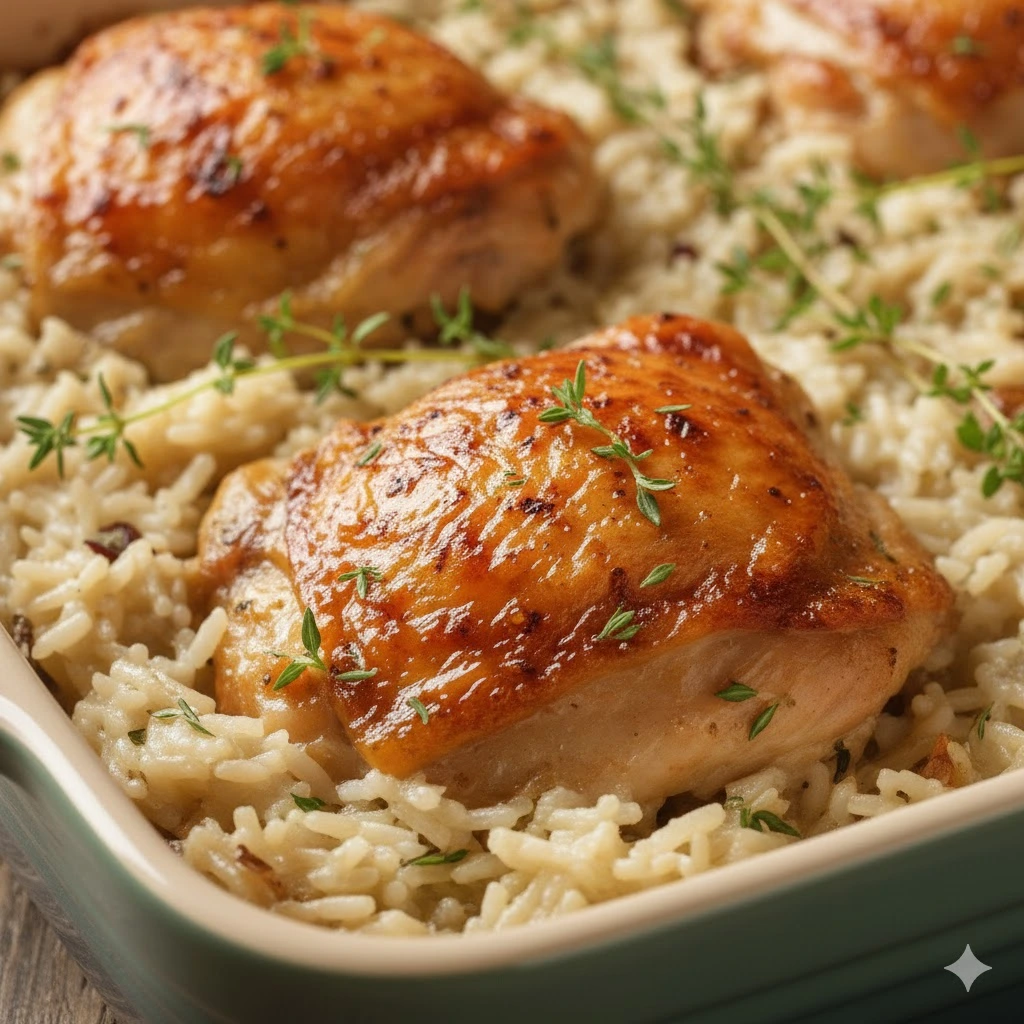

The world of Mexican cuisine is vast and wonderful, but few dishes hold the communal, comforting power of birria. While the more widely known version often features goat or beef, a deeply flavorful birria de pollo, or chicken birria, offers the same rich, smoky depth with a lighter texture and quicker cooking time. This is not just a meal; it is an experience rooted in tradition, characterized by the silky, vibrant red chile broth—the consommé—that is essential for dipping, sipping, and elevating every bite of the tender chicken. When seeking that perfect balance of heat, earthiness, and acidity, this recipe delivers a truly authentic rendition of birria de pollo, transforming simple chicken into a culinary centerpiece ideal for weekend gatherings or a celebratory dinner. It is a labor of love that rewards the cook with layers of complex flavor.
Table of Contents
Essential Components for the Birria Broth
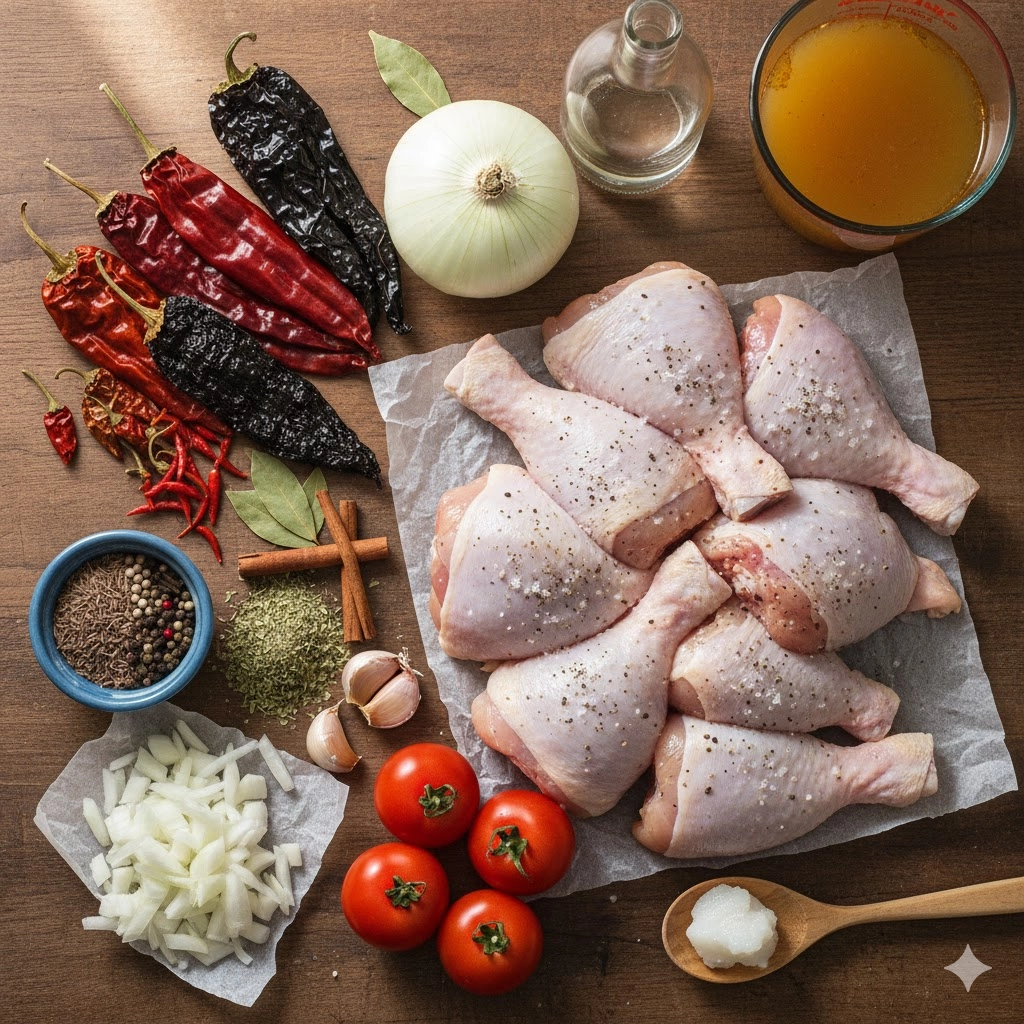
The true soul of birria is the deeply layered, aromatic broth, built upon a foundation of dried chiles and fragrant spices. Do not skimp on quality here; the freshness of the spices will dramatically impact the final taste.
The Chile Base
- 3 ounces (85 grams) dried Guajillo chiles, stemmed and seeded
- 1.5 ounces (43 grams) dried Pasilla chiles, stemmed and seeded
- 1 ounce (28 grams) dried Chile de Árbol, stemmed (adjust for spice preference)
- 3 cups (710 milliliters) chicken broth, plus more for simmering
- 1 cup (240 milliliters) water
- 1/4 cup (60 milliliters) distilled white vinegar
Aromatic and Protein Elements
- 3 pounds (1.36 kilograms) bone-in, skin-on chicken pieces (thighs and drumsticks recommended)
- 1 tablespoon olive oil or rendered lard
- 1 large white onion, roughly chopped
- 6 cloves garlic, peeled
- 4 Roma tomatoes, halved
Spices and Seasoning
- 1 tablespoon cumin seeds, toasted and ground
- 1 teaspoon dried Mexican oregano
- 1 teaspoon whole black peppercorns, toasted and ground
- 4 whole cloves, toasted and ground
- 1/2 teaspoon ground cinnamon
- 3 bay leaves
- 1 tablespoon salt, or to taste
- 1 teaspoon fresh ground black pepper, or to taste
A Step-by-Step Guide to Crafting Chicken Birria
Achieving the characteristic depth of flavor in this dish requires patience and attention to the details of developing the chile paste and slowly simmering the chicken.
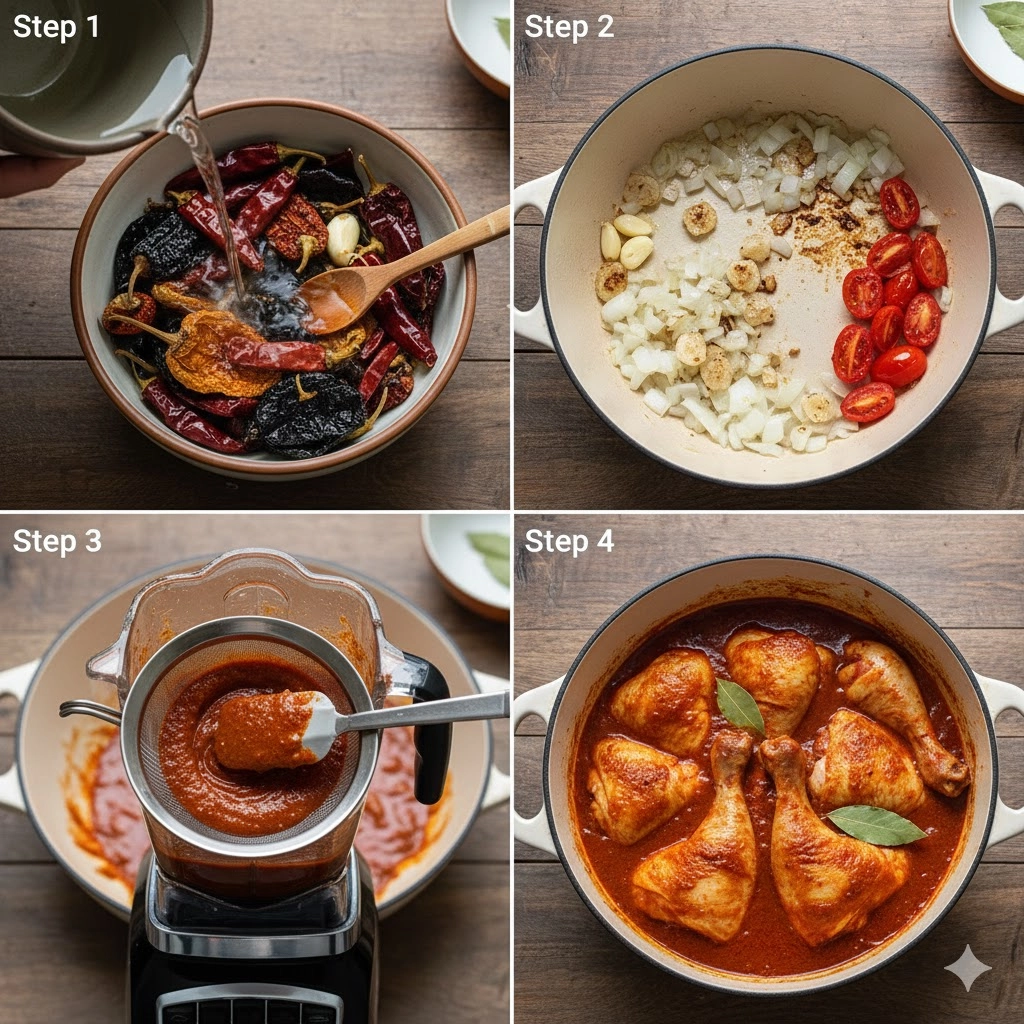
- Prepare and Soak the Chiles: Bring a small pot of water to a boil, remove from heat, and add the stemmed and seeded Guajillo, Pasilla, and Árbol chiles. Submerge them and allow them to soak for thirty minutes until they are soft and pliable. Drain the chiles, reserving one cup of the soaking liquid.
- Sauté Aromatics: Heat the olive oil or lard in a large pot or Dutch oven over medium heat. Add the chopped white onion and sauté until softened, about five minutes. Add the garlic cloves and halved tomatoes, cooking for another four to five minutes until the tomatoes begin to break down.
- Create the Chile Paste: Transfer the softened chiles, the sautéed aromatics, one cup of the reserved soaking liquid, the three cups of chicken broth, and the white vinegar to a blender. Add all the ground spices (cumin, oregano, peppercorns, cinnamon). Blend on high until completely smooth, which may take up to three minutes. Strain this mixture through a fine-mesh sieve into a large bowl to ensure a smooth, grit-free sauce.
- Brown the Chicken: Return the large pot to medium-high heat. Pat the chicken pieces very dry and season them generously with salt and pepper. Sear the chicken in batches, skin-side down first, until a deep golden-brown crust forms—about six to eight minutes per side. Remove the chicken and set aside.
- Simmer the Birria: Pour the strained chile sauce into the pot, scraping up any browned bits from the bottom. Bring the sauce to a gentle simmer. Return the browned chicken to the pot, nestling the pieces into the sauce. Add the bay leaves and enough extra chicken broth or water to barely cover the chicken.
- Slow Cook: Bring the liquid back to a gentle simmer, then reduce the heat to low, cover the pot tightly, and let the birria cook slowly for one hour and thirty minutes to two hours. The chicken should be fall-apart tender when checked with a fork.
- Rest and Shred: Remove the chicken from the pot and let it rest on a cutting board. Discard the bay leaves. Skim any excess fat from the surface of the broth (this is your consommé). Once cool enough to handle, remove the skin and bones and shred the chicken meat into bite-sized pieces.
- Final Assembly: Return the shredded chicken to the sauce and toss gently to coat. Adjust the seasoning of the broth with more salt if necessary. Serve hot.
Deep Dive into the Cooking Process
Understanding the sensory indicators and crucial checks at each stage ensures a rich, authentic flavor profile. The success of this birria de pollo hinges on developing complex flavors slowly.
The Essential Chile Soak
Do not rush the chile soaking step. The chiles must be fully rehydrated and softened to blend into a smooth paste. If the chiles resist blending easily, or the resulting paste feels gritty, it will negatively impact the final texture of the consommé. If you blend the sauce and it is still thin and watery, it means the chiles did not fully hydrate before blending. Ensure the chiles are totally submerged in the hot, but not boiling, water. The aroma should be fruity and slightly smoky.
Layering the Aromatics
The brief sauté of the onions, garlic, and tomatoes is critical. The onions should become translucent, signaling the release of their sweet compounds. The tomatoes should visibly soften and begin to caramelize slightly, lending a necessary acidity and depth of color to the final sauce. The goal is to cook the raw edge off the vegetables before they are blended into the powerful chile paste. A faint, sweet, vegetal aroma should fill your kitchen.
The Chile Paste—A Culinary Crossroads
Blending the chiles and aromatics with the toasted, ground spices is where the birria flavor profile is born. The blending must be intense and long enough to completely break down the chiles. Straining the sauce, while tedious, is non-negotiable for a truly refined consommé. If you skip this step, the final broth will be cloudy and may contain irritating chile skin fragments. As you strain, the bright red-orange hue of the sauce should intensify, and the aroma will be profoundly earthy, smoky, and spicy.
Slow and Steady Simmering
The slow cook time is essential not just for tenderizing the chicken but for marrying the flavors of the chile sauce into the protein. The chicken releases gelatin and natural savory juices, which thicken and deepen the consommé. The heat should be very low—just enough to sustain a gentle bubble—to prevent the chicken from becoming tough or the sauce from scorching on the bottom of the pot. The chicken is ready when it is falling off the bone and a gentle press with a fork causes it to completely break apart. The finished consommé should have a silky, slightly glossy appearance on the surface.
Expert Techniques for Birria Excellence
Elevate your finished dish with these focused professional insights to manage heat, texture, and flavor.
- Toast Your Spices: Briefly toast the cumin seeds, black peppercorns, and cloves in a dry skillet until fragrant before grinding. This simple step awakens their volatile oils, dramatically enhancing the depth and complexity of the sauce.
- Balance the Acidity: The addition of white vinegar is crucial. Birria needs a bright, slightly tangy note to cut through the richness of the chiles and chicken. Taste the finished consommé and add a tiny bit more vinegar or lime juice at the end if the sauce feels flat or too heavy.
- A Note on Skimming the Fat: The fat that rises to the top of the simmering broth is the manteca or chile oil. This richly flavored fat is an optional but traditional component, often reserved for dipping tortillas before making tacos, giving them an extra layer of flavor and a beautiful color. Skim it gently and reserve it if desired.
- Use Bone-In Meat: Always use bone-in chicken thighs and drumsticks. The bones and skin contribute essential gelatin and fat to the broth, which gives the final consommé body and a luxurious mouthfeel that boneless meat simply cannot replicate.
- The Rest is Non-Negotiable: After cooking, allow the chicken to rest briefly before shredding. This retains moisture in the meat. Similarly, letting the consommé cool slightly allows the flavors to settle and marry more fully.
Creative Paths: Birria Variations and Substitutions
This recipe is robust enough to allow for slight variations without sacrificing its authentic flavor profile.
- Spice Level Adjustment: For those who prefer a milder flavor, remove all the seeds and veins from the Chile de Árbol, or simply omit them. To increase the heat significantly, do not remove the seeds from the Árbol chiles, or add one or two Morita chiles to the soak.
- Different Protein Options: While this is a chicken recipe, the exact same chile sauce base can be used for beef chuck roast or goat shoulder. The main adjustment will be the cooking time; both beef and goat require three to four hours of slow simmering to achieve the same fall-apart tenderness.
- Smoky Flavor: For a noticeable smoky element, add one or two stemmed and seeded chipotle peppers in adobo sauce to the blender when making the chile paste. This adds a depth of smoke that complements the earthiness of the Guajillos.
- A Vegetarian Broth: To make a vegetarian version, substitute hearty vegetables like oyster mushrooms, chunks of sweet potato, and firm tofu for the chicken. Use a high-quality vegetable broth instead of chicken broth. Note that the texture of the finished consommé will be slightly thinner due to the lack of gelatin from the bones.
Perfect Pairings for Serving
Birria is highly versatile and serves beautifully in multiple formats, always accompanied by its rich broth.
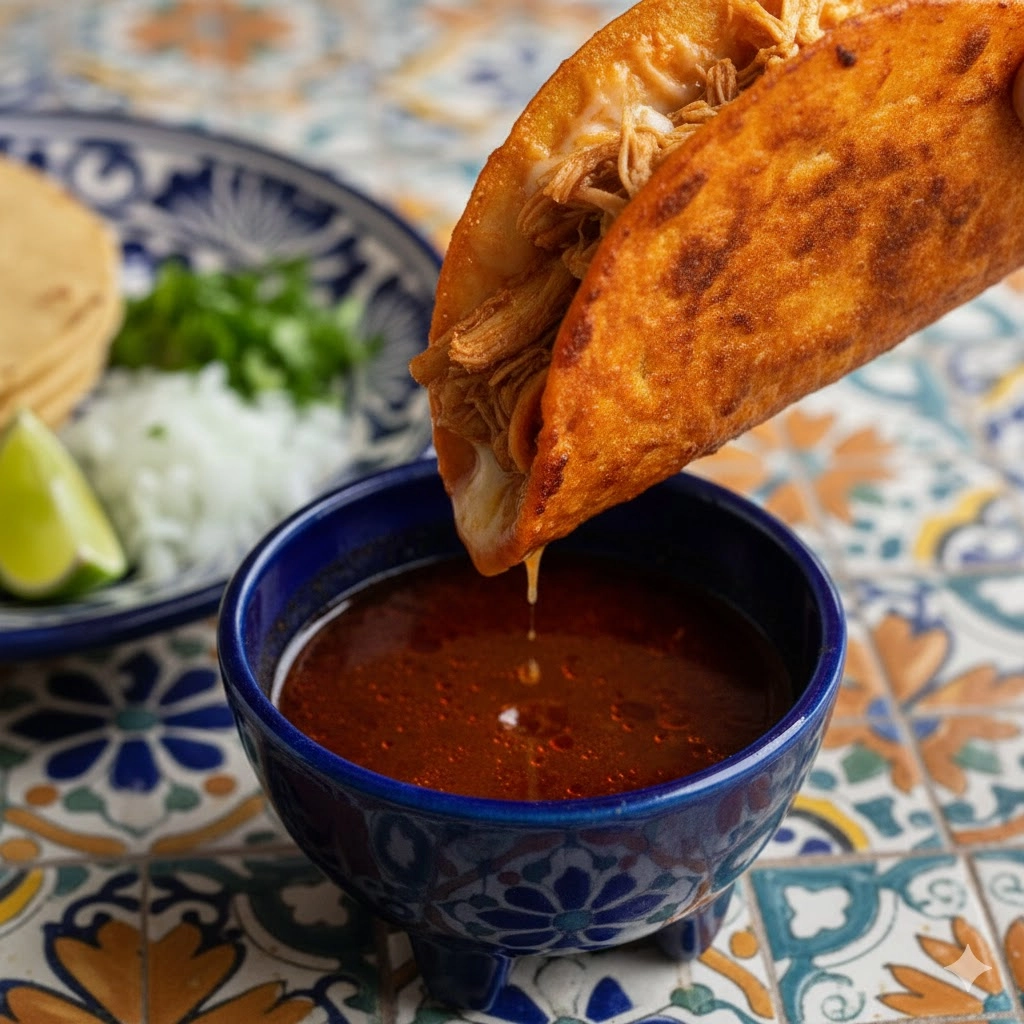
- Classic Birria Tacos: The most popular method. Use warm corn tortillas, a generous amount of shredded birria, chopped white onion, and cilantro. Serve a small bowl of the consommé alongside for dipping the tacos (the quesabirria style).
- Birria Burrito Bowls: A modern, customizable way to serve. Layer the chicken and a spoonful of the broth over white or Mexican rice, and top with black beans, avocado, and pickled red onions.
- Standalone Stew: Serve the birria in a deep bowl, like a hearty stew, with a side of warm corn tortillas for soaking up the rich broth. Garnish with a squeeze of fresh lime juice, finely diced onion, and fresh cilantro leaves.
- Complementary Sides: Pair the meal with a simple, refreshing cabbage slaw dressed with lime, or a side of traditional refried beans to balance the richness of the chicken and sauce.
Common Inquiries About Birria
What is the difference between Birria and Chile Colorado?
While both dishes use a red chile base, they differ significantly in complexity and application. Chile Colorado typically uses only one type of dried chile (often Guajillo or California) and focuses on a simpler, sweeter flavor profile used as a basic sauce. Birria, on the other hand, relies on a complex blend of several chiles, numerous toasted spices, and often vinegar for acidity, resulting in a much deeper, more layered flavor, which is traditionally a braise for meat.
Can I make the consommé ahead of time?
Absolutely. The chile base can be blended, strained, and refrigerated for up to four days or frozen for several months. The flavor often improves after a day in the refrigerator as the spices fully infuse into the liquid. You can then continue the recipe from the browning and simmering step when ready to cook.
Is Birria supposed to be extremely spicy?
Traditional birria has a warm, building heat, but it is not meant to be overwhelmingly spicy. The heat is primarily derived from the Chile de Árbol. The Guajillo and Pasilla chiles provide fruity and smoky notes, respectively, rather than intense heat. You have full control over the spice level by adjusting the quantity of the small, hot Árbol chiles in the recipe.
What is the best way to store and reheat leftovers?
Store the shredded birria and the consommé together in an airtight container in the refrigerator for up to four days. To reheat, gently warm the entire mixture on the stovetop over low to medium-low heat. Do not boil vigorously, as this can dry out the chicken. Add a splash of broth or water if the mixture seems too thick.
Estimated Nutritional Overview
The following table provides an approximation of the nutritional content for one serving of this birria preparation.
| Nutrient | Amount per Serving |
| Calories | 380 kcal |
| Protein | 45 g |
| Carbs | 15 g |
| Fat | 15 g |
| Fiber | 4 g |
| Sugar | 4 g |
| Sodium | 590 mg |
Important Note on Estimates
Nutrition information is an estimate and may vary based on preparation and ingredients used.
PrintAuthentic Birria de Pollo for a Rich, Flavorful Meal

The world of Mexican cuisine is vast and wonderful, but few dishes hold the communal, comforting power of birria. While the more widely known version often features goat or beef, a deeply flavorful birria de pollo, or chicken birria, offers the same rich, smoky depth with a lighter texture and quicker cooking time. This is not just a meal; it is an experience rooted in tradition.
- Prep Time: 35 mins
- Cook Time: 2 hours
- Total Time: 2 hours 35 mins
- Yield: 6 servings 1x
- Category: Main Dish, Stew
- Method: Stovetop, Simmering
- Cuisine: Mexican
Ingredients
3 ounces (85 grams) dried Guajillo chiles, stemmed and seeded
1.5 ounces (43 grams) dried Pasilla chiles, stemmed and seeded
1 ounce (28 grams) dried Chile de Árbol, stemmed (adjust for spice preference)
3 cups (710 milliliters) chicken broth, plus more for simmering
1 cup (240 milliliters) water
1/4 cup (60 milliliters) distilled white vinegar
3 pounds (1.36 kilograms) bone-in, skin-on chicken pieces (thighs and drumsticks recommended)
1 tablespoon olive oil or rendered lard
1 large white onion, roughly chopped
6 cloves garlic, peeled
4 Roma tomatoes, halved
1 tablespoon cumin seeds, toasted and ground
1 teaspoon dried Mexican oregano
1 teaspoon whole black peppercorns, toasted and ground
1/2 teaspoon ground cinnamon
3 bay leaves
1 tablespoon salt, or to taste
1 teaspoon fresh ground black pepper, or to taste
Instructions
1. Prepare and Soak the Chiles: Bring a small pot of water to a boil, remove from heat, and add the stemmed and seeded chiles. Submerge them and allow them to soak for thirty minutes until they are soft and pliable. Drain the chiles, reserving one cup of the soaking liquid.
2. Sauté Aromatics: Heat the olive oil or lard in a large pot over medium heat. Add the chopped white onion and sauté until softened, about five minutes. Add the garlic cloves and halved tomatoes, cooking for another four to five minutes until the tomatoes begin to break down.
3. Create the Chile Paste: Transfer the softened chiles, the sautéed aromatics, one cup of the reserved soaking liquid, the three cups of chicken broth, and the white vinegar to a blender. Add all the ground spices. Blend on high until completely smooth, then strain the mixture through a fine-mesh sieve into a large bowl.
4. Brown the Chicken: Return the large pot to medium-high heat. Season the chicken pieces generously. Sear the chicken in batches, skin-side down first, until a deep golden-brown crust forms—about six to eight minutes per side. Remove the chicken and set aside.
5. Simmer the Birria: Pour the strained chile sauce into the pot. Return the browned chicken to the pot, nesting the pieces into the sauce. Add the bay leaves and enough extra chicken broth or water to barely cover the chicken.
6. Slow Cook: Bring the liquid back to a gentle simmer, then reduce the heat to low, cover the pot tightly, and let the birria cook slowly for one hour and thirty minutes to two hours. The chicken should be fall-apart tender.
7. Rest and Shred: Remove the chicken and let it rest. Discard the bay leaves and skim any excess fat from the broth (consommé). Shred the chicken meat, discarding skin and bones.
8. Final Assembly: Return the shredded chicken to the sauce and toss gently to coat. Adjust the seasoning of the broth with more salt if necessary. Serve hot.
Notes
For truly authentic flavor, briefly toast your cumin seeds, black peppercorns, and cloves in a dry skillet until fragrant before grinding them.
Always use bone-in chicken thighs and drumsticks; the bones and skin add essential gelatin and richness to the final consommé.
The chile base can be blended, strained, and refrigerated for up to four days before cooking the chicken.
Nutrition
- Serving Size: 1 bowl
- Calories: 380
- Sugar: 4g
- Sodium: 590mg
- Fat: 15g
- Saturated Fat: 5g
- Unsaturated Fat: 8g
- Trans Fat: 0g
- Carbohydrates: 15g
- Fiber: 4g
- Protein: 45g
- Cholesterol: 120mg