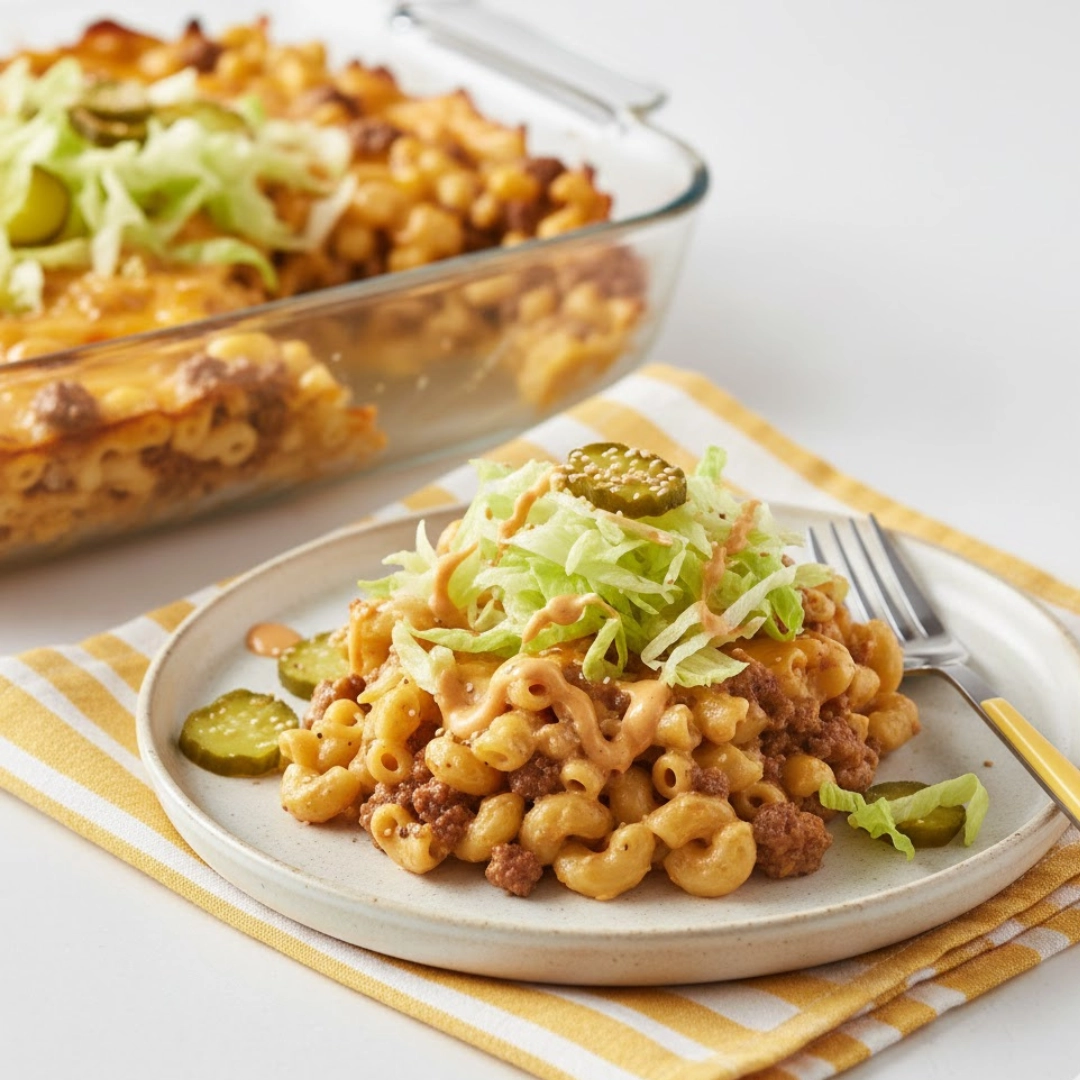
The concept of taking a classic handheld item and translating its core flavor profile into a baked dish is one of the great joys of home cooking. This is precisely what the Big Mac Casserole achieves. It captures the essential, nostalgic taste of the iconic fast-food sandwich—the tangy “special” sauce, the savory beef, the sharp pickle, and the melted cheese—and reinterprets it in a deeply satisfying, oven-baked format. It’s a playful and hearty dish, ideally suited for weeknight family dinners, casual gatherings, or any occasion when comfort and familiarity are the highest priorities. The casserole requires minimal complex technique, relying instead on high-impact flavor layering to deliver a fun and recognizable meal in every forkful.
Table of Contents
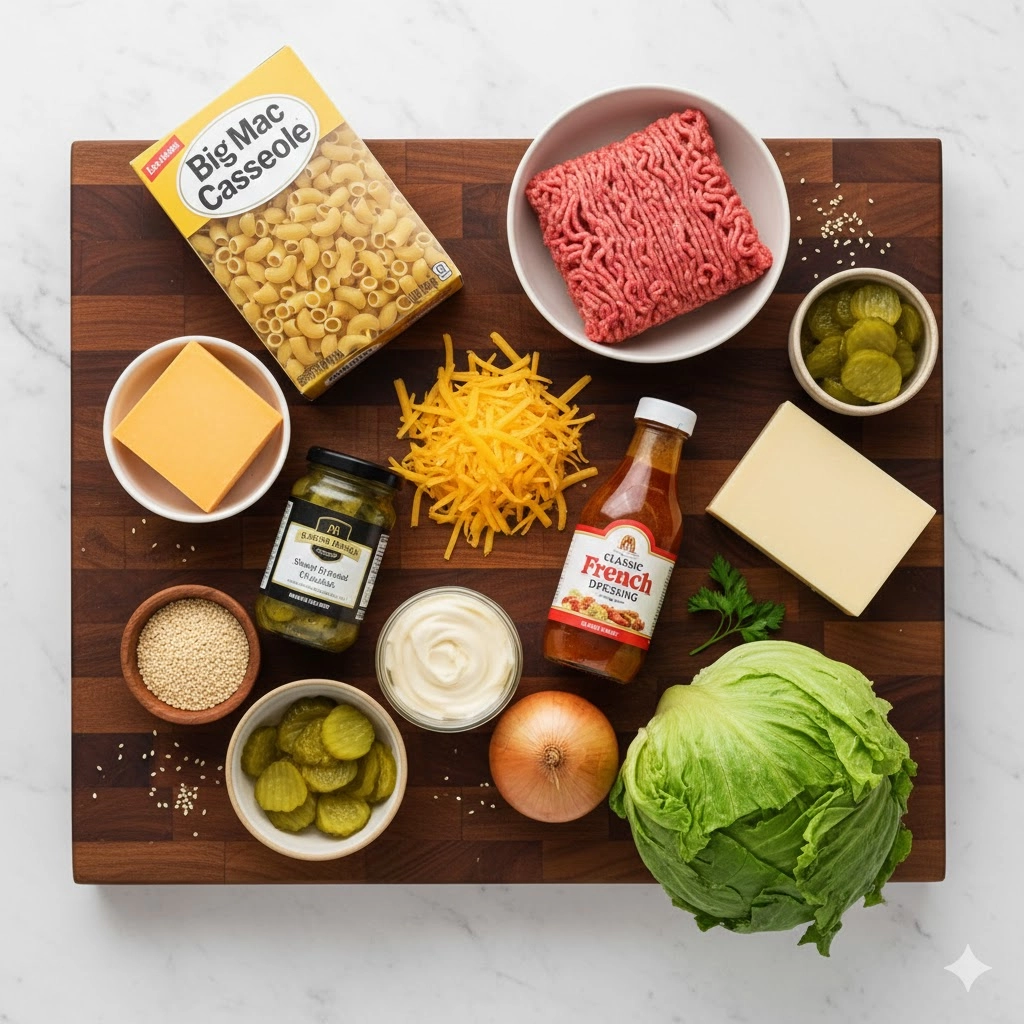
Primary Components of the Casserole
This recipe serves six to eight people.
For the Hearty Base
- One pound (450 grams) ground beef, 80/20 blend
- One medium yellow onion, finely diced
- One teaspoon kosher salt
- One half teaspoon black pepper
- Four cups (400 grams) cooked macaroni pasta (about two cups dry)
- Four tablespoons (56 grams) unsalted butter
- Four tablespoons all-purpose flour
- Two cups (475 ml) whole milk, warmed
The Essential “Special Sauce” Layer
- One cup (235 ml) mayonnaise (full-fat recommended)
- One quarter cup (60 ml) French dressing (classic, sweet style)
- Two tablespoons sweet pickle relish
- One tablespoon finely minced white onion
- One teaspoon white vinegar
- One half teaspoon smoked paprika
To Finish and Garnish
- One half cup (120 ml) beef broth
- One and one half cups (170 grams) shredded sharp cheddar cheese
- One half cup (55 grams) shredded Monterey Jack cheese
- One half cup dill pickle slices, plus extra for serving
- Two tablespoons sesame seeds, for sprinkling
- One half cup shredded iceberg lettuce, for garnish (added after baking)
Assembly Sequence
These high-level steps guide you through the process of creating the layered casserole.
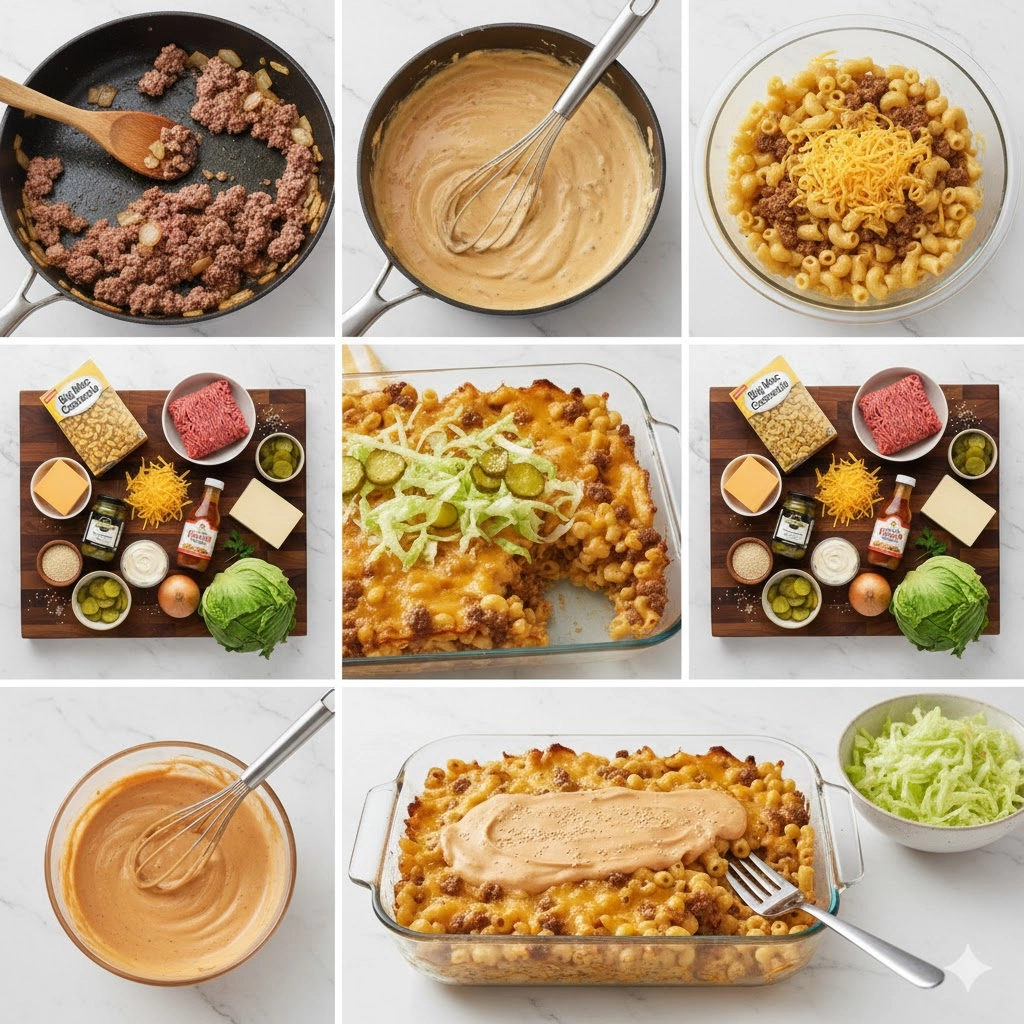
- Prepare the Pasta: Cook the macaroni according to package directions until just al dente. Drain immediately and set aside.
- Sauté the Aromatics and Meat: Brown the ground beef in a large skillet, breaking it up as it cooks. Once the meat is nearly done, add the diced yellow onion, and continue cooking until the beef is fully browned and the onion is softened. Drain off any excess fat.
- Construct the Sauce: In a separate medium saucepan, melt the butter over medium heat. Whisk in the flour to form a roux, cooking for one minute. Gradually whisk in the warm milk and beef broth until the mixture thickens into a creamy sauce. Season with salt and pepper.
- Create the Base Mixture: Stir the cooked macaroni, the browned beef and onion mixture, and one cup of the shredded cheddar and Monterey Jack cheeses into the creamy sauce until everything is evenly combined. Transfer this mixture into a buttered nine by thirteen inch baking dish.
- Mix the Topping: In a small bowl, combine all the “special sauce” ingredients: mayonnaise, French dressing, relish, minced onion, vinegar, and paprika. Stir thoroughly to combine.
- Layer and Bake: Evenly spread the assembled topping sauce over the pasta and meat base in the casserole dish. Arrange the dill pickle slices across the top, followed by the remaining cheese blend. Sprinkle with sesame seeds.
- Finalize the Baking: Bake the casserole in a preheated oven at three hundred seventy-five Fahrenheit for twenty to twenty-five minutes, or until the cheese is melted, bubbly, and lightly golden brown around the edges.
- Rest and Serve: Let the casserole rest for ten minutes after removing it from the oven. Just before serving, scatter the shredded iceberg lettuce over the top.
Detailed Technique and Flavor Development
Achieving the right texture and the signature flavor profile requires careful attention to a few key stages. This section breaks down the nuances of each part of the cooking process.
The Macaroni Foundation
The choice of macaroni is classic here, as its small tubular shape catches the creamy sauce perfectly. Crucially, cook the pasta to the point of being al dente, meaning it still has a slight resistance to the bite. Since the pasta will continue to cook and absorb liquid in the oven, starting it underdone prevents the final casserole from becoming mushy. After draining, a quick rinse in cold water can stop the cooking process completely, but make sure to shake off all excess moisture so the final sauce isn’t watery.
Building the Savory Beef Layer
When browning the ground beef, aim for some good, crispy caramelization on the edges of the meat. This depth of browning, known as the Maillard reaction, creates a much more profound, savory flavor—the base umami note that grounds the entire dish. Add the diced yellow onion toward the end of the browning process. Cooking the onion only until it is softened and translucent prevents it from burning while ensuring its natural sugars sweeten the beef mixture slightly. The act of draining the rendered fat is non-negotiable; too much fat will result in an oily casserole.
The Creamy Binder Sauce
The creamy binder is a simple Béchamel sauce, elevated with beef broth. Begin by melting the butter and whisking in the flour for one minute; this removes the raw flour taste. The gradual addition of warm milk is vital to prevent lumps. Pour in a small amount, whisk until smooth, then repeat. The addition of beef broth instead of just milk adds another layer of complexity, boosting the overall beef flavor without making the sauce heavy. The sauce should be noticeably thick before you incorporate the other ingredients, as the pasta will immediately begin soaking it up.
The Signature “Special Sauce” Topping
The topping is where the casserole truly mimics the sandwich. The combination of full-fat mayonnaise and French dressing provides the characteristic tangy-sweet and creamy base. Finely minced raw white onion adds a necessary sharp, pungent bite, while the sweet pickle relish and white vinegar deliver the essential sour and briny notes. A pinch of smoked paprika is a subtle but effective addition, providing a whisper of smoky depth that complements the beef. Mix this sauce separately and gently spread it over the base before the final cheese and pickle layer. This ensures the sauce remains distinct and doesn’t get fully cooked into the base mixture.
Achieving the Perfect Finish
When the casserole goes into the oven at three hundred seventy-five Fahrenheit, the goal isn’t to cook the ingredients—they are already cooked—but to melt the cheese, fully heat the entire dish through, and develop a beautiful, slightly browned crust. Look for the edges of the cheese to be bubbly and just beginning to turn golden. The sesame seeds sprinkled on top are an aesthetic and flavor touch, mimicking the bun texture and adding a mild nutty note to the crust. After baking, the mandatory ten-minute rest allows the internal heat to redistribute and the sauce to set slightly, preventing a soupy consistency when serving.
Essential Guidance for Best Results
These unique, recipe-specific insights will help elevate your casserole from a simple dish to an expertly executed meal.
- Pre-Shred Your Cheese: While buying pre-shredded cheese is convenient, it often contains starches that prevent the cheese from melting as smoothly. Shredding whole blocks of sharp cheddar and Monterey Jack yourself yields a creamier, richer cheese blanket on top.
- Emulsify the Topping Vigorously: The “special sauce” layer is an emulsion. Whisking the mayonnaise, dressing, and other components vigorously ensures they bind completely. This results in a stable, uniform sauce that won’t separate during the short baking time.
- The Power of Warm Milk: When making the Béchamel base, using milk that has been warmed slightly (either in the microwave or on the stovetop) dramatically reduces the chance of developing lumps when whisking it into the roux.
- Don’t Skip the Rest: The ten-minute rest is crucial. It’s not just to prevent burning your mouth; it allows the starch in the pasta to fully absorb the remaining liquid in the sauce, giving the casserole a cohesive, sliceable structure.
- Use Fresh Iceberg Lettuce: The hallmark of the sandwich is the cold, crisp texture of the shredded iceberg lettuce. Adding it after baking, just before serving, provides a cool, palate-cleansing contrast to the hot, rich casserole.
- Quality Dill Pickles: The flavor of the pickle is prominent in this dish. Use good quality, crunchy dill pickles—not sweet or bread-and-butter style—for the best approximation of the classic sandwich’s tang.
- Avoid Over-Baking: The target is twenty to twenty-five minutes. Over-baking can dry out the base and cause the top layer to scorch, losing the desired creamy texture.
Realistic Recipe Changes and Ingredient Swaps
Adaptations are part of the joy of casserole cooking. Here are a few ways to modify the Big Mac Casserole recipe to suit different tastes or dietary needs.
- Picky Eater Adaptation (No Pickles): If dill pickles are a point of contention, omit the slices on top. Instead, increase the sweet pickle relish in the “special sauce” layer by one teaspoon to maintain the essential pickle tang without the textural crunch.
- Protein Swap: This recipe works beautifully with ground turkey or ground chicken. If using a leaner protein, you may want to add one tablespoon of olive oil to the pan when browning to prevent the meat from sticking and drying out.
- Vegetable Inclusion: To add a slight nutritional boost, fold in one cup of frozen, thawed mixed vegetables (peas, carrots, corn) or one cup of finely chopped fresh mushrooms to the ground beef mixture during the last five minutes of cooking.
- Spicier Kick: Introduce a little heat by adding one half teaspoon of cayenne pepper to the beef and onion mixture, or by substituting the Monterey Jack cheese with Pepper Jack cheese.
- Gluten-Free Option: Simply substitute the all-purpose flour in the creamy binder sauce with an equal amount of gluten-free all-purpose flour blend, and use gluten-free elbow macaroni. The thickening process remains the same.

Ideas for Complementary Side Dishes
Since the Big Mac Casserole is rich, savory, and substantial, the best sides offer brightness, acidity, and freshness to cut through the richness.
- Crisp Green Salad: A simple side salad with mixed greens, thinly sliced red onion, and a light, bright vinaigrette (like a red wine vinegar and olive oil dressing) provides necessary acidity and a refreshing crunch.
- Tangy Coleslaw: A classic coleslaw, particularly one made with a vinegar-based or light mayonnaise dressing, offers a cool, slightly sour counterpoint that mimics the sharpness of the pickles.
- Oven-Baked French Fries or Sweet Potato Fries: For a complete fast-food experience, serve the casserole alongside a batch of thin, oven-baked fries. The salty, crispy exterior and starchy interior are a natural match.
Frequently Asked Questions
Can I prepare this casserole ahead of time?
Yes, you can prepare the base mixture (cooked pasta, beef, and creamy sauce) and assemble it in the baking dish up to twenty-four hours in advance. Cover it tightly and refrigerate. Do not add the “special sauce” topping, the cheese, or the pickles until right before baking. You may need to add ten to fifteen minutes to the total baking time if cooking straight from the refrigerator.
What is the best way to store leftovers?
Store any leftover casserole in an airtight container in the refrigerator for up to three days. To reheat, you can use the microwave, but for the best texture, reheat individual portions in an oven or toaster oven at three hundred fifty Fahrenheit until heated through.
Can I freeze the Big Mac Casserole?
It is generally not recommended to freeze this casserole once fully assembled, as the creamy sauce can sometimes separate, and the macaroni pasta may become overly soft upon thawing and reheating. If you must freeze, freeze only the prepared beef and onion mixture, then make the sauce and pasta fresh before assembly.
What can I substitute for the French dressing?
If French dressing is unavailable or undesirable, you can create a similar flavor profile by mixing one quarter cup of ketchup with one half teaspoon of brown sugar and one teaspoon of white vinegar, then adding this mixture to the mayonnaise base.
Why is the lettuce added after baking?
The shredded iceberg lettuce is added after baking and resting because it is a textural element meant to be cold and crisp. If baked, the lettuce would wilt, turn brown, and lose its essential crunch, compromising the final authentic sandwich-inspired texture.
Nutritional Information
| Nutrient | Amount per Serving |
| Calories | 585 kcal |
| Protein | 34 g |
| Carbs | 48 g |
| Fat | 31 g |
| Fiber | 3 g |
| Sugar | 7 g |
| Sodium | 690 mg |
Disclaimer
Nutrition information is an estimate and may vary based on preparation and ingredients used.
PrintBig Mac Casserole: The Ultimate Retro Dinner
This nostalgic Big Mac Casserole translates the iconic sandwich’s tangy, cheesy, and savory flavors into a hearty, oven-baked pasta dish.
- Prep Time: 20 mins
- Cook Time: 25 mins
- Total Time: 45 mins
- Yield: 8 servings 1x
- Category: Main Dish
- Method: Baked
- Cuisine: American
Ingredients
1 pound ground beef, 80/20 blend
1 medium yellow onion, finely diced
1 teaspoon kosher salt
1/2 teaspoon black pepper
4 cups cooked macaroni pasta
4 tablespoons unsalted butter
4 tablespoons all-purpose flour
2 cups whole milk, warmed
1 cup mayonnaise (full-fat recommended)
1/4 cup French dressing
2 tablespoons sweet pickle relish
1 tablespoon finely minced white onion
1 teaspoon white vinegar
1/2 teaspoon smoked paprika
1/2 cup beef broth
1 1/2 cups shredded sharp cheddar cheese
1/2 cup shredded Monterey Jack cheese
1/2 cup dill pickle slices
2 tablespoons sesame seeds
1/2 cup shredded iceberg lettuce
Instructions
1. Cook the macaroni according to package directions until just al dente. Drain and set aside.
2. Brown the ground beef and diced yellow onion in a large skillet. Drain off excess fat.
3. In a separate saucepan, make the creamy sauce by melting butter, whisking in flour, and gradually adding warm milk and beef broth until thickened. Season.
4. Stir the cooked pasta, beef mixture, and one cup of the cheese into the creamy sauce to create the base. Transfer to a buttered 9×13 inch baking dish.
5. Combine mayonnaise, French dressing, relish, minced onion, vinegar, and paprika for the “special sauce” topping. Spread evenly over the base.
6. Arrange the dill pickle slices, remaining cheese, and sesame seeds over the topping.
7. Bake at three hundred seventy-five Fahrenheit for twenty to twenty-five minutes, until bubbly.
8. Let the casserole rest for ten minutes, then garnish with shredded iceberg lettuce just before serving.
Notes
Shred cheese yourself for the smoothest melt.
The 10-minute rest is crucial for the casserole to set and prevent a soupy texture.
Store leftovers tightly covered in the refrigerator for up to three days.
Nutrition
- Serving Size: 1/8 of casserole
- Calories: 585
- Sugar: 7g
- Sodium: 690mg
- Fat: 31g
- Saturated Fat: 14g
- Unsaturated Fat: 15g
- Trans Fat: 0g
- Carbohydrates: 48g
- Fiber: 3g
- Protein: 34g
- Cholesterol: 105mg