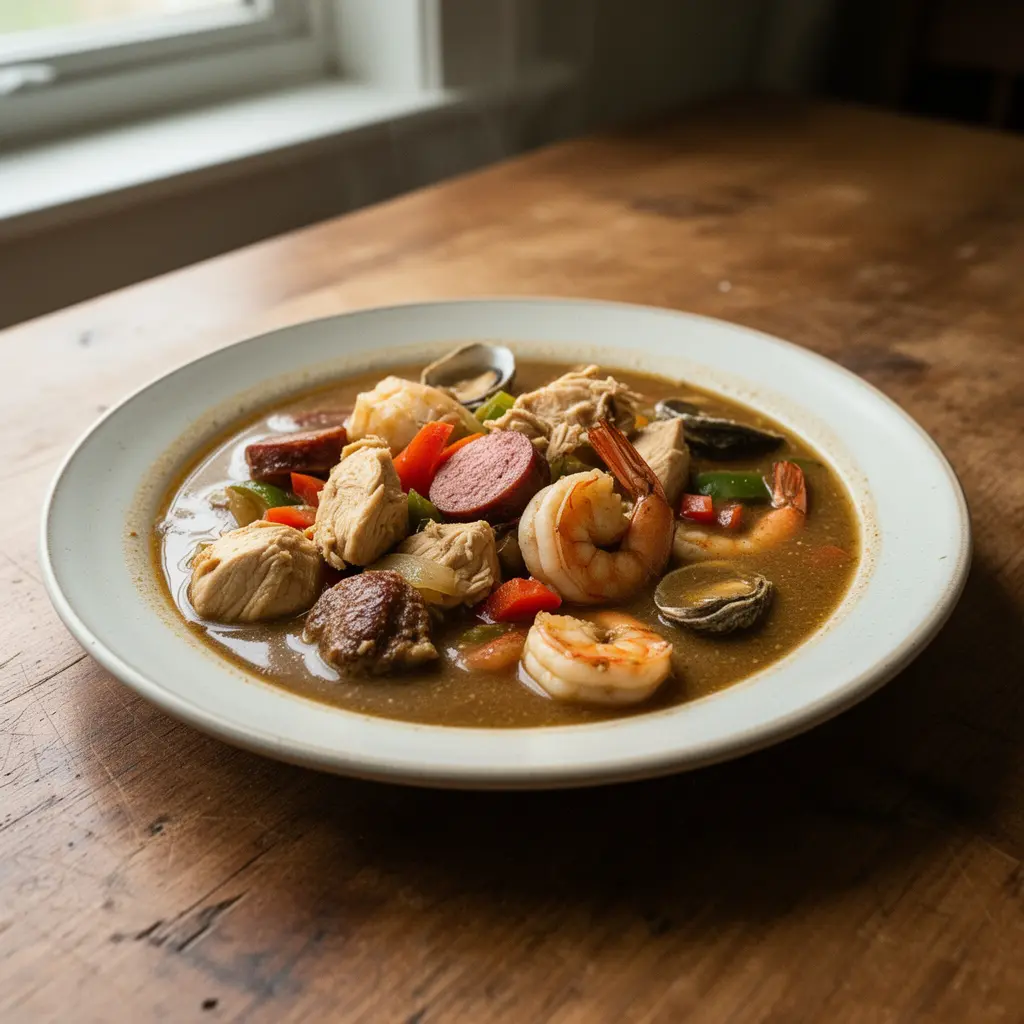
The Mississippi Delta. Land of soulful blues, sprawling cotton fields, and food that hugs your soul. My journey into the heart of gumbo began not in some fancy culinary institute, but in my grandmother’s humble kitchen in New Orleans. Her name was Evangeline, and her gumbo was legendary. The aroma alone could draw folks in from blocks away. I remember standing on a rickety stool, barely tall enough to see over the stovetop, mesmerized as she coaxed the roux to a perfect mahogany brown, a color she always described as “just before you think it’s burnt, cher.” She’d hum old Creole melodies while adding layer upon layer of flavor, each ingredient a testament to the richness of the land and the bounty of the sea. The crackle of andouille, the sweetness of shrimp, the gentle heat of cayenne pepper – it was a symphony of tastes that danced in your mouth. Evangeline’s gumbo wasn’t just a meal; it was a story, a history lesson, a love letter passed down through generations. I learned more than just cooking techniques in that kitchen; I learned the importance of patience, the power of tradition, and the undeniable magic of food made with love. When she finally handed me her worn and stained recipe book, I knew it wasn’t just a collection of instructions, but a sacred trust. This gumbo, this recipe, is my attempt to share a piece of that magic with you.
Ingredient Deep Dive
| Ingredient | Quantity | Notes |
|---|---|---|
| Chicken Thighs, boneless, skinless | 2 lbs | Cut into 1-inch pieces. |
| Andouille Sausage | 1 lb | Sliced into 1/2-inch rounds. |
| Shrimp, peeled and deveined | 1 lb | Medium size, tails removed. |
| Crawfish Tails | 1 lb | Optional, can substitute with extra shrimp. |
| Oysters | 1 pint | Optional, shucked, liquor reserved. |
| All-Purpose Flour | 1 cup | For the roux, unbleached preferred. |
| Vegetable Oil | 1 cup | For the roux, can use canola or peanut oil. |
| Onion | 1 large | Diced. |
| Bell Pepper | 1 large | Diced, green or a mix of colors. |
| Celery | 3 stalks | Diced. |
| Garlic | 4 cloves | Minced. |
| Chicken Broth | 8 cups | Low sodium preferred. |
| Crushed Tomatoes | 1 (28 oz) can | Un-drained. |
| Okra | 1 lb | Sliced into 1/2-inch rounds, fresh or frozen. |
| Creole Seasoning | 2 tbsp | Such as Tony Chachere’s. |
| Cayenne Pepper | 1/2 tsp | Adjust to taste for desired heat. |
| Dried Thyme | 1 tsp | |
| Dried Oregano | 1 tsp | |
| Bay Leaves | 2 | |
| Hot Sauce | To taste | Louisiana-style hot sauce is recommended. |
| Green Onions | 1/2 cup | Chopped, for garnish. |
| Fresh Parsley | 1/4 cup | Chopped, for garnish. |
| Cooked White Rice | For serving. |
Substitutions & Swaps
Sometimes you don’t have every ingredient on hand, or you might want to tweak the recipe to your liking. Here are some substitutions that will work:
- Chicken: Boneless, skinless chicken breasts can be used, but they may become slightly drier than thighs. Cut them into similar sized pieces for even cooking. Turkey sausage can be substituted for chicken.
- Andouille Sausage: If Andouille isn’t available, chorizo (Spanish or Mexican) can offer a similar smoky, spicy flavor. Alternatively, use smoked kielbasa.
- Shrimp: Any type of shellfish can work in place of shrimp: crab meat or lobster could be nice.
- Crawfish Tails: If crawfish tails are unavailable, simply increase the amount of shrimp. Imitation crab meat is NOT recommended
- Oysters: If you dislike oysters, simply omit them.
- Vegetable Oil: Canola oil, peanut oil, or even melted butter can be used for the roux, although the flavor profile will change slightly with butter.
- Creole Seasoning: If you can’t find Creole seasoning blend a mixture of paprika, garlic powder, onion powder, dried oregano, dried thyme, cayenne pepper, and black pepper.
- Okra: If you really don’t like okra, you can leave it out. Filé powder (ground sassafras leaves) added at the end will help thicken the gumbo, but it has a distinct flavor not everyone enjoys.
- Chicken Broth: Seafood stock will enhance the seafood flavors. Beef broth can be used in a pinch.
- Bell Pepper: Celery can be used in place of bell pepper.
Equipment Guide
To make a great gumbo, you’ll need the right tools:
- Large, Heavy-Bottomed Pot or Dutch Oven: Essential for even heat distribution, especially for the roux. A 6-quart or larger pot is ideal.
- Wooden Spoon or Heat-Resistant Spatula: For stirring the roux and preventing sticking.
- Cutting Board: A sturdy cutting board for chopping vegetables and meats.
- Sharp Knife: A good chef’s knife will make prep work easier.
- Measuring Cups and Spoons: For accurate ingredient measurement.
- Tongs: For handling meat and seafood.
- Ladle: For serving the gumbo.
Step-by-Step Walkthrough
1. Make the Roux: In the large, heavy-bottomed pot, heat the vegetable oil over medium heat. Gradually whisk in the flour, ensuring there are no lumps.
2. Cook the Roux: Reduce the heat to medium-low and cook the roux, stirring constantly, for 30-45 minutes, or until it reaches a dark mahogany brown color. This step requires patience and constant attention to prevent burning.
3. Add the Vegetables: Once the roux is the desired color, add the diced onion, bell pepper, and celery (the “holy trinity”). Stir well to coat the vegetables in the roux and cook for 8-10 minutes, or until the vegetables are softened.
4. Add Garlic and Spices: Add the minced garlic, Creole seasoning, cayenne pepper, dried thyme, and dried oregano. Stir and cook for another minute, until fragrant.
5. Add Chicken and Broth: Add the chicken pieces and stir to coat with the roux and vegetables. Pour in the chicken broth and crushed tomatoes. Add the bay leaves. Bring the mixture to a boil, then reduce the heat to low, cover, and simmer for at least 1 hour, or up to 2 hours, stirring occasionally.
6. Add Andouille and Okra: After simmering for an hour or more, add the sliced andouille sausage and okra. Stir well and continue to simmer, covered, for another 30 minutes.
7. Add Seafood: In the last 15-20 minutes of cooking, add the shrimp, crawfish tails (if using), and oysters (if using). Stir gently to combine. Cook until the shrimp is pink and cooked through and the oysters are plump.
8. Season and Serve: Remove the bay leaves. Taste the gumbo and adjust the seasoning as needed with salt, pepper, and hot sauce.
9. Garnish and Serve: Serve hot over cooked white rice. Garnish with chopped green onions and fresh parsley.
Expert Tips & Troubleshooting
- The Roux is Key: Don’t rush the roux! This is the foundation of the gumbo’s flavor and color. Keep stirring constantly to prevent burning. If it burns, you must start over.
- Don’t Overcrowd the Pot: If you’re doubling the recipe, consider using two pots to ensure even cooking and browning.
- Adjust the Spice Level: Control the heat by adjusting the amount of cayenne pepper and hot sauce. Taste frequently and add more as needed.
- Too Thin? If your gumbo is too thin, remove the lid during the last 30 minutes of cooking to allow some of the liquid to evaporate. Alternatively, add a slurry of cornstarch and water (1 tablespoon cornstarch mixed with 2 tablespoons cold water) to thicken it.
- Too Thick? If your gumbo is too thick, add a little more chicken broth until you reach the desired consistency.
- Salty? If your gumbo is too salty, add a peeled potato cut into chunks. Simmer for about 30 minutes, then remove the potato before serving. The potato will absorb some of the excess salt.
- Oysters: When adding the oysters, include their liquor for added flavor.
- Cutting Bitter Flavor: Adding a pinch of baking soda can help to neutralize any bitterness that may develop from the roux or other ingredients.
Flavor Variations
Gumbo is endlessly adaptable. Here are some ways to customize the flavor:
- Smoked Meats: Add smoked ham hocks or smoked turkey legs for a deeper smoky flavor.
- Duck Gumbo: Substitute duck confit for the chicken for a richer, gamey flavor.
- Vegetarian Gumbo: Omit the meats and seafood and add more vegetables such as sweet potatoes, zucchini, and eggplant. Use vegetable broth instead of chicken broth.
- Seafood Focus: For a stronger seafood flavor, use seafood stock instead of chicken broth and add more variety of seafood. Crab, lobster, and scallops are all fantastic additions.
- Spicier Gumbo: Increase the amount of cayenne pepper or add a few dashes of your favorite hot sauce. You could also use a spicier andouille sausage.
- Tomato Base: Some gumbo recipes omit the crushed tomatoes altogether. Experiment to see what you prefer.
Storage & Reheating
- Storage: Allow the gumbo to cool completely before transferring it to an airtight container. Store in the refrigerator for up to 3-4 days.
- Freezing: Gumbo freezes well. Transfer cooled gumbo to freezer-safe containers or freezer bags. Remove as much air as possible to prevent freezer burn. Freeze for up to 2-3 months. Note that the texture of the okra may change slightly after freezing and thawing.
- Reheating: Thaw frozen gumbo in the refrigerator overnight. Reheat gently in a pot over medium-low heat, stirring occasionally, until heated through. Add a little extra chicken broth if needed to loosen the consistency. You can also reheat gumbo in the microwave in 1-2 minute intervals, stirring in between, until heated through.
FAQ Section
Q: Can I make gumbo ahead of time?
A: Absolutely! In fact, gumbo often tastes even better the next day as the flavors have more time to meld together. Prepare it a day or two in advance and store it in the refrigerator.
Q: Do I have to use okra?
A: No, you don’t have to use okra. Okra acts as a thickening agent and adds a distinct flavor, but if you dislike it, you can omit it. Consider using filé powder as a thickening agent.
Q: How spicy should the gumbo be?
A: The spiciness is entirely up to your preference. Start with a small amount of cayenne pepper and hot sauce and add more to taste.
Q: Can I use pre-cooked chicken?
A: Yes, you can use pre-cooked chicken, such as rotisserie chicken. Add it during the last 30 minutes of cooking time to prevent it from drying out.
Nutrition Information
Note: Nutrition information is an estimate and may vary based on specific ingredients and portion sizes.
| Nutrient | Amount per Serving (approximate) |
|---|---|
| Calories | 450-550 |
| Total Fat | 25-35g |
| Saturated Fat | 8-12g |
| Cholesterol | 150-200mg |
| Sodium | 800-1200mg |
| Total Carbohydrate | 20-30g |
| Dietary Fiber | 5-8g |
| Sugars | 5-8g |
| Protein | 30-40g |
Disclaimer: This recipe is intended for informational purposes only. Individual results may vary depending on cooking skills, ingredient quality, and other factors. Always practice safe food handling techniques and consult with a healthcare professional or registered dietitian for personalized dietary advice.