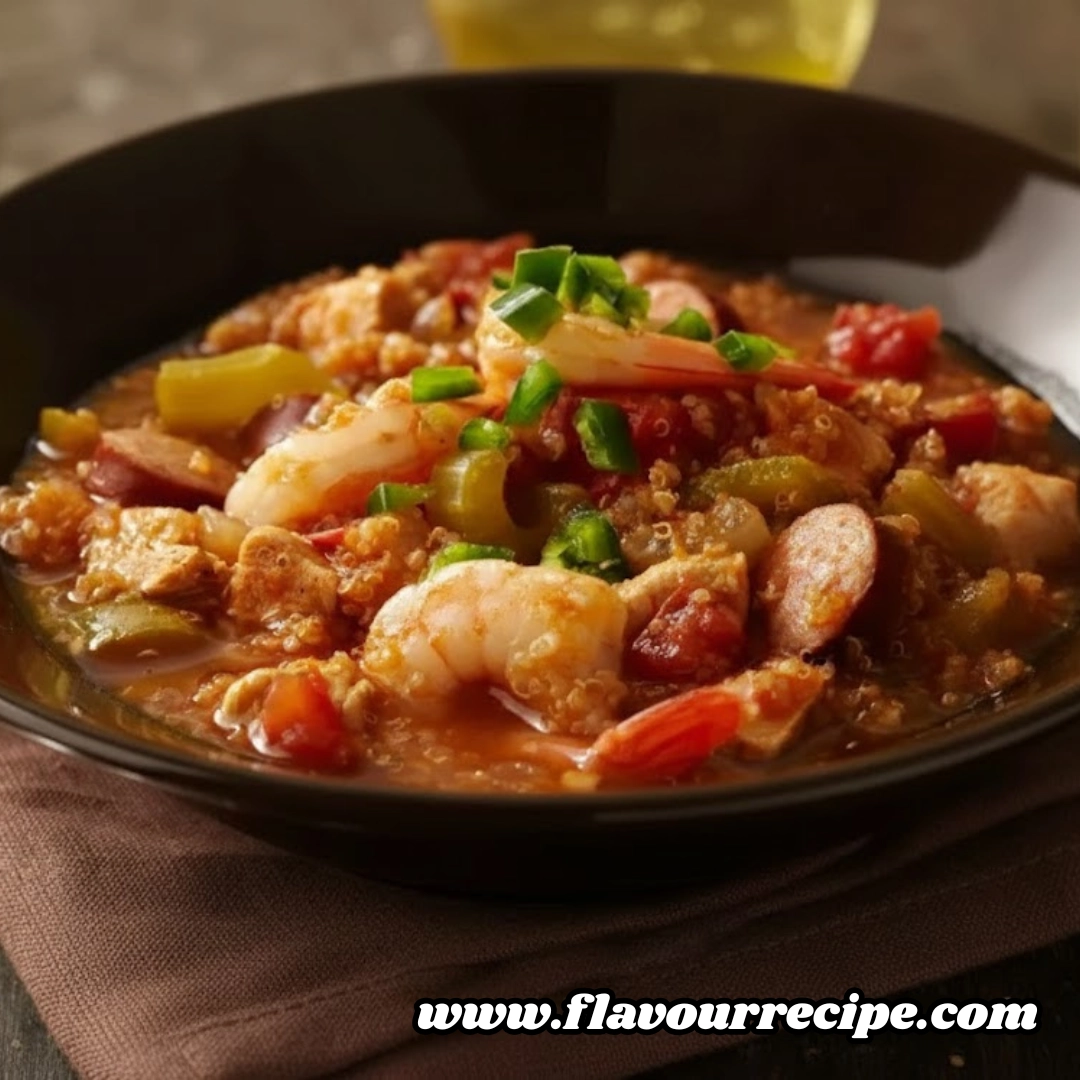
Few dishes in the American culinary landscape carry as much history, soul, and sheer aromatic power as a bubbling pot of jambalaya. This iconic one-pot wonder is more than just a meal; it is a celebration of Louisiana culture, blending French, Spanish, and African influences into a harmonious symphony of spice and texture. Whether you are looking for a comforting weeknight dinner or a centerpiece for a festive gathering, this specific recipe stands out as the gold standard. It strikes a masterful balance between the smoky depth of andouille sausage, the tender juiciness of seasoned chicken, and the complex, earthy undertones of the Cajun holy trinity. By following this method, you will transform simple pantry staples like white rice and canned tomatoes into a robust, world-class feast that tastes like it spent all day simmering on a back porch in the Bayou.
Table of Contents
The Essential Ingredients for Success
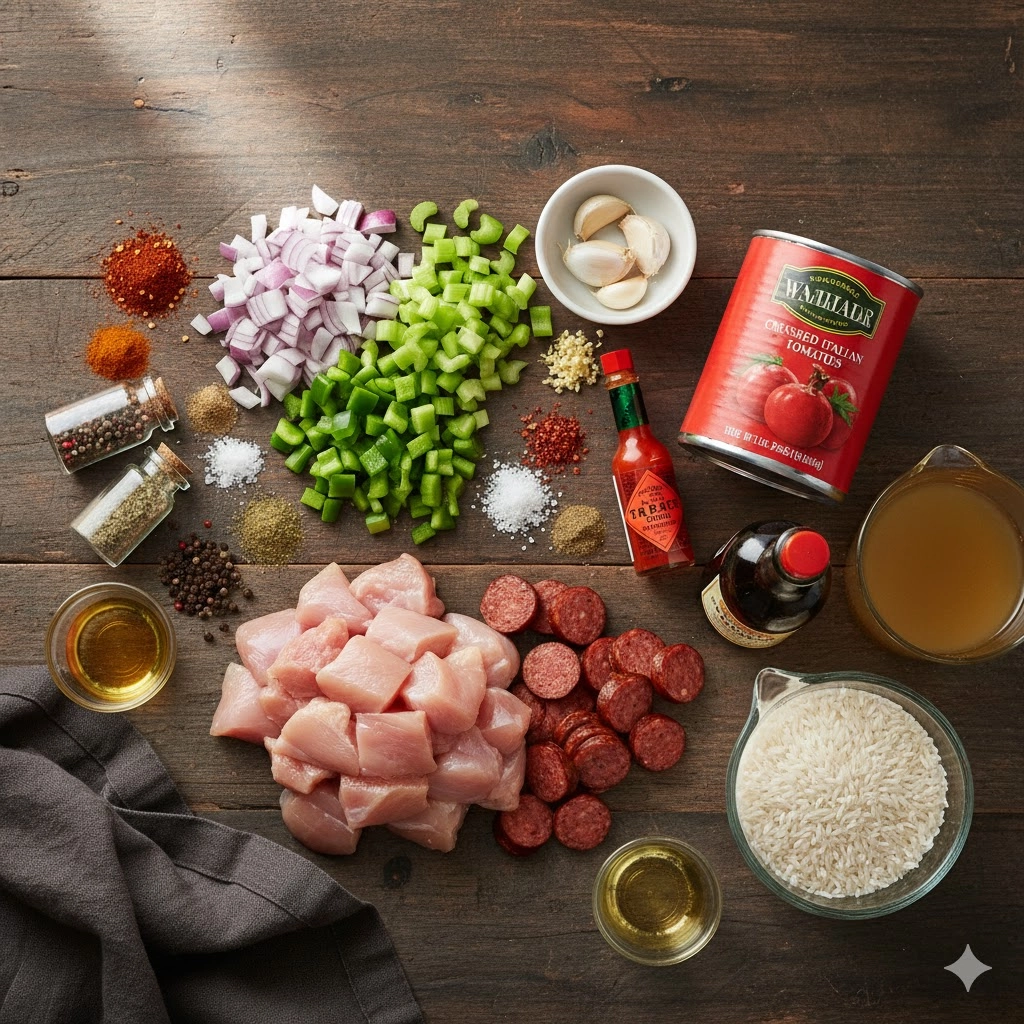
To create the best jambalaya possible, you must start with a foundation of quality ingredients. This recipe relies on a specific combination of proteins and aromatics that build layers of flavor.
- 2 tablespoons peanut oil, divided
- 1 tablespoon Cajun seasoning
- 10 ounces andouille sausage, sliced into rounds
- 1 pound boneless skinless chicken breasts, cut into 1-inch pieces
- 1 medium onion, diced
- 1 small green bell pepper, diced
- 2 ribs celery, diced
- 3 cloves garlic, minced
- 1 (16 ounce) can crushed Italian tomatoes
- 1/2 teaspoon red pepper flakes
- 1/2 teaspoon ground black pepper
- 1 teaspoon salt, or to taste
- 1/2 teaspoon hot pepper sauce
- 2 teaspoons Worcestershire sauce
- 1 teaspoon file powder
- 1 1/4 cups uncooked white rice
- 2 1/2 cups chicken broth
Preparation Instructions
Step 1: Begin by gathering all your ingredients and prepping your vegetables. Having your “mise en place” ready is crucial for a smooth cooking process.
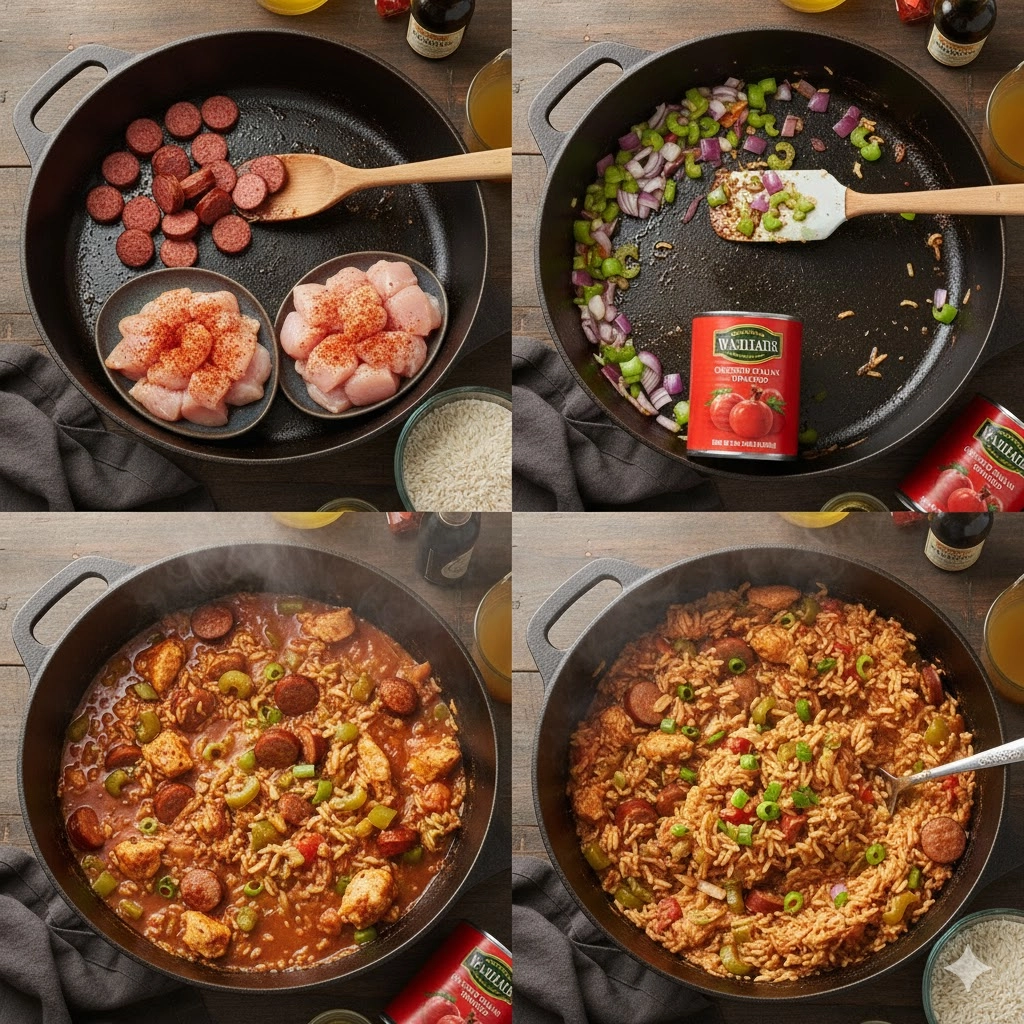
Step 2: Place a large, heavy Dutch oven over medium heat. Add 1 tablespoon of the peanut oil. While the oil heats, toss your sliced andouille sausage and 1-inch chicken breast pieces with the Cajun seasoning until evenly coated.
Step 3: Add the seasoned andouille sausage to the hot oil. Sauté the rounds until they are beautifully browned and have released some of their smoky fat. Use a slotted spoon to remove the sausage from the pot, leaving the drippings behind, and set the meat aside in a bowl.
Step 4: Pour the remaining 1 tablespoon of peanut oil into the pot. Add the seasoned chicken pieces and sauté them until they are lightly browned on all sides. You do not need to cook them all the way through at this stage. Use the slotted spoon to remove the chicken and set it aside with the sausage.
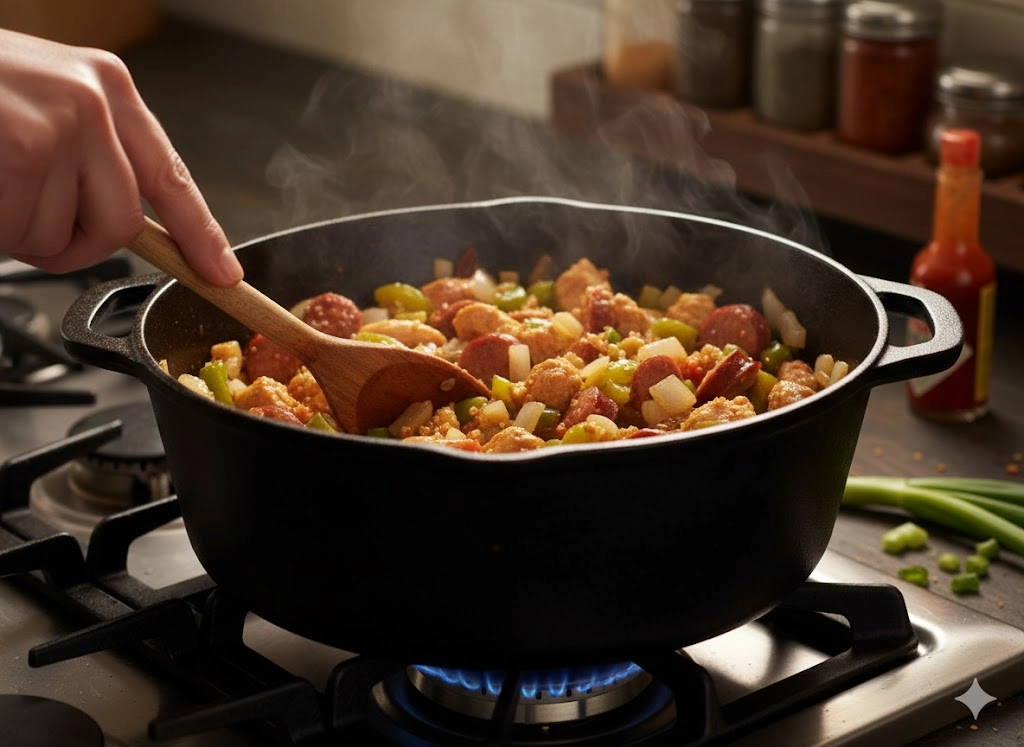
Step 5: In the same pot, which is now filled with flavorful browned bits and oil, add the diced onion, green bell pepper, and celery. Stir in the minced garlic. Sauté this mixture, stirring frequently, until the vegetables are tender and the onions are translucent.
Step 6: Stir in the crushed Italian tomatoes. Season the vegetable base with the red pepper flakes, black pepper, salt, hot pepper sauce, Worcestershire sauce, and file powder. Mix everything thoroughly to ensure the spices are well-distributed.
Step 7: Return the browned chicken and sausage to the pot, including any juices that may have collected in the bowl. Stir well and allow the mixture to cook together for 10 minutes, stirring occasionally to prevent sticking.
Step 8: Pour in the uncooked white rice and the chicken broth. Give the pot one final, good stir to make sure the rice is submerged and not clumped together.
Step 9: Bring the liquid to a rolling boil. Once boiling, immediately reduce the heat to a low simmer. Cover the pot and let it cook for 20 to 25 minutes. You will know it is finished when all the liquid has been absorbed and the rice is tender.
Step 10: Remove from heat, fluff with a fork, and serve your masterpiece while it is piping hot.
Masterful Step-by-Step Details and Kitchen Science
Creating a truly magnificent jambalaya requires more than just following steps; it requires an understanding of how flavors develop in a single pot. The process begins with the “fond,” which is the collection of browned bits at the bottom of the Dutch oven. When you sauté the andouille sausage first, you are not just browning meat; you are rendering out the fat that is infused with smoked paprika, garlic, and cayenne. This fat becomes the medium through which every other ingredient is flavored.
The use of peanut oil is intentional here. Because it has a higher smoke point than butter or olive oil, it allows you to get a hard sear on the chicken and sausage without burning. This sear is what provides the deep, umami-rich character that distinguishes a professional jambalaya from a bland rice dish. When you move to the vegetable stage, the moisture from the onions and peppers helps to deglaze the pot, lifting those flavorful browned bits off the bottom and incorporating them into the vegetable base.
The “Holy Trinity”—onion, celery, and bell pepper—is the backbone of Louisiana cooking. By sautéing them until tender, you are mellowing their sharp raw flavors into a sweet, savory foundation. Adding the garlic at the very end of this sauté ensures that its delicate aromatic compounds do not burn, which would otherwise introduce a bitter note to the final dish.
Once the crushed tomatoes and spices are added, a ten-minute simmer before the rice is introduced allows the acidity of the tomatoes to soften and the spices to “bloom.” File powder, made from dried and ground sassafras leaves, is a critical addition here. It acts as both a subtle thickener and an earthy flavor enhancer. Adding the rice and broth last ensures that the grains absorb the seasoned liquid directly, puffing up with flavor rather than just water. The 20 to 25-minute simmer is a period of transformation where the liquid, starch, and fat emulsify into a rich, cohesive sauce that coats every grain of rice.
Unique Culinary Insights for the Perfect Pot
To elevate this dish to the next level, consider the importance of the pot itself. A heavy-bottomed Dutch oven, preferably cast iron, is the best vessel for jambalaya. It provides even heat distribution, which is vital when cooking rice. Thin pots often have “hot spots” that can scorch the rice at the bottom before the top is cooked through. If you find your rice is sticking, resist the urge to stir it constantly during the final simmering phase; stirring releases starch, which can make the jambalaya gummy rather than fluffy.
Another secret to a successful jambalaya is the quality of the chicken broth. While store-bought broth is perfectly acceptable, using a low-sodium version allows you to have more control over the salt levels, especially since Cajun seasonings and andouille sausage already contain a significant amount of sodium.
If you prefer a “drier” jambalaya, ensure your measurements for the rice and broth are exact. The ratio of 1 1/4 cups of rice to 2 1/2 cups of broth is calculated to ensure the rice is perfectly cooked without leaving excess liquid. If you live at a high altitude, you may need to add an extra splash of broth and increase the simmering time by a few minutes, as water boils at a lower temperature and evaporates more quickly.
Modifications and Substitutions
While this recipe is designed to be the “Best Jambalaya” in its traditional form, there is room for personal adjustment. If you cannot find andouille sausage, a good quality smoked kielbasa or Spanish chorizo can work as a substitute, though the flavor profile will shift slightly. Andouille provides a specific peppery kick that is hard to replicate exactly.
For those who want to experiment with the protein, you can substitute the chicken breasts with chicken thighs. Thigh meat is higher in fat and more resistant to overcooking, making it incredibly tender in a long simmer. If you want to add seafood, such as shrimp, do not add it at the beginning. Instead, tuck raw, peeled shrimp into the top of the rice during the last 5 to 7 minutes of simmering. This prevents the shrimp from becoming rubbery.
If you are looking for a more “Creole” style jambalaya, which typically includes more tomato, you could increase the amount of crushed tomatoes, but be sure to reduce the chicken broth slightly to compensate for the extra moisture. Conversely, if you want a “Cajun” or brown jambalaya, you could omit the tomatoes entirely and focus on browning the meats even more deeply to achieve a rich, dark color.
Harmonious Accompaniments and Serving Suggestions
Jambalaya is famously a “one-pot meal,” meaning it contains your protein, starch, and vegetables all in one bowl. However, the right side dishes can provide a necessary contrast to the heat and richness of the dish. A classic pairing is golden sweet cornbread. The slight sweetness of the bread acts as a foil to the spicy Cajun seasoning and hot sauce.
For a fresh element, a simple green salad with a tart vinaigrette can help cleanse the palate between bites of the dense, savory rice. If you want to lean into the Southern theme, consider serving the jambalaya alongside Cajun corn and bacon maque choux or a side of slow-cooked Southern-style crowder peas. These sides add texture and variety to the plate.
When serving, a sprinkle of fresh green onions or chopped parsley on top adds a pop of color and a fresh, herbal note that cuts through the smokiness of the sausage. A few extra dashes of hot pepper sauce on the table are a must for those who want to customize their own level of heat.
Deep-Dive Frequently Asked Questions
What is the best way to reheat leftovers without the rice getting mushy?
The most effective way to reheat jambalaya is on the stovetop over low heat. Add a tablespoon or two of chicken broth or water to the pan to help loosen the rice and provide steam, then cover it with a lid. This method gently warms the meat and rice through without making the grains soggy, which can sometimes happen in the microwave.
Can I use brown rice instead of white rice in this recipe?
You can use brown rice, but it requires a significant adjustment to the liquid ratios and cooking time. Brown rice typically needs more liquid and can take 45 to 50 minutes to fully soften. If you choose this route, you may need to add about 1/2 cup more chicken broth and monitor the pot closely to ensure it doesn’t dry out before the rice is tender.
Why is my jambalaya rice still crunchy after the allotted time?
Crunchy rice is usually a result of the heat being too high, causing the liquid to evaporate before the rice can absorb it, or the lid not being tight enough to trap the steam. If this happens, add another 1/4 cup of broth, stir gently, and continue simmering with a very tight lid for an additional 5 to 10 minutes on the lowest possible heat setting.
Is it possible to make this dish in a slow cooker?
While you can make jambalaya in a slow cooker, the texture of the rice is often better when prepared on the stove. If you use a slow cooker, sauté the meats and vegetables in a pan first to develop flavor, then transfer everything except the rice to the slow cooker. Add the rice during the last hour of cooking to prevent it from turning into a mushy consistency.
A Legacy of Flavor in Your Kitchen
This jambalaya recipe is more than just a collection of ingredients; it is a gateway to the vibrant, communal spirit of Louisiana cooking. By taking the time to brown your meats properly and allowing the “holy trinity” to soften into a fragrant base, you are creating a dish that carries depth and history. It is a hearty, comforting, and deeply satisfying meal that only gets better the next day as the spices continue to meld. Whether you are a seasoned chef or a home cook looking to expand your repertoire, this one-pot wonder is sure to become a recurring favorite at your dinner table.
Nutritional Profile and Information
The following values are estimates based on standard serving sizes for this specific recipe.
| Nutrient | Amount Per Serving |
| Calories | 465 |
| Total Fat | 20 grams |
| Saturated Fat | 6 grams |
| Cholesterol | 73 milligrams |
| Sodium | 1633 milligrams |
| Total Carbohydrate | 42 grams |
| Dietary Fiber | 3 grams |
| Total Sugars | 2 grams |
| Protein | 28 grams |
| Vitamin C | 20 milligrams |
| Calcium | 67 milligrams |
| Iron | 4 milligrams |
| Potassium | 666 milligrams |
Dietary and Health Disclaimer
The nutritional information provided here is for educational purposes only and is calculated based on the specific ingredients listed in this recipe. Actual values may vary depending on the brands used and any modifications made during the cooking process. If you are following a strictly controlled diet for medical reasons, such as a low-sodium or low-calorie plan, please consult with a healthcare professional or a registered dietitian before consuming.
PrintThe Absolute Best Jambalaya: A Deep Dive into Cajun and Creole Perfection

This iconic one-pot jambalaya blends smoky andouille sausage, tender chicken, and the ‘holy trinity’ of vegetables into a bold, spice-infused rice dish.
- Prep Time: 20 mins
- Cook Time: 45 mins
- Total Time: 1 hr 5 mins
- Yield: 6 servings 1x
- Category: Main Course
- Method: Stovetop
- Cuisine: Cajun/Creole
Ingredients
2 tablespoons peanut oil, divided
1 tablespoon Cajun seasoning
10 ounces andouille sausage, sliced into rounds
1 pound boneless skinless chicken breasts, cut into 1-inch pieces
1 medium onion, diced
1 small green bell pepper, diced
2 ribs celery, diced
3 cloves garlic, minced
1 (16 ounce) can crushed Italian tomatoes
1/2 teaspoon red pepper flakes
1/2 teaspoon ground black pepper
1 teaspoon salt, or to taste
1/2 teaspoon hot pepper sauce
2 teaspoons Worcestershire sauce
1 teaspoon file powder
1 1/4 cups uncooked white rice
2 1/2 cups chicken broth
Instructions
1. Heat 1 tablespoon peanut oil in a large Dutch oven. Season sausage and chicken with Cajun seasoning. Sauté sausage until browned, then remove.
2. Add remaining oil and sauté chicken until lightly browned. Remove and set aside.
3. In the same pot, sauté onion, bell pepper, celery, and garlic until tender.
4. Stir in crushed tomatoes, red pepper flakes, black pepper, salt, hot sauce, Worcestershire sauce, and file powder.
5. Add chicken and sausage back to the pot. Cook for 10 minutes, stirring occasionally.
6. Stir in rice and chicken broth. Bring to a boil.
7. Reduce heat to low, cover, and simmer for 20 to 25 minutes until liquid is absorbed.
8. Fluff with a fork and serve hot.
Notes
Use a heavy-bottomed Dutch oven for even rice cooking.
Do not lift the lid during the final simmering phase.
Store leftovers in an airtight container for up to 4 days.
Nutrition
- Serving Size: 1 bowl
- Calories: 465
- Sugar: 2g
- Sodium: 1633mg
- Fat: 20g
- Saturated Fat: 6g
- Unsaturated Fat: 14g
- Trans Fat: 0g
- Carbohydrates: 42g
- Fiber: 3g
- Protein: 28g
- Cholesterol: 73mg