
Mastering a foundational pastry dough is a rite of passage for any home baker, yet it often feels like a daunting task. The beauty of this Best Ever Pie Crust lies in its absolute simplicity, relying on just four basic pantry staples to create a result that is remarkably tender and structural. While butter-based crusts are famous for their flavor, a shortening-based dough offers a superior level of plasticity and a shatteringly crisp texture that remains stable even under the weight of heavy fruit fillings or intricate lattice designs.
This particular method prioritizes temperature control and minimal handling to ensure the gluten remains relaxed. Whether you are preparing a savory pot pie for a quiet family dinner or a decorative fruit galette for a festive gathering, this dough provides the reliable canvas you need. By following a few specific techniques regarding the integration of fats and hydration, you can achieve a professional-grade finish that avoids the common pitfalls of shrinkage or toughness.
Table of Contents
Ingredients
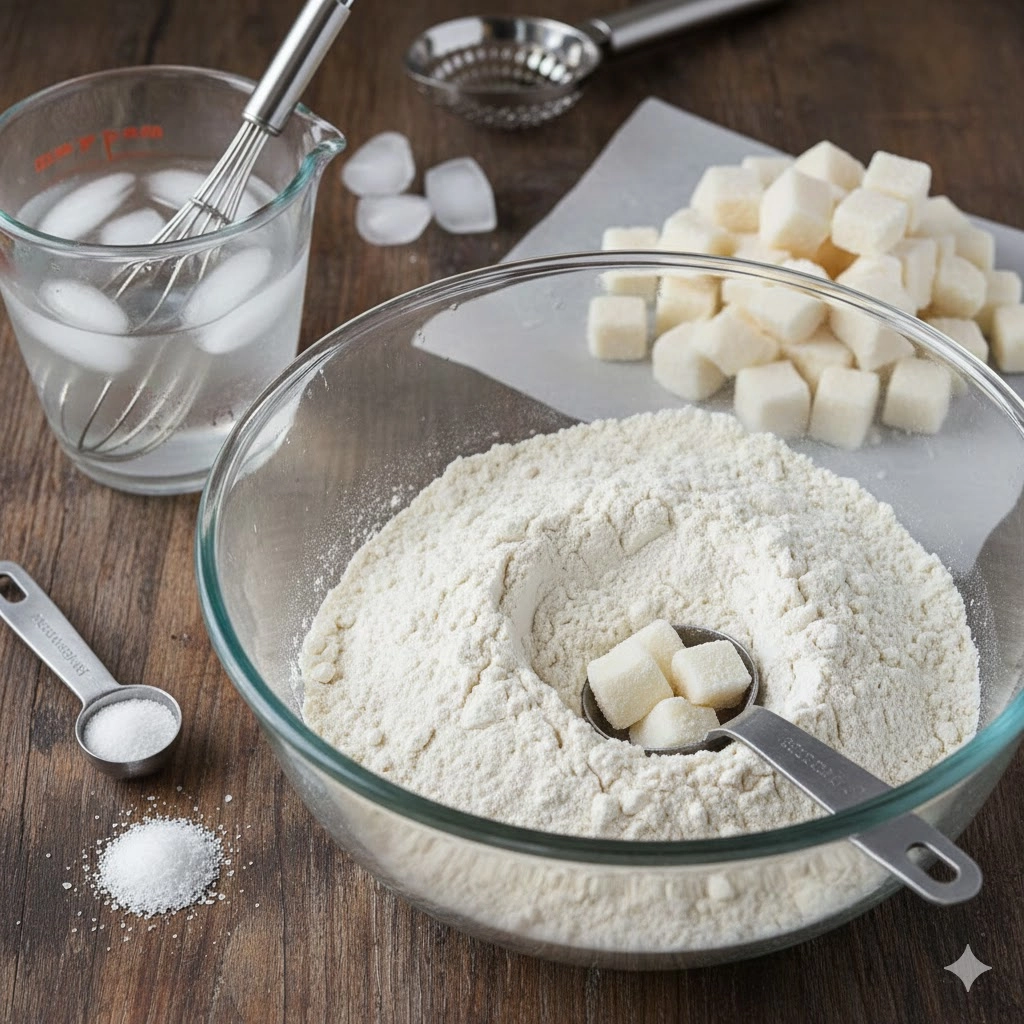
- All-Purpose Flour: 2 cups (approximately 250 grams), leveled carefully.
- Salt: 1 teaspoon of fine sea salt or table salt.
- Vegetable Shortening: 1 cup, diced into small cubes and chilled in the freezer for thirty minutes.
- Ice Water: One-half cup of water, kept at a near-freezing temperature, used sparingly as needed.
Instructions
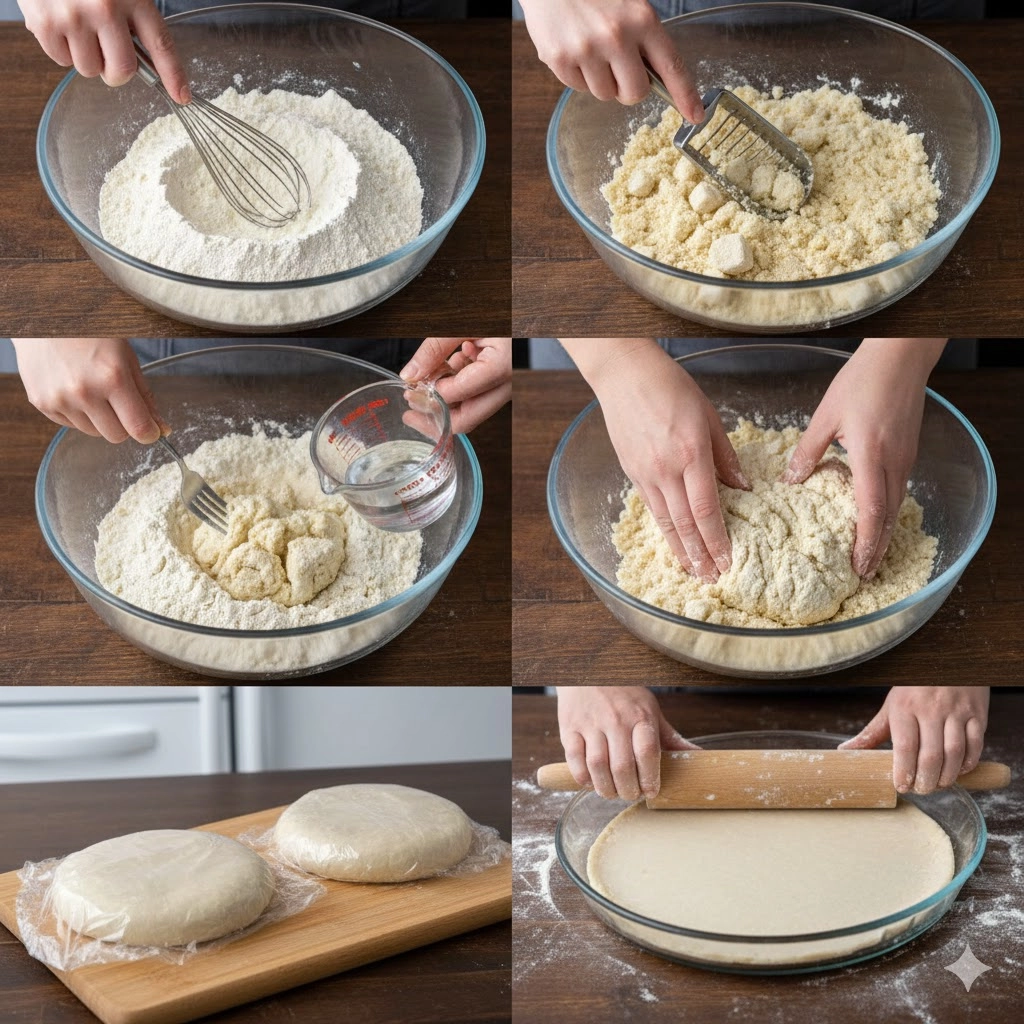
- Combine the dry components by whisking the flour and salt together in a chilled mixing bowl.
- Integrate the frozen shortening cubes into the flour using a pastry blender until the mixture mirrors the appearance of coarse, uneven crumbs.
- Introduce the ice water gradually, starting with a few tablespoons and tossing the mixture with a fork until the flour is hydrated.
- Form the dough into a cohesive mass by pressing it gently against the sides of the bowl.
- Partition the dough into two equal portions and shape them into flat discs.
- Enclose the discs in plastic wrap and refrigerate for a minimum of thirty minutes, though four hours is optimal.
- Roll the dough out on a floured surface to your desired thickness and diameter.
- Transfer the pastry to your pie plate and trim or crimp the edges as required by your specific pie recipe.
Step-by-Step Details
Preparing the Base
Begin by ensuring your dry ingredients are thoroughly aerated. Whisking the flour and salt not only distributes the seasoning but also breaks up any clumps in the flour. This creates a uniform environment for the fat to be introduced. Using a metal bowl that has been pre-chilled in the refrigerator can help maintain the low temperature of the ingredients throughout the process.
Cutting in the Fat
When you add the frozen shortening, your goal is not to create a smooth paste. Instead, use a pastry blender or two knives to “cut” the fat into the flour. You are looking for a variety of sizes in the fat particles; some should be as small as breadcrumbs, while others should remain the size of small peas. These larger pockets of fat are what eventually melt in the oven, creating steam that lifts the layers of dough into a flaky texture.
Controlled Hydration
The most critical stage is adding the water. Use water that has been sitting with ice cubes to ensure it is as cold as possible. Sprinkle it over the flour mixture and use a fork to “fluff” the dough rather than stir it. You want the moisture to be absorbed without overworking the gluten. Stop adding water the moment the dough can be squeezed in your palm and hold its shape without crumbling. If it feels sticky, you have added too much; if it falls apart, it needs a few more drops.
Chilling and Rolling
Resting the dough is non-negotiable. During the thirty minutes to four hours in the fridge, the flour fully hydrates and the gluten strands relax. This prevents the crust from snapping back or shrinking when it hits the heat of the oven. When rolling, work from the center outward, rotating the disc frequently to ensure it isn’t sticking. If the dough starts to feel warm or soft, slide it back into the fridge for ten minutes before continuing.
Pro Tips
- The Freezer Method: Place your pastry blender and mixing bowl in the freezer along with the shortening. Keeping the equipment cold prevents the fat from softening during the mixing process.
- Minimal Contact: Use your hands as little as possible. The heat from your palms can quickly melt the shortening, which results in a mealy rather than flaky crust.
- Liquid Precision: Always start with half the amount of water called for and work upward. Humidity levels in your kitchen can significantly change how much liquid the flour requires from day to day.
- Visual Cues: Look for “marbling” in the rolled-out dough. You should see visible streaks or spots of shortening flattened into the flour; this is a guaranteed sign of a flaky result.
- Vinegar Trick: A teaspoon of apple cider vinegar added to the ice water can help inhibit gluten development, making the dough even more tender and preventing it from becoming gray.
- Flour Choice: While bread flour has too much protein, you can substitute twenty percent of the all-purpose flour with cake flour for an even more delicate, melt-in-your-mouth consistency.
Variations or Substitutions
- Buttery Blend: For those who crave the flavor of butter but want the stability of shortening, use a fifty-fifty split. Ensure the butter is unsalted and just as cold as the shortening.
- Herb-Infused Crust: For savory pies like chicken pot pie or quiche, add one tablespoon of dried thyme or rosemary to the flour and salt mixture.
- Sweet Pastry: If making a fruit or custard pie, add one tablespoon of granulated sugar to the dry ingredients to encourage better browning and a hint of sweetness.
- Dairy Enrichment: Replace the ice water with very cold heavy cream. The extra fat and milk solids create a richer flavor profile and a slightly softer crumb.

Serving Suggestions
- Classic Fruit Fillings: This crust is sturdy enough to hold heavy, syrupy fillings like apple, cherry, or blueberry without becoming soggy.
- Blind Baked for Cream Pies: Prick the bottom with a fork, line with parchment and pie weights, and bake until golden to use for chocolate silk or banana cream fillings.
- Decorative Toppings: Because shortening dough holds its shape so well, use the second disc to cut out leaf or star shapes with cookie cutters to decorate the top of your pie.
FAQs
Why did my pie crust turn out tough?
Toughness is usually the result of overworking the dough or adding too much water. Both of these actions develop the gluten in the flour. To keep it tender, handle the dough as little as possible and only add enough water to make it cohesive.
Can I make this dough in a food processor?
Yes, but you must be extremely careful. Use the pulse button in short bursts to avoid over-processing the fat. If you process it until it looks like a uniform dough, you will lose the flaky layers.
How long can I store this dough in the freezer?
This dough freezes exceptionally well. Wrap the discs tightly in a double layer of plastic wrap and place them in a freezer bag. They will stay fresh for up to three months. Thaw in the refrigerator overnight before rolling.
Do I need to grease my pie pan before adding the crust?
Generally, no. The high fat content in this recipe prevents the crust from sticking to most glass or ceramic pie dishes.
Nutrition Information
| Nutrient | Amount per Serving |
| Calories | 170 kcal |
| Protein | 2 g |
| Carbs | 12 g |
| Fat | 13 g |
| Fiber | 0 g |
| Sugar | 0 g |
| Sodium | 146 mg |
Disclaimer
Nutrition information is an estimate and may vary based on preparation and ingredients used.
PrintThe Secret to a Perfectly Flaky and Reliable Best Ever Pie Crust

A reliable and incredibly flaky 4-ingredient pie crust made with shortening for perfect texture and stability in any pie recipe.
- Prep Time: 20 mins
- Cook Time: 0 mins
- Total Time: 50 mins
- Yield: 16 servings 1x
- Category: Dessert
- Method: Baking
- Cuisine: American
- Diet: Vegetarian
Ingredients
2 cups all-purpose flour
1 teaspoon salt
1 cup vegetable shortening, cubed and frozen
1/2 cup ice-cold water (use as needed)
Instructions
1. Whisk flour and salt together in a large bowl.
2. Cut in chilled shortening with a pastry blender until mixture resembles coarse crumbs.
3. Add ice water in small increments, stirring with a fork until moist.
4. Gently gather dough into a ball and divide into two discs.
5. Wrap in plastic and chill for at least 30 minutes to 4 hours.
6. Roll out on a floured surface and fit into your pie plate.
Notes
Keep all ingredients and tools as cold as possible.
Avoid overworking the dough to ensure a flaky texture.
This recipe yields two 9-inch crusts.
Nutrition
- Serving Size: 1 slice
- Calories: 170
- Sugar: 0g
- Sodium: 146mg
- Fat: 13g
- Saturated Fat: 3g
- Unsaturated Fat: 10g
- Trans Fat: 0g
- Carbohydrates: 12g
- Fiber: 0g
- Protein: 2g
- Cholesterol: 0mg