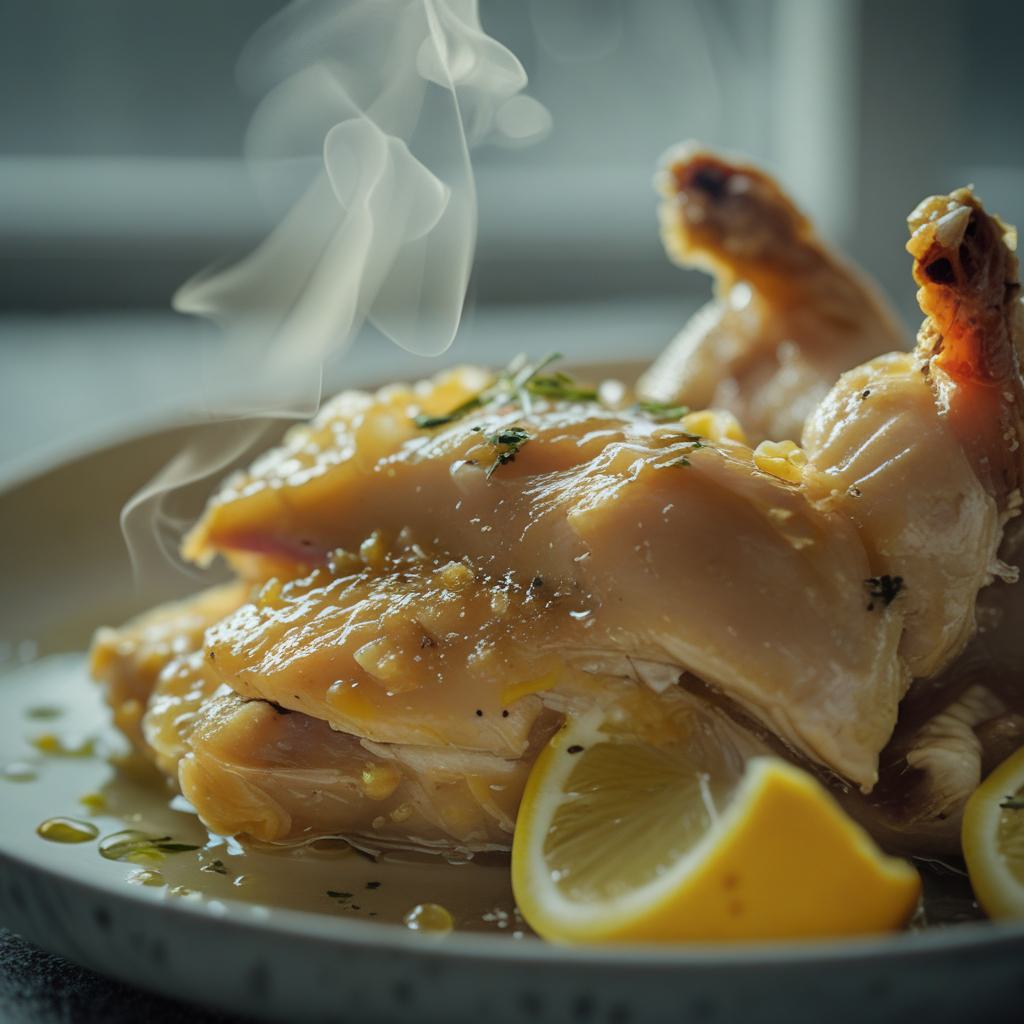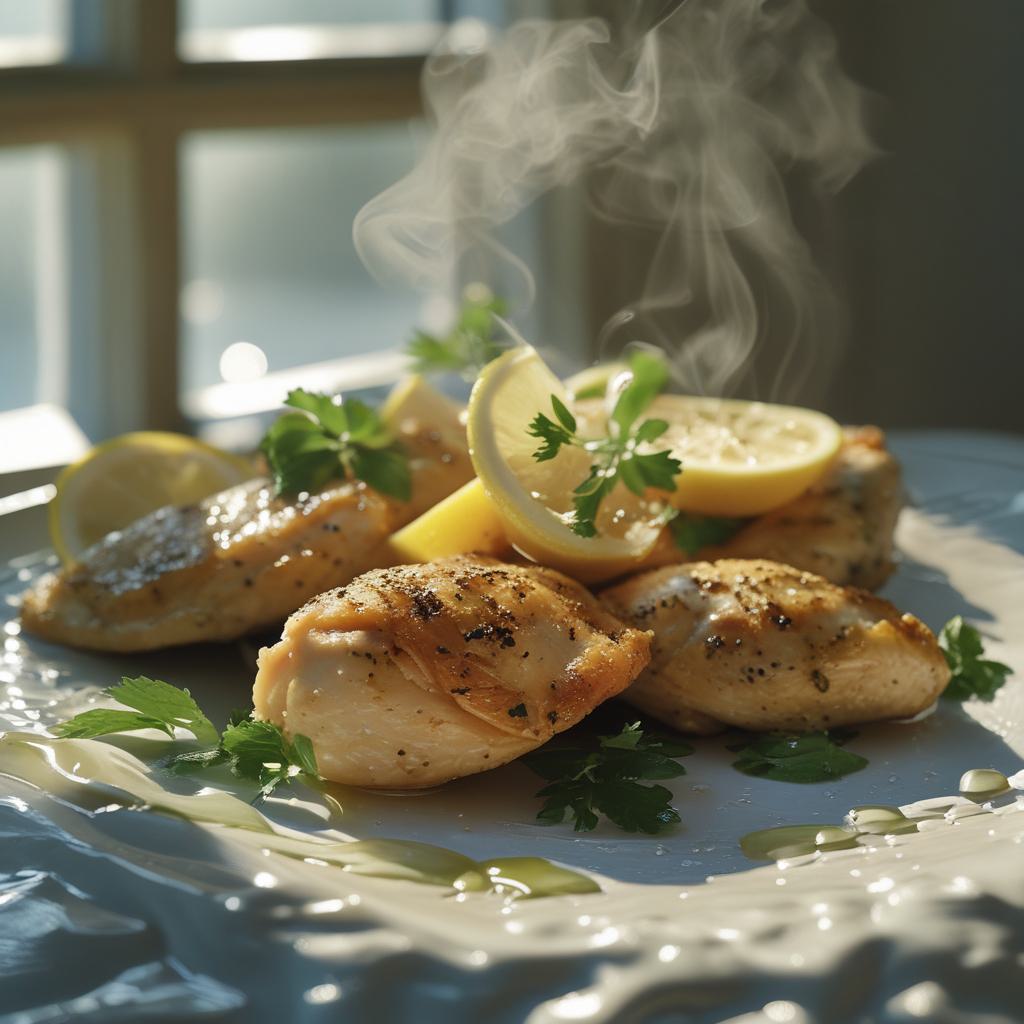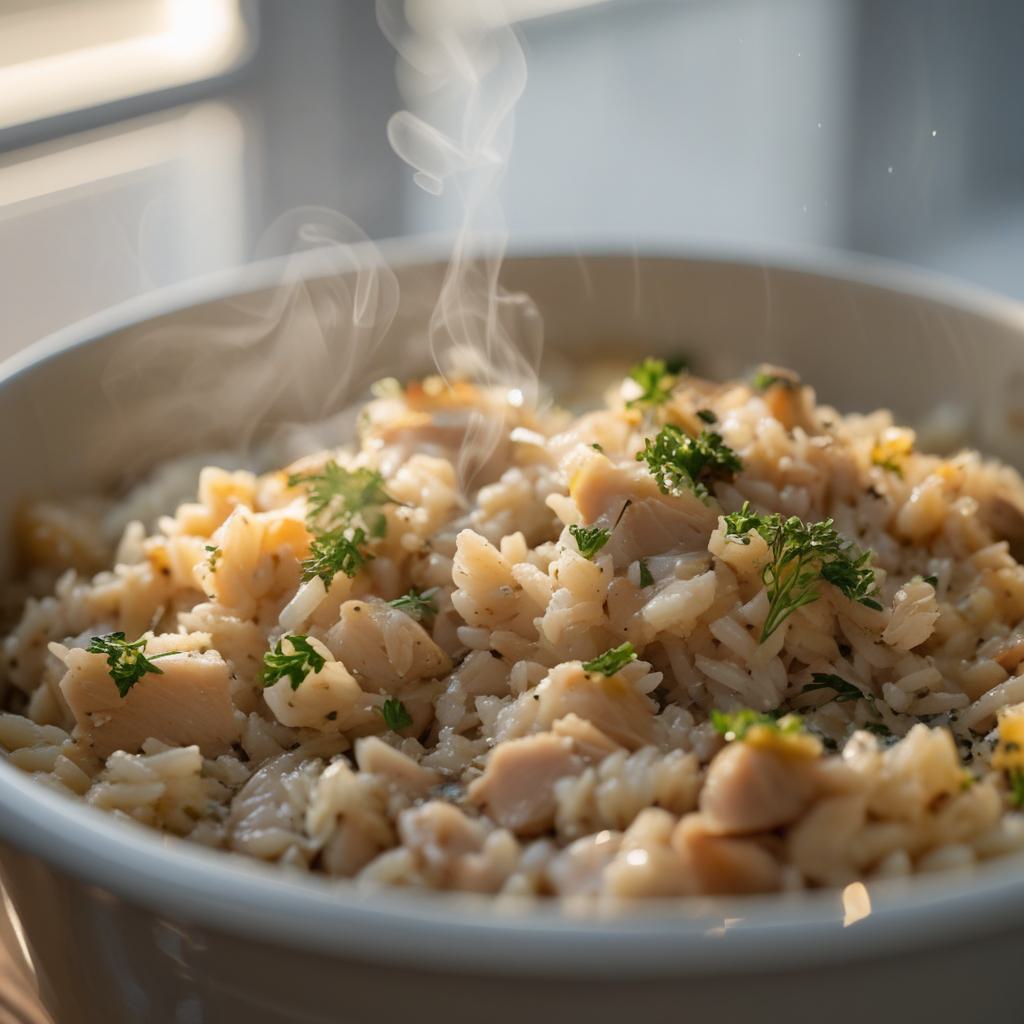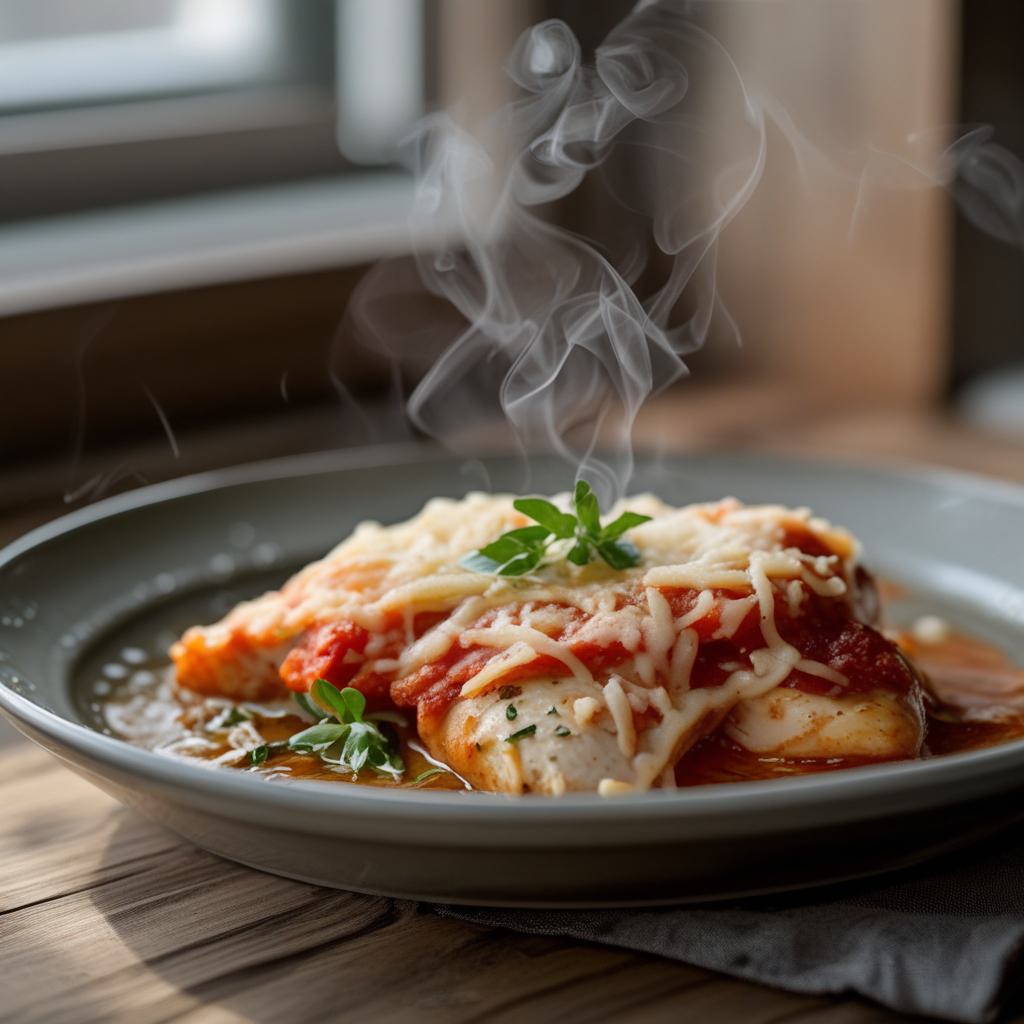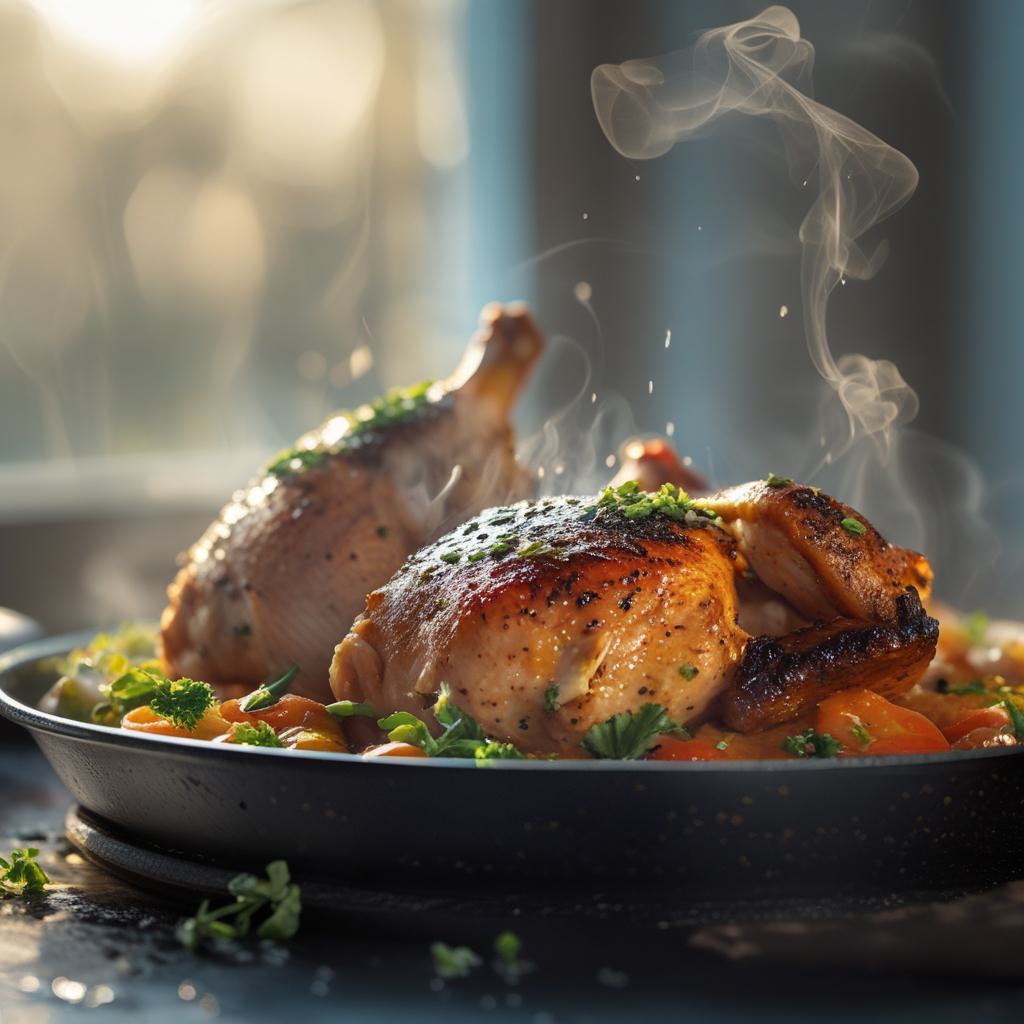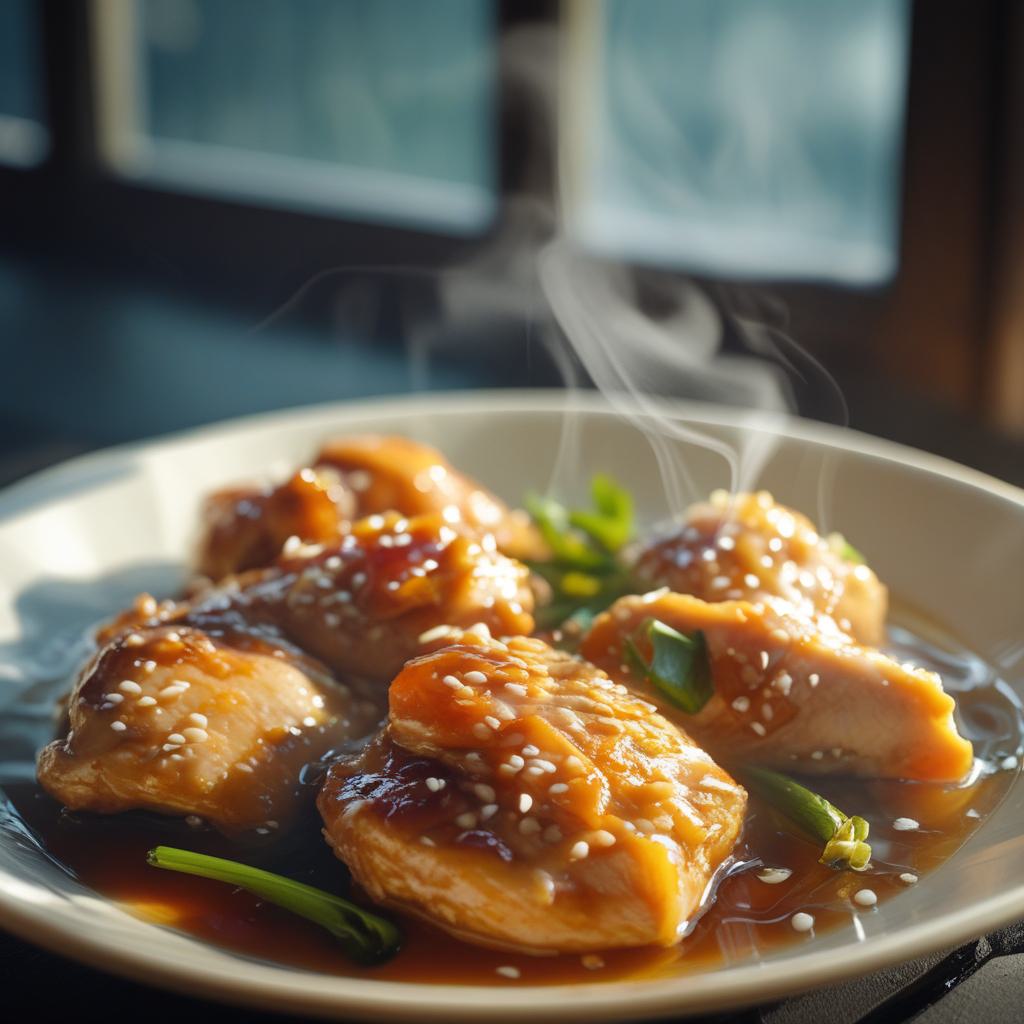
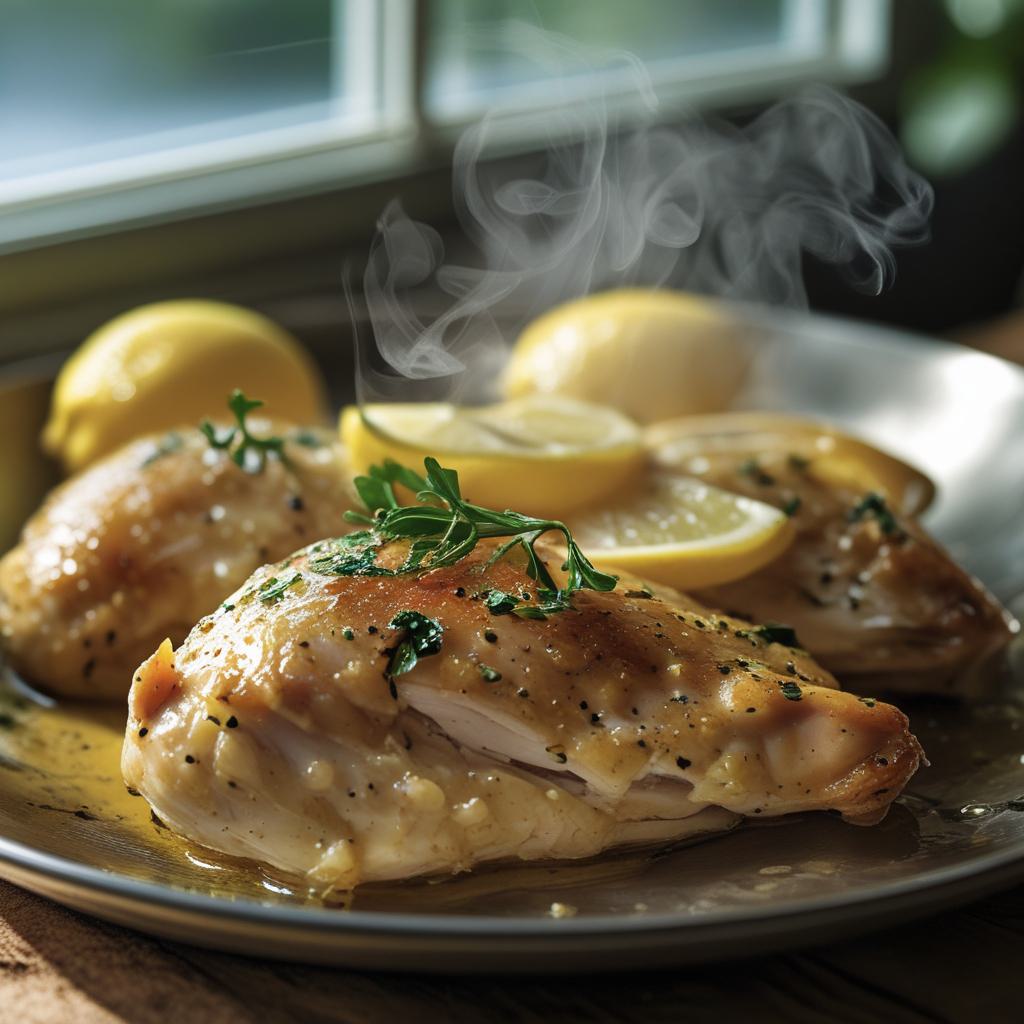
The moment lemon chicken enters the kitchen, an aromatic ballet begins. Zesty lemon oils burst into the air as rinds hit hot butter, releasing their solar-bright essence against the sizzle of golden chicken skin. This dish—born from Provençal farmhouses and perfected in Parisian brasseries—stars humble ingredients transformed through heat and chemistry. Crisp-tender poultry acts as a canvas for acid’s vivacity, while caramelized fond whispers tales of Maillard reactions in every bite. It seduces with contrasts: the sharp tang of citrus cutting through rich pan sauces, herbal whispers of thyme curling around sweet-savory garlic, and the primal satisfaction of perfectly seared protein. When plated, its perfume suggests sunlit groves meeting wood-fired hearths—a sensory passport to culinary elegance.
Table of Contents
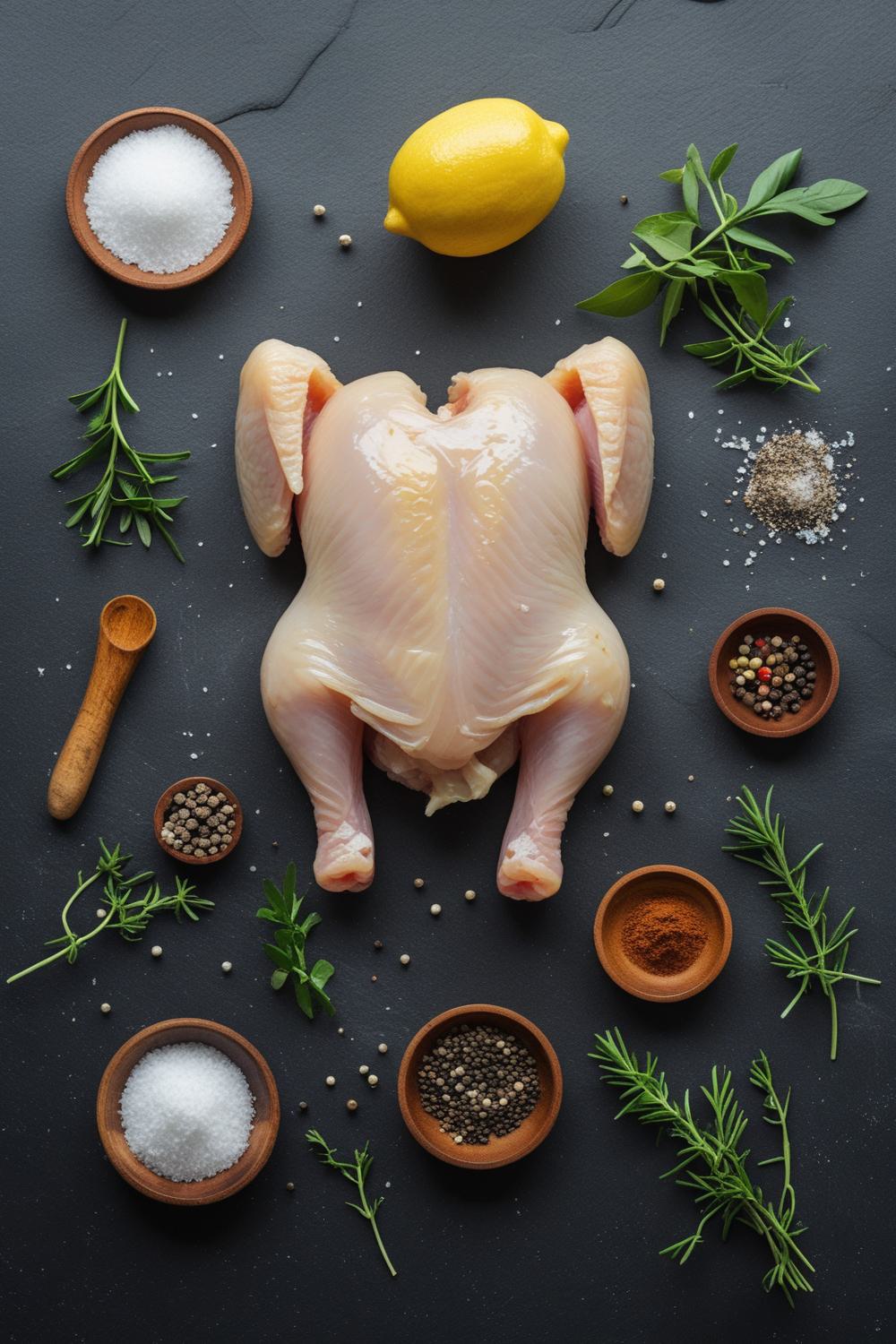
Ingredient Deep Dive
| Ingredient | Quantity | Purpose |
|---|---|---|
| Chicken thighs (bone-in, skin-on) | 6 pieces | Fatty skin creates crispness; bones retain moisture |
| Fresh lemons | 3 large | Zest for bright oils, juice for balanced acidity |
| Dry white wine (e.g., Sauvignon Blanc) | 1 cup | Deglazing agent; ethanol extracts fat-soluble flavors |
| Unsalted butter | 4 tbsp | Emulsifies sauce; milk solids promote browning |
| Fresh thyme | 1 tbsp | Contains thymol—counteracts chicken’s fattiness |
| Shallots | ½ cup minced | Sweeter, gentler allium base than onions |
Selecting bone-in thighs leverages collagen-to-gelatin conversion during cooking, ensuring fork-tender meat without dryness. Fresh lemon zest provides limonene-rich oils unavailable in bottled juice—these volatile compounds skyrocket aromatic complexity when heated. High-fat butter enables sauce emulsification; its milk solids caramelize into nutty browned bits (beurre noisette) when foam subsides, amplifying depth.
Dry wine serves dual purposes: acidic liquid lifts fond (the browned protein bits), while ethanol binds flavor molecules through hydrogen bonding. Shallots—with higher sugar content than yellow onions—caramelize without bitterness during the 3-minute sauté crucial to developing the sauce’s foundation. Thyme’s phenolic compounds withstand prolonged heat better than delicate herbs like basil, maintaining structure through braising.
Substitutions & Swaps
For gluten-free needs, swap flour in dredging with cornstarch or rice flour—their finer particles create lacier crusts through faster dehydration. Vegans may use cauliflower steaks or firm tofu pressed for 1 hour; brine tofu in 1 tsp miso + ½ cup lemon juice beforehand to mimic umami depth. Honey or maple syrup (1 tbsp) can replace white sugar if desired, but reduce sauce simmer time by 2 minutes to prevent cloying reduction.
Lemon shortages? Meyer lemons add floral sweetness, while 3 tbsp white vinegar + 1 tsp orange zest approximates sharpness. White wine alternatives: ¾ cup chicken broth + 1 tbsp capers (for briny sharpness). Dairy-free? Ghee or refined coconut oil works, but will mute the sauce’s layered richness compared to butter.
Equipment Guide
A seasoned cast iron skillet reigns supreme—its thermal mass prevents temperature crashes when chicken hits the pan, yielding audible sizzle at 375°F for ideal Maillard browning. Enameled Dutch ovens work for braising but lack the conductive sear of bare cast iron. Stainless steel suffices if you master the “mercury test”: water droplets should skitter like mercury when pan is properly preheated.
Use a microplane for lemon zesting—its surgical precision avoids bitter pith. Instant-read thermometers (like Thermapen) ensure chicken reaches the USDA-safe 165°F while preventing overcooked rubberiness. Tongs with scalloped edges grip without tearing skin. Avoid non-stick; high-heat searing degrades coatings, and fond formation suffers.
Step-by-Step Walkthrough
- Pat chicken dry with paper towels. Season skin with 1 tsp kosher salt—salt draws moisture to surface, accelerating crisping.
- Heat skillet 3 minutes over medium-high. Add 2 tbsp butter; swirl until foam subsides and butter smells nutty.
- Sear chicken skin-side down 7 minutes without moving (enables crust formation).
- Flip thighs; cook 5 minutes. Transfer to plate. Discard all but 1 tbsp fat.
- Sauté shallots 2 minutes; add garlic and 2 tsp thyme, cook 20 seconds.
- Deglaze with wine, scraping fond with wooden spoon. Reduce 3 minutes—liquid should coat spoon.
- Stir in lemon zest, juice, ½ tsp black pepper. Return chicken skin-side up.
- Bake uncovered at 375°F (190°C) 20 minutes until sauce reduces by half.
- Swirl in remaining butter away from heat—this mounts the sauce into glossy emulsion.
Browning Wisdom: Oil the chicken, not the pan—rub 1 tsp olive oil onto skin beforehand. Butter alone burns; combining with 1 tbsp avocado oil raises smoke point.
Sauce Science: Wait to add lemon juice until after deglazing—early acidity toughens proteins. Final butter addition (monté au beurre) must occur off-heat to prevent splitting.
Bake vs. Simmer: Oven heat circulates evenly, gently thickening sauce without scorching—unlike aggressive stovetop boiling that risks curdling dairy elements.
Expert Tips & Troubleshooting
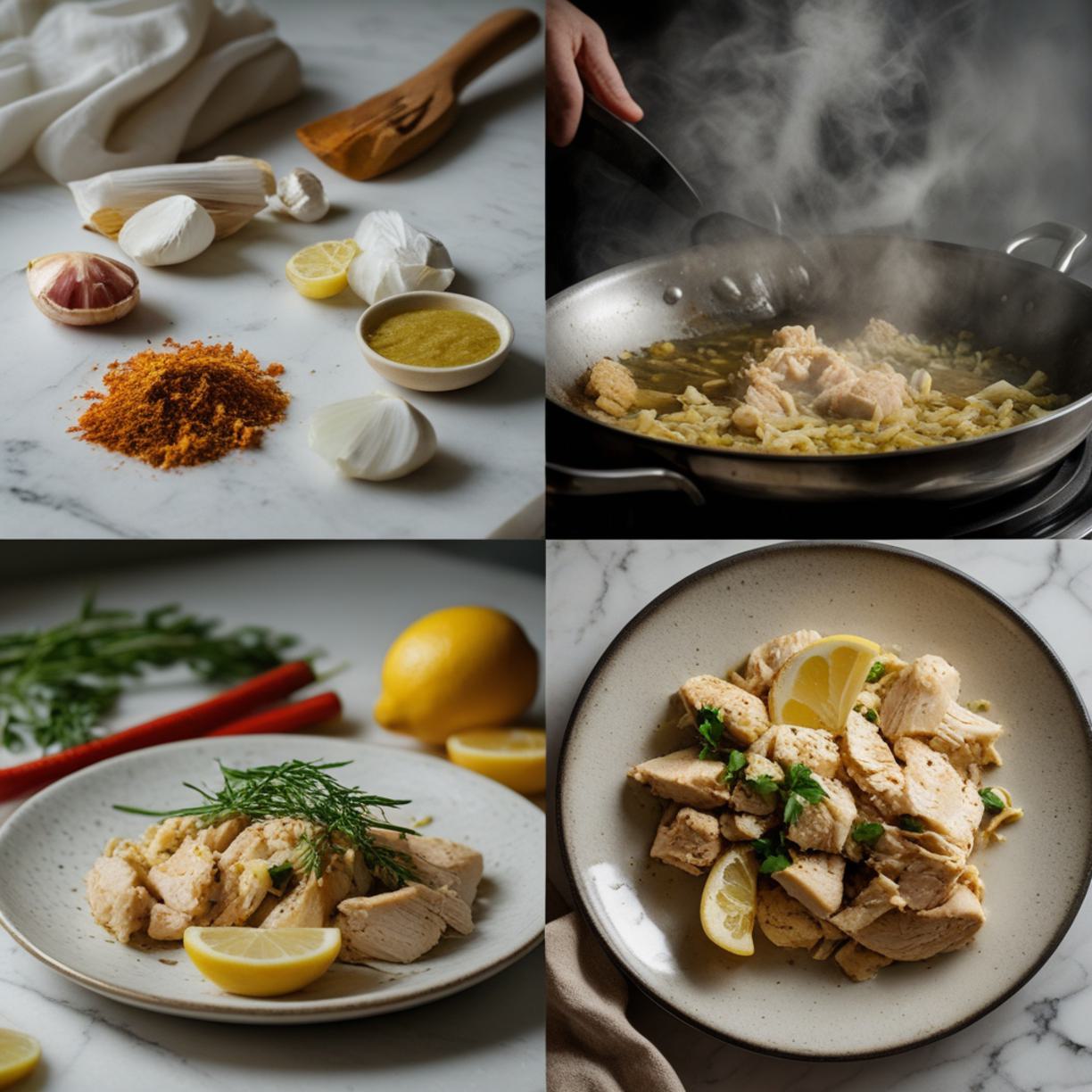
The Dryness Dilemma: If chicken breasts overcook past 165°F, slice and return to pan sauce—the liquid’s fat content remoistens fibers through capillary action. For thighs cooked beyond 195°F (falling off bone), serve as pulled meat mixed into sauce.
Crisp Skin Commandments: Salt skin 2 hours before cooking—osmosis draws water out, drying the surface thoroughly. Never crowd the pan; overlapping creates steam pockets preventing caramelization.
Sauce Rescue Tactics: If sauce “breaks” (separates), whisk in 1 tsp cold butter cubes at 150°F, shaking pan briskly. Over-reduced? Add 2 tbsp warm broth or cream. Too tart? Balance with ½ tsp honey—never sugar, which leaves grainy residue.
Timing Alchemy: Complete prep (zest, juice, herb prep) before heating pans—active cooking stage requires undivided attention to achieve perfect fond consistency.
Flavor Variations
Spicy Calabrian Twist: Add 2 tbsp chopped Calabrian chili paste during sauté phase; substitute lemon with 1 blood orange for mellowed heat.
Kid-Friendly Sweetness: Replace wine with apple cider; incorporate 2 tbsp honey into glaze.
Mediterranean Herb Bomb: Stir 2 tsp chopped rosemary and ½ cup kalamata olives into sauce.
Winter Comfort: Add 1 cup cremini mushrooms with shallots; finish with ¼ cup cream for velvety texture.
Storage & Reheating
Refrigerate cooled leftovers in airtight containers for 3 days. Freezing dulls lemon notes—consume within 30 days if frozen. To reheat: Place chicken on wire rack over baking sheet; warm at 300°F (150°C) for 15 minutes. Re-sauce separately in saucepan over low heat, whisking in 1 tsp water if thickened. Never microwave—texture turns gummy.
FAQ Section
Q: Can I cook chicken straight from the fridge?
A: Never—cold meat drops pan temp. Rest poultry 30 minutes at room temperature before searing.
Q: Why not chicken breasts?
A: Breasts lack thigh fat and cook faster, leading to dry meat unless brined 2 hours prior.
Q: How to make sauce thicker?
A: Create slurry with 1 tsp cornstarch plus 2 tbsp cold broth. Whisk into simmering sauce 1 minute off-heat.
Q: Stuck fond?
A> Deglaze earlier—don’t wait until dark brown. Acid from wine or lemon loosens faster than water.
The Recipe Card
Gourmet lemon chicken: Crisp-skinned thighs bathed in buttery lemon-wine sauce scented with thyme. 55-minute total time: 15 mins prep, 40 mins cook. Serves 4. Wine Pairing: Sancerre or dry Riesling.
Nutrition Information
| Calories | 485 kcal |
|---|---|
| Protein | 32g |
| Total Carbohydrates | 8g |
| Dietary Fiber | 2g |
| Total Fat | 33g |
| Saturated Fat | 14g |
| Cholesterol | 162mg |
Disclaimer: Nutritional data estimated via USDA database. Actual values vary by ingredient brands and portion sizes.