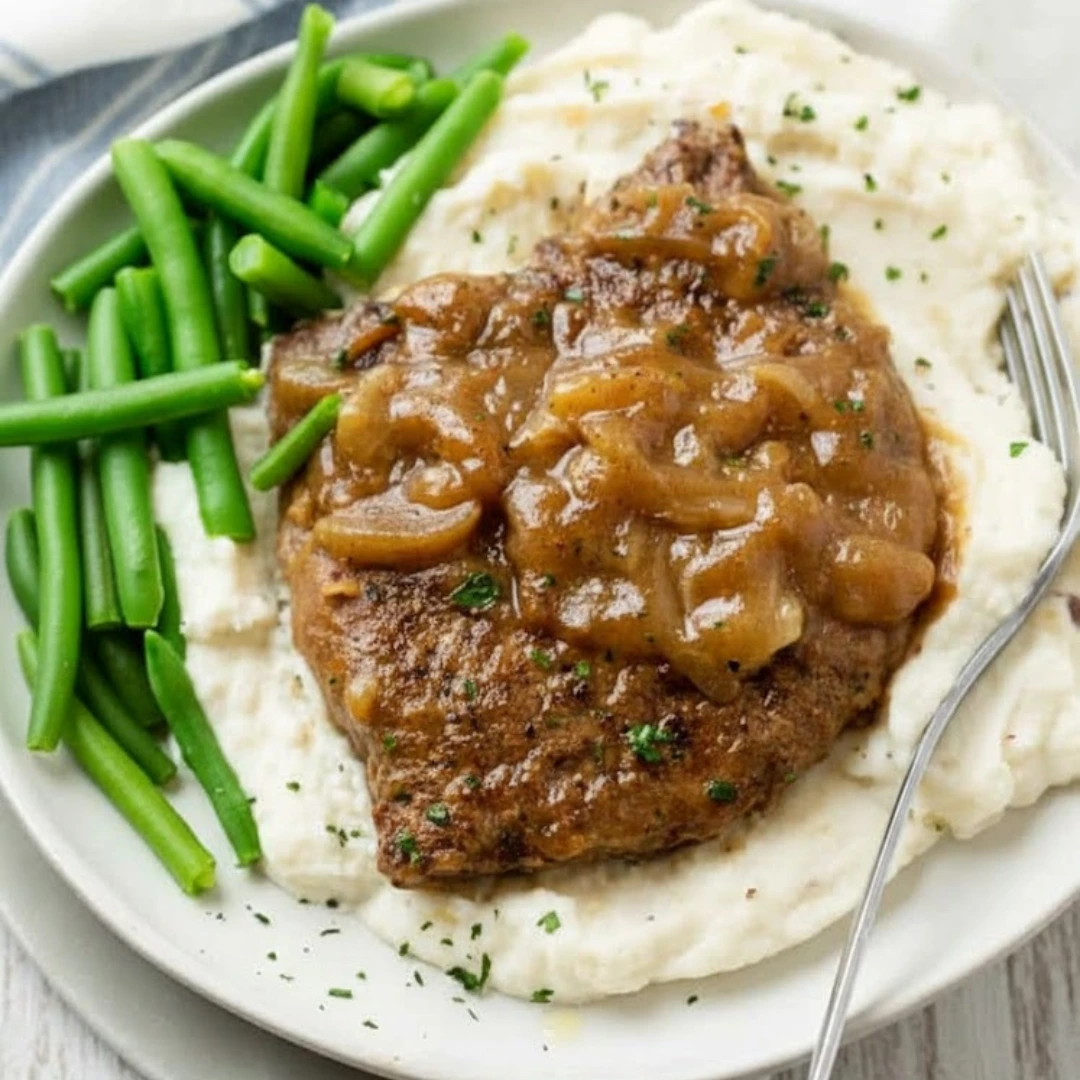
There is something profoundly nostalgic about a plate of tender beef smothered in a rich, velvety onion gravy. For many of us, cube steak represents the ultimate comfort food—a dish that transforms a budget-friendly cut of meat into a meal that feels like a warm hug at the end of a long day. This Best Crock Pot Cube Steak recipe is designed to deliver that “melt-in-your-mouth” experience by utilizing low and slow cooking methods combined with a savory, deeply flavored brown gravy. Whether you choose to prepare this on the stove top for a quicker weekend meal or let it gently simmer in your slow cooker while you go about your day, the result is consistently spectacular. By following a few simple techniques like double-tenderizing and building a flavor “fond” in your skillet, you can elevate this humble classic into a gourmet family favorite that rivals any high-end pot roast.
Table of Contents
Ingredients
The Main Components
- 4 cube steaks
- 3 Tablespoons flour
- 2 Tablespoons olive oil
- 3 tablespoons cold unsalted butter, separated
Meat Seasoning Blend
- 1 teaspoon brown sugar
- 1/4 teaspoon black pepper
- 1/2 teaspoon salt
- 1/2 teaspoon garlic powder
- 1/2 teaspoon onion powder
- 1/2 teaspoon chili powder
- 1/2 teaspoon paprika
Savory Gravy Base
- 2 tablespoons cornstarch
- 1 cup chicken broth
- 1 cup beef broth
- 1 beef bouillon cube, or 1 teaspoon better than bouillon
- 1 teaspoon onion powder
- 1/2 teaspoon garlic powder
- 1 1/2 teaspoons Worcestershire sauce
- 1 large yellow onion, sliced into 1/2 inch strings
Instructions
- Prepare your seasoning by combining the brown sugar, black pepper, salt, garlic powder, onion powder, chili powder, and paprika in a small bowl. Set this aside for later use.
- In a medium-sized mixing bowl, create the gravy base by whisking together the cornstarch and both the chicken and beef broths until the mixture is completely smooth and free of lumps. Whisk in the beef bouillon, onion powder, garlic powder, and Worcestershire sauce.
- Prepare the meat by placing a sheet of plastic wrap over each steak. Use the textured side of a meat mallet to pound the steaks until they are approximately 1/2 inch thick.
- Pat the meat completely dry using paper towels. Rub the seasoning mix thoroughly into both sides of each steak, then dredge the meat in the flour, tapping off any excess.
- Heat the olive oil in a large skillet over medium-high heat. Sear the steaks in batches for approximately 3 minutes per side until a golden-brown crust forms. Remove the steaks and let them rest on a separate plate.
- Melt 2 tablespoons of butter in the same skillet over medium heat. Use a silicone spatula to scrape up the browned bits (the fond) from the bottom of the pan.
- Add the sliced onions to the butter. Sauté for 15 to 25 minutes, stirring frequently, until the onions are soft, reduced, and nearly caramelized.
- Pour the liquid gravy mixture into the skillet with the onions. Stir well to incorporate the pan drippings. Bring the liquid to a boil, then immediately reduce the heat to a simmer.
- Return the seared steaks and any accumulated juices to the pan. Spoon the gravy over the meat. Cover the pan partially and simmer for about 5 to 7 minutes until the gravy has thickened and the meat is tender.
- For a professional finish, remove the pan from the heat and stir in the remaining tablespoon of cold butter until melted. Serve immediately over your choice of sides.
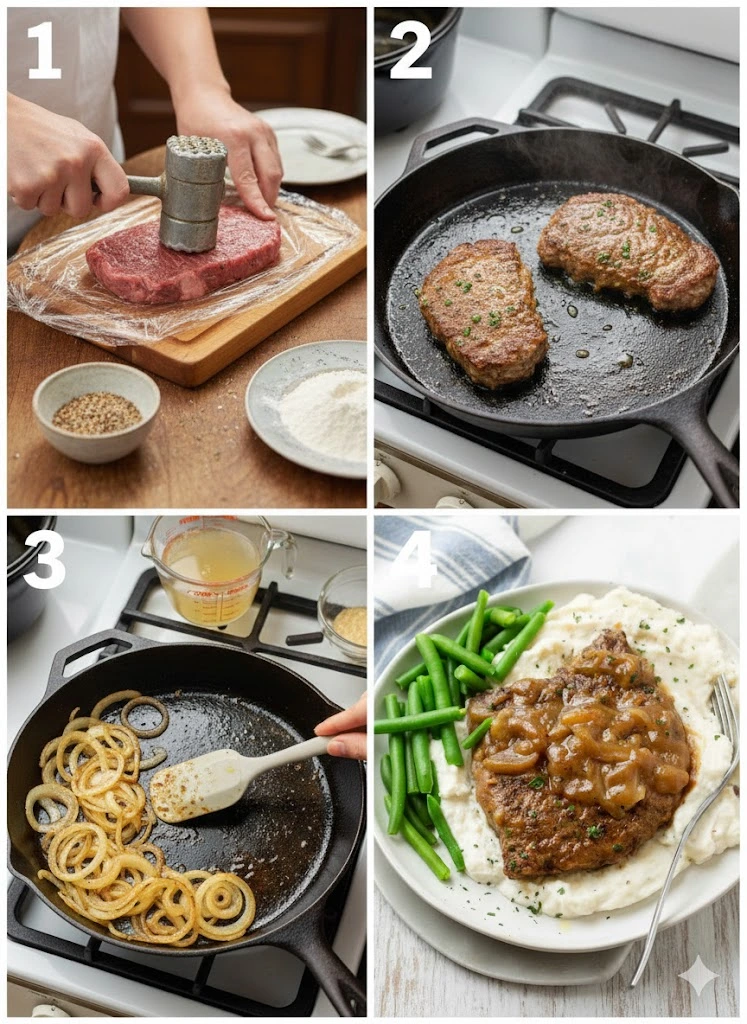
Achieving the Perfect Seared Texture
The secret to an incredible cube steak lies in the initial sear. Even though we are often looking for the tenderness that comes from slow cooking, the flavor is built in the skillet. When you dredge your seasoned meat in flour and hit that hot olive oil, you are initiating the Maillard reaction. This chemical reaction between amino acids and reducing sugars is what creates that complex, savory “browned” flavor that defines a great steak.
Make sure your pan is truly hot before the meat touches the surface. If the oil isn’t shimmering, the flour will simply absorb the fat and become soggy rather than crispy. You want to hear a distinct sizzle the moment the beef hits the pan. By searing the meat in batches, you prevent the temperature of the skillet from dropping, which ensures that the steaks fry rather than steam in their own juices. This crust not only adds texture but also provides the “fond”—those little brown bits stuck to the bottom of the pan—which serves as the flavor foundation for your entire gravy.
Massive Expansion of the Cooking Process
Understanding the “why” behind each step can turn a good cook into a great one. When we talk about tenderizing cube steak, it is important to realize that this cut is usually taken from the top round or top sirloin. These are muscles that get a lot of work, meaning they are naturally lean but can be quite tough due to connective tissue. While the butcher pre-piths the meat to create those signature indentations, a second round of tenderizing at home is the “pro move.” By pounding it to a uniform 1/2 inch thickness, you ensure that every part of the steak cooks at the exact same rate, preventing the edges from becoming leathery while the center finishes.
The onion preparation is another area where patience pays off. Many recipes rush the onion step, but giving them 15 to 25 minutes allows the natural sugars in the yellow onion to break down. As they soften and turn translucent, they lose their sharp bite and take on a mellow, savory sweetness that balances the saltiness of the beef broth and Worcestershire sauce. If you see the onions browning too quickly, don’t be afraid to add a tiny splash of water or broth to the pan to deglaze it and keep the onions cooking evenly.
Finally, the technique of “monter au beurre” or “mounting with butter” at the very end is what separates home cooking from restaurant-quality fare. By whisking in cold butter after the heat is turned off, the fat emulsifies into the sauce rather than melting into an oil. This results in a gravy that has a glossy sheen and a silky mouthfeel that coats the back of a spoon perfectly.
Unique Culinary Insights and Tips
To get the most out of this recipe, consider the type of cookware you are using. A heavy-bottomed cast iron skillet is the gold standard here because it retains heat exceptionally well, leading to a more consistent sear. If you are using stainless steel, you might notice more sticking, which is actually beneficial for creating a rich fond, provided you are diligent with your silicone spatula.
Regarding the liquid base, this recipe calls for a mix of chicken and beef broth. While it might seem counterintuitive to use chicken broth in a beef dish, many professional chefs use this trick to provide a lighter, more complex savory profile. All-beef broth can sometimes be overwhelmingly “heavy” or one-dimensional. The chicken broth adds a subtle sweetness and depth that allows the beef bouillon to really pop without the sauce becoming too dark or salty.
If you are a fan of earthy flavors, this is the perfect time to introduce mushrooms. For the best results, sauté your mushrooms in a separate pan with a bit of butter and thyme before adding them to the final gravy. Mushrooms contain a high percentage of water; if you cook them directly in the gravy, they can thin out your sauce and end up with a rubbery texture. Searing them first concentrates their umami flavor and gives them a beautiful golden exterior.
The Art of the Slow Cooker Transformation
If you are opting for the Crock Pot method, the preparation remains largely the same because the flavor is still built in the pan. You should never skip the searing step even when using a slow cooker. Searing the meat and preparing the gravy on the stove first allows you to lock in the juices and develop the aromatic profile of the onions.
When you transfer the ingredients to the slow cooker, you are essentially creating a controlled environment where the collagen in the beef can slowly break down over 7 to 8 hours on low heat. This results in a texture that is nearly impossible to achieve on a standard stove top simmer. The slow cooker is also incredibly forgiving. If you find yourself running late, the meat will generally stay moist and tender as long as it is submerged in that delicious onion gravy. It is a fantastic “set it and forget it” option for busy families who want a home-cooked meal waiting for them at the end of the day.
Modifications and Substitutions
This recipe is remarkably adaptable to different dietary needs and pantry availability. If you are looking to manage your sodium intake, you can easily swap the standard broths for low-sodium versions and use unsalted butter throughout the process. Since the beef bouillon is a major source of salt, you can replace it with a splash of red wine or a teaspoon of tomato paste to maintain that deep, savory “umami” hit without the extra sodium.
For those who prefer a different aromatic profile, you can substitute the yellow onion with shallots for a more delicate flavor, or add a few cloves of smashed garlic during the last few minutes of the onion sauté. If you don’t have Worcestershire sauce on hand, a mix of soy sauce and a teaspoon of lemon juice can mimic that fermented, acidic punch that cuts through the richness of the gravy. If you are avoiding gluten, ensure your flour dredge is replaced with a gluten-free all-purpose blend, and double-check that your bouillon and Worcestershire sauce are certified gluten-free.
Accompaniments and Serving Suggestions
The quintessential partner for cube steak is a mountain of creamy mashed potatoes. The gravy acts as the perfect sauce for the potatoes, creating a harmonious plate of food. To elevate your mashed potatoes, try folding in some sour cream or chives. If you want something a bit different, this beef and gravy also pair beautifully over buttered egg noodles or a bed of fluffy white rice, which soaks up every drop of the sauce.
To balance the richness of the meat and gravy, serve a bright, acidic vegetable on the side. Roasted green beans with a squeeze of lemon or glazed carrots add a necessary pop of color and freshness. For a true Southern-style feast, don’t forget the bread. Buttermilk biscuits or a wedge of warm cornbread are ideal for mopping up any leftover gravy on the plate. If you want to go the extra mile, a simple garden salad with a sharp vinaigrette can act as a palate cleanser between bites of the savory beef.
Deep-Dive FAQ
Why is my cube steak still tough after cooking?
Toughness in cube steak usually comes down to two factors: under-tenderizing or overcooking. Even though the meat comes pre-tenderized from the store, taking the time to pound it thin at home breaks down the remaining stubborn muscle fibers. Additionally, if you are cooking on the stove top, ensure you don’t boil the meat rapidly; a gentle simmer is necessary to keep the proteins from tightening up and becoming rubbery.
Can I make the gravy thicker or thinner?
The thickness of your gravy is easily controlled by the cornstarch slurry and the simmering time. If you prefer a very thick, “country-style” gravy, you can add an extra teaspoon of cornstarch mixed with cold water near the end of the cooking process. Conversely, if the gravy has reduced too much and become too salty or thick, simply whisk in a splash of beef broth or water until you reach your desired consistency.
Is it possible to prepare this dish ahead of time?
Yes, this recipe is excellent for meal prep. You can sear the steaks and prepare the gravy a day in advance, then store them together in the refrigerator. When you are ready to serve, simply reheat the mixture on the stove top over low heat. You may need to add a tablespoon or two of water to loosen the gravy, as it will naturally thicken when chilled.
What is the best way to store and reheat leftovers?
Leftover cube steak and gravy should be stored in an airtight container in the refrigerator for up to three days. For long-term storage, this dish freezes beautifully for up to three months. To reheat, the stove top is preferred over the microwave to maintain the texture of the meat. Warm it slowly over low heat, adding a splash of broth if the sauce has become too dense.
The Ultimate Comfort Food Wrap-Up
Mastering the art of the cube steak is a journey into the heart of home cooking. By taking simple, affordable ingredients and applying classic techniques like proper searing and patient onion caramelization, you create a meal that is far greater than the sum of its parts. This recipe isn’t just about feeding a family; it is about creating a moment of comfort and satisfaction at the dinner table. Whether it’s the silky finish of the butter-mounted gravy or the perfectly seasoned crust of the beef, every element is designed to provide a high-quality dining experience in the comfort of your own kitchen.
Nutrition Information
| Nutrient | Amount Per Serving |
| Calories | 538 kcal |
| Total Fat | 35 g |
| Saturated Fat | 14 g |
| Cholesterol | 145 mg |
| Sodium | 1102 mg |
| Carbohydrates | 18 g |
| Protein | 38 g |
| Fiber | 1 g |
| Sugar | 3 g |
| Iron | 4 mg |
Disclaimer
The nutritional information provided is an estimate based on the specific ingredients and measurements listed in this recipe. Individual results may vary depending on the brands used and any modifications made during the cooking process.
PrintBest Crock Pot Cube Steak
This Tender Cube Steak is smothered in a delicious brown gravy with onions and pan fried on the stove top or in the Slow Cooker! Perfect when served over mashed potatoes.
- Prep Time: 15 mins
- Cook Time: 30 mins
- Total Time: 45 mins
- Yield: 4 servings 1x
- Category: Dinner
- Method: Stovetop or Slow Cooker
- Cuisine: American
Ingredients
4 cube steaks
3 Tablespoons flour
2 Tablespoons olive oil
3 tablespoons cold unsalted butter, separated
1 teaspoon brown sugar
1/4 teaspoon black pepper
1/2 teaspoon salt
1/2 teaspoon garlic powder
1/2 teaspoon onion powder
1/2 teaspoon chili powder
1/2 teaspoon paprika
2 tablespoons cornstarch
1 cup chicken broth
1 cup beef broth
1 beef bouillon cube
1 teaspoon onion powder
1/2 teaspoon garlic powder
1 1/2 teaspoons Worcestershire sauce
1 large yellow onion, sliced into 1/2 inch strings
Instructions
1. Combine meat seasoning mix and set aside.
2. Whisk cornstarch, broths, bouillon, onion powder, garlic powder, and Worcestershire sauce until smooth.
3. Tenderize steaks to 1/2 inch thickness using a meat mallet.
4. Season steaks and dredge in flour, tapping off excess.
5. Sear steaks in olive oil for 3 minutes per side; remove and set aside.
6. Melt 2 tbsp butter and sauté onions for 15-25 minutes until soft.
7. Add liquid gravy mixture to skillet and bring to a boil, then reduce to simmer.
8. Return steaks to pan, spoon gravy over them, and simmer for 5-7 minutes.
9. Remove from heat and stir in 1 tbsp cold butter for a silky finish.
Notes
Aim for an internal temperature of 125 Fahrenheit for tender results.
Use a cast iron skillet for the best crusty sear.
For Slow Cooker: Sear meat first, then cook on low for 7-8 hours.
Nutrition
- Serving Size: 1 steak with gravy
- Calories: 538
- Sugar: 3g
- Sodium: 1102mg
- Fat: 35g
- Saturated Fat: 14g
- Unsaturated Fat: 17g
- Trans Fat: 1g
- Carbohydrates: 18g
- Fiber: 1g
- Protein: 38g
- Cholesterol: 145mg