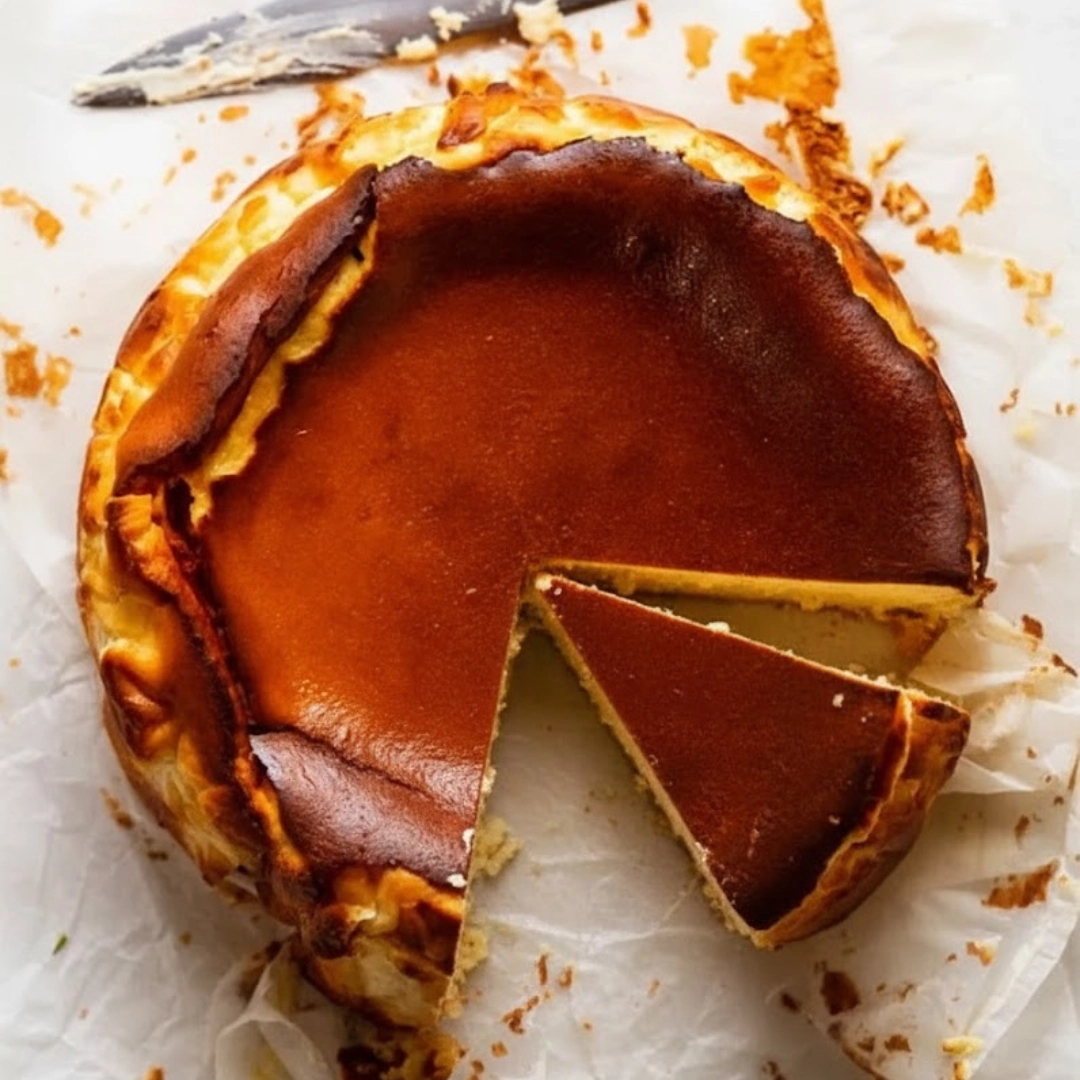
The notion of a Basque burnt cheesecake is an exercise in culinary contradiction: a dessert that is intentionally scorched, yet creamy, dense, and ethereally light on the palate. Born in San Sebastián, Spain, this dessert eschews the careful water bath and precise temperature control of its New York counterpart, embracing a fiercely high-heat bake that caramelizes the exterior to a dark, nearly bitter crust. This intense contrast—the deeply browned, almost savory exterior giving way to a custardy, often molten center—is precisely what makes it one of the most compelling and surprisingly simple cheesecakes to master. It is an impressive finish to any dinner party and equally satisfying for a quiet afternoon indulgence.
Table of Contents
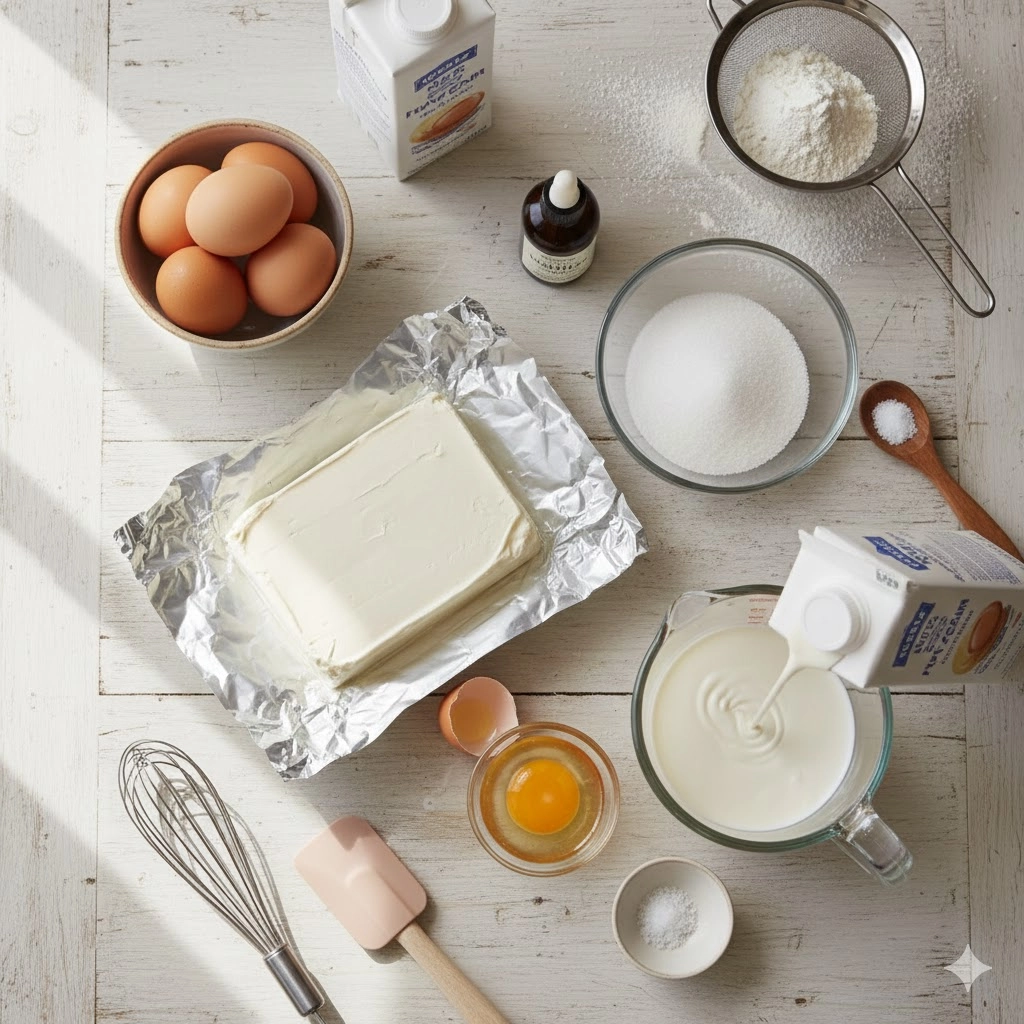
The Essential Components and Measures
Achieving the iconic texture of this rustic cheesecake depends on the quality and temperature of your basic dairy components. Ensure all chilled ingredients are brought to room temperature before mixing to guarantee a smooth, homogenous batter that bakes evenly.
Dairy and Primary Ingredients
- Two pounds (907 grams) full-fat cream cheese, softened
- One and a half cups (300 grams) granulated sugar
- One teaspoon fine sea salt
- Five large eggs, room temperature
- Two cups (480 milliliters) heavy cream (double cream), room temperature
Flavor and Structure
- One teaspoon pure vanilla extract
- One quarter cup (30 grams) all-purpose flour, sifted
The Fundamental Baking Process
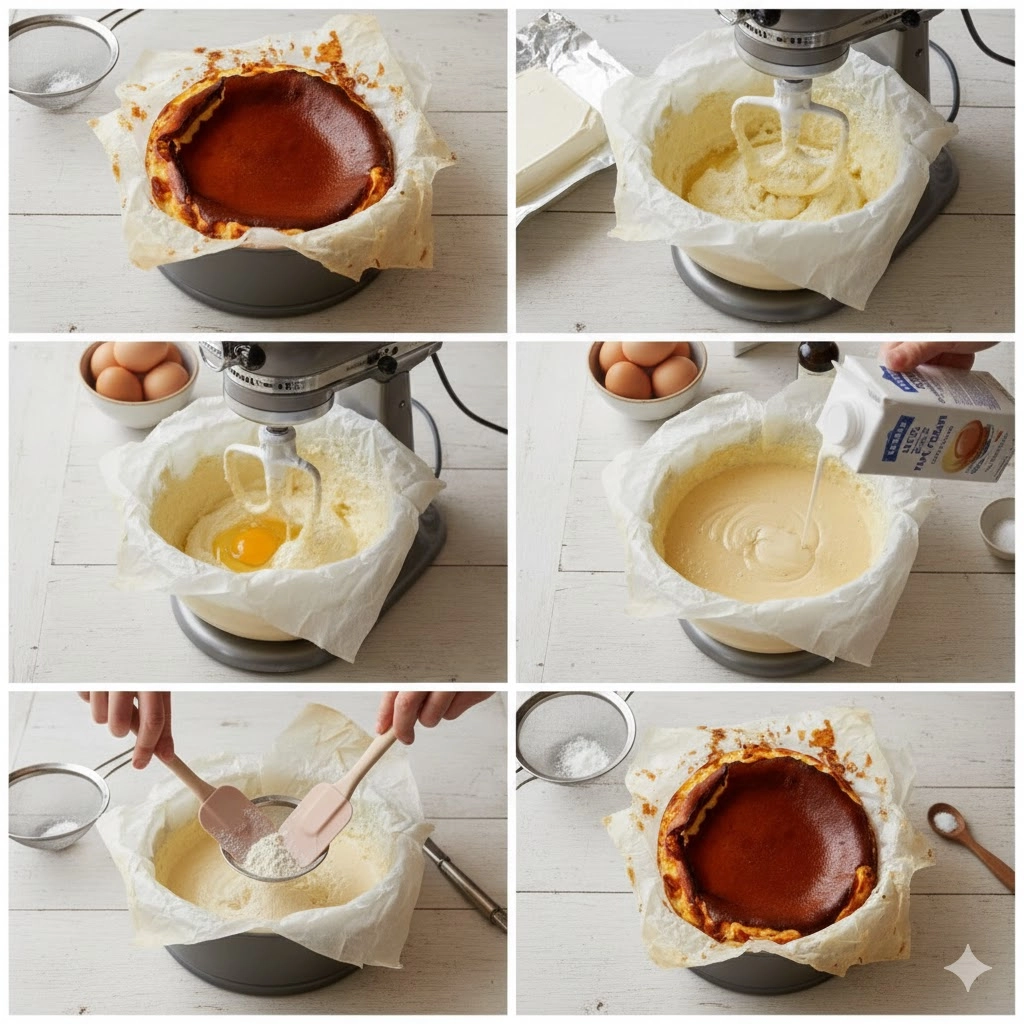
The magic of the Basque burnt cheesecake lies in its simplicity. Follow these high-level steps to guide your preparation, remembering that high heat is your friend here.
- Prepare the Pan: Line a nine-inch springform pan with two sheets of parchment paper, ensuring it extends well above the rim. Preheat the oven to four hundred twenty-five Fahrenheit.
- Cream the Base: Beat the softened cream cheese, sugar, and salt until the mixture is completely smooth and airy.
- Incorporate Eggs: Add the eggs one at a time, beating just until each yolk is fully integrated before adding the next. Avoid over-mixing at this stage.
- Add Liquid and Flavor: Slowly stream in the heavy cream and vanilla extract, mixing on low speed until the batter is fluid and uniform.
- Fold in Flour: Gently fold in the sifted flour using a rubber spatula until no streaks remain.
- Transfer and Bake: Pour the batter into the prepared pan and transfer it to the hot oven.
- Monitor the Burn: Bake for fifty-five to sixty-five minutes, until the top is deeply, uniformly browned and the center still has a distinct wobble.
- Cooling and Setting: Allow the cheesecake to cool completely at room temperature, then chill for at least six hours before serving.
Detailed Notes on Sensory and Textural Transformation
The art of the Basque burnt cheesecake is in the nuance of each stage, particularly in how the texture and appearance change from raw ingredients to finished dessert.
Preparing the Rich Base
Starting with room-temperature cream cheese is non-negotiable. Cold cream cheese will result in a lumpy, inconsistent batter, which translates to a grainy baked product. The initial creaming of the cheese and sugar should take a good three to five minutes on medium speed. You are looking for a significant lightening of color, almost white, and a fluffy texture. The fine sea salt is crucial here; it is the counterpoint that prevents the sweetness from becoming cloying, providing depth that many plain cheesecakes lack.
The Gentle Incorporation of Eggs and Cream
When adding the eggs, resist the urge to beat them vigorously. Over-beating incorporates too much air, which can cause the cheesecake to inflate dramatically and collapse severely. The ideal is to break the yolk just before it enters the bowl and mix only until the yellow streak disappears. The heavy cream should be added slowly, like a stream, with the mixer on a low setting. The final batter will be relatively thin—closer to a thick custard or crepe batter than a traditional cheesecake filling.
The Parchment Paper Precaution
The paper lining is fundamental, serving two purposes: it creates the dramatic, wrinkled, rustic edge that is the dessert’s signature, and it prevents the fiercely hot, molten batter from leaking out. Use two sheets for extra security, crossing them in the pan so they fully cover the bottom and sides, extending two to three inches above the rim. The batter will rise quite high, and the extended paper protects it from burning on the sides as well as giving you a handle for extraction.
Mastering the High-Heat Bake
Baking at four hundred twenty-five Fahrenheit is the core technique. This heat is what creates the Maillard reaction so quickly on the surface, yielding the characteristic “burnt” top. The internal temperature of the oven may vary, so focus on visual and physical cues.
- Visual Check: The top should be a deep mahogany brown, uniform in color, with some areas approaching black. Don’t be afraid of the color; it is the goal.
- Physical Check (The Wobble): After the suggested time, the edges should be completely set and puffed. The center, however, must have a pronounced, almost liquid jiggle—a distinct, uniform wobble that says, “I am still underdone.” This center will continue to set as the cake cools, giving you that beautiful, creamy, ultra-smooth interior.
Setting and Serving the Custard
Once removed from the oven, the cheesecake will deflate significantly and rapidly—this is expected. Let it cool on the counter for two to three hours. The internal heat will continue to cook the center, transitioning it from liquid to a firm custard. Finally, chill it in the refrigerator. This final step is vital for structure. While it can be eaten at room temperature for a truly gooey center, chilling it solidifies the structure, making it easier to slice cleanly.
Pro-Level Insights for the Perfect Cheesecake
This recipe is simple, but simple recipes highlight small errors. Consider these expert tips for an elevated final product.
- Sifting the Flour: Always sift the quarter cup of flour, even if you rarely sift flour for other recipes. The small amount of flour is there purely for structural integrity, and any lumps will create pockets of unmixed starch in the final baked product.
- The Tap Test: After pouring the batter into the lined pan, gently tap the pan on the counter three or four times. This helps to eliminate any large air bubbles trapped in the batter, which can lead to large, unsightly voids in the finished slice.
- Temperature Consistency: If your oven runs hot or cold, invest in an inexpensive oven thermometer. This high-heat bake leaves very little margin for error, and being off by thirty Fahrenheit can mean the difference between burnt and merely dark brown.
- Aromatics in the Batter: Consider infusing the heavy cream slightly before mixing. Gently heat one quarter cup of the cream with a small split vanilla bean or a few strips of lemon zest, let it steep for twenty minutes, then strain and allow it to cool before mixing it back into the rest of the cold cream.
- Patience in Cooling: Do not be tempted to rush the cooling process by placing a hot cheesecake directly into the refrigerator. This traps steam and moisture, often leading to a dense, soggy texture rather than a smooth custard.
- Choosing the Cream Cheese: Use only full-fat block cream cheese, not the whipped or tub varieties, which contain stabilizers and extra water. The high fat content is the key to the rich, unctuous texture.
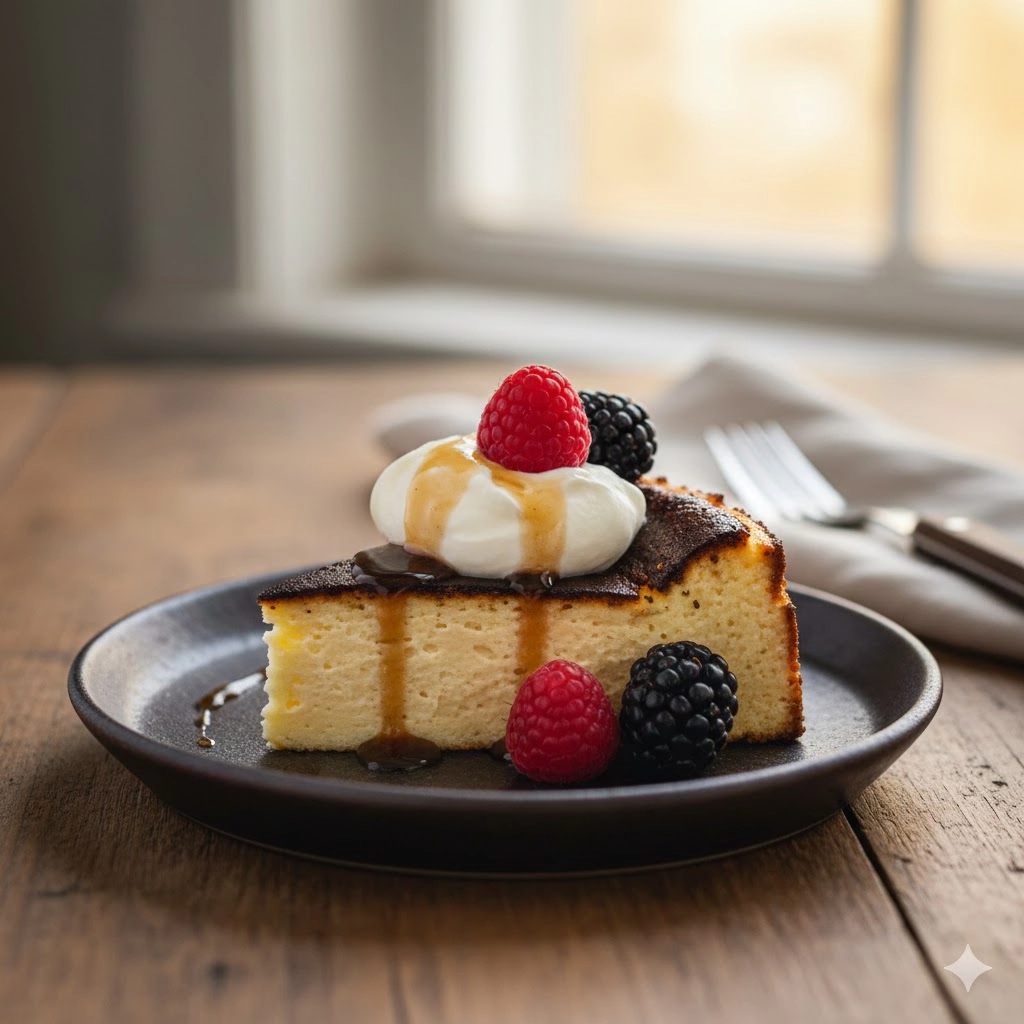
Alternative Flavor Directions
While the classic Basque burnt cheesecake is a vanilla-heavy affair, its simple base makes it an excellent canvas for flavor experimentation.
- Coffee and Cardamom: Replace the vanilla extract with two teaspoons of espresso powder dissolved in one tablespoon of hot water, plus one teaspoon of ground green cardamom. This offers a deeply aromatic, slightly bitter, and complex profile.
- Goat Cheese Blend: For a tangier, more savory-sweet flavor, substitute four ounces of the cream cheese with a high-quality fresh goat cheese (chevre). This adds a sharper dimension that pairs wonderfully with the burnt caramel crust.
- Citrus Zest Infusion: Fold in the finely grated zest of two large lemons or three oranges into the batter along with the vanilla. The citrus essential oils withstand the high heat and brighten the rich flavor dramatically.
Complimentary Servings
Because the cheesecake itself is so rich and texturally distinct, the best accompaniments are those that provide acidity, fruit, or an opposing textural element.
- Tart Red Fruit Compote: A simple sauce made by simmering frozen mixed berries (strawberries, raspberries, currants) with a touch of sugar and a squeeze of lemon juice. The tartness cuts through the richness beautifully.
- A Shower of Maldon Salt: A small, delicate flake of sea salt sprinkled over a slice just before serving enhances the sweet-salty balance and adds a subtle, pleasant crunch.
- Sweet Sherry Reduction: Reduce a half-cup of sweet Pedro Ximénez sherry in a small pot until it becomes syrupy. A light drizzle over the top introduces an earthy, dried-fruit note that is distinctly Spanish.
- Fresh Whipped Cream: A dollop of lightly sweetened, freshly whipped cream, perhaps infused with a bit of Amaretto or Kirsch, adds a cloud-like texture contrast to the density of the cake.
Culinary Queries
Is it supposed to taste burnt?
No, it should not taste like charcoal or ash. The desired flavor is intensely caramelized, like a very dark toffee or butterscotch, with a slight bitterness that serves to balance the sugar. The term “burnt” describes the appearance and the baking technique more than the final flavor.
Can I make this in advance?
Absolutely. The Basque burnt cheesecake is an excellent make-ahead dessert. It needs a minimum of six hours to chill and fully set, and its flavor improves overnight. You can easily make it two to three days in advance and keep it covered in the refrigerator.
Why did my cheesecake crack?
Cracking usually occurs if the baking time is too long or the oven temperature is too low. It signifies that the outer edges set too firmly before the center had a chance to gently cook. Ensure your oven temperature is accurate and that you remove the cake while the center still has that distinct, generous wobble.
Does it need to be refrigerated?
Yes, because it is essentially a rich, dairy-heavy custard, it must be refrigerated after the initial room-temperature cooling period. It can be left at room temperature for up to two hours for serving, but leftovers must be stored in the refrigerator.
Can I use a different pan size?
A ten-inch pan will require a reduction in baking time and will yield a thinner cake. An eight-inch pan will require a longer baking time (likely up to eighty minutes) and may need to be tented with foil to prevent the top from burning completely before the center cooks. Stick to the nine-inch springform for the ideal ratio and texture.
Nutritional Breakdown
| Nutrient | Amount per Serving |
| Calories | 520 kcal |
| Protein | 12 g |
| Carbs | 35 g |
| Fat | 38 g |
| Fiber | 1 g |
| Sugar | 31 g |
| Sodium | 280 mg |
Estimated Nutrition Disclaimer
Nutrition information is an estimate and may vary based on preparation and ingredients used.
PrintBasque Burnt Cheesecake: A Study in Contrasts
This recipe for Basque Burnt Cheesecake results in a stunning dessert with a deeply caramelized crust and a rich, creamy, custardy interior. It’s surprisingly simple and baked at high heat.
- Prep Time: 15 mins
- Cook Time: 65 mins
- Total Time: 7 hours
- Yield: 12 servings 1x
- Category: Dessert
- Method: Baking
- Cuisine: Spanish
Ingredients
Two pounds (907 grams) full-fat cream cheese, softened
One and a half cups (300 grams) granulated sugar
One teaspoon fine sea salt
Five large eggs, room temperature
Two cups (480 milliliters) heavy cream (double cream), room temperature
One teaspoon pure vanilla extract
One quarter cup (30 grams) all-purpose flour, sifted
Instructions
1. Prepare the Pan: Line a nine-inch springform pan with two sheets of parchment paper, ensuring it extends well above the rim. Preheat the oven to four hundred twenty-five Fahrenheit.
2. Cream the Base: Beat the softened cream cheese, sugar, and salt until the mixture is completely smooth and airy.
3. Incorporate Eggs: Add the eggs one at a time, beating just until each yolk is fully integrated before adding the next. Avoid over-mixing at this stage.
4. Add Liquid and Flavor: Slowly stream in the heavy cream and vanilla extract, mixing on low speed until the batter is fluid and uniform.
5. Fold in Flour: Gently fold in the sifted flour using a rubber spatula until no streaks remain.
6. Transfer and Bake: Pour the batter into the prepared pan and transfer it to the hot oven.
7. Monitor the Burn: Bake for fifty-five to sixty-five minutes, until the top is deeply, uniformly browned and the center still has a distinct wobble.
8. Cooling and Setting: Allow the cheesecake to cool completely at room temperature, then chill for at least six hours before serving.
Notes
Use full-fat block cream cheese, not whipped or tub varieties.
Ensure all dairy ingredients are at room temperature for a smooth batter.
Do not be afraid of the deep brown, nearly black color on top; this is the goal.
Nutrition
- Serving Size: 1 slice
- Calories: 520
- Sugar: 31g
- Sodium: 280mg
- Fat: 38g
- Saturated Fat: 25g
- Unsaturated Fat: 10g
- Trans Fat: 0g
- Carbohydrates: 35g
- Fiber: 1g
- Protein: 12g
- Cholesterol: 150mg