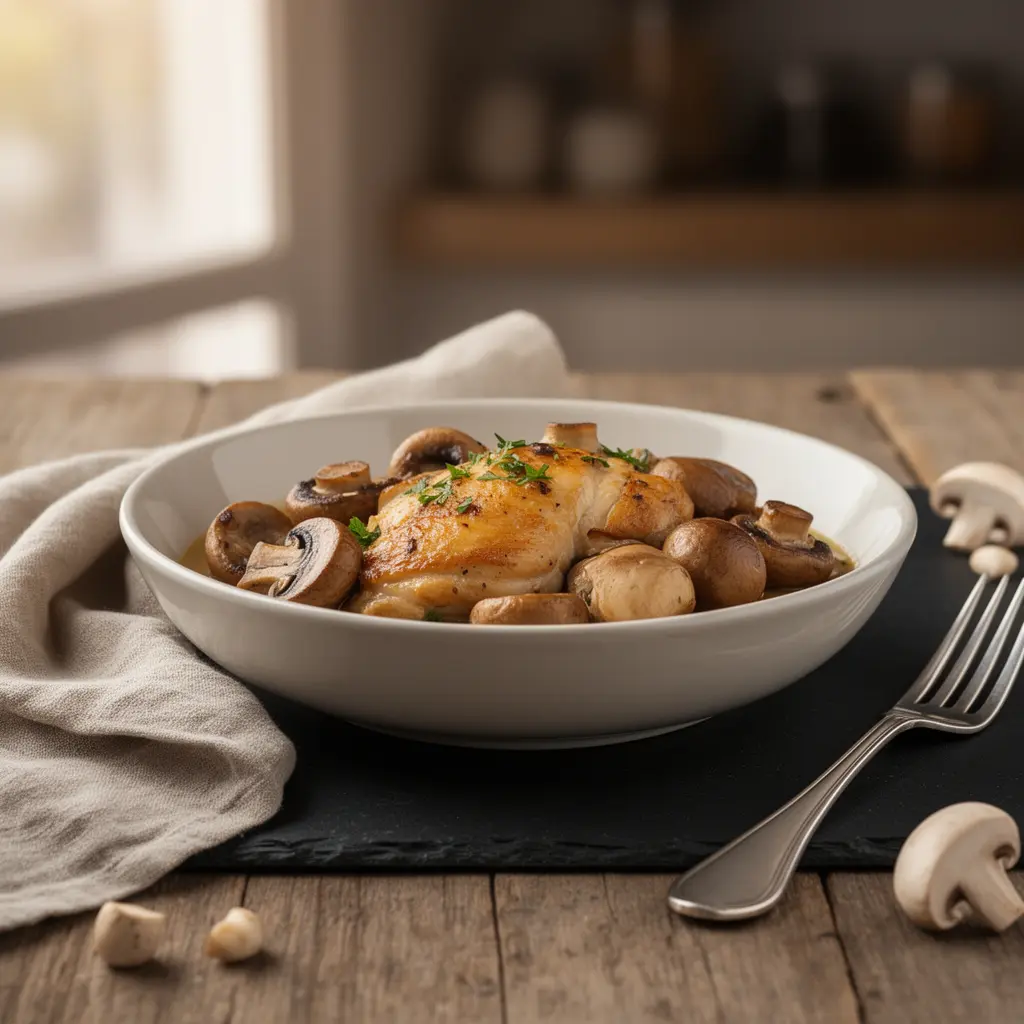
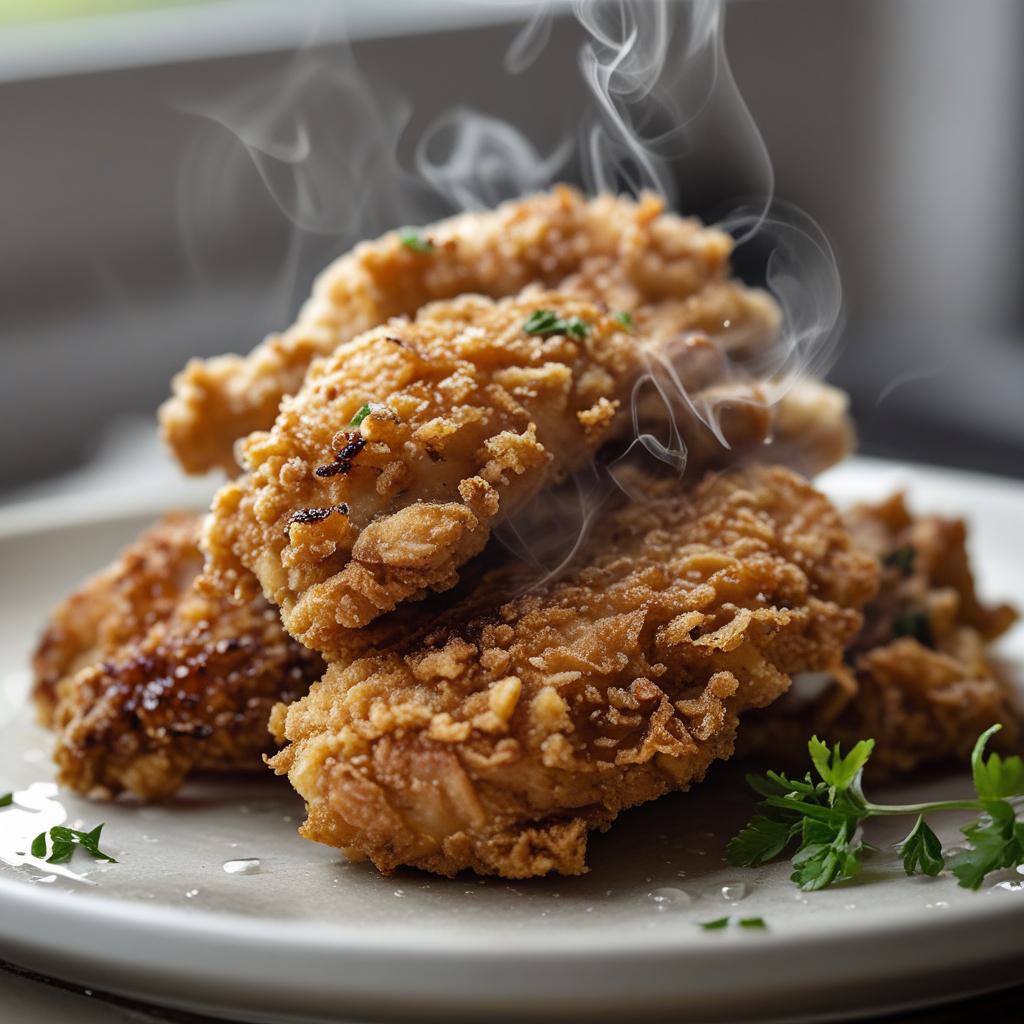
The first crackle of golden panko meeting hot olive oil sends an olfactory fanfare through the kitchen – toasted wheat and caramelized alliums performing a duet that lands somewhere between Parisian bistro and American diner nostalgia. Crunchy French Onion Chicken emerges from this alchemy, its bronzed crust cradling tender poultry steeped in the soulful depths of slow-cooked onions. Imagine the sweet severity of caramelized Vidalias melting into Gruyère’s nutty sophistication before meeting the bright punctuation of thyme. This dish wears its pedigree like a well-tailored apron: the crisp familiarity of southern fried chicken reinterpreted through Escoffier’s lens, where every textural contrast serves a deliberate sensory purpose. As the aroma of roasting garlic and beef stock reduction rises from your oven, it conjures the very essence of French onion soup in solid form – a culinary metamorphosis where steam becomes substance, broth transforms into armor, and humble ingredients achieve gastronomic transcendence. The magic lies in the Maillard reaction’s precise orchestration; onions must surrender their sharpness to become jammy conspirators against blandness, while breadcrumbs toast to the exact shade of antique mahogany. When fork meets crust, that audible shatter gives way to succulence, completing the sensory sonata that makes this dish unforgettable.
Table of Contents
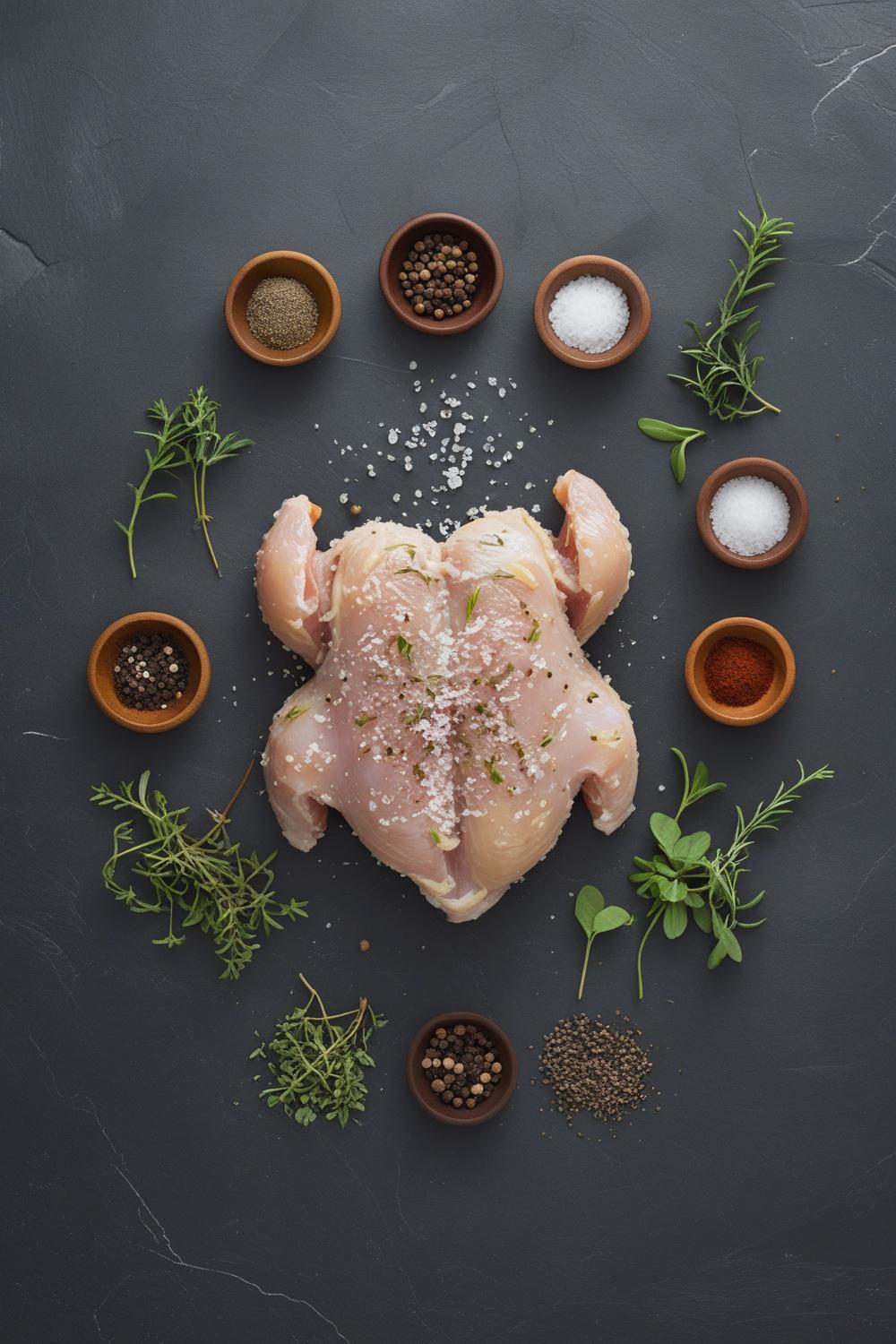
Ingredient Deep Dive
| Ingredient | Quantity | Purpose |
|---|---|---|
| Boneless chicken breasts | 4 (8oz each) | Protein base; pounded for even cooking |
| French onion soup mix | 2 packets (1.5oz) | Concentrated umami and seasoning |
| Panko breadcrumbs | 2 cups | Superior crunch with honeycomb structure |
| Gruyère cheese | 1 cup grated | Melting quality with nutty sweetness |
| Full-fat Greek yogurt | 1 cup | Tangy adhesive with heat stability |
| Shallots | 3 minced | Elevated allium base for crust |
| Beef stock reduction | 1/4 cup | Maillard reaction accelerator |
| Smoked paprika | 1 tsp | Color depth & subtle wood-fired note |
The protein matrix undergoes structural optimization through mechanical tenderizing – pounding breasts to ¾-inch thickness creates uniform thermal transfer without drying. Panko’s flake architecture (created through electrically baked bread) traps steam pockets differently than traditional crumbs, resulting in pronounced shatter upon biting. Gruyère’s emulsion structure – 45% fat content with crystalline tyrosine clusters – allows seamless melting without oil separation, binding crispy elements to the protein substrate.
Acidity balance proves critical. Greek yogurt’s lactic acid (pH 4.4) permeates the chicken’s muscle fibers during marination, denaturing proteins for maximum moisture retention. Simultaneously, the beef stock reduction’s glutamates (375mg/100g) synergize with the soup mix’s hydrolyzed vegetable protein, creating a foundational umami stratum that permeates every layer. Shallots supply isoalliin compounds that thermally decompose into the sulfurous notes essential for authentic French onion character.
Substitutions & Swaps
For gluten-free adaptations, replace panko with crushed gluten-free pretzels or rice cereal flakes – their maltodextrin content maintains crunch but requires 15% less cooking time to prevent over-browning. Vegan iterations utilize pressed extra-firm tofu slabs (frozen then thawed for porous texture) with nutritional yeast replacing the soup mix’s dairy components. When Gruyère isn’t available, aged Comté or Raclette offer similar melt profiles, though smoked Gouda introduces excessive moisture.
Pantry constraints demand creative solutions: substitute soup mix with DIY blend of dehydrated onions (2 tbsp), garlic powder (1 tsp), beef bouillon powder (2 tsp), and mushroom powder (1 tsp). Those avoiding beef can utilize concentrated mushroom stock with tamarind paste (1/4 tsp) to replicate umami depth. Yogurt alternatives must maintain viscosity – Kewpie mayonnaise adds richness but requires lemon juice (1 tbsp) to balance pH, while coconut cream needs arrowroot (2 tsp) for binding stability.
Equipment Guide
A 12-inch cast iron skillet is non-negotiable for the initial sear – its thermal mass achieves perfect crust formation without temperature dips when adding chicken. Non-stick surfaces prevent sticking but inhibit Mallard development. For oven finishing, a wire rack set inside a sheet pan allows convective heat circulation underneath, preventing soggy bottoms. Infrared thermometers (not probe types) ensure oil maintains 350°F before breading contact.
Cruciform tongs maintain crust integrity during flipping compared to flat-ended utensils. Granite mortar and pestle freshly grind dried porcini for DIY soup mix substitutions, releasing more glutamates than pre-ground powders. Stainless steel meat pounder’s flat surface prevents fiber tearing versus textured mallets. Glass bowls for dredging prevent static cling that wastes seasoned crumbs.
Step-by-Step Walkthrough
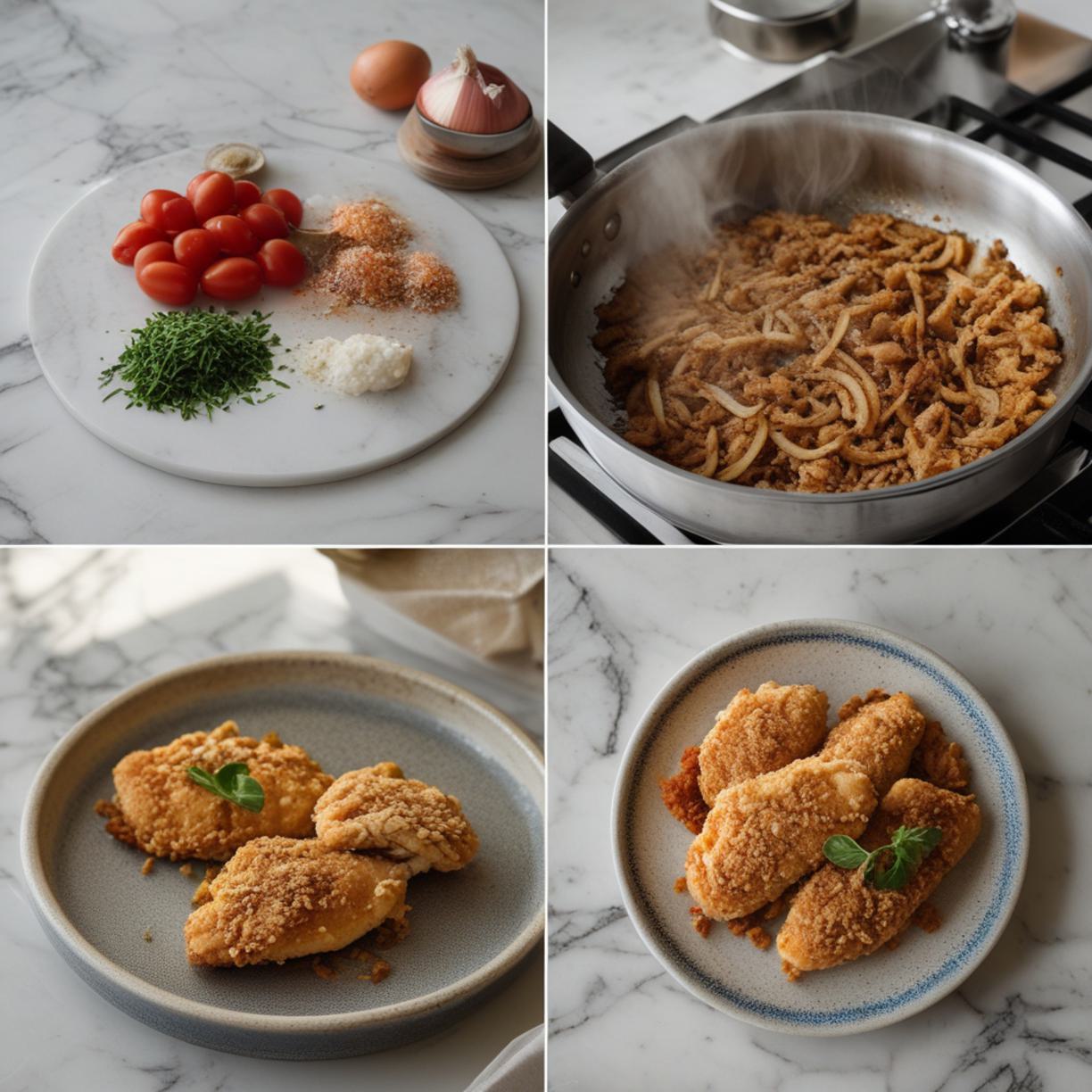
1. Brine chicken in yogurt soup mix marinade 4 hours minimum.
2. Create dredge station: flour -> egg wash -> panko/cheese mix.
3. Preheat skillet with 1/4″ oil to 350°F verified by laser thermometer.
4. Dredge breasts using “wet hand/dry hand” method to prevent clumping.
5. Fry 3-4 minutes per side until GBD (Golden Brown Deliciousness) achieved.
6. Transfer to wire rack on sheet pan and finish in 400°F oven (12 mins).
The initial yogurt marinade must fully coat all surfaces – its proteins form a moisture-locking colloid when heated. When dredging, employ the Japanese tenkatori technique: place chicken in crumbs, then sprinkle more over top while pressing gently to create crosshatched layers. Oil temperature management is critical; use a spoon to flick water droplets – they should dance, not explode violently.
During oven finishing, position an oven thermometer on the rack to verify true temperature. Many home ovens cycle ±25°F, drastically affecting cook times. For carryover cooking perfection, pull chicken at 155°F internal temp as the Gruyère’s retained heat will carry it to safe 165°F during resting. Never tent with foil – steam softens the crust.
Expert Tips & Troubleshooting
The Crispness Covenant: Should breading detach during frying, immediately pour hot oil over the exposed area using a metal spoon to seal the breach. To rescue undercooked interiors without burning crust, place chicken on preheated pizza stone (450°F) for 3-minute conductive heat bursts. If onions scorch during caramelization, deglaze with 1/4 cup apple cider vinegar then restart with fresh batch – the acidity lifts bitter compounds.
Pro secret: Add 1 tsp baking soda to caramelizing onions to accelerate breakdown of pectin via alkaline hydrolysis. For next-level presentation, employ the “cheese umbrella” technique – after oven cooking, use a culinary torch to melt additional Gruyère shavings over the crust, creating delicate crispy filaments. If dairy burns before chicken cooks, create an aluminum foil dam around edges to block direct heat.
Flavor Variations
Southwest Interpretation: Replace 30% panko with crushed tortilla chips, adding ground ancho chili (2 tsp) and lime zest to dredge. Top with avocado crema. Children’s Version: Substitute French onion mix with powdered vegetable broth, using mild mozzarella in place of Gruyère. Shape into tenders for easier handling.
Luxury Upgrade: Infuse oil with black truffle shavings (1 tsp) before frying, finishing with Périgord shaved truffles and reduced veal jus. Spicy Caribbean Twist: Add Scotch bonnet powder (1/2 tsp) to flour dredge, replacing Gruyère with pepper jack. Serve with mango chutney for cooling contrast.
Storage & Reheating
Cool completely before refrigerating uncovered for 90 minutes to prevent condensation – then wrap tightly in butcher paper, not plastic. Storage life is 72 hours max due to breading moisture migration. For reheating, use air fryer at 325°F for 4 minutes directly from fridge. Oven method: Place on wire rack over boiling water pan to create steam barrier against drying. Never microwave – it triggers rubbery protein denaturation.
FAQ Section
Q: Can I air fry instead of pan-frying?
A: Yes, but mist breading thoroughly with oil spray and cook at 400°F 10-12 mins, turning twice. Crust won’t be as tightly bonded.
Q: Why is my cheese burning?
A: Gruyère’s milk solids burn at 445°F – ensure oven doesn’t exceed 400°F and position rack in middle, not upper third.
Q: Can I prep ahead?
A: Dredge up to 12 hours in advance on wire rack in fridge – the chill firms the crust for better frying adhesion.
Q: Gluten-free alternatives?
A> Replace flour with cornstarch, panko with rice-crisp cereal, verify soup mix is GF-certified.
The Recipe Card
Crispy chicken cutlets crowned with Gruyère and caramelized onion crust. Serves 4. Total time 1 hour 45 mins (incl. marinating). Key techniques: controlled caramelization, dual-stage frying/baking, moisture management via yogurt brine. Critical flavors: umami depth, textural contrast, aromatic sweetness balanced by savory notes.
Nutrition Information
| Nutrient | Per Serving |
|---|---|
| Calories | 561 |
| Protein | 52g |
| Carbohydrates | 29g |
| Dietary Fiber | 2g |
| Sugars | 5g |
| Fat | 24g |
| Saturated Fat | 8g |
| Cholesterol | 173mg |
| Sodium | 1223mg |
Disclaimer: Nutritional data estimated via USDA database. Actual values may vary based on ingredient brands and preparation methods. Consult a nutritionist for specific dietary needs. High sodium content noted – those monitoring intake should reduce soup mix by 50% and increase fresh herbs.