There are few appetizers that rival the effortless sophistication of perfectly melted brie. This preparation takes a relatively humble wheel of soft-ripened cheese and transforms it into a molten, earthy delicacy, making it the undeniable star of any gathering. While often associated with festive holidays, the simple technique involved means it is an ideal choice for impromptu wine nights or even a decadent solo snack. Achieving the signature, runny interior and rustic exterior is less about complex steps and more about understanding the cheese’s thermal properties. When executed correctly, the warm, slightly pungent aroma that fills your kitchen is the first clue that you are about to enjoy the perfect Baked Brie. This recipe requires minimal intervention, yet delivers maximum gastronomic appeal.
Table of Contents
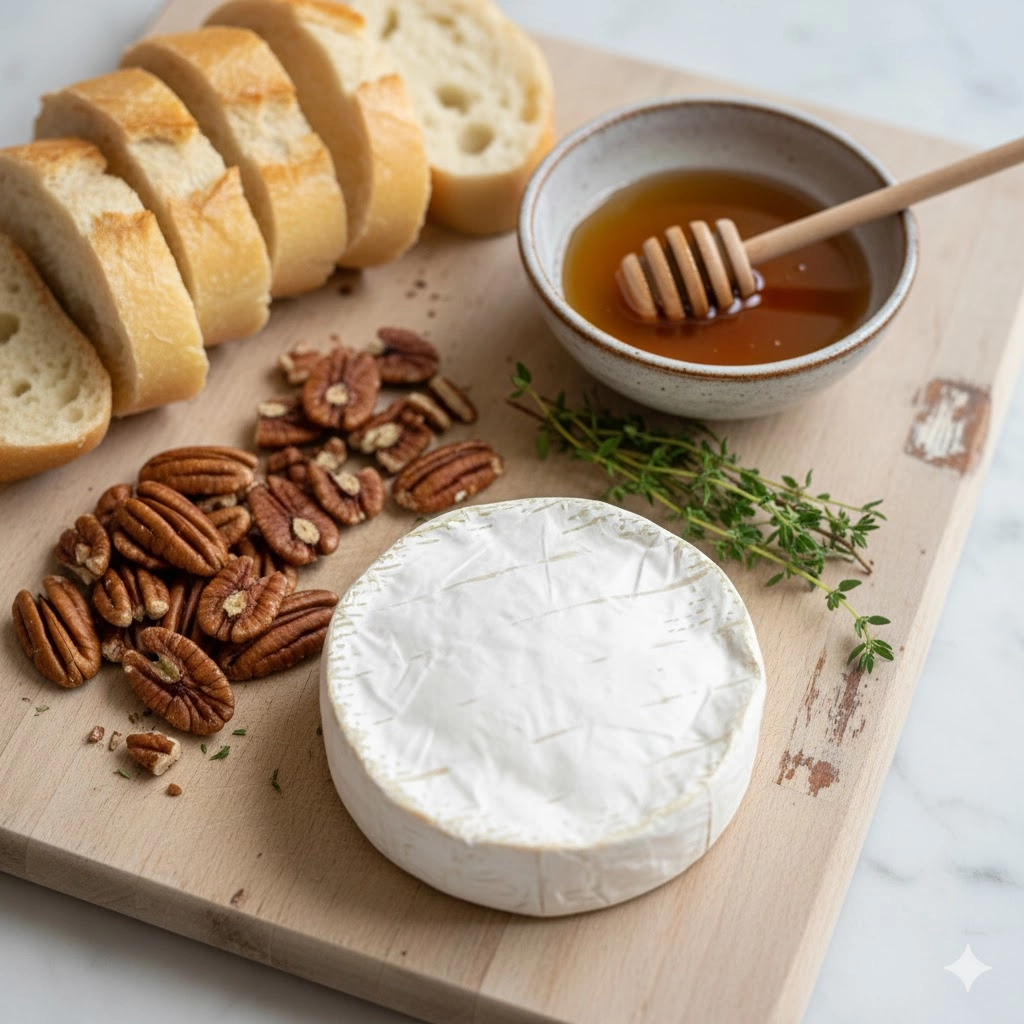
The Essential Mise en Place: Ingredient Checklist
This list focuses on the core components for a classic presentation. For variations on toppings, see the later section.
The Base
- 1 (13.2 ounce or 375 grams) round of Brie cheese, approximately four and one-half inches in diameter. The cheese should be chilled.
- 1 large baguette, sliced on a slight diagonal for crostini
- 2 tablespoons unsalted butter, melted
The Topping and Garnish
- 3 tablespoons of high-quality honey (preferably raw or local)
- one-half cup of pecans or walnuts, roughly chopped
- 1 small sprig of fresh rosemary or thyme
Seasoning
- Pinch of flaky sea salt (such as Maldon)
- Freshly ground black pepper, to taste
The Six-Step Roadmap to Gooey Perfection
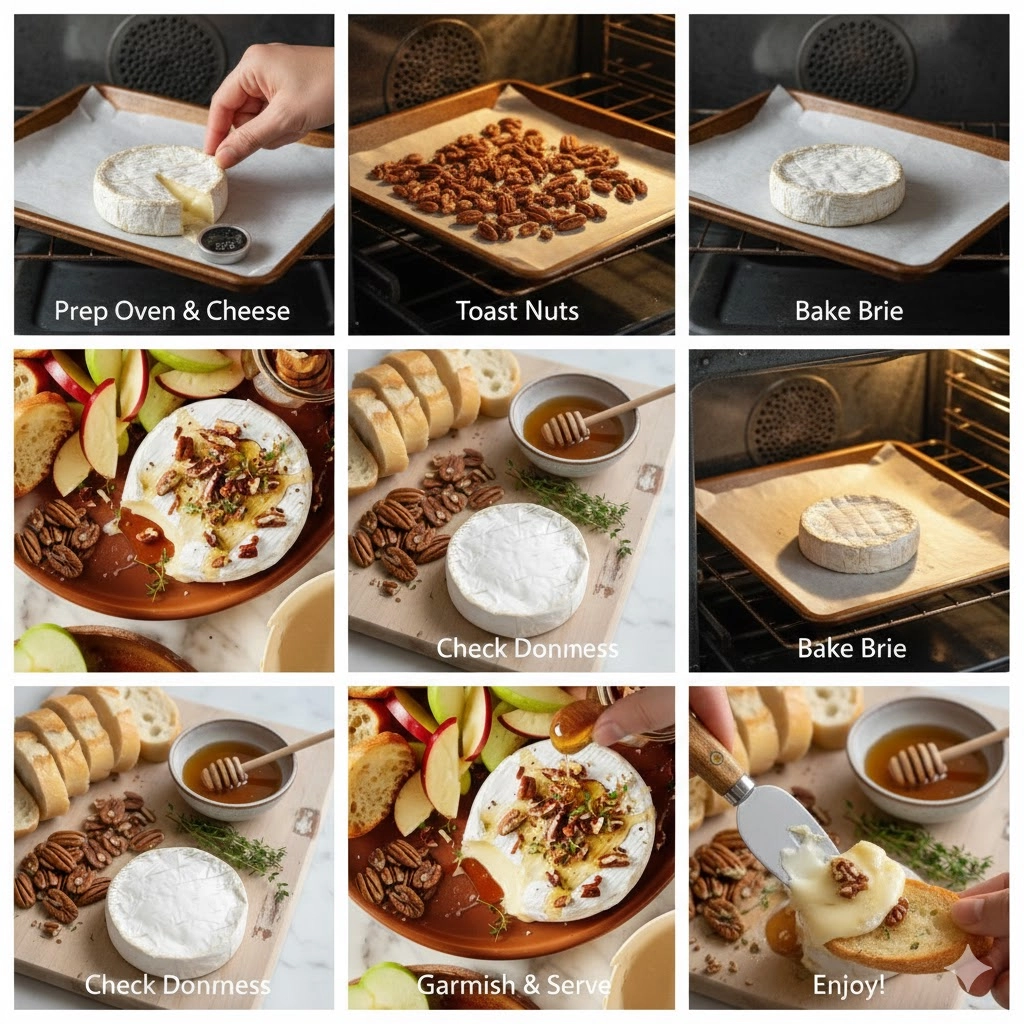
Following these instructions precisely ensures the ideal melt and structure required for serving.
- Prepare the Oven and Baking Surface: Position an oven rack in the center position. Preheat the oven to three hundred fifty Fahrenheit. Line a small, rimmed baking sheet or a six-inch oven-safe serving dish with parchment paper.
- Ready the Cheese: Remove the chilled brie from its packaging. Do not score, slice, or remove the rind. Place the intact cheese wheel directly onto the prepared baking surface.
- Toast the Nuts: Spread the chopped nuts on a separate, small tray. Place these in the oven for five to seven minutes, stirring once halfway through, until they are fragrant and lightly golden brown. Remove and set aside.
- Bake the Brie: Carefully slide the baking sheet holding the brie into the preheated oven. Bake for eight to eleven minutes.
- Test for Doneness: Gently press the center of the brie with the back of a spoon. It should yield easily, feeling soft and liquid-like beneath the rind, but still hold its shape completely.
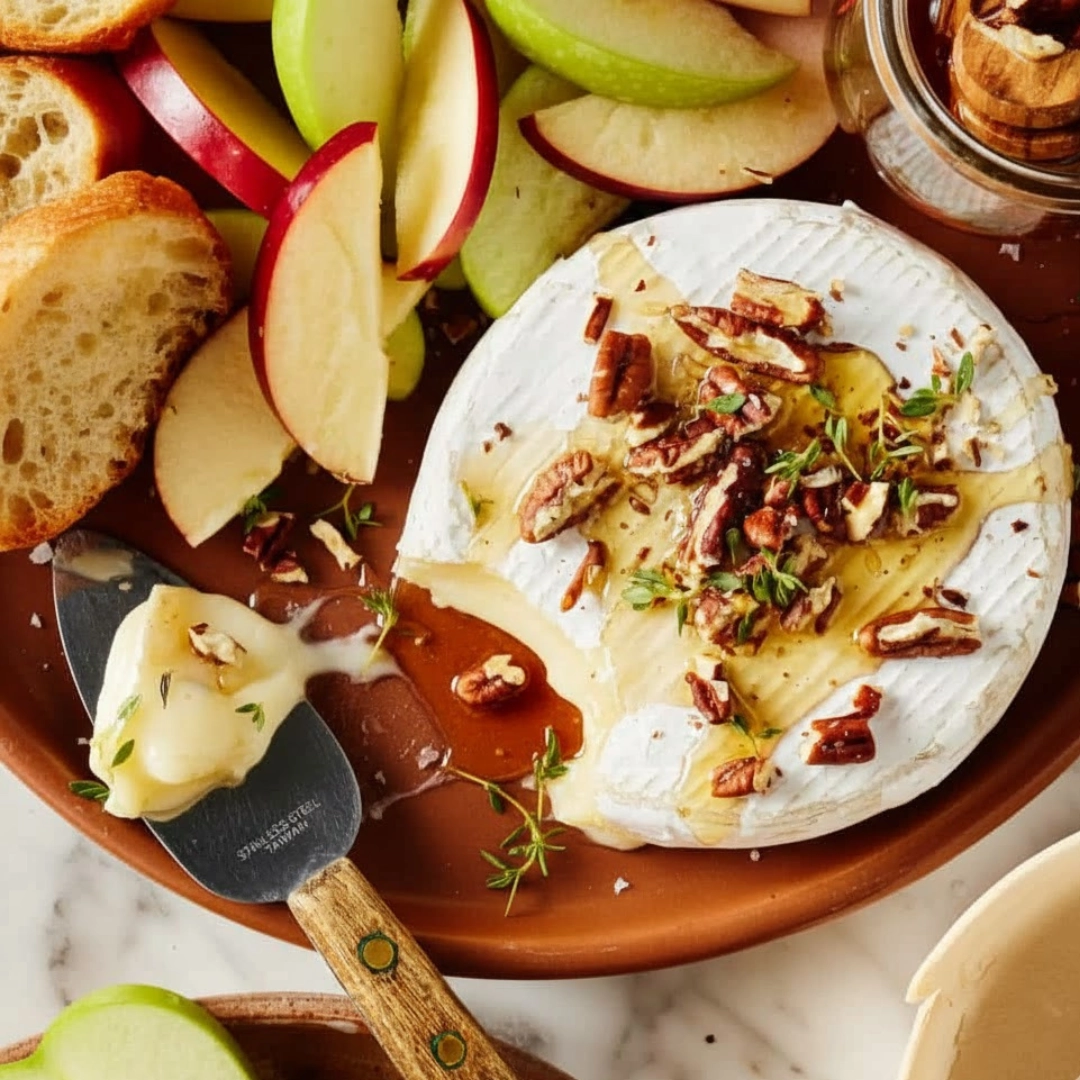
- Garnish and Serve Immediately: Using the parchment paper as a sling, carefully transfer the warm brie to a serving platter. Drizzle generously with honey, sprinkle the toasted nuts over the top, and finish with a pinch of flaky sea salt and a sprig of fresh herb. Serve with the baguette slices.
Behind the Rind: Technique and Sensory Cues
The success of a baked brie rests entirely on managing the internal temperature without compromising the structural integrity of the edible rind. The instructions above are brief, but the details in technique are paramount to achieving that beautiful molten center.
The Thermal Advantage of a Cold Start
The cardinal rule of this recipe is to begin with a wheel of brie that is cold, directly from the refrigerator. If the cheese starts at room temperature, the outer edges, which are closest to the heat, will begin to melt and weep before the center has had a chance to fully liquefy. This results in a puddle of half-melted cheese that collapses the moment it is moved. The cold start buys crucial time: the rind and edges heat gradually, allowing the internal fat matrix to break down fully into a smooth, liquid state while the outer layer—the Baked Brie’s crust—remains firm enough to act as a natural container.
Understanding the Rind’s Role
The white, bloomy rind (known as penicillium candidum) is not merely decorative; it is the structural support system for the melting interior. For this reason, scoring the top or removing the rind before baking is a common novice mistake. When you score the cheese, you create an escape route for the melting fat. While some recipes call for this to allow toppings to penetrate, it often leads to a messy and premature eruption. An intact rind ensures that the internal steam and pressure build up slightly, leading to that luxurious, flowing texture when the seal is finally broken by a guest’s knife. The rind itself is earthy, mushroomy, and provides a necessary textural and flavor contrast to the sweet toppings.
Sensory Indicators for the Perfect Bake
The eight-to-eleven minute baking window is an estimate; ovens vary widely, and cheese thickness is not always uniform. You must rely on visual and tactile cues for true doneness.
- Visual Cues: The cheese should not change color. A perfect baked brie looks virtually identical to a cold one, perhaps slightly softened. If you see the edges begin to flatten or small beads of fat (called “oiling out”) forming on the rind, it is overcooked.
- Aroma Cues: About two minutes before it’s done, a warm, nutty, and slightly pungent aroma will waft from the oven. This indicates the cheese is fully warm and the complex volatile organic compounds are being released.
- The Yield Test: The definitive check is a very gentle press on the center. Use the back of a plastic or wooden spoon. If the cheese feels taut and firm, give it two more minutes. If the cheese yields with almost no resistance, feeling like a heavy water balloon or a warm gel, it is done. It must be carefully removed at this moment to prevent structural failure.
A Note on Parchment Paper and Transfer
Handling a perfectly baked wheel of brie is challenging. It is extremely fragile. The parchment paper is your friend here. Do not try to lift the cheese directly with a spatula. Use the parchment as a sling to slide the cheese from the hot tray onto your room-temperature serving platter. This prevents the warm, delicate base from sticking, tearing, or collapsing during the transition, ensuring a flawless presentation.
Elevating the Experience: Expert Pointers
Take your appetizer from excellent to extraordinary with these refined techniques.
- Optimize the Vessel: If you are using a slightly smaller brie wheel (under 12 ounces), consider baking it directly in a small cast-iron skillet or a six-inch ceramic dish. This eliminates the tricky transfer process and keeps the cheese warmer for longer—ideal for slow grazing.
- Nut Preparation is Key: Toasting the nuts is non-negotiable. Raw nuts taste flat and starchy. Toasting unlocks their essential oils, deepening their flavor from a pale, creamy taste to a robust, earthy crunch that stands up against the richness of the melted cheese.
- Use a Warming Drawer: If you have to hold the brie before serving, avoid holding it in the oven. Instead, transfer it to a warming drawer set to its lowest setting (ideally around one hundred twenty Fahrenheit). This maintains the liquid state without continuing to cook the cheese and risk rind rupture.
- Balance the Honey’s Viscosity: If your honey is thick, warming it slightly in a microwave for about ten seconds will make it much more fluid. This allows for an even, elegant drizzle that coats the surface smoothly, rather than glopping into thick pools.
- The Flaky Salt Finish: A pinch of flaky sea salt at the end is a crucial counterpoint. The rich butterfat and the sweetness of the honey need a sharp, mineral contrast. The pyramid structure of the flakes provides a fleeting burst of salinity that cuts through the richness, preventing the dish from becoming cloying.
- Avoid Excess Moisture: If you plan to use jam or fruit, add it after the cheese is baked. Baking fruit or jam atop the brie releases excess steam and moisture, which can soften the brie’s rind prematurely and cause it to sag or break before it’s fully melted inside.
- The Optimal Serving Window: Baked brie is a sprint, not a marathon. It should be served within ten to fifteen minutes of leaving the oven. After that, the internal temperature drops quickly, and the cheese begins to firm up. If it cools, it is still delicious, but the desirable gooey texture will be lost.
Alternative Presentations and Flavor Bridges
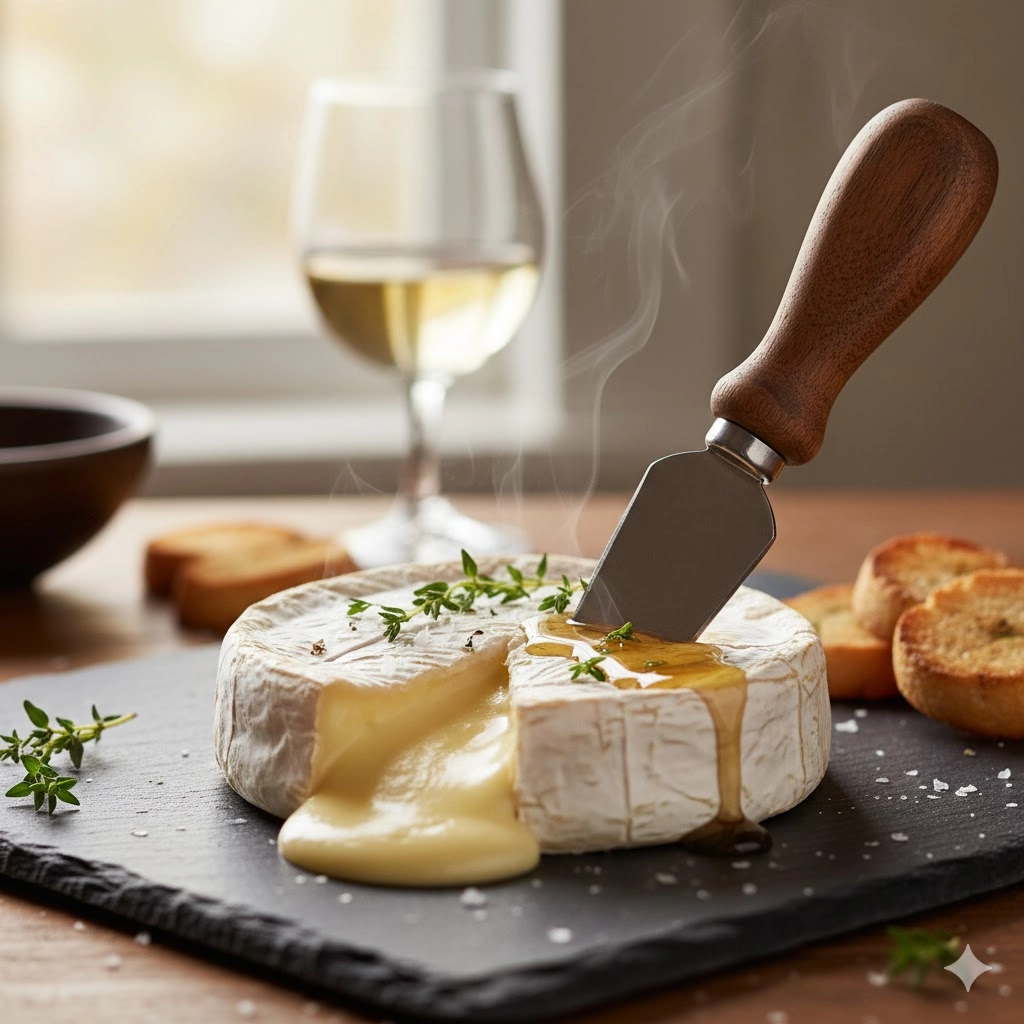
While honey and nuts are classic, the versatility of this melted cheese allows for endless creativity. The goal is always to balance the rich, buttery flavor of the brie with acidity, crunch, and herbaceous notes.
The Fig and Balsamic Reduction
Substitute the honey with a high-quality fig jam or preserves. To elevate it, swirl in one teaspoon of aged balsamic glaze with the jam before topping the cheese. The dark, acidic balsamic cuts sharply through the fatty cheese, and the earthy figs pair perfectly with brie’s mushroom undertones. Pair this variation with toasted walnuts or pistachios.
Cranberry and Citrus Brightness
For a brighter, tangier profile, use a spoonful of whole cranberry sauce (store-bought or homemade) instead of honey. Before serving, grate a minuscule amount of fresh orange zest over the top. The citrus oil adds a vibrant, floral quality that contrasts beautifully with the cheese’s funkiness. This is particularly good served with plain, crisp water crackers.
The Savory Herb Garden
Skip the sweetness entirely and focus on savory depth. Before baking, brush the top of the brie with a thin layer of olive oil (no more than half a teaspoon). After baking, top with a mixture of finely minced fresh garlic, rosemary, and sage. Finish with freshly cracked black pepper. This preparation transforms the dish into a pungent, deeply aromatic component, best served with hard crusty bread.
Puff Pastry Encased (Brie en Croute)
For a true showstopper, wrap the chilled brie in a sheet of store-bought puff pastry. Thaw the pastry, wrap it like a package, crimp the edges tightly, and brush the top with an egg wash (one egg whisked with one tablespoon of water). Bake at three hundred seventy-five Fahrenheit for approximately twenty-five to thirty minutes, or until the pastry is deeply golden brown. This variation offers a crispy, flaky texture around the molten cheese.
Curating the Serving Board: Pairing Ideas
A wheel of warm brie should never be presented alone. The accompanying items must provide textural contrast, salinity, or refreshing acidity to clean the palate.
The Starch Foundation
While any cracker will suffice, a sliced baguette is the standard bearer. Slice it on a slight bias and brush the slices with melted butter before toasting them lightly in the oven for about five minutes. This creates firm crostini that can handle the heavy, molten cheese without breaking. The crust should be robust enough to act as a proper spoon. Alternatively, focus on thin, neutral-flavored water crackers, which allow the cheese and its toppings to be the sole focus.
Fresh Fruit and Acidity
The best fruit pairings are those with high acidity and crisp texture. Sliced green apples, such as Granny Smith or Honeycrisp, offer a satisfying snap that contrasts the gooey cheese. Small clusters of red seedless grapes, chilled, are equally refreshing. Pears, particularly Bosc, work well but should be slightly under-ripe to ensure sufficient firmness. The refreshing crunch and slight tannic bite of the fruit prevents palate fatigue from the rich, warm cheese.
Cured Meat or Pickled Elements
For a full appetizer spread, introduce a subtle savory element. Thinly sliced prosciutto offers a delightful salty cure that contrasts the sweetness of the honey. For those who prefer tang, a small side bowl of cornichons (tiny pickled cucumbers) or pickled red onions provides the sharp, vinegary acidity necessary for contrast. These elements cut through the richness, allowing guests to cleanse their palate between bites.
Frequently Asked Questions on Brie Preparation
How do I know if my brie is still good?
A high-quality brie should smell pleasantly earthy, mushroomy, and perhaps slightly buttery. If the aroma is overpowering, intensely ammoniated, or smells strongly like chlorine, it is likely past its prime. Visually, the rind should be uniformly white and fuzzy; dark spots or pinkish areas are signs that the cheese may have developed unwanted molds or bacteria. Always check the expiration date and ensure the wheel is not oozing liquid before baking.
Can I bake brie in the microwave?
While you can technically melt brie in a microwave, it is highly discouraged for this recipe. Microwaves heat unevenly, causing the fat molecules to liquefy too quickly and violently. This leads to a rubbery, dense rind and a gritty, separated interior. The heat must be gentle and dry, which is what oven baking at three hundred fifty Fahrenheit provides. The oven ensures a slow, even melt from the outside in, yielding that smooth, flowing texture.
What is the best type of brie to use?
Look for a wheel labeled as Brie de Meaux or a high-quality domestic brie. Avoid “double” or “triple cream” varieties if you are new to baking brie, as these have a significantly higher fat content and may collapse or separate more easily. The best wheel will be about one inch thick and not overly mature (avoiding those that are already very soft at room temperature).
Can I freeze leftover baked brie?
It is not recommended to freeze baked brie. Freezing and thawing dramatically changes the texture of the cheese, making it grainy and watery as the fat and moisture separate. If you have leftovers, they are best consumed within two to three days, stored tightly wrapped in the refrigerator. Reheat gently in the oven at two hundred fifty Fahrenheit for about five minutes to restore some of its softness.
Is the rind safe to eat?
Yes, the rind is entirely safe and intended to be eaten. It is a surface mold culture that imparts the classic earthy flavor of brie. For a proper baked brie experience, the warm, slightly chewy rind is essential. It provides a savory, textural boundary against the sweet, molten interior.
Nutritional Overview
| Nutrient | Amount per Serving |
| Calories | 390 kcal |
| Protein | 19 g |
| Carbs | 28 g |
| Fat | 23 g |
| Fiber | 1 g |
| Sugar | 9 g |
| Sodium | 550 mg |
Nutrition Information Disclaimer
Nutrition information is an estimate and may vary based on preparation and ingredients used.
PrintMastering the Perfect Melt: A Simple Recipe for Baked Brie

This recipe transforms a wheel of chilled Brie into a warm, gooey, and elegant appetizer, perfectly topped with honey, toasted pecans, and a pinch of salt. Ready in under 20 minutes.
- Prep Time: 5 mins
- Cook Time: 11 mins
- Total Time: 16 mins
- Yield: 8 servings 1x
- Category: Appetizer
- Method: Baking
- Cuisine: French
Ingredients
1 (13.2 ounce or 375 grams) round of Brie cheese, chilled
3 tablespoons of high-quality honey
one-half cup of pecans or walnuts, roughly chopped
1 small sprig of fresh rosemary or thyme
Pinch of flaky sea salt
1 large baguette, sliced
Instructions
1. Position an oven rack in the center. Preheat the oven to three hundred fifty Fahrenheit. Line a small, rimmed baking sheet with parchment paper.
2. Remove the chilled brie from its packaging and place the intact cheese wheel onto the prepared baking surface. Do not score the rind.
3. Spread the chopped nuts on a separate tray. Place these in the oven for five to seven minutes, stirring once, until fragrant. Remove and set aside.
4. Carefully slide the baking sheet holding the brie into the preheated oven. Bake for eight to eleven minutes, or until the center is soft and yielding to the touch.
5. Using the parchment paper as a sling, transfer the warm brie to a serving platter.
6. Drizzle generously with honey, sprinkle the toasted nuts over the top, and finish with flaky sea salt and a sprig of fresh herb. Serve immediately with the sliced baguette.
Notes
The cheese MUST be cold from the fridge to ensure it melts inside without collapsing the rind.
Brie is best served within ten to fifteen minutes of leaving the oven. It will firm up as it cools.
Toasting the nuts is essential for optimal flavor and crunch.
Nutrition
- Serving Size: 1 serving
- Calories: 390
- Sugar: 9g
- Sodium: 550mg
- Fat: 23g
- Saturated Fat: 14g
- Unsaturated Fat: 7g
- Trans Fat: 0g
- Carbohydrates: 28g
- Fiber: 1g
- Protein: 19g
- Cholesterol: 70mg