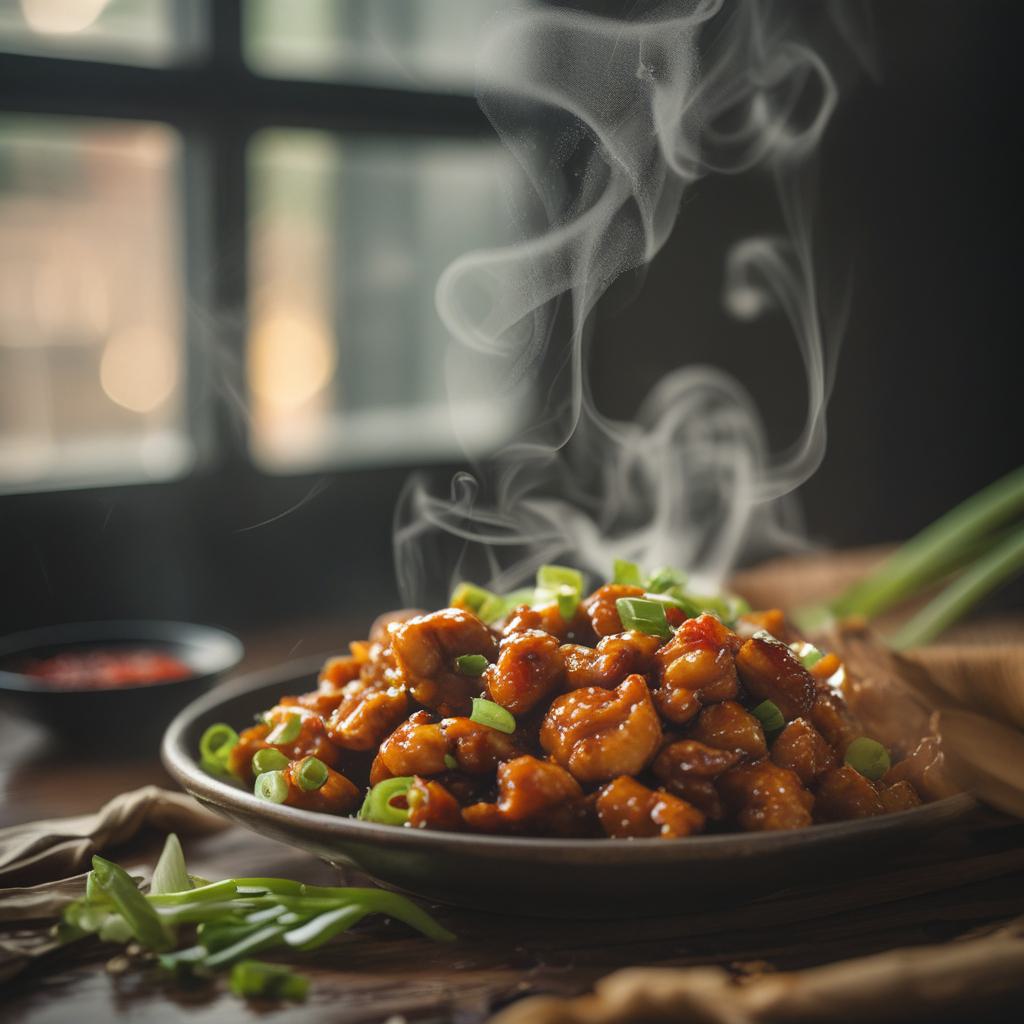
The air snaps with promise when Kung Pao Chicken hits the wok – that explosive hiss of marinated meat meeting scorching metal, followed by the rising perfume of toasted chilies and Sichuan peppercorns. This isn’t mere takeout fare; it’s a centuries-old symphony of contrasts orchestrated by Ding Baozhen, a Qing Dynasty governor whose passion for bold flavors birthed a legend. True Kung Pao is a masterclass in balance: the narcotic tingle of mala dancing with the sweet kiss of caramelized vinegar, the crunch of roasted peanuts against velvety chicken. The crimson dried chilies aren’t just heat-bringers – they offer a smoky depth, their seeds whispering secrets of terroir. This dish demands attention – the sharp tang of Shaoxing wine cutting through richness, the glossy sheen of a perfectly emulsified sauce clinging to every morsel. To eat Kung Pao Chicken is to understand power held in check. It’s fire tempered with honey, chaos refined into harmony. It reminds us that true mastery lies not in overwhelming the palate, but in making brutality beguiling.
Table of Contents
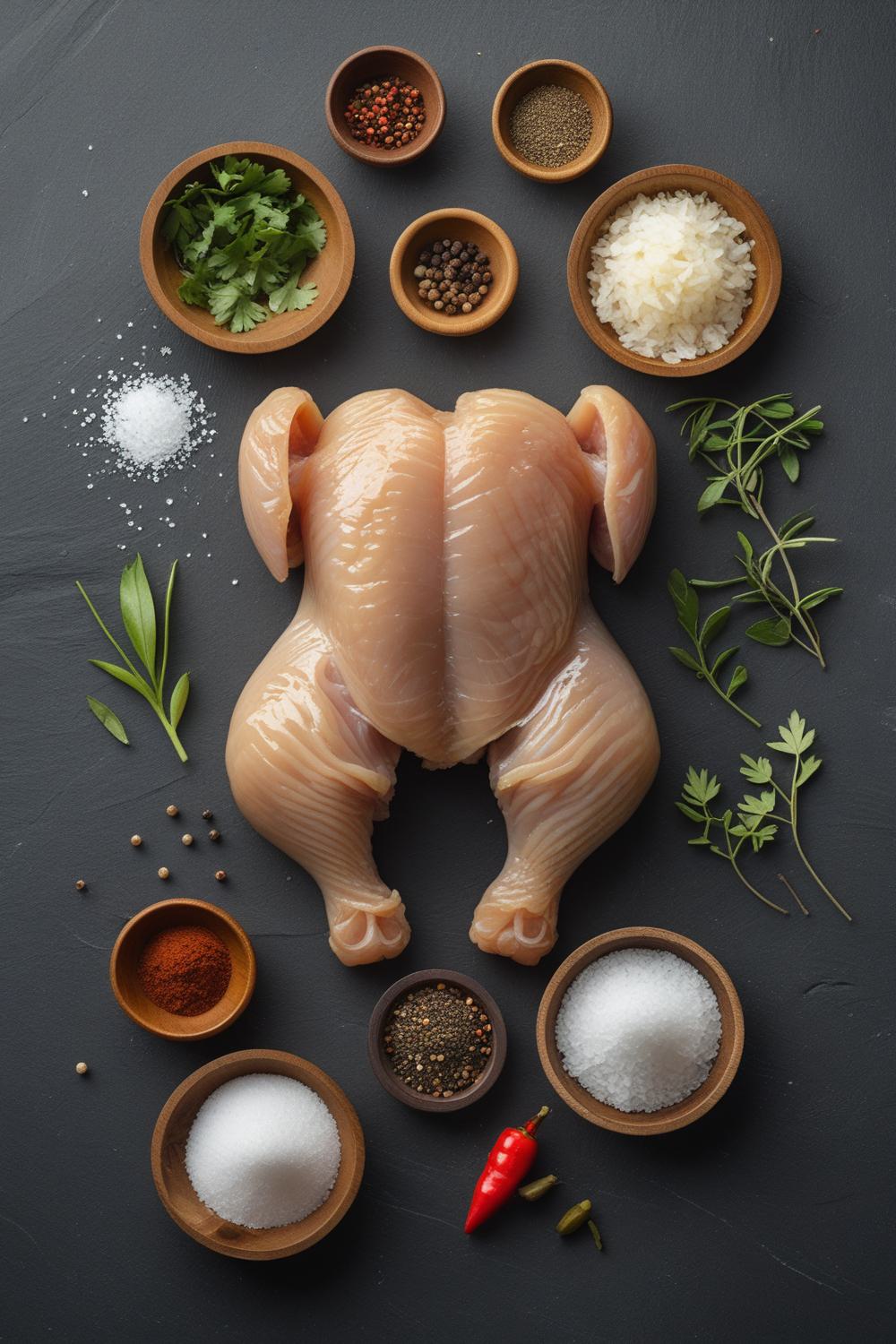
Ingredient Deep Dive
| Ingredient | Quantity | Purpose |
|---|---|---|
| Boneless Chicken Thighs | 1.5 lbs | Higher fat content resists overcooking; optimal texture |
| Chinese Roasted Peanuts | 1/2 cup | Pre-toasted nuts prevent sogginess; essential crunch |
| Sichuan Peppercorns | 2 tsp | Creates mala numbness; not heat but neurological buzz |
| Dried Arbol Chiles | 15 pods | Smoky, vegetal heat; less aggressive than Thai varieties |
| Chinkiang Vinegar | 3 tbsp | Fermented black vinegar: complex acidity cuts richness |
| Shaoxing Wine | 2 tbsp | Umami depth; alcohol evaporates, leaving fragrance |
| Double-Concentrate Tomato Paste | 1 tsp | Color anchor; prevents grayish sauce hue |
| Cornstarch Slurry | 4 tsp + 2 tbsp water | Creates glossy, clingy sauce structure |
| Whole Garlic Cloves | 8 cloves | Smashed for controlled flavor release |
| Fresh Ginger | 2-inch knob | Julienned to maintain texture through cooking |
Our protein choice is non-negotiable: thighs over breasts. Collagen-rich connective tissue liquefies under high heat, self-basting the meat while preventing the cottony dryness plaguing white meat. The peanuts must be pre-roasted – raw nuts release enzymes causing sauce breakdown. Note the cornstarch isn’t merely a thickener: it creates a protein-slurry matrix when combined with soy and wine, encapsulating juices during velveting.
Peppercorn quality determines authenticity. True Sichuan huajiao contains hydroxy-alpha sanshool, binding to TRPV1 receptors to create vibrating “electric” numbness. Substitute varieties lack this neuroactive compound. Tomato paste acts as our culinary insurance policy – its melanoidins delay Maillard reaction discoloration, keeping sauce vibrant crimson. Remember: Chinkiang vinegar’s glutamic acid content is triple balsamic’s, making it irreplaceable for umami layering.
Substitutions & Swaps
For gluten-free adaptation, swap light soy sauce with tamari (ensure it’s brewed, not chemical-hydrolyzed) and replace Shaoxing with dry sherry. Vegetarians may use extra-firm pressed tofu – freeze-thaw cycle creates meat-like fissures for sauce penetration. No Chinkiang vinegar? Combine 2 parts balsamic with 1 part Worcestershire and a dash of molasses. If Sichuan peppercorns are unavailable, toast 1 tsp black peppercorns with 1/2 tsp orange zest – this mimics the citrus-tingling profile.
Chicken broth can replace wine if necessary, but add 1 tsp marmite for lost umami. Peanut allergies demand cashews (roasted separately) or toasted sunflower seeds. For keto, substitute cornstarch with xanthan gum (1/4 tsp) and use sugar-free honey substitute sparingly. Crucially, never replace dried chiles with fresh – the dehydration process concentrates capsaicinoids differently.
Equipment Guide
A 14-inch carbon steel wok is ideal – its empirical shape allows graduated heat zones. Cast iron retains heat but lacks responsiveness; non-stick coatings prevent essential fond development. Use a flat-bottomed wok if cooking on Western stovetops. The wok hei (breath of the wok) requires a minimum 100,000 BTU burner, though a blowtorch aimed at the wok’s edge mimics this effect domestically.
Essential tools: a long-handled stainless steel spatula for tossing without burning, a fine-mesh skimmer for peppercorn removal, and a Chinese spider strainer for velveting. Always have a mise en place setup – once cooking starts, there’s no time for chopping. A mortar and pestle ensures proper Sichuan peppercorn cracking to release volatile oils. Avoid silicone utensils – they melt at required temperatures.
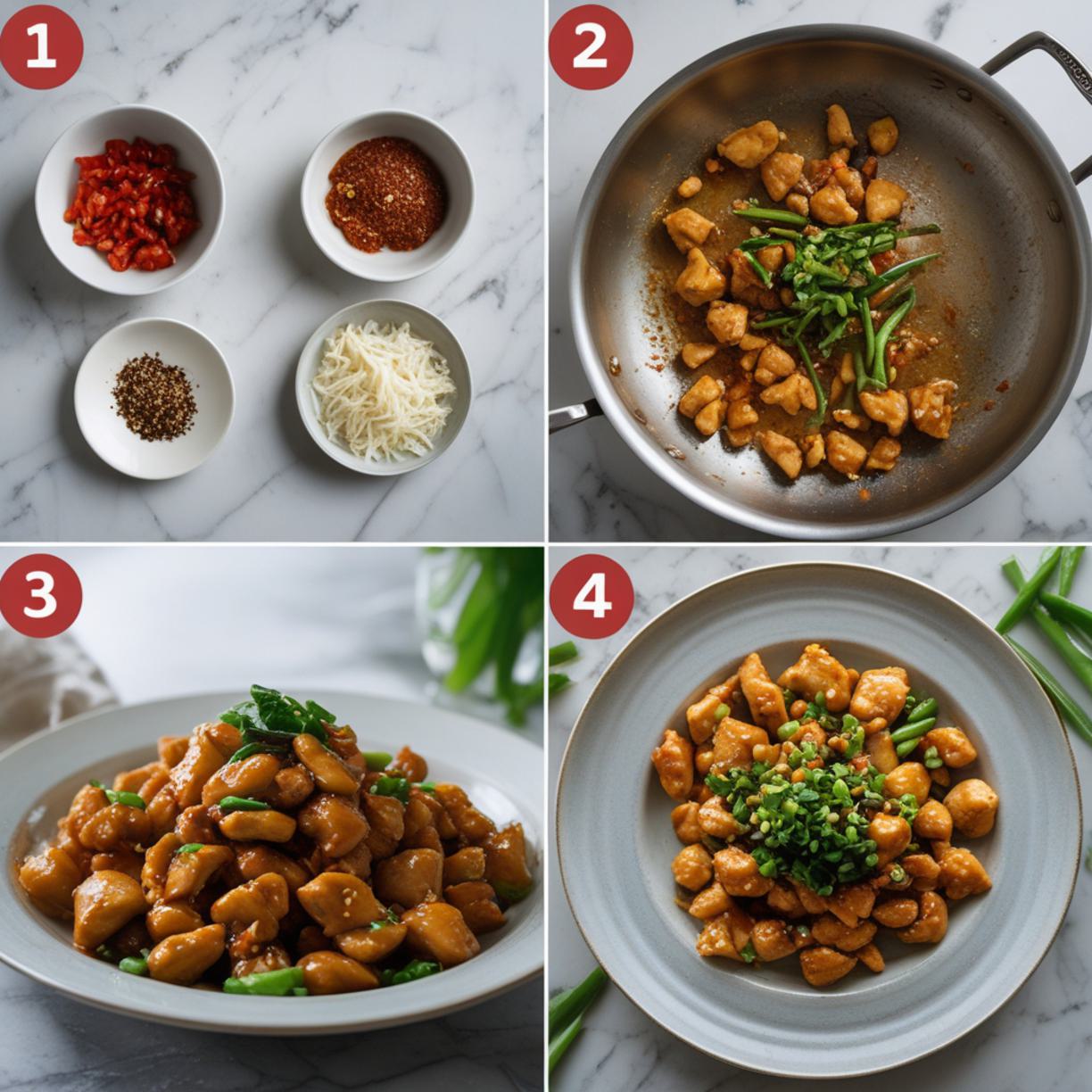
Step-by-Step Walkthrough
- Cut thighs into 3/4-inch cubes (larger pieces dry out)
- Marinate chicken with 2 tbsp soy, 1 tbsp wine, 1 tsp dark soy, 2 tsp cornstarch, 1 tsp oil – massage 5 minutes until sticky
- Infuse 1/2 cup oil with Sichuan peppercorns over medium-low heat 4 minutes; strain, reserving oil
- Reheat infused oil to 375°F. Fry chicken 90 seconds until edges crisp; remove
- Pour oil to 2 tbsp, blister chiles 15 seconds until fragrant but not blackened
- Add smashed garlic, ginger; stir-fry 10 seconds until edges translucent
- Deglaze with 1 tbsp wine, scraping fond
- Combine sauce: 2 tbsp soy, 3 tbsp vinegar, 1 tsp paste, 1 tbsp honey, 1 tsp sesame oil
- Return chicken; pour sauce clockwise around wok rim
- When sauce bubbles, add cornstarch slurry in 3 batches
- Off heat, toss in peanuts and 1/2 tsp ground Sichuan pepper
The velveting step is non-negotiable – the alkaline marinade (soy sauce’s pH 4.5-5.4) raises the chicken’s isoelectric point, allowing proteins to retain moisture better during high-heat cooking. Frying at precisely 375°F creates a protein gel barrier through rapid dehydration of the outer layer.
Timing aromatics is critical: garlic burns at 250°F, while ginger’s zingerone doesn’t release until 284°F. By smashing not mincing garlic, you create ruptured cells for slower flavor diffusion. Never add sauce ingredients directly to center where they’ll cool the wok – the rim cascade preserves thermal momentum.
Final emulsification happens off-heat. At 203°F (sauce boiling point), amylose starch chains begin unraveling. Letting residual heat complete thickening prevents a gluey texture. Stirring peanuts at the end preserves their acoustic crunch – a principle studied by food rheologists at P&G.
Expert Tips & Troubleshooting
Wok Hei Workaround: Place blowtorch 6 inches above wok’s edge while tossing – the 1100°F flame carbonizes stray sugars, mimicking breath-of-the-wok. Sauce Splitting? Whisk in 1 tsp hot water and swirl aggressively – lecithin from peanut oil will re-emulsify. Overly Numbing? Sichuan peppercorns contain both numbing (hydroxy-alpha sanshool) and bitter (limonene) compounds. Toast at 300°F for 90 seconds to vaporize bitterness while preserving numbing oils.
Chicken Toughness indicates improper velveting or overcrowded frying. Blot meat thoroughly before marinating – surface moisture causes steam instead of sear. Soggy Peanuts result from early addition. Always add them last. If chilies burned, remove with tongs and add 1 tsp sugar to counteract bitterness. Acid Balance is key – too tangy? Add honey; too sweet? Splash extra vinegar.
Flavor Variations
For Seafood Version, substitute chicken with extra-large shrimp (21/25 count) and add 1 tsp shrimp paste to the sauce. Kids’ Sanitized Edition: remove seeds from chilies (capsaicin resides there) and replace Sichuan pepper with orange zest. Incorporate 1/4 cup diced pineapple for sweetness. Xinjiang-Influenced twist: add cumin seeds with ginger and substitute peanuts with walnuts.
Gourmet Garnish: Infuse sesame oil with black cardamom and drizzle before serving. Extra Heat seekers should add 1 tsp ground facing heaven chilies (the urfa biber of Sichuan) with the sauce.
Storage & Reheating
Cool completely before refrigerating in glass (plastic absorbs capsaicin). Store peanuts separately. Consume within 72 hours. To reheat: spread thin layer on carbon steel pan over medium. Add 1 tsp water, cover 90 seconds until steaming, then uncover to crisp. Microwaving de-emulsifies sauce – avoid. Freezing distorts peanuts’ cellular structure; not recommended.
FAQ Section
Why no bell peppers? Authentic Kung Pao never contains them – an American-Chinese addition. Can I use peanut oil? Yes, but its smoke point (450°F) is lower than avocado (520°F) or rice bran (490°F). How to reduce spice? Remove chili seeds pre-cooking; add dairy (raita) when eating. Is dark soy essential? Yes – it contains caramelized sugars from longer fermentation, critical for color depth.
The Recipe Card
A Sichuan masterpiece balancing fiery chiles, tingling Sichuan peppercorns, and crunchy peanuts against velvety chicken. Sweet, sour and numbing flavors unite in glossy sauce. Ready in 25 minutes. Serves 4. Serve with jasmine rice to mop up the electric crimson sauce.
Nutrition Information
| Nutrient | Per Serving* |
|---|---|
| Calories | 489 kcal |
| Protein | 34.2 g |
| Carbohydrates | 18.3 g |
| Dietary Fiber | 2.1 g |
| Sugars | 8.7 g |
| Fat | 30.1 g |
| Saturated Fat | 6.8 g |
| Cholesterol | 142 mg |
| Sodium | 1283 mg |
*Estimates based on standard ingredients. Actual values may vary with substitutions.