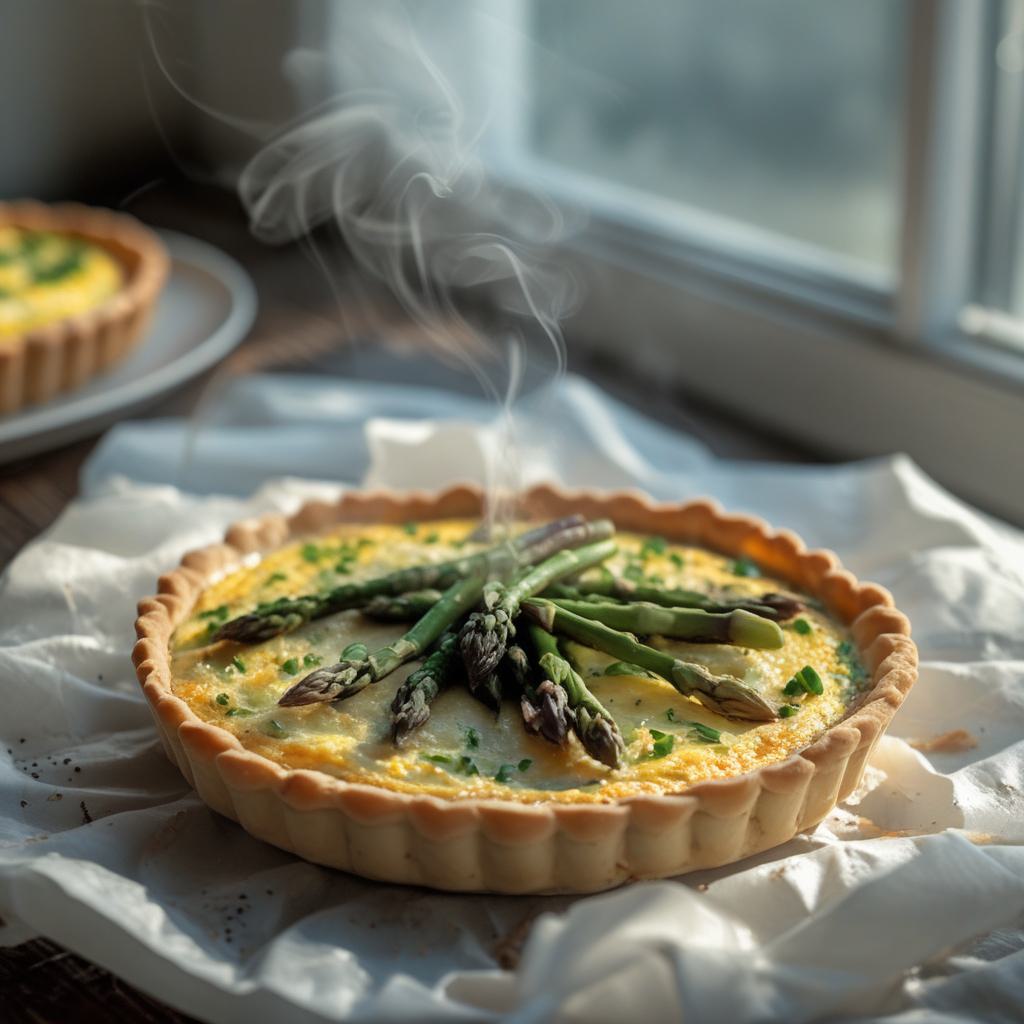
The moment asparagus quiche emerges from the oven, it whispers decadence. A golden crust cradles a custard so velvety it glistens under kitchen lights, while emerald spears rise like edible sculptures from its depths. This isn’t mere brunch fare—it’s alchemy. Imagine butter caramelizing in the crust’s layers as cream and eggs fuse into a tender embrace around sweet, earthy asparagus. The aroma alone is a symphony: nutty Gruyère bubbling at the surface, fresh thyme releasing its herbaceous perfume, and that faint mineral tang of green stalks roasting in their own juices. In Provence, they pair it with crisp rosé; in Brooklyn brasseries, it’s served with bitter greens. But universally, the first bite delivers contrast—crisp against creamy, vegetal against rich—that makes forks hover for seconds before plates even cool.
Ingredient Deep Dive
| Ingredient | Quantity | Purpose |
|---|---|---|
| Cold unsalted butter | 170g | Creates flaky layers via steam pockets during baking |
| 00 flour | 200g | Low-protein Italian flour ensures tender pastry |
| Fresh asparagus | 300g | Adds sweetness when roasted; fiber prevents sogginess |
| Gruyère cheese | 120g | Melts smoothly and adds umami depth |
| Heavy cream | 240ml | Fat content stabilizes custard emulsion |
| Farm eggs | 4 large | Proteins set at 70°C for sliceable structure |
The foundation of exceptional quiche lies in fat dispersion. Cold butter laminated between flour layers vaporizes during baking, creating air pockets that shatter into flakes—a process hindered by warm hands. Gruyère’s low acidity prevents curdling when mixed with cream, while its glutamate content amplifies savoriness.
Custard viscosity depends on egg-to-dairy ratios. Heavy cream’s 36% fat coats egg proteins, delaying coagulation until evenly set. Asparagus, blanched to deactivate peroxidase enzymes, retains its chlorophyll brilliance. Their pectin-rich cell walls also absorb excess moisture, safeguarding the crust’s crispness.
Substitutions & Swaps
For vegan adaptations, replace butter with frozen coconut oil in the crust. Use silken tofu blended with 2 tbsp tapioca starch instead of eggs, and cashew cream spiked with nutritional yeast mimics dairy richness. Gluten-free crusts benefit from 1:1 GF flour with 1 tsp xanthan gum to prevent crumbling.
Pantry swaps include leeks or broccolini if asparagus is unavailable. Gruyère can substitute with Comté or aged cheddar, but avoid overly oily cheeses like fontina that leak grease. Heavy cream may be replaced with full-fat oat milk thickened with 1 extra egg yolk. Always pre-cook watery vegetables to prevent flooding the custard.
Equipment Guide
A 24cm ceramic quiche dish is ideal—its thermal mass ensures even cooking without hotspots. Avoid glass pie pans, which risk crust shrinkage. For crusts, a French rolling pin (without handles) offers superior control over thickness. Blind bake using pie weights, but dried chickpeas work in a pinch; their round shape won’t tear foil like rice.
An infrared thermometer ensures butter stays below 4°C during pastry work. Use a stand mixer with paddle attachment for fast flour-fat incorporation before switching to hand blending—overworking gluten is the enemy. Finally, a mandoline slices asparagus uniformly, crucial for structural integrity.
Step-by-Step Walkthrough
1. Make the crust: Pulse flour, cubed butter, and 1 tsp salt in a food processor until pea-sized crumbs form. Add 3 tbsp ice water gradually until dough just holds. Flatten into a disc, chill 2 hours.
2. Blind bake: Roll dough to 3mm thickness, line dish, freeze 30 minutes. Cover with parchment, fill with weights, bake at 190°C for 20 minutes. Remove weights, bake 5 more minutes until golden.
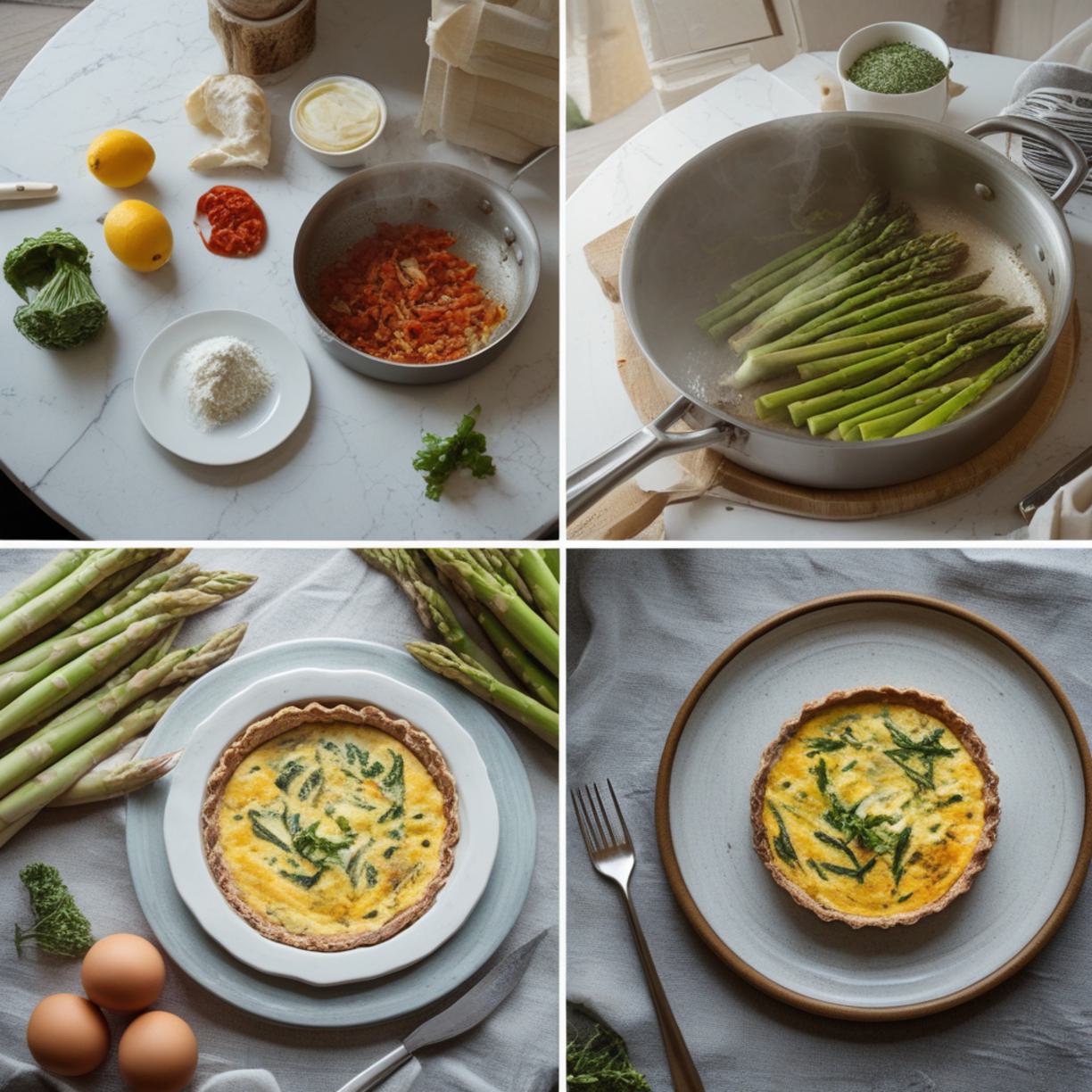
3. Prep filling: Snap asparagus ends, blanch in salted water 90 seconds, shock in ice water. Pat dry.
4. Whisk custard: Combine eggs, cream, 120ml whole milk, nutmeg, white pepper. Strain through a sieve.
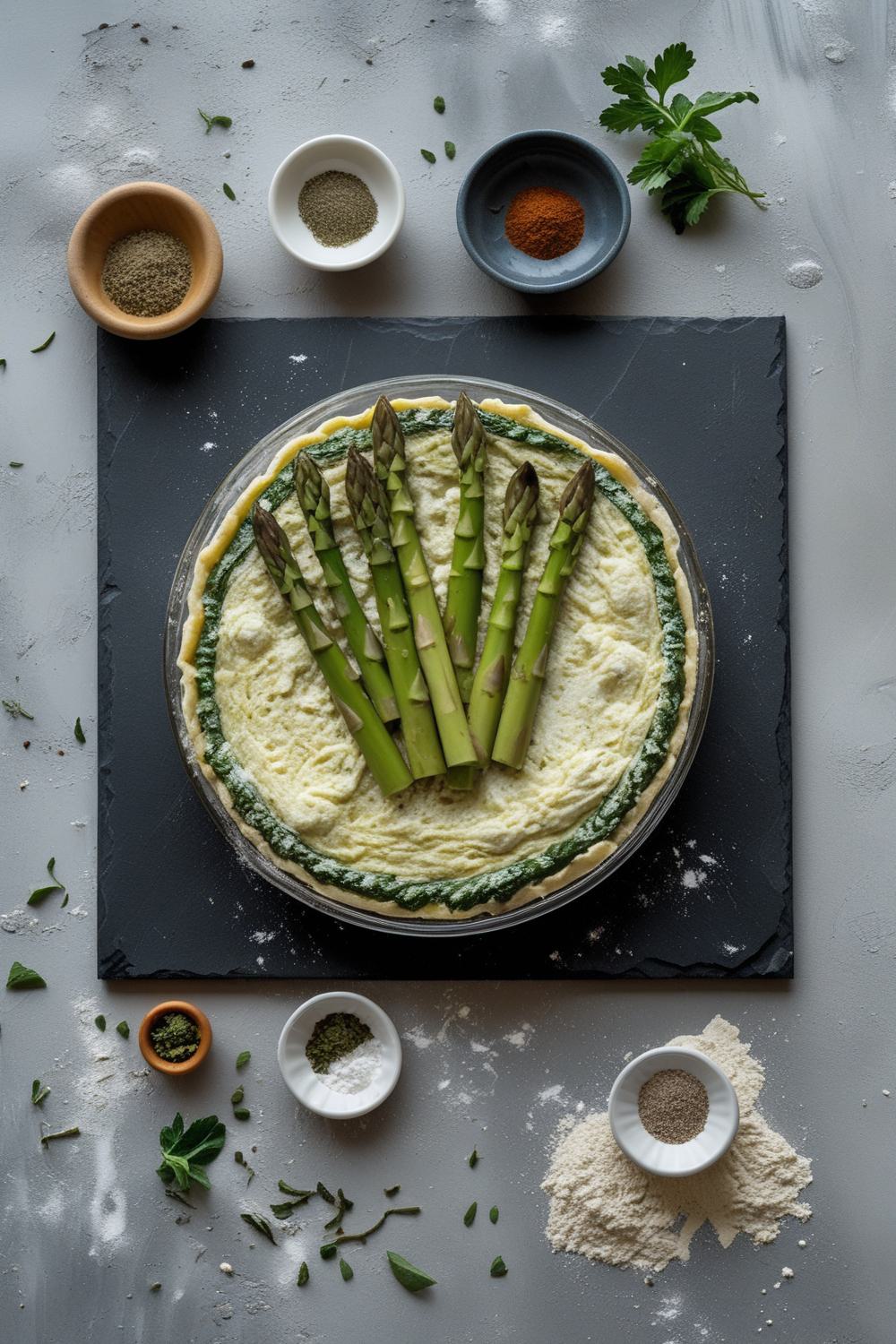
5. Assemble: Scatter grated Gruyère in crust. Arrange asparagus spears radially. Pour custard gently.
6. Bake: 175°C for 35-40 minutes until center jiggles slightly. Cool 1 hour before slicing.
Custard Science: Pour filling at 35°C for even setting. Cold custard risks uneven coagulation.
Asparagus Strategy: Angle spears at 45° to prevent sinking. Stagger thicker ends outward for even cooking.
Crumb Shot Test: Insert a knife near center; it should emerge clean but glossy—overcooked quiche weeps albumin droplets.
Expert Tips & Troubleshooting
The Soggy Bottom Solution: Brush hot par-baked crust with beaten egg white—it seals pores with a protein barrier. If leaks occur, sprinkle 1 tbsp semolina beneath cheese; it absorbs 3x its weight in liquid.
Custard Cracks?: Caused by overheating proteins. Bake in a water bath or reduce oven temp by 10°C. If edges darken too fast, shield with foil rings. For undercooked centers, broil 90 seconds—direct heat sets custard without drying.
Asparagus Aesthetics: Reserve 10 thin spears for the top layer. Submerge the rest in custard—their sugars caramelize into jammy undertones. If spears float, anchor them with a cheese lattice before pouring custard.
Egg Odor Neutralizer: A pinch of white miso in custard binds sulfur compounds without altering flavor.
Flavor Variations
Spicy Calabrian: Add 2 chopped ‘nduja sausages to the custard. Top with charred lemon zest and chili oil.
Kid-Friendly: Swap Gruyère for sharp cheddar, layer in diced ham. Blend steamed asparagus into the custard for hidden veggies.
Forest Floor: Mix in sautéed morels and sous-vide egg yolk at the center before baking. Finish with black truffle salt.
Storage & Reheating
Cool completely, then wrap slices in beeswax paper before refrigerating (3 days max). Freeze whole quiche up to 1 month—thaw overnight in fridge. Reheat at 160°C for 12 minutes on a preheated pizza stone to re-crisp crust. Avoid microwaving—it turns custard rubbery.
FAQ Section
Q: Can I use frozen asparagus?
A: Yes, but thaw and drain thoroughly—frozen spears release 40% more water.
Q: Why did my custard separate?
A: Overheating causes proteins to coagulate too fast. Use an oven thermometer.
Q: Can I make this ahead?
A: Par-bake crust 2 days prior. Assemble and bake day-of for best texture.
Q: Is serving cold okay?
A: Chilled quiche firms up, but flavors dull. Serve at 21°C for peak aroma.
Nutrition Information
| Nutrient | Per Slice (1/8) | % Daily Value* |
|---|---|---|
| Calories | 420 | |
| Total Fat | 31g | 40% |
| Saturated Fat | 17g | 85% |
| Protein | 14g | 28% |
| Vitamin K | 89mcg | 74% |
*Percent Daily Values based on a 2000-calorie diet.
Disclaimer: Nutritional data is estimated and may vary based on specific ingredient brands and preparation methods. Consult a nutritionist for precise dietary planning.