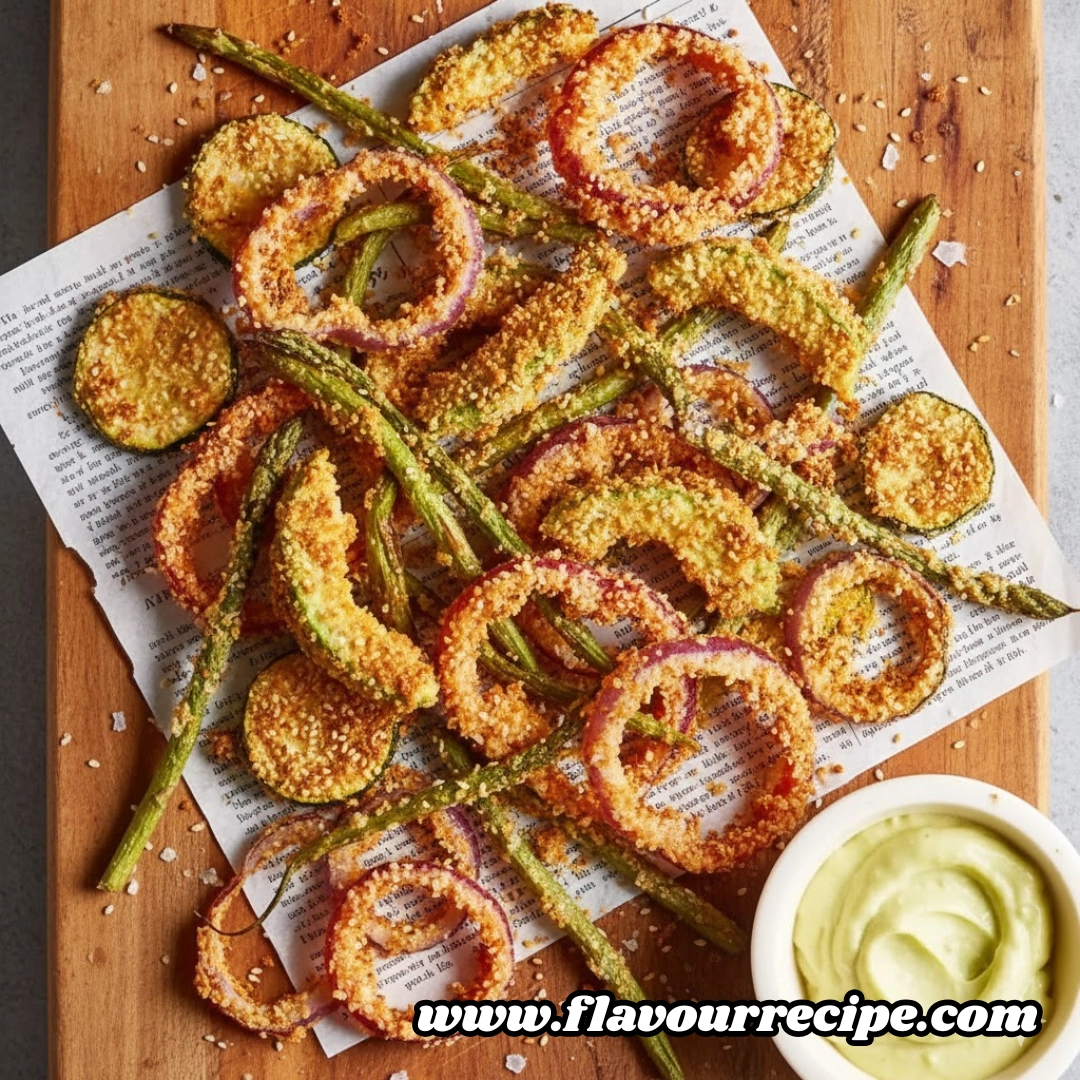
If you have ever sat at a high-end Japanese restaurant and marveled at the ethereal, light-as-air crunch of perfectly fried vegetables, you know how addictive that experience can be. Traditionally, achieving that golden shatter requires a vat of bubbling oil and a high degree of heat management. However, the modern kitchen has a secret weapon that changes the game entirely. Creating Air Fryer Tempura Vegetables allows you to enjoy that signature crunch with a fraction of the oil, making it a brilliant weeknight appetizer or a healthy side dish that actually feels like a treat. This recipe focuses on a diverse medley of textures, from the snap of green beans to the buttery softness of warm avocado, all enveloped in a seasoned panko crust that mimics the classic tempura experience with an air-fried twist.
Table of Contents
Essential Components for Your Tempura Batter and Veggie Medley
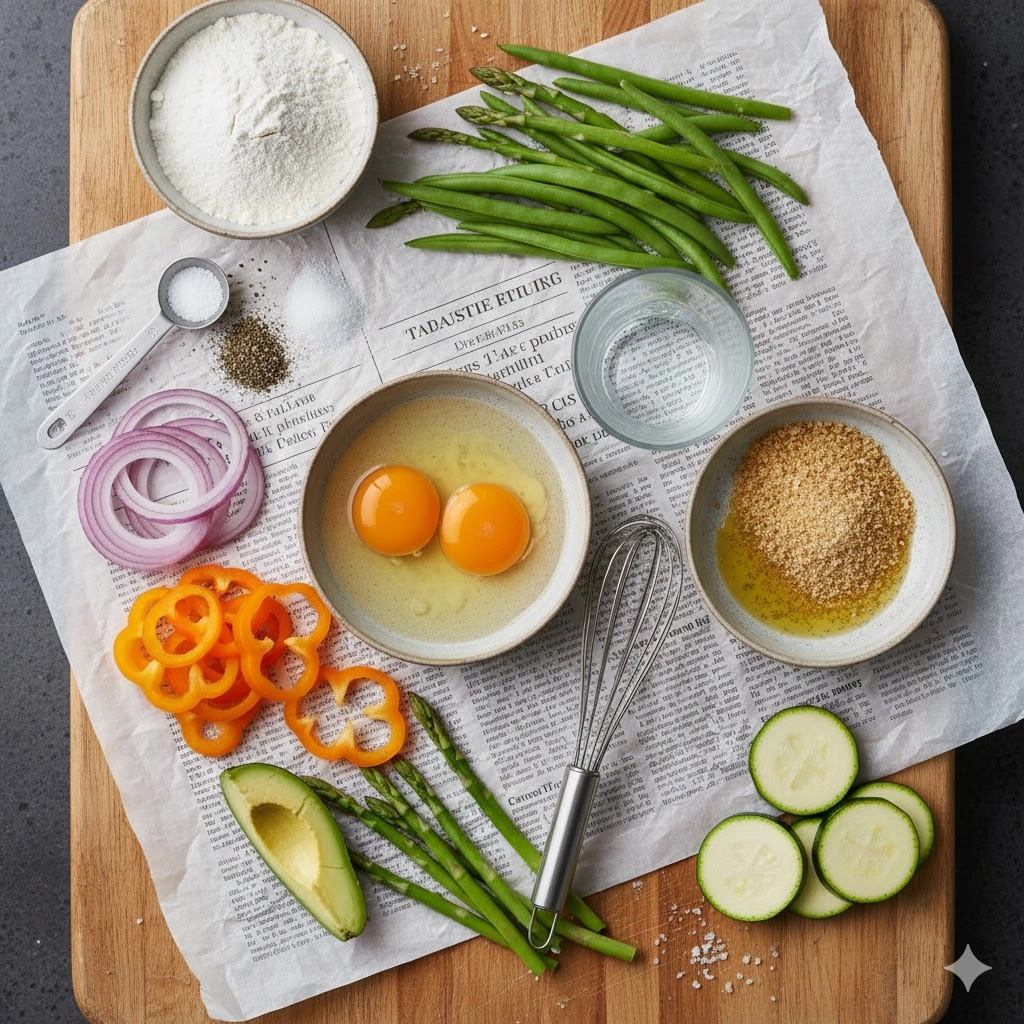
To begin this culinary journey, you will need to gather your components. This recipe relies on a three-stage dredging station to ensure the coating adheres perfectly to every curve of the vegetables.
- one half cup all-purpose flour
- one half teaspoon salt, divided, plus extra for finishing
- one half teaspoon ground black pepper
- two large eggs
- two tablespoons water
- one cup panko bread crumbs
- two teaspoons vegetable oil
- one half cup whole green beans
- one half cup whole asparagus spears
- one half cup red onion rings
- one half cup sweet pepper rings
- one half cup avocado wedges
- one half cup zucchini slices
The Step-By-Step Path to Golden Perfection
Precision in the preparation phase is what separates soggy vegetables from the elite crunch we are aiming for. Follow these steps carefully to ensure your air fryer performs at its peak.
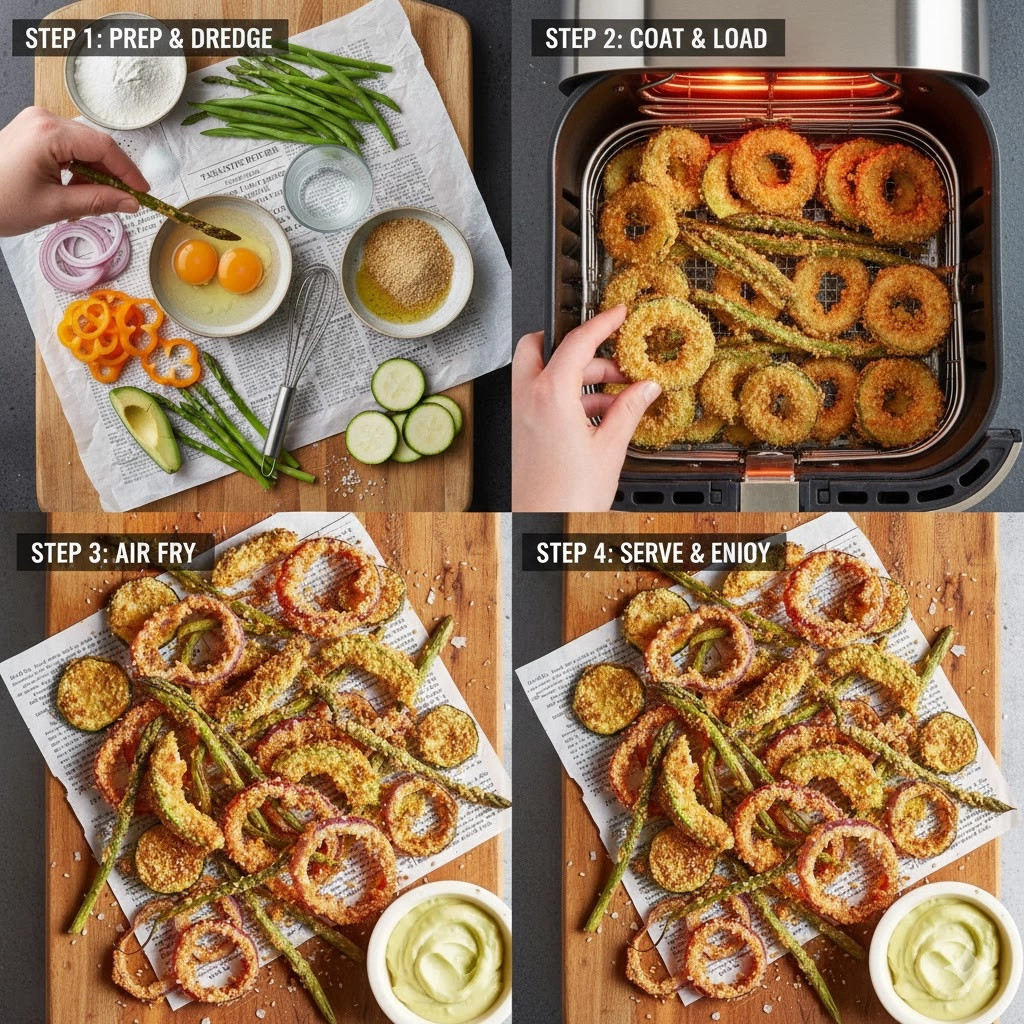
- Start by preparing your environment. Preheat your air fryer to 400 degrees Fahrenheit. Simultaneously, set your oven to 200 degrees Fahrenheit. This lower oven temperature is vital for keeping the first batch warm and crisp while the second batch cooks.
- Set up your dredging station using three shallow dishes. In the first dish, combine the all-purpose flour with one quarter teaspoon of salt and the black pepper. In the second dish, whisk together the two large eggs and the water until the mixture is uniform and frothy. In the third dish, combine the panko bread crumbs with the vegetable oil, stirring well so the oil is evenly distributed throughout the crumbs.
- Prepare your vegetables by sprinkling them with the remaining one quarter teaspoon of salt.
- Begin the coating process. Take a piece of vegetable and dredge it in the seasoned flour, shaking off the excess. Dip it into the egg wash, ensuring it is fully submerged, then roll it in the panko mixture, pressing gently so the crumbs adhere.
- Place the first half of your prepared vegetables into the air fryer basket in a single layer. Do not overcrowd them, as air needs to circulate to create the crunch.
- Cook at 400 degrees Fahrenheit for approximately 8 to 10 minutes, or until the exterior is a deep golden brown.
- Once finished, sprinkle with a little extra salt if desired and move them to the warm oven. Repeat the process with the remaining vegetables.
The Science of the Triple-Coating Method
Understanding why we use a three-step process is the key to mastering any breaded air fryer recipe. The first layer, the seasoned all-purpose flour, acts as a primer. Vegetables naturally hold moisture on their surface, which can cause breading to slide off. The flour absorbs this surface moisture, creating a dry “anchor” for the next layer. By seasoning the flour with salt and pepper, we ensure that the flavor is built from the inside out, rather than just sitting on the surface.
The second layer is the liquid binder. We use a combination of large eggs and water. The proteins in the egg whites and yolks act as a glue. The addition of two tablespoons of water is a subtle but important trick; it thins the egg just enough so that it doesn’t become too thick or “cakey,” allowing the final layer of panko to shine.
Finally, the panko bread crumbs provide the structural integrity of the crunch. Unlike standard bread crumbs, panko is flaky and jagged, which creates more surface area for the hot air to hit. By mixing the two teaspoons of vegetable oil directly into the panko, we are essentially “pre-frying” the crumbs. In an air fryer, there is no pool of oil to crisp the breading, so incorporating a small amount of oil into the crumbs ensures they turn golden and brittle rather than remaining pale and floury.
Variations for Every Palate
While the core recipe is a masterclass in balance, the beauty of tempura is its versatility. You can easily modify the flavor profile by altering the dry components of your dredging station.
For an Asian-inspired aromatic twist, consider adding one teaspoon of ground ginger to your flour mixture. This adds a subtle heat and a floral note that pairs beautifully with the sweetness of the red onions and sweet peppers. To complement this, you can stir two tablespoons of sesame seeds into your panko mixture. The seeds toast rapidly in the 400 degree Fahrenheit air, releasing nutty oils that enhance the overall savoriness of the dish.
If you are looking for something slightly more tropical or sweet, try adding two tablespoons of shredded coconut to the panko bread crumbs. This variation works exceptionally well with the avocado wedges and zucchini slices, offering a hint of sweetness that contrasts perfectly with a spicy dipping sauce.
Selecting and Preparing Your Vegetable Medley
The selection of vegetables in this recipe—green beans, asparagus, red onion, sweet peppers, avocado, and zucchini—is intentional. Each brings a different water content and texture to the plate.
When preparing your green beans and asparagus, ensure they are trimmed but left whole. This allows them to maintain a satisfying “snap” when bitten. For the red onions and sweet peppers, cutting them into rings provides a large surface area for the panko to cling to, resulting in a very high crunch-to-vegetable ratio.
The zucchini should be sliced into uniform rounds. Zucchini has a high water content, so the flour dredging step is particularly important here to prevent the crust from becoming soggy. Perhaps the most interesting inclusion is the avocado. While many people only think of avocado as a cold ingredient, air-frying it in a tempura shell transforms it into a warm, decadent treat that mimics the texture of melted cheese or rich custard.
Strategies for Heat Management and Batch Cooking
One of the challenges of using an air fryer for a family-sized portion is the limited basket space. Overcrowding is the enemy of the crunch. If the vegetables are touching or overlapping, the steam escaping from the vegetables will get trapped, resulting in a soft, steamed coating rather than a fried one.
This is why the 200 degree Fahrenheit oven is a non-negotiable part of the process. By placing a wire rack over a baking sheet in the oven, you create an environment where the first batch of tempura can stay hot and crispy. The wire rack allows air to circulate under the vegetables, preventing the bottoms from becoming soggy while you wait for the second batch to finish its 8 to 10 minute cycle in the air fryer.
Serving Suggestions and Accompaniments
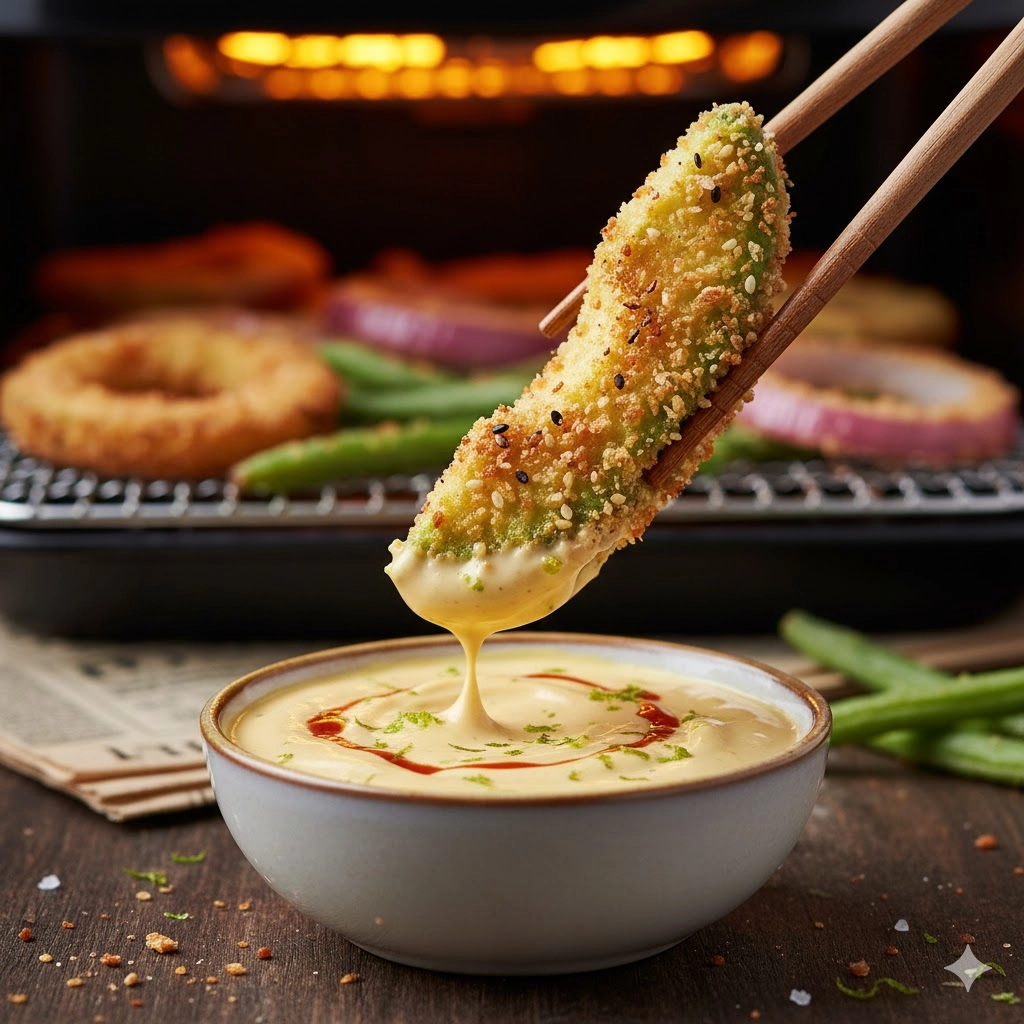
These Air Fryer Tempura Vegetables are best served immediately while the contrast between the hot, crunchy shell and the tender interior is at its peak. While they are delicious with just a final sprinkle of salt, they truly shine when paired with a bright dipping sauce.
A traditional Tentsuyu sauce, made from dashi, soy sauce, and mirin, provides a salty-sweet umami punch. Alternatively, a spicy mayo made with sriracha and lime juice complements the richness of the avocado wedges. For a fresher take, a simple squeeze of lemon juice and a side of whipped feta or a garlic yogurt dip can elevate the dish into a sophisticated Mediterranean-style appetizer.
Deep-Dive Culinary Questions
Why does my breading sometimes fall off the vegetables after cooking?
This usually happens because the vegetables were too wet before they entered the flour. If you wash your vegetables right before cooking, make sure to pat them completely dry with a paper towel. Additionally, if you skip the flour step and go straight to the egg, the coating won’t have anything to grip onto. The flour acts as the essential bridge between the vegetable skin and the egg wash.
Can I use a different type of flour for this recipe?
While all-purpose flour is the standard for its neutral flavor and protein content, you can experiment with rice flour for an even lighter, more authentic Japanese-style texture. Rice flour tends to stay crispier for longer. If you are looking for a gluten-free option, a high-quality gluten-free all-purpose blend will also work, though you may need to press the panko more firmly into the vegetable to ensure it sticks.
How do I prevent the panko from burning before the vegetables are cooked?
If you find your breading is getting too dark before the thicker vegetables (like the asparagus or green beans) are tender, you can slightly lower the temperature to 375 degrees Fahrenheit and extend the cooking time by two minutes. However, the 400 degree Fahrenheit setting is generally the sweet spot for achieving that flash-fried texture without overcooking the delicate interiors of the sweet peppers and onions.
What is the best way to reheat leftovers?
Avoid the microwave at all costs, as it will turn your beautiful tempura into a soft, rubbery mess. To revive the crunch, place the leftovers back into the air fryer at 350 degrees Fahrenheit for 3 to 5 minutes. This will draw out any moisture that has settled into the crust and restore the original texture.
Elevating the Experience
To make this meal feel like a complete event, consider the presentation. Serve the vegetables on a large wooden board or a ceramic platter lined with parchment paper. Grouping the vegetables by type creates a beautiful visual gradient of greens, reds, and golden browns. This dish is not just about the nutrition of the vegetables, but about the sensory joy of the “crunch” and the social experience of sharing a plate of finger food.
Nutritional Profile
| Nutrient | Amount Per Serving |
| Calories | 247 |
| Total Fat | 10 grams |
| Saturated Fat | 2 grams |
| Cholesterol | 93 milligrams |
| Sodium | 425 milligrams |
| Total Carbohydrates | 38 grams |
| Dietary Fiber | 4 grams |
| Total Sugars | 4 grams |
| Protein | 9 grams |
Nutritional Disclaimer
The nutritional information provided is an estimate based on the specific ingredients and measurements listed in this recipe. Actual values may vary depending on the specific brands of products used and variations in vegetable sizes. For those with specific dietary requirements, please consult a professional nutritionist.
Whether you are looking to sneak more greens into your diet or you simply want a restaurant-quality appetizer without the mess of deep-frying, these air fryer tempura vegetables offer the perfect solution. The combination of the triple-dredge technique and the high-heat air circulation results in a snack that is light, flavorful, and incredibly satisfying.
PrintMastering the Crispy Air Fryer Tempura Vegetables at Home
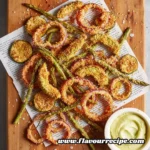
Enjoy the signature crunch of Japanese-style tempura with a fraction of the oil. These Air Fryer Tempura Veggies feature a diverse medley of textures enveloped in a seasoned panko crust.
- Prep Time: 15 mins
- Cook Time: 20 mins
- Total Time: 35 mins
- Yield: 4 servings 1x
- Category: Appetizer
- Method: Air Fryer
- Cuisine: Japanese-inspired
- Diet: Vegetarian
Ingredients
1/2 cup all-purpose flour
1/2 teaspoon salt, divided
1/2 teaspoon ground black pepper
2 large eggs
2 tablespoons water
1 cup panko bread crumbs
2 teaspoons vegetable oil
1/2 cup whole green beans
1/2 cup whole asparagus spears
1/2 cup red onion rings
1/2 cup sweet pepper rings
1/2 cup avocado wedges
1/2 cup zucchini slices
Instructions
1. Preheat air fryer to 400 degrees Fahrenheit and oven to 200 degrees Fahrenheit.
2. In three shallow dishes, set up a station: 1. Flour with 1/4 tsp salt and pepper; 2. Whisked eggs and water; 3. Panko mixed with oil.
3. Season vegetables with remaining 1/4 tsp salt.
4. Dip each vegetable in flour, then egg wash, then panko to coat.
5. Place half of the vegetables in a single layer in the air fryer basket.
6. Cook until golden brown, about 8 to 10 minutes.
7. Transfer to the oven to keep warm while repeating with the remaining batch.
8. Sprinkle with extra salt and serve hot.
Notes
Do not overcrowd the basket to ensure a crispy texture.
Use a wire rack in the oven to prevent the bottom of the tempura from getting soggy.
Pairs perfectly with spicy mayo or traditional tentsuyu sauce.
Nutrition
- Serving Size: 1 cup
- Calories: 247
- Sugar: 4g
- Sodium: 425mg
- Fat: 10g
- Saturated Fat: 2g
- Unsaturated Fat: 0g
- Trans Fat: 0g
- Carbohydrates: 38g
- Fiber: 4g
- Protein: 9g
- Cholesterol: 93mg