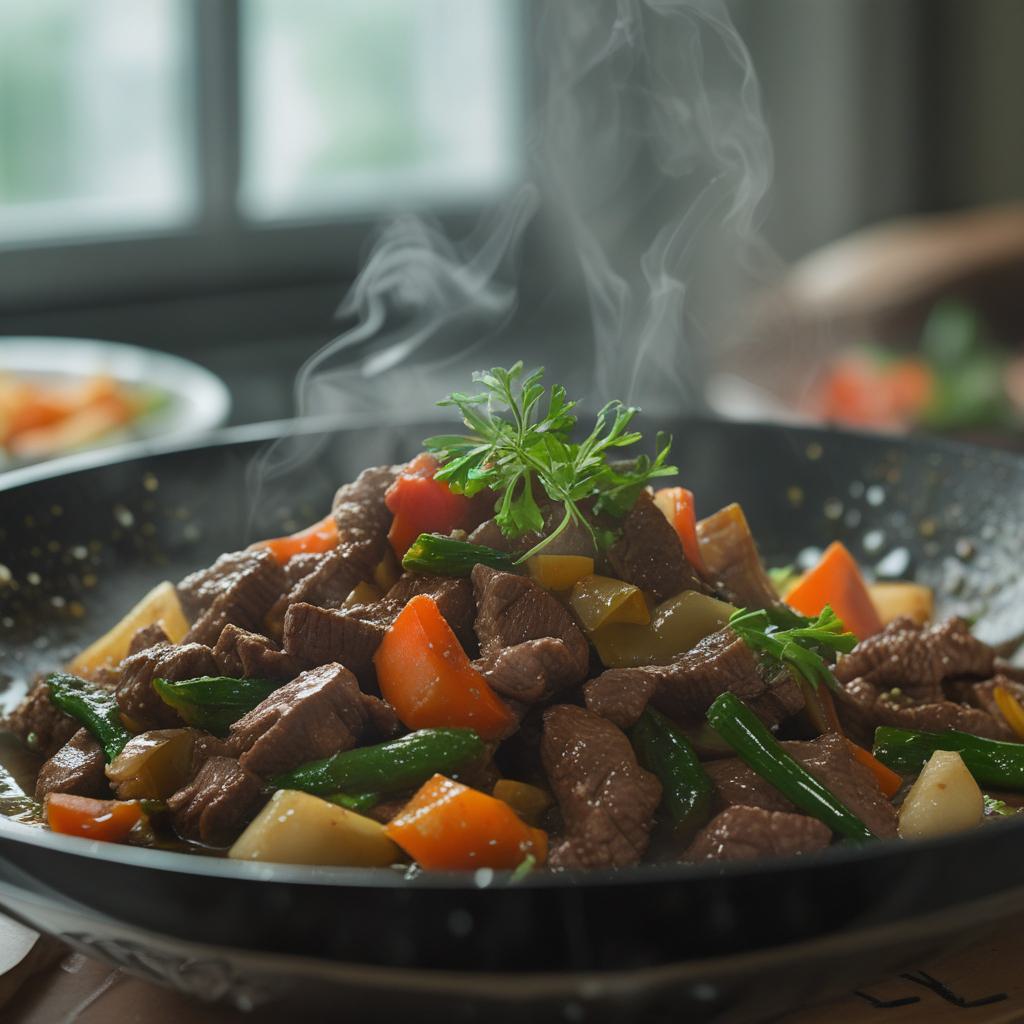
There’s an unmistakable percussion that defines great stir-fry cooking—a fiery wok hiss that makes restaurant kitchens sound like percussion ensembles. When you recreate this symphony at home, the aromas of searing beef fat meeting blistering metal erupt into your kitchen: the sweet-savory undertones of caramelizing soy sauce, the citrusy punch of fresh ginger, and the earthy depth of toasted sesame oil. This 30-minute beef stir-fry isn’t merely fast food; it’s edible physics where high heat transforms humble ingredients through the Maillard reaction. Thinly sliced flank steak becomes seared-edged jewels, while vegetables retain just enough crunch to contrast the velvety sauce clinging to each ribbon of meat. The magic lies in controlling chaos—prepping with military precision before unleashing controlled culinary pyrotechnics. This dish rewards the impatient gourmand with layers of umami from fermented sauces, brightness from rice wine, and lingering warmth from garlic that ghosts your palate long after the last bite.
Table of Contents
Ingredient Deep Dive
| Ingredient | Quantity | Purpose |
|---|---|---|
| Flank steak | 1 lb | Lean yet richly marbled cut that sears beautifully when sliced against the grain |
| Cornstarch | 1 tbsp | Creates “velveting” effect on beef for silkier texture |
| Dark soy sauce | 2 tbsp | Adds color complexity and fermented depth |
| Shao Xing wine | 3 tbsp | Chinese rice wine deglazes pan and balances richness |
| Garlic & ginger | 1 tbsp each | Aromatic foundation building flavor through pyrolytic reactions |
| Snow peas | 1 cup | Provides fresh, vegetal crunch and vibrant color contrast |
The chemistry begins with protein denaturation—high heat causes beef muscle fibers to contract and expel moisture, which caramelizes into flavor bombs when met with reducing sugars in soy sauce. Cornstarch acts as both tenderizer and thickener; its amylose molecules create a protective gel around beef proteins during velveting, preventing moisture loss during searing. Meanwhile, glutamates in fermented soy sauce trigger umami receptors, while allicin in garlic undergoes thermal decomposition into dozens of aromatic sulfides.
Vegetables are strategically layered by water content: peppers and onions first to develop fond, then fibrous carrots, with delicate snow peas added last to preserve chlorophyll integrity. Toasted sesame oil bridges these elements with lipid-soluble flavor compounds that bind fat-soluble aromatics to water-based sauces—the emulsifying alchemy behind every glossy-coated morsel.

Substitutions & Swaps
For gluten-free adaptations, replace soy sauce with tamari and verify rice wine contains no malt barley. Vegan versions can utilize marinated seitan or extra-firm pressed tofu—freeze and thaw tofu twice for meat-like texture. Swap beef with oyster mushrooms for umami depth without animal protein. When snow peas aren’t available, sugar snap peas or broccolini make excellent alternatives. For oil substitutions, peanut oil’s high smoke point outperforms olive oil. Rice vinegar can replace Shaoxing wine in a pinch, though it lacks the latter’s funky complexity. If cornstarch triggers allergies, arrowroot powder offers comparable thickening without gluten or grains.
Equipment Guide
A 14-inch carbon steel wok is ideal—its tapered shape creates varying heat zones for sequential cooking. (Cast iron retains heat but responds slowly to temperature adjustments). Gas burners provide intense BTUs crucial for wok hei (breath of the wok), though electric users should preheat pans 5 minutes before adding oil. Long-handled metal spatulas allow quick flipping without burning hands. Prepare a wire-mesh strainer for blanching vegetables and infrared thermometers to verify 400°F+ surface temps. Commercial-grade exhaust fans are advisable unless you enjoy setting off smoke detectors.
Step-by-Step Walkthrough
- Velvet beef: Combine 1″ steak strips with cornstarch, 1 tsp baking soda, and 2 tbsp water—marinate 15 minutes
- Prep mise en place: Organize aromatics, sauce mixture, and vegetables by cooking order
- Sear beef: Heat wok until smoking, add beef in single layer—sear 45 seconds per side without stirring
Professional Advice #1: High-heat searing requires dry ingredients—pat beef thoroughly before marinating. Residual moisture creates steam that prevents proper browning. When oil starts shimmering with faint smoke, it’s wok-ready. Add ingredients in clockwise order for visual tracking.
Professional Advice #2: Stir-frying isn’t stirring! Use the “flip and scoop” technique: push spatula along the wok’s curve to toss ingredients upward, allowing maximum contact with hot metal. If ingredients stick, deglaze immediately with rice wine.
Professional Advice #3: Vegetables expand cooking surface area, dropping wok temperature drastically. Cook in multiple small batches rather than overcrowding—meat first, then hard veggies, concluding with delicate greens.

Expert Tips & Troubleshooting
Avoid rubbery beef by slicing against the grain—this shortens muscle fibers. For even cooking, ensure uniform 1/4″ thickness using freezer-semi-firmed meat. Soggy vegetables? Blanch high-water-content veggies (like zucchini) before stir-frying to evaporate surface moisture. If sauces turn gloopy, finish with a splash of homemade stock to loosen texture. Prevent clumping rice noodles by rinsing under cold water after boiling. Weak flavors? Bloom aromatics: fry ginger first until golden before adding garlic. Burnt bits signal insufficient oil—reapply in bead-sized amounts along the wok’s sides as needed.
Flavor Variations
For Szechuan heat, add 1 tbsp chili bean paste (doubanjiang) during aromatics stage and finish with 1 tsp ground sansho pepper. Kids prefer sweetness—substitute sauce with 3 tbsp hoisin + 1 tbsp honey. Thai fusion replaces soy sauce with fish sauce and adds basil during final toss. Japanese-inspired versions use mirin instead of rice wine and finish with grated daikon. Moroccan twists include preserved lemon, cumin, and toasted almonds.
Storage & Reheating
Store components separately: sauce in airtight containers, blanched vegetables refrigerated in paper towel-lined bags. Beef keeps best when cooled on wire racks before refrigeration. Reheat wok-crisped leftovers in single layers using minimal oil—microwaving creates mush. Consume within 72 hours for optimal texture. Freezing dulls vegetable crunch but preserves marinated beef for future stir-fries.
FAQ Section
Q: Best beef cuts besides flank?
A: Skirt steak offers deeper marbling; flat-iron steak has uniform thickness ideal for beginners.
Q: Can I prep components ahead?
A> Marinate beef overnight and chop vegetables up to 48 hours in advance—store separately.
Q: Non-alcoholic rice wine substitute?
A> Mix 3 parts chicken stock + 1 part apple cider vinegar + pinch sugar.
Q: Maximum vegetable quantity?
A> Keep 1:1 protein-to-veg ratio to prevent wok cooling. For more veggies, batch cook separately.
Nutrition Information
| Nutrient | Per Serving |
|---|---|
| Calories | 427 kcal |
| Protein | 29.1g |
| Carbohydrates | 21.6g |
Disclaimer: Nutritional estimates utilize USDA databases—actual values may vary based on ingredient brands and portion sizes. Consult nutritionists for medical dietary needs.