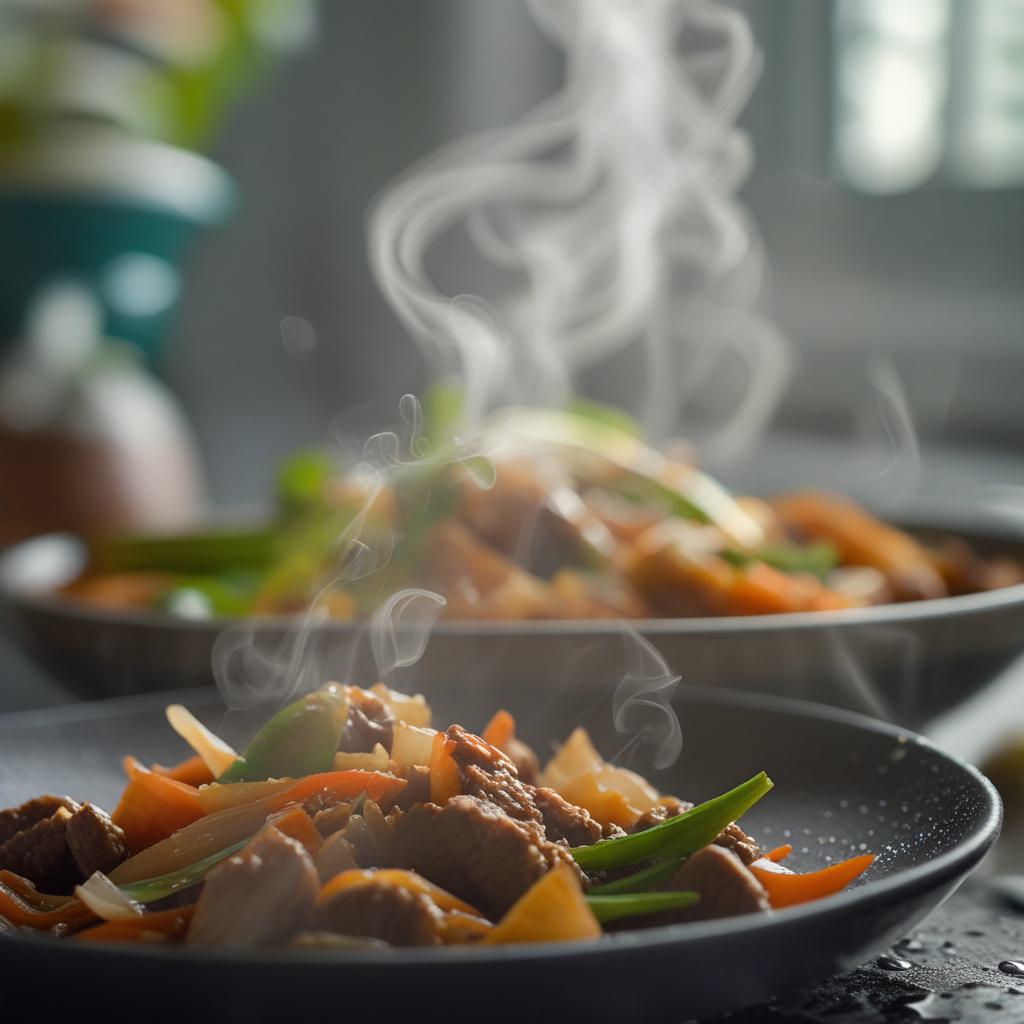
The sizzle hits the wok like a culinary overture—a sharp hiss that transforms raw ingredients into a symphony of umami. Thin slices of marbled flank steak dance across searing metal, caramelizing at the edges as toasted sesame oil releases its nutty perfume. Pockets of garlic and ginger bloom in the heat, their aromas tangling with the earthy sweetness of shiitake mushrooms. This isn’t mere speed cooking; it’s alchemy. The stir-fry’s allure lies in its contrasts: tender beef against crisp sugar snap peas, fiery chili threads tempered by the mellow richness of oyster sauce. Every element is a calculated note—soy sauce’s salty depth, rice wine’s brightness, scallions’ grassy finish—that crescendos in under ten minutes. To taste it is to understand why wok hei (the breath of the wok) remains an unmatched culinary phenomenon. The dish arrives at your table steaming, vibrant as a Fauvist painting, proving that luxury isn’t tied to hours spent cooking but to the precision of technique and quality of components.
Table of Contents
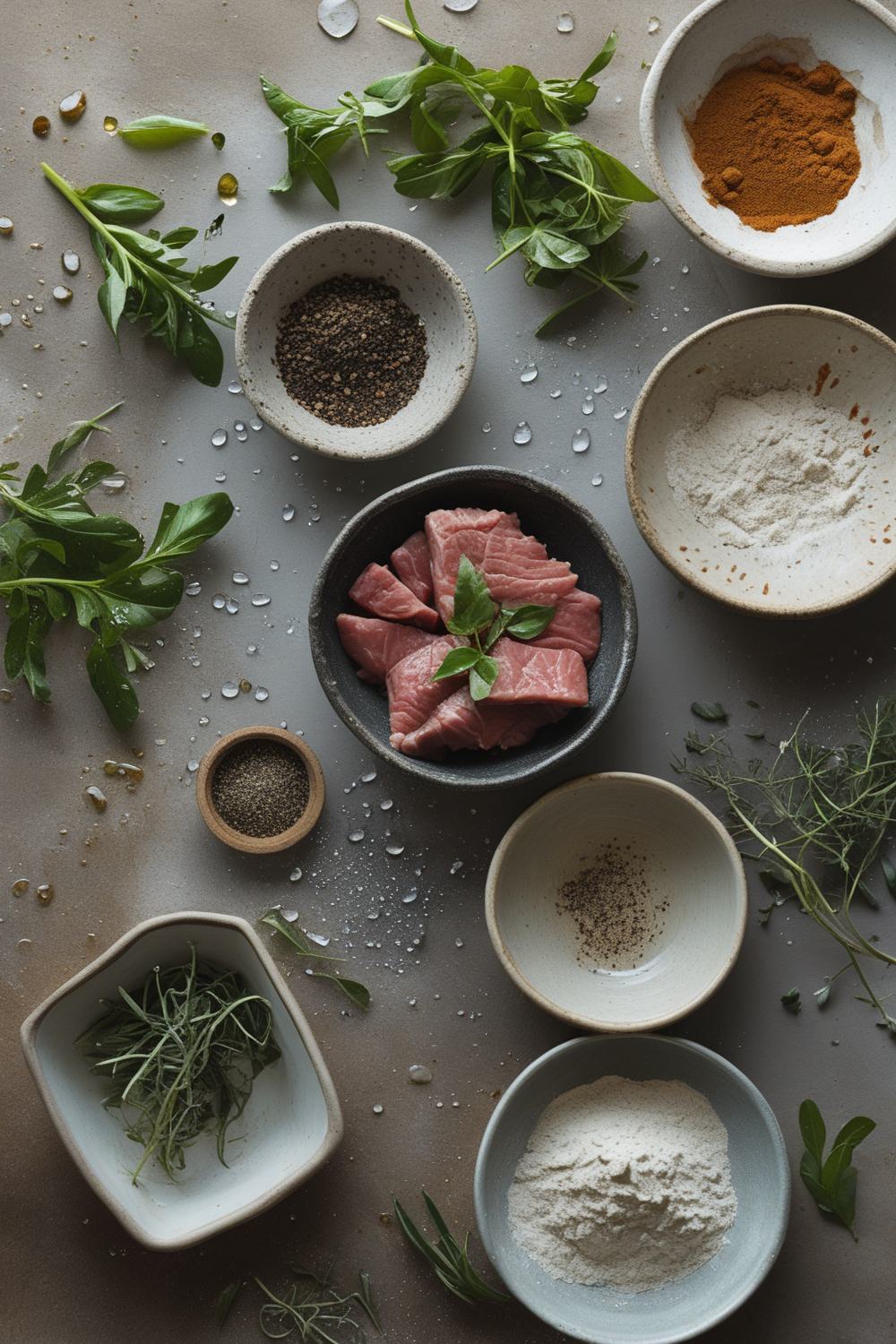
Ingredient Deep Dive
| Ingredient | Quantity | Purpose |
|---|---|---|
| Flank steak | 12 oz | High collagen content ensures tenderness when sliced thinly against the grain |
| Tamari (gluten-free soy sauce) | 3 tbsp | Umani-rich amino acids (glutamates) enhance meat’s savoriness without gluten |
| Toasted sesame oil | 1 tbsp | Fat with a low smoke point adds aroma but is added late to prevent bitterness |
| Rice vinegar | 2 tsp | Acidity balances fat, denatures proteins for tenderization |
| Shiitake mushrooms | 1 cup | Lentinula compounds amplify savory depth synergistically with soy |
Protein Science: Flank steak’s dense grain structure demands precise 45-degree bias slicing—cutting across muscle fibers shortens them, reducing chewiness. The marinade’s rice vinegar (pH 2.4-3.4) denatures surface proteins, allowing tamari’s enzymes to penetrate deeper for flavor depth.
Flavor Chemistry: Shiitakes contain lenthionine and guanylic acid, which interact with tamari’s glutamates to create synergistic umami—up to 8x more potent than either ingredient alone. Toasted sesame oil’s sesamol and sesamin compounds remain volatile; adding them off-heat preserves their aromatic thiazoles.
Substitutions & Swaps
For vegan versions, swap beef with pressed extra-firm tofu or king oyster mushrooms—freeze-thawed tofu develops a meaty, sponge-like texture ideal for absorbing marinade. Use mushroom oyster sauce instead of traditional oyster sauce. Gluten-sensitive cooks should verify tamari is certified GF (many contain wheat). In pantry emergencies, replace rice vinegar with apple cider vinegar plus 1/4 tsp sugar, and use honey instead of mirin. Protein alternatives: chicken thigh (adjust cook time to 5 mins) or shrimp (add last 90 seconds). For nut allergies, substitute sesame oil with perilla oil or omit entirely.
Equipment Guide
A 14-inch carbon steel wok outperforms non-stick for stir-frying—its porous surface develops a natural patina that prevents sticking while withstanding 600°F+ temperatures essential for wok hei (the coveted “breath of the wok”). Use a flat-bottomed version if cooking on standard Western ranges. Pair with a long-handled metal wok spatula for precise flipping. Infrared thermometers help maintain the critical 400-450°F zone—oil should shimmer but not smoke. If using cast iron, preheat 10 mins but reduce cook times by 15% due to higher heat retention. Avoid glass or ceramic bowls for marinade; reactive metals can impart off-flavors to acidic components.
Step-by-Step Walkthrough
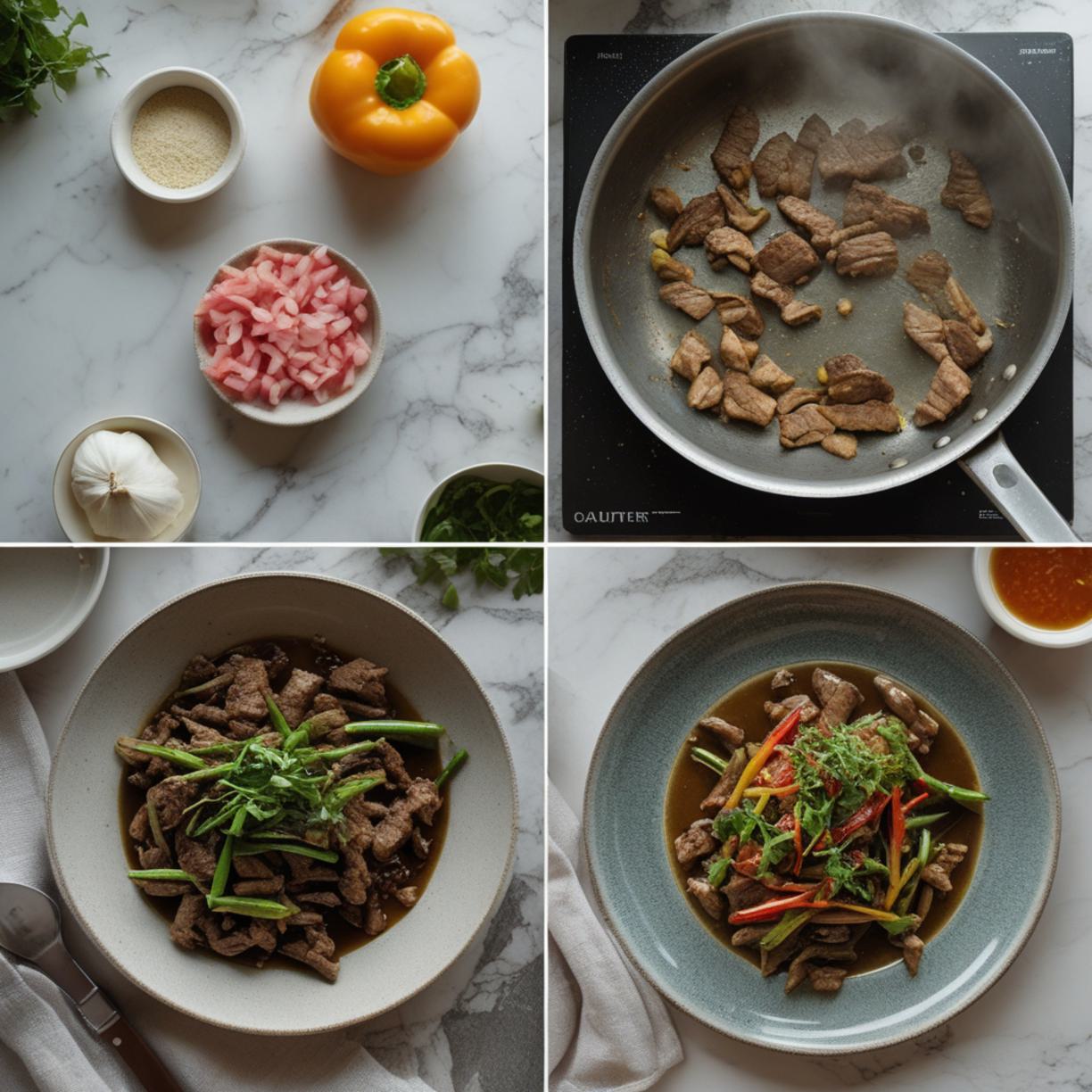
- Velveting the beef: Slice chilled flank steak 1/8″ thick against the grain at a 45° angle. Marinate with 1 tbsp tamari, 1 tsp rice vinegar, and 1 tsp cornstarch for 15 mins—the alkaline cornstarch raises meat’s pH, slowing protein coagulation.
- Mise en place: Prep vegetables identically (julienne carrots matchstick-cut to 2mm; mushrooms sliced 3mm thick) for even cooking. Separate aromatics (ginger/garlic) from vegetables.
- Wok seasoning: Heat wok until water droplets vaporize in 1 second. Add 2 tbsp peanut oil, swirl to coat, wait until barely smoking.
- Sear: Add beef in single layer; leave undisturbed 60 seconds to Maillard crust formation. Flip, sear 30 seconds, then remove.
- Aromatics bloom: Reduce heat to medium. Add ginger, garlic, white scallions; stir 20 seconds until fragrant but not browned.
- Vegetable tender-crisp: Increase heat to high. Add carrots, mushrooms, snap peas; stir-fry 90 seconds.
- Sauce integration: Return beef to wok. Pour premixed sauce (remaining tamari, rice vinegar, 1 tbsp water, 1 tsp sugar) around edges—it sizzles and reduces instantly.
- Finish: Remove from heat. Drizzle sesame oil, garnish with scallion greens. Serve immediately.
Thermal Control: Stir-frying is about managing two variables—time and temperature. Proteins require brief exposure to extreme heat (400°F+) to develop flavor via the Maillard reaction without overcooking. Vegetables need slightly lower temps (350°F) to retain snap. When ingredients crowd the wok, moisture accumulates, steaming instead of searing. Cook in batches when exceeding 1.5 lbs total volume.
Sauce Physics: Combining cornstarch (1 tsp) with cold marinade liquids prevents clumping. Adding sauce along the wok’s hot walls creates instant caramelization—sugars reduce into complex flavor compounds while starches thicken the liquid into a clingy glaze.
Expert Tips & Troubleshooting
Meat Mishaps: If beef turns rubbery, culprit is likely either cutting with the grain or overcooking. Flank steak requires 90 seconds max at high heat. For tougher cuts like skirt steak, replace 1 tsp rice vinegar with 1/4 tsp baking soda in marinade—alkaline tenderization breaks down collagen faster.
Soggy Vegetables: Always pat produce dry post-washing. Cook mushrooms first—their released moisture evaporates before adding other veggies. If using broccoli, blanch 60 seconds beforehand. Watery sauces? Mix cornstarch with cold liquid before adding; boiling activates its thickening power. Burned garlic? Add aromatics later and keep moving—they need only 15-20 seconds contact time.
Flavor Variations
Szechuan Fire: Add 1 tbsp chili bean paste (doubanjiang) and 1/2 tsp ground Sichuan peppercorns with aromatics. Finish with 1 tsp chili oil. Korean Fusion: Marinate beef with 1 tbsp gochujang and 1 tsp grated pear. Top with toasted sesame seeds. Kid-Friendly Sweetness: Substitute tamari with coconut aminos, add 1 tbsp hoisin sauce, and include pineapple chunks. Reduce chili content, garnish with crispy shallots.
Storage & Reheating
Cool completely within 1 hour; refrigerate in airtight glass container for up to 3 days. Freezing disrupts vegetable texture—not recommended. Reheating: Place portion in non-stick pan with 1 tsp water. Cover, steam 2 mins on medium, then uncover and stir-fry 60 seconds to restore crispness. Microwave reheating causes sogginess.
FAQ Section
Q: Can I use frozen beef?
A: Partially freeze (30 mins) for easier slicing, but thaw completely before cooking—ice crystals cause uneven searing.
Q: Why no broccoli in this recipe?
A: Broccoli’s dense florets require blanching first; this streamlined version prioritizes 10-minute speed.
Q: My wok smokes excessively—solution?
A> Use oils with high smoke points: peanut (450°F), avocado oil (520°F). Avoid olive oil (375°F).
Q: Can I substitute fish sauce for tamari?
A> Yes, but use 2/3 quantity—fish sauce is saltier (1.5x sodium content). Balance with 1 tsp palm sugar.
The Recipe Card
A lightning-fast gourmet beef stir-fry marrying tender flank steak with shiitake umami bombs and crisp vegetables. Velveting technique ensures melt-in-mouth texture while the wok’s sear creates complex caramelization. Ready in 15 minutes—serve over jasmine rice or cauliflower rice for low-carb.
Nutrition Information
| Nutrient | Per Serving |
|---|---|
| Calories | 389 |
| Protein | 29g |
| Fat | 24g |
| Carbohydrates | 14g |
| Sodium* | 860mg |
*Soy sauce contributes 65% sodium content. Reduce to 2 tbsp for lower sodium version (620mg).
Disclaimer: Nutritional data is estimated. Actual values may vary based on ingredient brands and portion sizes. Consult a nutritionist for dietary concerns.