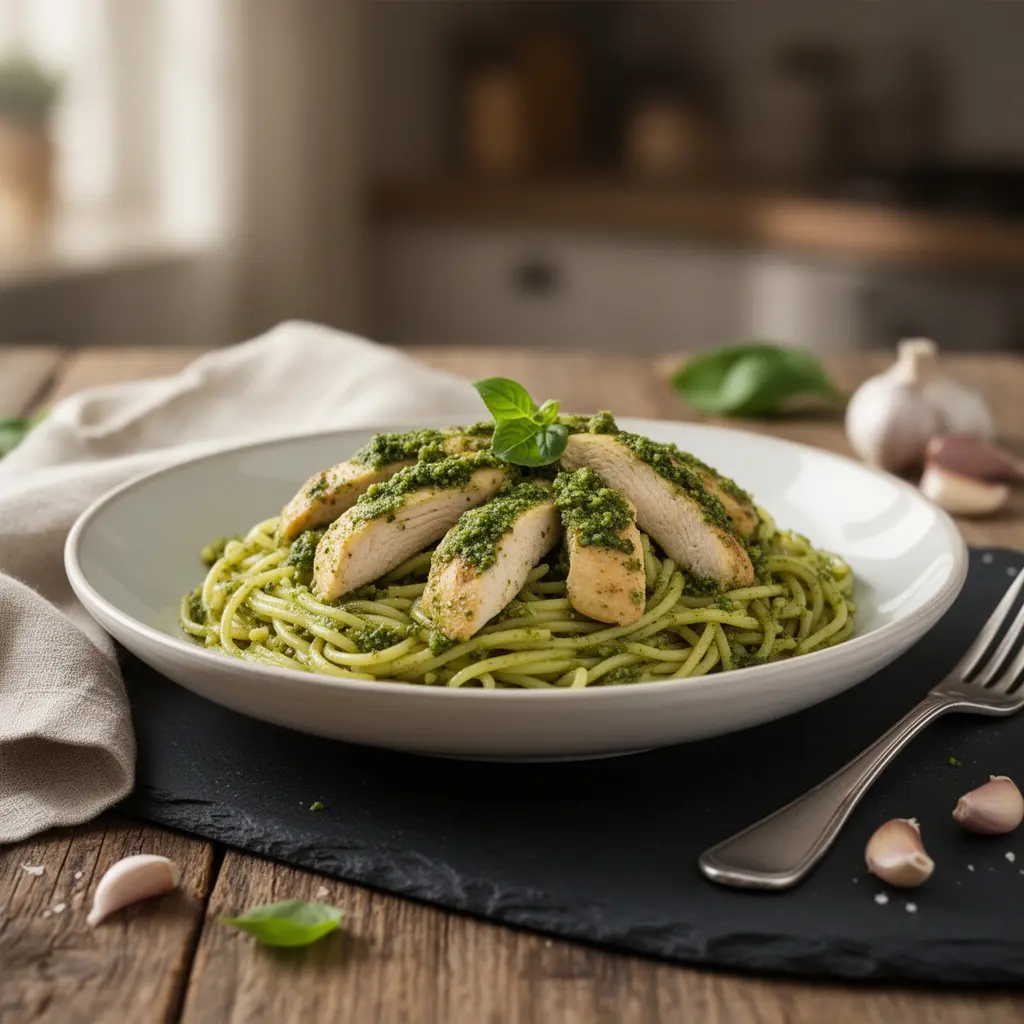

The hallmark of truly effective weeknight cooking is the ability to transform pantry staples into a dish that tastes complex, yet demands minimal effort. This elegant preparation—a creamy, vibrant bowl of 15-Minute Ricotta Pesto Pasta—achieves just that. It is a lesson in maximizing flavor using simple, high-quality ingredients. The combination of fresh basil pesto, rich whole-milk ricotta, and the starchy magic of reserved pasta water results in a velvety sauce that clings perfectly to every strand, creating a satisfying meal that feels special enough for company but is easily ready before hunger sets in. The bright acid from a hint of lemon zest cuts through the richness, balancing the depth of the cheese and herbaceousness of the pesto for a truly remarkable bite.
Table of Contents
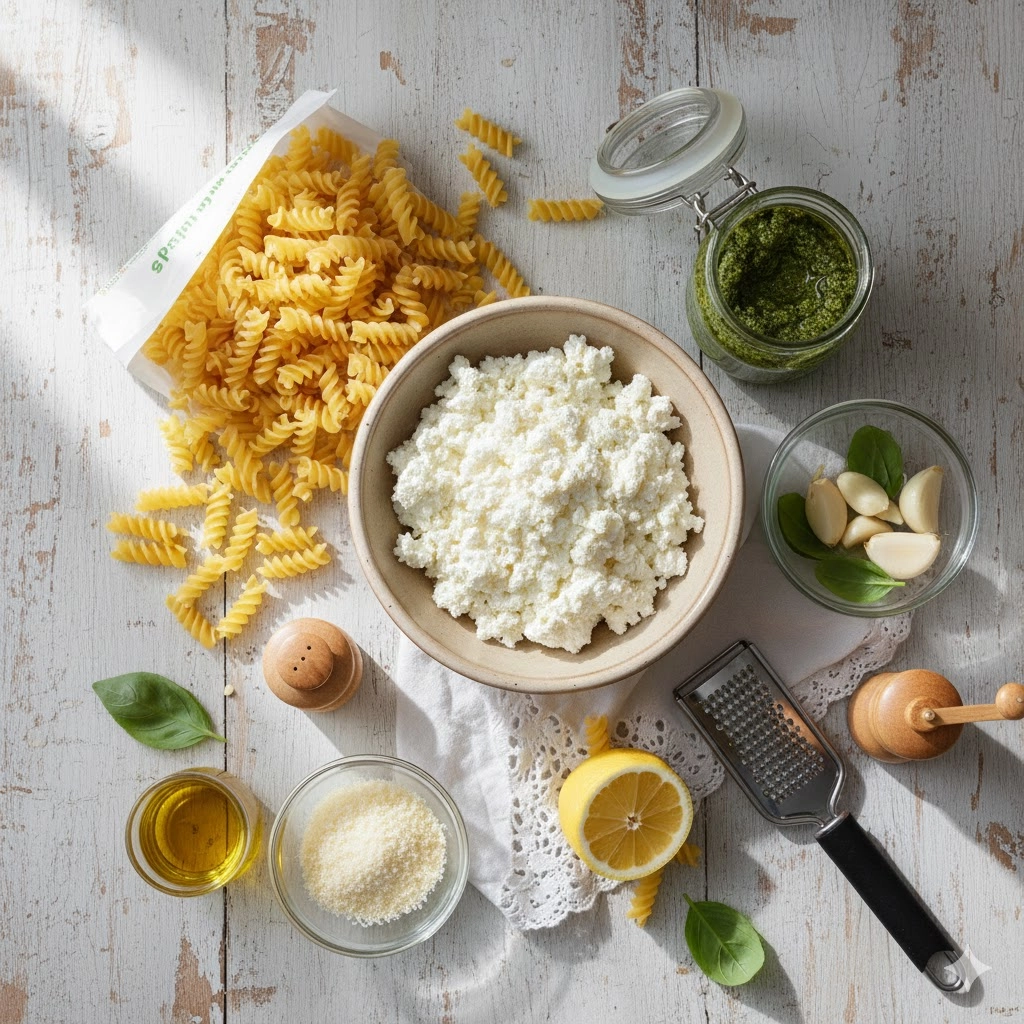
The Essential Components for Creamy Pesto Pasta
The success of this recipe hinges on ingredient quality and precise measurement, especially since the cook time is so brief. We prioritize full-fat dairy for texture and robust flavor.
Pasta and Foundation
- 1 pound (450 grams) quality short pasta, such as fusilli, penne, or rigatoni
- 2 tablespoons extra virgin olive oil
- 2 teaspoons fresh garlic, finely minced
- 1 teaspoon fine sea salt (for pasta water, plus extra for seasoning)
- Freshly cracked black pepper, to taste
The Ricotta-Pesto Emulsion
- One-half cup (120 milliliters) prepared basil pesto (refrigerated, not jarred shelf-stable, for best flavor)
- One-half cup (120 grams) full-fat ricotta cheese
- One-half cup (120 milliliters) reserved pasta cooking water
- Zest of one small lemon
- One-half cup (50 grams) Parmesan cheese, finely grated, plus extra for serving
- One-quarter cup fresh basil leaves, torn, for garnish
High-Level Prep: Bringing the Dish Together Quickly
This timeline operates in parallel; the sauce is built while the pasta cooks. Efficiency is paramount to keeping the entire preparation under the fifteen-minute mark.
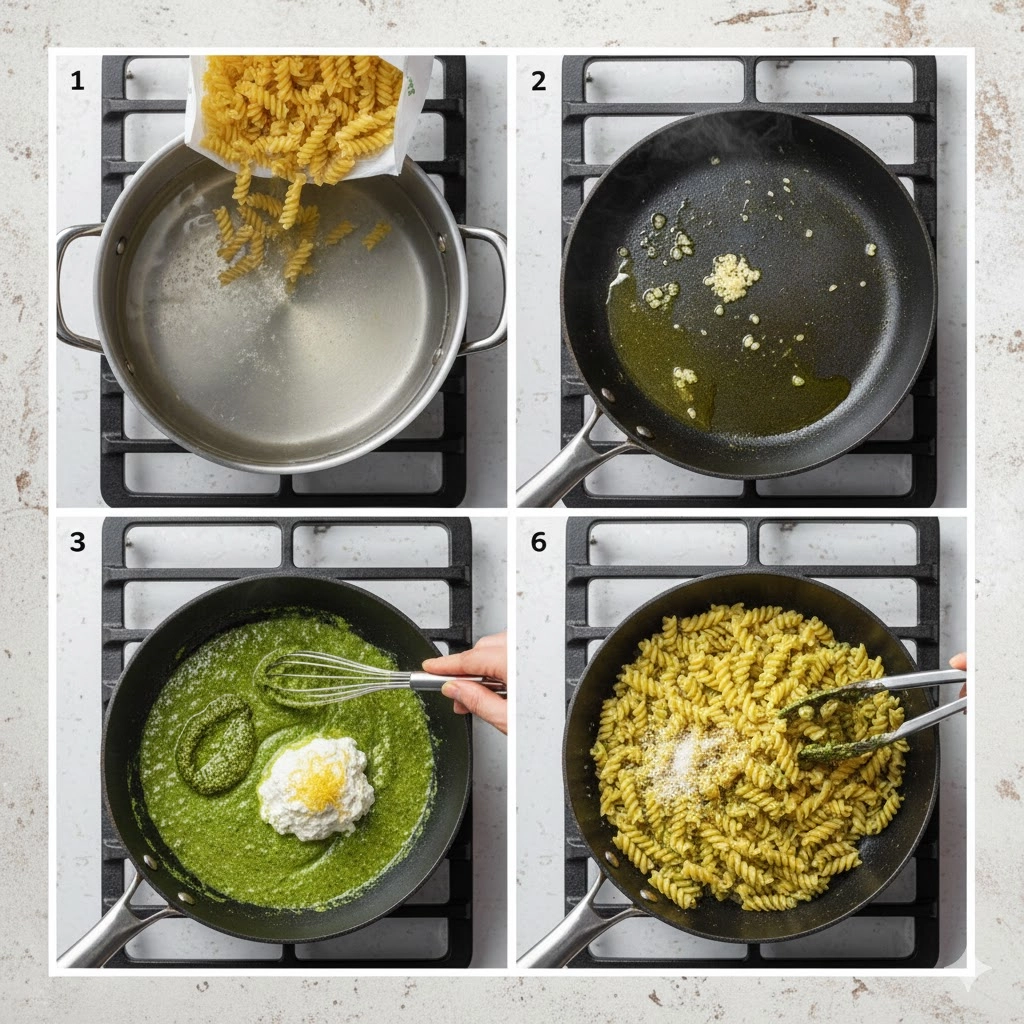
- Boil the Pasta: Bring a large pot of heavily salted water to a rolling boil. Add the pasta and cook according to package directions, setting a timer to ensure you hit the al dente stage.
- Prepare the Emulsion Base: While the pasta cooks, gently warm the olive oil and minced garlic in a large, wide skillet over medium-low heat until fragrant.
- Reserve Water and Drain: Just before the pasta is fully cooked, carefully scoop out and reserve one-half cup of the starchy cooking water. Drain the remaining pasta immediately, but do not rinse.
- Construct the Sauce: Remove the skillet from the heat. Stir in the ricotta, pesto, lemon zest, black pepper, and half of the reserved pasta water. Whisk until smooth.
- Combine and Finish: Add the hot, drained pasta and the grated Parmesan cheese to the skillet. Toss quickly and thoroughly to coat every piece. Add additional reserved pasta water, tablespoon by tablespoon, until the sauce reaches a luxurious, creamy consistency.
- Season and Serve: Taste the finished dish and adjust salt or pepper as necessary. Divide into warm bowls, garnish with fresh basil and extra Parmesan, and serve without delay.
Mastering the Sauce: Textural and Flavor Development
The journey from a few simple ingredients to a complex, creamy sauce requires attention to sensory cues, particularly temperature and texture. This section provides the detailed insights necessary to ensure a high-level final product, far beyond the execution of the basic instructions.
The Starch Release and Salinity
Begin by ensuring your pasta water tastes like the sea. The large volume of water and liberal salting (about two teaspoons of fine salt per quart) is the only opportunity you have to season the pasta itself from the inside out. As the pasta boils, the starch is released into the water. This water, which we reserve, is not merely liquid; it is the vital binding agent for the sauce. When you reserve it, the temperature must be high, as the heat helps activate the starches and encourages the ricotta to emulsify properly, preventing it from appearing grainy.
The Gentle Garlic Bloom
The critical step that precedes the main sauce construction is the “bloom” of the garlic in the olive oil. Use medium-low heat and introduce the minced garlic only after the oil is warmed. The goal is a light, golden fragrance—not browning or crisping. If the garlic turns brown, it becomes bitter and will taint the entire dish. This bloom takes barely thirty seconds and establishes a crucial aromatic foundation. Removing the pan from the direct heat source before adding the remaining dairy is key to preventing the delicate ricotta from separating or “breaking” when introduced to high heat.
Creating the Velvety Emulsion
The transition from individual components (ricotta, pesto, water) to a cohesive sauce is where the technique shines. When you stir the pesto, ricotta, and starch water together off-heat, you are encouraging an emulsion. The fat from the pesto and the dairy solids in the ricotta are stabilized by the starches in the reserved pasta water. Whisking vigorously but gently helps these elements bond. The sauce should be warm enough to melt the Parmesan, but never boiling. If the sauce becomes too hot, the proteins in the ricotta tighten up, resulting in a grainy or curdled texture. A smooth, velvety sheen is your visual cue that the emulsion is holding.
The Final Marriage of Pasta and Sauce
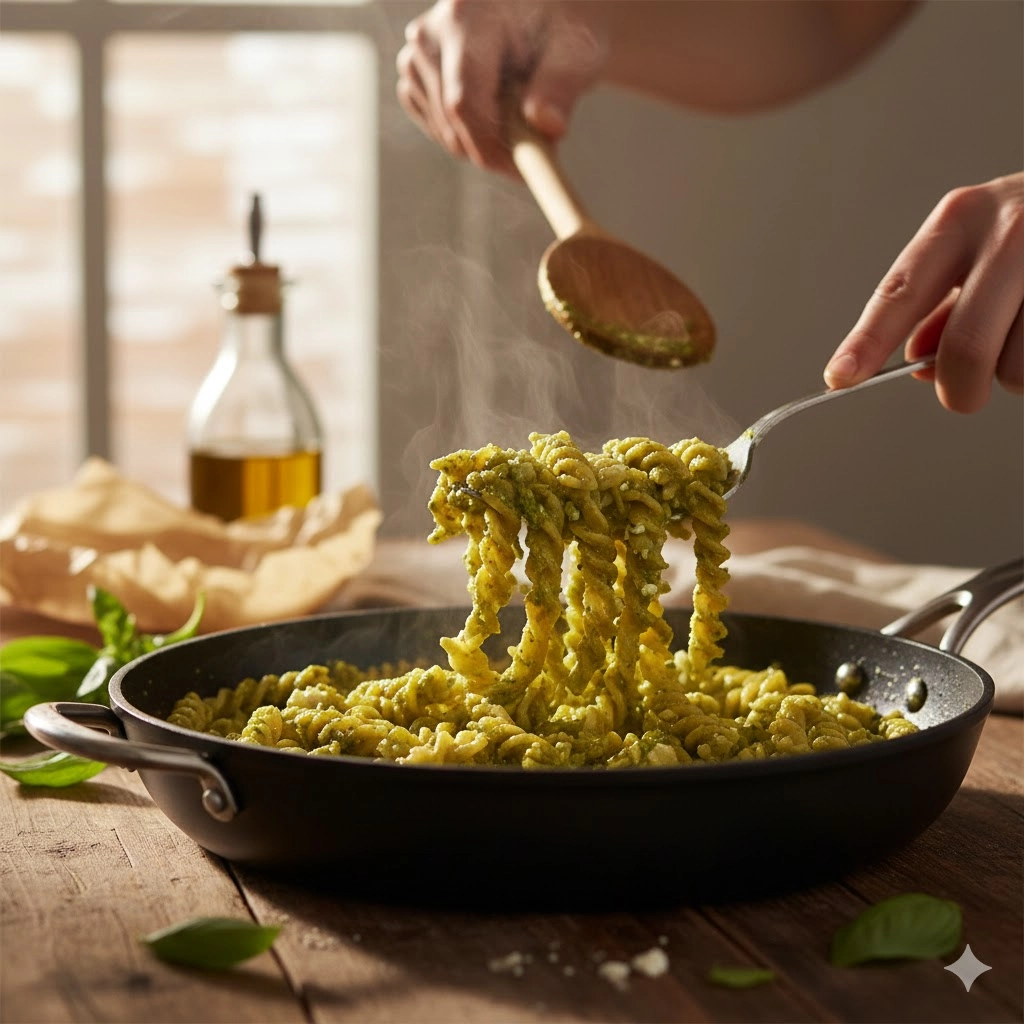
The moment the hot, drained pasta is introduced to the prepared sauce is known as the “mantecatura.” The residual heat and steam from the pasta itself are sufficient to finish the process. Instead of simply stirring, use tongs or a flat spatula to toss the pasta, lifting and folding it over to ensure the sauce coats every piece without smashing the pasta. The starch-coated pasta grabs the fat-and-water emulsion. If the mixture appears too thick, you add the reserved cooking water, one tablespoon at a time, continuing to toss until the perfect, glossy viscosity is achieved. The final addition of Parmesan should melt almost instantly into the sauce, providing a deep umami finish.
Expert Techniques for Impeccable Pesto Pasta
Achieving depth of flavor and ideal texture in a rapid dish like this requires a few targeted techniques that elevate the finished product beyond a standard toss-and-serve meal.
Choose the Right Vessel for Finishing: Always use a wide, deep skillet—not the pasta pot—for finishing the sauce. The increased surface area helps the pasta water evaporate slightly if needed, and allows for proper tossing, ensuring even, full coating of the pasta without crowding.
The Full-Fat Ricotta Mandate: Do not attempt to use low-fat or part-skim ricotta. The higher fat content (full-fat is typically around twelve percent to sixteen percent fat) is essential for achieving the necessary stability and luxurious mouthfeel in the emulsion. Lesser-fat versions are prone to breaking and resulting in a thin, watery, or grainy sauce.
Use High-Quality Cold Pesto: For a dish with only a few elements, the quality of the pesto is non-negotiable. Use a fresh, refrigerated product rather than a shelf-stable jar. The brightness of flavor from the fresh basil and quality oil is what makes this dish outstanding. If you must use jarred, stir in one teaspoon of fresh basil oil or a splash of quality extra virgin olive oil before combining it with the ricotta.
The Single Salt Adjustment: Resist the urge to season the ricotta mixture heavily until the Parmesan has been added. Parmesan is very salty, and once the final cheese is melted in, you can taste the finished dish and make one, final, measured salt adjustment. This prevents over-salting, especially when using pre-made pesto, which often contains significant sodium.
Finish with Zest, Not Juice: The lemon zest contains the concentrated essential oils of the fruit and provides a brilliant, fragrant top-note without adding excess liquid or acidity that could potentially curdle the dairy. If you desire more acidity, add the juice after the pasta is fully tossed and plated, not during the sauce-making process.
Ensure Proper Draining Temperature: The pasta should be drained quickly but immediately transferred to the skillet while still piping hot. This heat is what activates the remaining starches on the pasta’s exterior, ensuring maximum sauce adhesion and creaminess. A minute or two delay can result in a lukewarm sauce that doesn’t emulsify or coat properly.
Adapting the Dish: Beyond the Basil and Ricotta Base
The simplicity of the 15-Minute Ricotta Pesto Pasta recipe makes it an excellent canvas for various flavors and dietary substitutions. A few modifications can transform the meal entirely while preserving the core creamy, satisfying texture.
Pesto Profile Swap: Experiment with different herbaceous bases. Instead of classic basil, try arugula pesto for a peppery bite, sun-dried tomato pesto (pesto rosso) for a sweeter, more intense umami flavor, or a kale and walnut pesto for an earthy, green depth. Each swap brings a completely different complexity.
Incorporate Seasonal Vegetables: Add bulk and nutrients by folding in quick-cooking vegetables. Steam or blanch five ounces of asparagus tips or broccoli florets during the last two minutes of the pasta cooking time. Drain them with the pasta and toss them into the sauce. For a more savory addition, stir in half a cup of roughly chopped oil-packed sun-dried tomatoes or marinated artichoke hearts.
Protein Enrichment: This pasta serves as a phenomenal side for pre-grilled or pan-seared chicken breast, but it can also be a main dish with added protein. Stir in four ounces of hot, crumbled Italian sausage or four ounces of canned chickpeas (drained and rinsed) directly into the finished pasta. The warmth of the sausage or chickpeas helps integrate them into the warm, creamy sauce.
Dairy-Free Interpretation: While traditional ricotta is paramount for the classic taste, the dish can be adapted. Use a cashew-based pesto and substitute the ricotta with an equal measure of cashew cream (cashews soaked and blended with a small amount of liquid) or a full-fat almond-based ‘ricotta’ alternative. The fundamental principle of binding with starch water remains the same, though the texture will be slightly leaner.
Ideal Companions for Your Finished Pasta
Given the rich, aromatic nature of the creamy pesto, the best side dishes are those that offer a sharp, crisp contrast in texture and flavor, providing a welcome freshness to cut through the richness of the dairy.
Simple Arugula Salad with Sharp Vinaigrette: A classic counterpoint. A light toss of peppery arugula leaves with shaved Parmesan and a very acidic vinaigrette—using two parts high-quality red wine vinegar to one part olive oil, plus a touch of Dijon mustard and salt—offers the necessary palate cleanse.
Toasted Bread with Aged Balsamic: Serve slices of crusty, lightly toasted French baguette or ciabatta. This is perfect for soaking up any remaining sauce on the plate. Drizzle a small dish of the bread with a high-quality, dense, aged balsamic vinegar for dipping; the syrupy sweetness and acidity are a great complement to the herbaceous sauce.
Quick Roasted Cherry Tomatoes: Roast one pint of cherry tomatoes with a drizzle of olive oil, salt, and pepper in a three hundred seventy-five Fahrenheit oven for eight to ten minutes. Their intense sweetness and slightly blistered texture provide a wonderful burst of contrast when served alongside the pasta.
Chilled Sauvignon Blanc: For an adult pairing, a highly crisp, mineral-driven white wine, such as a New Zealand Sauvignon Blanc, is ideal. Its inherent high acidity and notes of citrus and green herbs echo the flavors in the pesto and cut through the fat of the ricotta, making the entire dish taste lighter.
Common Queries on Ricotta Pesto Pasta
Can I make the sauce ahead of time?
While the sauce technically can be made ahead of time, it is strongly discouraged for this recipe. Pesto and ricotta, when combined and chilled, tend to lose their fresh, vibrant flavor and the ricotta thickens substantially. This makes it difficult to achieve the proper emulsion when mixed with the hot pasta. For the best flavor and texture, prepare the ricotta-pesto mixture just before the pasta is finished cooking.
What is the best type of pasta shape to use?
Short, textured pasta shapes like fusilli, rigatoni, penne, or cavatappi are generally superior for creamy sauces. Their twists, ridges, and hollow interiors are specifically designed to trap and hold thick sauces like this ricotta emulsion. While spaghetti or linguine will work, they offer less surface area for sauce adherence compared to the ridged tubes or spirals.
Why is my sauce grainy or separated?
A grainy or separated sauce is almost always caused by overheating the ricotta. When dairy proteins are exposed to too much heat, they coagulate and release moisture, causing a “broken” appearance. The fix is to ensure the ricotta is added to the pan off the heat and only warmed gently. If it breaks, try stirring in a small amount of cold water or cold ricotta to attempt to shock the emulsion back together, though success is not guaranteed.
How do I store and reheat leftovers?
Store any leftovers in an airtight container in the refrigerator for up to three days. The sauce will thicken considerably upon chilling. To reheat, place the pasta in a skillet over low heat and add two to three tablespoons of water or milk per serving. Stir gently and consistently until the sauce loosens and the pasta is heated through. Do not use high heat, as this will further break the sauce.
Can I substitute cottage cheese for ricotta?
Cottage cheese is a poor substitute for ricotta in this application. Cottage cheese has a much higher moisture content and a curd texture that will not blend smoothly into the velvety emulsion required for this dish. It is highly likely to result in a watery, texturally inconsistent sauce. If substituting, use another cream-based fresh cheese like mascarpone (which is much fattier) or a high-quality farmer’s cheese, adjusting for moisture.
Estimated Nutritional Breakdown
| Nutrient | Amount per Serving |
| Calories | 485 kcal |
| Protein | 22 g |
| Carbs | 55 g |
| Fat | 20 g |
| Fiber | 3 g |
| Sugar | 4 g |
| Sodium | 450 mg |
Nutrition Information Disclaimer
Nutrition information is an estimate and may vary based on preparation and ingredients used.
PrintElevate Weeknight Meals with 15-Minute Ricotta Pesto Pasta
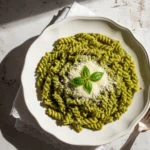
A truly expert-level recipe for a creamy, elegant pasta dish made from basil pesto and rich ricotta cheese. Perfect for a satisfying meal in barely fifteen minutes.
- Prep Time: 5 mins
- Cook Time: 10 mins
- Total Time: 15 mins
- Yield: 4 servings 1x
- Category: Main Dish
- Method: Stovetop
- Cuisine: Italian
Ingredients
1 pound (450 grams) quality short pasta
2 tablespoons extra virgin olive oil
2 teaspoons fresh garlic, finely minced
1 teaspoon fine sea salt (for pasta water, plus extra for seasoning)
Freshly cracked black pepper, to taste
One-half cup (120 milliliters) prepared basil pesto
One-half cup (120 grams) full-fat ricotta cheese
One-half cup (120 milliliters) reserved pasta cooking water
Zest of one small lemon
One-half cup (50 grams) Parmesan cheese, finely grated, plus extra for serving
One-quarter cup fresh basil leaves, torn, for garnish
Instructions
1. Boil the Pasta: Bring a large pot of heavily salted water to a rolling boil. Add the pasta and cook according to package directions, setting a timer to ensure you hit the al dente stage.
2. Prepare the Emulsion Base: While the pasta cooks, gently warm the olive oil and minced garlic in a large, wide skillet over medium-low heat until fragrant.
3. Reserve Water and Drain: Just before the pasta is fully cooked, carefully scoop out and reserve one-half cup of the starchy cooking water. Drain the remaining pasta immediately, but do not rinse.
4. Construct the Sauce: Remove the skillet from the heat. Stir in the ricotta, pesto, lemon zest, black pepper, and half of the reserved pasta water. Whisk until smooth.
5. Combine and Finish: Add the hot, drained pasta and the grated Parmesan cheese to the skillet. Toss quickly and thoroughly to coat every piece. Add additional reserved pasta water, tablespoon by tablespoon, until the sauce reaches a luxurious, creamy consistency.
6. Season and Serve: Taste the finished dish and adjust salt or pepper as necessary. Divide into warm bowls, garnish with fresh basil and extra Parmesan, and serve without delay.
Notes
The key to creaminess is full-fat ricotta—skim milk versions will not emulsify correctly.
Always remove the pan from heat before adding the ricotta to prevent the dairy from separating.
For the best flavor, use high-quality, refrigerated basil pesto.
Nutrition
- Serving Size: 1 bowl
- Calories: 485
- Sugar: 4g
- Sodium: 450mg
- Fat: 20g
- Saturated Fat: 10g
- Unsaturated Fat: 8g
- Trans Fat: 0g
- Carbohydrates: 55g
- Fiber: 3g
- Protein: 22g
- Cholesterol: 35mg